Articles Written By: jhhd2026@pomona.edu

A Message from the Alumni Association Board President

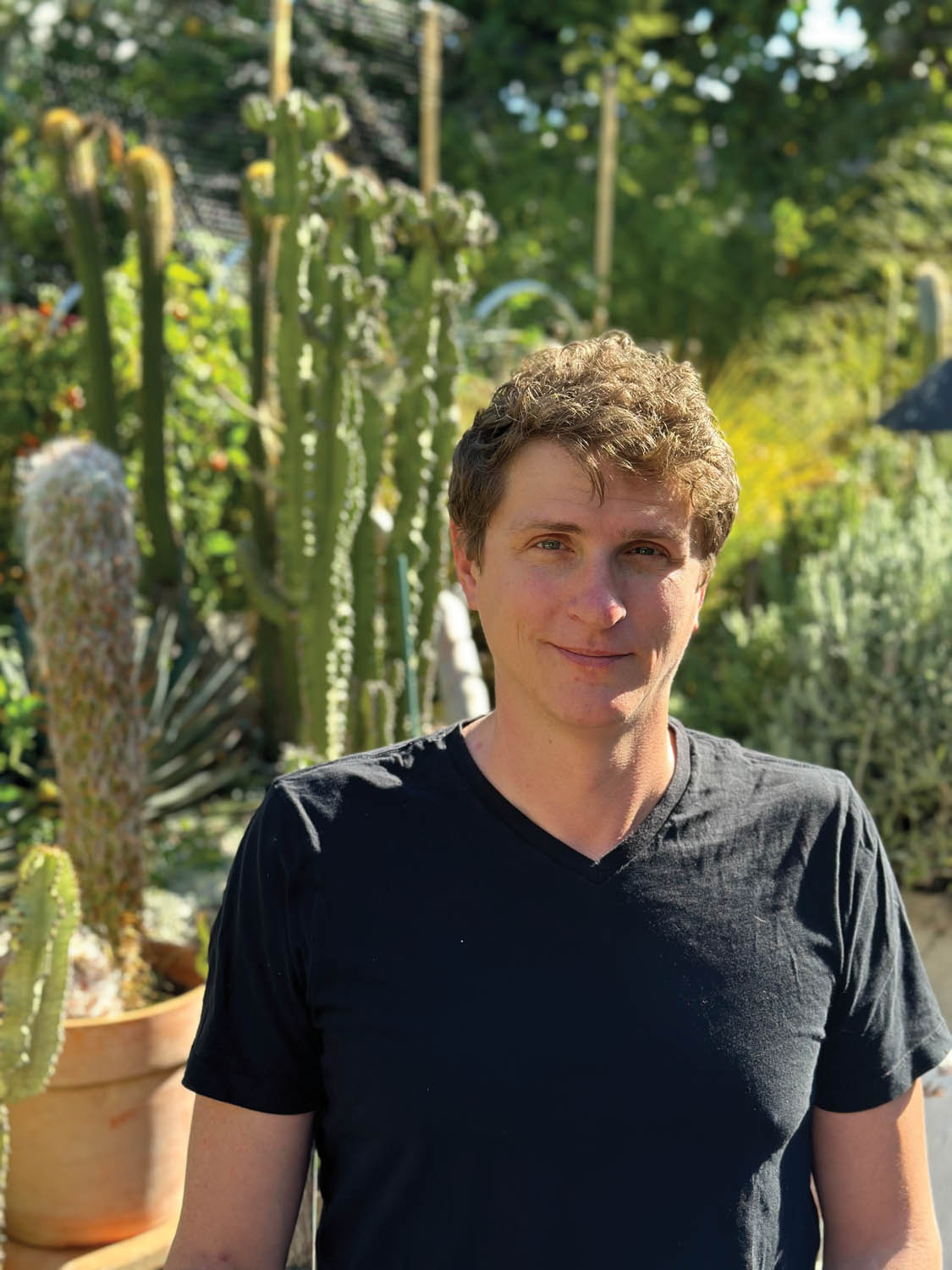
Portrait of Roby GangulyIf you asked me about my Pomona origin story, I’d take you back to the day I received my acceptance letter from Dean Bruce Poch. At the end was a handwritten note detailing my application and experience. No other admission letter had a personal touch. Pomona, a place I couldn’t even afford to visit, showed what it meant to be a small liberal arts college.

That’s one reason the theme of Originals resonates deeply with me. It celebrates what makes Pomona special: creating a place where you’re recognized for who you are and who you are becoming. This is a difficult task, and Pomona delivers.

Like all Sagehens, that was made possible by alumni and donors whose generosity helped me say “Yes!” to Pomona after the College said yes to me. My family couldn’t fully pay for Pomona. I took out loans, earned scholarships and, most important, received generous financial aid, thanks to those who came before me.

Now, I give for those whose origin stories are just being written. Today’s students are tomorrow’s entrepreneurs, doctors, teachers and leaders, and each of us has a role in ensuring these Originals can say “yes,” too. I hope you’ll join me in supporting them.

Chirp!

Robi Ganguly ’00
President,
Pomona College Alumni Association Board
alumni.board.president@pomona.edu

Career Corner: Data Driven

Ali Bennett ’27

Hometown: San Francisco
Major: Mathematics
Pomona sport: Women’s Basketball

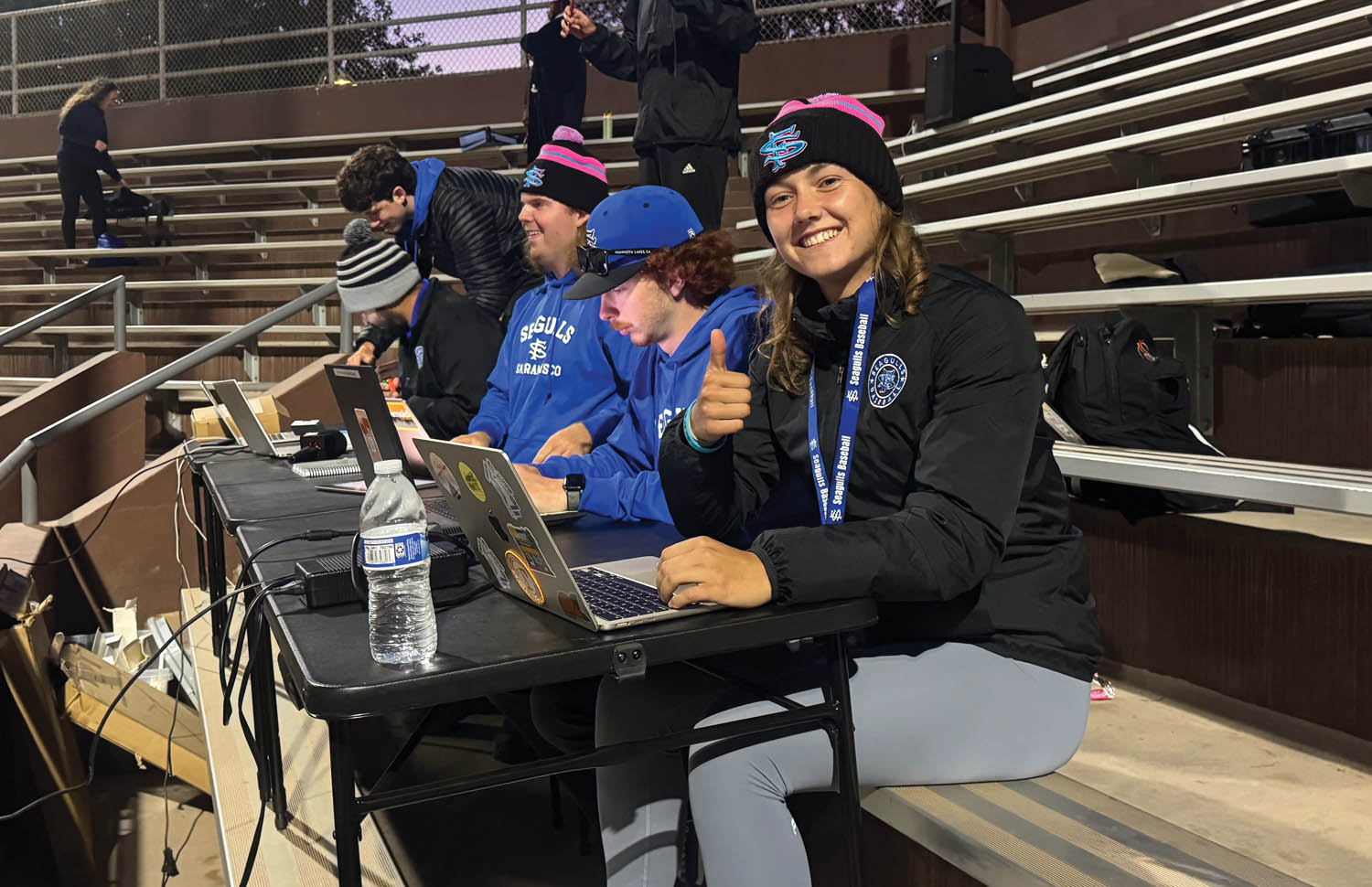
Pomona alum Ali Bennett in the standsAli Bennett ’27 has been fascinated by sports analytics since she read Michael Lewis’ renowned 2003 book Moneyball: The Art of Winning an Unfair Game her first year at Pomona College.

This summer, she used the Pomona College Internship Program (PCIP) to learn what would be required of her should she pursue a career in such a data-driven field.

Bennett interned with the San Francisco Seagulls Baseball Academy, which offers all-season developmental teams for youth, high school and collegiate ballplayers.

As a data and analytics intern, Bennett worked with game-day technologies that track player movement, keep live score and record gameplay from different angles on the field.

Between first pitches, she drew up scouting reports, cut video upon request and crafted a dashboard for players to see their statistics. She was also expected to be on top of communication and respectful of others’ time—the same habits that help her basketball team function.

“Quick and reliable communication helps build trust and makes everything run smoothly,” she says.

The six-week apprenticeship has convinced Bennett to pursue a career in sports analytics—a path several Pomona alumni have followed in recent years to great success.

She intends to use her experience in San Francisco to guide her senior thesis, and after she concludes her playing career at Pomona this winter, she plans to look for analytics work in basketball, her true love.

“I’m looking forward to coming up with useful connections between the sport and the numbers,” she says. “It’s super cool to now know I can use numbers to make a big impact on the game.”

A Bridge to the World

A student trip to China leaves a lasting legacy. 

A Chinese woman on a busy street

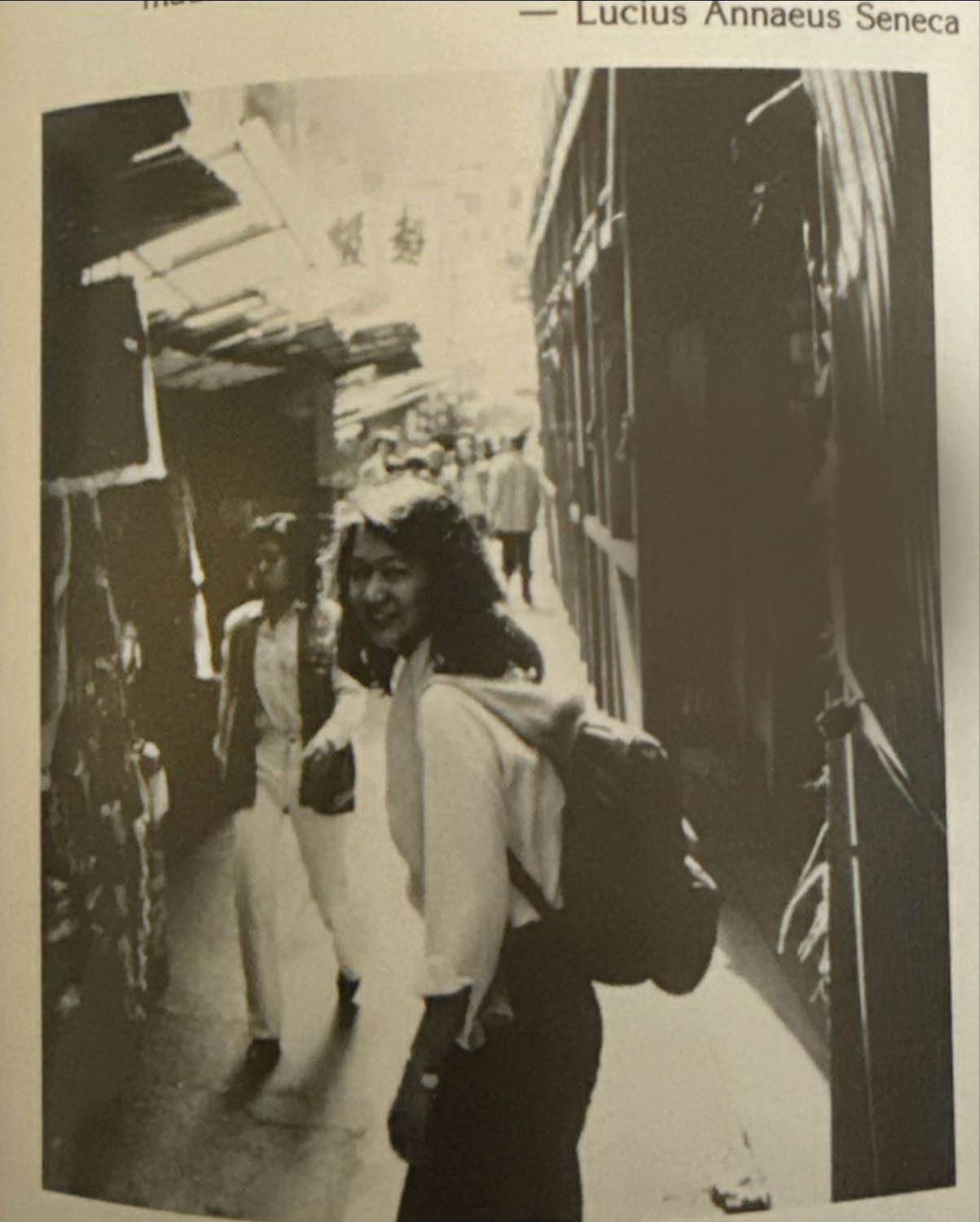
Chiu-Mi Lai ’83, pictured here on her 1981 journey to China (Metate, 1983).

When Chiu-Mi Lai ’83 boarded a train in Hong Kong bound for mainland China in 1981, she carried more books than luggage. She also carried a rare opportunity to see a country that had only recently reopened to the world.

More than four decades later, that journey has come full circle in the form of a new gift to Pomona College.

Lai and her husband, David Mohrig ’83, established an endowed fund honoring Emeritus Professor of Politics David Elliott and his wife, Mai Elliott, whose mentorship left a lasting mark on her life.

“This gift is an acknowledgment of the impact a professor can have on students, which is the greatest reward for a teacher,” David Elliott says.

The fund will support Pomona students pursuing experiential learning opportunities in Asia, covering costs including travel, research and service projects.

“About half of Pomona students study away, and we are committed to expanding those opportunities so more students can engage in the transformative learning that has long defined the College,” says Kara Godwin, assistant vice president and chief global officer.

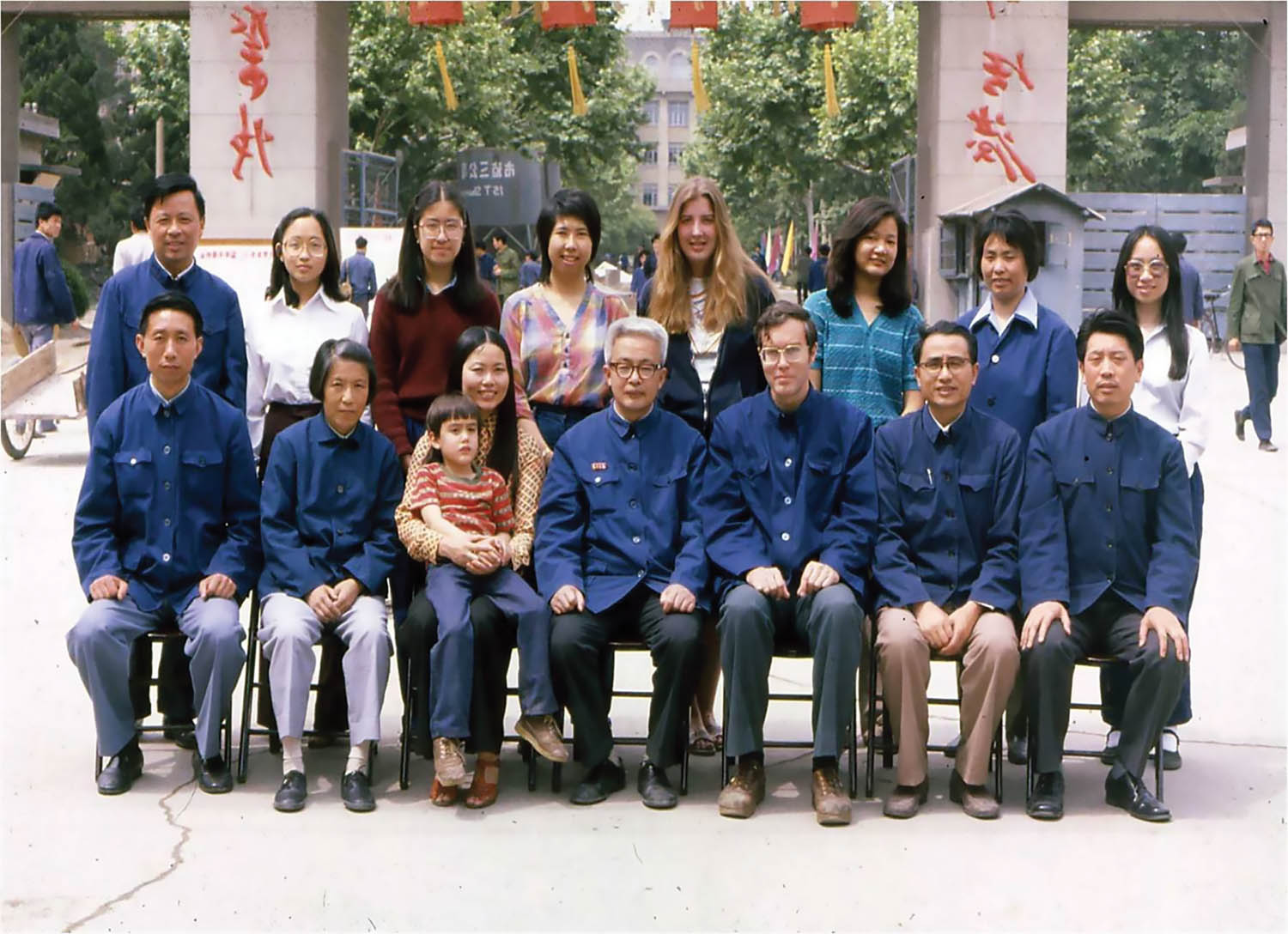
The 1981 trip took place as China was slowly emerging from the devastation of its cultural revolution and was tentatively opening to the outside world. This allowed Nanjing University to accept a group of students from the College as part of an exchange, making Pomona students, as David Elliott says, “pioneers”—part of an unofficial diplomatic opening between the U.S. and China.

Lai recalls lectures unfolding on trains, stacks of books hauled overseas and the close-knit group navigating an unfamiliar world together.

Group photo of Chinese and American students and professors

Group photo taken at the gate of Nanjing University. Left to right: front row, third from left, Mai Elliott holding Bryan Elliott; fifth from left Profesor David Elliott. Back row: second from let and continuing, Jeanne Wong, Rudi Jeung, Tillie Fong, Janie Stoddard, Chiu-mi Lai, Teacher Zhang, and Jeannie Lee

“David and Mai had to manage everything—courses, travel, bureaucracy—all with their 5-year-old son in tow,” Lai says. “Looking back, I appreciate even more the sacrifice they made in taking us there.”

For David Elliott, the experience was just as formative.

“Whenever Mai and I reminisce about that trip, we remember the students’ curiosity about a country they had known only through classes,” he says, “and the unfailing warmth and generosity of the Chinese people, who had so little at the time, yet showed such resiliency and hope for the future.”

Lai, who along with Mohrig taught at the University of Texas at Austin before retiring in spring 2026, says she and her husband shared the lessons from their Pomona experience with their students, as well.

“Learning happens in the classroom, but so much of what stays with you for the rest of your life happens outside of it,” she says.

To learn more about supporting study away opportunities for Pomona students, contact Kyle Davis, senior director of development at Kyle.Davis@pomona.edu.

Khalab Blagburn ’27 Named a Beinecke Scholar

Portrait of Khalab Blagburn outdoorsWhen Khalab Blagburn ’27 won a $35,000 Beinecke Scholarship this spring to support his graduate education, the cognitive science and mathematics double major became the first Pomona student since 2013 to receive the prize, which is awarded annually to outstanding juniors throughout the country in the social sciences, arts and humanities.

“I’m thankful and the recognition is great,” Blagburn says, “but the financial support is amazing and a testament to the people around me, the opportunities I’ve pursued and the work I’ve put in.”

At Pomona, Blagburn began working in the lab of Eric Hurley, professor of psychological science and Africana studies, as a sophomore, and was soon running point on a project about verve—the level, intensity and variability of immediate and environmental sensate simulation a person prefers and in which they are able to function optimally—in African American culture.

Blagburn says he has used a childhood fascination with optical illusions and magic to “pivot toward education, examining how students’ perceived social conditions shape psychological constructs like achievement motivation and sense of belonging, which, in turn, influence academic outcomes.”

A right back on the Sagehens men’s soccer team, Blagburn plans to earn a Ph.D. in education with a focus on educational psychology.

“I’m interested in conducting social psychological interventions to support underserved and minoritized students,” he says. “Then after my Ph.D., I’m eager to work within or with academic institutions to lead program development, curriculum development, and to make sure those students are being met where they need support.”

5 Questions for: Danielle Lynch

Pomona-Pitzer Director of Athletics and Chair of the Physical Education Department

Danielle Lynch Portrait

Danielle Lynch traces her competitive nature to childhood, when as a young fan of Olympic champion sprinter Florence Griffith Joyner, she raced friends down her northern New Jersey neighborhood streets barefoot.

She almost always won.

“That’s when I learned I don’t need anything but who I am to be successful,” she says.

Lynch used that outlook to become a first-generation student-athlete at Rutgers University, and it’s the same perspective she’s brought to Pomona-Pitzer as director of athletics and chair of the Physical Education Department, a role she began in April.

“I felt the love immediately,” she says. “I felt supported. People are asking the right questions and then truly listening for the answers to the solutions they’re seeking. People are truly wanting to engage in meaningful ways to learn about my experiences and how I’m going to work with our students.”

Lynch recently answered questions about the Sagehen community, philanthropy, holistic development and wellness, and the hallmarks
of great athletic departments.

What traits do great athletic departments have in common?

Great athletic departments have core values that are strong. They’re student centered. They have coaches that are teaching and building culture. Winning helps people feel good, but great athletic departments have a healthy, successful culture that develops young people holistically. A byproduct of that, oftentimes, is winning, and not only winning in the sport, but also winning in life. I’ve been at a lot of places that do things really, really well, and I’ve gained different tidbits of excellence from those spaces to work into my own ethos and core values on how I’d like my department to be run.

How do you hope to strengthen connections between student- athletes, alumni and the broader Pomona community?

College is full of incredible opportunities, but it’s also a time when students face real challenges—academically, socially and personally.
A woman and two men in a swimming pool

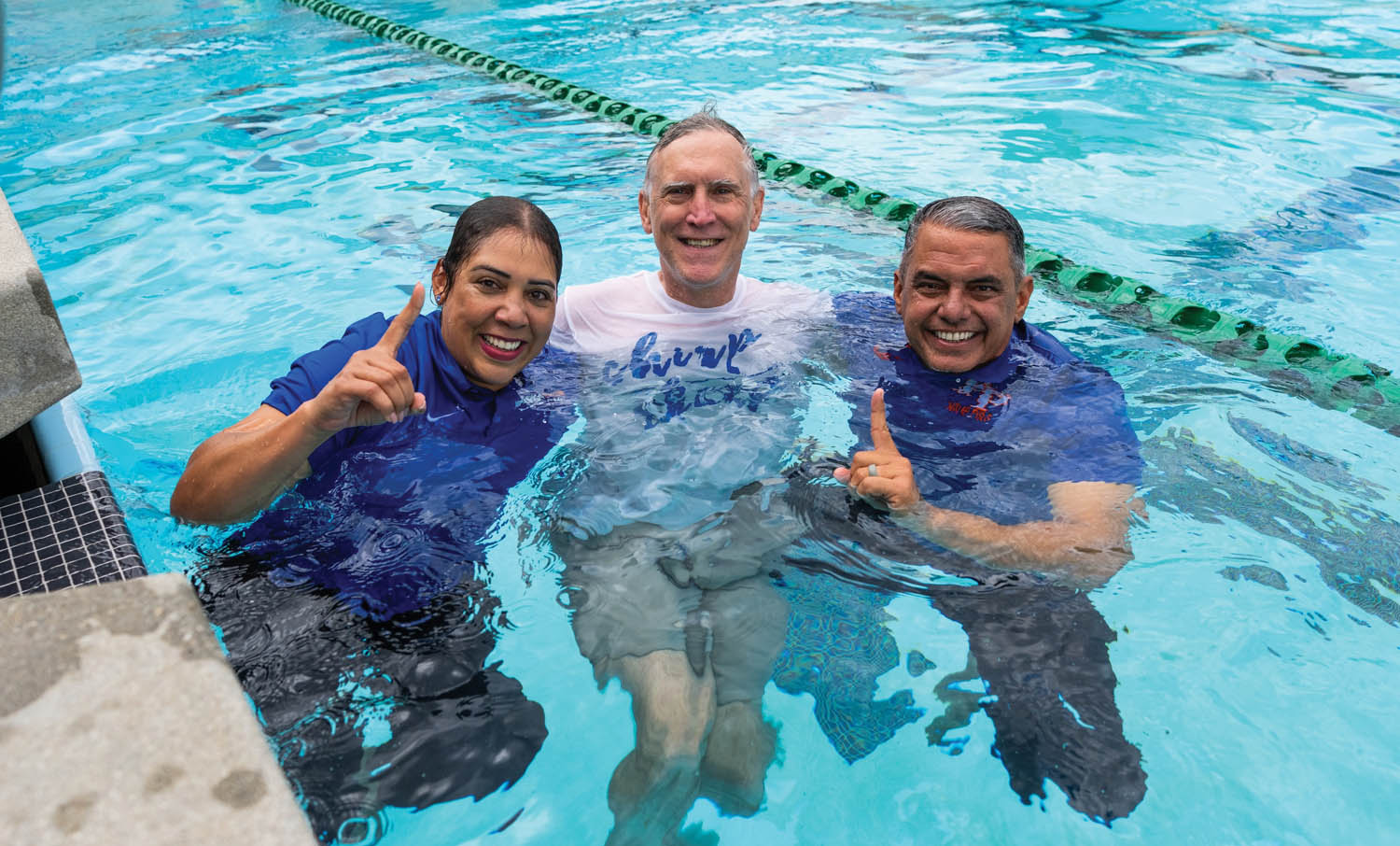
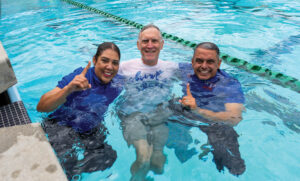
Danielle Lynch with Pitzer President Strom C. Thacker (middle) and Sagehens Coach Alex Rodriguez after the women’s water polo team captured a fifth straight national title in May.

When alumni and families stay engaged, they help create a network of people who care deeply about student success and well-being. I think one of the most powerful things we can do is create opportunities for just that by bringing people together around the things that matter most—supporting student wellness, celebrating their achievements on and off the field and ensuring they have what they need to thrive.

Alumni and families can play such a meaningful role in both celebrating those successes, while also helping address the obstacles students face along the way.

What role do alumni and families play in the success of an athletics program?

Alumni show our current student-athletes what a Sagehen life looks like after they’ve left the bubble of collegiate athletics with an excellent liberal arts education. They help us with mentorship as well as career networks, and they model what our current student-athletes and students in general hope to become. Families are partners in the developmental mission. We recruit families, not just athletes.

We are also incredibly grateful for the many alumni and families whose generosity strengthen Sagehen Athletics. Their support helps create opportunities for student-athletes to pursue excellence while benefiting from the full Pomona experience—from competitive athletics and leadership development to academic achievement and personal growth.

That spirit of support is reflected in Sagehen Athletics Giving Day, where alumni and families have consistently rallied behind our athletes, supporting everything from team travel to facility upgrades. Their generosity is a powerful expression of the lifelong connection so many have to Pomona and its athletic community.

Where can community support make an immediate impact?

Sagehen Athletics creates a powerful entry point for Pomona alumni, families and friends to invest in student success. Their involvement—whether through mentorship, volunteerism or cheering in the stands—supports an experience that helps our Pomona-Pitzer student-athletes develop as leaders and scholars. Donor support in particular strengthens wellness, expands career development opportunities and helps ensure that every student has the resources needed to learn, grow and thrive.

I also encourage Sagehens to reach out to me directly so I can hear what is needed, and what concerns and questions we all have. We need to have honest and open conversations about opportunities to create community, excellence and holistic development.

What responsibility do athletic departments have in shaping good citizens and leaders?

Some of my doctoral research looked at social justice and leadership. Student-athletes have social capital, especially on liberal arts campuses that lack fraternity and sorority life. We want to help develop our student-athletes to become conscientious leaders who are bringing solutions to some of the larger issues we’re facing—not only as a country but worldwide.

Student-athletes have the power to shift culture and to make change on a large scale, so it’s our responsibility to help them understand the power they hold and activate it for good.
 

Breaking the Code

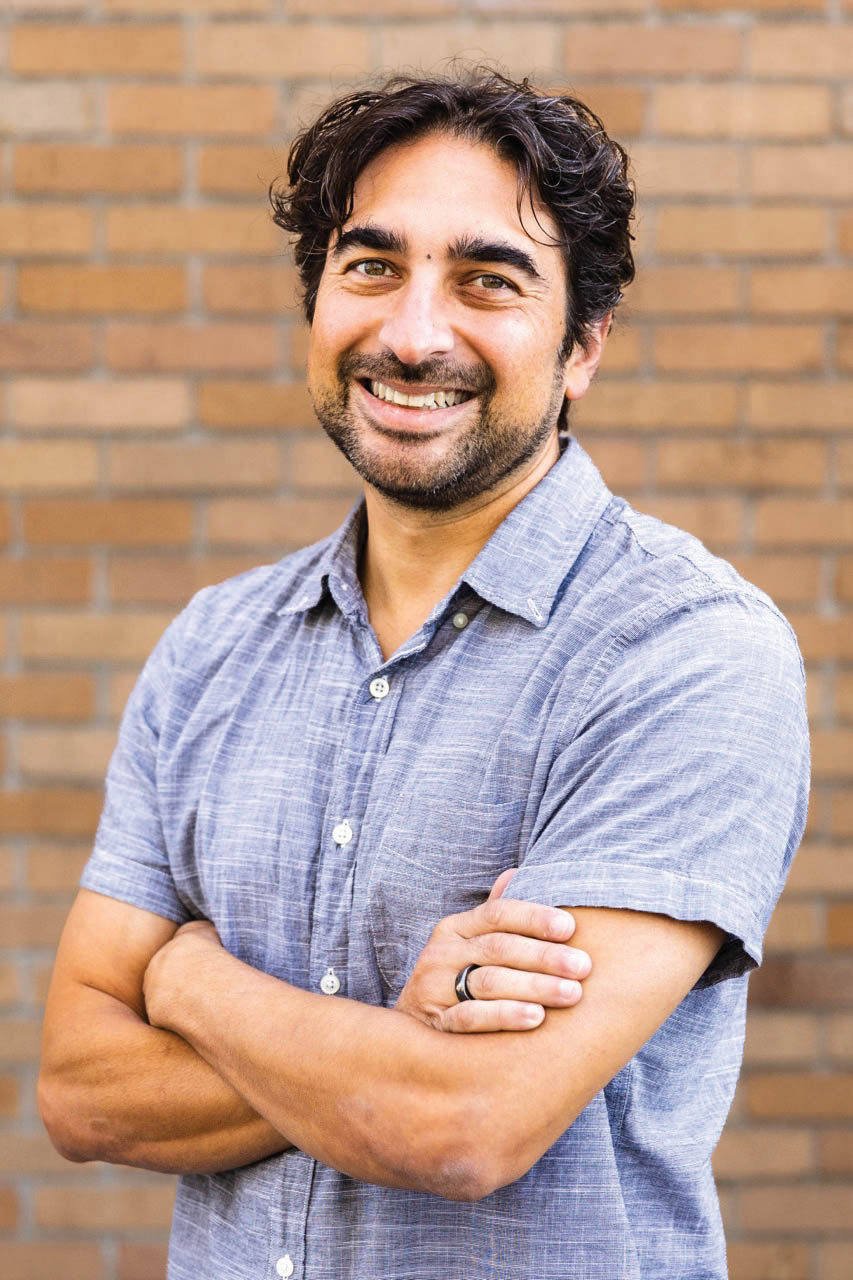
Portrait of journalist Jeff HorwitzThis has been an eventful year for journalist and author Jeff Horwitz ’03.

In May, along with fellow Reuters reporter Engen Tham, he won the 2026 Pulitzer Prize in the Beat Reporting category for his “inventive and revelatory reporting on Meta,” which detailed the social media company’s willingness to expose users, including children, to scams and AI manipulation.

Horwitz, who lives in the Bay Area, says he “never expected to be in contention” for the prize and was “gratified and delighted.” He also admits that winning the award is “a pretty strong recipe for some incoming imposter syndrome” as he contemplates where to focus his reporting gaze next.

This fall, his 2023 book Broken Code: Inside Facebook and the Fight to Expose Its Toxic Secrets, which also focuses on how Meta placed profits above civic conscience, hits movie screens as the basis for The Social Reckoning, a follow-up to Aaron Sorkin’s Social Network. The new movie, released on October 9, dramatizes the 2021 Facebook leak by whistleblower Frances Haugen as reported by Horwitz in “The Facebook Files” for The Wall Street Journal.

As Horwitz recounts, he was first approached by Sony before the book was even published. “These things are wildly speculative,” he says, and it was only last year that it started seeming like it might happen. Conversations with Sorkin ensued, though Horwitz is quick to point out that while the movie is inspired by his book, Sorkin “worked with the story as he wanted to tell it, and that is just fine by me.”

Jeremy Allen White, known to many as Chef Carmy in the popular comedy-drama The Bear, plays Horwitz, with Mikey Madison (Anora) in the role of Frances Haugen and Jeremy Strong (Succession) as Mark Zuckerberg.

The experience of being played by a Hollywood actor, Horwitz says, has been “bizarre” and he finds it “deeply amusing to be played by an extremely sexy man.”

“The Hollywood stuff as a whole has been interesting and fun to see,” he says, but he has tried to keep “a moderate distance.” Meanwhile, new topics—some related to climate change, some around AI—vie for his journalistic attention.

In the Groove

Portrait of We Are Scientists rock musicians against a pink wall

By the time you read this, Keith Murray ’99 and Chris Cain ’99, aka the indie rock band We Are Scientists, will be deep into a North American tour that has them criss-crossing the nation (and Canada) from Chicago to Seattle to San Antonio to Vancouver, and many parts in between, before winding up in Toronto on December 5. This musical whirlwind comes on the heels of a festival tour in the U.K. and Spain that took up much of their summer.

Twenty years on from their breakout 2005 album With Love and Squalor, and with nine studio albums under their belts (including last year’s Qualifying Miles), the New York City-based band—known for frenetic rhythms, punchy hooks and witty phrasing—shows no signs of slowing down. Being on the road, they say, is as much fun as ever.

“I think the good elements of being on tour are amplified in our band,” says Murray, who met Cain when they were both undergraduates at Pomona, where they united over a love of comedy. “Most bands don’t really socialize with one another the way we do.”

When they’re back home, says Cain, “the thing that keeps the job fun is continuing to push ourselves as songwriters and recording artists.” Songwriting actually has become more enjoyable over the years, he notes. When they were first trying to break into the New York music scene, “writing a bad song felt like the end of the world.” Two decades later, more prolific and more adept, they can immerse themselves in the flow of creativity with less angst.

Though neither has become rich from their musical career, they both say they’re happy with how things turned out—partly due to the values and reverence for the arts they learned at Pomona.

“I certainly wouldn’t trade my lifestyle for one that involved more wealth and less personal interest and satisfaction inherently woven into what I do every day,” says Murray. “So, in some ways, maybe we’re the richest men of them all.”

Learn more.


Babylon, South Dakota

Babylon South Dakota book cover

Little, Brown and Company, 2026
By Tom Lin ’18

A saga about a Chinese couple trying to eke out a living on their Dakota farm, which takes a supernatural turn when the U.S. Army builds a nuclear missile silo on their land.


“Called to this distant land by the death of an unknown kinsman and the promise of a new life came Hsiu Keng and his wife, Lee Mei, thirty-seven and thirty-three, who owned together but one suitcase full of clothes and an old leather knapsack filled with treasures that had survived the furor of the revolution: untranslated documents attesting to their births and marriage, three and a half misshapen taels of gold, a jade pendant carved into the shape of a monkey, a red coral bracelet too small for either of their wrists, a little booklet of family photographs, a transistor radio, and a silk bag of chrysanthemum seeds. They took possession of one hundred and sixty acres of soil that sloped, south to north across folded ridges, down to an overgrown pasture.”

Community Through Compost

Lina McRoberts carrying crop

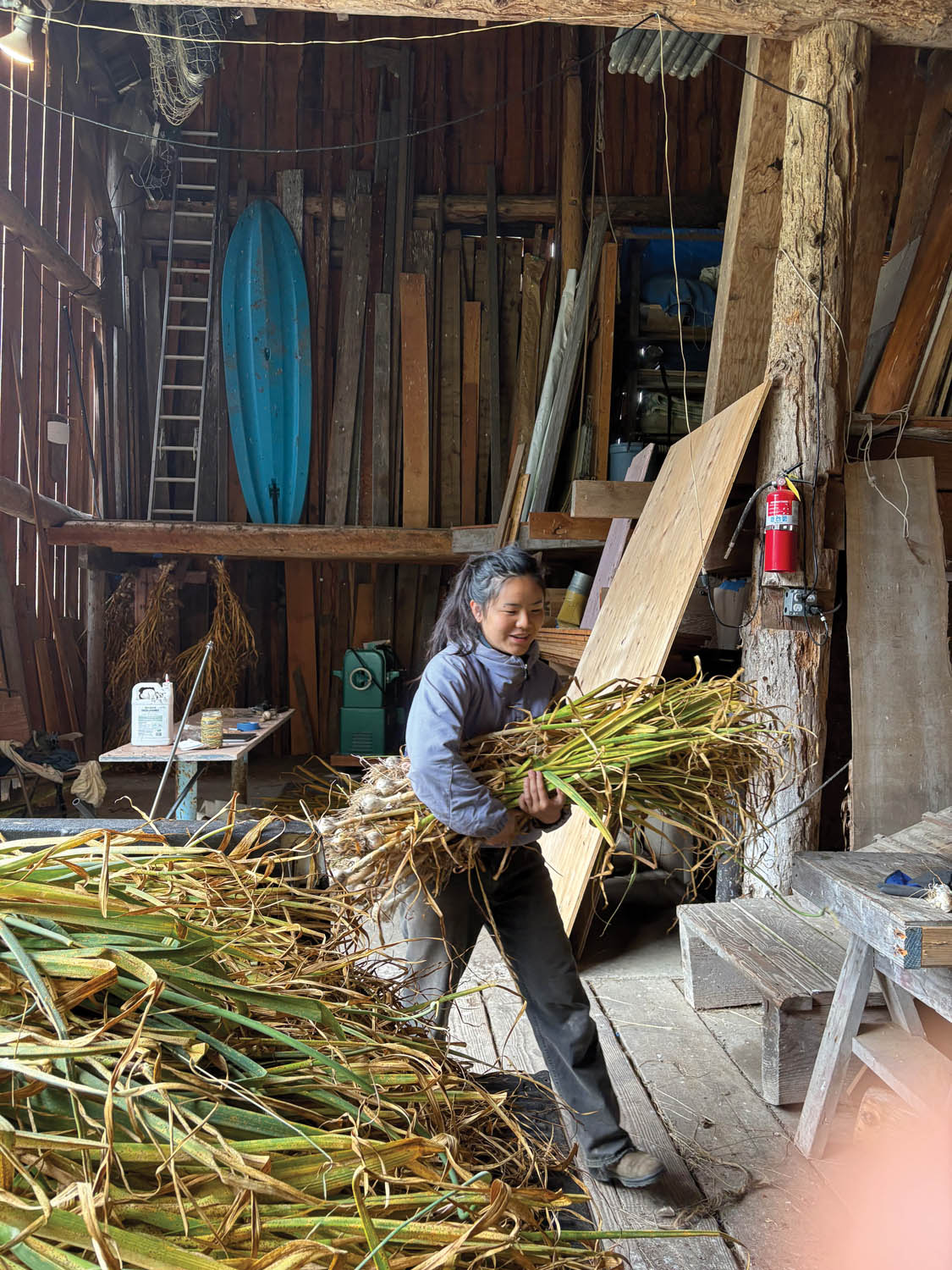
Woman carrying bales of wild garlicOn a typical afternoon this past July, a visitor to Midnight’s Farm on Lopez Island off the coast of Washington state might have spotted Lina McRoberts ’27 harvesting rhubarb, trellising Swiss chard or sticking a temperature probe into a steaming pile of compost.

A physics and gender and women’s studies double major, McRoberts spent 10 weeks living and working at the farm for her Summer Undergraduate Research Program (SURP) project, through an internship with the Lopez Community Land Trust. Alongside daily hands-on farmwork, McRoberts drew on her physics knowledge to understand and improve the farm’s community composting system.

Composting is fascinating, says McRoberts, because while it is a biological, chemical and physical process, it also is a stewardship practice that transforms waste—brought to the farm by Lopez Island residents—into a shared community resource that is sold back to local farms, restaurants, gardens and community members. “Nutrients circulate, quite literally, through the island,” she says.

On the technical side, McRoberts wanted to know how airflow, temperature, moisture and microbial activity interact within large compost piles. Because the microbial activity driving decomposition occurs largely out of sight within piles that can reach 8 feet in height, temperature serves as one of the most important indicators of what is happening inside.

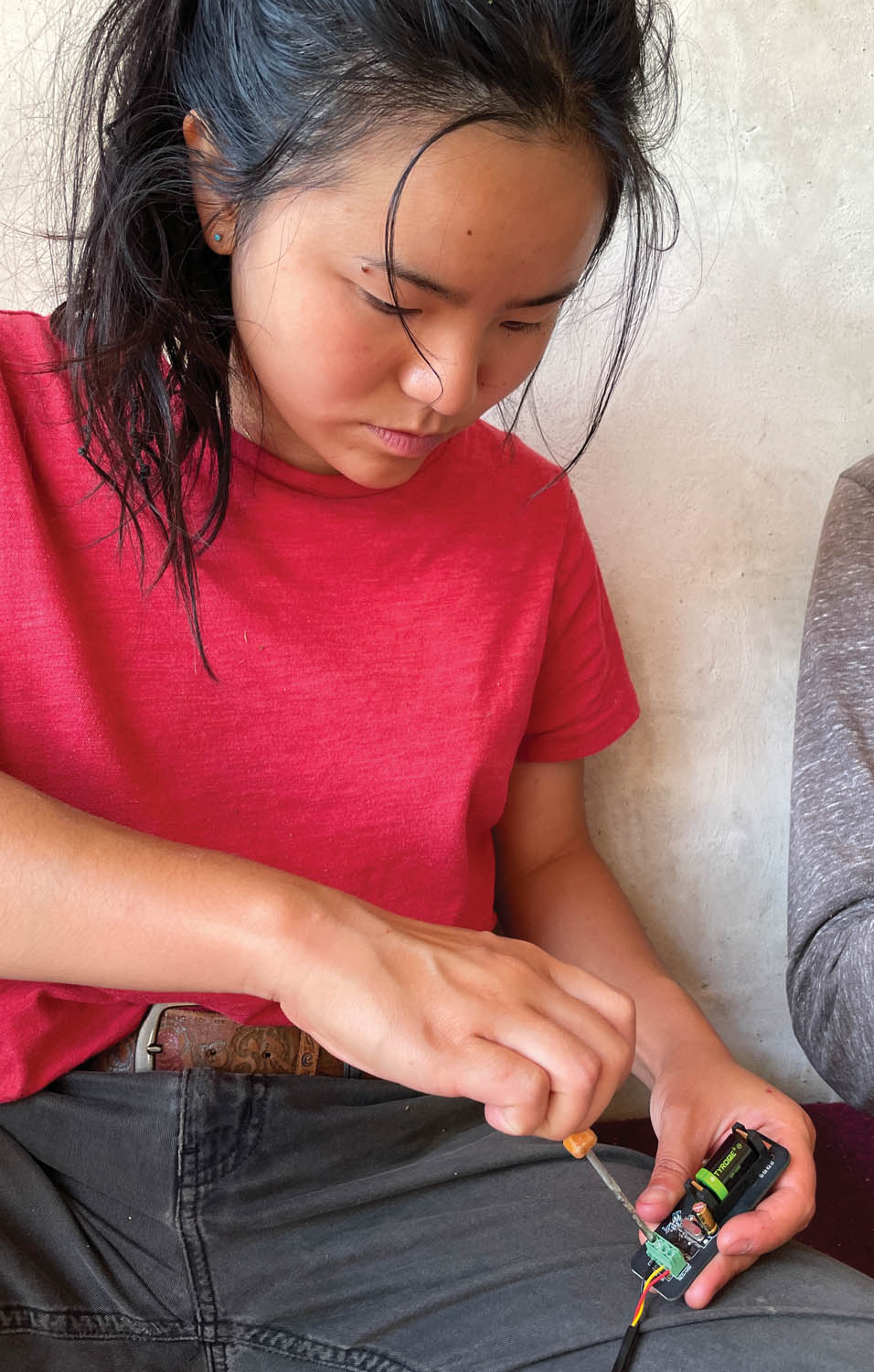
One of McRoberts’ first tasks was to re-establish Midnight’s Farm’s wireless temperature monitoring system (separate from the farm’s regular wired setup), which was used for past experiments and had been offline for six months. After identifying and testing damaged probes, troubleshooting communication failures and reconnecting hardware, McRoberts brought the system back online. This was essential for her own research, she says, because “without reliable temperature measurements, it would be nearly impossible to assess whether the compost is receiving adequate oxygen, how actively decomposition is occurring, or how different management strategies influence the composting process.”

Woman fixing a temperature probe

Lina McRoberts
fixing a compost
temperature probe.

The composting project has led McRoberts to think about the broader systems and people that make community-scale sustainability possible, especially on a small island like Lopez.

“Living on Lopez Island has given me a deeper appreciation for both the possibilities and the challenges of community life,” she says. “The island is extraordinarily beautiful, but it also faces many of the pressures affecting rural communities across the country—housing affordability, rising land values, an aging population and economic inequality.”

During her time at Pomona, McRoberts has been increasingly involved in political organizing. In her sophomore year, with her friend Claudio Castillo ’26, she co-founded Critical Mass, a student organization that encourages STEM students to consider who their work serves and what kind of world it is helping to create. They have explored such topics as surveillance technology, the political economy of scientific research and growing attacks on public education and intellectual life.

That social justice lens led her to seek out opportunities where she could use her scientific training in ways that felt directly connected to community needs. The Lopez Island composting project, she says, allowed her to apply physics in a context with tangible and immediate benefits.

“I am constantly reminded that technical knowledge is not neutral,” she says. “It matters deeply how we choose to use it, and I have found it remarkably rewarding to apply it in service of a community working to sustain itself.”

McRoberts found digging into manual farm labor equally satisfying. Biking to the grocery store on Lopez Island, she says, “I would see the mixed greens we harvested, washed, dried and bagged that very morning, or the raspberries that we woke up an hour and a half early to harvest so as to avoid the sun.”

There was a moment, she says, echoing German philosopher Karl Marx, where she caught a glimpse of herself in her work. “Meaningful labor,” she says, “allows us to encounter ourselves in the world we have and continue to make.”

Staff Spotlight: Jillian Gomez, Farm Manager

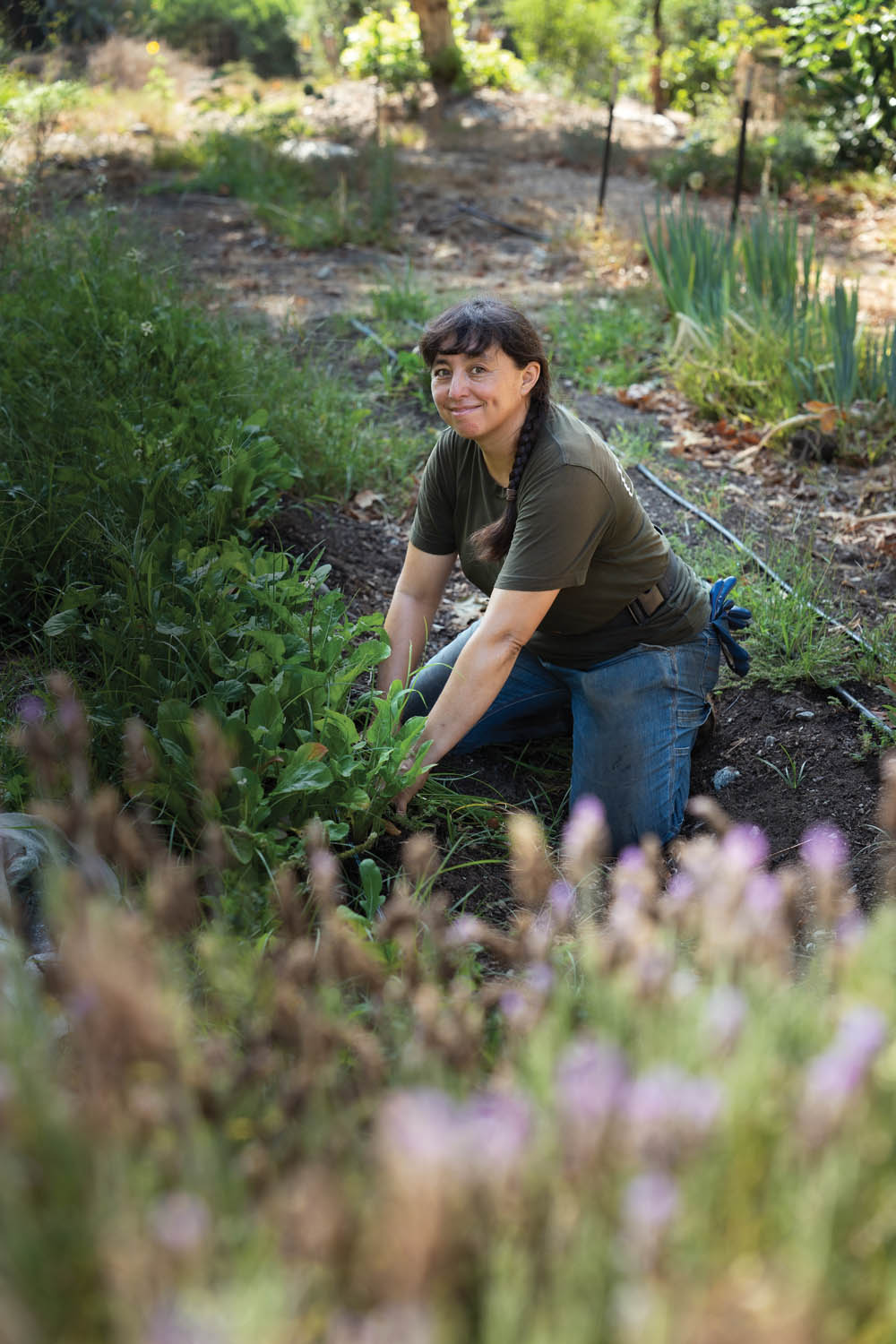
Jillian Gomez, Pomona College farm manager

Jillian Gomez gardening at Pomona's organic farmHidden away in the far southeast corner of campus, the Pomona College Organic Farm is home to a native plant garden, a composting system, lush fruit orchards and 50 beds of vegetable crops, as well as a small flock of friendly chickens. Jillian Gomez has overseen the farm since 2021.

Why should folks visit? It’s just a beautiful space and it’s good for people’s mental health to come out here and take a break. It’s also great for learning about nature and sustainable agriculture and land management. Beyond that, we want the broader community to be involved as much as possible—we recently had a soil fest here put on by a local organization. People are surprised this exists in the middle of Claremont.

How are students involved? We have a compost crew, which is usually about five students, and farm assistants—we had seven or so last semester. Students tend to come back each year. I think people who are drawn to work with the farm tend to stick around and get really committed.

A typical day? Every day is different. It always starts with going around checking on things. How is the compost doing? How are the bees doing? How is the pond doing? A student installed the pond as her senior project to create a habitat for native frogs. So, I’ll check on that. It’s part of my job to make room for students to have ideas and try stuff.

The fun parts? I love being outside. I learned early on that I wasn’t cut out for indoor office work. I love to be outdoors. I like problem solving and there are so many opportunities for little improvements and big improvements.

The biggest challenge? Number one is squirrels. They eat everything. The ground squirrels are a native species, so they’re supposed to be here, but their population is way out of control. It’s especially bad in the summer, when the juveniles are coming out of the burrows. The population triples or quadruples depending on how big the litters are.

What’s new? The compost program is always a big thing. In the past couple of years, we’ve been trying to expand the percentage of food waste we take from the dining halls. At the same time, we’re dealing with new and emerging pest issues. This summer I’ve been trying to figure out how can we secure the compost from the coyotes, who have suddenly shown an interest in getting into those food sources.