Articles Written By: jhhd2026@pomona.edu

Jake Bruml ’15 Is Scouting the Next Great Boston Red Sox

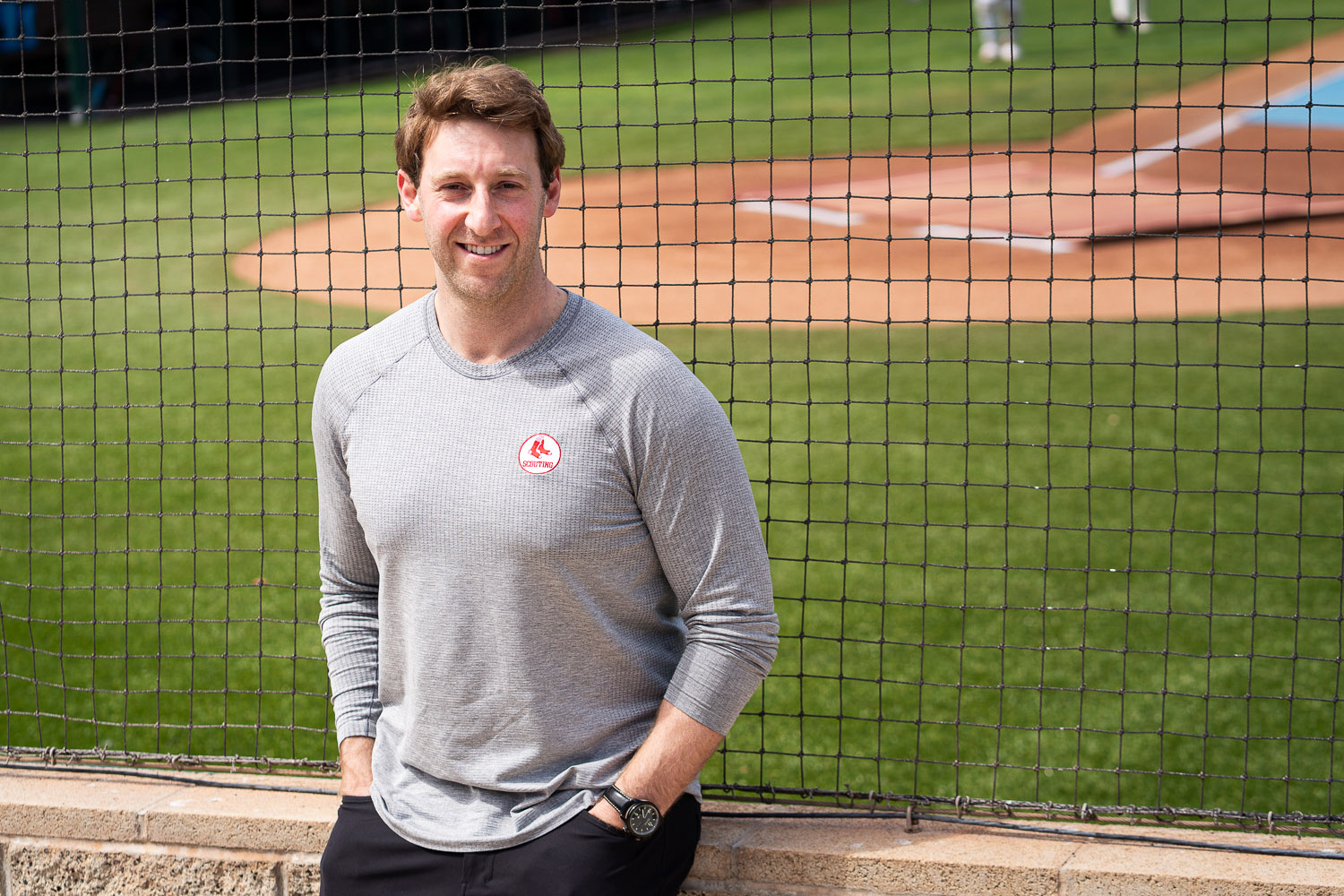
As director of amateur scouting for the Boston Red Sox, Jake Bruml ’15 is nomadic most of the year, his weekday afternoons an endless parade of baseball at different schools in different states.

It’s a gig that’s taken him to baseball hotbeds in California and Texas as often as it’s taken him to towns in Alabama and Oklahoma that have one stoplight and a can’t-miss prospect everyone there knows by name.

In April, Bruml, a San Mateo native, returned “home” to scout in Southern California, where he collected 203 hits and 23 pitching wins as a Sagehen.

“Pomona College is an incredible place,” he says. “I made connections that’ll last a lifetime.”

Since hiring the Pomona alumnus as a pro scouting intern ahead of the 2019 season, Red Sox officials have placed a premium on Bruml’s work ethic. As a result, one of Pomona’s own is a key decision-maker within a storied Major League Baseball franchise.

“Pomona challenged me in a way I’ve never been challenged before,” he says. “Between balancing the rigorous courseload and lab work that being a STEM major included, in addition to being an athlete, I really had to navigate things strategically.

“I didn’t know it at the time, but that set me up for future success in any role.”

At least three players from the Sagehens’ 2013 baseball team have held front office positions in Major League Baseball—Bruml (Red Sox), Guy Stevens ’13 (Kansas City Royals) and Simon Rosenbaum ’16 (Tampa Bay Rays).

Good work across the past six seasons has earned Bruml promotions to increasingly important positions, including his current role as director of amateur scouting.

As he applies his philosophy to a 126-year-old franchise with nine World Series titles, he’s using principles he picked up at Pomona to weigh million-dollar decisions.

As a chemistry major, Bruml followed procedures to create compounds or complete experiments. Depending on the results, he would determine how to improve either the procedure or the compound itself to generate a better outcome.

“I’ve been able to create a similar process that can be applied to evaluating players, where every player is held to the same evaluation process and scrutiny,” he says. “This allows me to home in on the questions that need answering when watching them play.”

Bruml’s holistic approach to scouting, shaped largely at Pomona, is what Red Sox fans hope will bring the next great homegrown star to Beantown.
Melissa Barlow ’87 Returns to Final Four

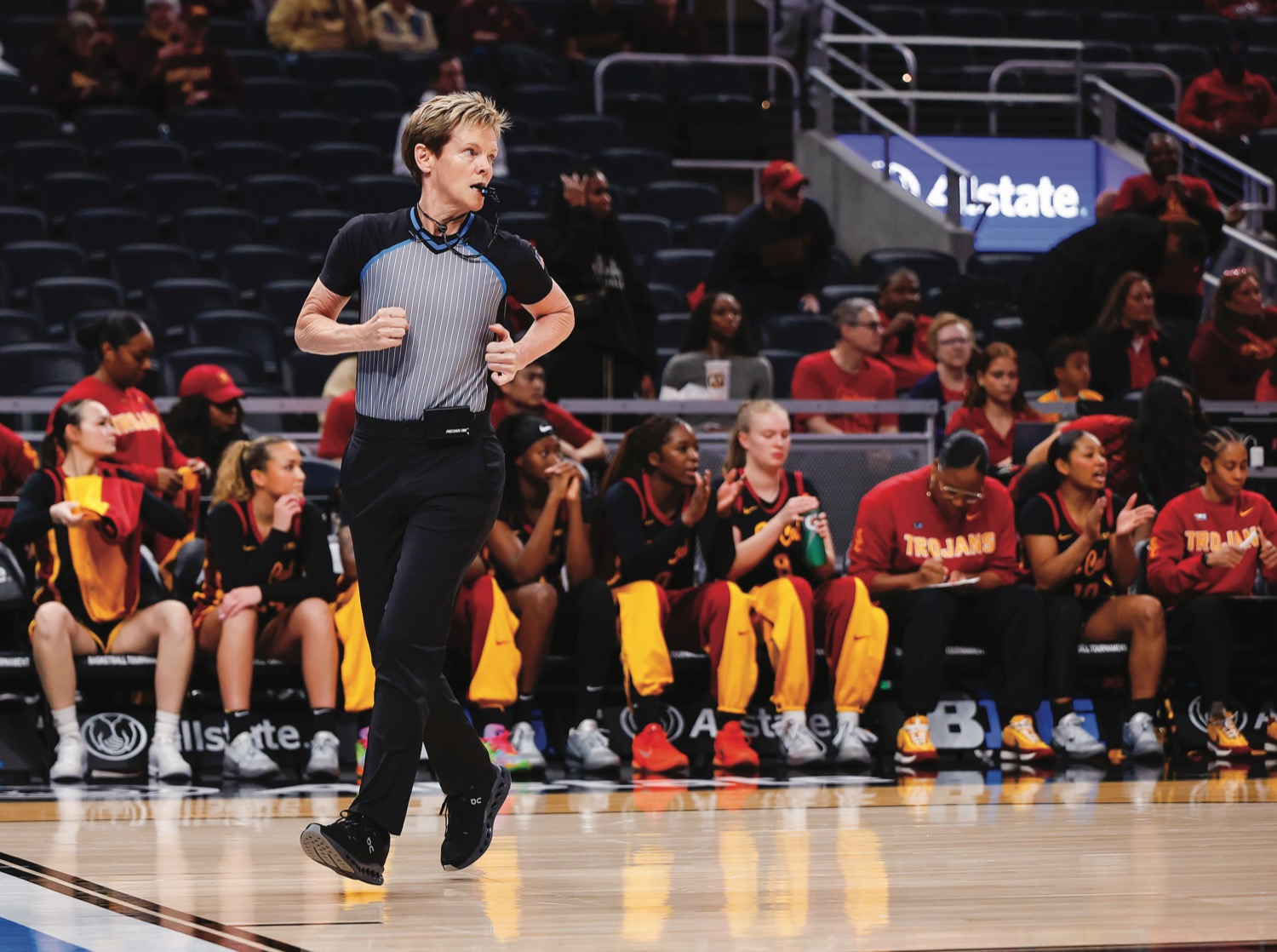
Referee Melissa Barlow officiating the Texas vs. UCLA semifinal game at the 2026 Women’s Final Four. Photo by Jeffrey Brown 

Referee Melissa Barlow officiating the Texas vs. UCLA semifinal game at the 2026 Women’s Final Four. Photo by Jeffrey Brown

Officiating the best NCAA women’s basketball teams on the sport’s grandest stage is no small task, but Melissa Barlow ’87 is no stranger to the spotlight.

In April, the Las Vegas resident officiated Texas-UCLA at the 2026 Women’s Final Four, the 13th time she was selected to work the tournament’s culminating rounds. (The Bruins won the national semifinal, then captured their first NCAA women’s basketball championship.)

“It’s special every time you get to go to the Final Four because you never know when it’s going to be your last,” Barlow says. “I was thrilled and humbled by the responsibility. You want the assignment, but it’s stressful because all eyes are on you. You want to do a really good job.”

Barlow, a former Sagehens point guard who still holds program records for career assists (411) and assists in a single season (199), hasn’t lost her love for officiating the sport’s biggest games.

Being selected to work the Final Four “is the goal every year,” she says, “but it’s not really something you can control. I’ve learned all you can control is the product you put out there on the floor. The expectation, the job, is to get plays right.”

Across her three-plus decades as an official, Barlow has shared the court with women’s basketball royalty—Lisa Leslie, Maya Moore, Penny Toler—and seen the game change tremendously.

College players today are stronger and faster than they were in the 1990s and 2000s, she says, and they play a more physical style of basketball. They’re taller, too, meaning Barlow’s had to train her gaze on the rim to make goaltending and basket interference calls.

Additionally, greater parity in the sport has made outcomes less of a certainty. “There’s so many more good games now compared to back in the day when the usual suspects won every time,” she says.

A healthy and sharp 60, Barlow has long passed the date she once expected to call it a career. “As long as I can still perform at the level I think the game deserves,” she says, “I’m going to keep doing it.”

Oldenborg Takes a Bow

For nearly six decades, the Oldenborg Center for Modern Languages and International Relations put Sagehens at the world’s doorstep. This spring, the Pomona community said goodbye to the well-loved building with a series of celebrations.

“Oldenborg’s impact lives on through the people who studied, taught, worked and built community there,” says Pierre Englebert, the H. Russell Smith Professor of International Relations and Professor of Politics and Oldenborg Faculty Fellow. “That’s why it was so important to share the place—one that has meant so much to generations of Sagehens and friends—through celebrations that honor those stories and the lasting mark Oldenborg has made.”

Dear Oldenborg, Let Me Tell You a Story

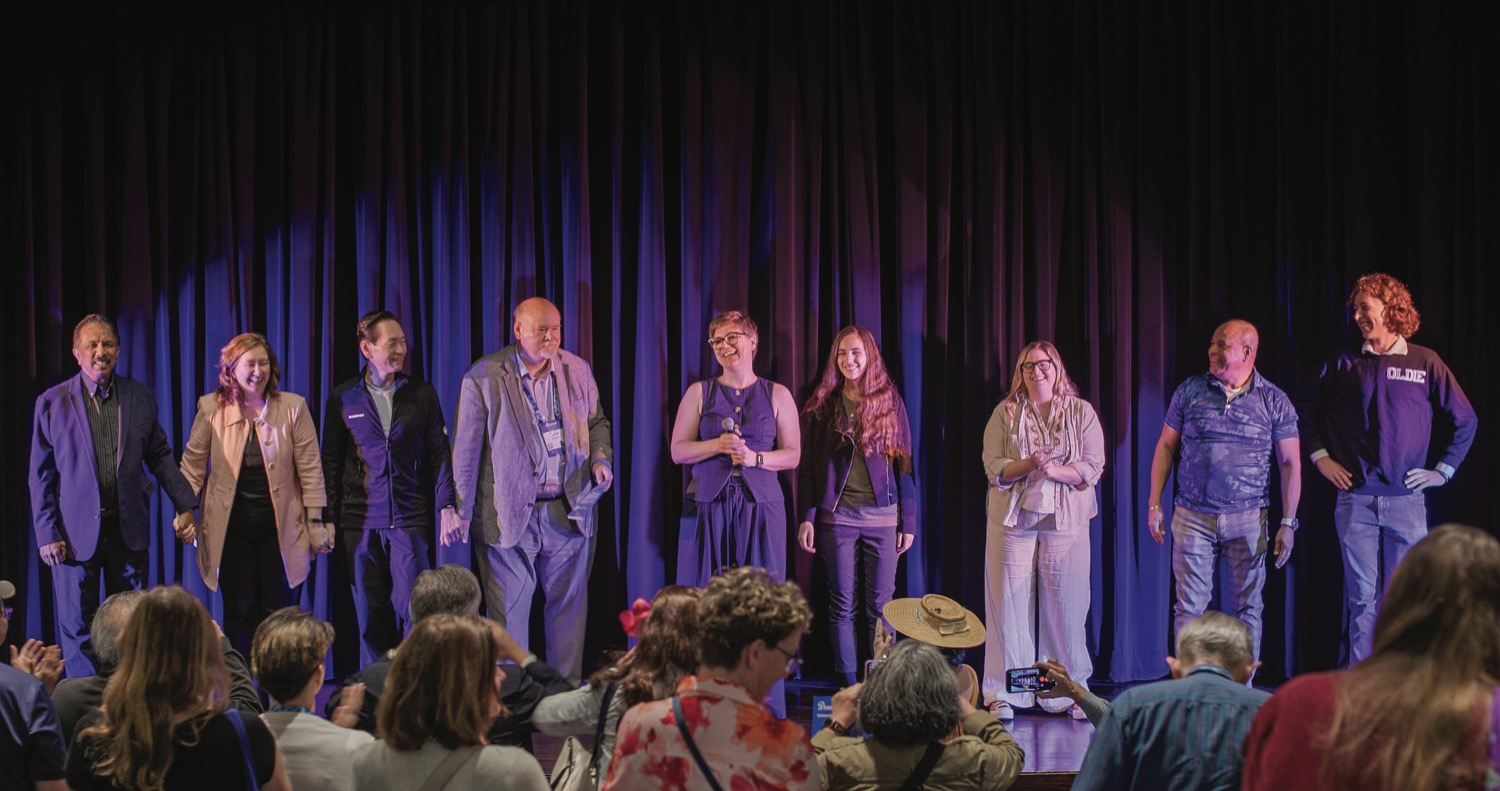
You don’t make it to 60 years without collecting a few great stories, and Oldenborg has plenty. During Alumni Weekend on May 1, the College hosted a storytelling celebration in Rose Hills Theatre where speakers revisited their favorite moments onstage.

Oldenborg storytelling celebration speakers: (from left) Nimal Perera, community friend; Karin Zaugg Black ’93; Trustee Emeritus Bernie Chan ’88; Terril Jones ’80; Anne Dwyer, emcee and chair of German and Russian and a former director of the Oldenborg Center; Jacqueline Cordes ’25; Spanish language resident Blanca Lopez Sagarra; Adan Amaya of Mail Services; Liam Bayer ’27.

Stories were shared by (from left) Nimal Perera, community friend; Karin Zaugg Black ’93; Trustee Emeritus Bernie Chan ’88; Terril Jones ’80; Anne Dwyer, emcee and chair of German and Russian and a former director of the Oldenborg Center; Jacqueline Cordes ’25; Spanish language resident Blanca Lopez Sagarra; Adan Amaya of Mail Services; Liam Bayer ’27.

One Last Time at the Tables

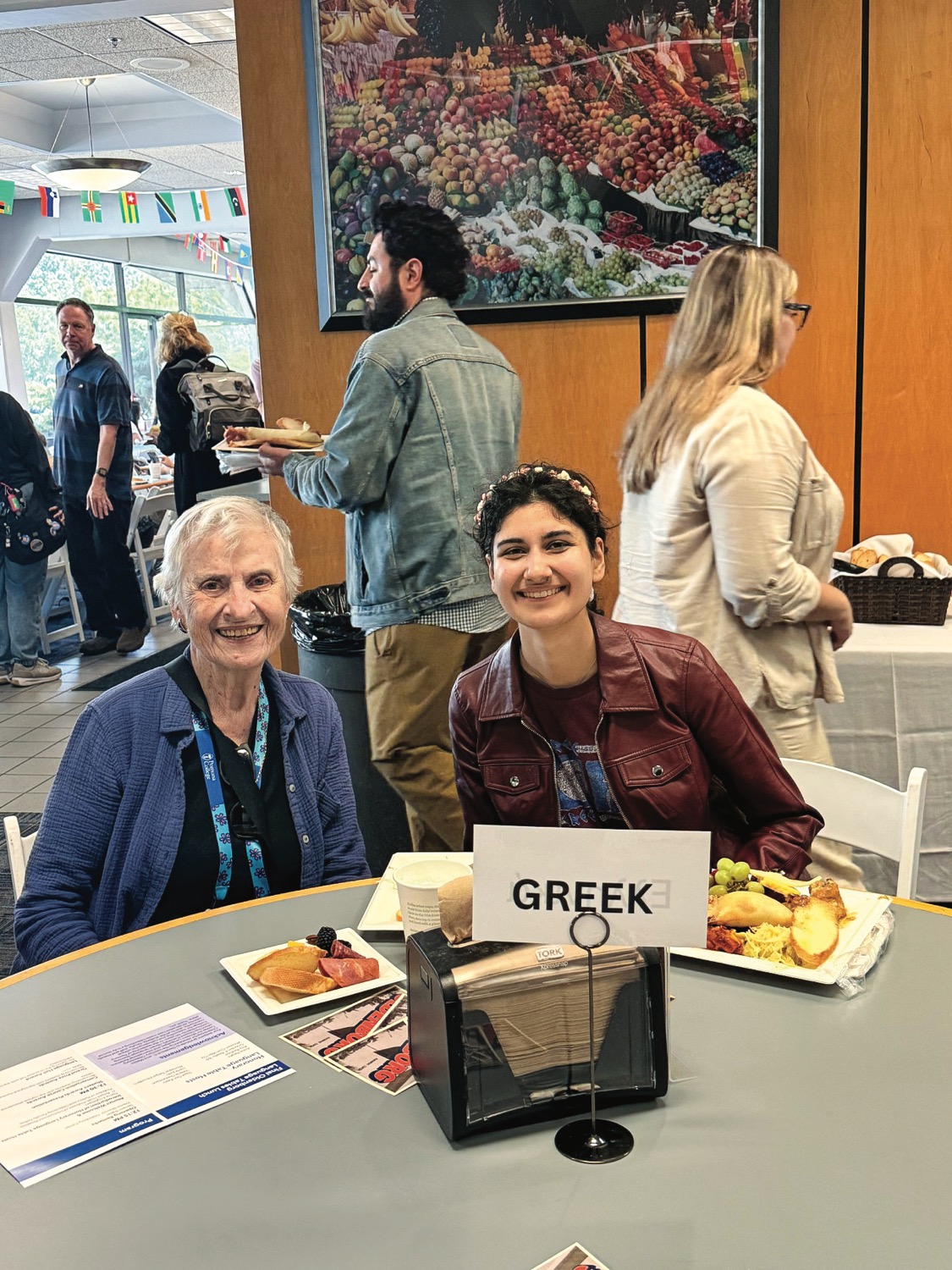
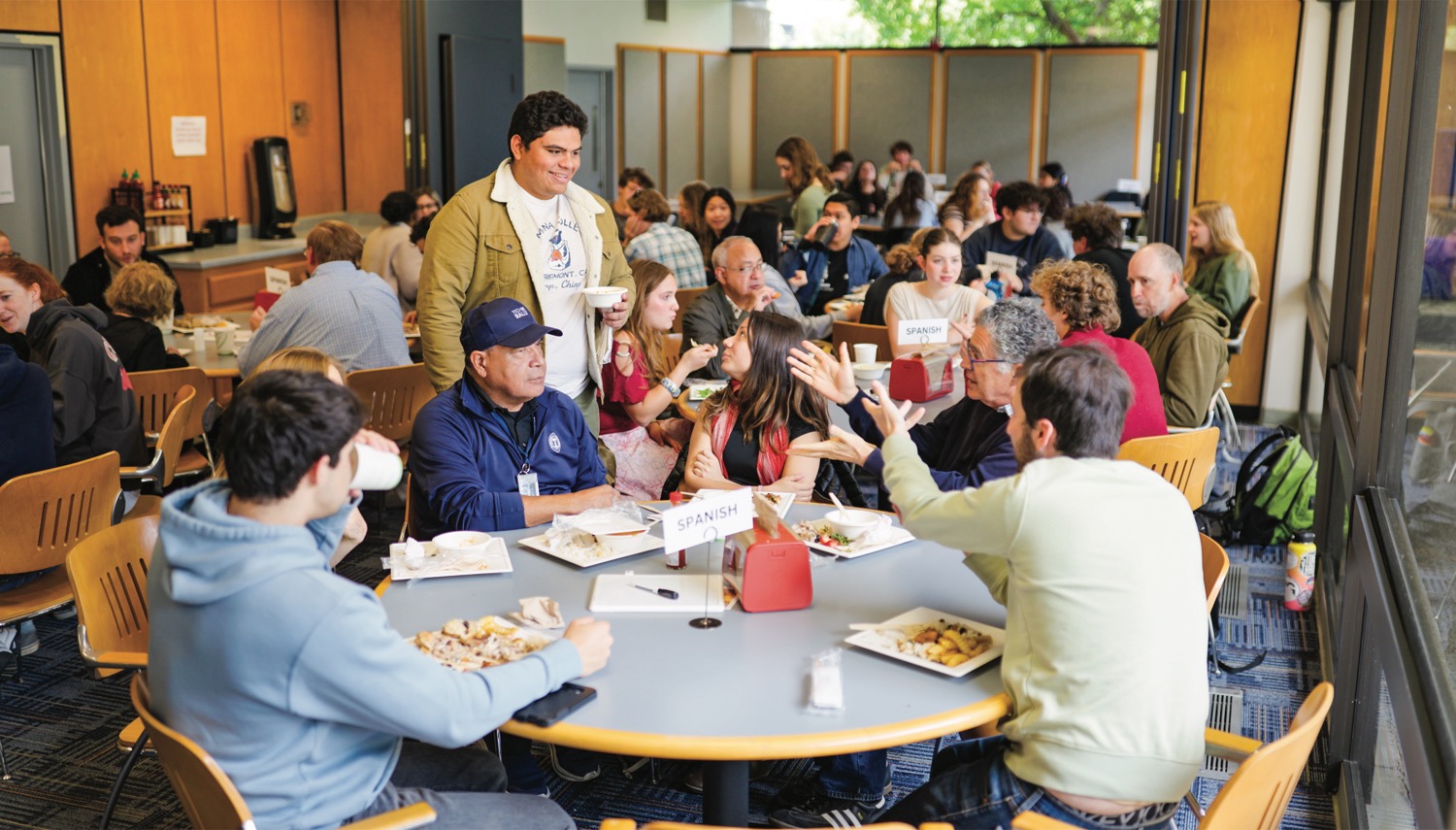
Oldenborg slipped back into its natural rhythm during the open house celebration as guests gathered for a final meal at the language tables. Live music echoed through the corridors while alumni, students and visitors conversed across languages, greeting friends both familiar and new. Adding special resonance to the event, honorary language table hosts—former directors, emeriti faculty and longtime conversation partners—returned to Oldenborg to share in the celebration and reconnect with the community.

“Arriving at Oldenborg, walking by the hallway photos, passing through those dining hall doors, being greeted by faces both familiar and new—it felt like coming home,” said Rita Bashaw, former Oldenborg director and German conversation partner.

Anne Bages returned to the Greek table where  she met Maria-Sophia Sotiropoulou ’28, who comes from the same Greek village as Bages’ family.

Oldenborg, Piece by Piece

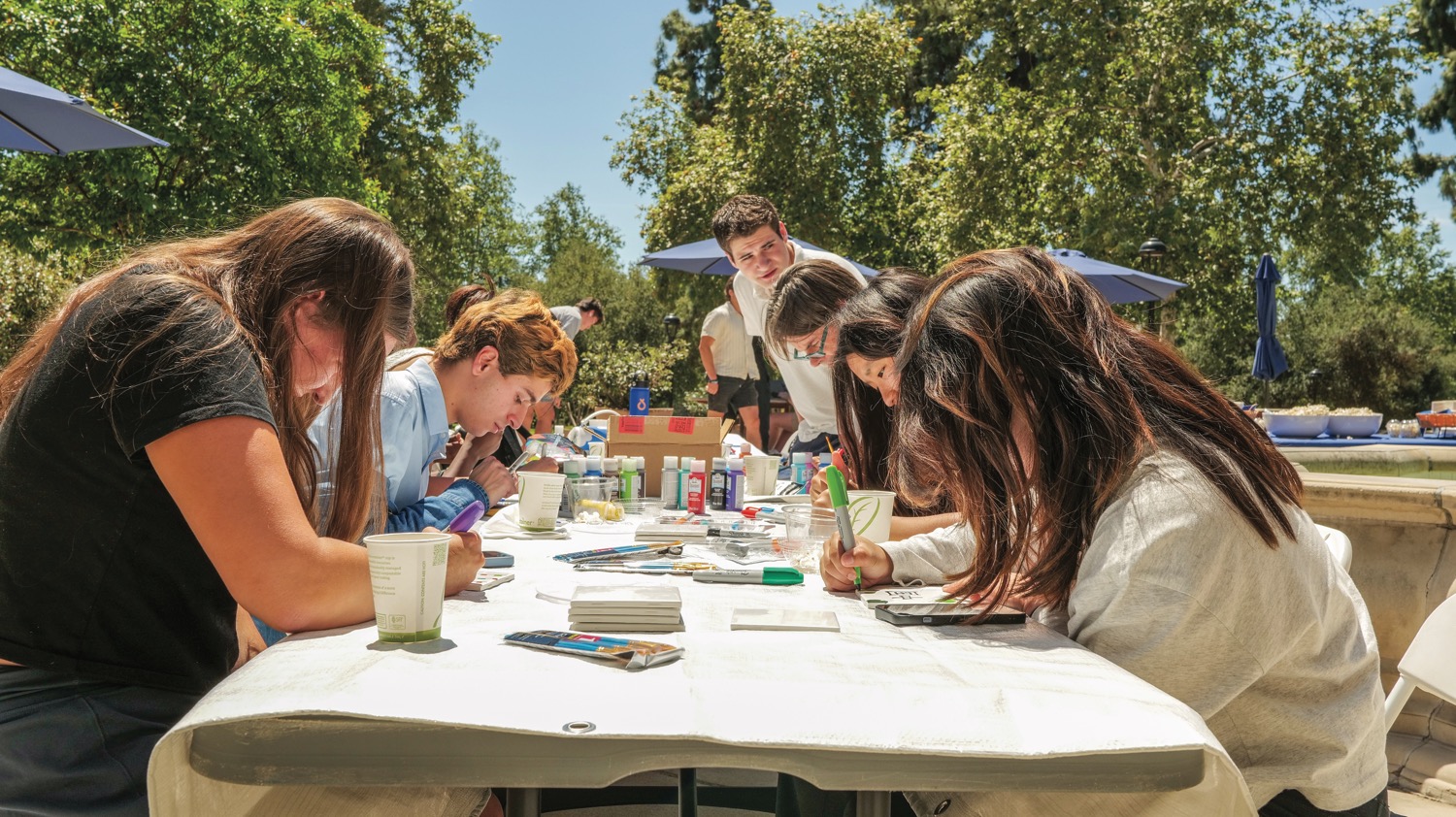
Students, faculty and staff worked on a memory tile projectOldenborg has always been a place where people leave with something—a new language, a new perspective, a new connection. This time, they left something behind as well. On April 15, students, faculty and staff gathered to begin a memory tile project, decorating tiles that captured what Oldenborg meant to them.

Over the course of three weeks, the collections grew as more members added their tiles, creating a shared mosaic that will carry Oldenborg’s legacy forward. The project culminated during Alumni Weekend.

With Love, the Friends of Oldenborg

Led by Trustee Emeritus Bernie Chan ’88, alumni and friends are supporting a campaign to name a space in the Center for Global Engagement in honor of the “Friends of the Oldenborg Center,” ensuring that its legacy of community is represented in the new facility.

Click here to make a gift.

A Message from the Alumni Board President

Robi Ganguly ’00, Pomona College Alumni Board PresidentDear Sagehens,

It’s an honor to serve as your new Alumni Board president. As a first-year student living in Smiley 3, I couldn’t have imagined how much my connection to Pomona would continue to grow. I’m excited to support our alumni and deepen our partnership with Pomona College.

I’m grateful to Andrea Venezia ’91 for her leadership over the past two years as the board president. Andrea brought a deep commitment to alumni engagement and a steady presence to the board, and I hope to continue to lead with consistency and a simple focus on what we can impact.

I’m excited to help connect alumni to the College—whether through regional events, career conversations with students or other meaningful opportunities. There are many ways to stay involved with Pomona in ways that fit your life. Our connection to Pomona can serve us in ways few institutions can because of how close-knit we are and how much we have in common.

Sincerely,

Robi Ganguly ’00

President, Pomona College Alumni Board

alumni.board.president@pomona.edu

In Memoriam: Douglas Gene McConnell

1945–2026

Douglas Gene McConnell (1945–2026)

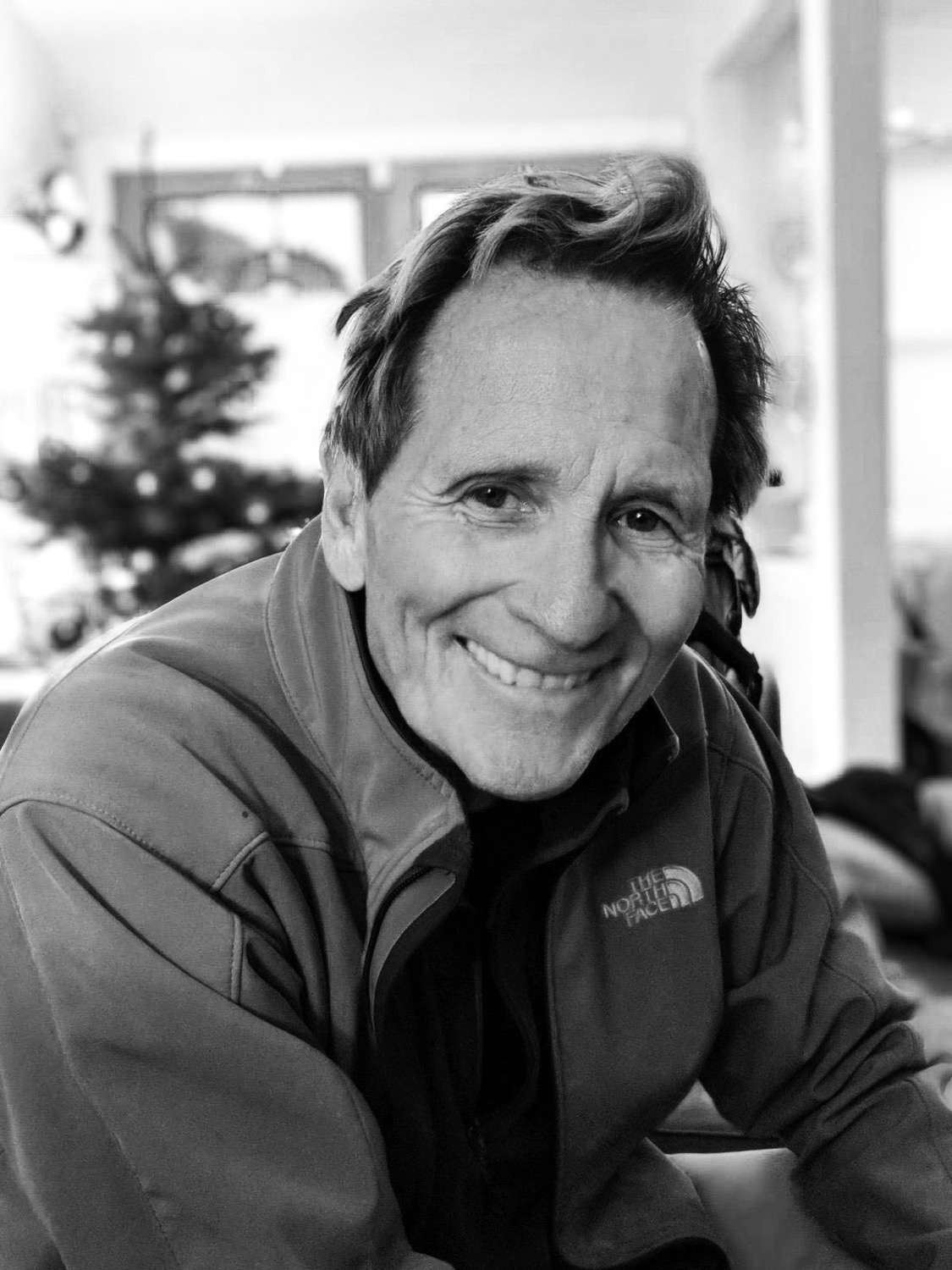
Douglas Gene McConnell, of Corte Madera, California, died on January 13, 2026, at age 80, from complications following a 2022 stroke.

Born in 1945 in Santa Monica, California, and raised in the Central Valley, McConnell spent many happy weekends visiting the state and national parks with his family, where he developed his love for the outdoors. His lifelong curiosity and optimism shaped a career that intertwined storytelling, the environment and public service. At Pomona College, he was freshman class president, quarterbacked his fraternity’s champion intramural flag football team and was student body president in his senior year. After Pomona, he earned a master’s degree in political science from the Eagleton Institute of Politics at Rutgers University and briefly worked in Pomona’s admissions office recruiting students for the Class of 1973.

In 1969, McConnell’s growing interest in media led him into television “to find out who was deciding what was news and what wasn’t.” Working briefly in the mailroom at KTLA in Los Angeles, he was soon offered the position of production assistant for the late night news, gaining his first experience producing broadcast stories.

Environmental and public interest themes soon became the throughline of his life’s work. After leaving KTLA in late 1969, McConnell joined classmate Jim Chard and others in developing an environment-focused proposal for the U.S. Bicentennial Celebration. He was director of communications for the first International Youth Conference on the Human Environment in 1971 and helped prepare delegates for the 1972 United Nations Conference on the Human Environment
in Stockholm.

From late 1973 to 1981, McConnell lived in Alaska, applying television and public dialogue to civic life. When, in 1974, newly elected Alaska Governor Jay Hammond said he wanted to hear from “all Alaskans” about the important issues facing the state, Doug created the Alaska Public Forum. He served President Jimmy Carter as field survey director for the President’s Commission on Coal and produced the photojournalistic report The American Coal Miner: A Report on Community and Living Conditions in the Coalfields.

Television eventually became his most visible platform. McConnell developed and hosted programs for Discovery Channel, PBS and local stations, earning multiple regional Emmy Awards. In the 1980s and early 1990s, he was a familiar face on San Francisco’s KPIXTV, where he hosted the popular series Mac & Mutley, sharing the screen with his canine co-host, who McConnell maintained was the real star. His warmth, curiosity and boundless enthusiasm made him instantly recognizable, and his sons came to think it was normal for strangers to start talking to their dad in public.

In 1993, McConnell took the helm of Bay Area Backroads on KRON-TV, which ran until 2008, and, with Open Road with Doug McConnell, which he launched in 2015, inspired generations of Bay Area residents to explore the region’s scenic landscapes, small towns, winding waterways and public lands, and introduced viewers to the organizations working to protect them

Colleagues remember McConnell’s generosity and authenticity—he was the same person off camera as on, unfailingly kind, curious and sincere. His upbeat spirit and genuine affection for both landscapes and people gave his programs a rare sincerity. He freely lent his time as a volunteer emcee for nonprofit galas and environmental fundraisers, helping to elevate the causes
he championed.

McConnell played an outsized role in promoting the region’s parks and natural areas and he made the work behind creating and caring for these places understandable to the public. For the professionals he profiled, he was a friend and tireless champion.

Beyond broadcasting, McConnell was honored by many environmental organizations. He was especially pleased to have been named an honorary ranger by both the California State Parks and the National Park Service.

With his rugged good looks, easy manner and perpetual positivity, McConnell embodied the joyful spirit of exploration he encouraged in others. His television legacy endures in the countless viewers he inspired to get outside, discover the beauty of their surroundings and care deeply for the places that make the West unique. His friends remember him as a storyteller par excellence. He could turn a brief sighting of a mountain lion while hiking into a rollicking story of “man meets savage beast in the California wilds.”

He is survived by his wife of 44 years, Kathy Taft, sons Nicolas and Patrick and two granddaughters.

—Don Hoyt ’67, P’00, P’04