Articles Written By: jhhd2026@pomona.edu

On the Celestial Beat

Table Mountain Telescope exterior

A telescope against the night sky

It’s 10 p.m., and three Pomona College students are just getting their night started.

Huddled in a closet-sized room alongside Associate Professor of Physics and Astronomy Phil Choi, they’re searching a computer screen for their next celestial target. The click of a button triggers the mechanical sound of metal and gears groaning through the walls.

Just outside, a massive telescope carefully pivots into position across the night sky.

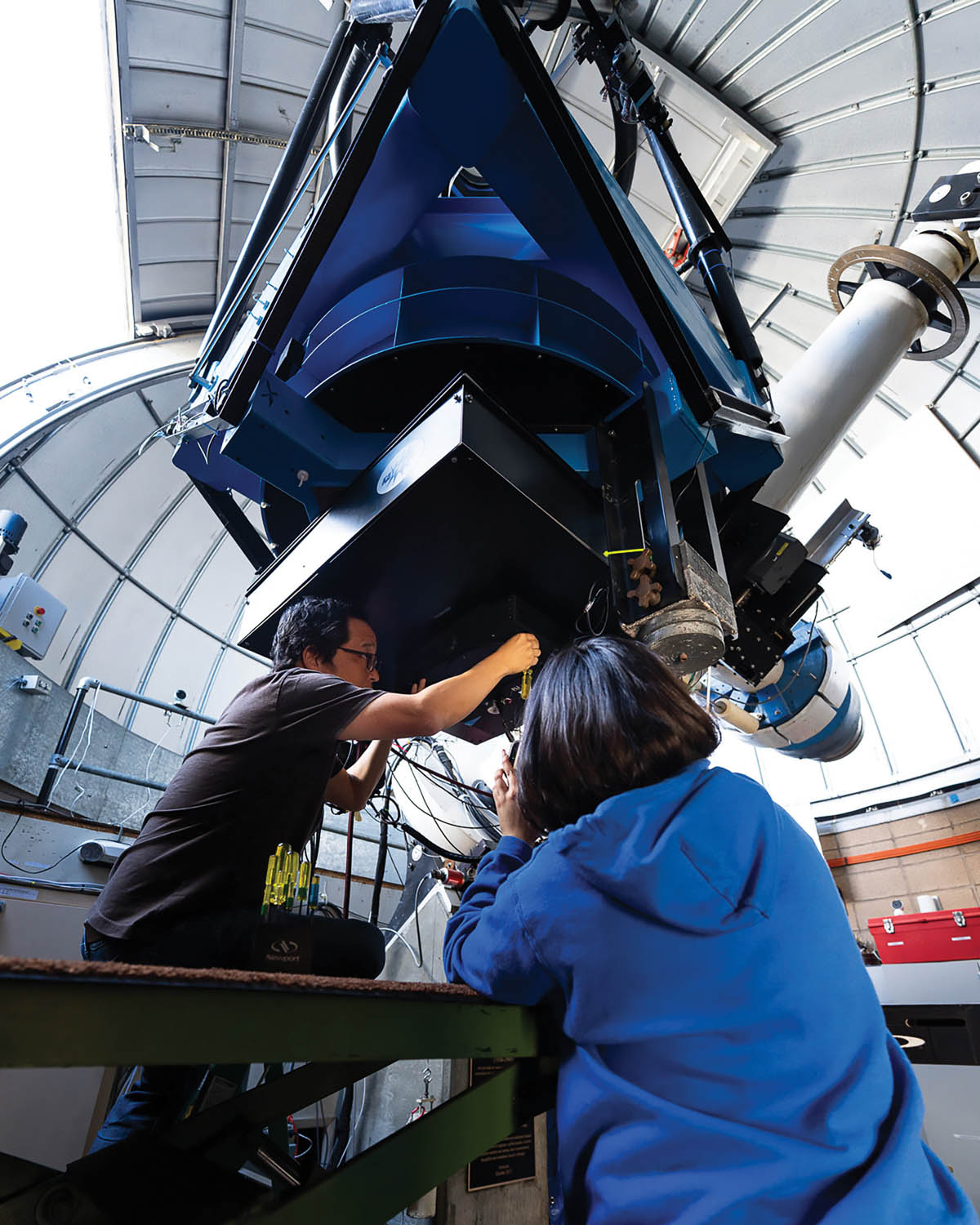
These stargazing Sagehens are not on campus. They’re perched atop a 7,000-foot peak in the San Gabriel Mountains at Pomona College’s Table Mountain Observatory (TMO), scanning the sky for Near Earth Asteroids.

“These are potential impactors,” Choi says of the asteroids. “We’ve been working for years trying to discover these things, determine their orbits and decide whether they’re potentially hazardous.”

“If they are,” he adds, “we follow them up.”

Designed and constructed in the 1980s, the observatory’s research capabilities were limited during its first few decades. But in the past five years, TMO has exploded onto the astronomy scene as a productive science machine.

“We’re active every clear night,” Choi says, “so we’re involved in a very serious way in two or three big collaborations where we’re churning out data on a night-to-night basis.”

TMO provides an advanced learning opportunity that many young astrophysicists don’t receive until grad school. It’s also been a boon for recruiting high-caliber students to the College.

“I did not think coming in that I would have the level of hands-on experience, the level of interaction with senior researchers at NASA’s Jet Propulsion Laboratory [and] the level of interaction with collaborators around the world,” Sage Santomenna ’26 says.

A professor and student work with a telescope

Tala Istanbouli ̓28 and
Professor Phil Choi tinker with
the hardware underneath
the one-meter telescope.

Santomenna turned down multiple R1 university offers in favor of attending Pomona College for its astrophysics program. Their work at TMO was the foundation of a prestigious Goldwater Scholarship awarded for the 2025-26 academic year.

Santomenna exemplifies the important roles students have played in bolstering the telescope through its history, Choi says.

“I’d say there’s been a factor of 10 increase in the efficiency of our telescope based on a lot of the software tools that Sage has been able to build for us,” Choi says.

On more than one occasion, Choi has been asked why he doesn’t roboticize and automate the observatory to pump out nonstop research for collaborators.

His answer is always the same: It’s important that TMO remains accessible to Pomona students.

Since taking over as the facility’s point-person 18 years ago, Choi has worked with students to secure multiple National Science Foundation and NASA grants to build up the million-dollar instrumentation and high-tech software that are the bedrock of the now modernized telescope.

As TMO continues to evolve in leaps and bounds, the astrophysics world has taken notice.

The combination of advanced instrumentation and year-round, immediate access enables TMO to occupy a unique niche in high-spatial and temporal-resolution imaging of fast-moving objects. For the Near Earth Asteroid study, the TMO facility achieves astrometric performance better than all but a handful of competing systems in the world.

“It’s a humble one-meter telescope,” Choi says, “so compared to a lot of other instruments doing this research, it’s small. But the thing that makes it special is the hardware on the back end is doing something that very few facilities do.”

“People are sometimes skeptical of our technique, but our results speak for themselves.”

Originals: The Campaign for Pomona College

Students gathered in the Skyspace at Pomona College

When Pomona College was founded nearly 140 years ago, our founders imagined something new: a college in a garden, rooted in the traditions of the liberal arts but alive to the possibilities of a changing world. That willingness to imagine what might be possible has carried Pomona forward ever since, from President James Blaisdell’s audacious vision for a community of distinctive colleges to our continuing commitment to finding extraordinary human talent wherever it may be.

Original thinking is our inheritance. At Pomona, students learn to think differently and broadly, to take intellectual risks and approach the world with curiosity, humility and care. Our originals are not rugged individualists striking out alone. They understand that ideas flourish in community—and that our greatest possibilities emerge when we learn from and work alongside people whose experiences and perspectives differ from our own.

The world needs those qualities now more than ever. It needs people who are unafraid to question assumptions, who can turn knowledge into understanding and who believe deeply in our capacity to work together. It needs Sagehens.

Originals: The Campaign for Pomona College is our commitment to ensuring that Pomona continues to prepare them. Together, we will expand access for extraordinary students, invest in transformative teaching and emerging fields of knowledge, deepen both global learning and collaboration, strengthen the ties that connect us across lifetimes and nurture the health and well-being that allow every member of our community to flourish.

Generations before us made this Pomona possible. Now it is our turn to imagine and make possible the Pomona that generations to come will need.

Gabrielle Starr, President

Making Pomona Accessible

Pomona’s future depends on its ability to attract the most talented students wherever they are found.

Every year, exceptional young people arrive on campus carrying extraordinary ambition, creativity, determination and promise. They enrich every classroom, laboratory, studio, residence hall and athletic field. They challenge one another. They expand one another’s horizons. They elevate the entire community.

Students Seated, Originals

But making Pomona accessible means more than opening the door. It means ensuring that students from every socioeconomic background—including middle-income families for whom a Pomona education may still feel out of reach—can choose Pomona and participate fully once they are here. Through Originals, we will expand financial aid while helping ensure that every Sagehen has access to the tools and resources that make the full Pomona experience possible.

That commitment begins with new financial aid for middle-income students, alongside expanded support for Pomona’s current financial aid program. And because the true cost of college extends beyond tuition, Access to Course Essentials (ACE) and the Technology Access Program (TAP) will help provide the technology, materials and academic essentials students need to make the most of their Pomona education.

Making the Invisible Visible

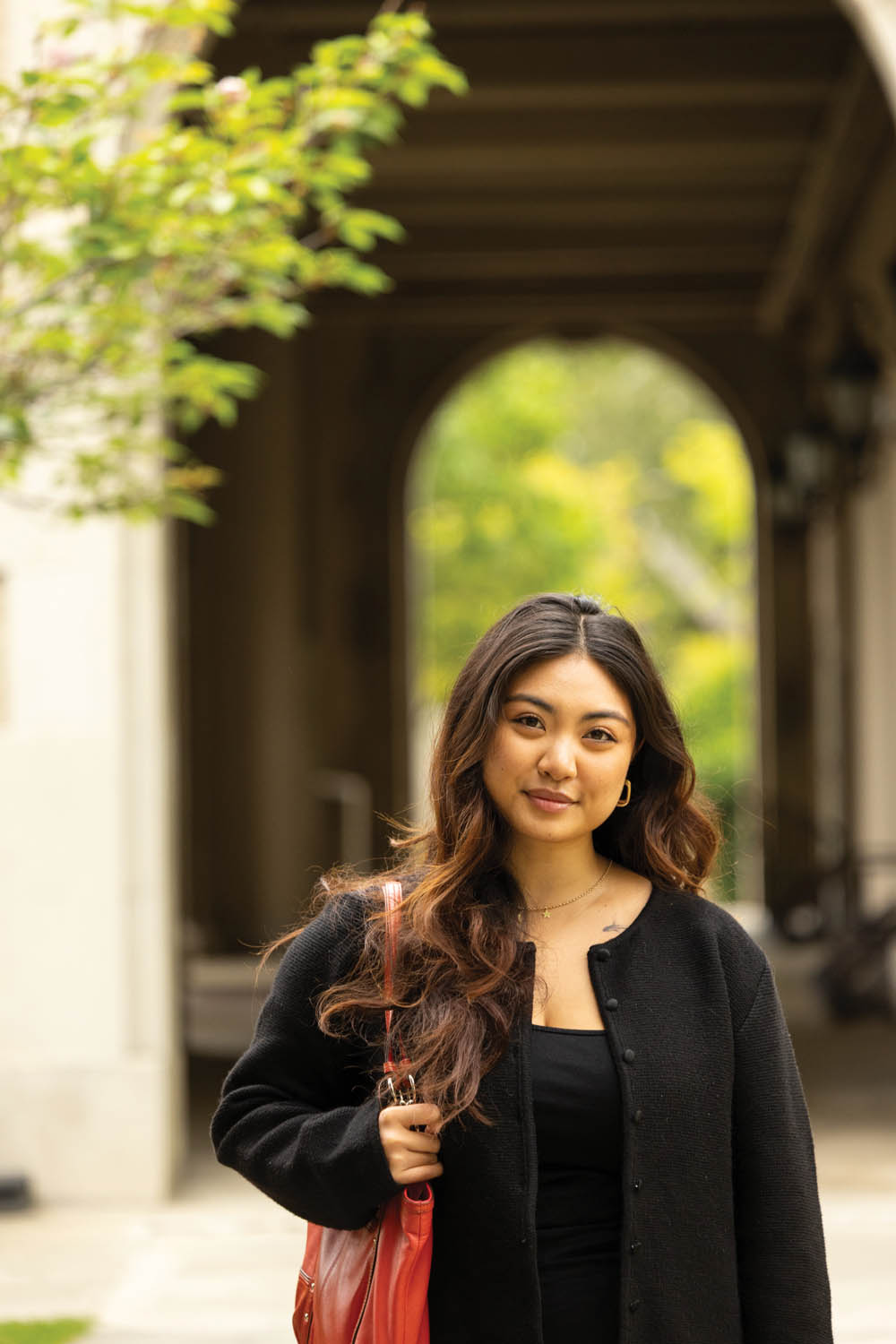
Photo of a woman in front of an arch“I’d never taken an economics class before,” says Rachel Nguyen ’26. “The only economics experience I had was helping my mom with the books at the nail salon.”

At Pomona, Rachel discovered economics as a tool for understanding communities like her own. Her pioneering econometric research on Vietnamese nail salons and technicians documented a workforce often overlooked in official datasets, laying groundwork that could inform labor policy and protections for immigrant workers. “It begins with the data,” she says.

Pomona also opened doors beyond the classroom. A fellowship in California Governor Gavin Newsom’s office gave Rachel firsthand experience in public service, while Pomona-funded study abroad took her to Vietnam, where she became the first in her family to return and reconnect with relatives.

Rachel’s first stop after Pomona? Graduate study in economics at the University of Chicago, where she will confront new datasets and new questions with the same instinct to look beyond the obvious.

Leading in a Changing World

The defining challenges of our time refuse to stay in a single discipline.

Climate change. Artificial intelligence. Global migration. Public health. Democratic participation. Economic inequality.

Meeting these challenges requires more than expertise. It requires people who can connect ideas across fields, cultures and perspectives and transform insight into action.
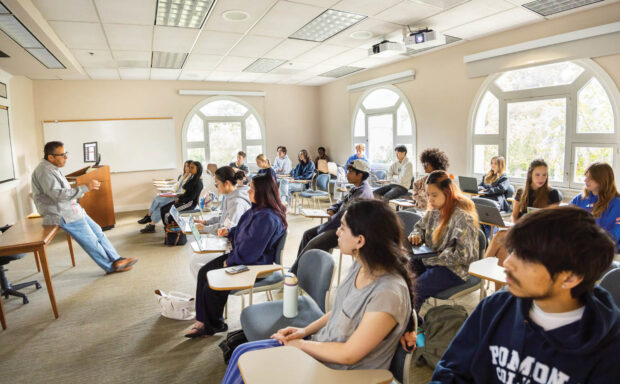
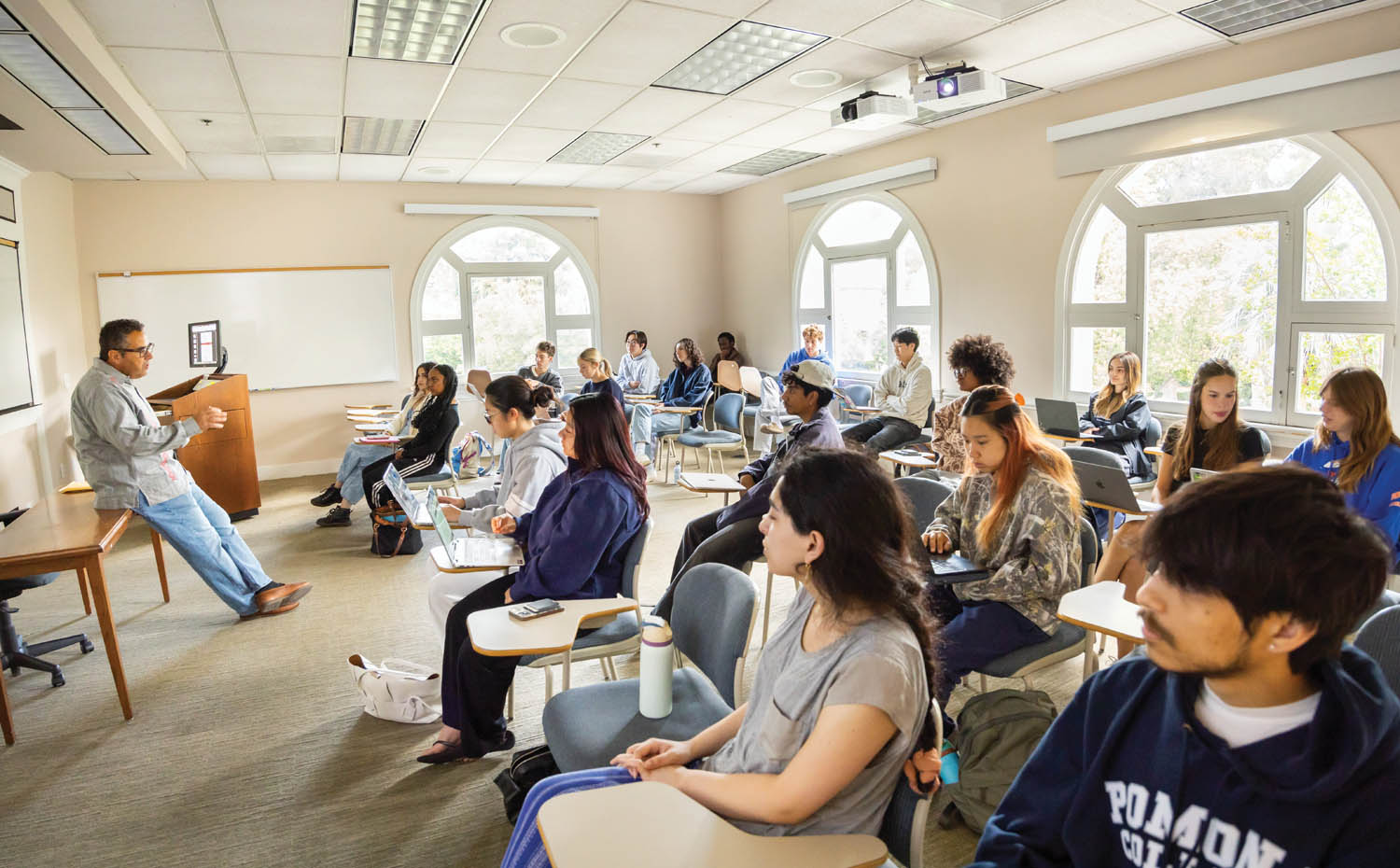
Teacher in a classroom with students

This campaign will accelerate faculty-student research, expand global learning opportunities, strengthen interdisciplinary teaching and invest in emerging areas of inquiry. It will position Pomona as a national model for the next generation of liberal arts education—one that prepares students not simply to navigate change, but to shape it.

Philanthropy will make this ambition possible at every level. Campaign investments will build the Center for Global Engagement; create new endowed faculty positions; expand global learning, collaboration and dialogue; advance inclusive excellence; strengthen academic support; and provide faculty with the fellowships, resources and professional development they need to pursue ambitious ideas. Together, these investments will give Pomona the people, programs and places to keep pushing the boundaries of a liberal arts education.

Reaching Beyond Our Gates

For generations, Pomona students have learned that some of the most consequential education happens when they cross boundaries—between disciplines, cultures, communities and ways of seeing the world. The new Center for Global Engagement will create a home for that kind of discovery.

Now under construction, the $125 million Center is Pomona’s most ambitious capital project to date. Designed as a living-learning “liberal arts laboratory,” it brings together residential life, dining, classrooms and collaborative spaces, housing 200 students and welcoming the entire community for global and interdisciplinary learning.

Its promise is being realized through extraordinary philanthropy with $50 million in support from the Pomona community helping move the center’s construction and programs forward. Among the transformational commitments are a $10 million gift from Board Chair Janet Inskeep Benton ’79 and a $10 million commitment from Trustee Emeritus Ranney E. Draper ’60 and his late wife, Priscilla. Their generosity builds on decades of leadership and investment in the College, reflecting a shared belief in preparing Sagehens to engage meaningfully with a changing world.
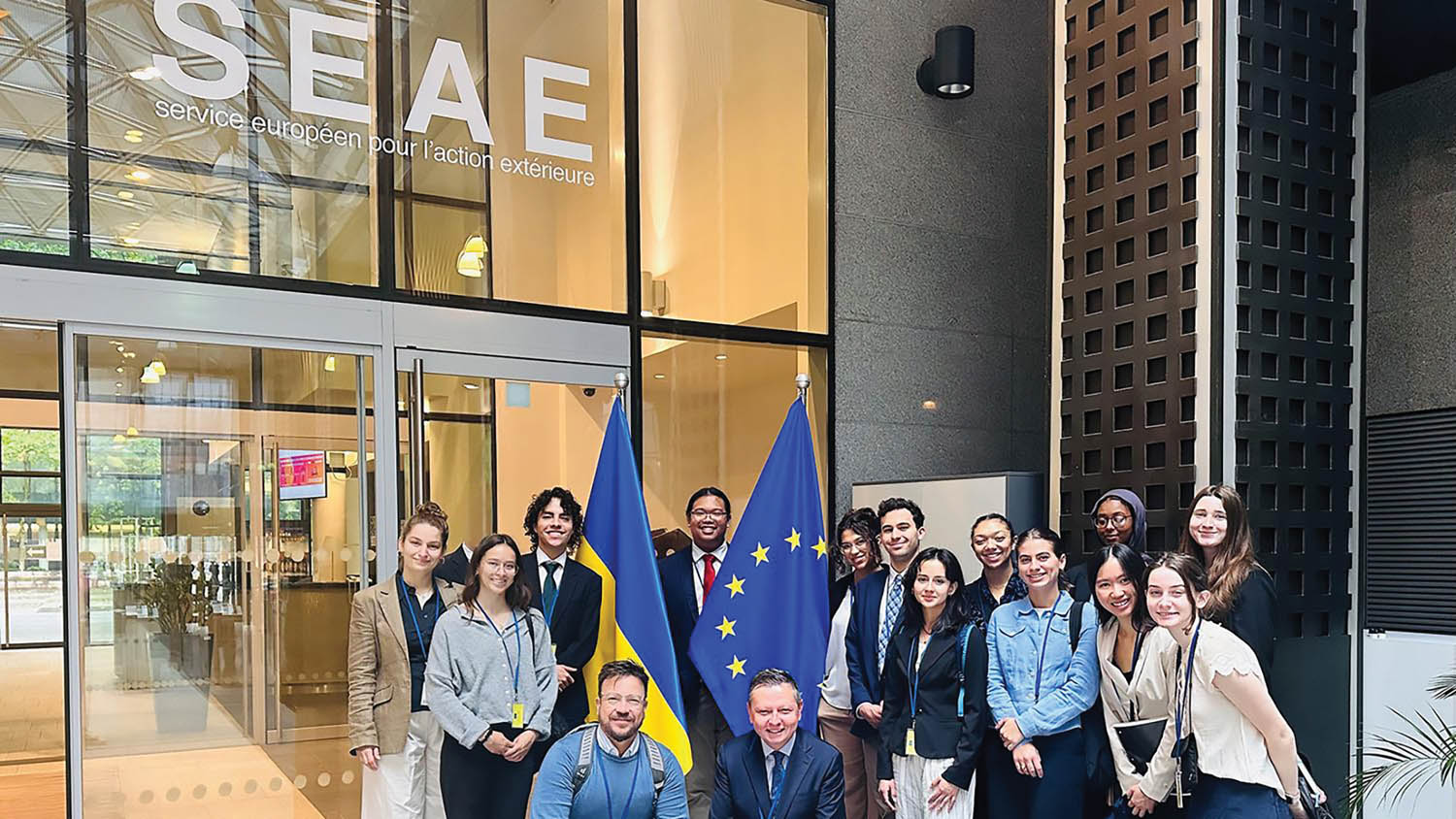
A group of students engaged in a global learning experienceThat spirit of exploration extends to many others who support the Center and related programs. The philanthropy of Karen Q. Wong P’29 and Kelvin Huang P’29 honors Karen’s father and his lifelong belief in education. Their fund will support study away in China, giving future students opportunities to learn through language, culture and firsthand experience.

Together, these gifts and many others demonstrate what the Center makes possible: not simply a new building, but an enduring ecosystem for curiosity, connection and learning across borders.

Nurturing Our Whole Community

A truly transformative educational experience engages the whole person—and the whole community.

Original thinking requires more than intellect. It requires confidence. Resilience. Belonging. It requires the freedom to take risks, pursue ambitious questions, recover from failure and begin again. No one does that alone. Pomona’s commitment to student, faculty and staff success extends beyond the classroom to encompass wellness, mentorship, belonging, athletics, residential life, leadership development and the many experiences that help people discover who they are and what they are capable of becoming.
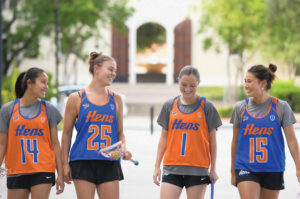
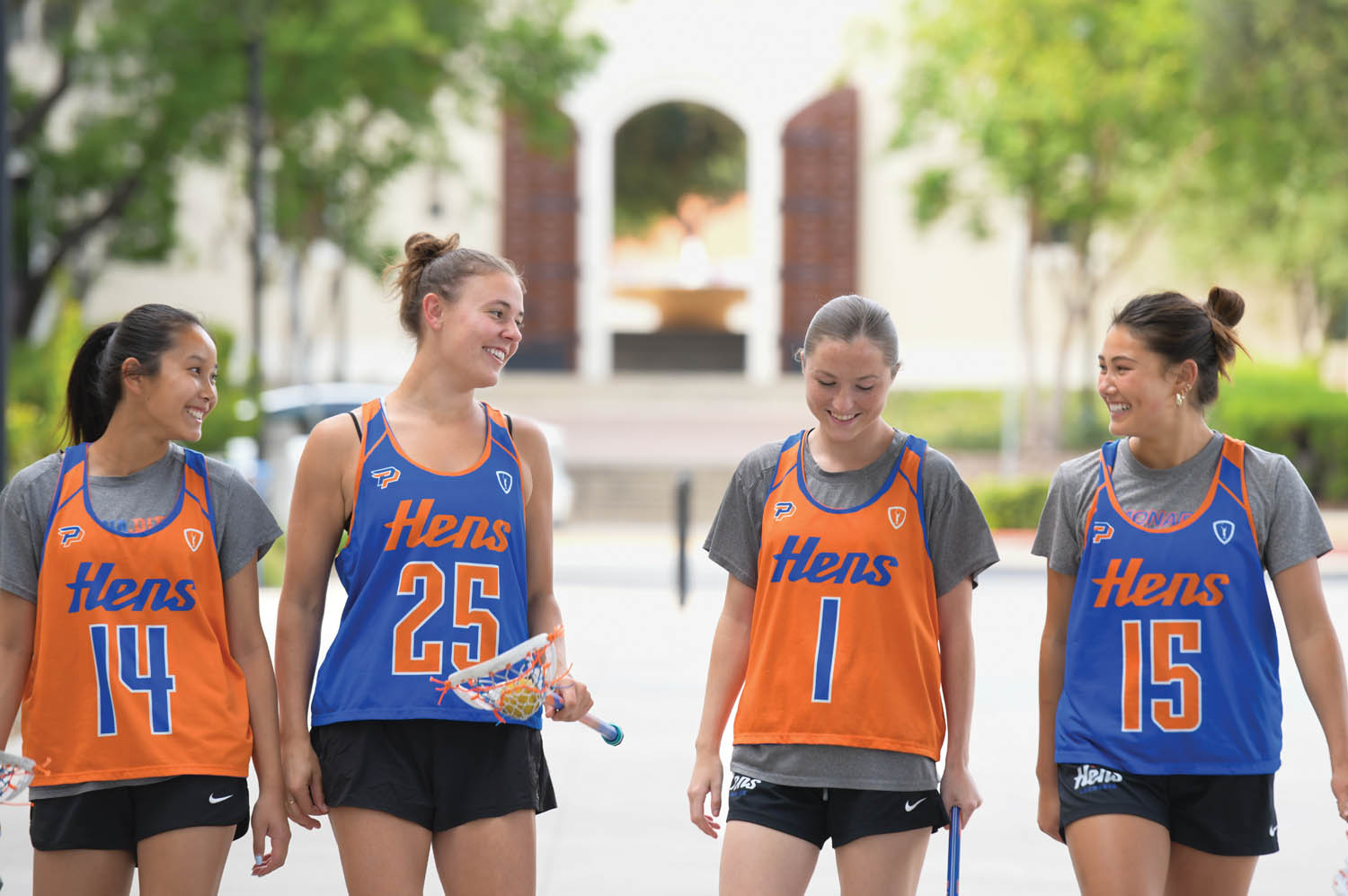
A group of women athletes smilingThis campaign will strengthen the conditions that allow all to flourish. It will expand access to wellness resources, deepen mentorship and community-building opportunities, enhance student life and athletics and create an environment where every student can participate fully in the life of the College. Great communities do more than support achievement. They make achievement possible.

Philanthropy will strengthen the foundations of a thriving Pomona community. Campaign investments will support the Center for Athletics, Recreation and Wellness as a hub for movement, connection and well-being; expand access to health insurance so students can get the care they need; and advance health and wellness initiatives for students, faculty and staff, including efforts to build a thriving workplace culture. Together, these investments recognize a simple truth: people do their best thinking, learning and creating when they have the support to thrive.

470,000—and Counting

Since opening its doors, the Center for Athletics, Recreation and Wellness (CARW) has welcomed more than 470,000 visits, a powerful measure of how philanthropy can transform daily life at Pomona. More than a place to exercise, the CARW has become a crossroads for the College: a place where students, faculty and staff gather, recharge, compete and connect. Its extraordinary use demonstrates what the campaign is already achieving—investing in spaces that strengthen well-being, belonging and community for everyone at Pomona.

Connecting Across Lifetimes
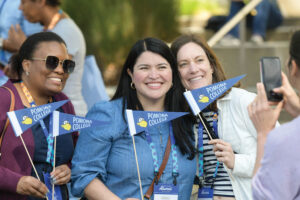
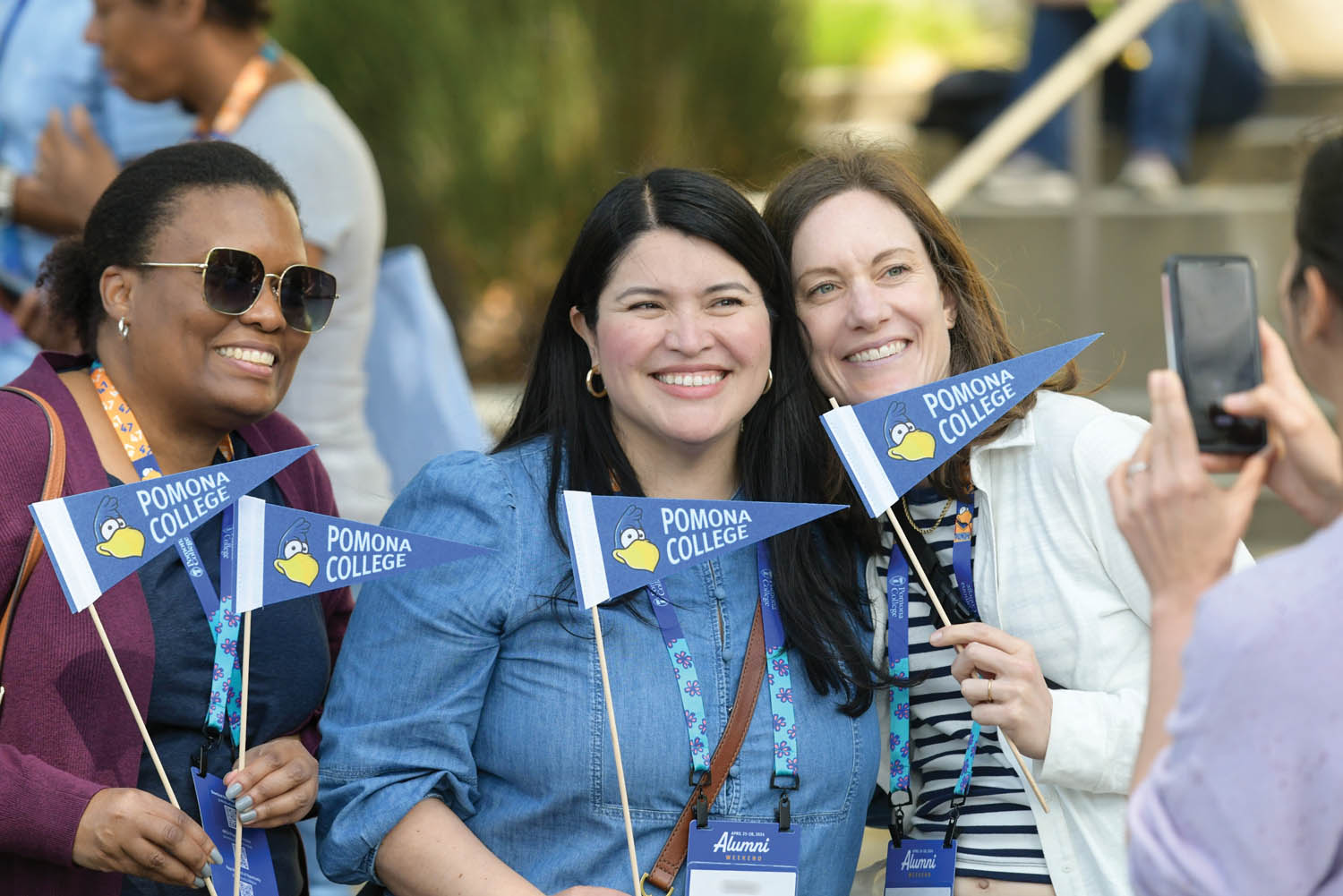
A group of women alumni smilingA Pomona education does not end at Commencement. It grows and deepens over time.

One of Pomona’s greatest strengths is the willingness of Sagehens to invest in those who follow. Through Originals, Pomona will double alumni engagement while creating more opportunities for graduates to mentor students, create internships, share expertise, return as teachers and open doors to careers and experiences.

These relationships help students test ideas in the world, discover new paths and imagine futures they may never have considered. They also give alumni meaningful ways to stay connected and give back.

Campaign investments will expand the Return to Pomona Scholar program, extramural research opportunities and career development, creating more ways for students to learn from alumni and gain experience beyond the classroom.

When Sagehens invest in Sagehens, everyone benefits.

A Network that Opens Doors

“One trait you’ll see among Pomona students is that whatever they do, they do it in an original way,” says Sebastian Fish Mathurin ’26. He sees that same spirit in alumni: “the passion, the drive, but also the curiosity and the ability to remain a student throughout life.”
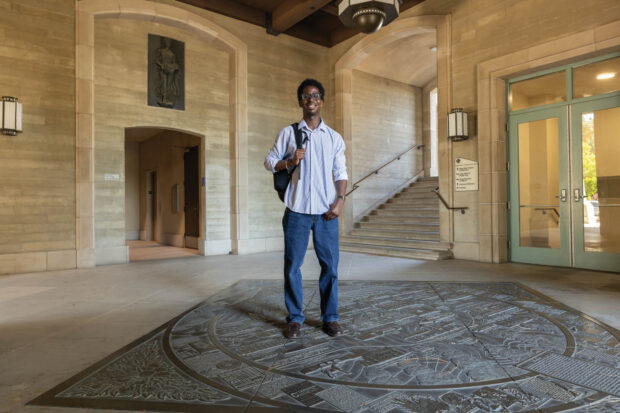
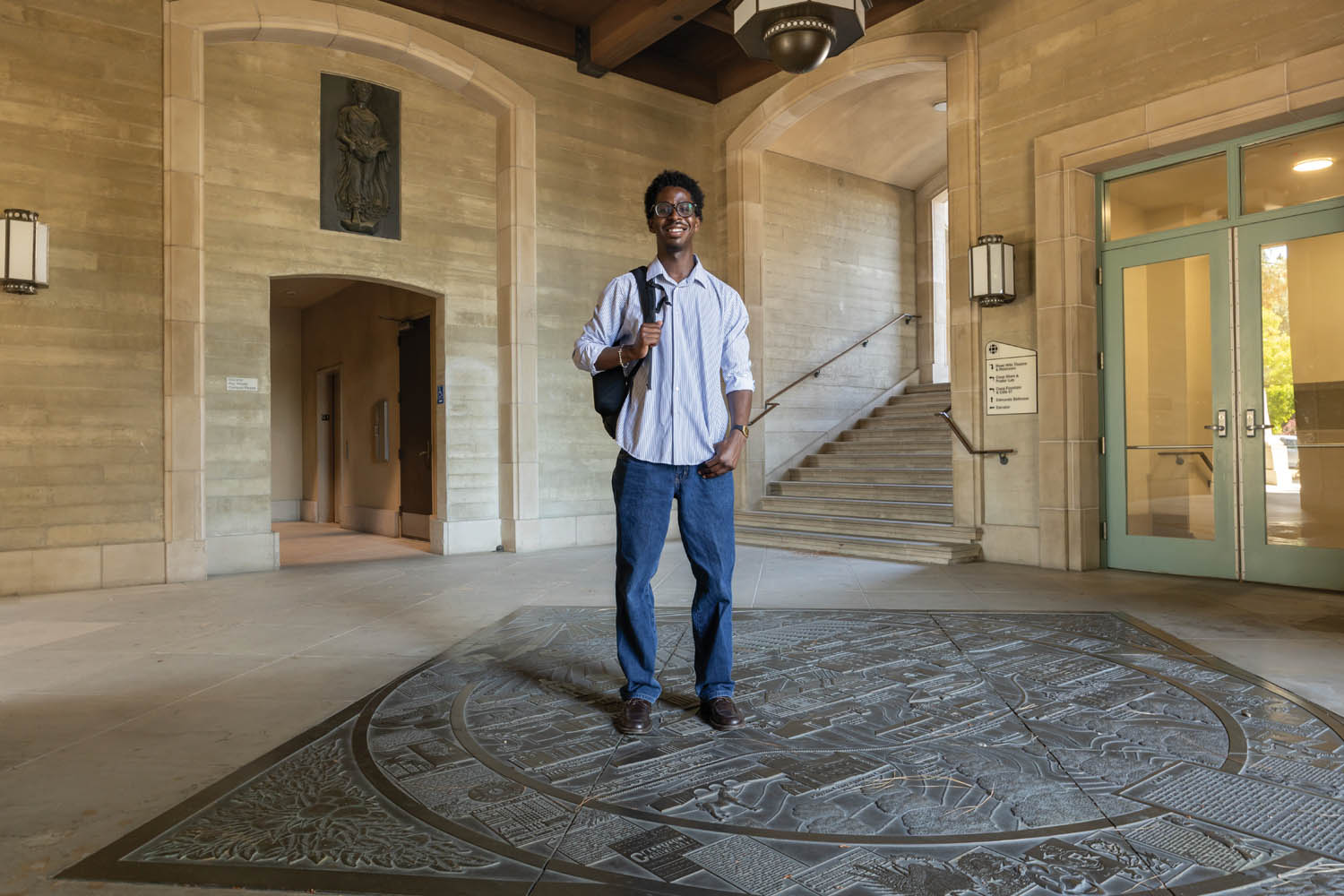
A man with a backpack smiling

Sebastian experienced that connection firsthand through Trustee Aditya Sood ’97, president of Lord Miller and executive producer of films including Deadpool and Spider-Man: Across the Spider-Verse. Their mentorship led to a summer internship at Lord Miller—and Pomona funding helped make it possible.

A stipend from the Career Development Office and Pomona College Internship Program enabled Sebastian to remain in California and take advantage of an opportunity he otherwise might not have been able to pursue. The experience showed Sebastian what can happen when generations of Sagehens invest in one another: alumni open doors, Pomona helps students walk through them and new possibilities take shape.

When Sagehens invest in Sagehens, everyone benefits.

Ensuring Pomona Endures

Pomona’s defining strengths are the result of generations of vision, generosity and leadership.

The strongest institutions do more than endure. They evolve. They adapt. They lead. This campaign will ensure that Pomona remains among the world’s most influential liberal arts colleges while expanding its capacity to shape the future.
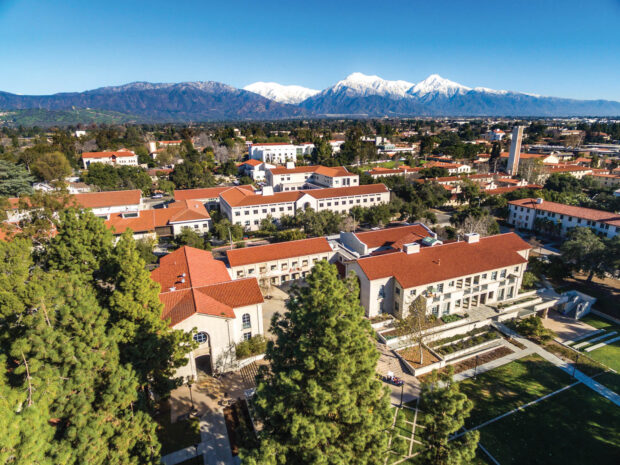
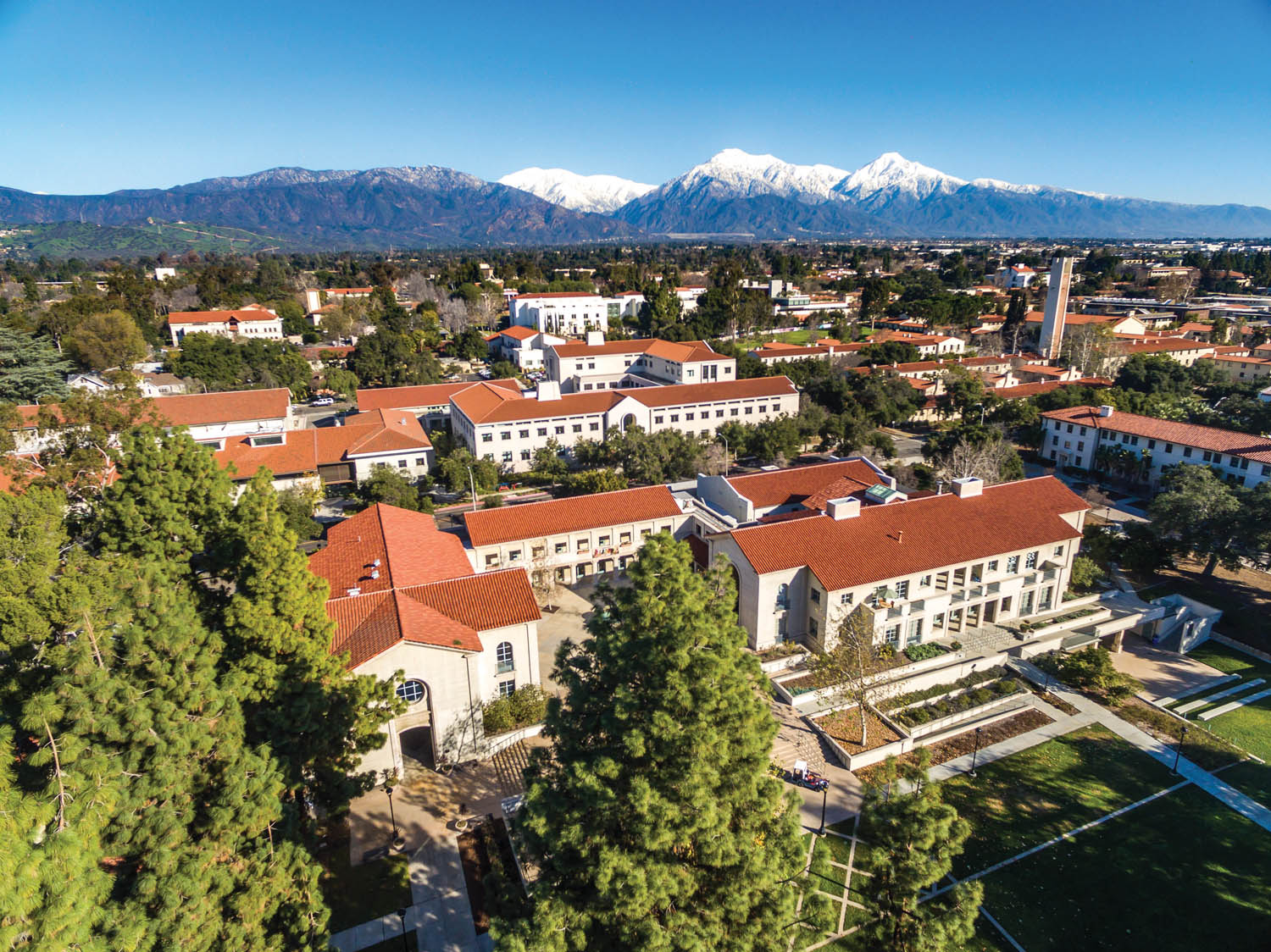
Aerial view of a college campus

That future will be built, as Pomona always has been, gift by gift and generation by generation. As Vice President for Advancement Maria Watson says, “At Pomona, generosity has always been an act of optimism: a belief in students we may never meet, discoveries we cannot yet imagine and a College that will keep evolving long after we are gone.”

The Pomona Annual Fund, the Pomona Plan and legacy gifts are key parts of the Originals campaign: resources that will sustain the people, programs and possibilities at the heart of the College while creating a strong foundation for generations of Sagehens still to come.

The Originality of the Pomona Plan
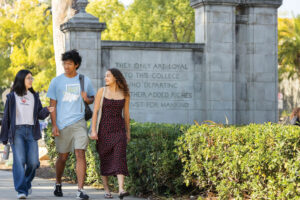
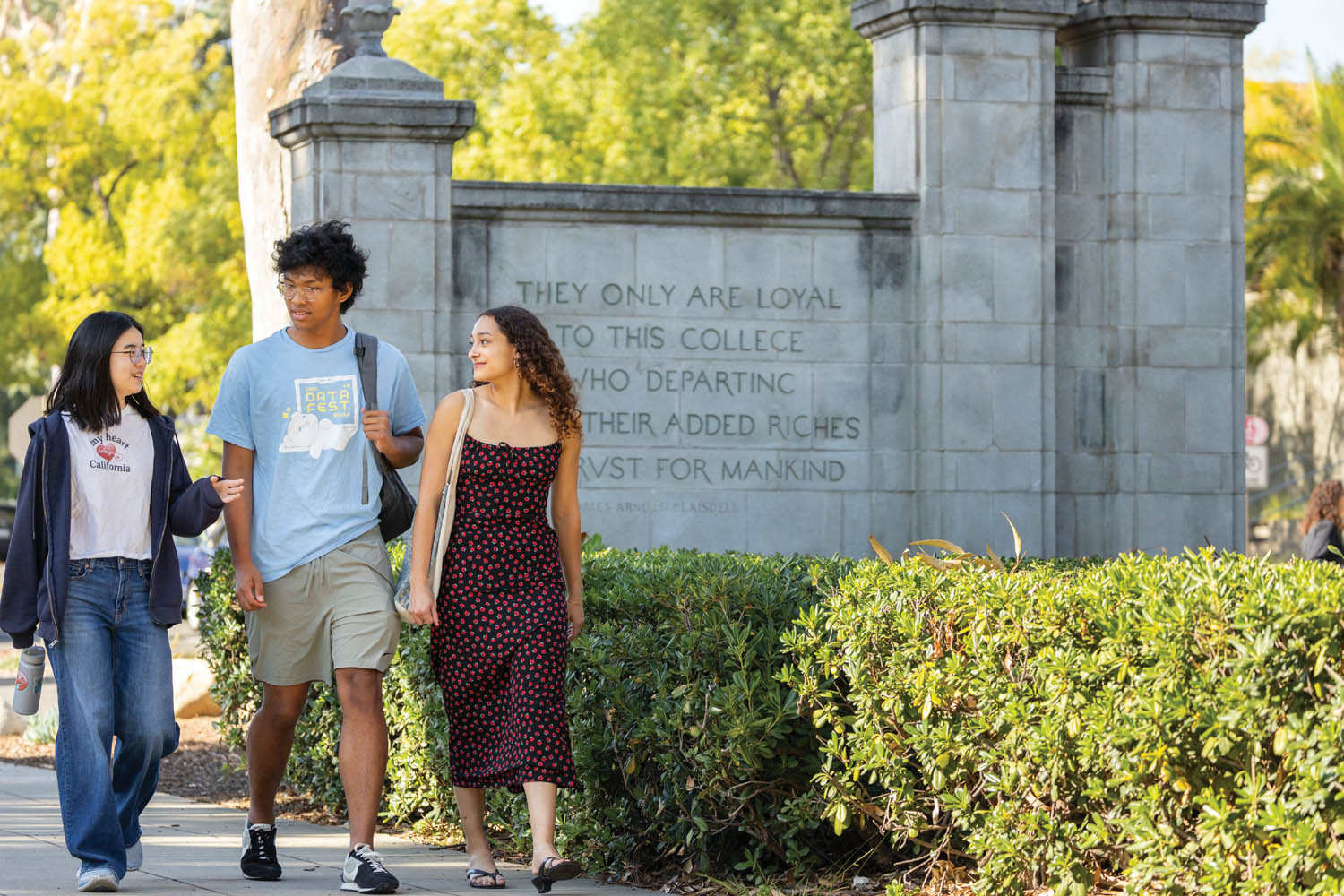
Students walking through stone gatesPomona was an original in planned giving, too. Developed in the 1940s by Allen F. Hawley, Class of 1916, the Pomona Plan pioneered a model in which donors could receive lifetime income and tax benefits while ultimately supporting the College—a concept that became a model for institutions nationwide. Today, it remains one of higher education’s most respected life-income programs. As Senior Director of the Pomona Plan Art Landerholm ’92 puts it, “It’s a distinctly Pomona idea: a financial, tax and philanthropic ‘win-win’ for the College and generations of participants.”

Meet the Campaign Chairs

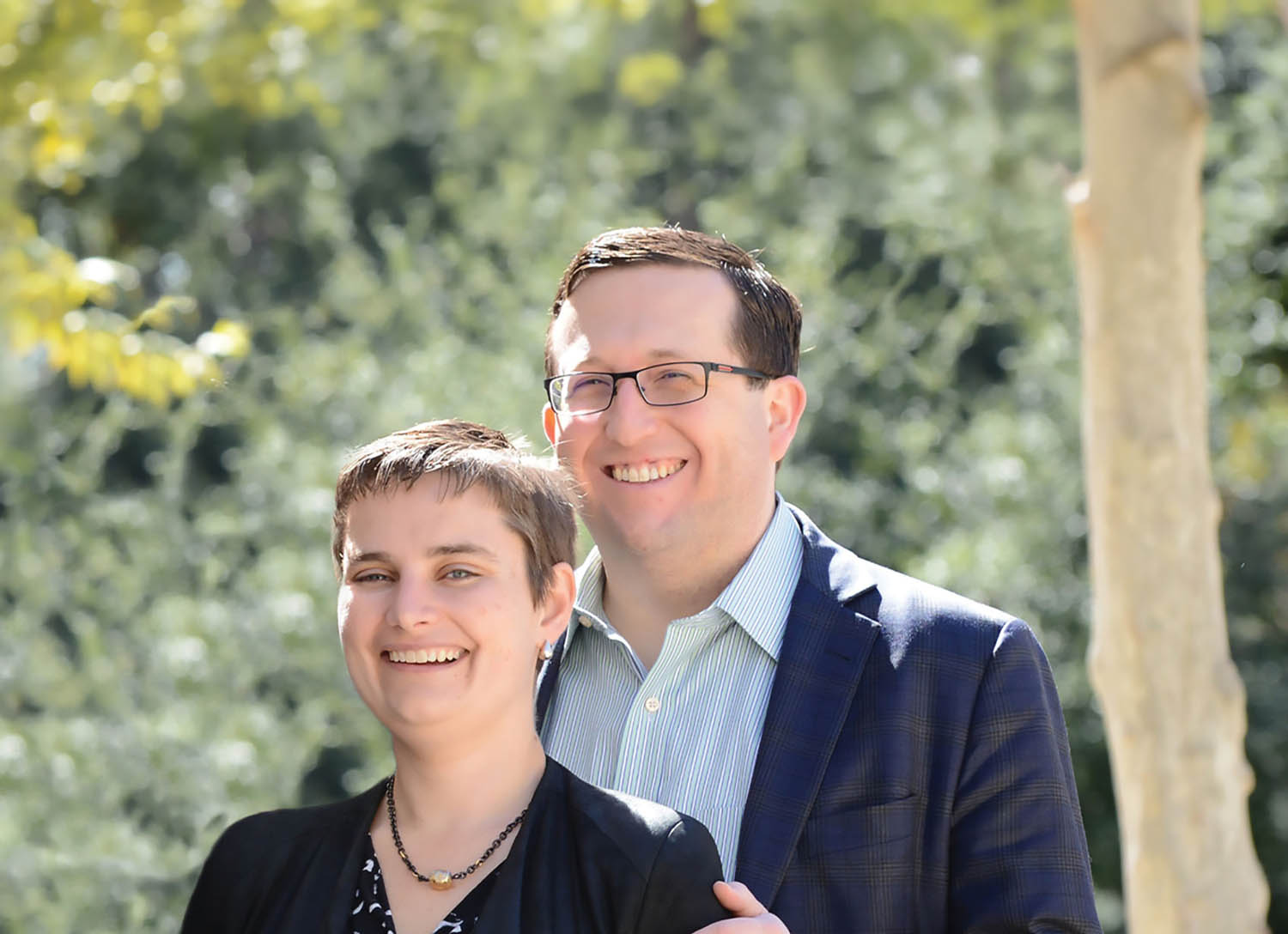
Sam ’04 and Emily ’04 Glick have been part of each other’s Pomona story since meeting during their first year on campus and flirting in James Irvine Professor of Economics Eleanor P. Brown’s class as seniors. Now they are returning to help write the College’s next chapter as campaign chairs. We asked them to fill in the blanks.
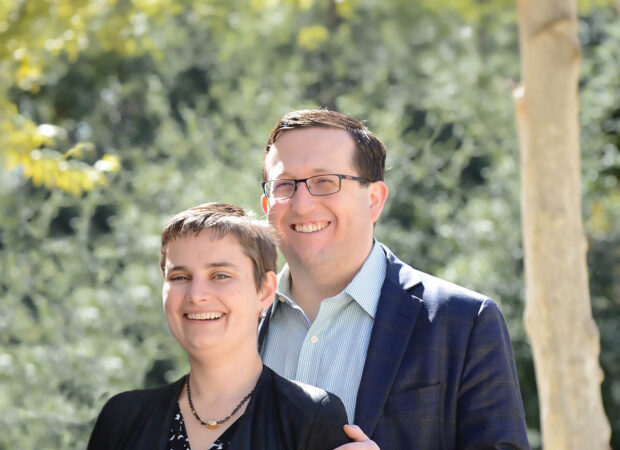
Portrait of Sam and Emily Glick

Our Pomona meet-cute started with…

Emily: A textbook. I needed the most expensive book on my list—about $110—and Sam had already taken the class and still had his copy. I figured if I borrowed his, I could save the money and buy him lunch as a thank you. We were both so busy that lunch kept getting rescheduled, until it finally became dinner—and then 11 hours of talking. We started dating about three weeks before graduation, and here we are.

A Pomona moment we still think about…

Emily: I received an Iberian Grant, funded by an alumna, for independent study in Spain. I lived in Madrid and studied what the Spanish government was doing to help people experiencing homelessness, creating a black-and-white photo essay and written report. It was a lesson in independence, among other things—you had to find a roommate, figure out your international cellphone and make your own way. I learned about poverty and about telling people’s stories without exploiting them. But mostly, I learned I could land in another country, figure things out and do something I hadn’t done before.

Sam: In a class on medieval mystery plays, we had to enact a scene where a woman throws her baby over a balcony. We did it from the second floor of the Smith Campus Center—with a small watermelon wrapped up like a baby. It was a pretty gory moment. But we were learning how to draw emotions out of people and think about how audiences hundreds of years ago might have experienced the story. I still think about the lesson on how you can have a serious impact on people with limited resources through commitment and ingenuity.

The thing about Pomona that’s hard to explain until you’ve experienced it…

Sam: Every moment at Pomona is part of that Pomona education. I started learning from Day One through late-night dorm hallway conversations with my sponsor group. I had the opportunity to sit on a presidential search committee as a student, and that was part of my education. Doing summer research with faculty was part of my education. And then every course I took—from general education requirements to intense courses in my major to classes I chose on a whim because they looked interesting—helped me gain new perspectives and connect dots across topics I might never have thought were related.

Pomona College Campaign Committee*

Sam ’04 and Emily ’04 Glick, Chairs
Janet Inskeep Benton ’79
Ranney E. Draper ’60
Wei Hopeman ’92 P’28
Robert “Bobby” Lee ’02
Wendell Jackson “Jack” and Carolyn Long P’13 ’15
Steven Olson P’23 ’26
Gabrielle Starr
James “Jim” Valone ’85
Eileen Wilson-Oyelaran ’69

*As of September 1, 2026

What motivates us to lead the campaign is…

Emily: There is a sense of community and commonality. And even if you weren’t on campus at the same time or you’re in a different career field, I think Sagehens find a togetherness through a similar mindset and a similar set of values. The campaign is a little like showing up at a wedding where everyone cares about the couple getting married. Love is in the air. It is a sense of we’re all here to promote a good thing that we believe in.

The campaign priority that gets us up in the morning is…

Emily: The recruitment, retention and success of students from middle-income families. Talented students from families of every income level need to know that they should apply, and that attending and successfully graduating from Pomona is achievable for them.

Sam: I agree. Pomona is for everybody. For someone who is qualified and can benefit from a Pomona education, there should be no financial barrier to them getting that education. Period.


4 Important Facts

  1. The campaign’s reach is College-wide.

Originals is an investment in the whole Pomona experience—from financial aid and faculty to global learning, wellness, career exploration and the resources that sustain the College. Together, these priorities strengthen the interconnected experiences that allow students to thrive.

  1. Its impact extends beyond our gates.

A Pomona education was never meant to stay in Claremont. Sagehens carry what they learn into laboratories, classrooms, boardrooms, studios, communities and public life—bringing independent thinking, intellectual curiosity and a distinctly collaborative approach to challenges that matter.

  1. It doubles down on the Pomona you love.

This campaign isn’t about reinventing Pomona. It’s about investing more deeply in what makes Pomona original: extraordinary students and faculty, learning at a human scale, close relationships, intellectual risk-taking and a community where people challenge and care for one another.

  1. We all can help.

There is no single way to be part of Originals. Give. Volunteer. Mentor a student. Attend an event. Reconnect with classmates. Share your Pomona pride. Every act of participation strengthens the community—and helps create possibilities for the Sagehens who come next.
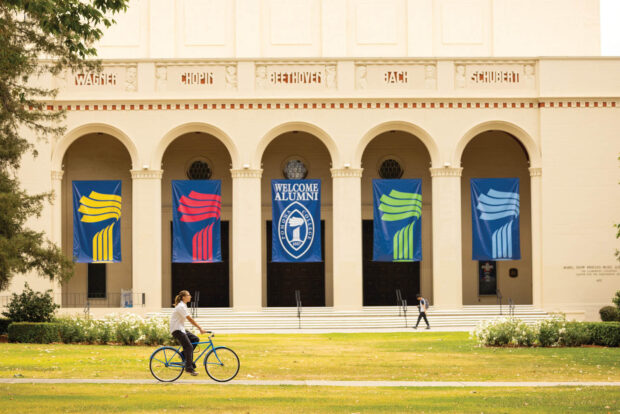
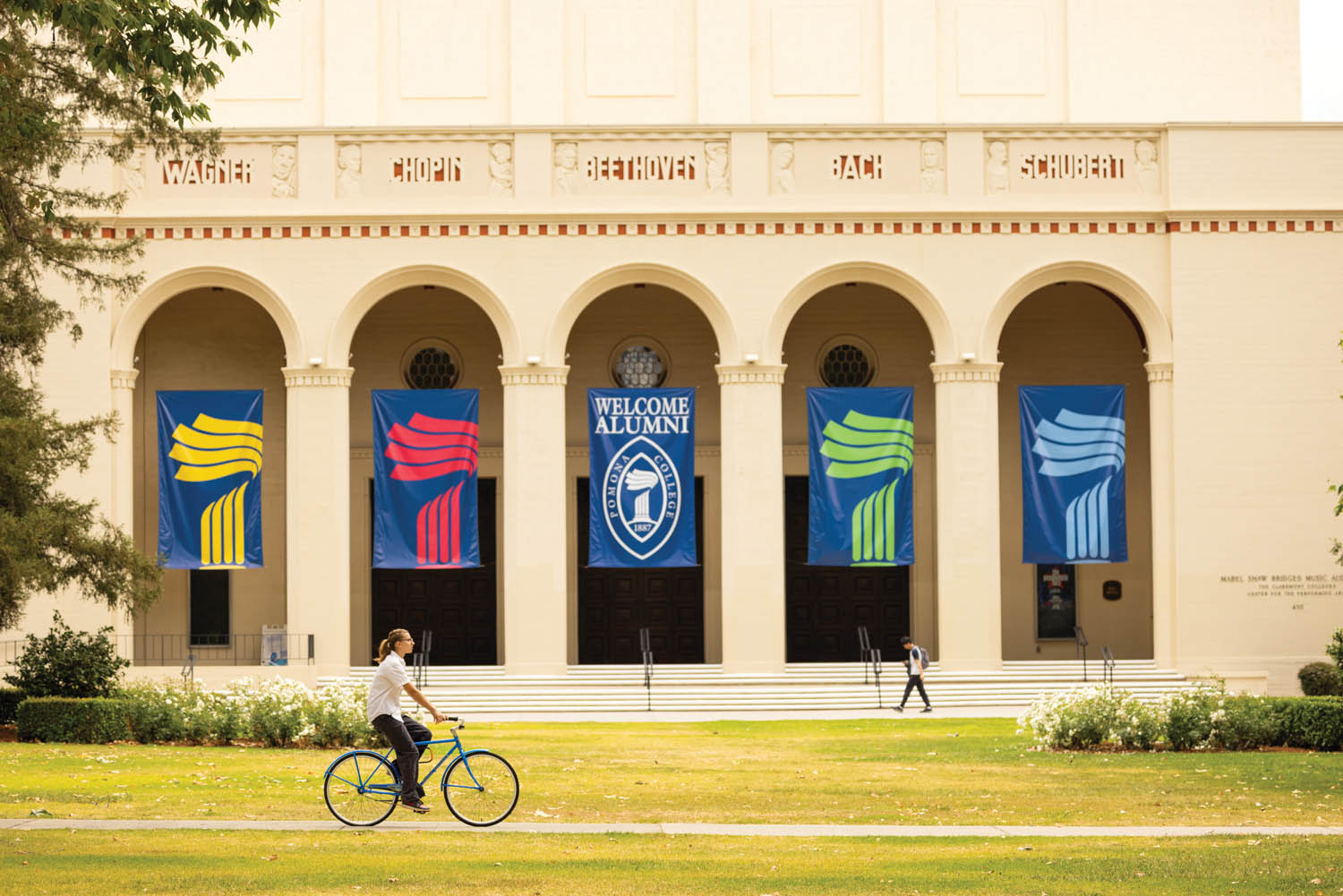
Exterior shot of Bridges auditorium

7 Gifts Making an Impact

From opening gates for students to advancing bold ideas, creating new opportunities and investing in the College for generations to come, every gift has a story—and a purpose. Here are seven Originals leading the way.

  1. Open the world
    Bill Riley P’26
    A $1 million commitment to the Center for Global Engagement will help bring the world to Pomona—and Pomona to the world.
  2. Expand access
    Anonymous
    A $2.5 million family gift will strengthen technology and access, helping ensure students have the tools they need to take full advantage of a Pomona education.
  3. Open doors around the world
    Wei Z. Hopeman ’92 P’28 and David Basmajian P’28
    A $1 million gift established an endowed family fund for global internships, launching the Pomona College Global Internship Program and expanding opportunities for students to learn and gain experience around the world.
  4. Put Pomona within reach
    Lauri M. Steel ’67
    A commitment to scholarships will help make a Pomona education possible for talented students, regardless of their financial circumstances.
  5. Invest for generations
    Ruth ’68 and Richard Ault
    Through the Pomona Plan and legacy giving, the Aults are putting $3 million to work for Pomona’s future—and demonstrating the lasting power of planned gifts.
  6. Make a transformational commitment
    Janet Inskeep Benton ’79
    A $10 million commitment to the Center for Global Engagement is helping bring a vibrant new residential community to life, adding 60 beds and creating new opportunities for students to live, learn and grow together.
  7. Give 47 at a time
    Ryan Luo ’16
    Luo’s connection to Pomona keeps multiplying. After launching the Pomona College Hackathon as a student, he later hired fellow Sagehen Sam Malik ’24 at his company, AegisAI. Today, he stays connected to the Computer Science Department—and supports its students and faculty with a recurring gift of, naturally, $47 a month.

Originals Are Coming Your Way

The Campaign for Pomona College is taking flight. Join fellow Sagehens, families and friends across the country and around the world to celebrate Originals, connect with the Pomona community and hear how the campaign is shaping what comes next for the College. Mark your calendar and watch for more details:

San Francisco
November 4, 2026

Los Angeles
February 11, 2027

Asia
March 29–April 2, 2027

Chicago
May 18, 2027

New York City
May 20, 2027

Wherever Sagehens gather, original thinking follows. We hope you’ll be part of it.

pomona.edu/originals/events

What’s the Big Idea?

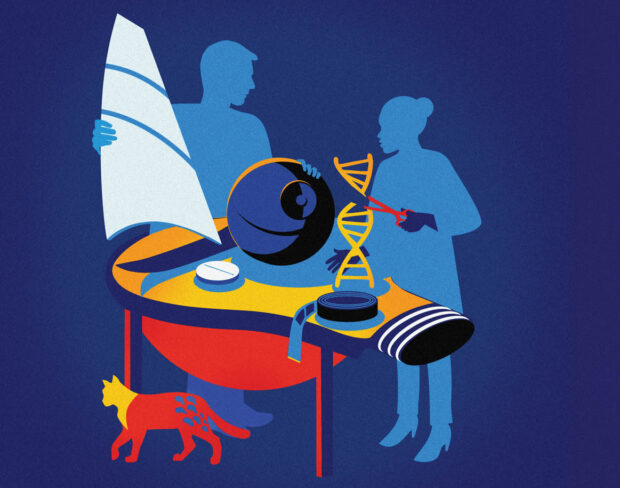
Illustration of big ideas, two thinkers with objects of interest on a table.

These Sagehens, original thinkers all, turned blue sky thinking into the real deal.

illustration showing a man and a woman working on ideas

It’s not enough to have a good idea, though it’s a good start.

What follows that moment of inspired thinking is what really matters. Will that precious germ of an idea shrivel on the vine, or will it flourish and bear dazzling fruit? That, of course, depends on myriad factors—timing, talent, toil, grit. A dash of good fortune?

In the following pages, we present a baker’s dozen of Pomona alums who took their boundary-pushing ideas and ran with them, turning inspired dreams into lasting realities. Some of our visionaries created something entirely new; others solved an intractable problem, inspired vital change, transformed our perceptions, or simply made an aspect of daily life so, so much better. All our idea makers have made an outsized impact in their field, the ripples of their achievements fanning out far and wide into the world at large.

Pomona College has been nurturing innovative thinkers for well over a century now, and the Sagehens we recognize here represent just a fraction of a much longer list that could have filled many issues of the magazine. We hope you’ll let us know who else we should have included.


James Turrell ’65
Artist
The Big Idea: Make art out of light

Not content with limiting himself to traditional materials—paint, metal, wood, stone—James Turrell chose light itself as his sculptural medium, launching a lifelong artistic investigation into the very nature of perception. A pioneer of the California Light and Space Movement of the 1960s, Turrell has created immersive installations around the world that employ light as a tool to alter how we sense space, depth, color and form. Most famous are his Skyspaces (including our very own in Draper Courtyard), which open up to the sky and, with programmed lighting at dawn and sunset, offer a profound, perception-altering experience for those seated below. Turrell also has been working since 1977 on turning an extinct volcanic crater in Arizona into a naked-eye observatory that connects visitors with celestial events and the cosmos.

Illustration showing a box with a sticker on itStanton Avery ’32
Inventor/Businessman
The Big Idea: Invent self-adhesive labelsGrowing up poor in Oklahoma during the Great Depression, R. Stanton Avery went on to create a global company and invent a revolutionary technology—the self-adhesive label. Labels had existed before, of course, but those required moistening or gluing. Avery’s inspired concept was to create a sticker that was pressure sensitive, self-adhering and resealable. He created his first set of labels soon after graduating from Pomona, with a $100 loan from his future wife Dorothy Durfee and a combination of used machine parts and a saber saw, from which he crafted a rudimentary die-cut labeling machine. In 1935, he founded Avery Adhesives, a small company in Los Angeles that grew into Avery Dennison, a global Fortune 500 company. Avery’s invention forever changed the world of packaging, retail and shipping, making it feasible to apply large numbers of labels quickly and affordably.

Gary Acosta ’85
Entrepreneur
The Big Idea: Expand Latino wealth and business ownership

As an advocate for Latino wealth creation, Gary Acosta wears many hats. He is co-founder and CEO of the National Association of Hispanic Real Estate Professionals (NAHREP), the nation’s largest Latino business organization, with around 100 chapters across the U.S. Acosta also is a founding partner of venture capital fund L’ATTITUDE Ventures, which invests exclusively in Latino-led companies, and he is a founder of the Hispanic Wealth Project, dedicated to increasing household wealth and economic mobility in the Latino community. Through his entrepreneurship, investing and public policy work, Acosta has become one of the nation’s most influential advocates for Latino economic advancement. While at Pomona, Acosta played varsity basketball under future NBA Hall of Fame coach Gregg Popovich, and he has said his mentor’s intensity and consistent commitment to excellence has stayed with him.


Stephen Smith ’17
Health Care Entrepreneur
The Big Idea: Make OCD therapy accessible and affordable

After struggling for many years with undiagnosed obsessive-compulsive disorder (OCD), Stephen Smith eventually found help through exposure and response prevention (ERP) therapy, a type of cognitive behavioral therapy now considered the gold standard for treating the condition. Knowing that many with OCD face long delays in getting an accurate diagnosis or evidence-based treatment, Smith co-founded NOCD, a digital community and telehealth platform that offers OCD prevention and management therapy. The service officially launched in 2017, the same year Smith (a transfer student and Sagehen football player) graduated from Pomona. The company has since grown into the world’s largest OCD specialty telehealth provider, with more than a million therapy sessions annually and 140 million people able to access it through their insurance. Recently, NOCD acquired a PTSD-focused platform, launching a parent brand called NOTO, with comedian Howie Mandel—who also lives with OCD—as its spokesperson.

illustration of a strand of DNA being snipped

Jennifer Doudna ’85
Biochemist
The Big Idea: Take gene editing to the next level

In 2020, Jennifer Doudna’s work co-inventing CRISPR-Cas9, a breakthrough method of gene editing that allows scientists to make precise changes to DNA, received the highest of accolades, a Nobel Prize in chemistry. The technique Doudna and her collaborator, Emmanuelle Charpentier, created has transformed science by making gene editing faster, less expensive and more accurate. It is now a standard tool in genetics, biotech and biomedical research. CRISPR can treat genetic diseases by correcting errors in DNA and treatments using the “genetic scissors” have already been approved for patients with sickle-cell disease. It also shows potential for treating cancer and inherited disorders. Beyond medicine, CRISPR is being used to improve crops and better understand how genes function in plants, animals and humans.

Maya Horgan Famodu ’13
Venture Capitalist
The Big Idea: Re-envision investing in African companies

A two-time Forbes 30 Under 30 honoree, venture capital investor Maya Horgan Famodu has been named a Most Influential Person of African Descent by the United Nations and a Young Global Leader by the World Economic Forum. The Nigerian American entrepreneur, who grew up poor in a trailer park in rural Minnesota, founded her investment fund Ingressive Capital in Lagos, Nigeria, at the age of 25. Since then, she has been a powerful force in building Africa’s technology startup ecosystem and increasing access to early-stage venture capital for African founders. Key to her success has been her ability to persuade influential investors in Silicon Valley and around the world to pay attention to the continent’s tech sector and consider it worthy of investment. Famodu also is helping to prepare tomorrow’s tech workers through Ingressive for Good, a nonprofit she co-founded that provides scholarships, technical training and career opportunities for young Africans pursuing technology careers.


Myrlie Evers-Williams ’68
Civil Rights Activist
The Big Idea: Push forward the goals of the Civil Rights Movement

Myrlie Evers-Williams arrived at Pomona to begin a new life as a student and young widow with three children a year after the 1963 assassination of her husband, civil rights leader Medgar Evers. She would go on to chair the NAACP from 1995 to 1998 and to give the invocation at President Barack Obama’s second inauguration in 2013, the first woman and layperson to do so. For more than three decades, Evers-Williams sought punishment for her husband’s murderer, efforts that finally led to a successful murder conviction in 1994. Through her speeches, writing and public service, Evers-Williams has advocated powerfully for civic engagement, voting rights and equal opportunities for all people. In 2023, Evers-Williams donated her archival collection of papers and other memorabilia to Pomona, making them available to future scholars and the public.

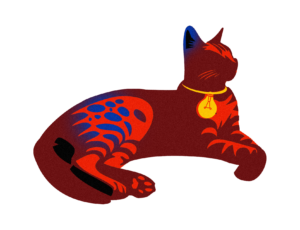
Illustration of a catJean Mill ’48
Conservationist
The Big Idea: Develop a new breed of domesticated cat

When Jean Mill set out to develop an entirely new breed of cat, she had a loftier goal in mind than merely creating a beautiful feline. Mill, who studied genetics at UC Davis after graduating from Pomona, was motivated by an interest in conservation. If people could own a domestic cat that looked like a wild leopard cat, she reasoned, there would be less poaching of wild-caught exotic felines. To create a cat with the spotted coat of a wild leopard cat and the tame and friendly nature of a house pet she crossed an Asian leopard cat (Prionailurus bengalensis) with domestic cats and then selectively bred the offspring over many generations. Eventually, the bengal cat was recognized as a distinct breed by the International Cat Association. Today, it is one of the most popular and sought after breeds of cat in the world.

Sharon Camp ’65
Public Policy Expert
The Big Idea: Get emergency contraception directly to women who need it

Known as the “Mother of Plan B,” Sharon Camp led the effort to develop and launch the emergency contraceptive in the U.S. Before Camp committed herself to the cause, major pharmaceutical companies in the U.S., fearing potential backlash, had shied away from developing and marketing emergency contraception. Camp, who previously led a nonprofit focused on reproductive health, had seen firsthand the harm caused by poor reproductive care in developing nations and knew the importance of getting contraception directly into the hands of women and making abortion safer. In the late 1980s, she worked to bring Mifepristone to the U.S. and a decade later founded Women’s Capital Corporation as a three-person startup, overcoming a slew of hurdles to develop and commercialize Plan B—the so-called “morning after” pill. Bridging research, public policy and pharmaceutical development, Camp, who died in 2025, transformed access to emergency contraception, impacting millions of women’s lives.

Illustration of Star Wars VFX elementsRobert Blalack ’70
Visual Effects Artist
The Big Idea: Create “impossible” visual effects

Anyone who has seen the first Star Wars movie has witnessed the jaw-dropping work of Robert Blalack. A trailblazing visual effects artist, Blalack co-founded Industrial Light & Magic (ILM) and helped create many of the modern visual effects techniques that have transformed filmmaking. His work on Star Wars, which immersed audiences in a believable world of spacecraft battles and glowing lightsabers, won him an Oscar for Best Visual Effects in 1978. Blalack, who began developing his filmmaking skills while at Pomona, is known as much for the processes he developed as he is for specific techniques. Before ILM came on the scene, visual effects consisted of hundreds of individual effects created shot by shot. Blalack and ILM figured out how to scale the process and combine multiple film elements into a convincing final shot. The workflows ILM developed—where separate elements are created, tracked, composited and integrated through a standardized pipeline—laid the groundwork for modern VFX studios.

Mikey Dickerson ’01
Software Engineer
The Big Idea: Modernize government software

If you tried to sign up for “Obamacare” health insurance in 2013, when HealthCare.gov went online, you might have experienced glitches with a website that crashed within hours of launching and seemed doomed to failure. Enter Mikey Dickerson, then a site reliability engineer at Google, who was brought in to overhaul the government website. The recovery team he headed up stabilized and rebuilt the system, allowing millions of people to sign up for health insurance. In 2014, President Barack Obama appointed him as the first administrator of the U.S. Digital Service, a new department designed to improve government technology. By bringing the same engineering standards that Silicon Valley was already using—modern software engineering, user-focused design, rapid iteration—to government systems, Dickerson changed government technology. He came back to Pomona as a professor of practice from 2021 to 2024, teaching a popular computer science elective called Managing Complex Systems.

Illustration of a man on a windsurferHoyle Schweitzer ’55
Surfer and Businessman
The Big Idea: Transform windsurfing into a global sport

Surfer Hoyle Schweitzer, who died this year at age 93, may not have invented windsurfing, but he did turn it into a global cultural phenomenon. While the idea of attaching a sail to a board had been around since the 1950s, Schweitzer and engineer Jim Drake developed and patented the first commercial Windsurfer sailboard—a board with an asymmetrical sail, a hand-held boom and a mast attached with a universal joint—in the late 1960s. With impressive business and marketing acumen, Schweitzer (with his wife Diane) whipped up interest and turned windsurfing into a hugely popular water sport enjoyed by millions during the 1970s and ’80s. Competitions, magazines and schools all devoted to the wind-powered board followed in the wake of Schweitzer’s entrepreneurial brilliance, and in 1984 windsurfing became the youngest sport ever to be included in the Olympic Games. Modern wind-powered sports such as kitesurfing and foiling owe a direct debt to the windsurfer and to Schweitzer’s invitation to the world to hop onboard and ride the wind.

Chinasa T. Okolo ’18
AI Strategist
The Big Idea: Make AI more equitable and inclusive

Chinasa T. Okolo, a Nigerian American computer scientist, has been named one of the most influential people in artificial intelligence by Time and included on Forbes’ inaugural 30 Under 30 in AI list. Okolo, who has consulted for the United Nations and the World Bank and contributed to the International Scientific Report on the Safety of Advanced AI and Nigeria’s national AI strategy, argues that AI must do a better job serving Africa and other parts of the Global South. Countries outside the traditional tech centers, she insists, should be included at the table in policy discussions determining the future of AI. Her research, much of it in the field, explores how people in low-resource settings, including frontline health care workers in rural India, interact with AI and how AI systems can be designed to be more understandable and useful for everyday users.

Watch This Space

These young Sagehens are making waves and getting noticed.

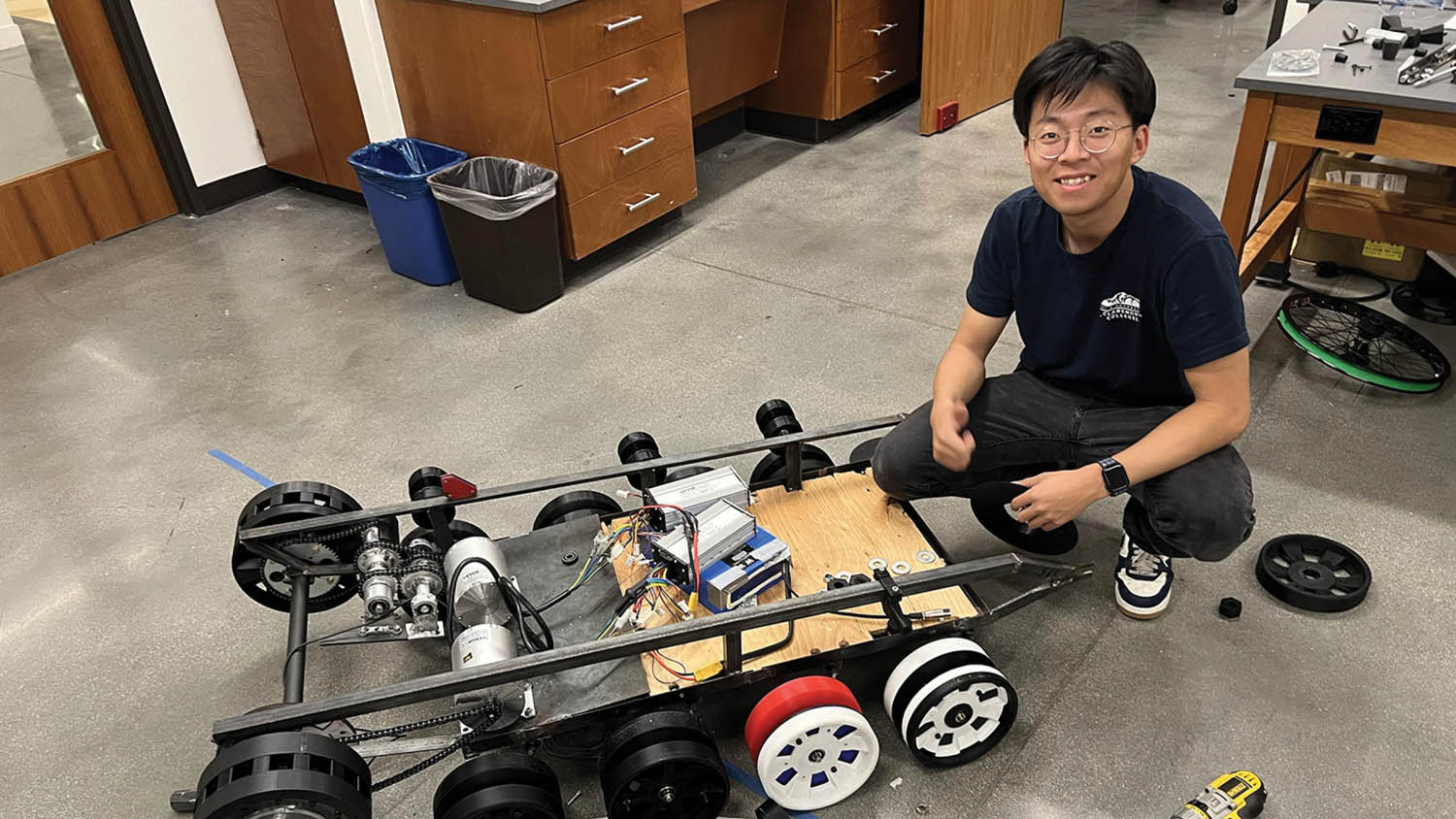
Photo of a man with a robot carDonny Lu ’26
Passion: Technology

After wide-ranging academic exploration at Pomona, Donny Lu decided in his sophomore year to major in physics, finishing his degree requirements in a year before heading to Caltech for a 3/2 program in engineering. Now living in San Francisco, he has launched Dlab Sciences, a startup that aims to automate the tool-and die-making process to build hardware more economically.

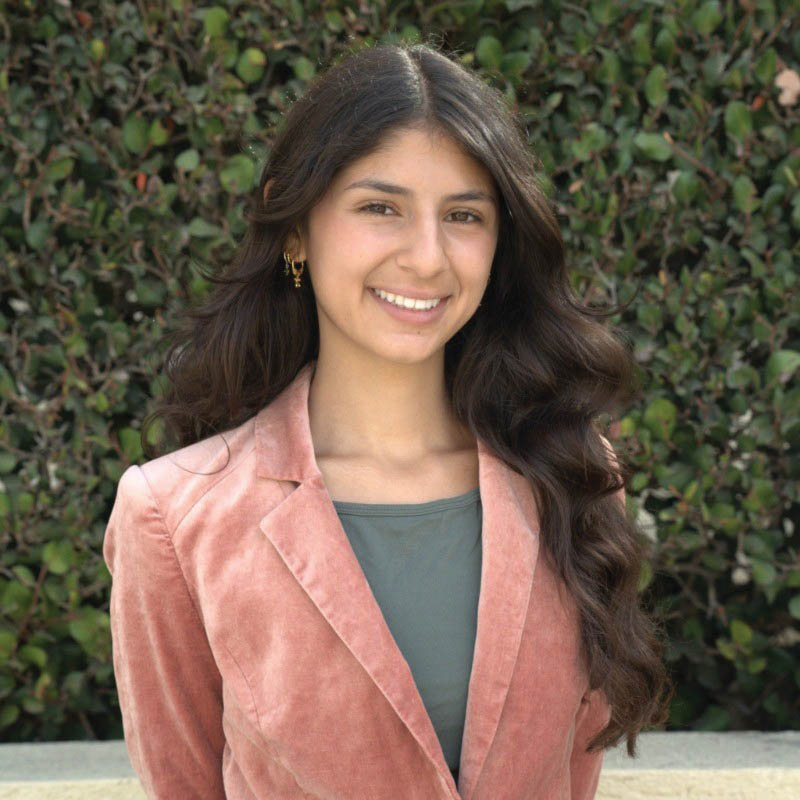
Photo of a woman smiling against a hedgeIsha Raheja ’27
Passion: Environmentalism

As well as bringing a beehive to the Pomona College Organic Farm, Isha Raheja has secured a contract with LA Metro to provide all 5C students with free transit access. Raheja is also head of Recoop and the Free Room, which has diverted 27,546 lbs of waste—clothes, shoes, furniture, books—and redistributed them to students and community organizations.

Black and white photo of a young manDevansh Taliyan ’27
Passion: Entrepreneurship

At the age of 16, Devansh Taliyan introduced India’s first carbon-neutral soap, crafted by women from Mulshi Valley. At Pomona, he led the first student-run accelerator at Claremont Colleges. He has also developed apps to connect students with tutors; to encourage real-life encounters; and to help medical clinics get every dollar they are owed by insurance companies.

Building Hiki

Jamil Karriem, founder of the Hiki app

How (and why) a Pomona alum quit investment banking and launched a friendship and dating app for the neurodivergent community.

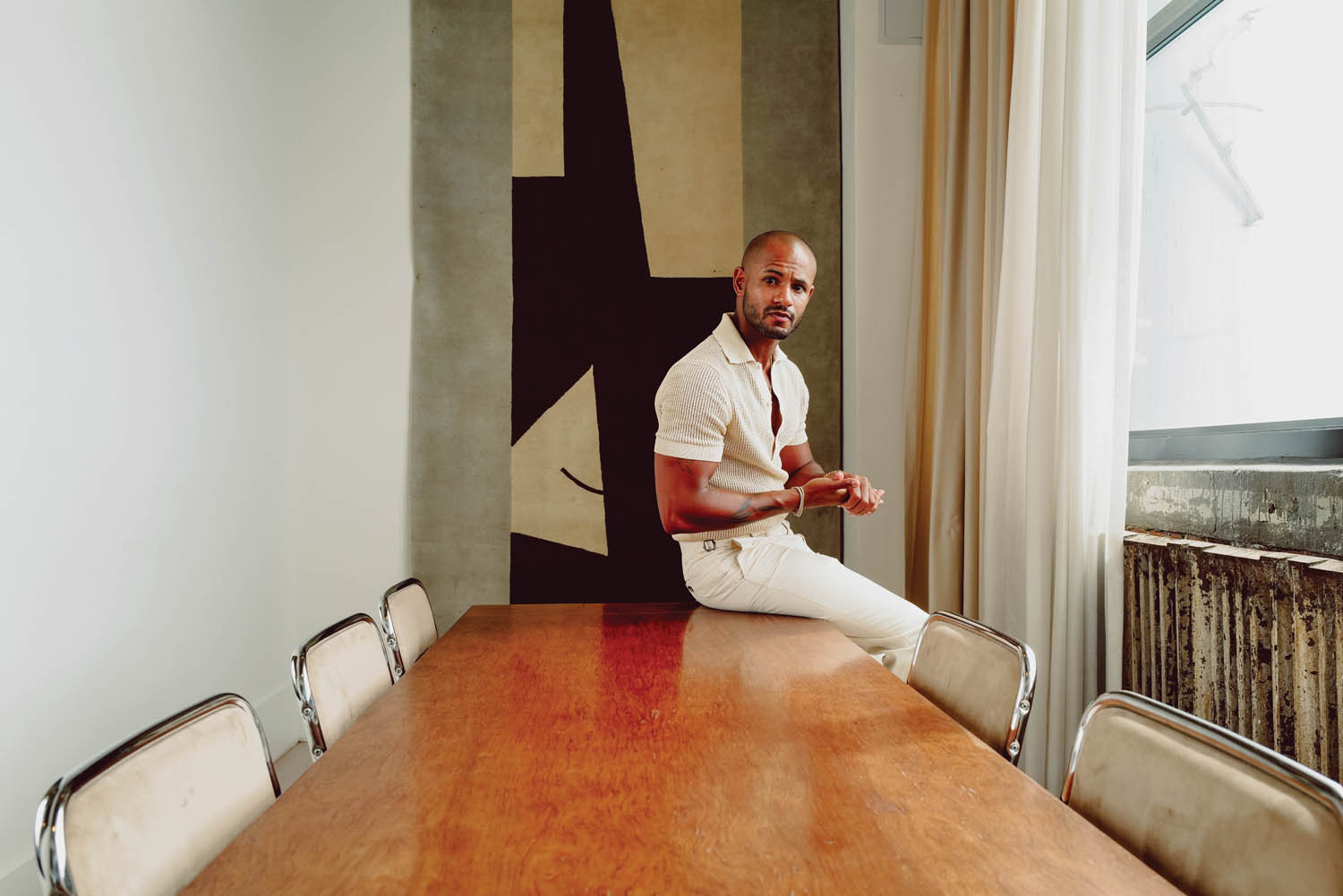
Portrait of a man sitting on a table

Jamil Karriem ’12 had just met up with his younger cousin for drinks and dinner at a trattoria in his hometown of South Orange, New Jersey, and he was worried. His cousin, with whom Karriem is very close, is autistic, and during their conversation he confided to Karriem that he was having a hard time finding friends and expressed fear that he would not be able to find a partner in life.

When he returned home that night to his brownstone in Brooklyn, New York, Karriem did some research. “What I found really terrified me,” he says. “Autistic adults were far more likely to report feelings of loneliness and far more likely to die by suicide. The research suggested it had nothing to do with neurological predispositions and everything to do with lack of access.”

Karriem decided to help. “At first I assumed I was going to Google some resources to text him, and that would be the end of it, but I just wasn’t able to find anything that I was comfortable sharing,” he says. “That sort of triggered my own educational journey.”

“Our users are seeking companionship, whether it be platonic or romantic. Also, the way neurodivergent brains often experience the world is that conceptually it wouldn’t even make sense to skip friendship to get to romance.” —Jamil Karriem

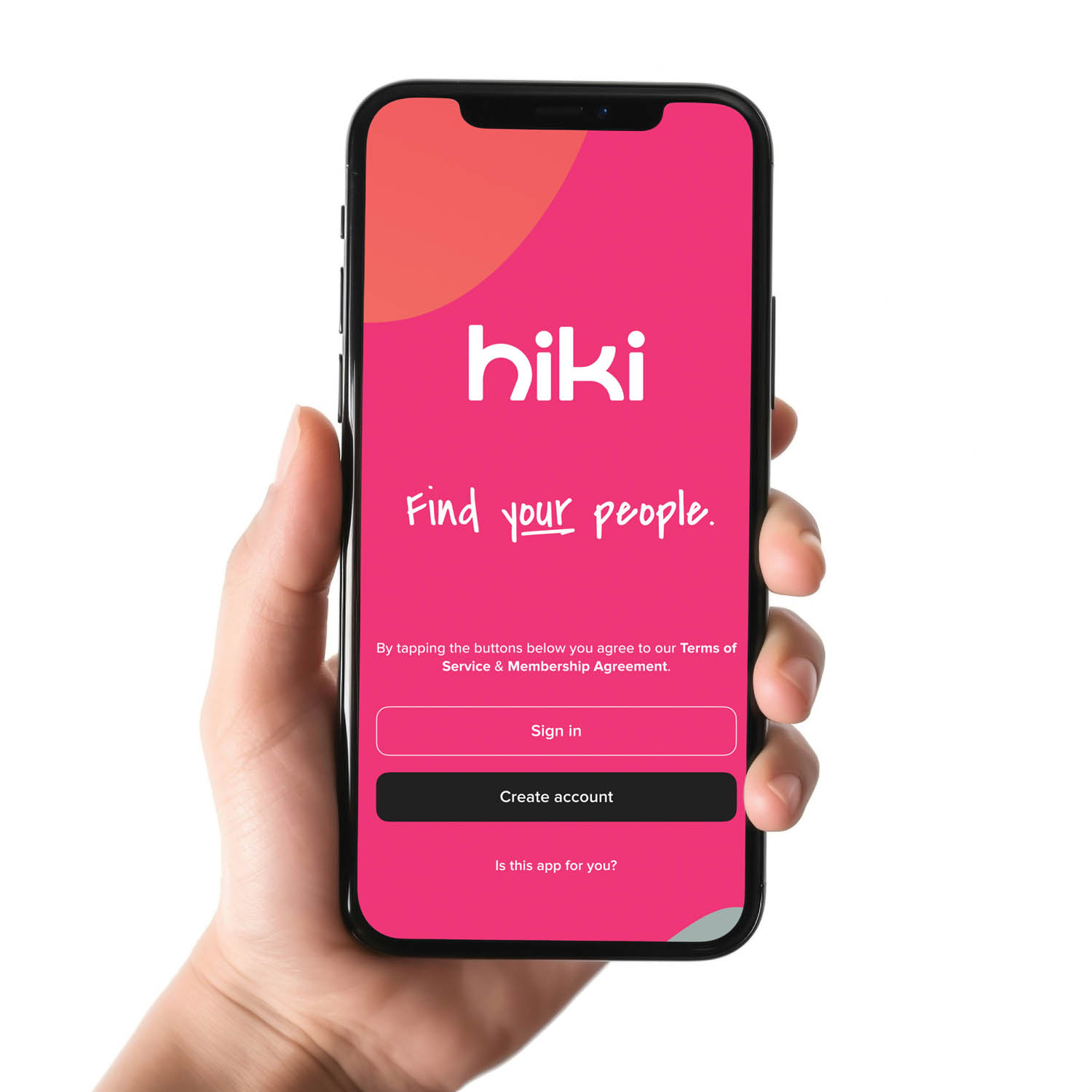
Pink logo with word HikiKarriem kicked some ideas around in his head that night and hit on the idea of creating a dating app for those with autism. Nine years later, the app Karriem first envisioned, Hiki (which means “able” in Hawaiian) has millions of downloads and half a million daily active users. In the process, Hiki has grown rapidly (it officially launched in 2019) and is now open to all neurodivergent persons. It’s expanded to be a combination friendship and dating app, which connects members interested in romance, but also includes a social media area for conversations. “Our users are seeking companionship, whether it be platonic or romantic,” says Karriem. “Also, the way neurodivergent brains often experience the world is that conceptually it wouldn’t even make sense to skip friendship to get to romance.”
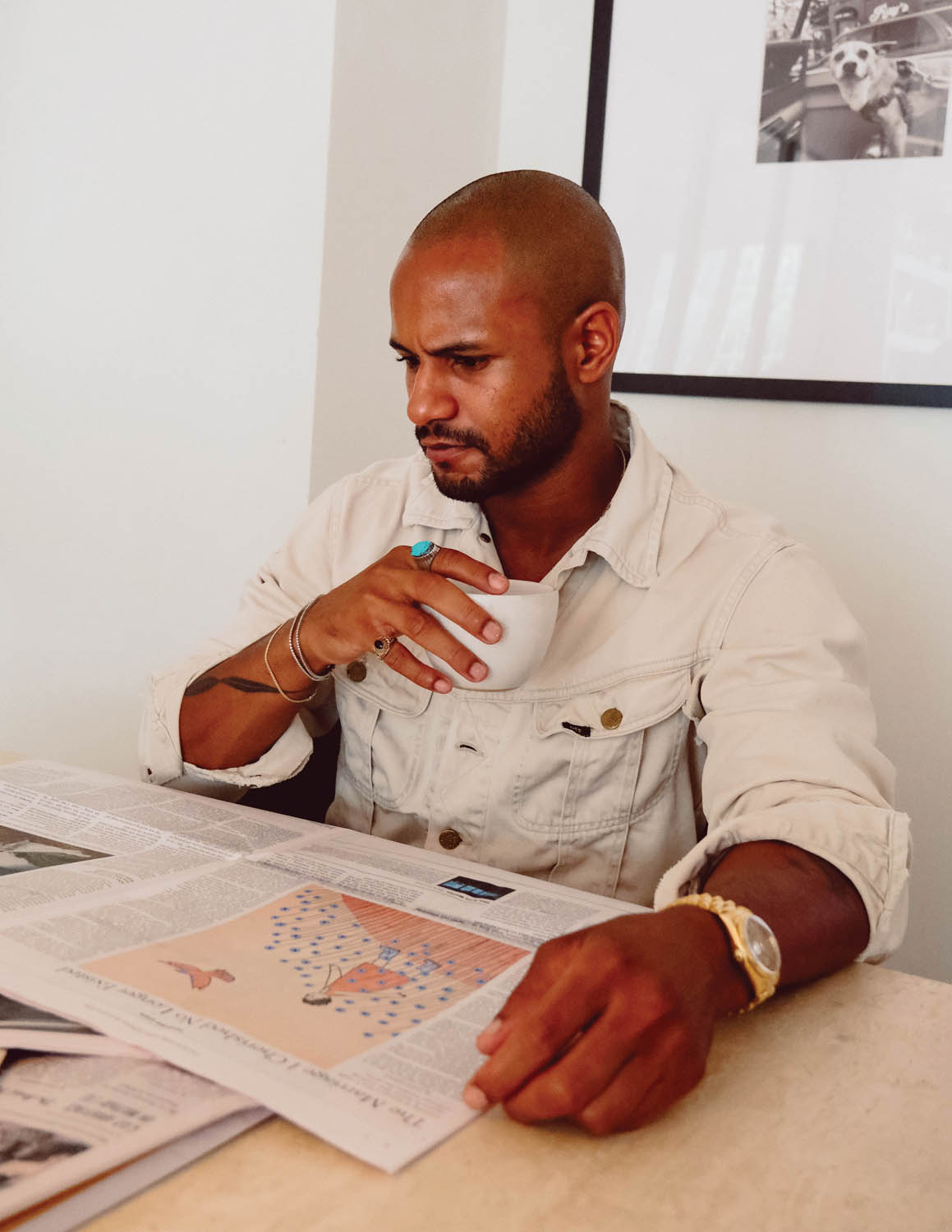
Man reading newspaperAt the start, Karriem had little idea of what his new quest would demand. He was living in New York City, working in investment banking and already had a full plate, but he knew he was onto a possibly transformational idea. “I was working all day at my job, then developing the app from 10 until 2 in the morning. Rinse and repeat,” he says. “I’m a non-technical founder—I don’t write code—which is more common now than it was then, but I know how to design with empathy and I know how to bring a product to market.”

Puzzle With 1,000 Pieces

Before designing an app, Karriem first had to learn more about people with autism. “I was dealing with a sample size of one, my cousin, and so I started reaching out to more autistic adults to learn what they were experiencing.” Karriem asked friends and family and contacted any organization he could find that worked with autistic adults to see if they knew people who would speak with him about their lives. In total, he conducted more than 1,000 interviews.

His sociology degree was a major asset. “This was all qualitative data. Shout-out to Pomona College, and to my professor, Dr. Gilda Ochoa, who was my advisor and taught me all those skills.”

“We were updating and implementing what the community wanted. Sometimes we were adding new features every day.” —Efstathios Ntonas, Hiki CTO

Contrary to the typical tech startup, where developers first seek deep-pocketed investors, Karriem instead first funded his project by emptying his savings account. From there he raised $5,000 in a pitch competition, and another $10,000 at a second pitch competition. “At the second one there was a venture capitalist who just happened to see my pitch. He wasn’t part of the competition,” says Karriem. “After I won, he took my card and then cut a check for $100,000. That’s when I quit my job. Now we’re a pretty traditional venture capital-backed startup and have raised about $5 million to date.”

The development and growth process for Hiki was relentless. Karriem and Efstathios Ntonas, the chief technology officer at Hiki, responded to new needs and ideas for the app, almost in real time. “We were updating and implementing what the community wanted,” Ntonas says. “Sometimes we were adding new features every day.”

Unique App for a Unique Group

The abundance of features and options built into the app are all part of Karriem’s goal to give users the power to customize the app as they wish, and the staff of seven at Hiki, who are also all neurodivergent, are always listening.

Hiki app shown on smart phone“We’ve built the tools to enable people to do things their own way, which is all that neurodivergent people have ever really wanted—to be supported to do what we know is right for us and be guided along the way in case things go a little wrong,” says Sef Cavendish, community moderator and user outreach coordinator. “The famous phrase is, if you’ve met one autistic person, you’ve met one autistic person. We are all so different, even though we have a lot of similar traits that have led to the construct of us sharing the same diagnosis.”

“Giving individuals control over their unique experience honors the reality that no two neurodivergent people are alike.” —Jamil Karriem

Ntonas says he more or less retains the code for the app in his head. He is tasked with implementing the massive array of controls for users and can tell right away if a change will conflict with the functionality of the site. Ntonas says the complexity is a challenge, but worth it to make the user experience of the neurodivergent community that use the app more comfortable. “There’s no part of the app that users can’t put their hands on and control.”

That is not a trivial aspect of the plan, Karriem explains. “Some things are so customizable that it can feel excessive compared to other platforms. Other details may feel redundant. We make counterintuitive decisions all the time based on our community’s input. Giving individuals control over their unique experience honors the reality that no two neurodivergent people are alike.”

Turquoise circle with a smiley faceHiki has enjoyed booming growth since its debut—Karriem estimates the user base has doubled year over year—and those on the app have responded positively. One user, a 52-year-old with autism, said Hiki had helped them break an extended cycle of isolation. Another said, “I’ve talked to more people in two hours on here [Hiki] than I have in the past 10 years probably.” Karriem has received notes from users saying they met their current spouse on Hiki. “We will be forever grateful for what you made possible,” wrote one, announcing their upcoming wedding.
Looking Inward

As part of the discovery process, Karriem learned about his own ADHD, which had been veiled to him throughout his life. “I began to think about things I struggle with. I never understood why someone changing plans at the last minute would give me extreme anxiety. When I was a kid it could lead to an outburst,” he says. “I learned coping mechanisms, but then you realize, wait, my neurotypical friends don’t have to sit alone in a dark room after they socialize. I’m just a little different.”

Says Cavendish: “In Jamil, we have somebody that took a risk and created something from a place of care for a community he didn’t even realize was his own yet. We’ve been through so many big waves that have almost broken up this boat, but we’re still here. Jamil got us through.”

On principle the company leaves money on the table that other tech firms don’t. “We don’t run ads on the platform because they’re overstimulating, we don’t track user data, and every single core feature is available completely for free,” says Karriem. “People are meeting the love of their life, and they’re meeting their best friend, or they’re finding somebody that they can talk to.”

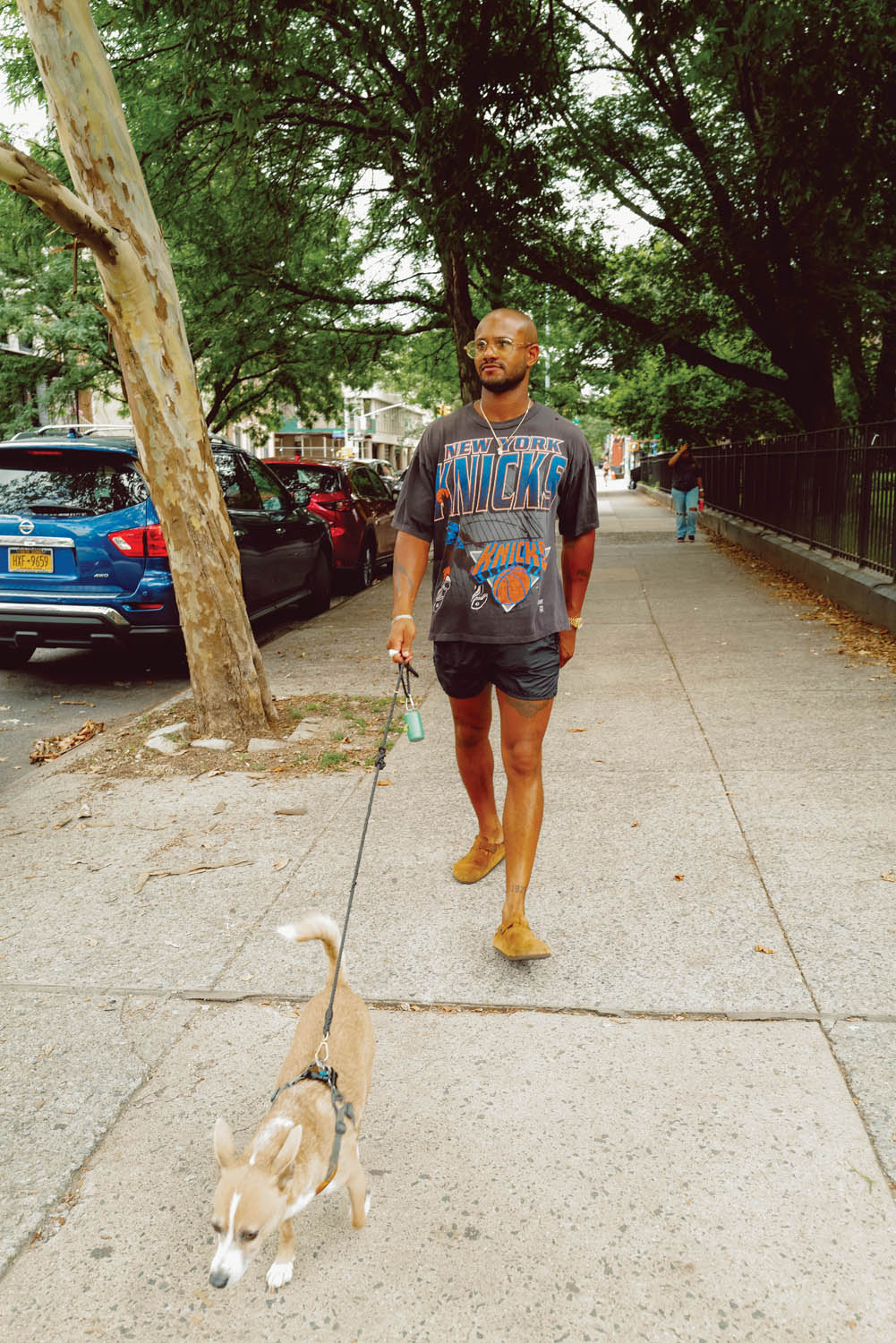
Man walking a dogHiki workers are all remote and stay in touch with a virtual meeting each morning, and Karriem has one-on-one meetings with each employee every two weeks. A typical day for Karriem begins with a 6 a.m. walk with his dog, Money (a rescue dog and likely a chihuahua mix) around his Bedford-Stuyvesant neighborhood in central Brooklyn, followed by several hours of focused work before a trip to the gym mid-morning to work out. Afternoons he typically works in a remote office, doing Zoom calls or other tasks, or he may head in to Manhattan for an in-person meeting before returning home for dinner. “I’m a huge cook, and I’m also Jamaican, so I typically make a lot of Caribbean food.”

Pomona Homecoming

During the spring semester, Susie Wise, innovator in residence at The Hive, and author of the book Design for Belonging: How to Build Inclusion and Collaboration in Your Communities, asked Karriem to join her Advanced Human-Centered Design course. “I think it was really interesting for them to get to both meet Jamil as an entrepreneur but also understand how he’s really paying attention to these deep human needs of the users on his platform, which is about making human connections,” says Wise. “So it had a really nice resonance with our using human-centered design practices.”

The class examined a Hiki feature called Match, a tool for users that helps them find people with whom they could be compatible as friends or partners. “The challenge was to reimagine it, and there were lots of interesting implications. There were four project teams, and they all built stories of ways that Match could work differently. So they built those and shared them with Hiki,” says Wise. “I think this is also a great full-circle moment when students get to work on a real-world challenge that’s brought to them by somebody from Pomona.”

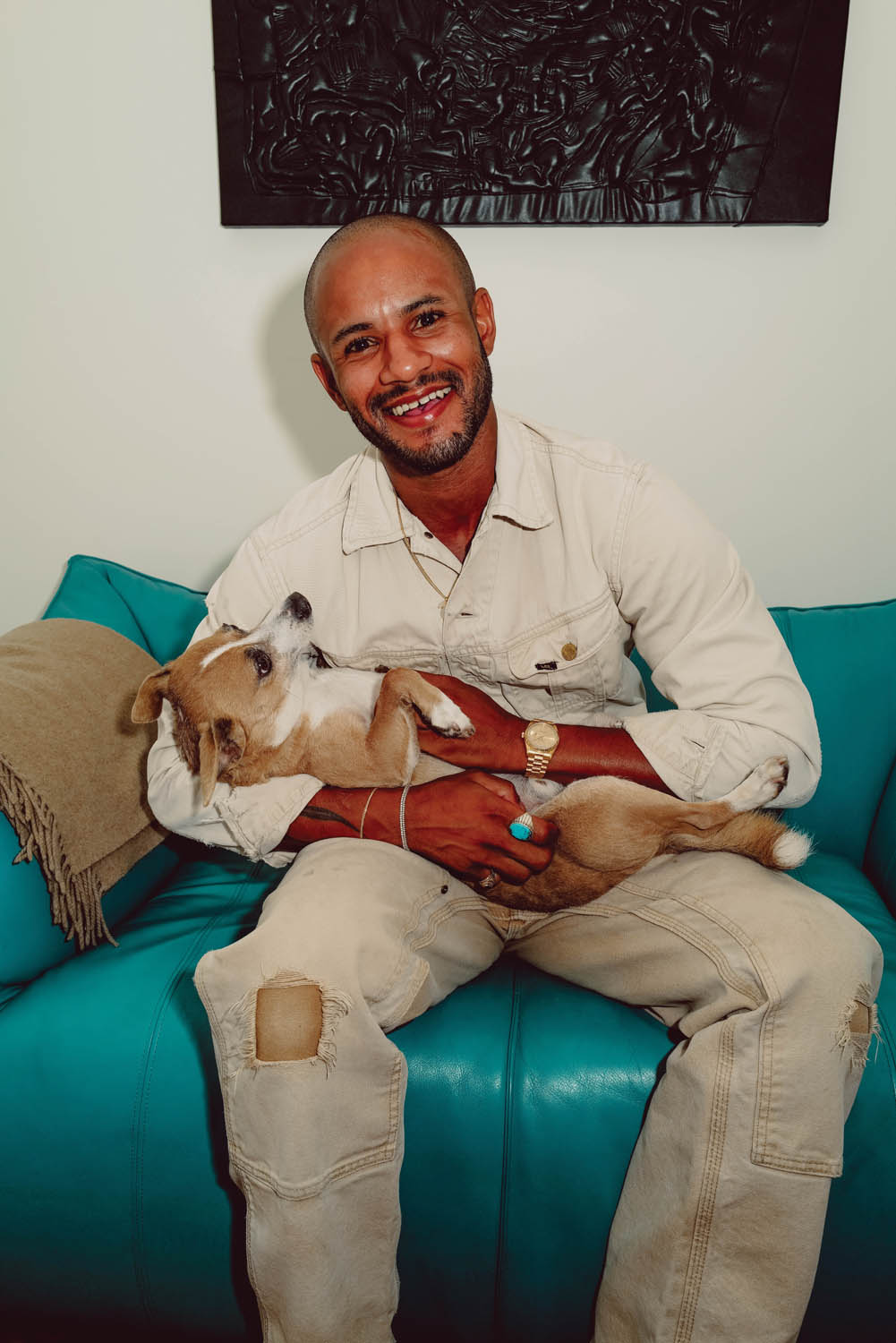
Man holding dog and smilingFor the final presentations by the class, Karriem returned to campus. It was the first time he had been back to Pomona in many years. “It was incredible. The campus is so beautiful and the energy so special. The relationships that I made on campus are still, to this day, the most important in my life,” he says. “Two of my best friends—Jesse Stoneman [’12] and Rahul Misra [’12]—married each other. They just had a baby and are literally raising her in the condo above two more of our best friends—Greg Wright [’12] and Nicola Parisi [’12]. The first person I ever met was Andre Shepley [’12] while high school seniors on prospective student weekend for students of color. We hit it off right away, were freshman roommates, and I was best man at his wedding. We’re brothers to this day.”

Karriem said the student work was excellent. “They were so full of vibrant ideas and strong opinions,” he says. “Having this outlet to teach, support and learn from the students gave me a new creative outlet that I absolutely loved.”

First-Year Read

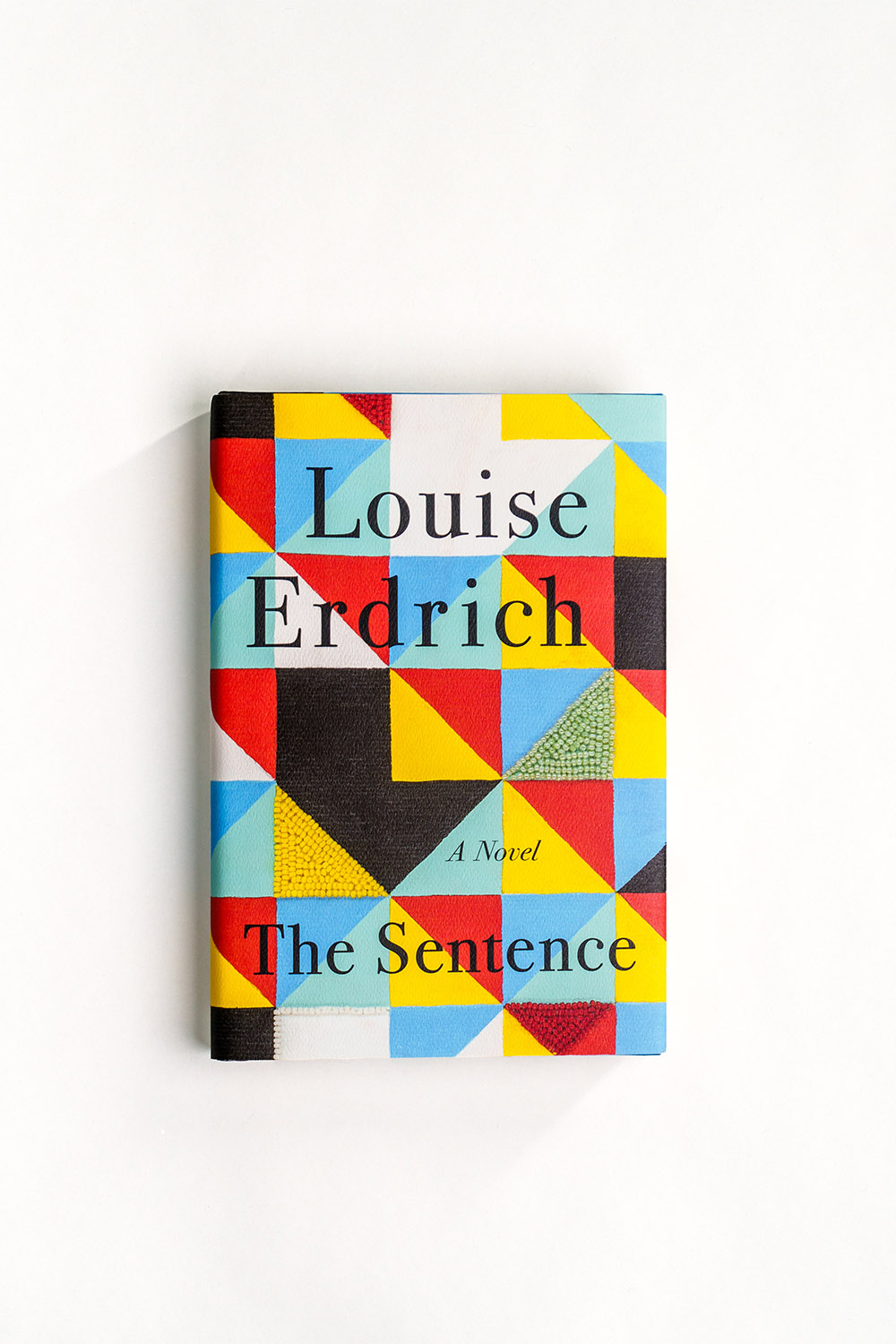
A Novel by Louise Erdrich: The Sentence,Each year, Pomona selects a work for the entire first-year class and transfers to read before arriving on campus. For 2026, the chosen book is The Sentence by Louise Erdrich.

“It takes such a fascinating approach to describe a moment in time, the pandemic, filled with constant fear and uncertainty,” says Meiya Rollins ’29. “The book is full of humor, mystery, excitement and grief that makes you keep turning the page.”

What Was Your Class Book?

Sagehens, we need your help. If you graduated before 2003, do you remember what class book you were assigned to read your first year? The first-year annual orientation book program had some stops and starts over the years, but we’d love to fill in as many blanks as possible. Write and tell us about your class book at pcm@pomona.edu.

Rethinking The Food System

A Conversation with Author Nancy Matsumoto ’80

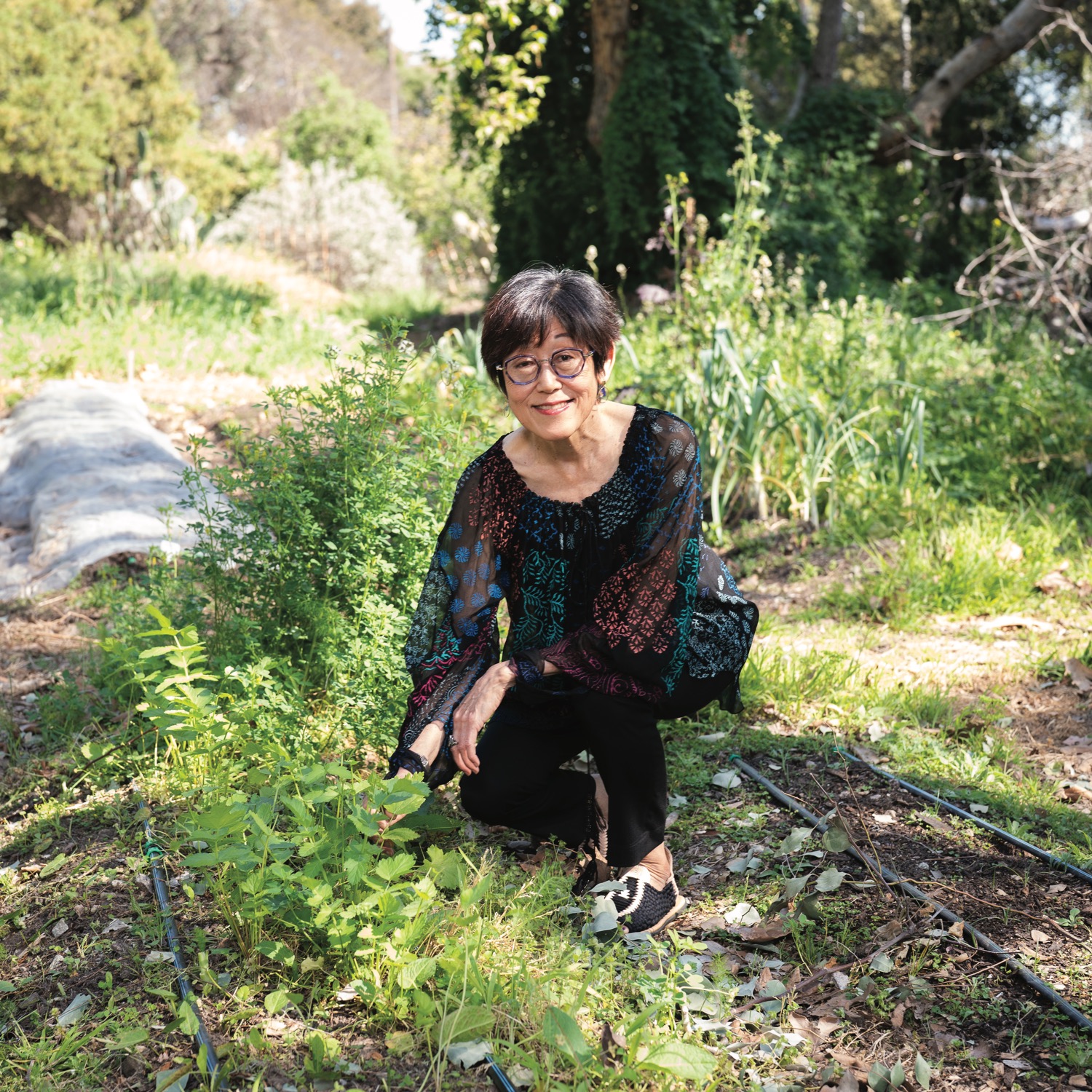
Portrait of Nancy Matsumoto ’80, author of Reaping What She Sows

Matsumoto ’80, author of Reaping What She Sows

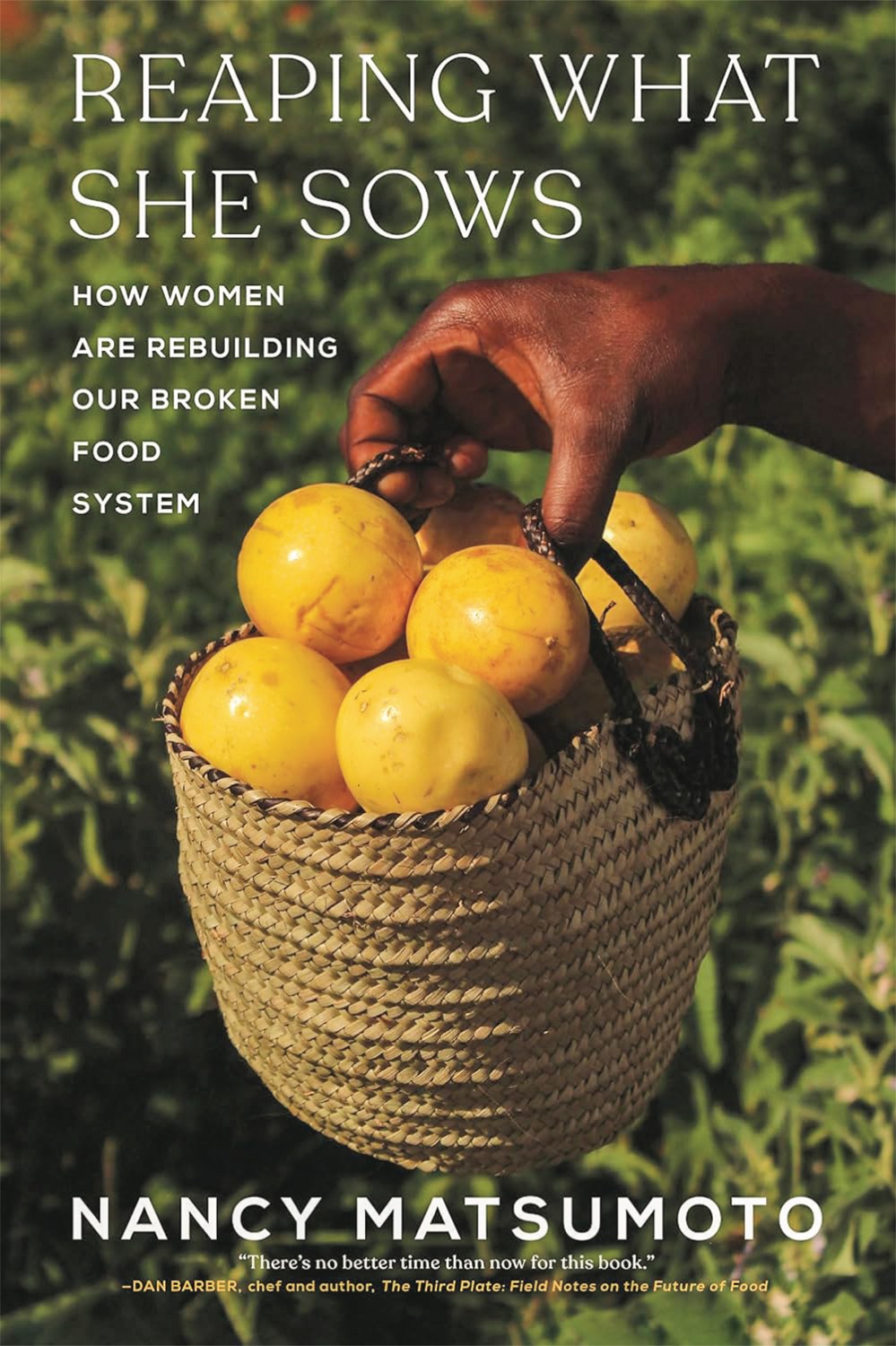
In Reaping What She Sows, award-winning author Nancy Matsumoto ’80 highlights how women farmers are quietly reshaping agriculture. Drawing on her experience as a longtime food and agriculture journalist, she illuminates an alternative food system rooted in reciprocity, community and respect for the land.

In a recent conversation with Pomona alumnus and fellow food writer Steve Sabicer ’00—author of the Substack newsletter Enlightened Omnivore—Matsumoto reflected on the personal roots of her work, the challenges and opportunities within the “alt food” movement and how flavor, community and connection can drive meaningful change.

What made this book personal enough that you felt you had to write it?

I didn’t really start this book as a personal story. I wrote it because I wanted to highlight these amazing women. And in the process of writing it, I started putting a little bit of my own story in. And what was interesting is that I realized how much my family had really shaped me, and how much of my interest in food and agriculture really came from very early experiences in my background.

My grandfather was both a fruit picker and a cannery worker up in the Pacific Northwest. Both sides of my family were in the [Japanese internment] camps of World War II. My grandmother wrote poems about being a farmer in the prison camp, and I think a connection to nature gave her a sense of agency that she wouldn’t have otherwise had.

We often romanticize local food systems, but global supply chains feed billions. What do you think about the benefits of local versus large-scale agriculture?

I think COVID was a real wake-up call to many people. Not being able to get things on the supermarket shelves was a shock. And then it also forced people to look in their own backyards and discover local farmers. They could get eggs that taste way better. And when avian bird flu came, they realized it didn’t affect their small, local organic farmer because they’re not part of the industrial poultry egg system. And so they began to see that there are real benefits to this, to not being part of a system where front-line workers were dying of COVID, where something like avian bird flu can just spread like wildfire because these are not great conditions for animals.

As a former butcher and someone raised for some of my childhood by a depression-era grandfather, wasting things was a huge deal. Do you think we’ve lost the sense of morality or responsibility about what we throw away?

Yes, and I think industry is complicit in making us that way because it’s a way to sell more stuff. If you don’t save and reuse and recycle, you buy more. You know, the way recycling works in our country is a perfect example. It’s made to make us feel good when actually it’s not really doing that much. It’s kind of like the cynical corporate mentality that wants to get us addicted to ultra-processed foods. It’s all about making more money.

And so yes, I think we’ve moved very far away from those traditional “waste not” [values]. It’s very strong in Japanese and Asian culture. And my parents were probably shaped by their wartime prison experience and their Japanese culture. That’s still very important to me, and I think it’s important for us to return to because food waste is huge.

Book Cover, Reaping What She Sows, MatsumotoYou write that taste may be one of the strongest drivers of change when it comes to agriculture. What do you mean by that?

Absolutely. There are bakers who I’ve met who are passionate about regeneration, about organic production methods, about the value of organic and regenerative grain growing, but they’re not going to mention that in their bakery or when they’re selling their goods to customers. In fact, they’re quiet about it. And some have actually said to me, you know, I don’t want to be preachy. Customers come to the bakery every week because it’s delicious. Do they know anything about the farming practice? Do they care about it? No. Not everyone is going to tell the whole regenerative story when they’re creating a delicious food. They want the food to speak for itself, which is completely legitimate.

What role do consumers play in building a better food system?

The consumer does have a big role and actually a lot of power. Of course we can all go to our farmers market. We can all grow vegetables in our backyard. But think a little bit more broadly. Does your community have a food policy council? Can you join it? Can you start one? How can we get more local and regenerative and organic sourcing for our elementary school or our charter school or our local hospital or prison? Going one step up from the individual level to the corporate, the institutional, and then you’re starting to talk about more business for these farmers who are really trying to create system change.

You have to really get in the weeds sometimes, and so work that may seem sort of nerdy and boring and geeky—digging into supply chains and sourcing—can actually be a source of real community and joy.

What gives you hope about the food system right now?

I think it’s really these amazing women that I meet all over the country. Every event I do, I meet more and more incredible people who are thinking of innovative ways to make a difference. You have dropouts from corporate America, people like you who are moved to join this movement because it speaks to them. And I can’t tell you how much joy there is in the room when you’re with people and they are energized. It is really one of the most rewarding parts of doing this work.


The Healing Power of Art

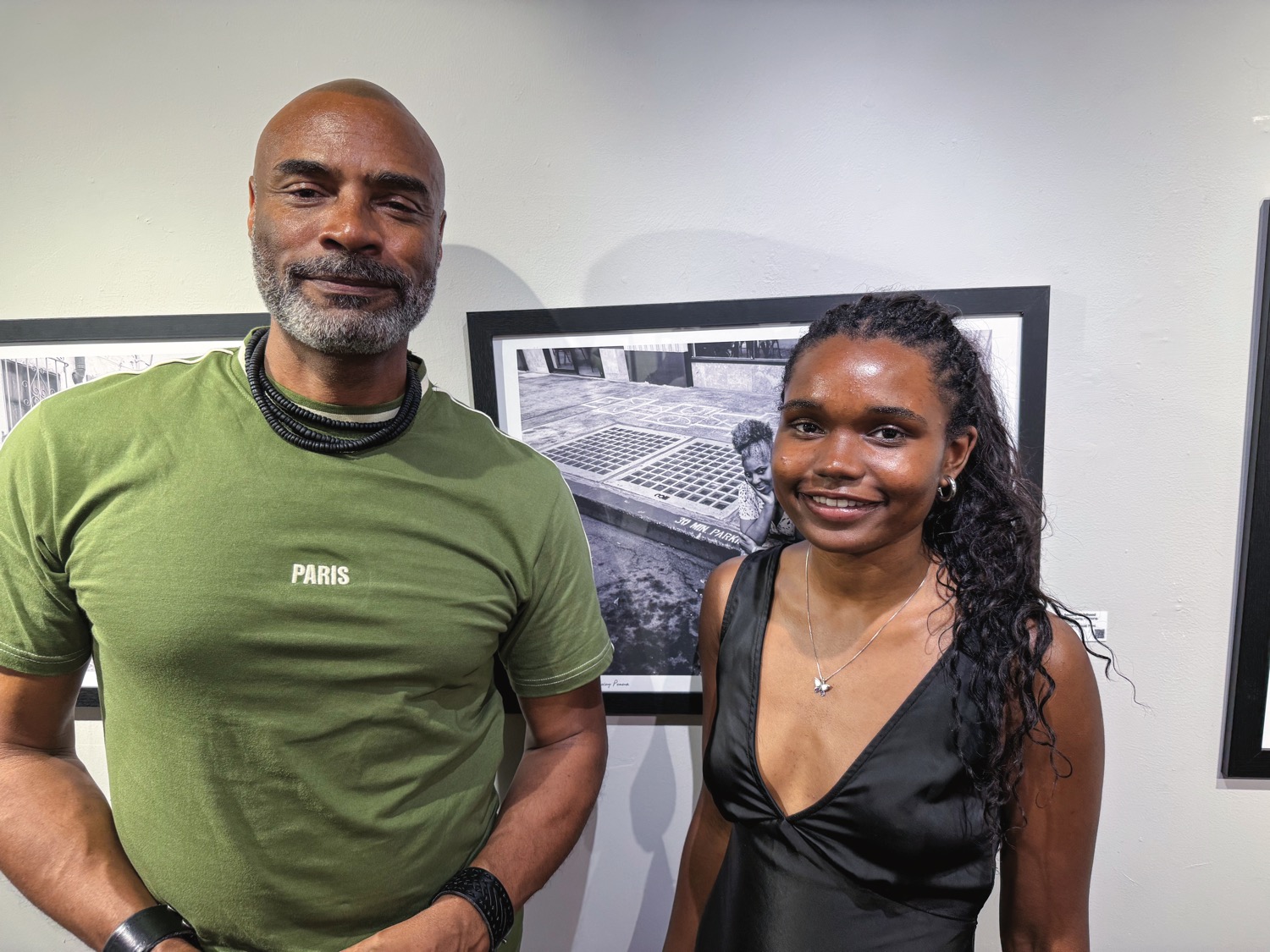
Photographer Alfred Haymond with Aminah Augustin ’28.

Photographer Alfred Haymond with Aminah Augustin ’28.

When Associate Professor of Sociology Pamela Prickett met Alfred Haymond, a photographer who lost his Altadena home in the 2025 Eaton Fire, she knew she wanted her students to hear his story firsthand.

Haymond’s photographs, which capture everyday Black life in Los Angeles, “help bring some of the theories and histories we read about in class into new, real-life perspective,” says Prickett.

In April, she took a group of her Urban Sociology students to the Sasse Museum of Art in Pomona for a private tour of Haymond’s exhibit “Observations in B&W.” Haymond talked about his art and also about the human toll of the fire and how artists have been healing and helping others to heal through their work.

“Alfred depicted what it was like to be in the community of West Altadena,” says Aminah Augustin ’28, “showing how lively, artistic and innovative it was.”


Benton Receives Saul Steinberg Gift

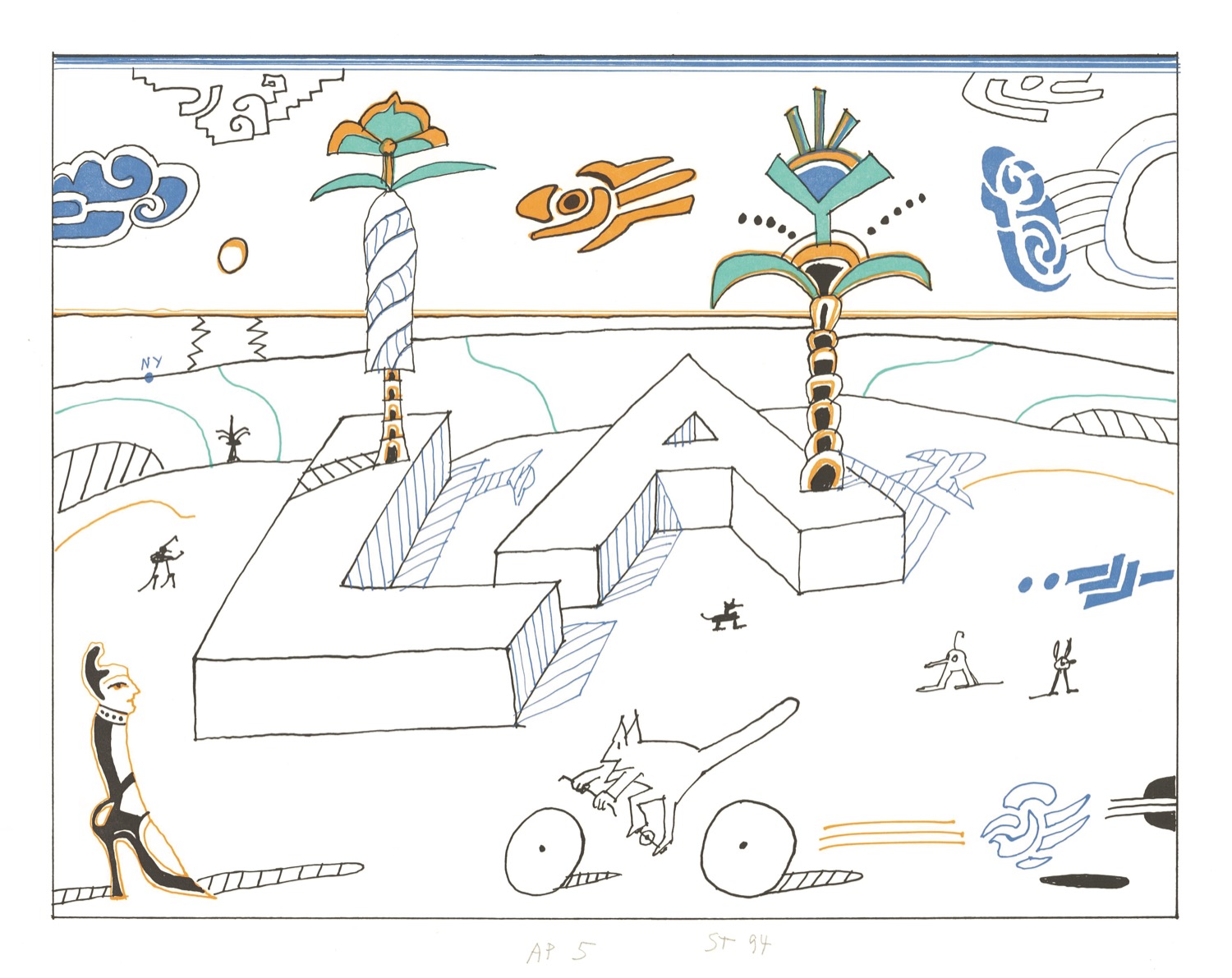
Saul Steinberg, LA, 1994. Photoengraving on wove paper. Pomona College Collection, Gift of the Saul Steinberg Foundation

Saul Steinberg, LA, 1994. Photoengraving on wove paper. Pomona College Collection, Gift of the Saul Steinberg Foundation.

Pomona’s Benton Museum of Art recently announced a gift of 76 works of art by Saul Steinberg from the Saul Steinberg Foundation, a nonprofit established by the artist in his will. The gift encompasses a wide range of two- and three-dimensional media—from prints and drawings to wooden objects—and celebrates Steinberg’s constantly evolving artistic practice and his deep level of engagement with the people and objects around him. “We are especially proud,” says Museum Director Victoria Sancho Lobis, “to preserve and interpret not only the work for which Steinberg is best known, but also the kind of creative projects that best reflect his humanity and that can inspire young people in embodying the values of curiosity, exploration and discovery.” Lobis is curating an exhibition organized around the gift that will take place at the museum this fall. Stay tuned for more details.

Neuroscience Meets Dance in Move Your Body, Grow Your Brain

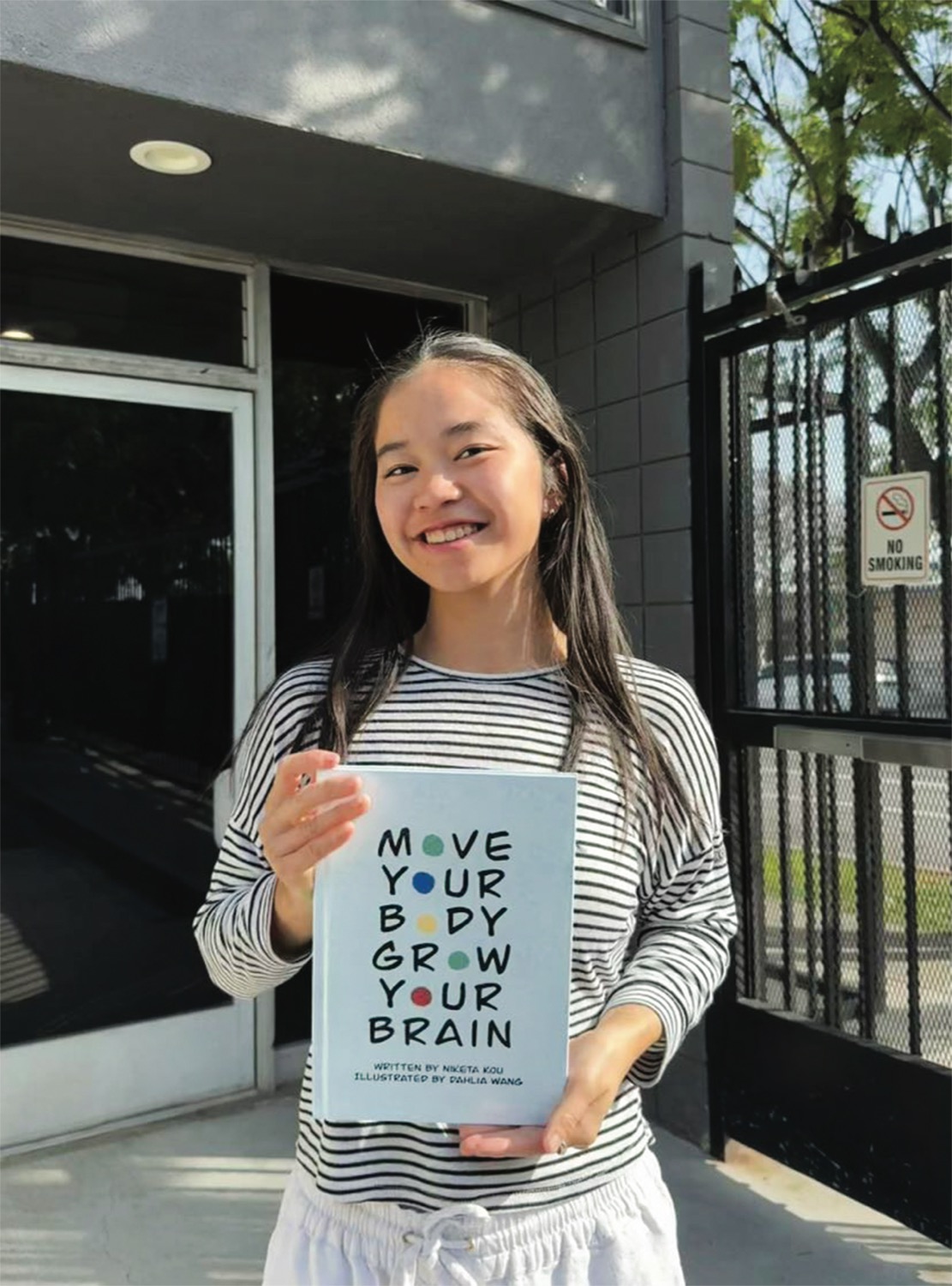
Niketa Kou ’25 with her book, Move Your Body, Grow Your Brain

Niketa Kou ’25 with her book, Move Your Body, Grow Your Brain

Niketa Kou ’25 created a children’s book for her senior thesis to spark curiosity and encourage young readers to explore both movement and science.

A lifelong dancer from Taiwan who double majored in dance and neuroscience at Pomona, Kou worked with Jonathan T. King, director and assistant professor of neuroscience, and the writing partners at the Center for Speaking, Writing, and the Image (CSWIM) on a narrative explaining the brain in a fun, accessible way.

In April 2025, Kou self-published Move Your Body, Grow Your Brain.

“In the book, Lazy Larry goes on a journey with Nike the Neuron and learns that physical activity strengthens neural connections and encourages new ones,” she says. “It also boosts blood flow and oxygen to the brain, supporting neuron health and improving memory and learning.”

As she brainstormed possible neuroscience theses, Kou drew inspiration from her time explaining complex ideas to children as a tutor. A longtime believer in the power of movement as medicine, she decided to explain the science behind her conviction.

“I thought, ‘As a kid, I would love to know these things.’”

Kou collaborated with illustrator Dahlia Wang SC ’24 to give her words life. Across 32 colorful pages, Move Your Body, Grow Your Brain encourages young readers to explore both movement and science. Several pages include a physical activity to try and an explanation of its scientific benefit.

Kou’s project thesis was a natural extension of her longest hobby, dance, where she experienced—long before neuroscience gave her the language for it—how movement affects the mind and body.

While she danced ballet growing up in Shanghai, Kou fell in love with contemporary dance in high school and chose to explore the expressive, evolving genre at Pomona.

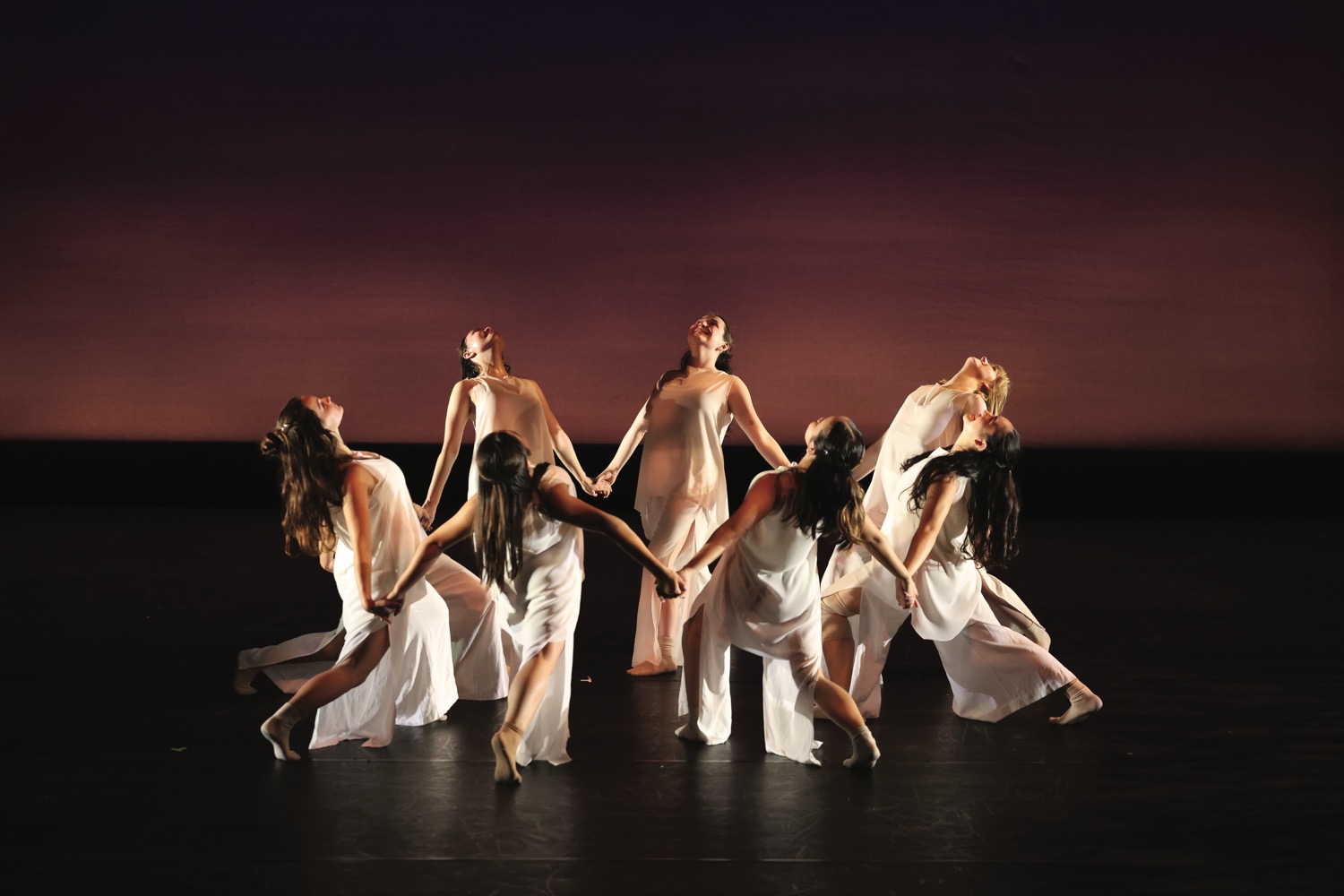
Kou started choreographing her sophomore year, a responsibility that transformed the way she thought. Beyond creative growth, she says,

Dancers in Niketa Kou’s senior thesis performance.

Dancers in Niketa Kou’s senior thesis performance.

choreography pushed her to trust her instincts, embrace uncertainty and approach problem-solving with curiosity rather than perfectionism.

Ahead of her senior year, Kou danced in Berlin on a summer scholarship. When she returned to Claremont, she says she had a more expansive, flexible mindset shaped by movement.

“The beauty of dance is getting to slow down time and have fun, which can be hard as a college student,” she says. “Movement changed the way my mind and body responded to pressure. Dance became a space where I could reset mentally and reconnect physically.”

A medical assistant by day, Kou moonlights as a freelance dancer in and around Los Angeles.

“I’m still living that Pomona College life—balancing both sides of me,” she says.

Letter Box

Remind Me

I enjoyed the article in the current issue of Pomona College Magazine about the tradition of assigning a book for all first-year students to read. However, in polling friends of mine also from the Class of ’68, none of us has any recollection of that happening. Can you advise what the book was that was assigned to the Class of ’68 (incoming freshmen in 1964)? Maybe that would spark a memory! Thank you!

—Peggy Halstad Templer ’68

I love the magazine. The Winter 2026 issue had an article by Paul Eckstein ’62 on the summer reading books that freshmen are assigned. Is there any way someone can tell me what the freshman summer reading was for the incoming Class of 1979? I’ve asked all my alumni friends and none of us remember. Thank you so much! We would love to be reminded!

—Gabriela Vazquez ’83

As a Pomona College graduate I treasure each issue of the Pomona College Magazine. As a student who transferred from Pitzer in my junior year, I did not get the same bonding experience of sponsor groups that first-years receive. But even 50+ years later, I would love to read the book that my class read their first year. The photo of the big stacks of books that you feature each year never goes back to the Class of 1973 so I am wondering if you could send me a list of all the titles, by year, from the inception of the program. If not, I would be happy to at least get the title of the book the freshman class that graduated in 1973 read.

—Georgia Hall Chun ’73


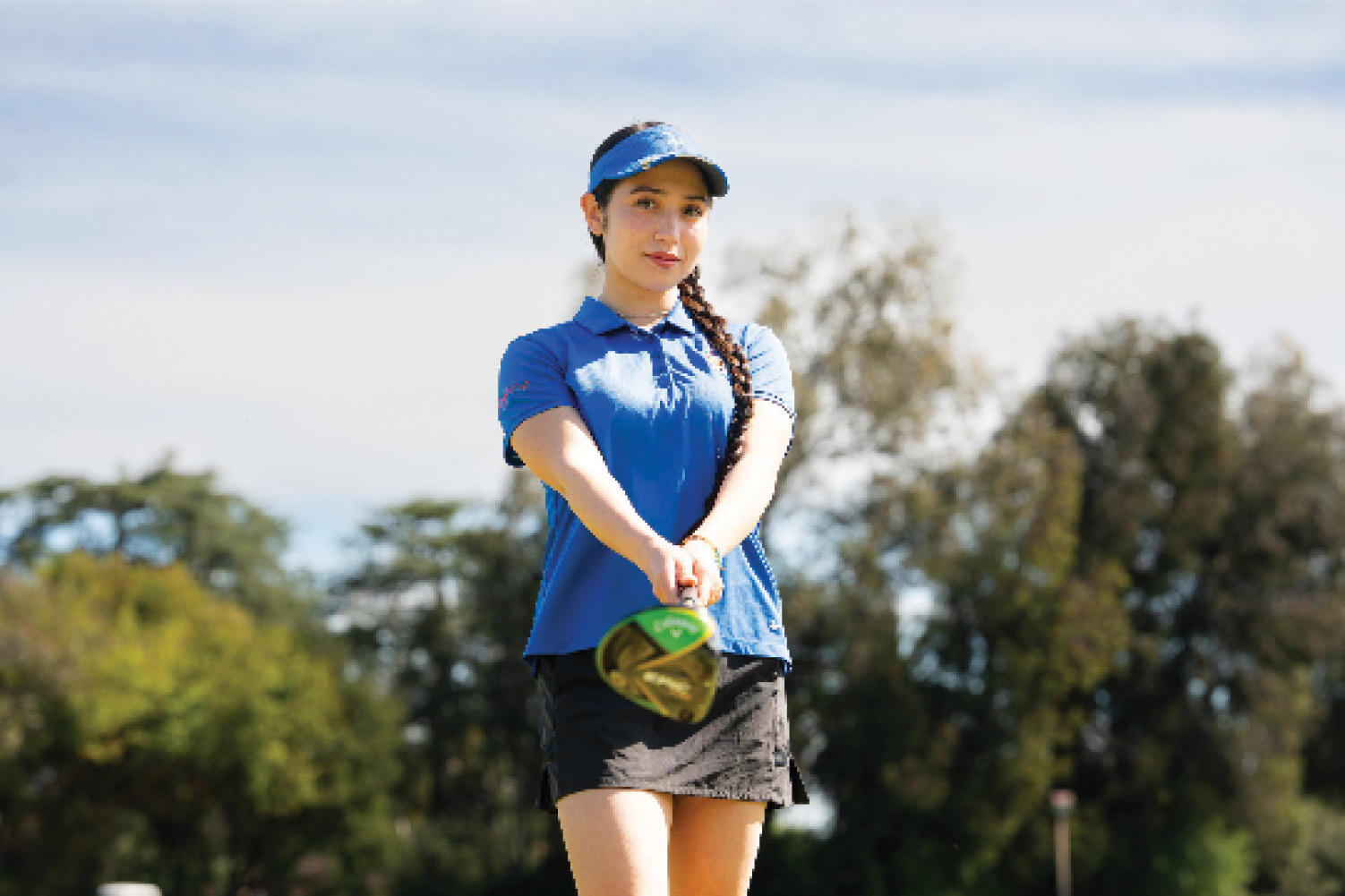
Rachel LeMay ’27, a neuroscience major, is the only women’s golfer to earn All-American honors her first two years in Sagehen blue.

Rachel LeMay ’27, a neuroscience major, is the only women’s golfer to earn All-American honors her first two years in Sagehen blue.

Fore!

I enjoyed reading about Sagehen athletics shining in the fall season but was a bit surprised and disappointed to see that there was no mention of the men’s or women’s golf team, which competed in both the fall and the spring. These student-athletes make quite a sacrifice to compete in two seasons and seeing how there was no mention of them at all, it seems like quite an egregious omission!

I do not golf myself but having three kids (hopefully future Sagehens!) involved in junior golf, I get to see firsthand the amount of time/work/sacrifice these collegiate golfers make to play the sport that they love.

—Dan Tzuang PO’98
Interim Associate Dean of Students
of Health and Wellness 2015

Editor’s Note: While the men’s and women’s golf teams play in the fall, their traditional seasons are in the spring, with invitationals between February and May, culminating with the conference and NCAA finals. The few fall tournaments they play in do not count toward records or standing.


Corrections for Winter 2026 Issue

In “They Got Mail” (Page 42), several of the names for the caption accompanying the senior class photos were mistakenly transposed. The caption has been corrected online. Read the full story at magazine.pomona.edu/they-got-mail

Write to Us at PCM

Pomona College Magazine welcomes brief letters to the editor about the magazine and issues related to the College from the extended Pomona community—alumni, parents, students, faculty, staff, donors and others with a strong connection to the College. Write to us at
pcm@pomona.edu or mail a letter to Pomona College Magazine, 550 N. College Ave., Claremont, CA 91711. Letters should include the writer’s name, city and state of residence, class year for alumni and contact information. With rare exceptions, letters should be no more than 400 words in length. Letters are selected for publication based on relevance and available space and are subject to being edited for brevity and clarity.