
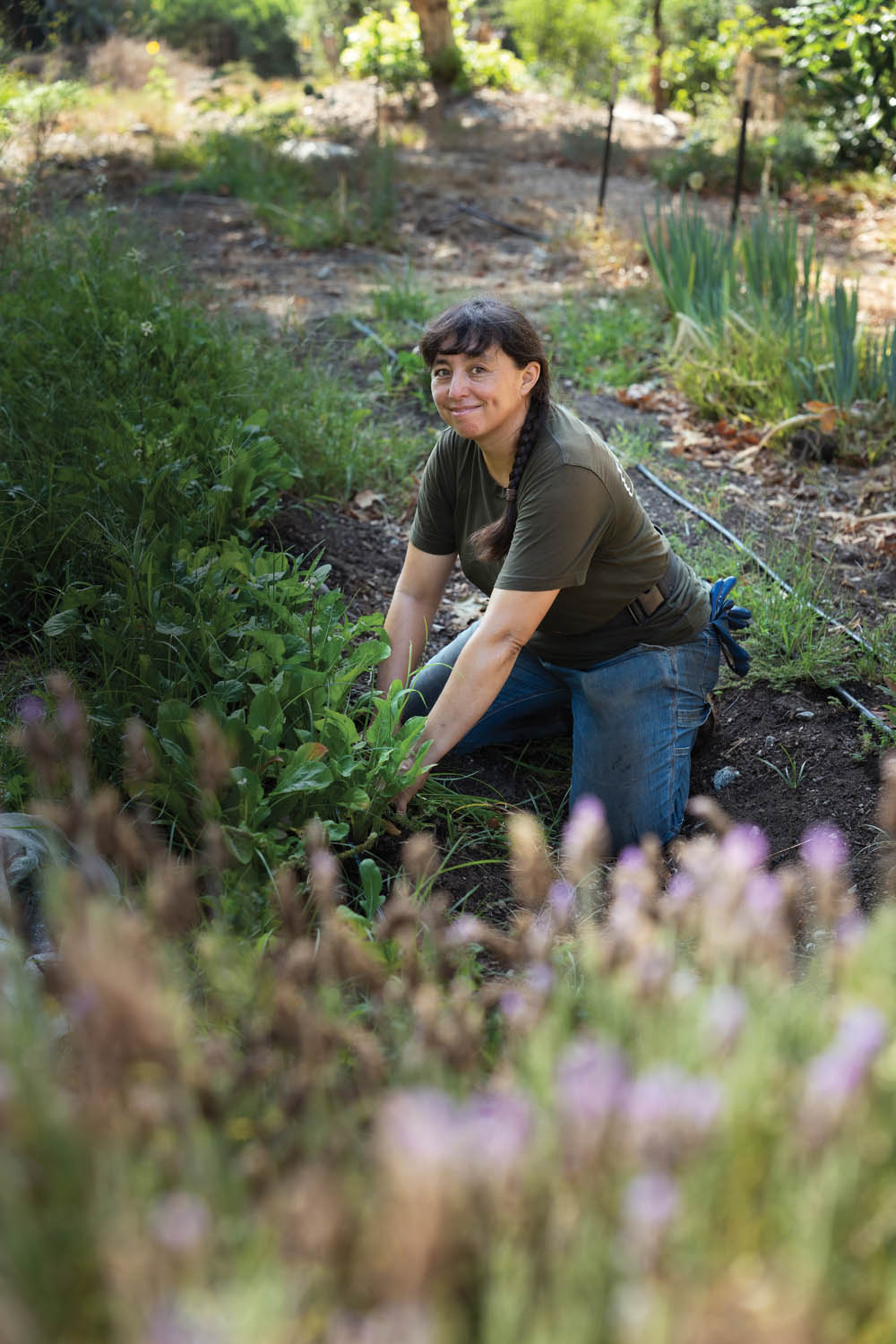
 Hidden away in the far southeast corner of campus, the Pomona College Organic Farm is home to a native plant garden, a composting system, lush fruit orchards and 50 beds of vegetable crops, as well as a small flock of friendly chickens. Jillian Gomez has overseen the farm since 2021.
Why should folks visit? It’s just a beautiful space and it’s good for people’s mental health to come out here and take a break. It’s also great for learning about nature and sustainable agriculture and land management. Beyond that, we want the broader community to be involved as much as possible—we recently had a soil fest here put on by a local organization. People are surprised this exists in the middle of Claremont.
How are students involved? We have a compost crew, which is usually about five students, and farm assistants—we had seven or so last semester. Students tend to come back each year. I think people who are drawn to work with the farm tend to stick around and get really committed.
A typical day? Every day is different. It always starts with going around checking on things. How is the compost doing? How are the bees doing? How is the pond doing? A student installed the pond as her senior project to create a habitat for native frogs. So, I’ll check on that. It’s part of my job to make room for students to have ideas and try stuff.
The fun parts? I love being outside. I learned early on that I wasn’t cut out for indoor office work. I love to be outdoors. I like problem solving and there are so many opportunities for little improvements and big improvements.
The biggest challenge? Number one is squirrels. They eat everything. The ground squirrels are a native species, so they’re supposed to be here, but their population is way out of control. It’s especially bad in the summer, when the juveniles are coming out of the burrows. The population triples or quadruples depending on how big the litters are.
What’s new? The compost program is always a big thing. In the past couple of years, we’ve been trying to expand the percentage of food waste we take from the dining halls. At the same time, we’re dealing with new and emerging pest issues. This summer I’ve been trying to figure out how can we secure the compost from the coyotes, who have suddenly shown an interest in getting into those food sources.