Lee C. McDonald ’48
Emeritus Professor of Politics
1925-2021
Lee C. McDonald ’48, a former dean of the College and emeritus professor of politics, died on December 29, 2021. He was 96.
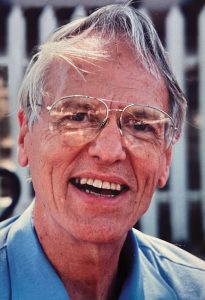 A professor at Pomona for nearly 40 years, McDonald taught government and political theory from 1952 to 1990, serving as dean of the College from 1970 to 1975. His daughter Alison McDonald ’74 recalls that during his years as dean, McDonald enjoyed working closely with President David Alexander and other administrators. But he always said that being an administrator meant “saying no” and he found it hard to say no. After five years, he returned to teaching, which he loved.
McDonald won Wig Awards for excellence in teaching—voted on by students—in very different student political eras, one amid the turmoil of 1968 and another in 1989, the year George H.W. Bush succeeded Ronald Reagan as president, even though students knew McDonald was a staunch Democrat. He is remembered each year at commencement with the Lee Cameron McDonald Prize in Political Theory, which is awarded by the Department of Politics to the best senior or junior in the major.
His talents as a dean and colleague were also greatly appreciated, remembers Emerita Professor of Politics Betsy Crighton.
“Lee was one of the first people I met when I interviewed at Pomona College in 1975. He was the dean of the College, and I was a young candidate for a faculty position. Memorably, he said almost nothing during the interview: just sat quietly and listened. That quality of attentiveness—accompanied by wisdom, good humor, and restraint—built deep trust in his leadership. He was a gentle yet powerful force in the politics department, in the College and in Claremont.”
Born in Salem, Oregon, McDonald started college at the University of Oregon but joined the Army as soon as he turned 18. The year was 1943. He spent the rest of World War II training as a fighter pilot and while stationed at Santa Ana Army Air Base in Orange County, he visited a high school friend at Pomona College. There he struck up a friendship with a student named Claire. The two wrote to each other for the duration of the war before marrying in August of 1946. McDonald joined Claire Kingman McDonald ’47 at the College and finished his degree at Pomona, where he was inducted into Phi Beta Kappa and graduated magna cum laude.
Afterward, McDonald used GI Bill benefits to earn a master’s degree in political science from UCLA and a Ph.D. from Harvard. In 1952, McDonald was offered a position teaching government at Pomona. He and Claire happily returned to Claremont, where they would spend their lives, raise their children, and remain active in the life of the College even after retirement. He was awarded an honorary doctor of laws from Pomona in 1998, and he and Claire received the Alumni Distinguished Service Award in 2009.
McDonald’s students have continued to write to him for years. As recently as August, Jon Fuller ’60 wrote to congratulate McDonald and Claire after reading about their 75th wedding anniversary in the Claremont Courier. In his letter, Fuller recalled how McDonald phoned him after his graduation to tell him and a friend about opportunities to serve as volunteer drivers at the 1960 Democratic Convention even though “you knew very well that we both then identified as Young Republicans.” Fuller called the convention “one of the most memorable experiences of my life,” recalling how he briefly sat next to Eleanor Roosevelt, who handed him a campaign souvenir as she left.
As a professor, McDonald loved wrestling with complex ideas. Among his many publications was a textbook, Western Political Theory, which was used in colleges for many years.
As members of the community, McDonald and Claire were founding members of the Claremont Presbyterian Church in the mid-1950s. In 2003, the couple moved to the Mt. San Antonio Gardens retirement community in Pomona.
McDonald is survived by his wife Claire, daughter Mary ’71 and son-in-law Jack; daughter Alison ’74 and daughter-in-law Sandy; son Paul and daughter-in-law Susan; five grandchildren and two great-grandchildren. His daughter Devon died in 1957, daughter Julie ’74 died in 1996 and son Tom in 2010.
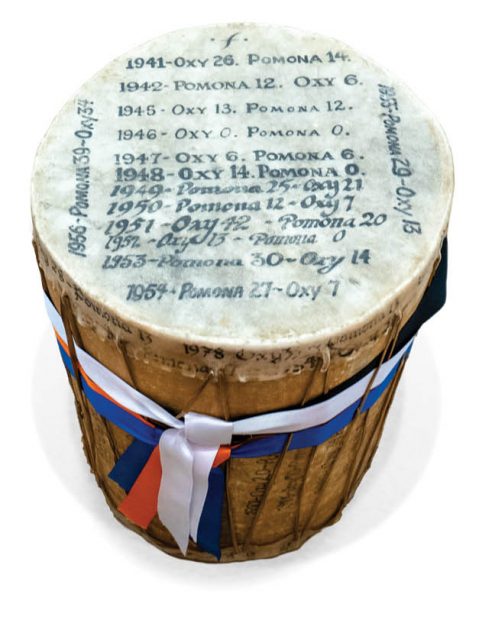 As someone who practiced the gridiron arts on Merritt Field for several years—toiling beneath the torrid San Gabriel Valley sun, stately oak tree, and watchful eye of legendary coach Roger “RC” Caron—I greatly enjoyed the “A Drum Falls Silent” piece in the Fall/Winter 2021 edition. My mother and uncle, who were taken to the bonfire rallies during the 1950s by my grandfather, former Dean of Men Shelton Beatty, confirm that they were, indeed, a “huge tradition,” if a bit haphazardly staged—one year, the inferno almost toppled onto the fieldhouse that preceded the Rains Center.
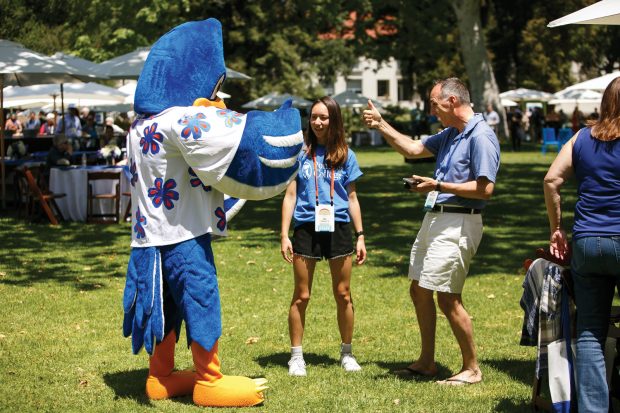
 Watch your email and mailbox for more information on these upcoming events. To update your contact information, please email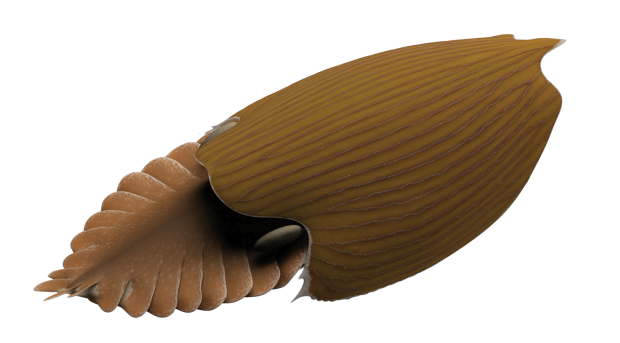
 An ancestor of arthropods such as crustaceans and insects, the long-extinct animal’s name is Titanokorys gainesi, meaning “Gaines’s titanic helmet.” It lived during the Cambrian Period about 500 million years ago, when animal life was brand new and had not yet crawled out of Earth’s oceans and onto land.
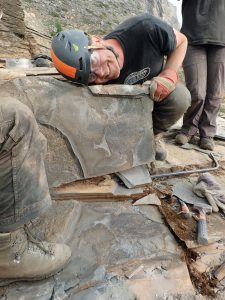
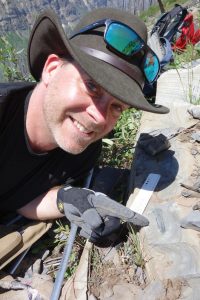 The newly discovered species comes from the Burgess Shale, a rock formation found high in the Canadian Rockies that preserves fossils of soft-bodied creatures, such as jellyfish and worms that decompose rapidly and don’t normally fossilize. It was discovered more than a century ago and became a watershed for understanding the origins of complex life on Earth. Gaines and a small team of researchers began working there in 2008, with the support of Parks Canada.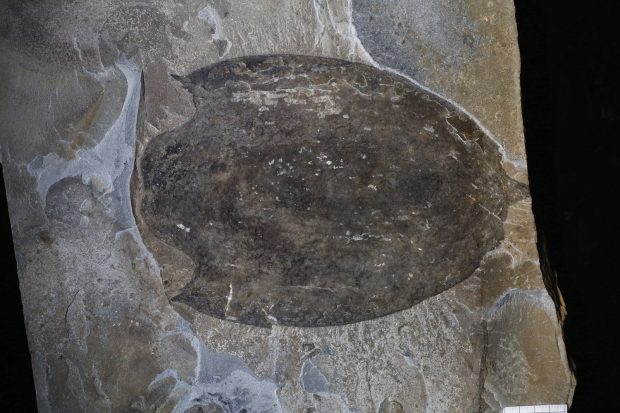
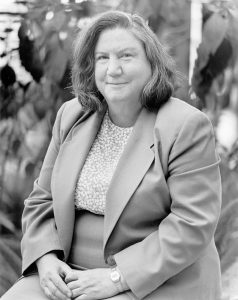 An avid advocate for women in science, Hoopes served as Pomona College’s vice president for academic affairs and dean of the College from 1993 to 1998. The first scientist and the first woman appointed to that role, Hoopes was known for her high standards, candor and generosity. Her deanship received high praise.
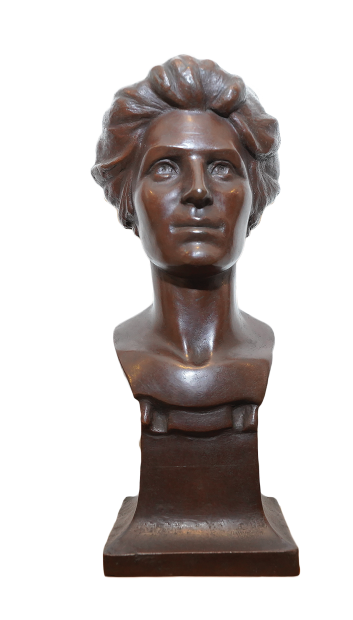 Born in San Francisco, Viola Minor was the daughter of Danish immigrant Capt. Robert Minor, a pioneer of the Pacific shipping industry, and his wife Hansine. Viola married Waldemar Westergaard, a professor of history at Pomona, on August 21, 1917.
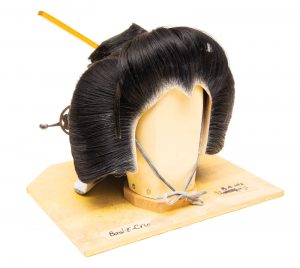 The weekend will feature an academic conference on Japanese theatre and performance as well as three performances of kabuki in English on the Seaver Theatre mainstage. Both the conference and the production are open to the public free of charge. The fully staged, English-language production of Gohiki Kanjinchō (Great Favorite Subscription List), one of kabuki’s most beloved plays, will be at 8 p.m. on April 1-2 and at 2 p.m. on April 3.