Blog Articles

30+ Years of Bilingual Immersion with a Teacher of the Year

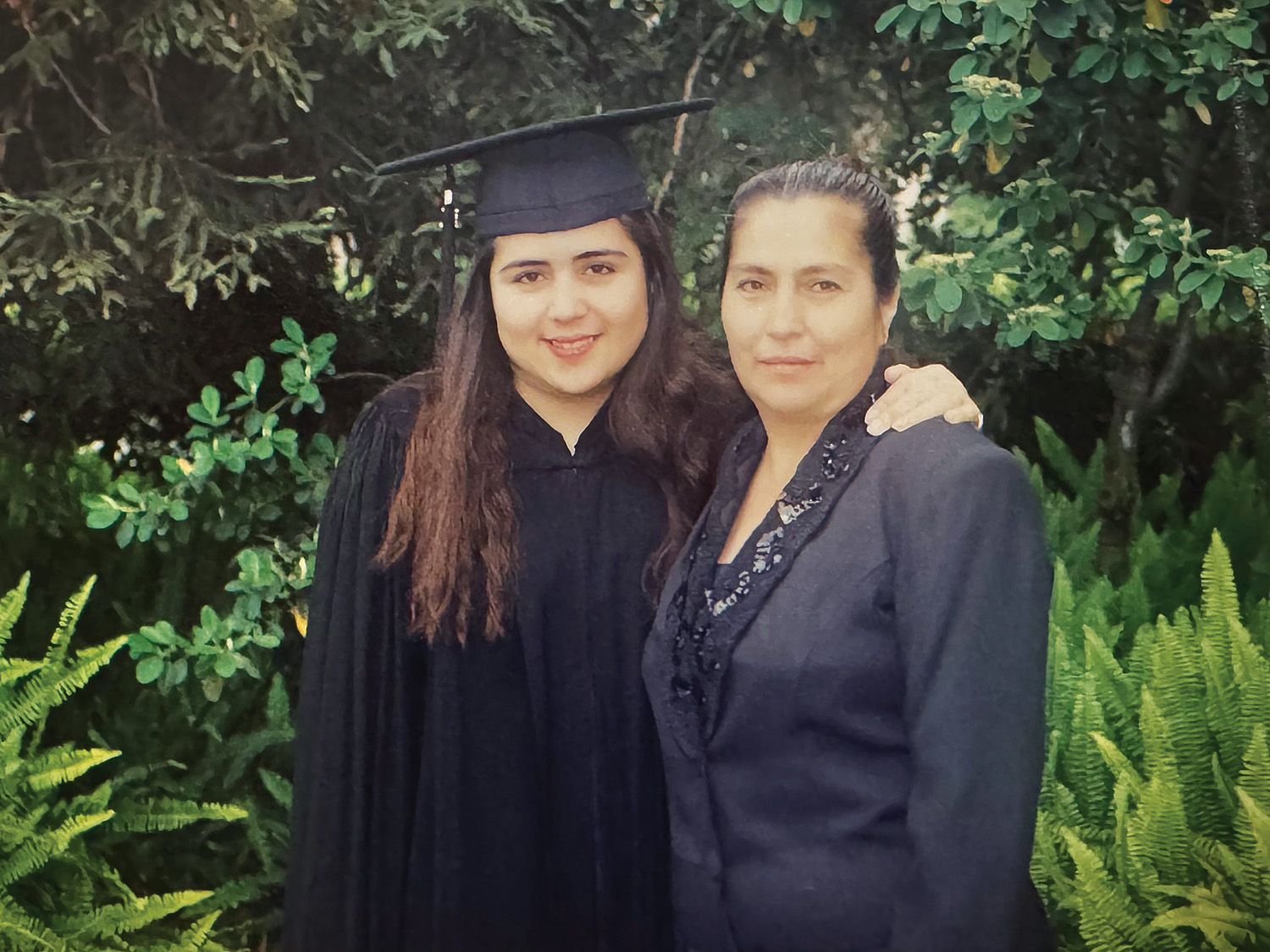
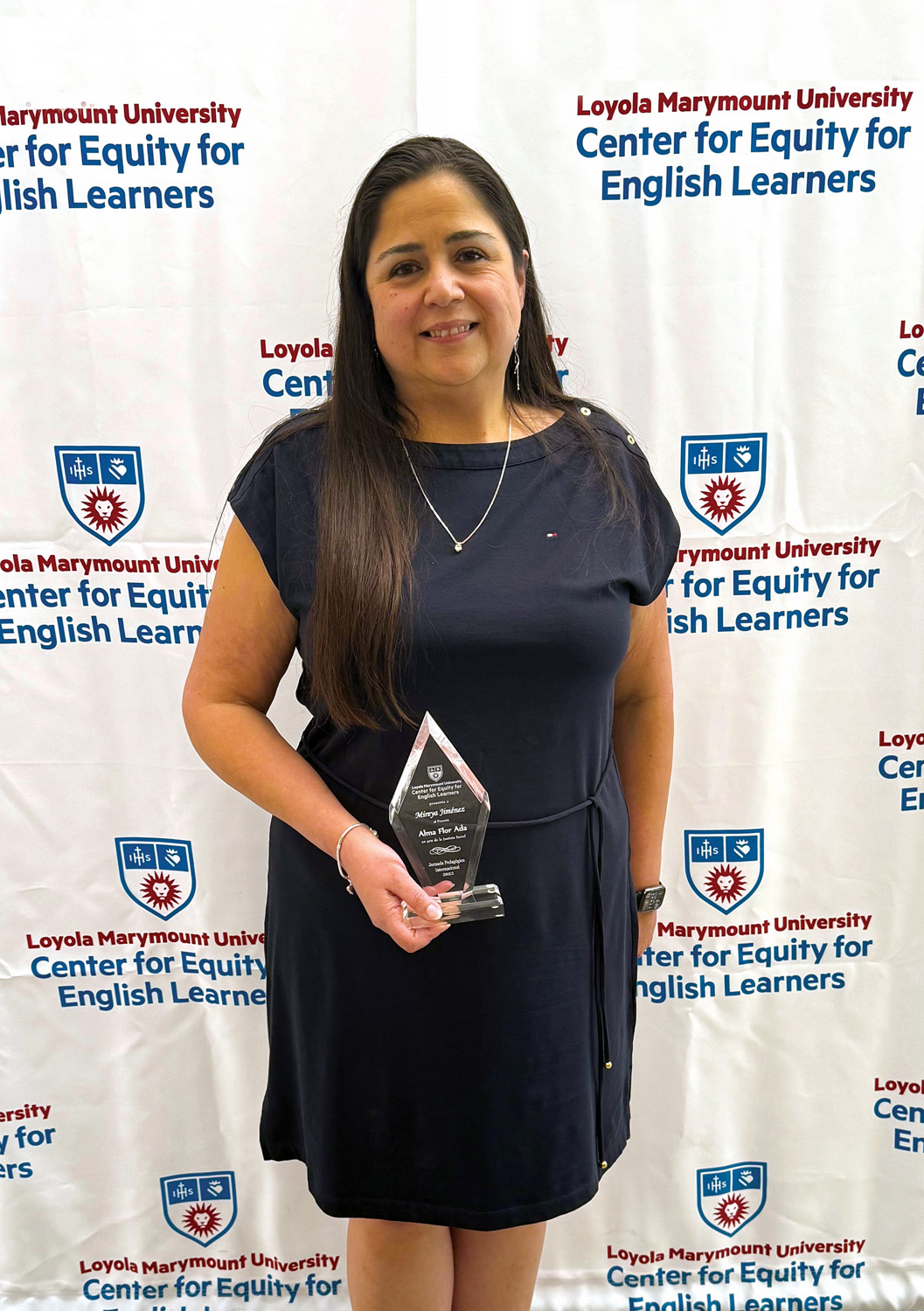
During an entry-level Spanish Literature course at Pomona, Mireya Jimenez ’94 discovered her true calling to become a teacher. She grew up speaking Spanish at home and was proud of her first language. But when her first Spanish paper was returned covered in red ink, her confidence was shaken.

She realized that the gaps in her Spanish were due in part to her having received all of her institutional education in English, sparking in her a deep desire to teach young students not just the Spanish language, but Latino cultures as well. More than three decades into a rich career as a bilingual educator, she was recently named California Association for Bilingual Education’s (CABE) Teacher of the Year.

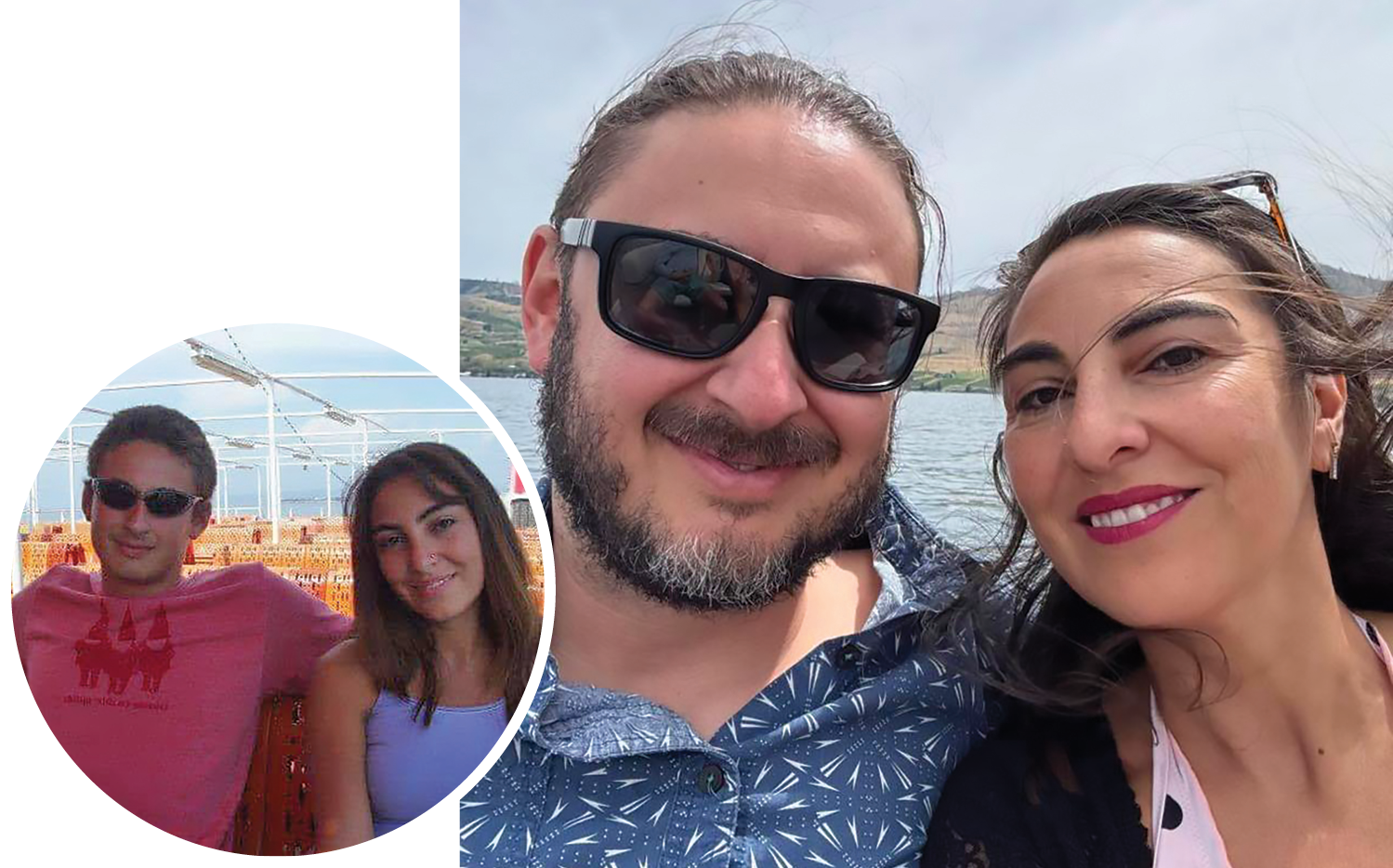
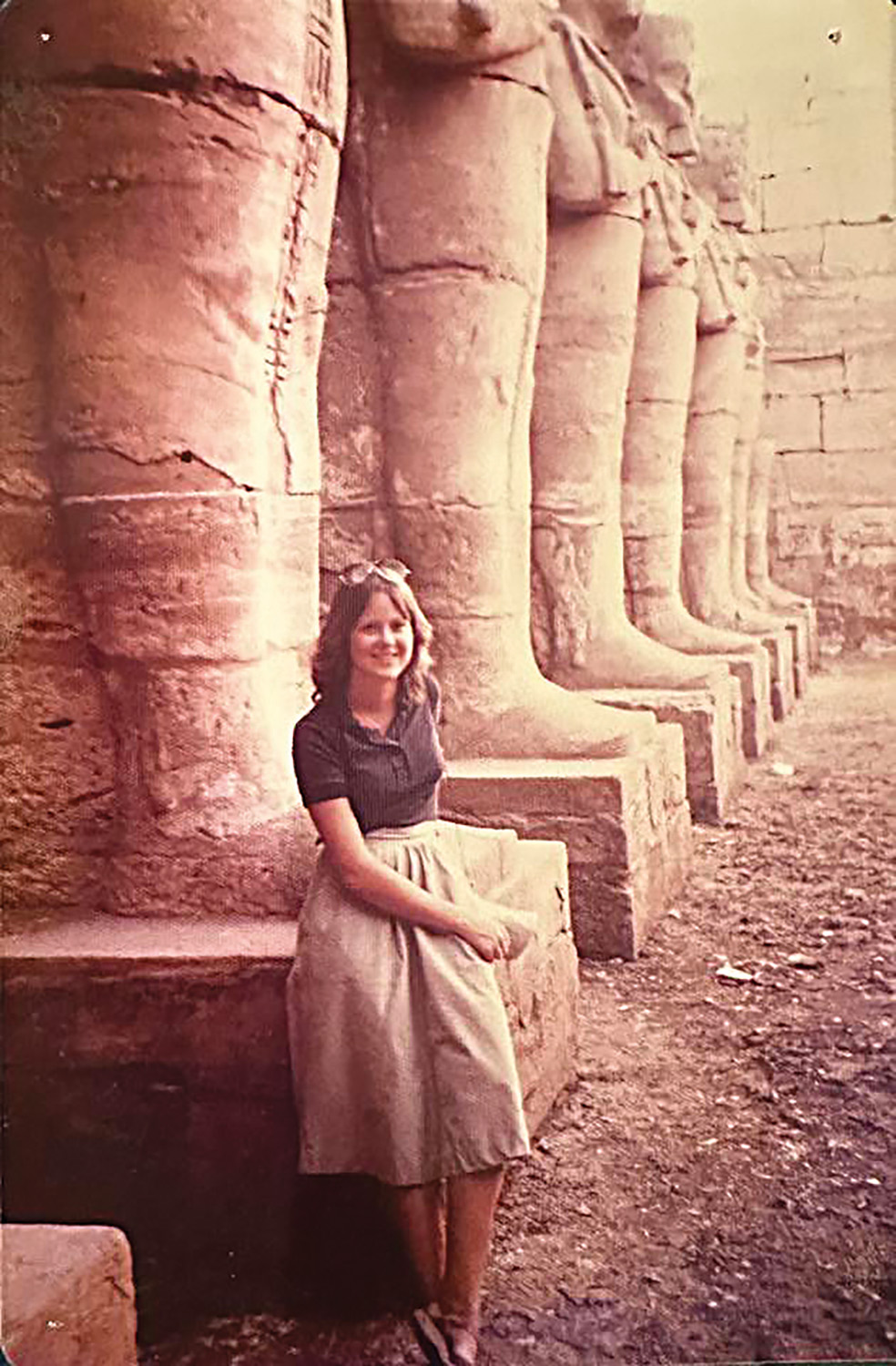
Mireya Jimenez ’94 (left) at Pomona with her mother.

A Palm Springs native and first-generation college student, Jimenez was able to attend Pomona thanks to a financial aid package that included grants, scholarships and work-study opportunities. Eager to experience more of the diverse, rich Latino culture, an additional scholarship gave her the chance to study abroad in Chile. She also petitioned for a self-designed Latin American Studies major, spurring the College to launch an official major the following year under the leadership of Emeritus Professor of History and Chicana/o Latina/o Studies Miguel Tinker Salas.

Mireya Jimenez ’94

After graduating Jimenez landed her dream job teaching in Pomona Unified School District’s Dual Language Immersion program, which supports both K-12 native Spanish speakers and elementary students learning Spanish as a second language.

Jimenez says that, for her, the “Teacher of the Year” award pales in comparison to another recent milestone in which one of her sixth-grade students won CABE’s statewide bilingual writing contest. What made it particularly poetic for her was that the winner is the daughter of one of her very first group of students—a testament to her enduring influence across generations.

As part of her award, Jimenez earned a three-week scholarship to travel to Spain this summer, where she continued to immerse herself in the language and culture she has dedicated her life to teaching.

“Little did I know when I came to Pomona [that] I would have created this life that I am so proud of,” she says. “I hope my story serves as a reminder that if you have a dream and the support of those who believe in you, anything is possible.”

Gifts to the Pomona Annual Fund support scholarships, grants and study away programs, making transformative education experiences like Mireya Jimenez’s possible. Visit our website or call 909-607-6096 to make a gift today.

Founders Day 2025—138 Years and Counting


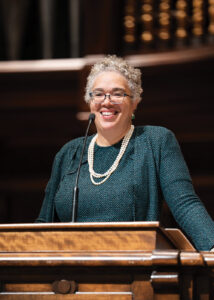
Pomona College President G. Gabrielle Starr speaking at Founders DayA stone’s throw from a red sandstone hunk on which Sagehens of the past carved their class numerals and motto, “Not to live but to live well,” in Greek, Sagehens of the present and future gathered to celebrate their beloved Pomona College’s founding.
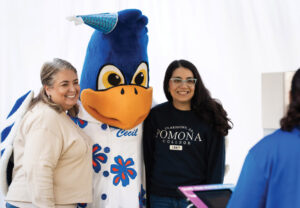
President G. Gabrielle Starr (top right) kicked off Pomona’s annual Founders Day Celebration on October 15 with a State of the College Address inside Little Bridges Auditorium. Scores of students, staff, faculty and College administrators then mingled on Marston Quad over lunch as the Draper Center accepted donations from the Sagehen community.

Starr told the story of Charles Sumner, who saved the College from a serious financial challenge in its early days; expressed pride in Pomona becoming one of the most highly-regarded colleges in the nation; and touted the milestones Pomona has hit in its 138 years.

“Pomona is a ‘we,’” Starr said, “and it’s a ‘we’ that does all kinds of things. We argue with each other, we disagree, we learn. We care about each other an extraordinary amount. We chirp together. We plan for the future, and we do things that are consequential on this campus.”

Starr emphasized that Pomona can also be better, and more true to its ideals.

“We always look higher—to who we can become and what we can do,” she said. “It’s crucial for all of us here to remember that the acts we carry out today, the things we’re doing now, lay the foundation for the future.”

Nayla Ward ’29, a first-generation Sagehen from Georgia, found comfort in learning Pomona has initiatives in place to support a diverse student body. Jared Sedlis ’29, a Massachusetts native, said he took great interest in hearing about Pomona’s globalization efforts “because we live in an interconnected world.”

What lies ahead for all Sagehens is a promise to give more college-aged students from middle-income families an avenue to Pomona, Starr said. Admissions officers do tireless work recruiting new students every year, she added, and record fundraising has made it possible for Sagehens to graduate in four years and debt-free.

Sagehens taking a picture with Cecil“Having a day where we think about where we’ve been helps motivate [us on] this shared path we’re taking on together,” said Michael Steinberger, associate professor of economics and chair of the department. “I particularly appreciate that the events today bring together staff, faculty and students to say that we are together in this incredibly important mission.”
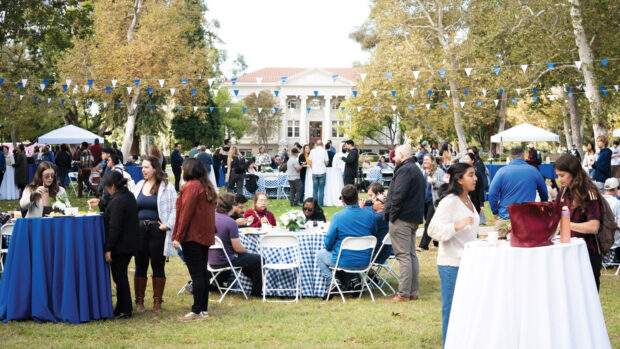
Founders Day also provided an opportunity for Sagehens to give back. The Draper Center partnered with local organizations to collect canned and packaged food, books and clothing. Pomona staff looking for ESL support had the chance to sign up for a personal tutor.

“Now more than ever, with what’s going on in the world, it’s important to focus on what we as a College can do,” said Sefa Aina, associate dean and director of the Draper Center. “Giving back is the nature of higher ed, but specifically at Pomona, it’s nurtured. All of our big events are centered around giving, around community service, around an externalizing of our energy and of our gifts.”

Founders Day


At Home at the Edge of the World

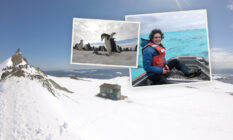
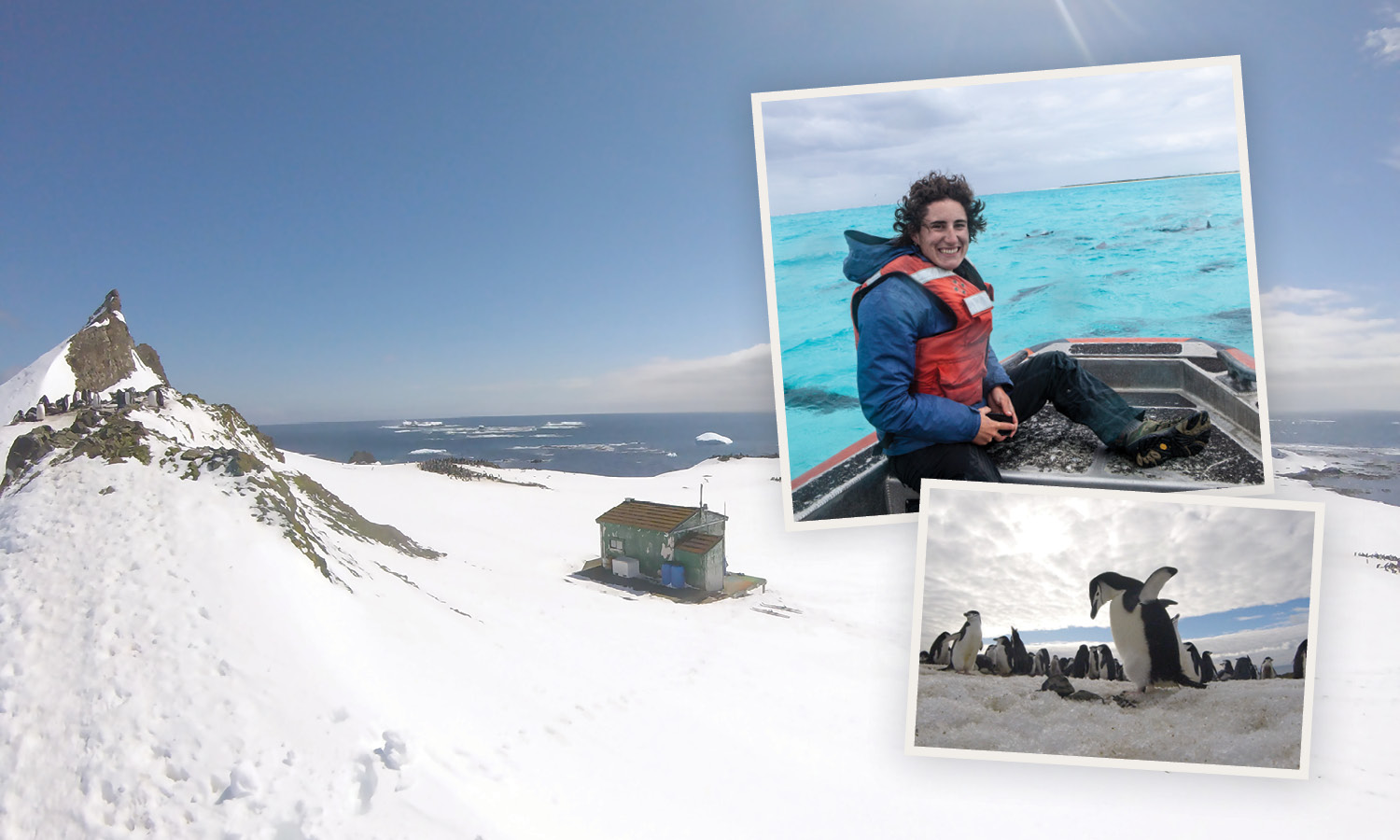
Photo of the 16 by 16 shack in Antarctica where Naira de Gracia ‘14 lived while studying penguin colonies overlayed by an image of de Gracia with dolphins in Midway Atoll in 2016 (credit Kaipo Kiaha) and a penguin colony in Antarctica (credit Naira de Gracia ’14).

Biologist and conservationist Naira de Gracia ’14 knows a few things about immersion. The child of journalists, as a kid she bounced between seven countries across three continents, spanning the U.S., Spain, Mexico, Chile, Argentina, South Africa and Egypt. During her Pomona summers she did fieldwork in Alaska, and from 2016 to 2018 lived in Antarctica and spent five months in a 16-by-16-foot shack with four other researchers studying penguin colonies—culminating in her 2023 book The Last Cold Place. She now focuses her work on regenerative agriculture, supporting efforts to conserve food and farming systems.

Photo of the 16 by 16 shack in Antarctica where Naira de Gracia ‘14 lived while studying penguin colonies overlayed by an image of de Gracia with dolphins in Midway Atoll in 2016 (credit Kaipo Kiaha) and a penguin colony in Antarctica (credit Naira de Gracia ’14).

Q: What aspects of your Pomona experience most informed your career trajectory?

A: I started in environmental sciences and, during an internship on seabird monitoring on the coastal islands of Maine, was blown away that this was a thing I could do professionally. I changed my major to biology, and was lucky to have an amazing mentor in Professor Nina Karnovsky. She’s still my hero. She took me for fieldwork in Alaska and helped me navigate what to study and has this joy that’s so fun and infectious.

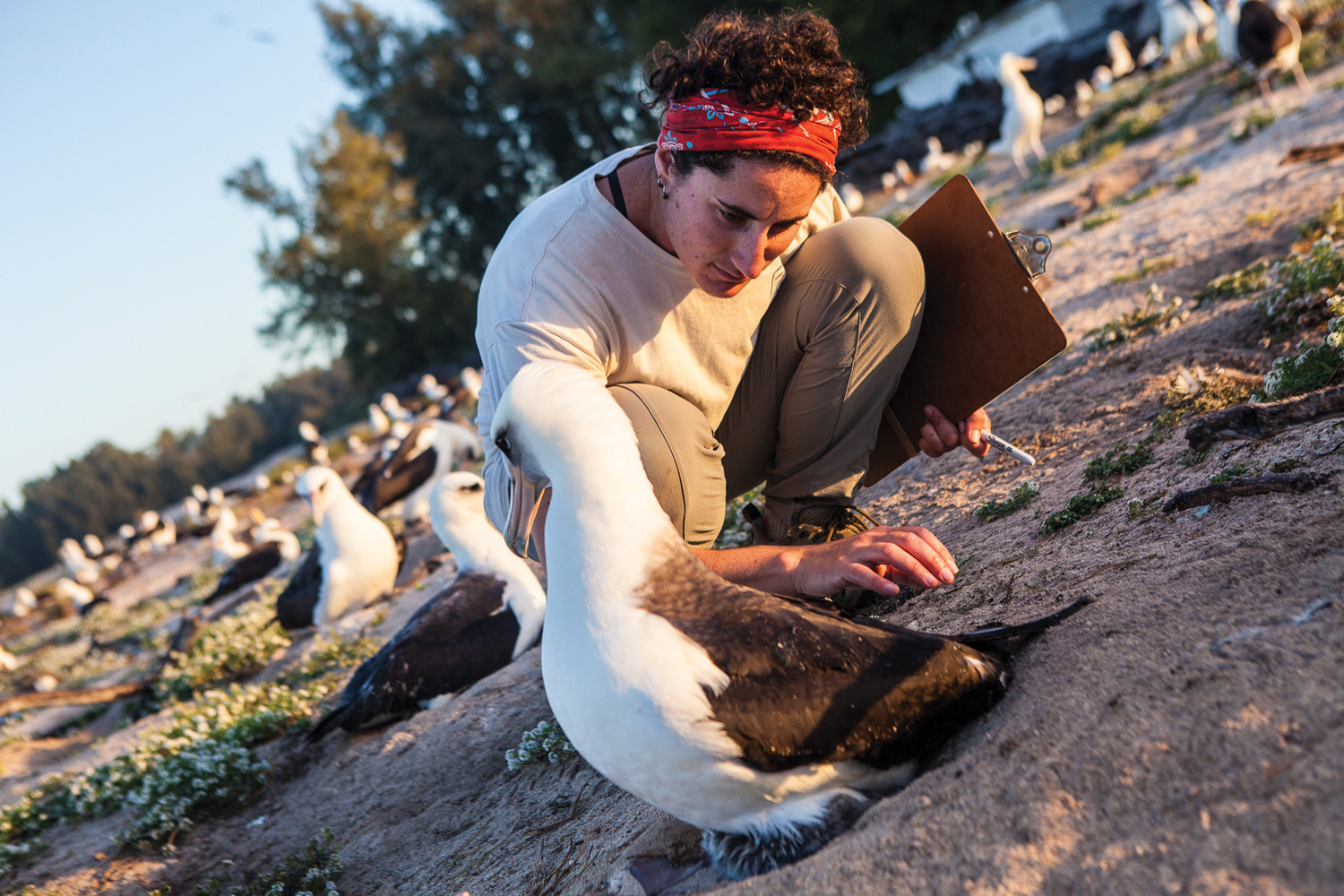
Naira de Gracia ’14 studying seabirds in Midway Atoll, in the northwest Hawaiian Islands, in 2015. Photo credit, Kaipo Kiaha.

[In Alaska] I spent a lot of time reading and thinking and cultivating a sense of awareness of my surroundings. I remember coming back and more deeply noticing birds and flowers and tree species. For me, immersion was in some ways less about the physical experience and more about a certain state of mind.

When I moved back to Pomona it felt a bit weird to be in such a different environment with people and concrete and buildings everywhere, so I would escape a lot to the farm, where I worked as manager after graduating. You spend time in class learning about ecosystems and plant biology, but I loved being able to actually interact directly with those ideas at the farm and see them laid out. It felt very inviting.


Q: What attracted you to conduct research in such isolated places as Antarctica?

A: Out of college I found myself drawn to being in more remote locations—just stripping away all the noise of society and connecting as profoundly as I can with my ecosystem. There was something beautiful about sitting on the side of a cliff and staring at a bird colony for three hours.

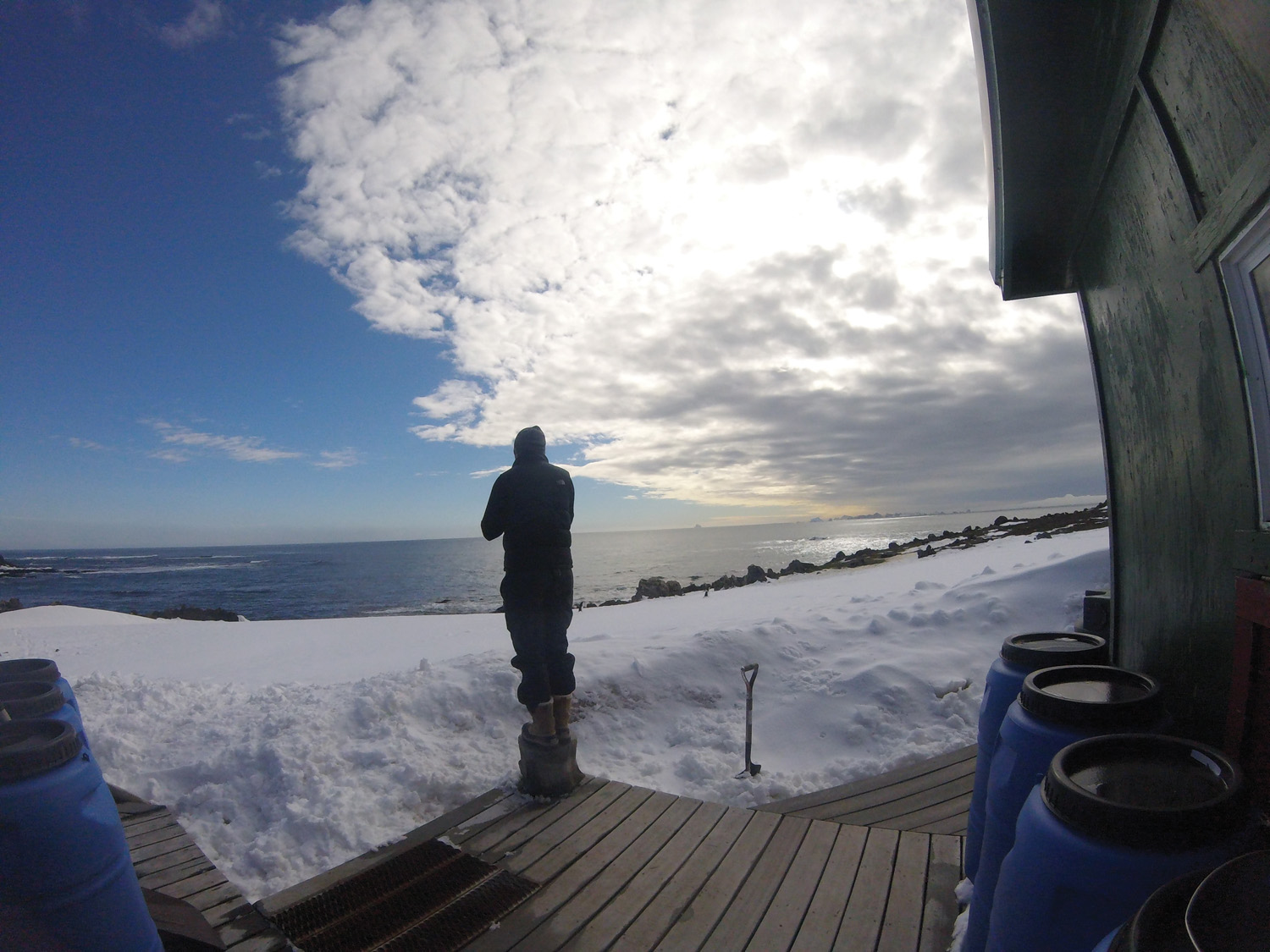
Naira de Gracia ’14’s view from the 16-by-16 cabin in Antarctica

Doing that kind of work envelops your entire life. You’re living with your co-workers on an island on a field camp, and every day you get up and monitor these animals. It lends itself to an intimacy with a place that I can sometimes otherwise struggle to find.

My job was to observe—we were noting everything that was happening on the island because it was important as part of the monitoring work. In that way, your senses are already attuned to your surroundings. It cultivates this sense of attention and intention that I really valued.

Q: One key aspect of writing is to get a reader immersed in your world. What was it like to try to do that with The Last Cold Place?

A: When I set out to write the book, part of my mission was to bring people a slice of that experience in Antarctica that most will never get to see. It was important to me to try to evoke it as vividly as I could, and I leaned a lot on all of the little details of daily life—smells, sounds, visuals. Reading a book obviously isn’t the same as being there, but you can still invoke a sense of place and emotional connection that can hopefully lead to some kind of care down the line for people to feel like they have a stake in what happens to that ecosystem.

Q: What led to your shift away from fieldwork?

A: For years I kept looking for the most remote, longest-season jobs, and had such amazing adventures. But it was also exhausting moving around every six months and living out of my duffel bag, and I wanted stability. I also felt like I wanted to understand more of the theory and the science behind the monitoring I was doing. So I went back to school and moved to New Zealand to get a master’s degree in conservation biology, then worked as a sustainability advisor, then moved to Sweden to do my agroecology master’s.

These days I’m more interested in a kind of bigger-picture immersion: what does it mean for us to apply the same attention to our agriculture and food systems? With fieldwork, it feels like we’re behind a wall to observe, and not supposed to affect anything that’s happening. I love that agriculture is not as passive—we’re influencing and restoring ecosystems, and eking out this natural abundance that helps us survive as a species. What I’m doing now isn’t so different in terms of looking at the landscape of a farm, and figuring out how the land is doing and what it needs. My career probably seems like I’ve jumped around, but I see the throughline very easily.

60 Years of Oldenborg

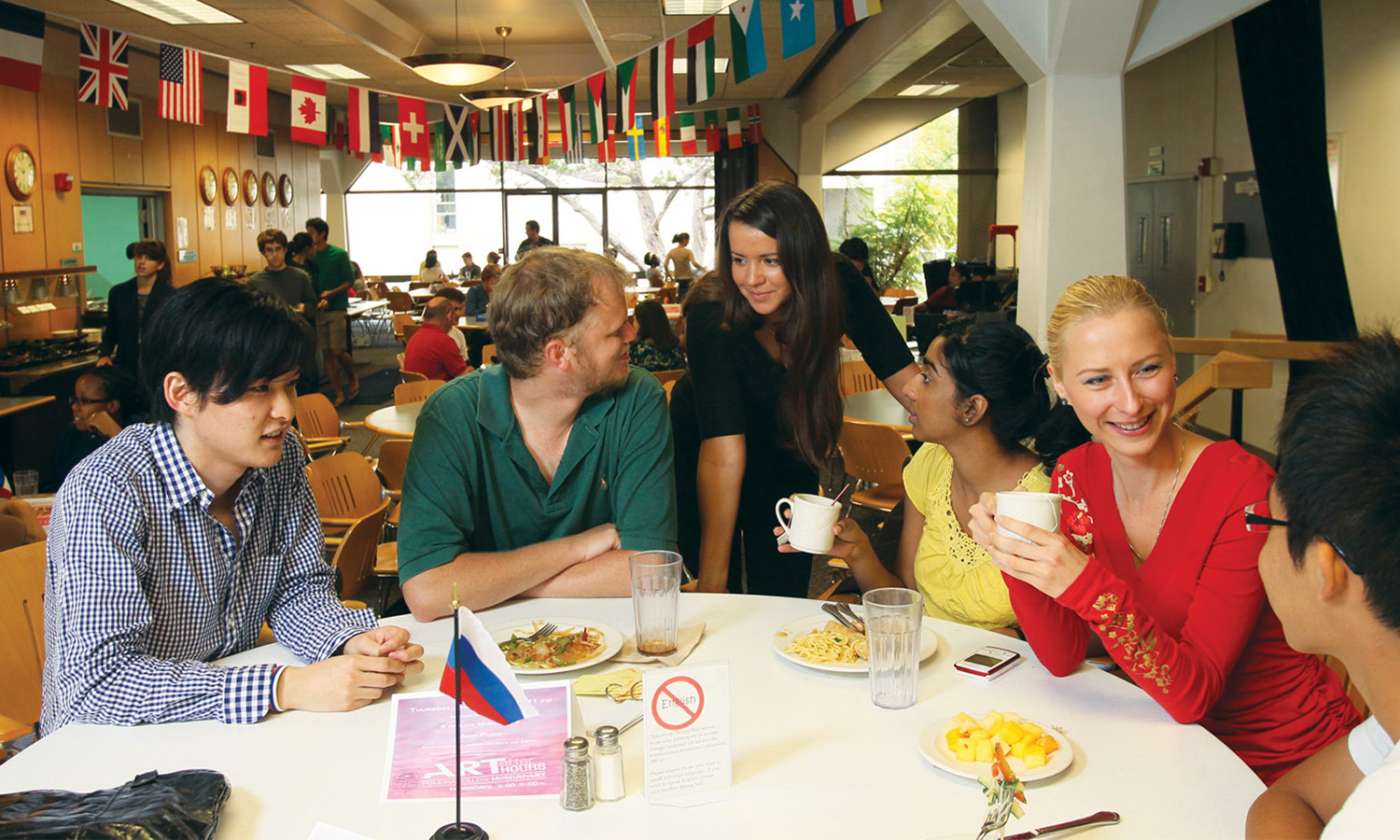
A Russian language table session at the Oldenborg Center for Modern Languages and International Relations.

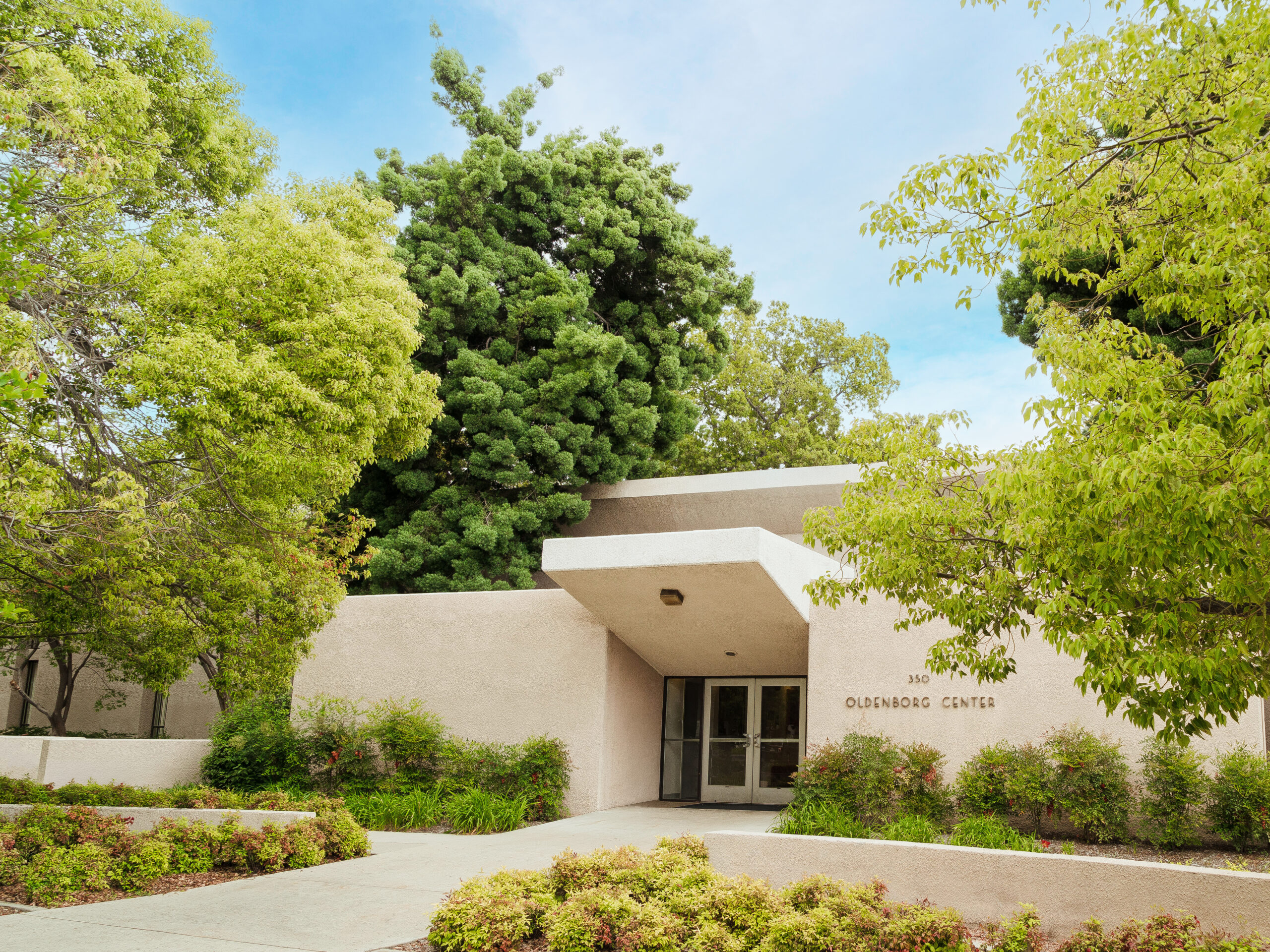
Like the proverbial blind men who each perceive an elephant to be a different object, the Oldenborg Center for Modern Languages and International Relations has been many things to many people. For nearly 60 years, it has played numerous roles and been home to a wide range of memories and experiences for people who have come through its doors.

For thousands of students and alumni, the Brutalist-style structure on the corner of Bonita Avenue and College Way has served as a residence hall. Many in the community have experienced the building as a dining hall where they have spoken different languages over lunch. For others, Oldenborg has been an academic space where they have taken part in language conversation classes.

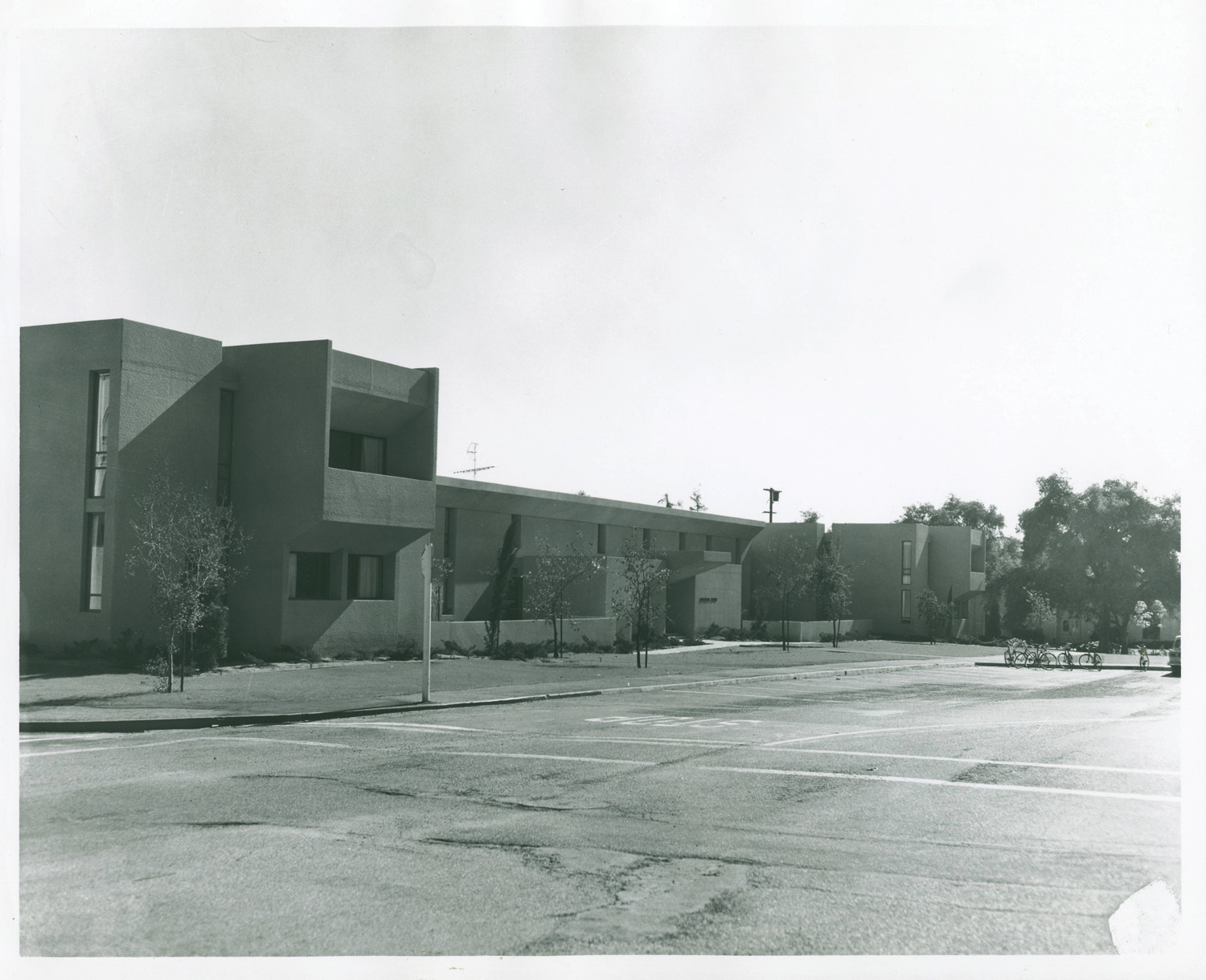
An early photo of the Oldenborg building exterior

And indeed, the versatility was the vision. The first facility of its kind in higher education, the immersive and multifaceted concept was cutting-edge when Oldenborg opened its doors in 1966. Now, six decades later, the building is showing its age, and it’s time to reimagine how Pomona College can equip students to be global contributors in the 21st century.

At the end of the 2025-2026 academic year, Oldenborg will make way for the new Center for Global Engagement (CGE). Projected to open in August 2028, the 100,000-square-foot space will build on the legacy of Oldenborg, still housing language immersion dorm rooms and a dining hall, but will expand to include a conference center and more spacious office, meeting and classroom areas, and a new vision for interdisciplinary liberal arts education.

The CGE will serve as a home for “firmly positioning Pomona as the national model for transformative, immersive, interdisciplinary global education,” says Pomona President
G. Gabrielle Starr.

Late Postwar Era Origins

In 1965, the United States was embroiled in the Vietnam War, Mao Zedong was preparing to launch the Cultural Revolution, and the Space Race was in full force.

Against this backdrop, Diederick C. Oldenborg, a retired businessman, was drawn to the idea—floated by his friend Allen Hawley ’16 and Pomona President E. Wilson Lyon—of a residential center to develop language fluency and understanding of international relations.

Born in Denmark and raised in New York, Oldenborg had been a world traveler, and his goal as a philanthropist was to “strengthen communication and understanding among nations and thereby contribute to world peace.”

Oldenborg and his wife Maisie’s gift of $1.1 million helped make the Oldenborg Center—developed by the department of Modern European Languages and Literature and College deans at the time—a reality.

When the center opened in November 1966, it contained a dining hall, dorm rooms for 144 students, and state-of-the art teaching facilities. Wings were organized by language (Chinese, French, German, Russian and Spanish) and overseen by language residents.

A Source of Pomona Lore

Two years after Oldenborg opened, residence halls at Pomona would become co-ed. But until then, its labyrinth-like layout was designed to keep men and women separated. The hard-to-navigate halls have been a hallmark of the building ever since: students who move in, especially to the second and third floors, can expect friends from other dorms to get lost trying to visit them, or to not try at all.

A popular legend holds that the alien race known as the Borg on Star Trek: The Next Generation got its name from Oldenborg. Though it has never been confirmed (or denied), the connections are too strong to ignore. Joe Menosky ’79 reportedly lived in Oldenborg—often referred to as the Borg on campus—as a student. When he became a writer for the show, the Borg collective was created. The cube where they reside is notoriously isolated, insular and full of maze-like hallways. (Menosky is also the one who started regularly dropping “47” references into episodes.)

During my time as a student at Pomona in the ’90s, a couple dozen first-year students were assigned to live in Oldenborg every year. The lore was that once someone lived there, they never left. Many students did in fact wear the badge of honor of living in the dorm all four years.

What’s your fondest Oldenborg memory?

“The dorm had a film series in the basement theater, which my pals and I took over for marathon screenings of Star Wars and a surprisingly popular showing of [Terry Gilliam’s ’80s trilogy] Time Bandits, Brazil and The Adventures of Baron Munchausen. I also remember that, because [Oldenborg] was Brutalist concrete, there was lore about what kinds of special hooks you had to buy to hammer into the walls to hang pictures. Regular nails simply did not penetrate!” —Adam Rogers ’92

“I transferred to Pomona in 1968 and, because I had three years of Chinese in high school, I was able to get into the Chinese language group. It was absolutely fabulous. A native Chinese speaker was in residence and organized activities. We often ate together at meals and went on picnics where we made dumplings and origami. It was a wonderful place to live—I hope that the new center will also encourage language immersion.” —Janet Cater ’70

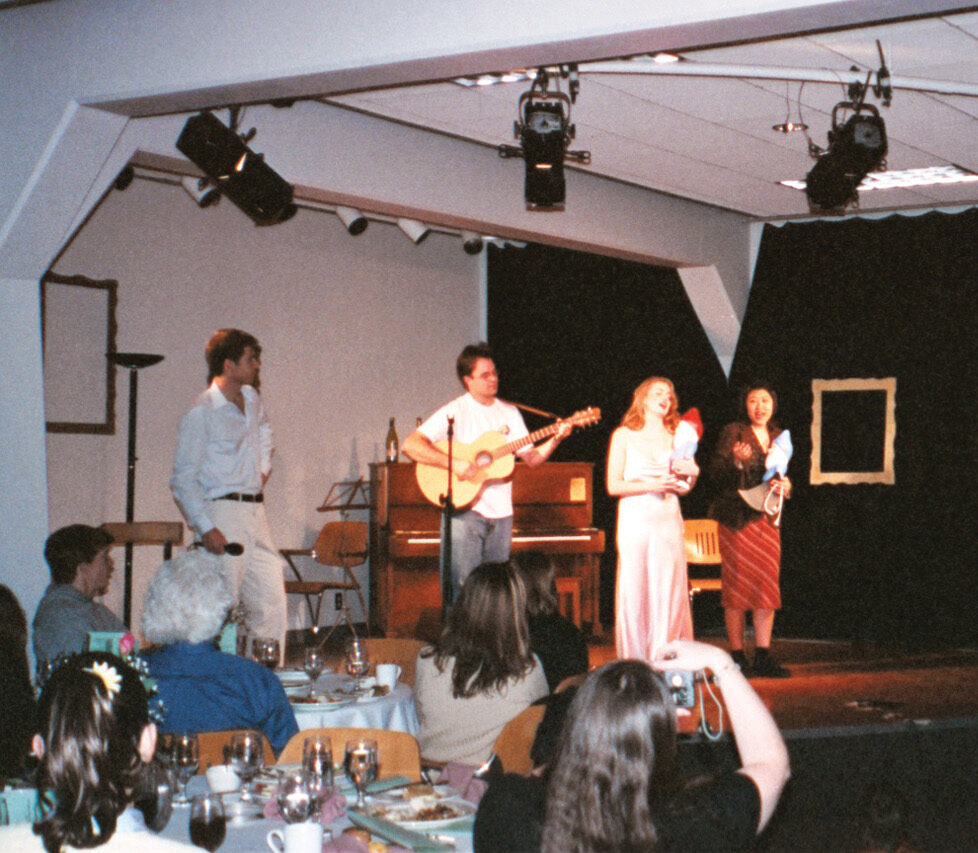
Stage performance during a French section dinner in 2003. From left, Andrew McKibben ’05, Bret Turner ’03, Alexandra (Thompson) Devendra ’05, Ngoc Thy Phan ’05, Catherine John ’05.

“I lived in the French section my sophomore year, Spanish for a semester of junior year, and German my senior year. I participated in every French, Spanish and German dinner and attended every Russian, Japanese and Chinese dinner. I ate lunch at the language tables nearly every weekday to catch up with my fellow polyglots or attend a talk. I watched extremely obscure foreign art films in the basement and cooked national dishes with residents in the lounges for study breaks. Nothing better prepared me to travel, live, study and work abroad after college. I’ll miss the ‘Borg!” —Catherine John ’05

“I could wax poetic about the home this struggling Pakistani found creating our own little special-interest floor under the vague umbrella of ‘some loose connection to South Asia.’ Or the early days of the now infamous Hindi-Urdu table, where so-called ‘enemies’ joyfully came together weekly to gab under the ever-loving eye of ‘Shaila Aunty’ (Professor Andrabi). Or sneaking in with sleeping bags to sleep in the library on the hottest of nights in one of South Campus’ only air-conditioned student spaces. While all those are worthy of essays of their own, I’d love to commemorate something else forever associated with Oldenborg: the Lucky Charms always stocked in that dining hall. To me, Lucky Charms represented the ultimate American experience: problematic but delicious, non-halal (marshmallows = pork gelatin), fake news masquerading as breakfast. In that room I connected with folks from around the world, united in our love for this most unlikely food-like object. ‘Center for Global Engagement’ indeed—one cereal bowl at a time.” —Naqiya Hussain ’08

“I remember great talks [where] they would bring in people to talk to us about international relations. One presentation was a man who had defected from Russia, where he had been the head editor of the country’s biggest newspaper. He tried to get us to understand about censorship and the Russian mentality—he said that Russia would go over every article in [the U.S. publication] Reader’s Digest with a fine tooth comb, and delete anything they didn’t want the Russian people to think about.” —Cheryl Nickel ’83

Present-Day Offerings

In recent years, Oldenborg is occupied almost exclusively by sophomores. Each language hall is anchored by a recent college graduate hailing from another country who assumes the language resident position for two years. The language residents’ apartments and adjacent lounges serve as hubs for each language wing and as venues for conversation classes, cultural programming and study breaks. In addition to the original five languages, a Japanese hall is also now in the mix.

A Russian language table session at the Oldenborg Center for Modern Languages and International Relations.

A Russian language table session at the Oldenborg Center for Modern Languages and International Relations.

Perhaps where the greatest sense of community takes place in Oldenborg is at the language tables. Happening every weekday during the noon hour, the tables bring together people in linguistic and cultural camaraderie. Tables for Chinese, German, French, Japanese, Russian and Spanish take place daily. A collection of more than 20 other languages rotate throughout the week.

More than just practicing another tongue, language-table participants also find a sense of belonging. There aren’t many places on campus—or in the world—where someone can sit at a table with people they may not know and engage in conversation. Many international students especially feel a sense of home at the tables, speaking their native language with fellow students, faculty and staff members, and other members of the community at large. Some would say that the sense of belonging outweighs even the linguistic gains.

Diana Braghis ’26

Diana Braghis ’26 a PPE (politics, philosophy, economics) major and Japanese minor, studied Japanese on her own in high school. The summer after her sophomore year at Pomona, she interned at the Japanese Embassy in her home country of Moldova, putting her Japanese skills to use. She credits the Japanese department professors and the Oldenborg Japanese table community “for helping [her] get as far as an employable level of Japanese in just two years.”

“The Oldenborg language tables community is a very vibrant one,” says Oldenborg Faculty Fellow Pierre Engelbert, H. Russell Smith Professor of International Relations and professor of politics. “It’s a community of exchange, discovery and mutual appreciation. People from all around the world come here and speak their language, share their culture and create this microcosm of the world.”

Confronting Complex Global Challenges

Sixty years after the conception of Oldenborg, today’s students are facing critical issues like climate change, artificial intelligence and geopolitical unrest that require interdisciplinary collaboration.

“We know that global learning today must equip our students and community to confront complex challenges that defy solutions from a single discipline, linear methodologies and solitary creativity,” says Starr. “The CGE will enable Pomona to chart new paths, providing a living, immersive laboratory in which the liberal arts, global study and research intertwine.”

The new center will include two structures: a three-story, C-shaped residence hall and an L-shaped structure incorporating the dining hall, teaching and meeting spaces, and offices.

The residence hall will house 200 students and nine visiting language and academic scholars. In addition to pods focused on languages, the CGE will add two or more pods on thematic topics tied to complex global challenges.

A 24,000-square-foot dining hall and conference center will facilitate daily language tables (with 25 languages represented every day), community dialogue, exchange with local and global leaders, lectures and symposia.

“Once completed, the center will offer our students more ways to connect with partners around the globe and work across disciplines to take on the most urgent complex challenges of our time,” says Kara Godwin, assistant vice president and chief global officer.

“Through the CGE, new generations of Sagehens will work in teams with faculty and visiting scholars to analyze real-world challenges, embrace cultural diversity and ask profound questions—questions that spark creative ideas and novel solutions that transcend all kinds of boundaries.”

Dear Oldenborg: Celebrating 60 Years of Global Engagement


Oldenborg has shaped Pomona through language learning, community-building and global engagement for 60 years…and counting.

Learn about our Oldenborg celebration and share your memories at pomona.edu/dear-oldenborg

What is immersive for you?

Debbie (Pieper) Fulmer '93 doing taekwondo“I just earned my 3rd degree black belt in taekwondo. I really have to focus, but I also have to ‘let go’ to some extent. It’s a real connection to Self, and to others.”

—Debbie (Pieper) Fulmer ’93


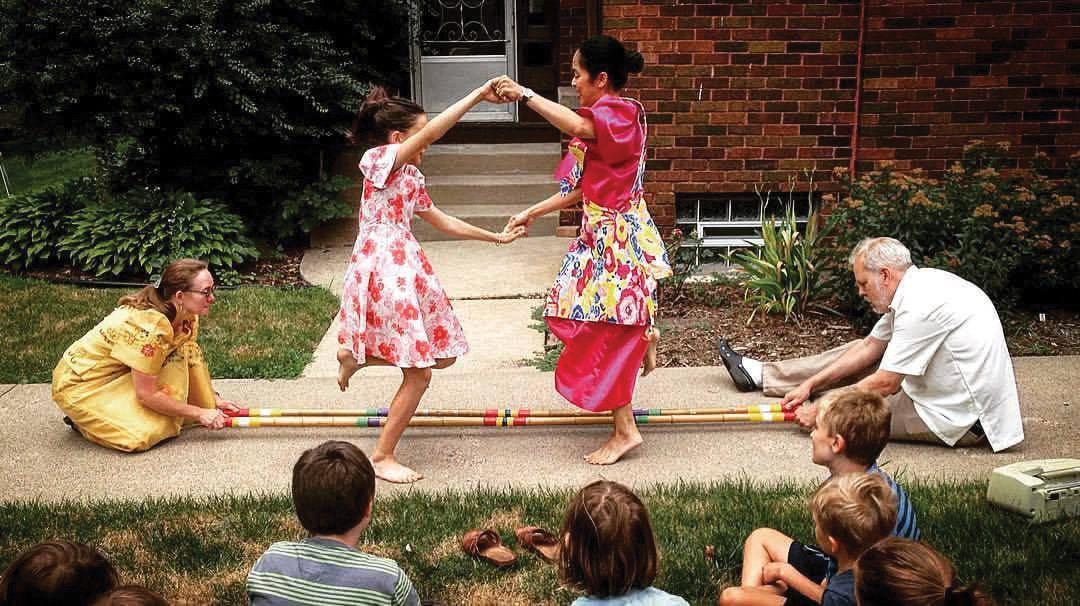
Janelle Tangonan Anderson 93 teaching Filipino dances to her daughter“I enjoy dancing Filipino dances with my daughter. I enjoy teaching my culture to the next generation.”
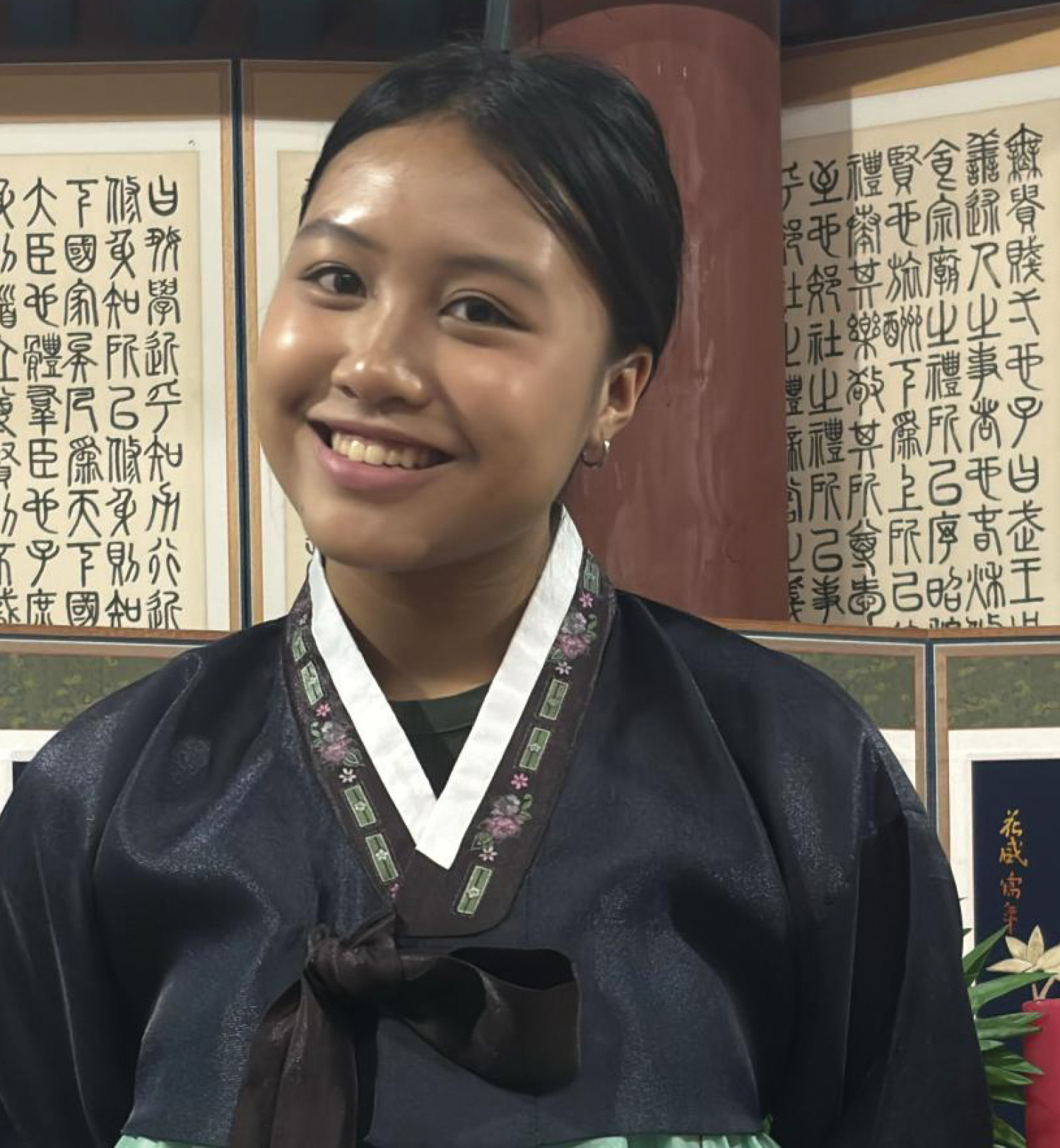
—Janelle Tangonan Anderson ’93


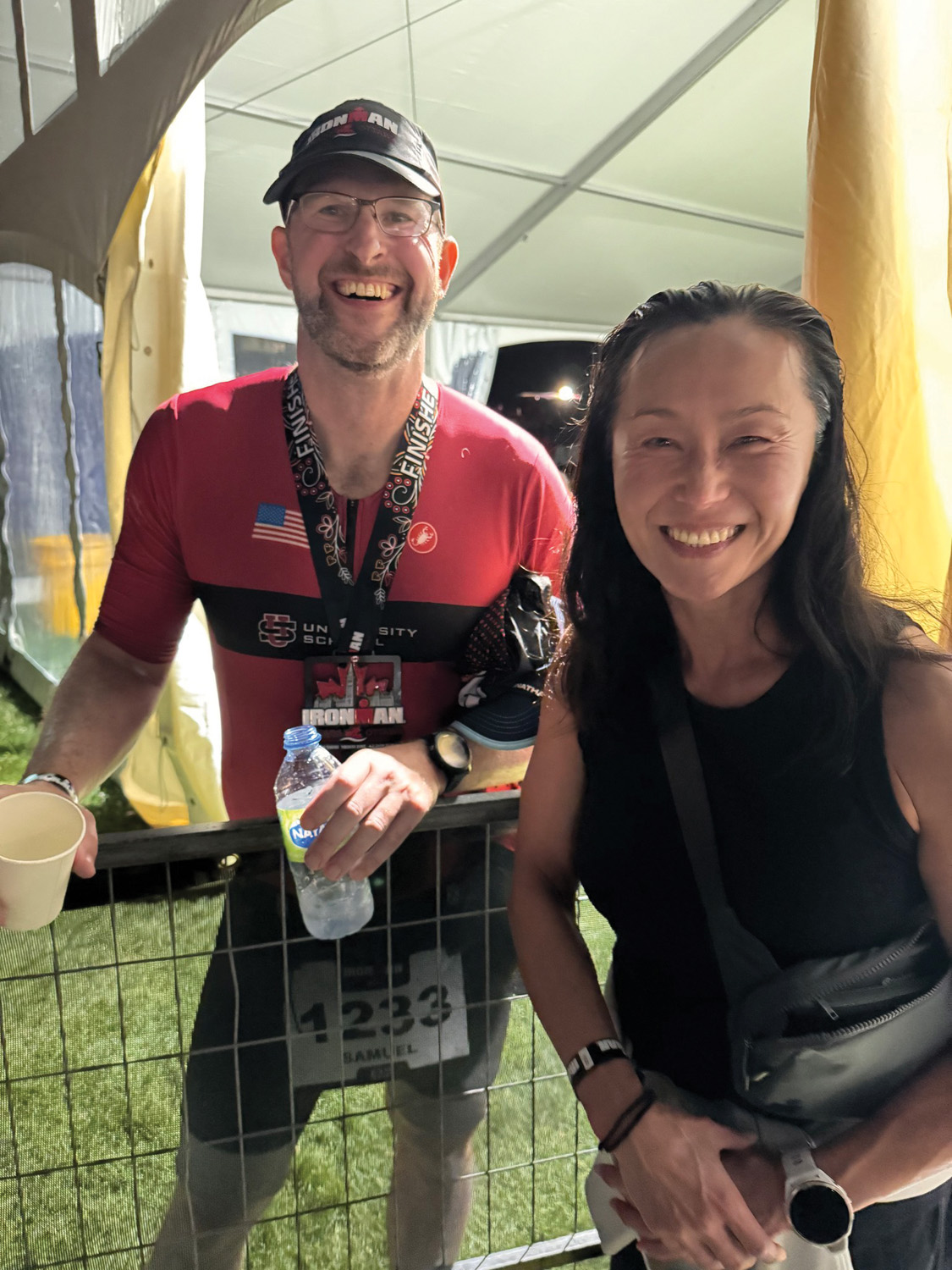
Sam Thomas ’91 running his first ironman with Eunice Kim Moon-’91“I finished my first Ironman with Eunice Kim Moon ’91! (Why is she showered and changed while I’m sweaty and gross? Because she finished waaay ahead of me.)”

—Sam Thomas ’91


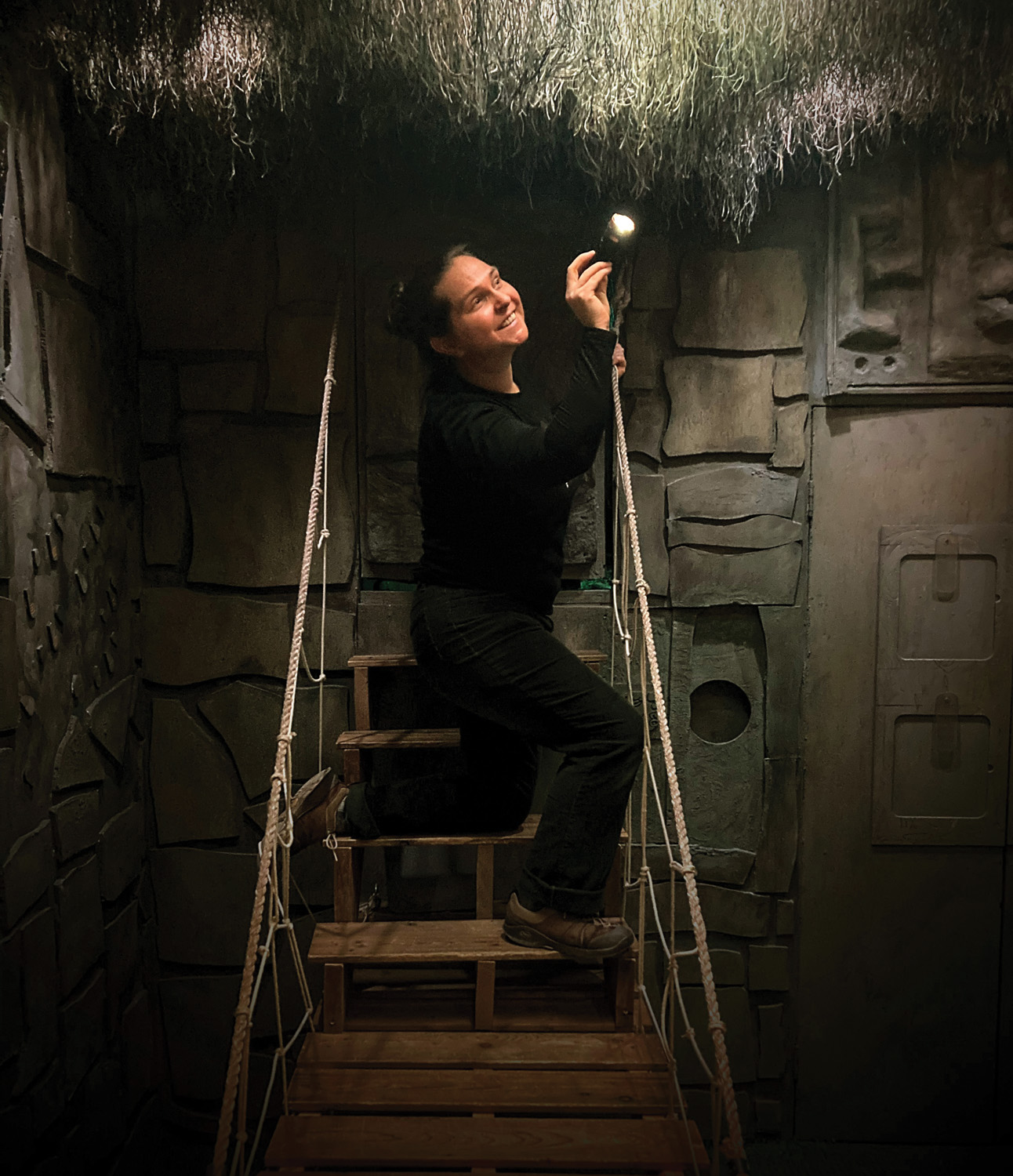
Krista Jones 99 chipping away at an escape room“Escape rooms! They’re all about immersion – the story, sets, challenges, hands-on elements, surprises, communication, and time pressure all keep me fully immersed and focused.”

—Krista Jones ’99


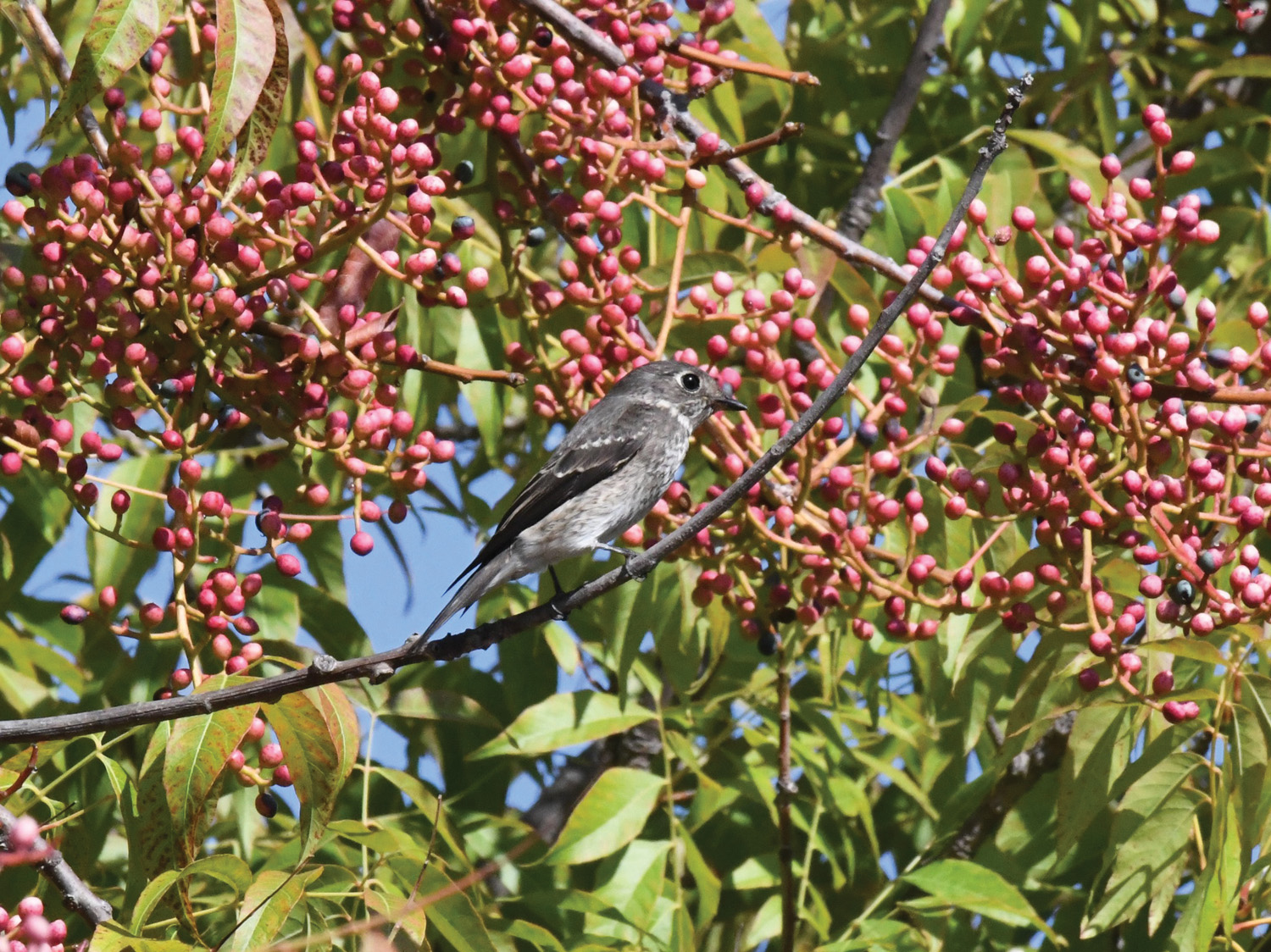
Dark sided flycatcher bird“Birdwatching gets me out of the house and away from screens. I came to it from photography, and as I gravitated towards it, I found so much more than just getting that ‘perfect shot’: when you want to find birds, listening is at least as important as seeing them.”

—Jeremy Frank ’90


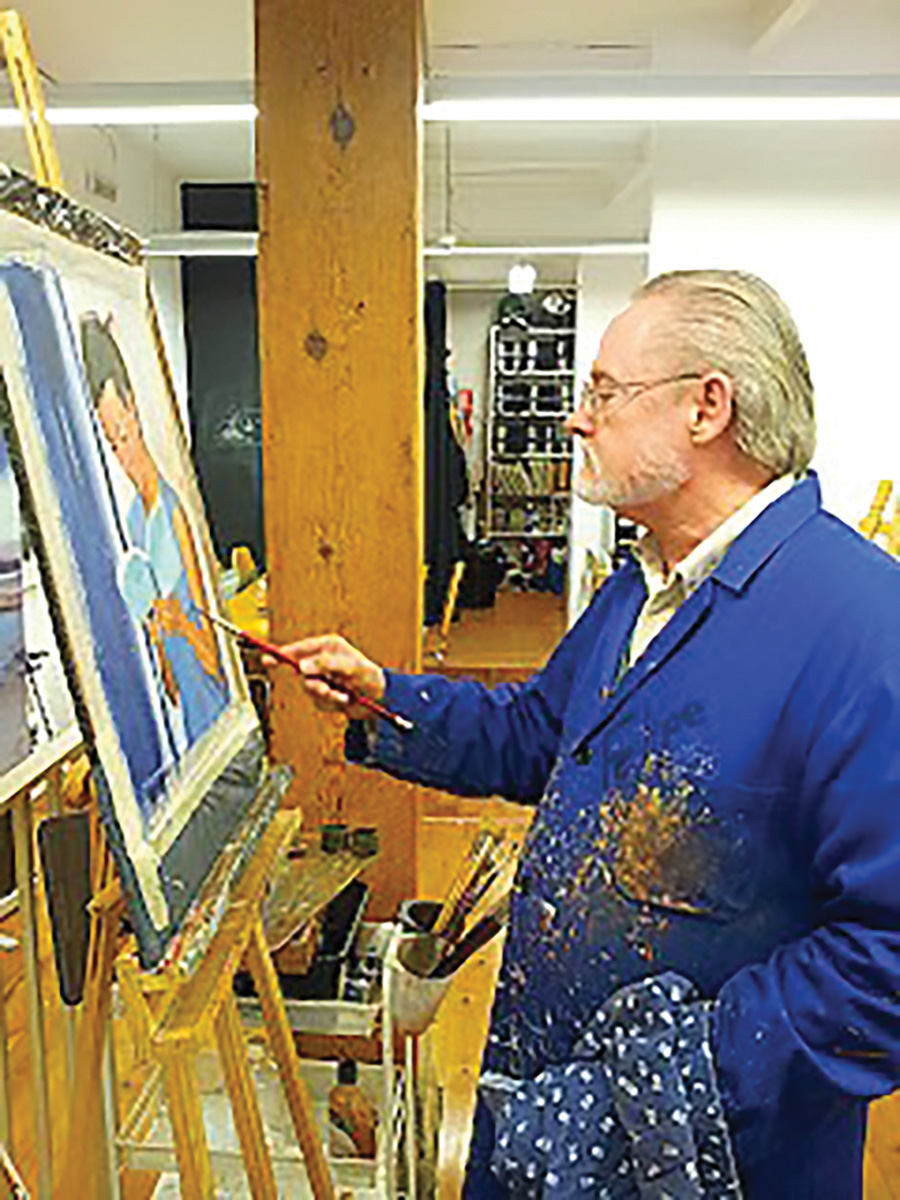
Phil Freyder 68 immersed in oil paintingFor me, what’s most immersive about oil painting is getting into the details with the contours of human heads and bodies, and especially the intense colors that are at my disposal.

—Phil Freyder II, ’68


More Than a Game

Ben Hoyt ’00

From traveling theme parks to immersive games you play on Netflix, Ben Hoyt ’00 describes his work as “surfing the wave of emerging technology.”

Take a look inside the world of Ben Hoyt ’00, whose “47 Games” has created immersive entertainment for Netflix, Marvel and more

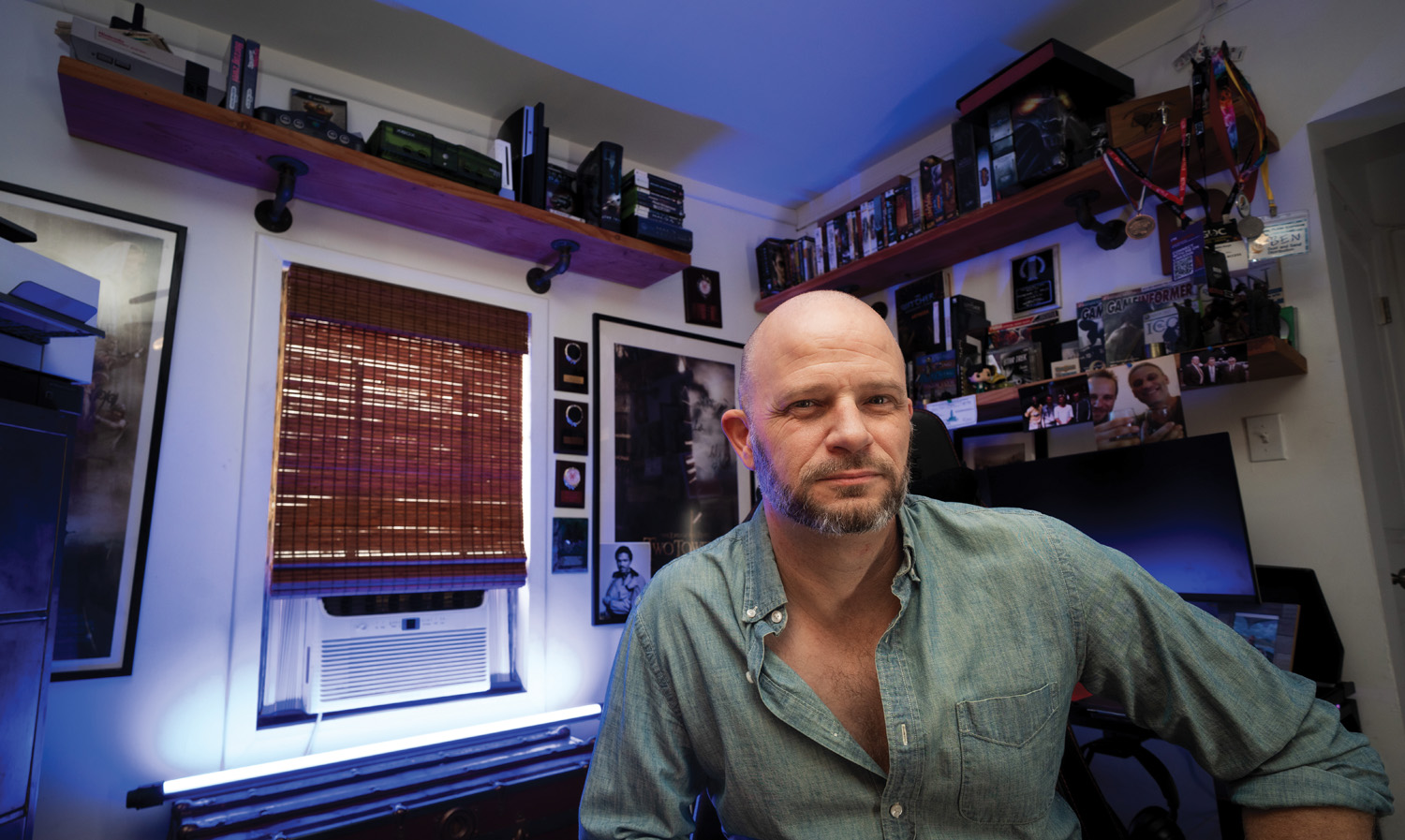
Lifelong gamer Ben Hoyt ’00 has a job that many gamers dream of, working on digital games based on some of the best-known intellectual properties (IPs) in the world. Throughout his 25-year career, Hoyt has played a key role in major projects involving Marvel, Terminator, Star Trek, Def Jam, The Witcher, American Girl, Top Gun, and more.

47 Games Logo

Through his work as founder and CEO of (what else?) 47 Games, Hoyt has become known as a go-to option for projects based on licensed IP, and he has established himself as a producer with a knack for orchestrating the complex cross-disciplinary teams required to develop major games—from creative to coding—and successfully bring them to market.

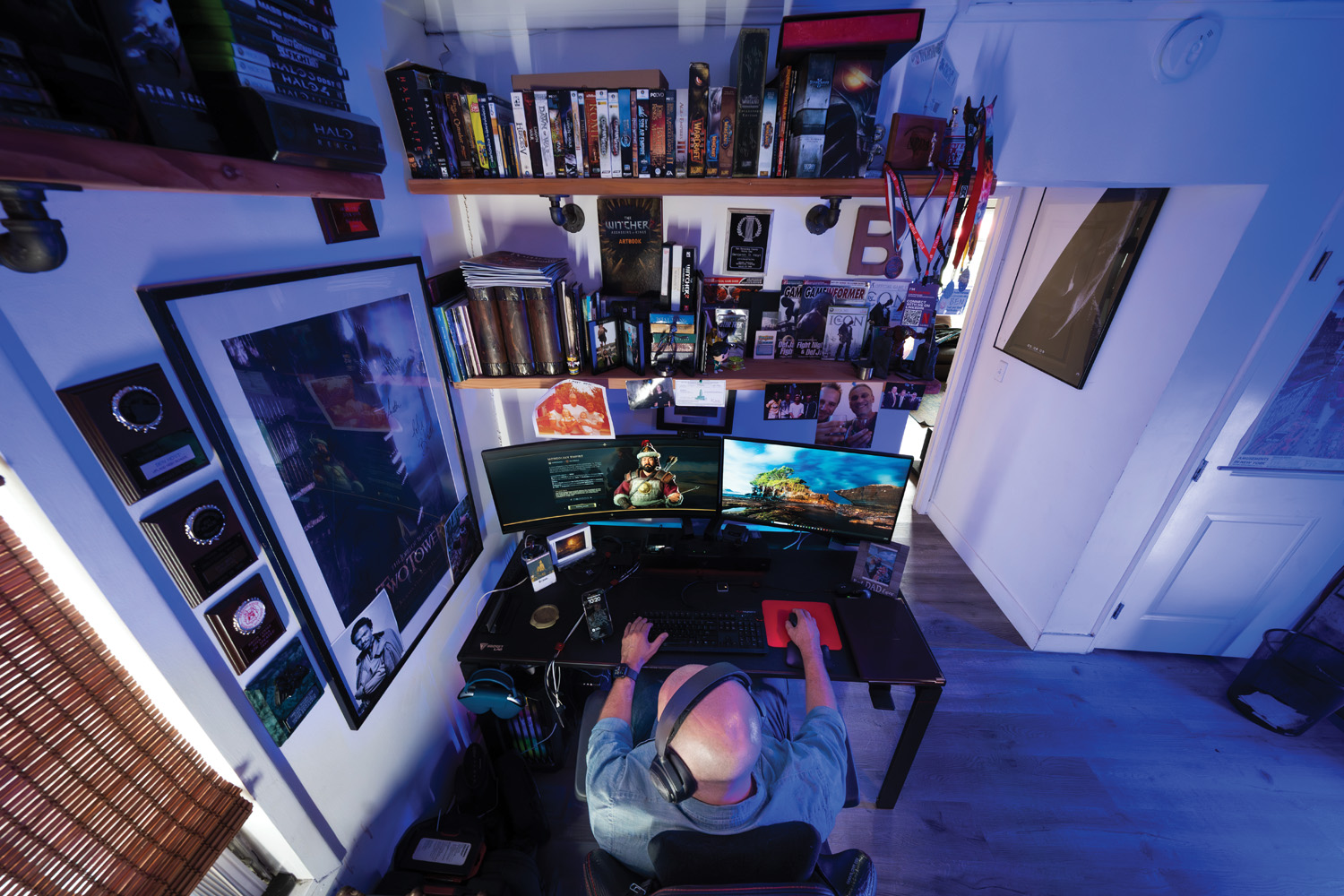
Ben Hoyt ’00 in his office

Hoyt began his career making fairly traditional video games for game consoles but soon expanded his portfolio to mobile games, immersive location-based experiences, virtual reality and augmented reality projects, and more.

In that sense, Hoyt has become a kind of conductor in the world of gaming and interactive content. The musical analogy fits with Hoyt’s view of the immersive field of gaming as the 21st-century version of Gesamtkunstwerk—a work of art that makes use of virtually all other art forms.

“Almost every form of creative endeavor that you can think of—script writing, voice acting, animation, digital, visual art, cinematics, music and sound design—is among the things that each go into the creation of a video game,” he says. “As a video game producer, you have to understand how these pieces fit together and how they are created in order to ultimately be able to deliver—in the case of larger and more complicated games—a finished project.”

Hoyt began his career making fairly traditional video games for game consoles but soon expanded his portfolio to mobile games, immersive location-based experiences, virtual reality (VR) and augmented reality (AR) projects, and more.

“I like to describe it as surfing the wave of emerging technology,” he says.

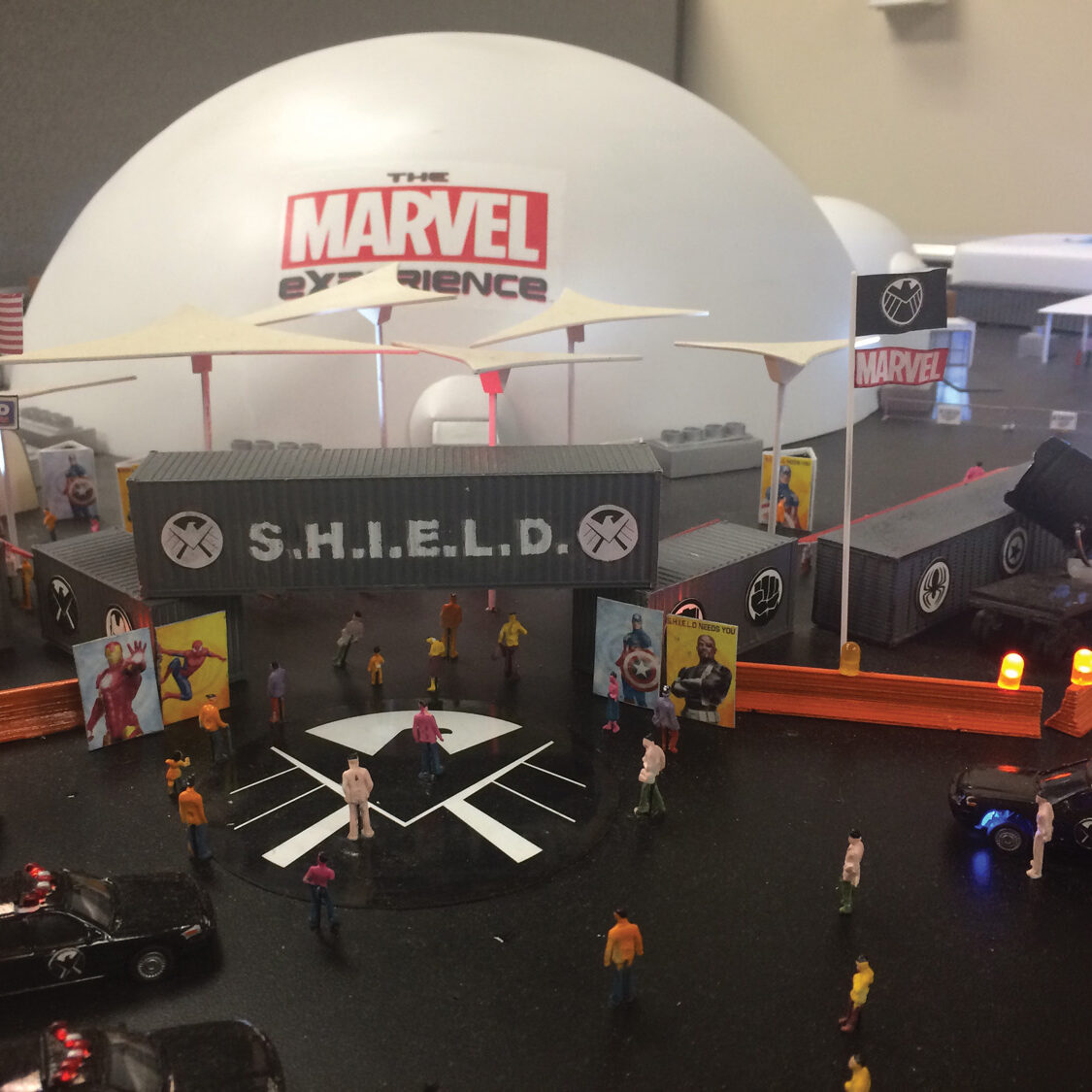
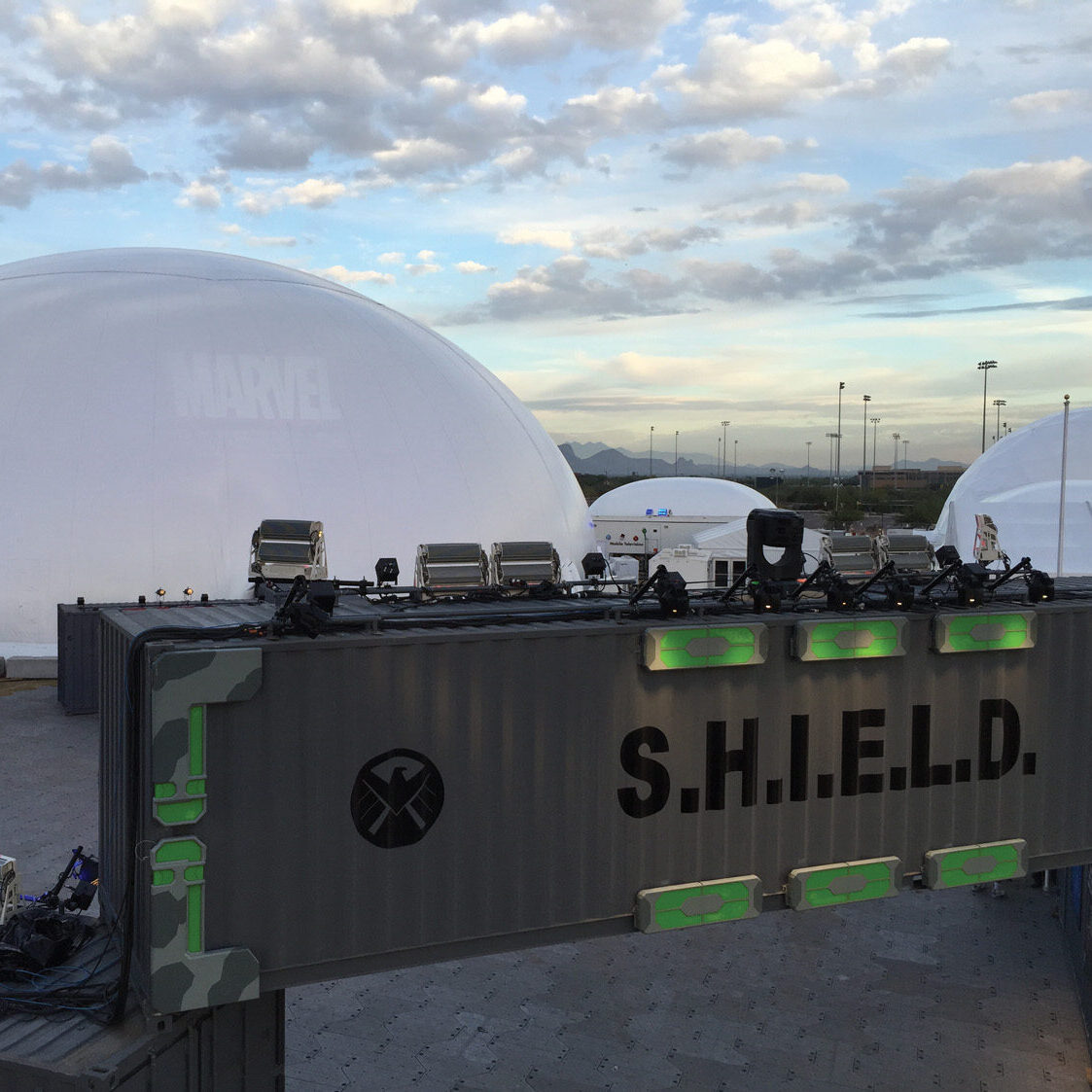
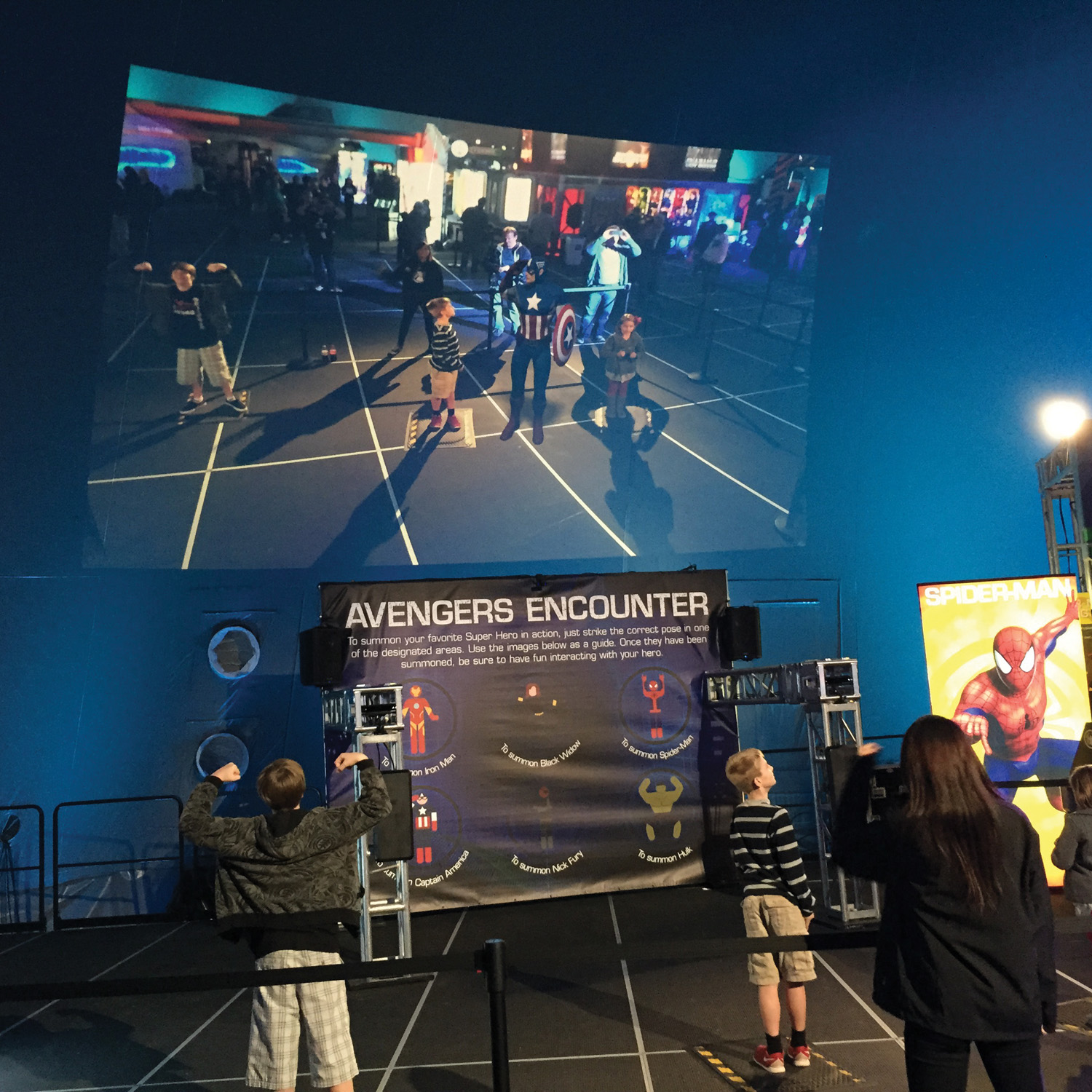
For example, his work on the touring theme-park-like production “The Marvel Experience” involved creating AR and VR experiences, interactive touchscreen activities and motion-tracking games. His team developed high-resolution stereoscopic 3D projections, as well as early versions of RFID bracelets that would track you through the park.

“It was called a ‘hyper-reality theme park,’ and we were trying to leverage a lot of innovative technology at the time to create an immersive experience for the guests,” Hoyt explains. “A lot of the things we used then have since become commonplace in parks like Disney World or Las Vegas’s Sphere venue.”

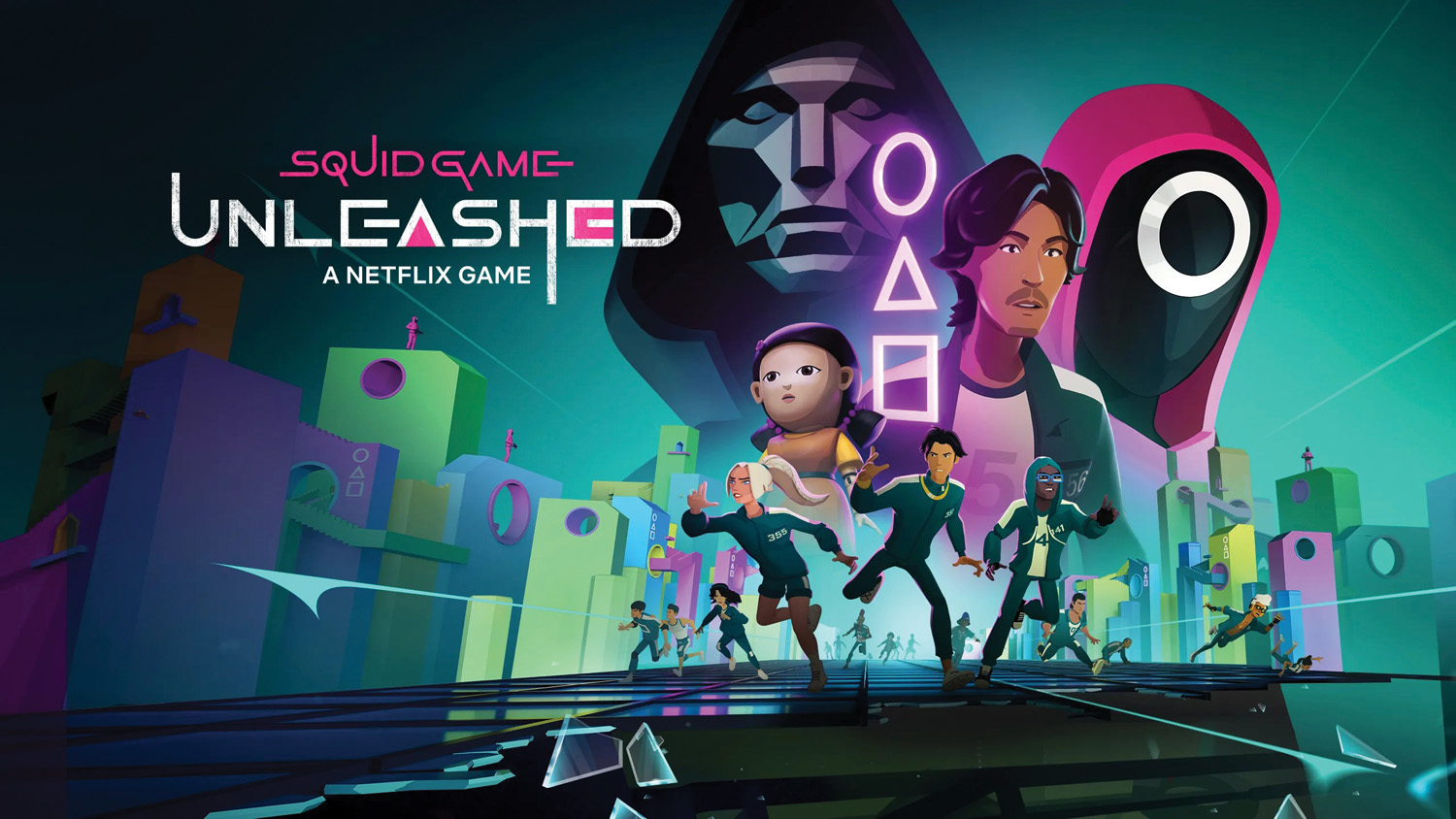
Hoyt’s most recent project is Squid Game: Unleashed, a multiplayer game based on the popular Squid Game series on Netflix. In the fictional TV series, created in South Korea, hundreds of cash-strapped players compete in a winner-take-all contest for a massive payout, but unbeknown to the players at first, losing means death. The macabre and dystopian show has been a huge hit, with three seasons now on view.

Splash screen for Squid Game: Unleashed

Splash screen for Squid Game: Unleashed

The tone of the game is less sinister than the series, and thankfully free of (real-world) lethality.

“The priority was to create something that would have broader appeal,” Hoyt says. “It’s a balancing act that I am used to from other projects I have worked on during my career. How do you create something authentic enough that it will appeal to fans of the IP or show, but that will also resonate beyond that audience?”

Squid Game: Unleashed has been a huge success: soon after its release in December 2024, Netflix announced it was the #1 game in Apple’s App Store in at least 24 countries, ultimately being downloaded more than 10 million times.

Hoyt joined the project early, during pre-production, as part of the core development team that would shape the contours of the game and the user experience.

“One of the things that has been critical in what I do is that, at the end of the day, the game will ultimately manifest as something that will be directly experienced by the player, so almost every decision that is made is in support of something that should matter to them,” Hoyt says. “It’s important for me to ground my advice and decision-making in the perspective of the player, and I’m able to do that because I have been a passionate gamer my entire life. I’m an advocate for the audience.”

Internally, on any given project, Hoyt may be working to advance and help curate the particulars of the game in different ways, serving in various roles as a translator, firefighter, or logistical expert. He must reconcile artistic and creative project goals across various disciplines, while providing a reality check when needed.

“I really enjoy that process of working with creatives in the different media, and being a kind of connective tissue for the projects,” he says. “You have to be able to understand how to bring all those things together in the best way possible.”

Providing a Reality Check

One challenge in Hoyt’s role is that he sometimes has to play the bad cop who vetoes enthusiastic yet unrealistic ideas. But he takes it in stride, and says that the more experienced the creative, the more they tend to appreciate a reality check.

“Creatives, by their nature, have very ambitious ideas, [yet] a project will typically only have the time and resources to achieve a part of that vision,” he says. “A good producer will be able to help identify, early on, what will be achievable, and know how to help creatives prioritize. There’s an art to delivering that news too, but experienced creators know that without boundaries the wheels can fall off the project.”

The inter-disciplinary combination of arts, media and technology can make gaming experiences uniquely immersive and potent, Hoyt says. He cites games like The Last of Us, which was later turned into a popular HBO zombie-apocalypse drama, for its ability to deliver “profoundly impactful emotional and psychological experiences” because of their interactivity, which can force players to experience stories in ways that more passive media can’t.

“The show is incredibly dramatic and impactful, but the experience of playing the game is even more visceral, because the game puts you into the shoes of the characters in the series, and that is not a situation you want to be in,” says Hoyt, referring to the unfortunate plight of the characters in the game. “It is a traumatic story, and the game shows what a unique medium this is.”

Hoyt also reports being influenced by a lo-fi computer game from 2013 that, despite modest means, creates a thought-provoking user experience. With a retro, Soviet-era aesthetic, Papers Please boasts rudimentary graphics and a simple premise: you’re a customs agent examining the documents of travelers at the border of a fictional autocratic country, and have to decide whether to let people in or out.

“Some might have a very touching reason for wanting to go through, and you have to make difficult decisions as you sit at this desk, a representative of the state,” Hoyt says. “As you make these judgment calls, depending on your choices you may rise up the ranks or be fired. I think it’s an example of how games can make people grapple with complicated real-world issues.”

The power of these games can at times feel like a double-edged sword for Hoyt, as the father of a 4-year-old daughter (California) and 6-year-old son (James). He is cognizant of the potential downsides of the industry: while Squid Game: Unleashed is family-friendly enough that Hoyt sometimes plays alongside his young son, he knows better than most about the risks of intensely immersive games.

“I don’t believe—and I think the research backs this up—that video games turn people into criminals, but there are certainly lots of games that I would not let my kids play,” he says. “I would prefer it if certain games weren’t out there at all. I just feel like they aren’t elevating us, but we live in a free society, and we have to deal with the fallout from that.”

Pomona Paved the Path

Hoyt attributes his ability to work effectively across fields in his professional life directly to his multidisciplinary studies at Pomona.

“The liberal arts education that I got at Pomona has been very valuable in my chosen career path,” he says. “I’m a generalist by nature, and I pride myself on being able to talk to anyone, from any background, and have an informed conversation with them about where they’re from and what they do. I think that’s a common attribute of Pomona people, and at least partially a product of a liberal arts education.”
He also cites his years on the college debate team as an experience that has been valuable in his career.

“I had the privilege to debate at a bunch of really fantastic institutions and tournaments, like Oxford, Cambridge, Swarthmore, the University of Glasgow, and other places,” he says. “I became comfortable with thinking and articulating on the fly, and learning how to weave a story extemporaneously. Being comfortable speaking publicly is a really valuable thing to have professionally. I’ve done press tours, met with journalists, and presented my projects in pitches to publishers or company leadership; and that debate experience was extremely helpful in all of those situations.”
Mapping Video Game Worlds

By Brian Whitehead

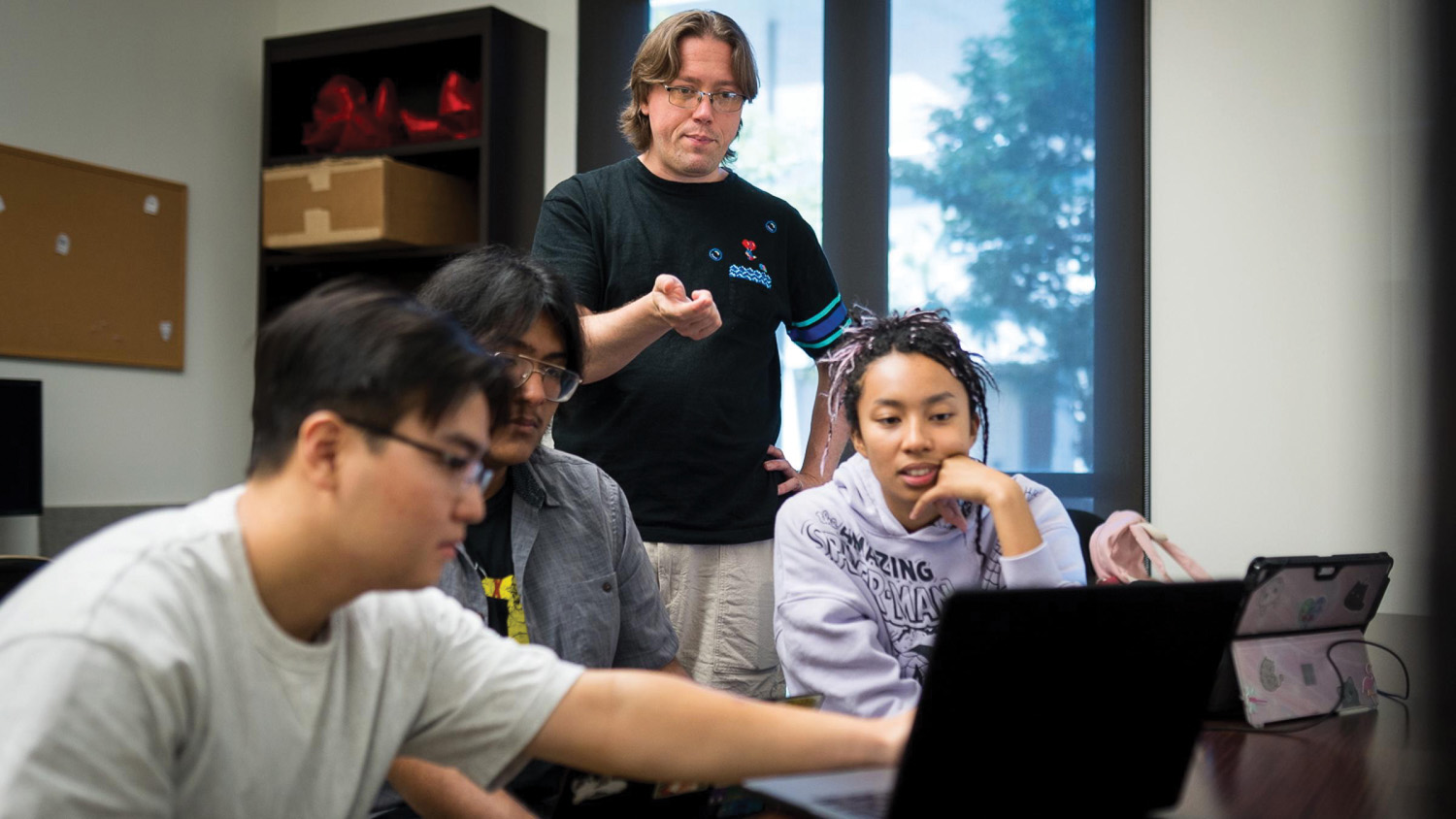
Inside a lab on the first floor of Edmunds Hall, Joseph Osborn, associate professor of computer science, and three rising Pomona seniors are using cutting-edge techniques to map the immersive, vibrant two-dimensional worlds of retro video games.

This summer Emma Gandonou ’26, Steven Kim ’26 and Leo Torres ’26 helped Osborn expand the scope of a project he’s been working on since graduate school—a computational system called Mappy that watches Nintendo Entertainment System (NES) games get played and constructs detailed maps of their terrain.

Joe Osborn with his students during their 2024 SURP.

Joe Osborn with his students during their 2024 SURP.

For their Summer Undergraduate Research Program (SURP) project, Gandonou, Kim and Torres determined whether it’s possible to map not just NES titles, but any two-dimensional action game.

“That’s important if we want an AI agent to play a video game, or if we want to add visual or motor accessibility features to a game,” Osborn says. “Knowing the terrain, and the layout, and where the objects are, and whether they’re solid or not—all these features end up being useful for a lot of different tasks.”
Despite their varying interest in video games, Gandonou, Kim and Torres each sought a place in Osborn’s lab this summer to hone their coding chops in a practical, applicable manner.

“It’s been helpful to keep my coding skills fresh,” says Gandonou, a computer science and cognitive science double major from Dallas. “I’ve also gotten better with problem-solving and become a better coder.”

Osborn says working on an existing project as opposed to a school assignment “exercises a different set of skills.” Such work can be more efficient and effective than self-study, and give students the confidence to pursue post-grad research.

Kim, a computer science major by way of Princeton, New Jersey, grew up playing video games and has been searching for ways to get involved in their development as he ponders a career in tech.

In Osborn’s lab, he and his labmates have worked collaboratively to replace the mapping tool’s current approach, which is based on deep understanding of simulated game hardware.

“Since NES games are coded similarly, Mappy can only be used on these kinds of games,” Kim says. “Our work aims to improve Mappy by incorporating modern computer vision models and techniques.”

A computer science major from San Bernardino, California, Torres built his own gaming computer in 2024, which made Osborn’s lab seem like a natural fit.

“It’s been a very collaborative environment,” Torres says. “If we’re stuck, we give each other advice and help each other out.”

Together, Gandonou, Kim and Torres have provided Osborn fresh perspectives on a long-running project. In speaking with his students about what is and isn’t possible with Mappy, he says he’s had to confront simplifying assumptions he made more than a decade ago.

“Conversations with new collaborators, especially students, really highlight those places where I’ve made a commitment early on that might be worth revisiting at some point,” Osborn says.

What’s your favorite photo you took of campus?

On Facebook, we asked alums about their favorite photo they ever took of something on campus. Here were a few of the responses!

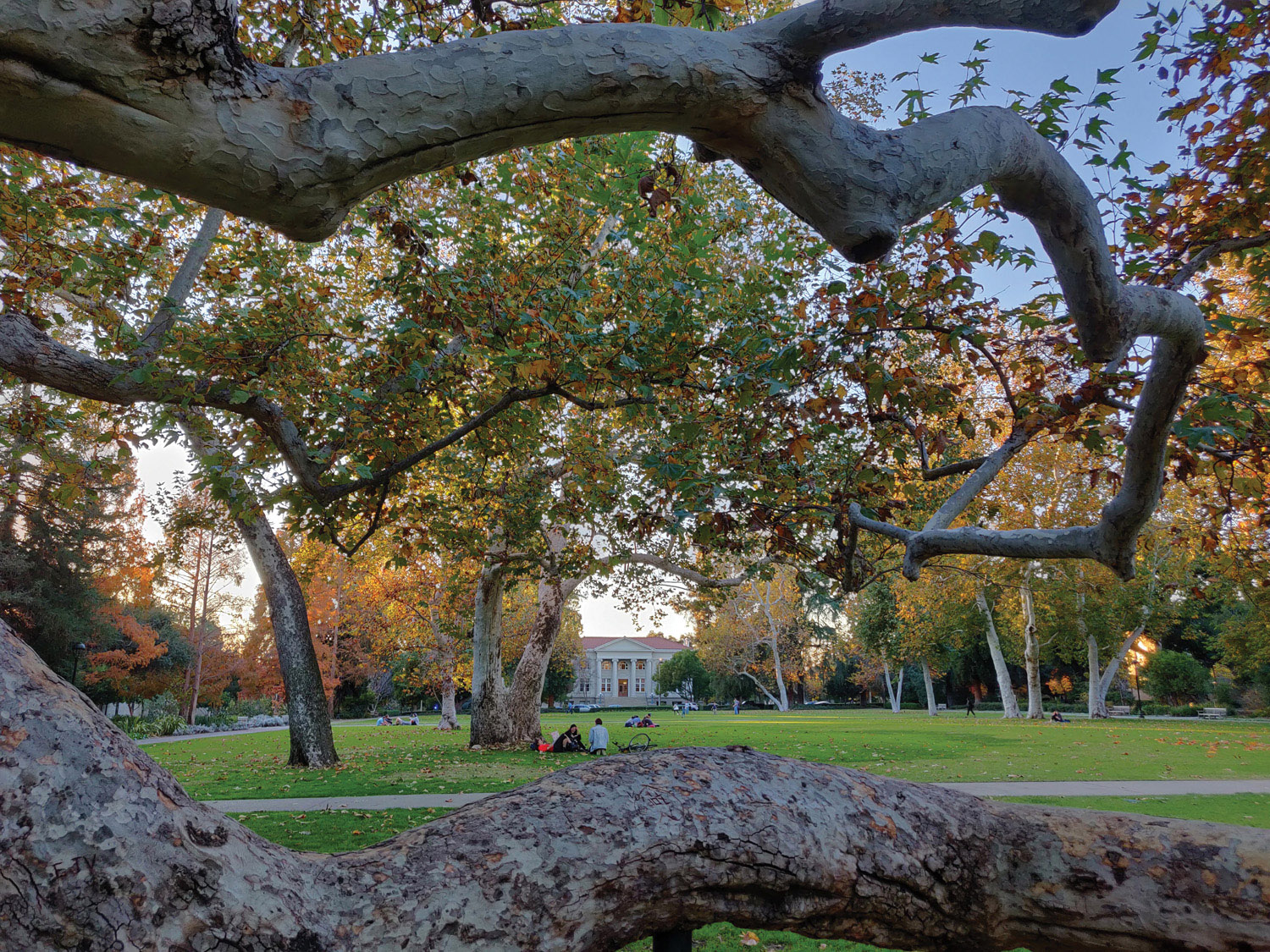
Tree on Marston Quad

A shot atop a tree on Marston Quad, by Samuel Breslow ’18

Seven Decades of Summer Reading for First-Years

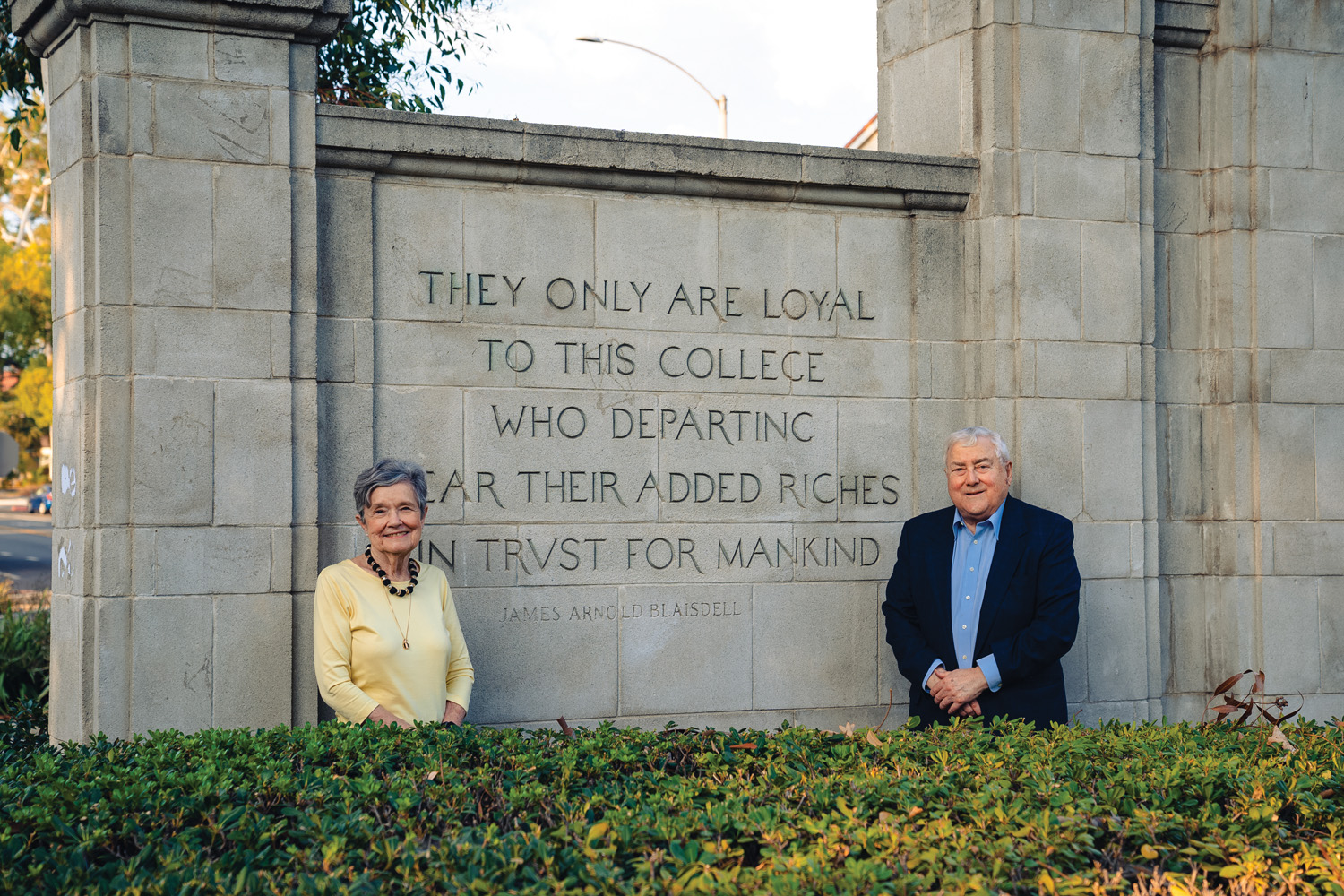
Paul and Flo Eckstein in front of the Pomona College Gate

The author with his wife, Flo, in front of the Pomona College Gate

Going back more than seven decades, Pomona College first-years have been assigned a common book to read during the summer before they pass through the Gates, which they typically discuss in small groups moderated by a professor during orientation week. The idea is to give first-years something challenging and interesting to discuss with their classmates and to provide them with a taste of what college will be like. Sometimes the idea works. Sometimes not.

Among the variety of books selected over the last two decades are James Baldwin’s If Beale Street Could Talk (2019), Justice Sonia Sotomayor’s My Beloved World (2015), Kazuo Ishiguro’s Never Let Me Go (2011) and Fareed Zakaria’s The Future of Freedom (2006). An Orientation Book Committee composed of faculty, staff and students is responsible for each year’s selection. According to English Professor and committee member Kevin Dettmar, the team wanted to select a book that “modeled a critically sophisticated engagement with contemporary popular culture. Critical-thinking skills aren’t just useful for the classroom: they’re lifelong skills.”

Stack of orientation books since 2003This year’s selection was African-American poet and music critic Hanif Abdurraqib’s They Can’t Kill Us Until They Kill Us (published in 2017), a collection of essays largely about music of the 1990s (much of it rap) and the artists who made that music. This year’s reading could not be more different than the reading assigned to my class in the fall of 1958, authored by social critic and essayist Lewis Mumford and titled The Human Prospect (published in 1955); that book was about almost everything under the sun except the music of the time.

About the only thing the two books have in common is that both are essay collections. Abdurraqib’s topics include “Chance the Rapper’s Golden Year,” “Death Becomes You: My Chemical Romance and the Ten Years of the Black Parade” and “The White Rapper Joke.” Mumford’s essays include such varied and unrelated topics as “The Monastery and the Clock,” “The Origins of the American Mind” and “Moby Dick.”

In 2024, literary critic Vincent Triola (author of numerous works of short fiction and a frequent book reviewer) described Abdurraqib’s collection of essays as “representing a generation’s lostness … caused by a technology-driven anti-intellectualism and superficiality that licenses poetry and authorship to anyone with a keyboard, inadvertently devaluing and obscuring quality literature.”

Abdurraqib’s essays are anything but superficial and anti-intellectual; they are well-crafted, beautifully written and, to use a word of the times, accessible, even for a reader now in his mid-80s. This year’s selection seems to have served as a good icebreaker for the racially, economically and geographically diverse Class of 2029.

Pomona is a very different place today from what it was in 1958. Three-quarters of Pomona’s Class of 1962 was from California (mostly from Southern California) with fewer than 3 percent students of color. By contrast, Pomona’s Class of 2029 is composed of students from 26 countries and 41 states (only 34 percent from California) and 55 percent students of color. If Abdurraqib’s set of essays was selected to prompt discussion across a diverse class, it was an inspired choice.

No one still alive remembers why The Human Prospect was selected. Perhaps Steve Pauley ’62 is correct when he muses that Mumford’s book was “assigned to terrify freshmen, most of whom were stars in high school. I guess the faculty wanted to drive some humility into us. What was terrifying was that at least some understood the book—at least they bluffed enough to pull that off.”

In contrast to Abdurraqib’s writing style, Mumford’s was anything but accessible. The book was tough sledding for children of the 1950s and hardly seemed designed to capture the interest of the 17- and 18-year-olds of the time. Gerry Wick ’62, a Ph.D in nuclear physics and now a Zen Buddhist master and author, recalls that he found Mumford’s writing style “turgid, arcane and too erudite to make for enjoyable reading.” Retired schoolteacher Bonnie Bennett Home ’62 remembers: “My professor was so disappointed in the election of The Human Prospect that he declined to discuss the assigned reading.”

Not every classmate of mine found Mumford’s book disappointing. John Roth ’62, a retired philosophy professor at Claremont McKenna, said that “our 18-year-old critiques of Mumford don’t cut much ice with me, nor do our 80-year-old condemnations. We should all hope to leave as much of a mark on our times as Mumford did on his.” Roth was enlightened by the essay “The Monastery and the Clock,” as “it opened my eyes as to how relatively recent the measurement of time is.” I, too, particularly liked that essay, and have often thought about its importance over the years. The remainder of Mumford’s essays, not so much.

Hlib Olhovskyi ’27

Olhovskyi

Returning to the present, the selection committee spoke passionately about They Can’t Kill Us Until They Kill Us.

“This book paints an image of the U.S. that is often shown differently overseas,” said Hlib Olhovskyi ’27. “Among a diverse list of excellent books, this collection stood out the most
for its captivating fusion of scope and detail, intimacy
and universality.”

Zoe Dorado ’27

Dorado

Zoe Dorado ’27 agreed. “[Abdurraqib] writes with a specific obsession that seems fueled by both love and uncertainty about the world,” she said. “He’s not an optimist, yet his work has a propelling force. It’s the type of book that I know I’ll return to during different stages of my life.”

“As I prepared to leave for college and reckoned with a desire for the relationships, places, and moments in time that I felt were disappearing, the appearance of Abdurraqib’s work in my life felt serendipitous and necessary,” said Nadia Hsu ’27. “Everything I’ve ever written since then has been kind of an imitation of Abdurraqib, and the way under his observation everything becomes sacred.”

Nadia Hsu ’27

Hsu

One can only speculate how the Class of 2029 will see the book with the perspective of 67 years. All that really matters, however, is how they regarded it this summer. Did it pique an interest in things unknown and spur lively discussion? Let it be said for now that in the view of this octogenarian, who found much of the book shocking but exciting, the Orientation Book Committee did its job well this year.

Mr. Eckstein ’62 is a longtime trustee of Pomona College, the parent of Timothy Eckstein ’92 and grandparent of Owen Eckstein ’28.