
Features

Can Zombies Do Math?

Can Zombies Do Math?

Is there any reason for today’s academic institutions to encourage the pursuit of answers to seemingly frivolous questions? The opinionated business leader who does not give a darn about your typical liberal arts classes “because they do not prepare today’s students for tomorrow’s work force” might snicker knowingly here: Have you seen some of the ridiculous titles of the courses offered by the English/literature/history/(fill in the blank) studies department at the University of So-And-So? Why should any student take “Basket-weaving in the Andes during the Peloponnesian Wars”? What would anyone gain from such an experience?

Yes, the professor will probably claim that our common global ancestry and the dependence of today’s culture on the classical morals of the era will provide much food for thought and much room for growth for the 18-year-olds who will be sitting through three hours of ancient basket-weaving lectures a week. “Yeah, yeah, yeah,” the industrialist will say with a dismissive wave.

But if our impeccably dressed friend is honest, perhaps he will admit that what he is demanding from college educators is to create for him an army of docile and respectful workers, ones who come out of the factory of higher education in time to be immediately recruited by the factory that is the job market. Workers who are faceless in the midst of a sea of millions like themselves, workers who are cheap and obedient and dispensable. Workers who should NOT learn to ask questions. And especially stupid or frivolous questions—those are the worst!

In these kinds of debates our friend will often find support amidst the faculty teaching in the STEM (science, technology, engineering and mathematics) disciplines. It is not tough to find an engineering professor who smirks at the titles of courses offered by his humanities colleagues, nor is it uncommon for faculty in the pure science disciplines to consider themselves at the core of the curriculum and the foundation of a real education.

My own disciplinary colleagues, the mathematicians, are not completely innocent either. True, many of us view mathematics as a creative art, but many of us also have the illusion that mathe- matics is the only path to universal truth. (Now what does that even mean?)

Last year I took a different path. I volunteered to teach a first- year seminar. A strange path indeed for the rational, linear-think- ing mathematician who had taken a whopping two courses in humanities during her own undergraduate studies. The first-year seminar series at Pomona is a perfect foundation for a deep and engaged liberal arts education. The courses are writing-intensive; most are discussion-oriented seminars. Students are expected to engage with analytic readings, sophisticated writing experiments, creative arts and aesthetic sentiments. That’s absolutely mar-velous for a humanities scholar. How about me? What would I center my course around?

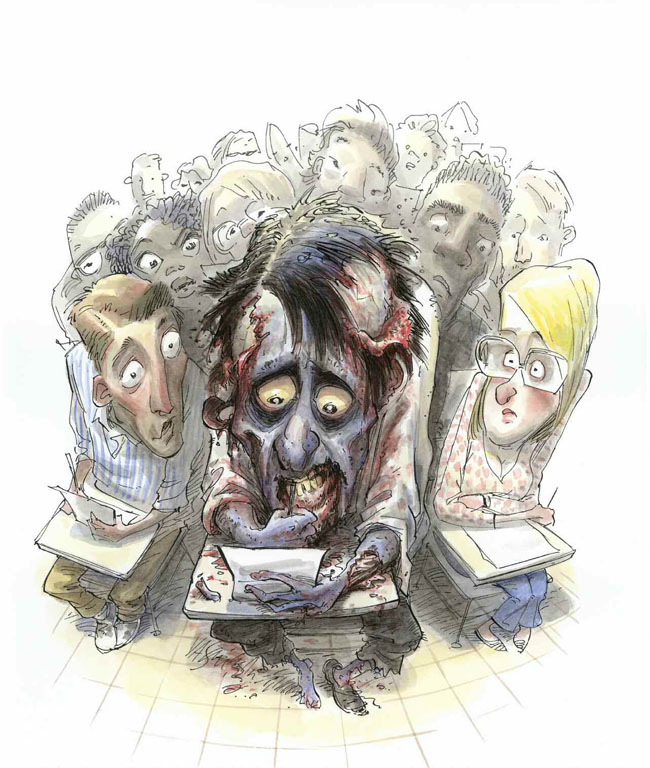
I followed the example of my most daring colleagues and chose a completely frivolous question to guide the semester’s activities: Can Zombies Do Math? The inclusion of zombies was a pragmatic move on my part. The Humans vs. Zombies game has been a hit on my campus for years now, so I knew that students would find the bloody stench and the gory manifestations of the living dead irresistibly appealing. However the central idea of the course had been simmering in my mind for several years before I even heard of the game.

Mathematics is undeniably a human endeavor, even though we mathematicians unfortunately do a poor job of sharing this fact with the rest of society. Mathematical practice gracefully integrates a certain comfort with ambiguity and a deep desire for elegant simplicity amidst complex patterns. I wanted to create a course where students, fresh out of the factory line that is the K–12 education system, would engage with ideas and experiences about the true nature of mathematics.

Throughout the course, my students and I read books, articles, essays, short stories and poems. We watched movies about zombies and mathematicians. Students reviewed novels they were individually assigned, and interviewed mathematicians to discover what motivated them. The main essays of the course focused on the two serious questions that were hidden under my frivolous one: What does it mean to be human? What is the true nature of mathematics? The culminating writing assignment was a narrative statement asking students to come back to the course title ques- tion and resolve for themselves the question that began the whole trip.

On the last class discussion of the semester, Kimberley, the student discussion leader, asked her classmates:

“Now that the course is coming to a close, how would you answer the question “Can zombies do math?” Would you answer it any differently than you would have at the beginning of the semester?”

There was consensus around the room that most of students had not changed their gut response to the question, but now they had a more crisp understanding of the path that led them to that answer. Along the way they tackled questions such as what makes us human, what we ostracize as subhuman, other, mon- strous, and what, if anything, is a soul. They also had the chance to explore ambiguous, wild patterns and strange, undetermined paths in the mathematical universe. But I think what mattered most in the end was summarized best by Kenny’s response to Kimberley’s question:

“Does the purple hippo that I just conceived like to brush his teeth? It depends.”

Yes, the course was centered around a frivolous question, but the point my students and I left the semester with was deep and nuanced: that the answer to any question we pose depends on what our basic assumptions are, what we are already inherently implying with our choice of words, tone of voice and turn of phrase, and what lies inside us as individuals who are reflecting over the question. The minor issue about what makes us human was, of course, a side attraction, which will hopefully allow these keen students of the liberal arts to proceed through the rest of their voyage in college with some carefully examined and deeply felt sentiments about their place in this universe.

Gizem Karaali is an associate professor of mathematics at Pomona College. This is an abridged and adapted version of a piece that originally appeared in Inside Higher Education

Beyond the Wall

Beyond the Wall: The National Debate Over Immigration Seems Stuck in Stalemate. Here, Four Alumni Offer Possible Paths Forward...

1) Open the Gates … Again

By Joel Newman ’89

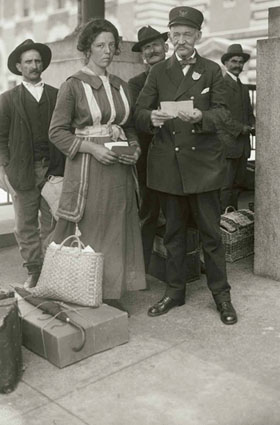
Arizona’s Joe Arpaio, the self-described “toughest sheriff in America” whose deputies have targeted undocumented immigrants, has emphasized that his parents immigrated legally to the United States from Italy in the early 1900s, according to author and journalist Jeffrey Kaye in his book Moving Millions: How Coyote Capitalism Fuels Global Migration. He differentiates his parents from 21st-century immigrants who enter “illegally.” Arpaio may not realize that if the system under which his parents came to America still existed today, most of the immigrants he targets would not be “illegal.”

Bettmann/Corbis AP Images

That more open approach served America well. In fact, we should replace our current immigration system with one similar to the old system, which generally allowed a free flow of newcomers. A 21st-century version would allow us to end today’s debate over work authorization, border enforcement, deportation and labor exploitation due to immigration status.

The immigration laws that Arpaio’s parents encountered were very different from those that exist today. Restrictions on European, Mexican, Canadian and other Western Hemisphere immigrants were few. To immigrate, they did not have to prove that they had a relative who was a U.S. citizen or legal resident, nor did they need to show that they had particular skills or prove that they were fleeing persecution. There were no annual numerical limits on immigration. Documentation was not required to work. According to Mae Ngai of Columbia University in her book Impossible Subjects: Illegal Aliens and the Making of Modern America, deportations were infrequent, and “it seemed unconscionable to expel immigrants after they had settled in the country and had begun to assimilate.”

There were provisions to exclude immigrants who arrived in the U.S. and were determined to be mentally challenged, criminals, polygamists or members of other groups, but Ngai notes that only 1 percent of the 25 million European immigrants from 1880 to World War I were excluded. This immigration system, which essentially had existed since colonial times (prior to the late 19th century, immigration had been controlled by states and colonies), ended in the 1920s with the enactment of annual numerical limits on European immigration and other immigration control features that continue to this day. This led to a dramatic reduction in European immigration levels.

A significant injustice with the older system was its ban on Chinese immigration (later to include other Asian immigrants). Notwithstanding this wrong and the concern many contemporary Americans had about the poverty, political orientation and ethnicity of many newcomers, few Americans today would claim that the much more lenient immigration system (at least toward Europeans) didn’t work. While many European immigrants suffered from horrible working conditions and nativist hostility, they were able to start new lives for themselves and their offspring. And the country immensely benefited economically and culturally. Implementing a revised version of this older system, allowing immigration from all countries and only excluding entrants for health or security reasons, would reap similar benefits today.

It’s also a matter of basic fairness. Most of today’s Americans are the beneficiaries of the relatively unfettered immigration policies for Europeans and Canadians before the 1920s. It is unjust for the majority of the public, who owe their American citizenship to the milder policies of the past, to deny today’s would-be immigrants the same opportunities. Had Arpaio’s parents faced today’s immigration laws, he likely wouldn’t be a U.S. citizen, let alone the “toughest sheriff in America.”

Joel Newman ’89 is an English as a Second Language teacher in Beaverton, Ore., working on a book advocating for open borders. He was a history major at Pomona.

2) Expand the Dream

By Will Perez ’97

Most of the efforts for immigration reform in recent years have focused on the DREAM Act, which would provide a path to legalization to approximately 800,000 young adults who meet the age, residency, college enrollment or military enlistment criteria. Many proponents of immigration reform still believe it is the most politically viable legislation. While I agree the DREAM Act is a much-needed step in the right direction—much of my academic work has focused on the issue of higher education access for undocumented immigrants—I would also make the case for a slightly wider starting point for reform, one that would improve the lives of millions of children and young adults, many of whom are already U.S. citizens.

Often forgotten in the debates about immigration reform are the 4.5 million children and adolescents who are U.S.-born citizens growing up with undocumented parents. Overall, an estimated 14.6 million people are living in some sort of mixed-status home where at least one member of the family is an undocumented immigrant. One in 10 children living in the United States is growing up in such a household. Within these mixed-status households are a range of citizenship and legal residence patterns involving siblings: some born in the U.S. with birthright citizenship, some in the process of attempting to obtain legal status and some fully undocumented.


Piotr Redlinski/Corbis / AP Images

The lack of immigration reform and absence of clear immigration policies results in negative consequences for the well-being of both U.S.-born and foreign-born youth growing up in households headed by undocumented immigrants. Children and youth in households with undocumented members live in fear of being separated from parents or other family members. More than 100,000 citizen children have experienced their parents’ deportation in the last decade. A recent survey of undocumented Latino parents found that 58 percent had a plan for the care of their children in case they were detained or deported and 40 percent had discussed that plan with their children.

Above and beyond the disadvantages faced by undocumented parents due to lower levels of education, they also are excluded from obtaining resources to help their children’s development. The threat of deportation results in lower levels of enrollment of citizen-children in programs they are eligible for, including childcare subsidies, public preschool and food stamps. It also leads to lowered interactions with public institutions such as schools. Without recourse to unions or labor law protections, these parents endure work conditions that are not only poor but chronically so. The resulting economic hardship and psychological distress bring harmful effects on children’s development. Among second-generation Latino children, those with undocumented parents fare worse on emergent reading and math skills assessments at school entry than those whose parents have legal resident status. Moreover, such disparities are evident at as early as 24 months.

Because parents’ socioeconomic status has enormous effects on children’s education, the negative influence of undocumented status may well persist into later generations. Children of undocumented immigrants have lower educational attainment compared to those whose parents are legal residents. But once undocumented immigrants find ways to legalize their status, their children’s educational levels increase substantially.

Higher education poses another set of hurdles for undocumented youth. The rare few who are able to attend college have limited access to financial support to pay for their education. Most must pay their own way, so they have to take on extra jobs and work long hours, leaving little time for studying or forcing them to take time off from school to save money. Many aim to be public servants because their lived experiences have created a desire to give back to their communities. They aspire to be doctors, lawyers and teachers, all professions for which bilingual and culturally representative candidates are greatly needed.

The DREAM Act, as proposed, would certainly benefit many undocumented young people, allowing them to attain legal status. But the undocumented status of their parents and other family members would still continue to have a negative effect on their emotional and academic well-being. Nearly 14 million individuals who live in mixed-status families would continue to suffer the devastating negative effects of undocumented status. Among them, millions of U.S.-born and foreign-born children and adolescents would still face the hardships that harm their development. Unless criteria is expanded to include all undocumented youth, their parents and the undocumented parents of U.S.-born children, the DREAM Act will fall far short of its promise to allow hardworking individuals the possibility to become fully integrated into American society so that they can fully contribute to our economic and civic vitality.

Will Perez ’97, associate professor of education at Claremont Graduate University, is author of Americans by Heart: Undocumented Latino Students and the Promise of Higher Education.

 3) Secure the Border First

By Joerg Knipprath ’73

Contrary to multiculturalist and globalist dogmas fashionable among the opinion elite, Americans as a whole embrace the notion that the United States is a distinct cultural and political entity. The public understands that preserving that distinctness requires controlling immigration to promote assimilation of immigrants culturally and economically. Securing the borders becomes one means to that end, as well as being a matter of national security. It is not surprising that opinion polls show significant public support for control over illegal immigration, even for the demonized Arizona law whose supposedly controversial provision over determining some individuals’ legal residency matches long-time federal law and the laws of California and many other states.

AP Photo / Gregory Bull

As a matter of political efficacy (as well as common sense), securing the border becomes the foundational task. The principal constitutional authority lies in the federal government. Once public confidence in the government’s willingness to control the border has been restored, normalization of the status of those here for a long time or who are here illegally due to no fault of theirs would become politically more acceptable. However, the Obama administration, like its predecessors, has shown little appetite for a concerted push to control illegal migration. By default, some of the states most affected by this laxity have found it necessary to act.

They have the Constitution on their side. That compact specifically obliges the United States to protect the states against invasion. While that language preeminently applies to military invasion, it is not so limited. Incursions by pirates were a recognized threat to Americans of the late-18th century. Today’s conditions of insecurity in person and property that make the southern border area so dangerous and have taken the lives of innocent citizens are analogous to pirate depredations in earlier years. The federal government’s breach of the constitutional compact justifies the reactions of states like Arizona, from increased apprehension of illegal entrants to sending the National Guard to patrol the state’s southern border. As James Madison rightly observed in Federalist No. 41, “It is in vain tooppose constitutional barriers to the impulse of self-preservation.”

As a (legal) immigrant and son of (legal) immigrants, I very much sympathize with the desires of those who come to the United States seeking a better life. Though I was still a child then, I vividly remember the process of obtaining the right to enter and the joy that came with knowing that our family would have that opportunity. However, that experience also turns me unsympathetic to those who crash the party and make others, who obey the immigration laws, look like saps.

There is no perfect defense, and we must avoid Maginot Line thinking. But as homeowners recognize, walls, fences (both physical and virtual) and patrols can do much to advance security. Lest anyone bring up a canard about the Berlin Wall, every rational being knows the difference between a wall or fence intended to keep people in and one intended to keep interlopers out. Think Great Wall of China versus Berlin Wall; think a fence around a residence versus one around a prison. After the border has been secured, other matters can be addressed in due course.

While the current economic doldrums seem to be discouraging many illegal entrants, one hopes that economic malaise will not be the new norm. Looking to the return of more vigorous economic times, a controlled, limited guest worker program, combined with the emerging regime of employer sanctions, would help lower the incentives to enter the U.S. illegally. At the same time, the unconstitutional practice of cities designating themselves as “sanctuary cities” must be brought to an end—these cities blatantly undermine federal immigration policy.

Military service would be another way to show a civic commitment that merits a path to citizenship. Whatever the approach, there must be no cutting in line for illegal entrants over law-abiding applicants for immigration. A final step would be to end the current policy under which any child born in the U.S.—even to parents here illegally—automatically receives citizenship, opening a path for the family to stay as well. Whether this would require a constitutional amendment or might be done through a reconsideration of the current interpretation of the citizenship provision of the 14th Amendment is a complex topic going beyond the political decision to do so. As often is the case, the devil is in the details. But Americans are not eager to see a long-term subculture of metics as in ancient Athens or to embark on a “deport-’em-all” quest. Nor is there today the cultural inclination to adopt robust laws like Mexico’s regarding illegal entrants. A sustained, comprehensive and multilayered effort is needed. The support among the people is there. What is in doubt is the political will of our leaders.

Joerg Knipprath ’73 is a professor at Southwestern Law School in Los Angeles, where he teaches constitutional law, legal history and business law courses.

4) Avoid the Guest Worker Trap

By Conor Friedersdorf ’02

Urgent as it is to reform America’s immigration system, so that those here illegally can live better lives and newcomers can more easily become lawful residents, one sort of immigration reform is best avoided: the large-scale guest worker program. That may seem counterintuitive. During the Bush administration, the Republican Party was divided between restrictionists, who sought tougher enforcement of immigration laws; and moderates, who wanted to permit foreigners six-year stints as temporary workers before requiring that they return to their country of origin. Many liberals and libertarians decided that the latter approach improved on the status quo, even if they’d go farther given their druthers.

But the “guest worker” compromise isn’t just a means of permitting more people to improve their lives by working in America. It is the fraught codification of their status as economic inputs, as opposed to humans on their way to being civic equals. Inequality under the law is a foolish thing to create. It is contrary to America’s founding ideals. And its unintended consequences are likely to be abuse, resentment and strife, as has been the case in some European countries where guest workers were brought in to alleviate labor shortages in the years after World War II.


AP Photo/ The Charlotte Observer, Patrick Schneider

The Europeans discovered that so-called guest workers often stay. Being people, they form local attachments, marry, conceive children and accumulate stuff. In America, they’d presumably do so in neighborhoods substantially made up of other guest workers. Unable to vote, they wouldn’t get their say in how these enclaves were governed. Their legal status would be predicated upon their employment, making them more vulnerable to abuse by employers, for whom they’d be a depreciating asset with a six-year life, rather than human capital in which to invest. These inegalitarian features ought to be enough to sour liberals on the policy.

Conservatives should be wary too. For guest workers who reproduce, the result is a child who cannot be socialized by his or her noncitizen parents in civic participation. And if there is wisdom in sticking to long-held custom and tradition, it is surely worth noting that guest worker programs are a radical departure from what has been a fantastically successful model of immigration in the U.S.: When we’ve welcomed immigrants as citizens, the result has been a rapidly assimilating population that spawns generations of loyal, productive Americans.

We’ve experimented very little with guest workers. What happens if we fill low-wage jobs with temporary residents whose only loyalty to America springs from the paycheck they collect? Might it produce second class noncitizens who become understandably disaffected with a nation that never granted their equality?

Fortunately, millions of people would like to seek citizenship and become Americans. Why would we purposefully entrench a system that instead favored noncitizen guest workers, marginalizing a whole segment of the population while ensuring that, at best, they cannot become fully invested in our country’s future?

One answer is that they’d be cheaper labor than permanent residents or citizens. That’s why the business wing of the Republican Party embraced a guest worker program. For people whose intent is to increase the number of immigrants who can come here legally, the guest worker temptation should be avoided, for its short-term benefits do not justify its major cost: changing how we see immigrants from equals whose future is wrapped up with ours to temporary labor for doing jobs that are beneath us.

Conor Friedersdorf ’02 is a staff writer at The Atlantic and founding editor of The Best of Journalism.


Orozco at the Border

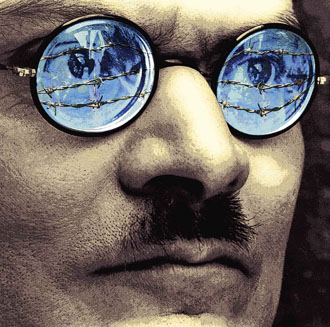
Orozco at the Border: The Mexican Muralist who Painted Prometheus Faced His Share of Indignities at the U.S. Border

Crossing the border can be a cruel social leveler. For José Clemente Orozco, as for many Mexican immigrants, entering the United States proved a harsh and humiliating experience. But unlike most of his compatriots, the renowned muralist endured immigrant indignities at opposite ends of the map, on both the southern and northern edges of the U.S.

Orozco’s first and most famous frontier passage came in 1917, more than a decade before creating his heroic Prometheus at Pomona College. U.S. customs agents at Laredo, Texas, confiscated and destroyed most of the paintings he was carrying, claiming that they were somehow obscene. It was a bitter first impression of the country he had looked to for new artistic horizons. Instead, he found at first a vexing sort of censorship that would worry him for many years to come.

The second border incident is less notorious in art circles, though Orozco himself mentions it in his autobiography. This time, the brush with authorities didn’t involve his art. But it left a personal wound that might feel familiar to many fellow immigrants, regardless of profession, fame or social class.oro

During that same trip, Orozco made a tourist stop at Niagara Falls. At one point, he crossed into Canada to get a better view of the binational natural wonder. World War I was raging and authorities feared an assassination attempt on England’s Prince of Wales, who happened to be visiting at the same time. Adding to a climate of international tension, Orozco recalls, newspapers blared “in enormous red headlines” an account by a “yellow journalist” about Pancho Villa’s revolutionaries assaulting a train in Sonora and allegedly violating all the women on board.

“I had been there a couple of hours when a policeman detected something suspicious in my countenance and asked for my passport,” Orozco writes of his aborted Canadian sojourn. “On seeing that I was a Mexican he literally gave a jump and expelled me on the spot, himself conducting me back to the American side. ‘Mexican’ and ‘bandit’ were synonymous.”

In either incident, those border agents could not have imagined that they were deporting—or destroying the work of—an artist who was to become, in the words of Art Professor Victor Sorell, “the Michelangelo of the 20th Century.”  Although somewhat overshadowed by the other two members of the esteemed troika of Mexican muralists, Diego Rivera and David Alfaro Siqueiros, Orozco has gained increasing attention and respectability in the United States, especially in the past decade. He was the subject of a 2007 PBS documentary, Orozco: Man of Fire, and of a 2002 traveling exhibition, José Clemente Orozco in the United States, 1927-1934, organized by the Hood Museum of Art at Dartmouth College, site of the last of three murals the artist created during that seven-year stay in this country.

In written essays and interviews, experts paint a portrait of an artist whose life and labor were deeply and permanently influenced by his binational lifestyle. Of Mexico’s big three muralists— Los Tres Grandes—Orozco was the one who spent the most time in the United States, a total of 10 years during four separate stays—in 1917-19, 1927-34, 1940 and 1945-46. His visits coincided with the most convulsive global events of the 20th century, including both world wars. Orozco was living in New York the day the stock market crashed in 1929, becoming an artistic eyewitness who documented its aftermath in grim urban tableaus during the first years of the Great Depression. One of those paintings, 1931’s Los Muertos, depicts skyscrapers collapsing in a jagged jumble, an image that would be used 70 years later by a Mexican magazine to illustrate the tragedy of 9/11.

Seen through the prism of his immigrant experience, Orozco’s story will feel familiar even to those far from the rarefied art circles he inhabited. The Niagara Falls fiasco raises issues of xenophobia and racial profiling that still resonate to this day, almost 100 years later. Beyond that, all immigrants can relate to elements of the artist’s cross-border existence—the struggle to navigate the culture gap, to carve out a space where they’re not always welcome, to build a new life from scratch, to move forward despite crippling setbacks. In Orozco’s case, that included periods of poverty and isolation, epic failures as an artist and early public scorn for his work. Not to mention the loss of one hand in a fireworks accident as a young man, a disability that would have sidelined most aspiring muralists, since it is such a physically challenging art form.

“He certainly represents that [immigrant] spirit of gumption and upward battle,” says Laurie Coyle, who wrote, directed and produced the vivid Orozco documentary along with collaborator Rick Tejada-Flores.

The incident in Laredo came as a culture shock for Orozco. Though no records of the destroyed paintings exist, experts believe they were part of a series of watercolors called House of Tears, depicting brothel scenes. They were studies in the human psyche, not sexuality. They may have been grim and hopeless, but not titillating. “The pictures were far from immoral,” writes Orozco in his autobiography. “There was nothing shameless about them. There weren’t even any nudes.”

His reaction: Just keep moving. “At first, I was too dumbfounded to utter a word, but then when I did protest furiously, it was of no avail,” he writes, “and I sadly continued on my way to San Francisco.”

Though barely mentioned again, the border incident created a sort of philosophical angst for the artist, with long-term effects, according to Renato González Mello, professor of contemporary art at the National University of Mexico (UNAM) and the foremost expert on Orozco. The encounter represents a historic clash that flares when Latin Catholic culture meets Anglo-Saxon Protestantism, he explains. Aesthetically speaking, that clash hinges on traditional distinctions between high and low art, a dichotomy that was of particular concern to Orozco and other Mexican artists of the revolutionary era who brashly worked to breach it.

“The incident makes him see that the distinction between high and low is subject to legal definitions,” González says in a bilingual phone interview from Mexico City. “What in Mexico would be a problem of good taste or bad taste, or simply a problem of class, in the United States becomes a matter of law enforcement… This is like a completely different planet for Orozco, and he sees it as incredibly strange and irrational.”

Getting used to new rules would take time. For the two years he spent in the United States on that first visit, Orozco did not produce any art works of note. Instead, he painted movie posters and Kewpie dolls for subsistence. “I still believed that there was some law against art in the United States,” the artist is quoted saying in the documentary, “and I wasn’t taking any more chances.”

Orozco returned to Mexico in 1919, on the cusp of the country’s public mural movement. But Orozco’s first major commission in 1924 was soon plunged into chaos when angry conservative students defaced his murals at the capital’s National Preparatory School, because they considered them seditious and sacrilegious. Orozco recalls that he and Siqueiros were both “thrown out into the streets like mad dogs.”


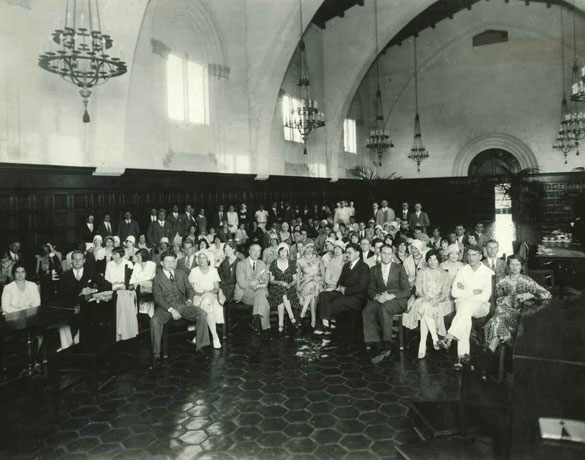
Orozco (front row, fifth from right) with an unidentified group in Frary Hall, where he would paint his Prometheus. Photo courtesy of Honnold-Mudd Library.

The muralists managed to finish the work two years later, to great acclaim. But soon, government support for the mural movement dried up, and with it the hope for new commissions. With that discouraging backdrop, noting that “there was little to hold me in Mexico,” Orozco decided to set out once again for El Norte, arriving in New York in the winter of 1927.

“It was December and very cold,” he writes. “I knew nobody and proposed to begin all over.”

For six months, Orozco lived in virtual anonymity, until hemet American journalist Alma Reed, who was to become his agent and chief cheerleader. She had been referred to the artist by another writer, Anita Brenner, daughter of Jewish emigrants to Mexico who was familiar with his work and expressed concern for his “sad and lonely and neglected” condition. But she warned Reed that Orozco could be difficult, a man “tortured by hypersensitive nerves” who was “easily hurt.”

In her own book about Orozco, Reed recounts going to meet the artist for the first time at his basement apartment in Manhattan. Instead of a temperamental grouch, Reed found “a gentle host” with a “cordial smile” and a “vague touch of the debonair.” She was incensed by the way her fellow Americans were ignoring him, a snub she called “a breach of international courtesy.”

“Not one of our very wealthy and socially prominent art patrons or subsidized cultural institutions had made the slightest gesture of welcome to this renowned master of the long-lost technique of true fresco …,” writes Reed. Impelled by a “nebulous desire to make amends,” she vowed to “let him know that one ‘Norteamericana’ felt honored to welcome him, though somewhat belatedly, to Babylon-on-Hudson and had come to wish him all the success and happiness he so richly deserved.”

In the next few years, Reed did much to make that success happen. She would be instrumental, in fact, in helping the painter land his three mural jobs, at Pomona and Dartmouth colleges and in New York at the New School for Social Research. And she helped introduce Orozco to a diverse and stimulating set of new contacts through the Delphic Circle, an intellectual and literary salon founded by Greek poet Angelos Sikelianos around a vision of universal brotherhood. The group, which had staged the ancient Greek tragedy Prometheus Bound in Delphi the same year Orozco arrived in New York, would be extremely influential in his work.

“I think the adoration that Alma Reed demonstrated toward him, the attention he received in New York at the ashram of the Delphic Circle, that kind of deified him in the same way that Rivera had been deified,” says Sorell, university distinguished professor emeritus at Chicago State University. “His confidence must have grown exponentially.”

Orozco spent more than two years in New York before landing his first mural commission at Pomona. Meanwhile, he survived partly by catering—or caving—to the trendy demand for Mexican art that developed in the United States and Europe during the 1920s and 30s. He made paintings of what writer and curator Diane Miliotes describes as “landscapes that verge on the folkloric … with these stock images of a pueblo, or an indigenous woman and her child, and maybe a maguey plant or two.”

In an essay for the companion book to the Dartmouth exhibition, Timothy Rub notes that “Orozco developed a keen if somewhat cynical awareness of what American patrons expected of Mexican painters.” In the same book, González Mello puts it more bluntly: “The first thing Orozco does upon his arrival (in New York) is become a professional Mexican.”

Personally, the artist found the whole thing distasteful. Even in Mexico, he was harshly critical of revolutionary artists who pandered to the folkloric, glorified the indigenous or idealized the concept of nationality, or Mexicanidad, all of which had been the bread and butter of the mural movement.

In the United States, he had to deal with the market on its own terms, at least to some extent.

“He’s dealing with an audience that doesn’t know anything about Mexico, except that it’s exotic and exciting and violent,” says Miliotes, who served as in-house curator for the Hood Museum exhibition. “And there’s this wonderful vogue for it that he’s trying to take advantage of, but it forces him to try to navigate that craze without feeling that he’s totally selling himself out.”

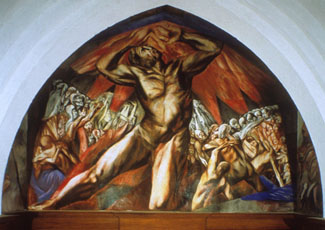
Those concerns would soon fade. In 1930, Orozco put himself firmly on the map as a world-class artist with his own daring identity when he painted Prometheus, the first fresco by a Mexican artist in the United States. The commission for the space above the fireplace in Frary Hall was pushed along by Catalan art historian José Pijoán, who was then teaching at Pomona.

At first, he considered calling on Orozco’s rival, Diego Rivera. But it was Pijoán’s colleague, artist Jorge Juan Crespo de la Serna, who steered the project to Orozco. Crespo de la Serna, then teaching at Chouinard Art Institute in Los Angeles, was a friend of Orozco and would become his assistant on Prometheus. “… The beauty of it is that a few kids and a few penniless professors had the faith and the courage to institute the proceedings and went ahead without committees, boards, or rubber stamps,” Pijoan wrote in the Los Angeles Times shortly after the work was completed.

The landmark work would become “the first major modern fresco in this country and thus epochal in the history of the medium,” according to the late art historian David W. Scott, former chair of the Art Department at Scripps College.

Yet, as bold as the fresco was, Orozco at first avoided painting a penis on Prometheus, the heroic nude that towers over diners at Frary. While more lofty artistic considerations about classic representations of the male physique may also have been at play, the artist was certainly well aware of his local critics and the risk of offending puritanical community standards. “Absolutely, I think he was hesitant (to add the penis) because there was disapproval that he was painting a very large naked male figure on the wall,” says Coyle, the documentarian. “He was reading the press and some of these critical articles were actually appearing while he was working on the mural.”

Orozco didn’t have to check the newspapers to find condemnation. He embarked on the project, he writes, “to the disgust of the trustees who would grumble as they made their way through the refectory and eye the scaffoldings askance, disposed to fall upon me at the first mis-step.”

A penis was appended later to the fresco when Orozco returned for a visit  months later, but it didn’t adhere properly because the wall had dried. Since then, of course, the missing member has been the subject of student jokes and pranks. The genital shortcomings didn’t deter artist Jackson Pollock, an Orozco admirer, from famously declaring Prometheus “the greatest painting in North America.”

Despite the controversy, the Pomona campus community, especially faculty and students, defended the artist’s right to express himself. The following year, in the face of yet another public outcry, administrators of the New School defended his depiction of Lenin and Stalin in his series of five frescoes with sociopolitical themes. The support in both cases must have been reassuring since he had seen how vicious public censorship could be, on both sides of the border. Later, the Dartmouth community also would stand up for his artistic freedom at a time when murals by Rivera in New York and Siqueiros in Los Angeles were being whitewashed or destroyed for political reasons.

Orozco returned to Mexico in triumph in 1934 and proceeded to create astonishing works of art that mark the pinnacle of his career. He completed his masterwork at Guadalajara’s Hospicio Cabañas, crowned by the soaring image of The Man of Fire in the cupola of the colonial structure, dubbed the Sistine Chapel of the Americas. In 1940, hailed as a celebrity, he returned to New York and created the anti-war mural, Dive Bomber and Tank, commissioned by the Museum of Modern Art. Orozco wrote his final chapter in the United States in 1945-46, near the end of his life. This time, the trip was primarily personal. He came to this country for the last time out of love. And he left with a broken heart.

Earlier, the aging artist had fallen head over heels for the young and beautiful lead dancer for the Mexico City Ballet, Gloria Campobello. But when his mistress gave him an ultimatum and his wife Margarita refused to give him a divorce, the stage was set for a midlife crisis that ripped open the man’s hermetic heart.

Orozco left his family and moved to New York to be with Campobello. But she soon abandoned him and returned to Mexico, ignoring his pathetic, pining letters. The artist found himself alone in Manhattan once again, just as he had started. Now all he wanted was to go back home and he begged his wife to take him back: “I know that I have behaved very badly with you and I have paid dearly with my remorse,” he wrote. “I don’t want to live here anymore. I don’t want any of it. Or even to see it again. My only thought is to return to you if you will take me back.”

And she did. He returned to Mexico City, with only three more years to live. His final works evinced a premonition of death. When it finally came, on Sept. 7, 1949, it caught him in the midst of a new project, painting a public housing mural.

Orozco had come to this country as an unknown, and left as an artist of global stature. Far from leveling him, immigration had vaulted him to new heights.

“I really think his experience in the United States inspired him to speak to people across borders,” says Coyle, the documentary filmmaker. “He did not want to be seen as a national artist or a Mexican artist. He really kind of chafed at those boundaries and divisions that people used to define themselves and what they were doing.”

To Shine in the West

To Shine in the West: Fong Foo Sec, Pomona's First Chinese Immigrant Student, Would Later be Hailed as a Scholar and Goodwill Ambassador, but First he had to Face Violence, Derision and a New Immigration Law....

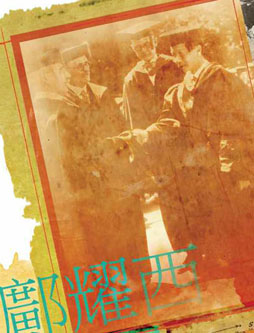
On a summer day in 1922, as the strains of opera music and applause from the commencement audience faded away, President James Blaisdell presented a doctor of laws to Fong Foo Sec, the College’s first Chinese immigrant student. It was only the third LL.D awarded since the College’s founding 35 years earlier, and the story of a peasant laborer turned goodwill ambassador receiving an honorary degree attracted coverage from as far afield as the New York Times.

Fong had become the chief English editor of the Commercial Press, China’s first modern publisher. At Commencement, he was praised as an “heir by birth to the wisdom of an ancient and wonderful people; scholar as well of Western learning; holding all these combined riches in the services of a great heart; internationalist, educator, modest Christian gentleman.”

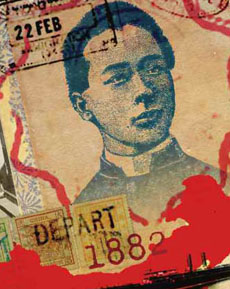
The pomp could not have been more different than Fong’s arrival four decades earlier, when his improbable journey to Pomona began under the cover of twilight. After his steamship docked in San Francisco in 1882, the scrawny 13-year-old boy hid in a baggage cart, while his fellow passengers banded together to fend off attackers along the waterfront, in case the immigrants were discovered before reaching the sanctuary of Chinatown.

“I was received with bricks and kicks,” Fong said, describing his reception in a magazine interview and in his memoirs decades later. “Some rude Americans, seeing Chinese laborers flock in and finding no way to stop them, threw street litter at us to vent their fury.”

Fong’s immigrant tale is both emblematic and exceptional: emblematic in the peasant roots, the struggles and dream of prosperity he shared with Chinese laborers of that era. Exceptional in the fact that Fong, though he came as a laborer, was able to get a college education in the U.S. and seize the opportunities it brought. He arrived at a time when formal immigration restrictions were scant, but also to a land gripped by anti-Chinese hysteria, just before a new law that, in the words of historian Erika Lee, “forever changed America’s relationship to immigration.”

IF FONG, IN HIS TINY VILLAGE in Guangdong province in southern China, had heard of such threats against his countrymen, he remained undeterred in his quest to go to Gold Mountain, a name California had picked up during the Gold Rush era. Fong’s childhood nicknames, Kuang Yaoxi, “to shine in the West” and Kuang Jingxi “to respect the West” are revealing. “He was expected, or perhaps destined, to become associated with the Western world and Western culture,” says Leung Yuen Sang, chairman of the History Department at the Chinese University of Hong Kong, who has conducted research on Fong.

Born in 1869, Fong tended his family’s water buffalo and planted rice, taro and sweet potatoes, but did not begin school until he was 8. Often hungry, he went barefoot and wore patched clothes, reserving his shoes for festival days, Fong wrote in his memoirs. But his father saw a way out for Fong. From the start of the 19th century, his clansmen, driven by bandits, floods, war and rebellion, went abroad to seek their fortunes. After seeing villagers travel to America and return with “their pockets full,” his father asked Fong if he’d like to go too.

To pay for his ticket, the family borrowed money from relatives and friends, a common practice for would-be travelers. In January 1882, accompanied by his neighbor, Fong left for Hong Kong where he stayed before sailing for San Francisco on the S.S. China. In the crowded hold, amid stormy weather and high waves, he learned his first words of English and picked up advice. Fong’s steamship was one of scores jammed with thousands of his compatriots who began rushing over while the U.S. Congress debated a moratorium on most immigration from China.

According to his memoirs, Fong arrived sometime after the passage, on May 6, 1882, of what became known as the Exclusion Act, but before it took effect 90 days later. The San Francisco Chronicle published the arrivals and passenger load of steamships from the Orient, noting in March of that year, “It is a matter of some interest to know just how many Chinese are likely to be pressed upon our shores.”

The Chronicle also wrote of crowded, unclean conditions aboard steamers, which were anchored on quarantine grounds and fumigated to prevent the spread of smallpox. In headline after headline, the newspaper created the sense of a city besieged: “More Chinese: Another Thousand Arrive in This Port,” “And Still They Come … Two Thousand Others on the Way,” “Another Chinese Cargo: Eighty Thousand Heathen Awaiting Shipment to This City.”

ANTI-CHINESE SENTIMENT had been building for decades on the West Coast. During economic downturns, the immigrants, with their cheap labor, became scapegoats. Mob violence flared against them, and in San Francisco, in 1877, thousands of rioters attacked Chinese laundries and the wharves of the Pacific Mail Steamship Company, the chief transpacific carriers of the laborers.

California had already passed its own anti-Chinese measures, and after years of pressure, particularly from the West Coast, Congress took unprecedented federal action in the form of 1882’s Exclusion Act. The 10-year ban on Chinese laborers would be the first federal moratorium barring immigration based upon race and class. Only merchants, teachers, students and their servants would be permitted to enter thereafter.

At first, confusion reigned. When the Exclusion Act took effect, a Chronicle headline proclaimed that the arrival of the “last cargo” of Chinese in San Francisco was “A Scene that Will Become Historical.” Still, the Chinese continued arriving as enforcement in the beginning remained haphazard. The act represented the U.S. government’s first attempts to process immigrants, and officials at the ports weren’t sure how to handle Chinese laborers under the new regulations, says Erika Lee, director of the Asian American Studies Program at the University of Minnesota. But in time the law succeeded in reducing Chinese immigration, which plummeted from 39,579 in 1882 to only 10 people, five years later. The Chinese population in the West shrank, as immigrants moved east to work and open small businesses. In the months and years to come, restrictions would tighten, with Chinese required to carry certificates of registration verifying legal entry. Later on, the right to re-enter the U.S. would be rescinded, and the act would be renewed.

“Beginning in 1882, the United States stopped being a nation of immigrants that welcomed foreigners without restrictions,” Lee argues in her book, At America’s Gates. “For the first time in its history, the United States began to exert federal control over immigrants at its gates and within its borders, thereby setting standards, by race, class, and gender for who was to be welcomed into this country.”

AFTER ARRIVING IN SAN FRANCISCO, Fong was forced to hide in a basement his first few days in Chinatown, a neighborhood of narrow alleys and cramped tenements, but also of temples and gaily-painted balconies. Laws targeting Chinese—their tight living quarters and their use of poles to carry loads on sidewalks— reflected the simmering resentment. “The city authorities, because they had not been able to prevent their coming, tried to make it difficult for [the Chinese] to settle down here,” Fong wrote.

 Like many immigrants, Fong turned to kinsmen for help. He left for Sacramento to live with an uncle, a vegetable dealer, who found him a job as a cook to a wealthy family. He earned $1 a week, along with the occasional gift of a dime, which he treasured “as gold.” He—like many Chinese immigrants—sent money back to cover the debt incurred to cover his passage to America and pay for family expenses.

At his uncle’s urging, Fong studied English at a night school set up by the Congregational Church in Sacramento’s Chinatown, but he started gambling and stopped going to class. Scolded by his uncle, he returned to school and a new teacher, Rev. Chin Toy, became his mentor.

Fong found himself debating whether to convert to Christianity. Among his parents, relatives, and friends, not a single one was Christian, and he hesitated giving up the idols his ancestors had worshipped for generations. “If Christianity turns out to be unreliable, I will lose heavily,” he wrote in his memoirs.

After a fire gutted the heart of Sacramento’s Chinatown and destroyed his few possessions, Fong had to move into a dark basement room, thick with his uncle’s opium smoke. Fong then asked if he could stay in the mission church, and Rev. Chin consented to the unprecedented request. From age 15 to 17, Fong lived in the mission, where he learned Chinese, the Bible, English, elementary science, and read books such as Pilgrim’s Progress and Travels in Africa. Six months later, he was baptized, but it took the Salvation Army to stoke his religious passion.

Drawn by the sound of the bugle one night, coming home from his cook’s job, Fong watched the preachers in the street, fervent despite a jeering crowd. Their zeal led him to question his faith and whether his sins had been forgiven. Struck by a vision of Christ’s breast streaming with blood, he knelt during a church service and repented.

His conversion was unusual—missionaries in those days did not make deep inroads among Chinese immigrants, who “did not seem to see the efficacy of a god who sacrificed his son on a cross,” says Madeline Hsu, director of the Center for Asian American Studies at the University of Texas at Austin. “Until there was a better sense of community and utility in attending church, missionaries seemed largely ineffectual.”

The Salvation Army, unable to proselytize among the Chinese until Fong joined up, sent him to their San Francisco headquarters in 1889 for six months of training. As a preacher, Fong became the object of “laughter, bullying, and insults. As a Chinese, I suffered more than any Westerner,” he wrote. Still, for more than a year, Fong evangelized in California, Oregon and Washington.

One night, a brawny man in the street started beating Fong, who could not defend himself, and the teenager escaped after a woman intervened. Another time, while Fong passed a football field, boys swarmed around him, spitting and assaulting him until he found refuge in a nearby house.

After a labor meeting to discuss measures against the Chinese, boys began following Fong, who brandished a paper knife to ward them off. He might have found his greatest peril in Tacoma, Wash., where mobs in November 1885 drove out every Chinese, part of a wave of xenophobic violence sweeping the West. During an evening meeting sometime after the anti-Chinese riots, Fong’s friends heard voices outside and urged him to change out of his Salvation Army uniform, hide in a friend’s house and then aboard a ship anchored in the harbor where he spent the night. “Later, it came to light several hundred people had gathered outside the door of the meeting place, ready to seize me,” he wrote in his memoirs.

Fong endured. After taking typing and shorthand in night school, he became a clerk at the Salvation Army, and then was promoted to secretary to a major, the organization’s ranking leader on the Pacific Coast. The next few years had “significant bearing” on his future, he wrote, because he associated with people of “superior class” who spoke fluent English. On his own, he studied history, archeology and literature, and honed his public speaking and debate skills.

BUT FONG HAD AMBITIONS that would lead him to Pomona—and, eventually, back to China. “If I could obtain higher learning, I could go back and be of service to society,” he wrote in his memoirs.“To spend my whole life in a foreign country did not seem to me the most ideal solution.”

In 1897, Fong met Pasadena businessman Samuel Hahn, whose son, Edwin, attended Pomona. Fong shared his dreams with them. Edwin Hahn, in turn, told Cyrus Baldwin, Pomona’s first president. Not long after, President Baldwin called upon Fong in San Francisco at the Salvation Army headquarters, urging him to come at once. Fong’s $300 savings, and his pledge to work part-time, would cover his tuition, the president assured him. Years later, Fong would name his first-born son Baldwin in gratitude.

Fong entered Pomona’s prep school, cleaning houses, waiting on tables, typewriting, picking apples and cooking to cover his expenses. Like some students, Fong built a wood shack to save on rent and prepared his own meals, harvesting vegetables from a friend’s garden, according to classmate Charles L. Boynton, who contributed to a memorial volume after Fong’s death. Rev. Boynton would become a missionary in Shanghai. (With the College’s Congregationalist roots, a good number of Pomona students went on to become missionaries in the early days.)

As a student, Fong helped bridge the gulf between cultures and countries, a role that would become his life’s work. He was seen as an expert on his homeland. Under the headline “The Views of a Bright Chinese Student,” the Los Angeles Times printed the transcript of a lengthy address Fong had given in Los Angeles regarding current events in China. And Boynton asked Fong—known as “Sec” or “Mr. Sec”—to speak with students planning to become missionaries in China, to share what he knew of the country and to make a personal appeal for evangelization. Fong also began his decades-long involvement with the YMCA during this time, after hearing about a fellow student’s account of young people surrendering their lives to Christ at a gathering on the hillside overlooking the ocean at sunset in Pacific Grove.

He interrupted his studies at Pomona twice: first, shortly after enrolling to accompany General William Booth, the founder of the Salvation Army, on a tour of the United States, and for a second time, in 1899, after he contracted tuberculosis and a physician ordered him to recuperate in a mountain camp for a year. “I was under the impression there was no cure for the disease and that it was a matter of a few months before my life, with its hopes crushed and work undone, would come to an end,” Fong later wrote in a letter.

A friend reasoned with him, helping restore his enthusiasm, and he looked fondly upon his time at Pomona. “Five years in college and all the assistance from friends—these I cannot forget.” After four years in Pomona’s prep school followed by a year of regular collegiate enrollment, he transferred to the University of California at Berkeley, where he graduated with honors with a bachelor of letters in 1905. He then headed east to Columbia, where he earned dual master’s degrees in English literature and education—fulfilling a prophecy. A generation ago, a fortune teller told Fong’s grandfather that an offspring would be awarded high academic honors.

FONG RETURNED TO CHINA in 1906 after a quarter-century absence. “The people are my people, and it doesn’t take long for me to forget that I had seen life—lived, struggled—in the West, and I was one of them once more,” he wrote.

He taught English and landed an appointment at the Ministry of Communications before taking his post at the Commercial Press in Shanghai, which published textbooks and translations. Such work contributed much to the educational development of China, which he considered vital to ensuring the country’s survival. Fong believed Chinese students also had to understand sciences, art, history, law and the government of Western countries.

In the decades ahead, Fong would become a prominent volunteer leader in Rotary International and the YMCA, and travel to Europe, Australia and the United States. And yet, despite his degrees, despite his accolades, under the Exclusion Act, he was not unlike the lowliest Chinese laborer who returned to his village after spending years in Gold Mountain.

America, it seemed, wasn’t ready for them. Permanent settlement in the U.S. was not an attractive option, because Chinese were prohibited from becoming naturalized citizens and faced a limited set of economic and social options. Many Chinese Americans were barred from certain professions, such as practicing law, even if they were college graduates. “It is notable that he ‘made his mark’ in China, not the U.S,” says Lee. During this time, the U.S. system for dealing with immigrants was becoming more and more formalized. Only a few years after Fong returned to China, an immigration station for detaining new and some returning Chinese immigrants opened on Angel Island in the middle of San Francisco Bay. By then, the Exclusion Act had set into motion new modes of immigration regulation that would give rise to U.S. passports, green cards, a trained force of government officials and interpreters, and a bureaucracy to enforce the law.

When Fong died in 1938, the Exclusion Act was still in effect. It wasn’t until five years later, when China and the United States became allies during World War II, that Congress repealed it. Large-scale Chinese immigration wasn’t allowed until the passage of the Immigration and Nationality Act two decades after the war’s end.

But throughout his life, Fong had remained optimistic about the power of education to alter American attitudes toward the Chinese, even if the laws hadn’t caught up to reflect that change. He exuded that spirit in an interview with a YMCA magazine, Association Men, in 1922, the same year he returned to the U.S. to receive his honorary degree from Pomona.

“The presence of several thousand Chinese students in your colleges and universities has given you a truer conception of us, than you get from the Chinese laundrymen,” Fong said. “The change which has come over the American is truly remarkable … you receive me with cordiality and friendliness. I am hailed as an equal.”

Meeting the New Americans

Some 37 people from 26 countries were sworn in at the naturalization ceremony at Pittsburgh's Allderdice High School attended by John '64 and Diane Eckstein in May.


Most American stories start in other places. Which, in a way, makes a naturalization ceremony the quintessential American experience. On this day, the high school auditorium in Pittsburgh, Pa., abounds with red, white and blue—balloons, strings of lights, tinselly decorations—and chamber singers stretch for the high notes of “The Star-Spangled Banner.” But what America means can be found in the stories of 37 people from 26 countries who have just taken the oath of allegiance and are now being called to the stage to receive their naturalization certificates.

 Some are very dignified, others giddy. Polish-born Marta Lewicka, a math professor at the University of Pittsburgh, turns to beam at the audience before she shakes the hand of a dignitary. Nader Abdelmassieh, a physician, poses at the end of the stage for a picture. He is a tall man with a quiet smile, but his face is shining as he waves a small flag like a child at a Fourth of July parade. America accommodates foreigners better than any other country in the world, he says later, adding, “Many people don’t realize this country is a gift and an opportunity.”

David Adeyemi at his naturalization ceremony in Dallas, hosted with Citizenship Counts.

 That lesson is front and center for John Eckstein ’64 and his wife Diane. For the past four months, they’ve been traveling cross-country attending naturalization ceremonies—this one is their eighth—to promote Citizenship Counts, a nonpartisan nonprofit founded in 2008 by Holocaust survivor and 2010 Presidential Medal of Honor recipient Gerda Weissmann Klein.


 Citizenship Counts has two missions—teaching a middle- and high-school curriculum on the rights and responsibilities of being a good American citizen and emphasizing our history as a nation of immigrants. “What better way to combine those two missions but to host a naturalization ceremony in the schools,” Eckstein says. Two of the speakers today fled Somalia with their families and spent eight years in a Kenyan refugee camp. One is a student at this high school, the other a recent graduate and newly minted citizen. “Students see that people from all over the world want to come to this country,” he says. “It’s a very meaningful ceremony.”

 The Ecksteins’ journey “from sea to shining sea” began at the end of January in San Diego and will end in New York City in June. By that time, Eckstein, a semi-retired physician from Phoenix, Ariz., will have racked up 3,500 miles by bike and on foot while Diane, a Citizenship Counts board member, follows in a small RV with their dog Kipp. “We wanted Gerda to see this journey,” says Eckstein, “which we view as a journey of freedom and hope.”

 The stop in Pittsburgh is a larger celebration for the Ecksteins as well. John’s grandfather Herman came to Pittsburgh in 1923 from Hungary, making a living selling furnaces, and able, after three years, to send for his wife and seven children. For today’s ceremony, John’s brother Paul ’62, a Pomona trustee and lawyer from Phoenix, and his wife Flo, have joined them, along with first cousins from Pittsburgh, New York and Florida. Their generation, says Paul, includes two doctors, one lawyer and two librarians.

 Their parents—Herman Eckstein’s children—all went to high school in this very building. In fact, the family home is just up the street and around the corner. A few years ago, in town for a family reunion, John, Paul and the cousins all trooped over to the old homestead. It was smaller than they remembered. They knocked on the door and asked if they could come in. “Certainly,” said the Vietnamese family who lives there now, opening the door wide and welcoming them in.

John '64 and Diane Eckstein take a picture with Adriana Antoietti at a naturalization ceremony in Dallas in March.

Immigrant Stories

Immigrant Stories: Five Young Sagehens Whose Immigrant Pasts Have Launched Present-Day Career Paths

AMY MOTLAGH ’98: REVOLUTION & REDEMPTION

 Amy Motlagh’s life journey has been bookended by revolutions. Born to an Iranian father and American mother, she was 2 years old when her family left Iran for San Diego just months before the overthrow of the Iranian monarchy. Now a professor of English and comparative literature at the American University in Cairo, she has found herself caught in the middle of another series of uprisings in Egypt that have inspired her to see her own people’s struggles in a new light.

“When we left Iran, my family settled in a very white neighborhood in San Diego, but I grew up hearing Farsi and knowing a few words. At that time, there was a lot of bad feeling surrounding Iran; particularly in the wake of the hostage crisis, I tried to distance myself from my Iranian heritage. Although he had lived in the U.S. before, my father was ambivalent about living there permanently, and he would often wonder aloud about the life we would have had if we had stayed. During the Iraq War there was a lot of tension at home. I remember intensely watching news from Iran. It could be your family’s house that was being bombed.

I didn’t start thinking about studying Iran until I took a Pomona class with Zayn Kassam called Women in Islam and did a project on [Iranian novelist] Nahid Rachlin. After graduating I finally returned to Iran with my dad, which changed my perception completely—I witnessed a very different Iran from the one I had seen on TV, and was amazed to find that even under this oppressive regime, there was such a vibrant culture. I loved hearing Persian. It’s a language that values wordplay and takes poetry seriously, and I quickly understood how important it was for me to master it.

Eventually, I enrolled in a Ph.D. program in Near Eastern studies at Princeton University. Although I was studying Persian literature, I also felt called to respond to questions about the Iranian diaspora being raised by books like Azar Nafisi’s Reading Lolita in Tehran. As somebody familiar with the American and Iranian literary traditions, I thought I could offer a critical perspective on how these works fit into a longer history of immigration, assimilation and life-writing in the United States.

It was initially frightening to be in Cairo during the demonstrations in January and February. We would hear gunshots or tanks driving by and be scared for friends who were participating. But once we saw what was happening in Tahrir Square with our own eyes, we could see that the protestors were peaceful and well-organized. Their courage has been inspiring. It’s a bit ironic to be experiencing a revolution when my family tried to leave one, but in certain ways [being in Cairo is] redemptive for me: I always felt like I missed out on something that was a huge part of my generation’s experience in Iran. My cousins grew up in a culture that was being radically remade, where people led double lives at home and in public, and where they had to deal with so many issues I didn’t have to deal with. It seems important to now be part of what’s happening in Egypt, even if it’s from the sidelines.

ALDO RAMIREZ ’00: MIGRANT TO MENTOR

For Aldo Ramirez ’00, school was an escape from a hard life toiling in the orchards and fields as a young boy. So, it is no surprise that after graduating from Pomona, he pursued a career in education. He is now putting his experience to work by helping young, low-income immigrants as principal of a small elementary school in the city of San Bernardino.

 I was born in L.A. and very shortly after, my family had to move back to Mexico. We lived over there for three or four years. It was a very happy time. My parents and my grandparents were hard workers. They had cattle. They had some crops. So, that is what we did out there. Then my family started moving back to the U.S. as farm workers, moving up through California, Oregon and Washington.

My earliest memories of that time were picking apples and pears and peaches, nectarines and things like that in Washington State. … We would get up really early in the morning, sometimes before the sun was out. It was not fun, I can tell you that. It was very hard, carrying a ladder in the morning. Your hands would freeze. Pulling the cherries from the trees, the stems would wear your fingers down. But during that time my parents always tried to stay positive. They always told us they wanted us to go to college and get a college degree so we wouldn’t have to work out in the fields.

It definitely helped with my endurance. I mean, in school it was pretty easy to put forward a lot of effort. When I was going to school, I didn’t have to work in the fields so I loved school. Most of the teachers that I had were fantastic. They wanted us to do well. But my 8th grade teacher, Mrs. Copeland, she was especially kind. She taught me a lot about writing and literature. And she kept track of me when I was going through high school. And in my senior year, I had a 4.0 grade point average so she came over to the high school and she pulled me out and she gave me literature on Pomona College. And she said ‘I think this is a very good school for you to go to.’ She’s the one who steered me that way and helped me put my application together. She just cared. She wanted me to be successful.

One of my first courses I took at Pomona was Raymond Buriel’s Psychology of the Chicano. And that just resonated with me. It was so interesting to start thinking about the psyche of immigrants, specifically from Mexico. Because education was such a positive experience for me, I did some work as part of a mentor program for students from one of the Pomona Unified School District’s middle schools. And so when I graduated I decided to go into teaching. And it was a perfect fit. I mean it gave me the opportunity to give back. Just like Mrs. Copeland helped me, I found myself in the position of being able to help the families of the students I was teaching. I find as soon as I share my experiences with them and I show them pictures of my family, they relate really quickly. And they do look up to me and a lot of them aspire to do what I have done. The city of San Bernardino has a high concentration of English language learners. About 40 percent of the district is English language learners. About 95 percent of the district gets free or reduced-price lunches so we are working with a very needy population.

JOE NGUYEN ’05: A FUNNY THING HAPPENED …

Joe Nguyen ’05 grew up in the Deep South as the son of immigrant parents whose roots stretch from Germany and Austria to Vietnam. So, perhaps it’s only natural that he decided to become a stand-up comedian. Nguyen holds on to his day job working for the state of California and does standup at night in Los Angeles and San Francisco.

 “My mom’s parents met and got married after World War II in a Jewish refugee camp in Shanghai. They wanted to move to the United States but, because of quotas, went to the Dominican Republic, where my mom and her sister were born and raised. My dad was an officer in the South Vietnamese army. He and his family narrowly escaped when Saigon fell at the end of the Vietnam War. His brother, who was in the Navy, was able to get them all on a ship to Guam.

My parents met while they were in college in Michigan. They moved to Atlanta when my dad got an engineering job there, and that’s where I grew up. When my family all gets together, it’s a very interesting mix. I think that, apart from the kind of food that I enjoy, there’s an open-mindedness that comes from growing up in a multicultural household.

I never considered myself a funny guy until sometime during college, when I realized I enjoyed cracking jokes and entertaining people. At some point, I started watching and listening to more standup comedy and thought, ‘I’d like to try that; I think I can do it.’

I didn’t have a job lined up after graduation, so I moved north with my girlfriend at the time. I took courses and performed at the San Francisco Comedy College, produced and hosted my own comedy show and, after a few years, started opening for some clubs. I moved to Los Angeles a few months ago and am learning the scene here and lining up shows.

My show used to be mostly about being different. From start to finish, it was ‘Hey, I’m a Vietnamese-Jew.’ I think that’s OK for a five-minute set, but when you do 15 minutes, people want something that is little more relatable. A lot of the newer material is less about my racial background. My style is slower paced, kind of dry and generally, pretty clean, like observational comedy.  So far, my parents seem supportive. I don’t know if it’s because they’re my parents or if they really approve of me doing standup comedy. They’ve been to a few shows in San Francisco, and I also did one show in Atlanta.

My dad still encourages me to go to law school, but we’ll see about that. Whatever I end up doing, I don’t think I’ll ever quit standup.

I get a little crazy sometimes and look at reviews of my shows online. I’m happy to say that most have been pretty positive. But there was one about a routine I did for the Kung Pao Kosher Comedy show, which is held every Christmas in a Chinese restaurant in San Francisco. It said, ‘Joe was OK, but his material was too much about being Vietnamese and Jewish; he needs to focus more on being a philosophy major at Pomona.’ And I said, ‘Damn, I thought I was giving the people what they want.’ You can’t please everybody.”

PETER WERMUTH ’01: AMBASSADOR OF BASEBALL

Peter Wermuth ’00 is trying to get cricket nation excited about that other bat-and-ball sport. Sent by Major League Baseball to oversee the six-team Australian Baseball League as CEO, Wermuth was first exposed to hardball as a kid growing up in Germany. He played on the Pomona-Pitzer squad and coached on the German national team before heading to the big-league boardroom.

I started playing baseball at age 10—my older brother went to college in America and brought some equipment back to Germany. We had no clue what we were doing: our first time out, we went to a schoolyard and set up a field with two bases and home plate.

The catalyst for me was attending my first German-American Baseball League game in Mainz, my hometown. It was a great atmosphere: a big barbecue going, old men playing dominos on the side of the field, people playing music and even some Latin dancing.

There wasn’t any German youth baseball in the country at the time, but the U.S. Armed Forces ran its own Little League, which I joined. I’d travel from one military base to another, competing against American teams and gradually losing some of my German accent. When I was 12, I applied to be the club’s treasurer; they wouldn’t let me, which I didn’t think was reasonable at all, so I went off and started my own club.

I wanted to attend college in the U.S. All the other top liberal arts schools were in the Northeast, and with baseball being a big part of the decision, [Pomona] was an easy choice. At Columbia Business School, I ran the Sports Business Association and brought an M.L.B. executive to campus. After the talk he asked me what I was planning to do that summer and I told him, “I’m going to work for you.” I did—and have been since.

I always knew I wanted to set up a professional league. Baseball in most countries outside the U.S. is not the national sport. It’s difficult for an American to understand that ‘if you build it’ they will not necessarily come! In Australia there’s cricket, rugby union, rugby league, Australian-rules football. You have to treat baseball as a niche sport. That’s something I bring to the table because I lived in that sort of environment in Germany.

We’re hoping to reach that second tier [in Australia]. My U.S. experiences inspired me to use what I think of as the minor league model, where it’s framed as a fun family night out. Exciting promotions, mascots, upbeat music, a safe environment—baseball is almost secondary.

I’d love to grow the league as fast as possible, but we don’t want the resources that we put in to exceed demand. It’d be a disaster to play in venues that we can’t fill. Though we’ll never be cricket or the Australian Football League, I think we can establish a really attractive product. This is likely the last chance baseball has to establish itself as a relevant sport in Australia, and I feel great responsibility for the future of the sport in this country.

 ANBINH PHAN ’01: CREATIVE EMPATHY

Anbinh Phan ’01 was born in a refugee camp in Malaysia after her parents fled Vietnam by boat during the exodus of the late ’70s. The family eventually settled in Torrance, Calif. After graduating from Pomona, Phan earned an M.P.A. from Princeton and a law degree from Georgetown, and now she is starting a social-justice venture revolving around stateless persons and human trafficking victims in Southeast Asia. Her work has spurred her to reflect on her family’s risky journey to America. In the photo, Phan holds a shapshot of herself with her mother at the refugee camp in Malaysia.

My parents worked really hard in Torrance. We lived modestly so that they could send money home to Vietnam. At Pomona, my whole experience made me think much more deeply about self-identity, Christian faith and civil rights. Having that multidisciplinary education helped me start to see things through numerous lenses.

I focused on international trade after graduating: I did a fellowship in Vietnam for eight months and worked at the U.S. Treasury for several years. I got interested in human rights, since a huge part of international trade revolves around labor, the supply chain and how products are manufactured.

In the summer after my second year of law school in 2009, I worked for [the human rights organizations] Global Centurion and Boat People S.O.S. in Southeast Asia, and met human trafficking survivors in shelters and asylums in Thailand, Vietnam and Malaysia. I only got glimpses of their lives, but they made a big impression on me, and I realized these people have aspirations like my family. They just want to create better futures for themselves.

During the trip I returned to Pulau Tengah, the Malaysian refugee camp I was born in, which was an amazing experience. To me it was this mythical place where my family had put so many hopes after surviving war and poverty. They were so brave to leave their country and have a child in the middle of the ocean. It wasn’t a coincidence that my name means “peace” in Vietnamese—that’s what my parents hoped for me on these shores.

When I came back to law school, I couldn’t get the experience out of my mind, and I started devoting my research to that region. Even though I’m American, I can relate as a member of the Vietnamese diaspora—I speak the language and understand the pressures and fears they face. It’s a natural empathy.

I feel privileged to be in America. I always wanted to pursue public service, because I didn’t want my family to work for all these things just so I could benefit individually. My ultimate dream is for these people I’m trying to help to gain some sense of optimism about their future. I’ve not seen the things I’m doing accomplish that yet, but I deeply hope that’s where we’ll be soon enough.

Recently, I presented at the United Nations Special Rapporteur on Human Rights in Cambodia. It was an opportunity to emphasize the challenges stateless people face—no access to education or social services, and a high vulnerability to labor and sex trafficking—as well as to advocate for a solution. As much as it was about legal rights, it was also a human story. It was fulfilling to share information to empathetic ears; the stories we chose to tell reflect who we are and what we hope for in the world.


Fellowship of the Ring

fellowship of the ring: everyone wants to ride it, but no one knows quite what to do with it. the strange and wonderful afterlife of a senior art project.

Cyclists ride on Circulus during its stay in Portland, Ore. (Photo by Jeff Snyder.)

“…and the ring of power has a will of its own.”
—Prologue to the 2001 Lord of the Rings film

TOILING DAY AND NIGHT at the end of his senior year, Sam Starr ’10 set out to forge his own 50-foot-wide mini-velodrome, a seductive ring of ready-to-race-on wood he called Circulus. Fueled by artistic vision and caffeine, he machine-cut board after board, tightened bolts and sanded away rough spots until the 39 portable sections were ready to be connected with help from a crew of friends. Finally, the senior art project would come to life in the cavernous emptiness of the decommissioned Seeley-Mudd Science Library. As Sam pictured it, the contrast of the sterile, silent location with the blur of motion on the track would make an artistic statement. But first there had to be a test ride to see if his creation actually worked. “A leap of faith,” Sam calls that initial spin. “I had no idea if it would even hold up.”

Sam had faced doubts early on, as some faculty members were concerned that there just wasn’t enough time for him to pull off a project of this scale. But Sam had a habit of making his own path. Before coming to Pomona, he spent a year racing on an amateur cycling team in Spain, building his confidence and riding ability. At Pomona, the art major became fascinated with fungi—yes, fungi—after attending an environmental talk, and he took a year off to work in a science lab at the University of Minnesota back home. He returned to Pomona determined to meld art and science by crafting his own bike-driven mobile biology lab, which he did, eventually riding the 130-lb. “Velolab” to Los Angeles and back in a 50-mile trek. Simply put: Sam can. “We live for teaching Sam Starrs,” says Art Professor Michael O’Malley, who helped guide Sam along the way.

Sam Starr ’10 rides on Circulus in the decommissioned Seeley-Mudd library. (Photo by Lisa Anne Auerbach.)

But Circulus was bigger and more ambitious than any of his previous undertakings. While Sam was fairly certain he could get the velodrome built in time, he worried over whether it would actually be rideable in the tight circle required for it to fit in Seeley- Mudd. His 3-D computer design and scale model would help reduce the risk of failure, but this was no sure thing until he put tire rubber to wood. So there was joy and relief as he made the inaugural ride with friends gathered around to watch. Thanks to centrifugal force—or was it something more?—he had no trouble taking a spin on Circulus without taking a spill. “I just rode around yelling and screaming and everyone was dancing around the side of it,” recalls Sam, speaking in his halting, soft-spoken manner that suggests that even as he talks a portion of his mental RAM is still devoted to making plans or poring over diagrams.

Circulus took off, attracting attention far beyond Pomona’s greenery-and-sunshine campus after a video of the mini-velodrome went viral on the web. The unusual project had obvious appeal for bikers, who were itching to ride it, and Sam suspects the do-it-yourself aspect added to the interest, as people found a certain “romance about such a big … project undertaken by one person.” All the attention was fun, but Sam had his own plans. After graduation, he was off to France for a gig helping with upscale cycling tours for American recreational bikers. Circulus found a temporary home, protected with tarps, in the backyard of a friend’s place in Upland, with a section going for a time to Riverside for a museum exhibition on bike culture. “I was worried that it was going to end up going to the landfill eventually,” says Sam. “There was just no way for me to really be able to do anything with it.”

Sam knew he couldn’t hold onto Circulus. And when he decided to give up the ring, its power only grew.

DAN POWELL SPENT A CHUNK of his childhood amidst metal coffee cans full of bearings and axles as he worked on bikes with his old man. His dad had made a hobby of pulling jalopy bikes from the garbage and fixing them up. “No one stole your bike,” Powell recalls of those days. “Because they looked horrible.” But Powell caught the bike bug and went on to work at a series of bike shops and then at Planet Bike, a well-known bike accessories brand. For a time he lived out of his 1964 Ford Econoline van while working as an intern for Bike magazine in San Juan Capistrano, Calif. In 2008, he and business partner Erik Olson started their own bike-accessories business, Portland Design Works, in the cycling-crazed Oregon city.

Powell dates his fascination with velodromes back to around 1995, when a couple of guys he knew who had been bicycle messengers told him about an event in Toronto with an insane figure-eight velodrome, complete with elevated flyover, called the Human-Powered Roller Coaster. Powell was transfixed by the blurry video. “As a very impressionable 19 to 20-year-old cycling kid, it seemed like the most badass thing ever,” he says. From then on, Powell recalls, he carried hopes of having his own velodrome.

Fifteen years later, in 2010, he read in the Urban Velo blog that Sam Starr was trying to sell Circulus. Here was his chance. When Powell didn’t hear back from Sam, he figured someone had already swooped in and bought it. But Sam was still in France and just hard to reach, and Circulus remained in storage. When they finally connected, Powell recalled that Sam had mentioned online that he would be happy to get back half of the $3,000 that had gone into the project. Powell offered $1,600, which he had to borrow from friends, and the deal was sealed. In time, he boarded a plane for Southern California and rented a truck to bring Circulus to Oregon.

Buzz about the velodrome’s arrival built quickly in Portland, and Powell and company invited friends to ride at a gathering that fell on April Fool’s Day 2011. They planned for a bigger unveiling, with a big party set for summer. They shored up the track,—which, after all, had been intended as an art piece—adding bolts and wood reinforcement. But they tinkered too much by brushing on a coating of basketball court varnish, leaving the track too slippery to ride just before the party. “We were panicked,” recalls Powell. Some skateboarders saved the day by letting them in on a trick: coating the track with a solution of watered down Coca-Cola would give it more stick and less slick. On went the show, which included a deejay and drew about 400 people, a cross-section of the biking community— “road cyclists, track guys, BMX kids.” The success of the event “kind of validated buying it,” says Powell.

New video from Portland only added to Circulus’ reputation, drawing more views and blog posts on the web. Powell notes the contrasts in the “peaceful and contemplative” video of Sam riding Circulus in placid Seeley-Mudd with the “devil-may-care” footage from the kick-off party. Circulus had left the artsy world of wine and cheese for the sweaty realm of beer and Cheetos. And that was just fine with Sam, who had watched it all from afar, checking in online every few weeks: “I’m sure a lot more people saw it as a bike project after I had let go of it than saw it as an art project when I still had it.”

“It was an art installation because of its context in the library,” he says. “You’re taking something and putting it … where it doesn’t really belong.” Then he turns a tad mystical: When Circulus became part of the bike world, Sam says, “in a way it was going home again.” But Circulus wouldn’t find a permanent home in that Portland warehouse. The velodrome was going on the road.

Next stop: Las Vegas.

EACH FALL, INTERBIKE International Trade Expo pulls in thousands of visitors for what is billed as the largest bicycle trade show in the U.S. With so many big-name vendors attending, Powell and his partner’s company would be small-fry, able to afford only a slim space at the Sands Convention Center. But with crowd-drawing Circulus in their possession, they would get a sweet deal for more room—and plenty of attention. On the first day of the show, an apparel brand had arranged for Jeremy Powers and Tim Johnson, big names in the cycling world, to race each other on Circulus. “They promoted it like a heavyweight boxing match,” says Powell. “The guys came out wearing robes. They weighed in. … They talked smack to each other.”

Their first two races in the best-of-three event went just fine. Then came the final showdown, and near-disaster. Someone in the crowd surrounding Circulus held out a $20 bill and Powers reached out to grab the cash, missed and nearly wiped out. “He came within 10 inches of leaving the surface of the track. You could smell the burning rubber,” says Powell. “This is 40 minutes into the first day of the show where we were going to turn people loose on this thing. I was scared.”

The show went on and so did the races, sometimes strangely. One was between riders in Gumby and Pokey costumes, another costumed race pitted a hot dog against a squirrel. All in all, Circulus was a crowd-pleaser as expected. (Sam Starr had tried to make it back to the states to see Circulus in Vegas, but he just couldn’t pull it off.) Still, Powell, glad there were no mishaps, was relieved when the time came to disassemble Circulus.

The ring, in some ways, had become a burden. Sure, it had brought lots of publicity to his enterprise in Portland, but he and his partner also didn’t want to be known just as the guys with the velodrome. Practically speaking, Circulus took up a lot of space they needed in their warehouse, and set-up and tear-down to take it on the road took hours of crew work—six hours to put it together, four to take it apart.

“My wife was like, ‘It’s time for it to go.’ My partner was like, ‘It’s time for it to go.’ I knew it was time for it to go,” recalls Powell.

So Circulus would be passed along once again.
Powell had a good sense of who the ring should go to next.

POWELL HAD CRASHED at his buddy Jeff Frane’s place last year when he came to Minneapolis for the Frostbike trade show. Frane was one of the first people Powell told about buying the velodrome, and Frane had fanned interest by unveiling the news in his Bike Jerks blog and posting the original video. “That was the spark in the proverbial dry grass,” says Powell. Frane has organized a slew of races in Minneapolis, another bike-crazy metropolis, including the annual All City Championship. “In short,” Frane writes online of his cycling interest, “I am way into it.” Like Powell, Frane also lived out of his van for a time. That was after college, where he’d studied comparative religion and public relations. “Super useful,” Frane says.

Once again like Powell, Frane found a way to make his living in the bike business, in his case as the sales and marketing manager for All-City Cycles. The difference is that little All-City is owned by industry powerhouse Quality Bicycle Products. Circulus was handed off in hopes that a big enterprise would be able to do more with the bulky attraction. Frane talks of bringing Circulus to Midwestern cities such as Chicago or Milwaukee this summer. He’d like to take it back to Vegas for Interbike in the fall, and maybe add a twist, throwing out the idea of a circus tent or a fog machine: “I think there’s a number of ways we could take it.” But there are logistics to be worked out and expenses to be calculated, and, at the moment, Circulus is safely stowed away at QBP’s massive warehouse in Ogden, Utah. Says Frane: “It’s sitting there while we decide what the heck to do with the thing.” The ring rests—for now.

Its maker, though, is hard at work. Sam Starr finally made his way back to the states, landing in little Hudson, New York. With some inspiration from art professor O’Malley, he took up another audacious industrial undertaking. Sam set to work on building a brick pizza oven … in the back of a truck. “To a large extent it’s just another excuse to get myself wrapped up in another crazy fabrication project,” he says. He recently started selling pizza out of the oven-bearing behemoth. (The business is called Truck Pizza: http://www.truckpizza.net./) But Sam remains an avid cyclist. He is still fascinated with velodromes and continues to field inquiries from would-be imitators requesting copies of the 3-D design he used for Circulus, though nobody ever seems to follow through and build one. “Maybe I should go into the mini-velodrome business one day,” he muses. Yes, Sam is tempted by the thought of forging another ring. “It’s in the back of my mind for sure,’’ he says.
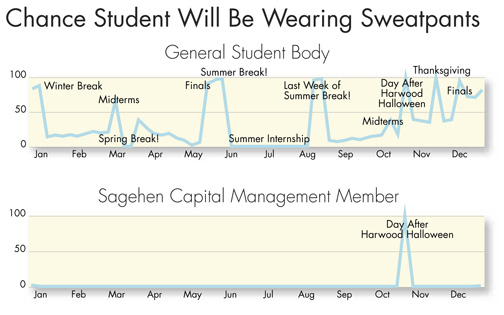
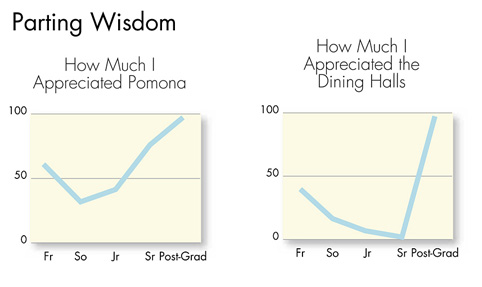
Swimming for her Life

swimming for her life: facing aggressive cancer and family tragedy, lucy embick kunz '78 took her fight underwater

Lucy Embick Kunz ’78 climbs onto the arm of the sofa, squats in her white sock feet and throws her whole body into the tale of her recent near-gold experience at the German Life Saving Championships.

The small-framed swimmer grabs below the arm of the sofa and demonstrates how she was perched on the block—one that was more slanted than usual—and ready to dive in.

Just then, Lucy recounts, she tipped forwards off the block, starting before the gun fired, disqualifying her from the second discipline, the combined swimming event. Lucy had already finished 12 meters ahead in the 50-meter freestyle, the first event of the three-part competition. She knew gold in her age category was within easy reach. “I would have won,” she says, squinting her blue eyes, clearly still furious with herself.

Lucy’s intensity serves her well because she is racing for more than medals: She swims for her own survival. Lucy has been fighting aggressive ovarian cancer since 2003, and she has done it, in large part, by throwing herself into competitive swimming. In a sense, every lap, every moment in the pool is a victory. As a medical physicist who knows her case confides: “The doctors say Lucy Kunz should have been dead seven years ago.”

Lucy has endured 157 days of chemotherapy, three months of radiation and 13 operations on what was once a near-perfect body. She has demonstrated pure mind over matter—winning dozens of golds and breaking an International Life Saving Organization world record in obstacle swimming with a body pumped full of toxic chemicals designed to fight off tumors. She says her greatest achievement may have been when she won the German Masters gold for the 200-meter backstroke in April 2010, about a week after her 118th day of chemotherapy.

She has done all this while grieving an unfathomable family tragedy. Her older brother, Dr. Andy Embick ’72, the one she followed to Pomona, the brilliant and restless Rhodes Scholar she had always looked up to, committed suicide just months before she was diagnosed with cancer eight years ago.

The combination of the two events launched Lucy on a journey of survival. “I never did give up. I never ever ever ever did,” says Lucy. “I have to be like the pop-up figures in comics. I’m shot down and have to get up again. If I give up swimming, I’ll give up my health and my life.”

LUCY’S LOVE AFFAIR with swimming started in kindergarten at her local YMCA in Salem, Ore., where she grew up as the third of four children. Her mother is a lawyer, and Lucy’s late father worked as an orthopedist. Lucy says the Embick children weren’t pushed to achieve. But excellence was in the air at home. She and Andy were always close, and he swam too, even though swimming was not something they shared in a big way.

Andy learned to love gymnastics as a teenager and later preferred the thrill of pursuits such as rock climbing and whitewater paddling. Lucy remembers the time, when she was a kid, that Andy embarrassed her at the pool by walking around the deck on his hands, as if in a gym. That was Andy.

Still, Lucy looked up to her big brother, the firstborn, to the point that he was nearly infallible in her mind. “He was always my example of doing everything right,” Lucy says, adding, “I had absolute trust in him. Andy took me climbing. He got me to rappel. I didn’t even think about it twice. Most people wouldn’t even go over the edge. Andy said ‘go’ and I went.”

Lucy followed Andy to Pomona after he told her she’d like it better than the other schools she’d applied to. Somehow, Andy was always right.

At Pomona, Lucy still went to the pool to keep fit, but she gave up swimming competitively to concentrate on her studies. Burdette Poland, a Pomona professor of history emeritus who taught Lucy in three courses, recalls Lucy as competitive, honest and determined. He remembers how she “broke loose” in her comprehensive exams in history, doing better work than she had ever done before and ranking third among history majors that year.

Andy, for his part, did compete on the swim and water polo teams, but was better-known for his mountaineering exploits, including eight days spent on Yosemite’s El Capitan. Richard Preston ’76, today a bestselling writer (The Hot Zone, The Cobra Event), recalls a conversation in which he reminded Andy that a single mistake during his solo ice-climbing expeditions could lead to his death. “Andy looked at me with this little smile and said, ‘Of course, I know that.’ I said, ‘Why do you do it?’ Andy said, ‘Because I don’t make mistakes.’”

Lucy and Preston dated steadily for two years when Lucy was a sophomore and junior. The pair would lose themselves in conversation about archeology and art history. Looking back, Preston recalls Lucy being in her prime during her Pomona years, except for having to live in the shadow of the monumental reputation of her brother, who had routinely scaled the side of Smiley Hall to get to his room instead of taking the stairs.

Andy and Lucy both were accepted at Harvard in their post-Pomona years, and Andy did go on to Harvard Medical Schoolafter his time at Oxford on the Rhodes Scholarship. But Lucy, after earning a master’s degree in art history at the University of Oregon and going on a Rotary Foundation scholarship to Munich, chose to attend the University of Pittsburgh for her doctorate because of the financial aid package.

The siblings maintained a close relationship despite the thousands of miles between them. Andy, a physician, made his home in Valdez, Alaska, and Lucy settled in southern Germany, raising three sons with her husband Roland, who works in banking. Lucy met Andy regularly for ski trips in the Alps, followed his expeditions with interest and consulted him for medical advice regarding her children.

All along, Lucy would find time for brief swims, but only when her children joined a team did Lucy return to competitive swimming. Within no time, Lucy began racking up the medals at swim competitions across Germany, pleased that she had found a way to combine her love for swimming with her responsibilities to her family. In 2002, Lucy won three gold medals at the Life Saving World Championships in Florida and was named athlete of the year in Schweinfurt, where she practices swimming and teaches everyone from toddlers to triathletes.

Then came the news that Andy had rowed his skiff out onto Prince William Sound and killed himself.

Why Andy made this choice remains a mystery to Lucy. She confesses, “It’s a tragedy which, in its profoundness, is incomparable to anything else in terms of being an incalculable shock to me and to our whole family.” Lucy believes the shock compromised her immune system.

AFTER THE CANCER DIAGNOSIS, Lucy at first focused on the pain, the suffering and the fear she felt in the face of cancer and the treatments. But she intuitively understood that she had to turn negative feelings into positive emotions in order to survive, so Lucy began swimming in even more competitions, just when most people would have believed that impossible. The initial diagnosis of cancer and the ensuing treatments only kept Lucy away from swim meets briefly. To her doctors’ amazement, she won four gold medals at the Bavarian long-distance championship in March 2004, less than four months after her first operation.

Lucy began to develop a personal philosophy about living with the disease. She had seen how other cancer patients had given up quality of life during treatment, and she resolved to follow a different path. And, as the years went by, Lucy says Andy’s death increased her determination to survive. “He gave me even more reason never to give up,” she says. Lucy’s medical advisers say her attitude has been a key part of  her survival. “Frau Kunz keeps fighting … Such illnesses do not have to be accompanied with weakness and low performance, if patients are willing to actively do something about it and fight their way through,” says biochemist Ulrike Kämmerer, who Lucy consults on her diet.

Kämmerer and a colleague at the University of Würzburg, medical physicist Rainer Klement, were co-authors on a recent paper about the benefits of a high-fat, low-carb diet for those diagnosed with cancer, the diet Lucy keeps and one she calls the “Atkins diet” for cancer patients. In the paper, titled “Is There a Role for Carbohydrate Restriction in the Treatment and Prevention of Cancer?” published in October in the journal Nutrition and Metabolism, the two explore the effect of glucose on tumor cell proliferation.

The diet is not widely recommended by doctors because many don’t know about it, and there have been too few tests of the diet, Klement says. But the researchers say the sugars in a high-carb diet actually feed tumor cells. By lowering the amount of sugar in the blood, a cancer patient can “starve” a tumor of the nutrition it seeks. “Several factors play a role in Lucy’s survival,” Klement says. “One is the swimming, which gives her lots of strength because she loves it, and she swims with abandon. The swimming helps to detoxify her body. Doing sports in some sense is like reducing carbohydrates—both work together well, and both are helping Lucy. And then she’s strong psychologically and has an extremely strong will. That surely also plays a part.”

Lucy herself says having strong and supple muscles has helped her recover quickly from numerous surgeries to remove tumor growth from different parts of her body. Her rigorous swim training has reduced her pain substantially and become her best physical therapy. “After all that radiation, if I hadn’t really pushed myself, I wouldn’t be able to move today much at all,” Lucy says.

Still, from a medical point of view, Lucy’s swimming ability defies explanation, given her metastatic condition and the large number of chemotherapy treatments she has undergone. Kämmerer says, “Lucy is swimming times that hardly any healthy (and younger) person could. It’s extremely exceptional.”

IT’S TUESDAY, THE DAY when Lucy devotes herself to her students at the pool. She is conducting a class with nine small children. As she helps the little ones with their backstroke, Lucy’s strongest stroke, she holds their small heads in her palm like a healer.

On this particular afternoon, Lucy skips the nap she usually takes poolside. Typically, she lies down on the tiled stadium bench for a doze. Lucy has organized her chemotherapy treatments and her schedule around her coaching commitments and her own swimming routine. She even manages her available energy throughout the week so that she can be at her best on Tuesdays.

Dealing with her lack of energy is just one side effect that Lucy has had to learn to live with. She says it took her years to come to terms with the limitations that the disease brings with it. Lucy has hit multiple physical low points but, she says, the thought of giving up doesn’t enter her mind. In 2010, while on holiday in Michigan, she says she experienced pain at a level of 13 on a scale of one to 10 after two months of thoracic radiation. “I basically lay on the floor of the summer house all vacation,” Lucy recalls.

Lucy says her unusually well-tested pain threshold allows her to keep going. “I am able to transfer the tolerance of pain and suffering I have had to develop to survive the treatments for my cancer to my competitions in the pool. … I can let swimming hurt. I can go beyond my limit.”

Professor Poland compares her fight with cancer to the story of Persephone from Greek mythology, since Lucy is forced to live another life in a different realm when she’s undergoing cancer treatments. “Lucy has the good fortune to be able to come back but always with the limitation that she has to return to the underworld before the end of the year,” says Poland, who has been corresponding with Lucy in recent years.

He adds, “When I was a kid, I would get a fever and go to bed, waiting for deliverance. I would lie back and let nature take its course. Lucy is the extreme opposite of that. … She is indefatigable.”

Lucy’s story of courage also helped Richard Preston as he recovered from a shattered pelvis after a ski accident in 2010. A few years earlier, the author had taken up tree-climbing while researching his 2007 book, The Wild Trees, about the people who climb some of the world’s tallest. After the ski mishap, he feared he “would never climb a tree again,” Preston says. “I thought a lot about Lucy during that time. If Lucy Embick Kunz can break the world record in swimming with ovarian cancer, then climbing trees with a shattered pelvis ought to be doable.” Preston has now increased the vertical distance he can climb to that of a redwood tree. He did it in honor of Lucy.

“I see her as a breathtaking athlete—but her accomplishments are not just physical,” says Preston. “They’re spiritual at the same time. People who have seen this deeply admire it.”

EIGHT YEARS INTO THE FIGHT, Lucy hardly seems battle-weary.Just recently, she received news that her tumors had not shown medically relevant growth, which meant she could extend the pause in her chemotherapy for another three to four months. “I feel like I have been saved from a burning airplane,” she says.

Amid her cancer treatments and swimming meets, Lucy still grieves the loss of Andy: “There is never a day when I do not miss him.” Resolving the tragedy isn’t possible, but she is no longer trying to find answers about why Andy did what he did. “Andy was always absolute in his decisions. I have accepted it,” Lucy says.

It’s not just the swimming that helps her cope, but the people she meets in occasional competitions for people with disabilities. At these meets, Lucy swims with people who are blind, deaf, paralyzed or have limbs missing. (She is categorized as “generally” handicapped.)

Lucy’s eyes well up as she describes a swimmer who has no arms and legs: The swimmer bites on a cord with his teeth to hold him at the edge of the pool (any body part counts). When the starting gun fires, the swimmer releases the cord and begins to propel himself through the water with sinuous short dolphin motions. “You watch people who swim 50 meters without arms and legs, and everything becomes quite relative,” Lucy says, adding, “I don’t think it’s fair for me to complain about my health.”

Nor does she complain. Andreas Moser, who coaches triathletes with Lucy at the Silvana pool in Schweinfurt, notes that Lucy doesn’t talk much of her cancer. She will just occasionally mention in a neutral way that she’s going to lose her hair again, something that makes her bathing cap the perfect accessory.

“I don’t look for excuses,” says Lucy. “I just swim.”

The 100-Mile Man

Zach Landman ’08

The motto of the Tahoe Rim Trail Endurance Run is “A Glimpse of Heaven, A Taste of Hell,” and it’s not hard to recognize why. Taking place smack-dab in the middle of the sweltering summer, the race encompasses two states, three national forests, six counties and a 10,000-foot summit in Nevada.

On this particular day in July 2009, Zach Landman ’08 was one of more than 100 runners jogging the route. Until the spring of his senior year, Landman—then a beefy linebacker on the Pomona-Pitzer football team—had never run more than five miles in a row. Barely more than a year later, he was competing in this 100-mile “ultramarathon.”

Just past the halfway point, he was settling into a nice pace. But as any ultra runner can tell you, there’s always time for things to head south, and at mile 60, they did. Landman’s stomach shut down, his muscles started cramping and he began throwing up every few steps in the dry afternoon heat. He was underfed and dehydrated, but couldn’t keep down food or water. For several hours he groggily stumbled along the dusty trail, dragging his feet and feeling on the verge of collapse.

“I was ready to quit,” he says simply.

As the sun set across the horizon of the Sierra Nevadas, Landman was losing hope and growing delirious with exhaustion. But with a bright array of constellations scattered across the sky and the piercing silence of the desert surrounding him, his mood slowly shifted and adrenaline started coursing through his veins again. After reaching the very edge of his ability to go on, he had somehow emerged in a strange, transcendent, almost blissful state of being.

He sped up for the final 20 miles of the race, and blew through the last seven to 10 miles of the course at a blistering seven-minute-mile pace. “Getting past that threshold of pain you thought you could withstand, you get to a new level of lightness and feel as though you could run forever,” he says. “You break through and it becomes almost utopia.”

Pause.

“Almost.”

CERTAIN ATHLETIC GOALS are understandable, practical and even downright enjoyable, like honing a tennis serve or perfecting your downward dog. But what, exactly, possesses someone to want to run 100 miles without stopping? “I read about it flipping through a Runner’s World magazine, and thought it sounded like just about the hardest thing I could possibly do,” Landman recalls with a hearty laugh.

The Orinda, Calif., native has a history of taking on tough challenges. In high school, he made a documentary about gay marriage that surprised his football teammates and won national film awards. At Pomona, he majored in science, technology and society, and was known as a fierce competitor on the gridiron. “Zach’s only happy when he’s being challenged,” says Robert Pepple ’08, a close friend and former teammate. “If something’s too easy for him over the long run, he gets bored. He loves the process itself—reaching a goal and then progressing to the next one.”

That same fire in the belly has further revealed itself at the University of California at San Francisco, where Landman is a fourth-year student of orthopedic surgery who, when he finds the time, publishes papers in major orthopedic journals. (He also fit in getting married this past summer.) All the same Type A personality traits of ultra runners figure prominently in medicine, among them intensity, focus, stamina and a drive to better understand the limits of the human body. “We are an ambitious, self-motivated bunch,” says ultra regular Mark Tanaka, an E.R. doctor and friend of Landman’s. “This isn’t a pastime for the lazy.”

LANDMAN’S ULTRA CAREER almost didn’t make it beyond the first race. Even with that joyous last-minute sprint, when he crossed the finish line at Tahoe—with a time of just under 24 hours—he vowed never to run another ultra again. In the ensuing days, though, he couldn’t get the experience out of his head.

“Whenever I closed my eyes, I was on the trails,” he says. Within two weeks, he was online researching his next competition. Landman won four of his first six races, even setting a course record at the Big Basin 50K (4 hours, 39 minutes). In 2010, he tackled the sport’s Holy Grail at the Western States Endurance Run, which climbs more than 18,000 feet, descends nearly 23,000, and traverses snowcaps, riverbeds and a seemingly unending series of sun-baked canyons with such names as “The Bake Oven” and “Devil’s Thumb.” Typically, as much as a quarter of the more than 400 participants don’t finish. The then-23-year-old, in only his second 100-miler, placed 16th.

Mark Gilligan, a long-time runner who founded the website UltraSignUp, had already heard about Landman after two races. “When you’re in a sport where everyone’s pretty gangly and the average age is 45, a young, muscular guy like Zach sticks out,” Gilligan says. “I could tell he was talented and that it was only a matter of time before he started winning races.”

That’s not to say success has come easily. In the early days, Landman spent hours painstakingly poring over topographical route maps and picking the brains of his peers. He quickly learned that the advice about how “it’s not a sprint, it’s a marathon” becomes exponentially more valuable in ultras, which runners train themselves to separate into 10- or 20-mile minigoals to conquer.

“Rough patches in marathons may last a few minutes,” he says. “In ultras they feel like an eternity.”

In preparation for those eternal runs, Landman’s weekdays begin with 3:30 a.m. “easy runs” of 10 to 12 miles through San Francisco’s Golden Gate Park. On weekends, he embarks on 50- mile excursions in which he equips himself with nothing more than a water bottle and a salt tab. When he and his wife Geri take hiking trips into the mountains, she will often drop him off at a trailhead and meet up with him 50 miles later in time for dinner.

During races he subsists on one-ounce energy gels that he knocks back like shots. At Western States, while others rested at aid stations and chowed on PB&Js and Red Bulls, he guzzled a couple gallons of water, sucked down 52 gels and stopped for nothing. (Nope, not even nature’s call. “I guess it’s one of those skills you pick up along the way,” he says nonchalantly.)

To motivate himself the night before each competition, Landman writes out a list of reasons that he’s running and hands it out to his crew to read back to him during the race. “I know I’ll want to come up with reasons to quit,” he says, “but I’ve grown to anticipate those moments and almost look forward to them.”

So what’s the payoff? Ultramarathoners aren’t looking for money or fame or glory; the prize for finishing Western States in under 24 hours was a silver belt buckle. For an overscheduled guy like Landman, the ritual centers him and lets him shut down his mind—which, somewhat paradoxically, often results in fresh perspectives and new research ideas.

“Every time I do an ultra, rather than feeling bigger and stronger and better about myself, above all I feel humbled,” he says. “Running up mountains and through nature, you can’t help but be in awe of what’s going on around you.”

LANDMAN’S HOBBY, while closely related to his career in orthopedic surgery, might also seem somewhat at odds with it. His UCSF colleagues tease him about how he’s “just trying to build a network of patients,” and caution him, only half-jokingly, about subjecting his feet to an activity that could result in the debilitating injuries described in his textbooks.

“There’s probably a healthy balance to this, but doing things in moderation just doesn’t work for me,” admits Landman, who cut a quarter of the weight off of his 225-lb. football frame in his first year of training. After Western States, he exhibited symptoms of rhabdomyolysis, a muscle-breakdown condition that can cause severe kidney damage. While he understands the risk of developing early osteoarthritis or hypoglycemia, he says that the joy he gets from the sport, for the moment, outweighs the potential repercussions 30 years down the road.

His research at UCSF could provide insight into what damage will be done: This spring, the Clinical Journal of Sport Medicine is publishing an article he co-authored that looks at physiological changes runners experience during races. Bucking conventional wisdom, he found that runners who hydrated less—and, therefore, lost more weight—were actually more likely to succeed. He argues that the “drink plenty of water” mantra that’s been drilled into our heads vastly oversimplifies matters for ultra runners, and that factors such as electrolyte balance and blood pressure may be better benchmarks for good health than weight loss. In many cases, runners are disqualified from races if their weight drops by more than 5 percent. Landman hopes his article might inspire the entire community to rethink the rule that has been followed for more than three decades.

AS MUCH AS IT IS a physical achievement, ultra running is ultimately bigger than the body. Some of the most experienced marathoners view a 50- or 100-mile race as beyond the realm of possibility, but ultra veterans would argue that it’s all in their heads. “If you can get past the mental roadblocks, you can get past the physical ones,” Gilligan says. Or, as one of Landman’s mentors told him: “The first 50 miles are run with the legs, and the second 50 miles with the mind.”

Landman wasn’t surprised to discover through his research that ultramarathons attract a disproportionate number of recovering addicts. The sport is, if nothing else, rooted in extremes— that mix of heaven and hell, of unbearable hurt interspersed with intense physical euphoria.

Speaking of hell, still remaining on his bucket list is the 135-mile Badwater Ultramarathon in Death Valley, where temperatures get so high that runners keep their feet on the road’s white lane markers to prevent the soles of their sneakers from melting off.

“Sure, some people don’t understand all of this and think I’m crazy,” Landman says. “But it works for me.”


White Knuckles

white knuckles: tammy kaehler '92 just wanted to write about a racecar-driving sleuth, but before weaving her tale, she knew she'd have to get behind the wheel

I realized my mistake as I sat sweating and gasping for breath, knees trembling, body strapped into a bare-bones racecar with more horsepower than I wanted.

At the twirl of the instructor’s hand in the air, I flipped two of the six switches that comprised the entirety of the racecar’s dash controls. The vehicle rumbled to life, shaking and coughing at idle in a way that let you know it would only be happy going fast.

I hadn’t wanted to go to racing school. I’d rather not go fast, and I’m not the physically adventurous type. The only boundaries I like to push are how many books I can read in a week. But I’d had the idea to write a mystery series set in the car racing world after working in corporate marketing for a racing series sponsor. The fact that I’d never written a mystery—that I’d written fiction for the first time in my life only a few months prior—hadn’t stopped me from pitching my nascent idea to a published author. She encouraged me, with one caveat: My sleuth, who I’d seen as a woman in corporate marketing, had to be the racecar driver.

I needed the knowledge I’d get from being behind the wheel, and I wanted to have done it, even if doing it scared me to death. So there I was in the car at Road Atlanta, a road course in Georgia. Panicking.

We’d started the three-day course with classroom work, which is the kind of thing I’m good at, even if the topic was tire contact patches and the forces involved in cornering and braking. But then they put me in a car, and told me to forget everything I thought I knew about driving.

The first hands-on exercise was learning to brake, which should have been a no-brainer. What’s different about braking on the track, however, is that you don’t ease onto the brake and ease off, as you would in a street car rolling to a stop at a light. In broad strokes, racecar drivers want to be 100 percent on the throttle until they’re 100 percent on the brakes.

That meant barreling toward the brake markers at full acceleration—and then standing on the brake pedal with all my might, hoping to God I didn’t run into the gravel trap or, worse, the wall at the outer edge of the turn. Every fiber in my body screamed at me to brake sooner while my brain countered with “they said not to brake until the next marker.”

After braking, we learned how to heel-and-toe downshift. That’s using the right foot on two pedals at once, to both brake and blip the throttle (press the accelerator), which raises the engine revs so the car doesn’t lurch when I release the clutch. The point is to be as smooth as possible—“smooth is fast,” one driver told me—and maintain the connection of the tires to the ground at all times.

I kept telling myself that if I could tap dance (which I can), I could heel-and-toe downshift too, even if tap dancing doesn’t usually happen at 80 mph. I managed it only once the first day.

At this point in the instruction, I should have taken comfort in the fact that the other students were in the same boat, all beginners, all learning—except that they weren’t, because three of them were NASCAR drivers, young guns recently hired by one of the top NASCAR bosses through a televised reality show.

They were there to brush up on their road-racing skills, since their experience mostly ran to ovals. I’m sure intimidating an already scared writer was all in a day’s work for them.

Unlike me, the NASCAR boys had no trouble putting all the pieces together when it came time for a lead-follow around the track with an instructor showing us the correct line and braking points. They performed well; I floundered. It was the second day, and we were in groups of three cars (one student per car) following an instructor who was a professional driver. We were supposed to hit each apex correctly, upshift to the gearing they’d told us was correct, brake where they told us to brake and heeland- toe downshift.

Another attendee was frustrated with my pace and dogged my back bumper, which didn’t improve my skill. But I simply wasn’t ready to go as fast as the other two drivers in my group, and I stuck to my own comfort level, trying not be peer-pressured into a speed I wasn’t ready for. A good friend and professional driver had counseled me to take things at my own pace, and I repeated her words to myself as I struggled through our sessions.

Sooner than I wanted it to, the moment of truth arrived: my first solo laps. I sat waiting in the rumbling car, sweating and terrified, hoping my shaking legs would be able to work the clutch and throttle. I wondered again why I was doing this and why I hadn’t chosen something more normal and less violent to write about besides racing. Tea parties and embroidery, perhaps. And then they waved me out.

The change didn’t happen right away. As I lapped the track in short stints, punctuated by feedback from instructors stationed at different corners, I slowly began to enjoy myself. To find myself grinning under my helmet because I enjoyed the section of the track that curves left and right like the letter “S.” To think more about doing every corner right the next lap, not just three of 12. I got comfortable enough to relax, process more information and handle the speeds. I still wasn’t fast, relative to other students in the school. But I was doing 90 mph before braking for one corner, going 75-80 through another corner, and hitting 117 on the back straight. Best of all, by the start of the third day, the instructors were telling me I was doing everything right. That even if I wasn’t fast, I had the right skills. Going fast just takes more seat time, they assured me. I’ll take their word for it.

In the end, I learned enough to make my racecar driver sleuth, Kate Reilly, credible in the eyes of the racing world. Even if I can’t drive the way Kate can, I understand how she does it, and I can make her a character that the racing world believes in—in part, thanks to one of the instructors who later reviewed and blessed the driving scenes in my novel. I also faced down my fears and made it through one of the toughest challenges in my life.

But the truly eye-opening moment came near the end of the three-day course, when I rode in the racecar I’d been driving, with an instructor at the wheel. That’s when I understood how much more potential there was in the car and the track, and how much farther away the dge was. That two-lap ride gave me a glimpse of a different world, one of extreme speed and control and daring.

I know I’ll never personally inhabit that world, but at least now I can write about it.


ABOUT TAMMY KAEHLER ’92

She fell into the world of auto racing—and landed in the VIP suites. Kaehler had a freelance gig writing marketing copy for a mortgage lender during the housing boom of the early 2000s. When the lender decided to help sponsor the American Le Mans racing series, Kaehler saw a chance to travel and look inside another world, so she signed on to help with corporate hospitality work at the races.

Since she was working for the company putting up the cash, Kaehler got inside access at the track, riding in top-of-the-line Porsches and meeting “everyone and their uncle.” She became fascinated with auto racing: the money, the violence, the rock-star drivers.

Soon she was at work on a racing-themed murder-mystery book featuring a female racecar driver, Kate Reilly. After the mortgage company went bust, she kept at her writing and kept her toes inthe motorsports world, volunteering at races. When Dead Man’s Switch finally published last year, she launched the book at the American Le Mans Series at Connecticut’s Lime Rock Park, where the story is set.

Since then, her author events have continued to zigzag between conventional mystery book venues, where the racing aspect of the book stands out, and book-signings at racing events, where the mystery aspect is unique. “At each, people are totally fluent with one aspect of what I’m writing about,” she says.

Following this unusual course, Kaehler has found her audience. Publishers Weekly and Library Journal both praised the debut, and the second Kate Reilly mystery will be published next year.