Blog Articles

Harnessing the Power of Fusion

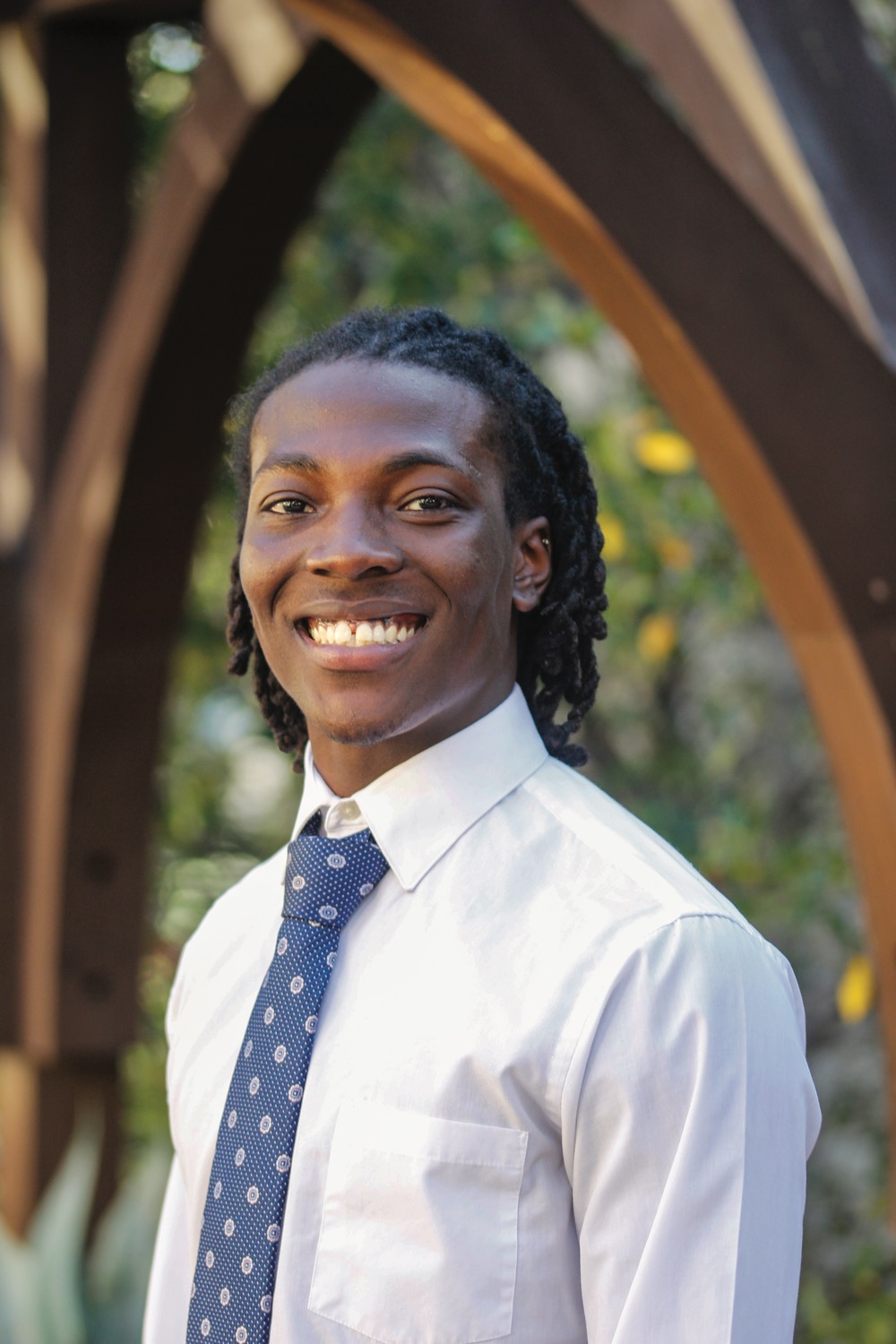
Alex Zylstra ’09 at Pacific Fusion where he works as a nuclear fusion energy scientist.

Alex Zylstra ’09 and Pacific Fusion are working to bring the energy that powers the sun’s core down to Earth.
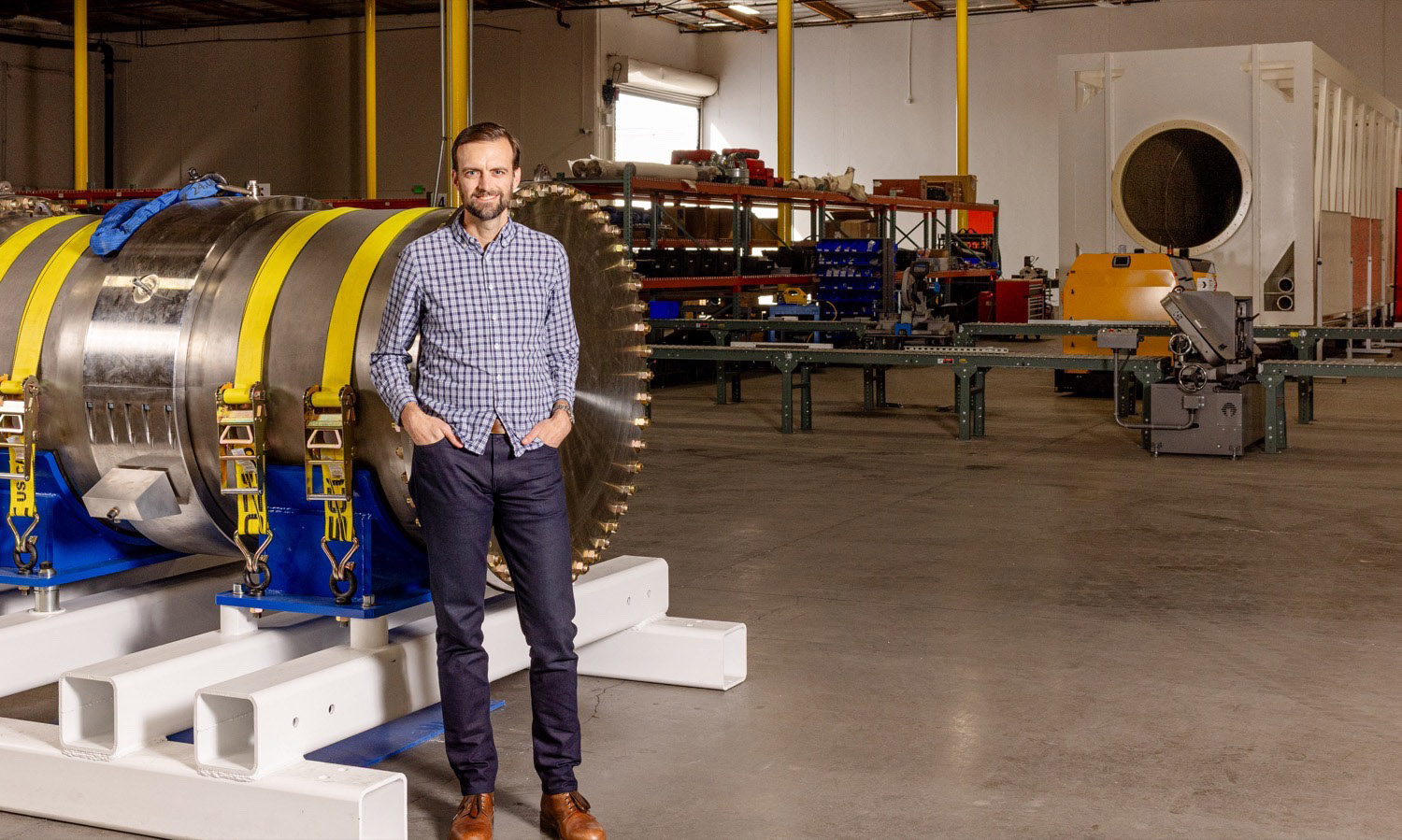
Alex Zylstra ’09 at Pacific Fusion where he works as a nuclear fusion energy scientist.

Alex Zylstra ’09 at Pacific Fusion where he works as a nuclear fusion energy scientist. Photo courtesy of Nicola Parisi ’12

Bay Area startup Pacific Fusion is developing a new technology that fires powerful electric pulses in a millionth of an eye-blink, lighting up magnetized fuel to generate fusion energy.

And they’re doing it with the help of Alex Zylstra ’09, the small-but-growing company’s experiments lead. Already, they’ve made significant strides toward ultimately building a commercial reactor with this futuristic energy source.

“When I started out, the mentality in the fusion community was that this is still a research project. There’s this joke that fusion is always decades away,” Zylstra says. “That has actually changed a lot.”

Nuclear fusion, which involves smashing atoms together at high temperature and pressure, is the same kind of energy that has powered the sun for 5 billion years. Researchers have long dreamed of harnessing fusion on Earth, a lofty goal that might one day provide nearly limitless, nearly carbon-neutral energy around the world. “Fusion has always been a sort of holy grail thing,” Zylstra says.
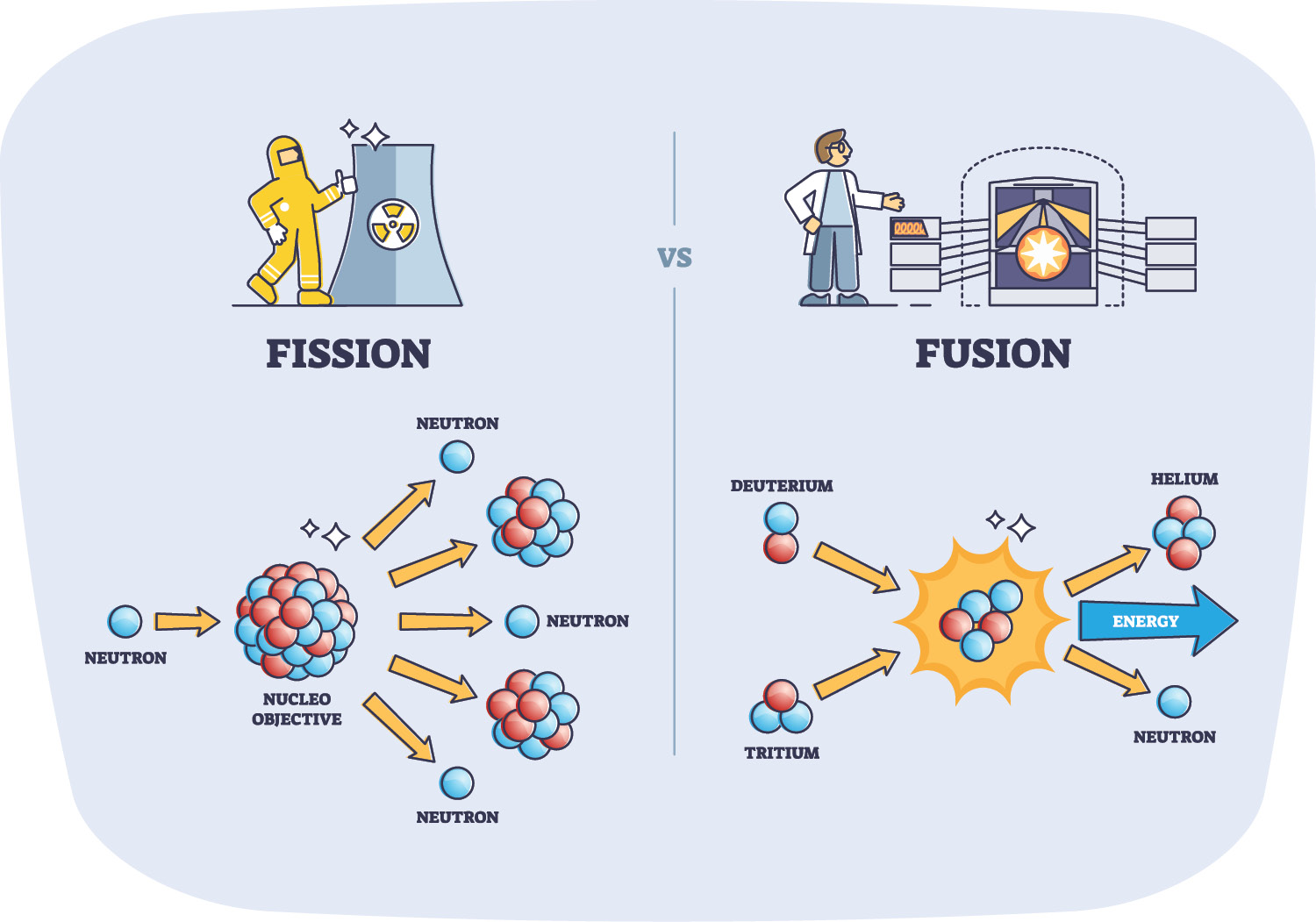
Diagram comparing nuclear fission vs fusion, showing fission splitting a nucleus and fusion combining deuterium and tritium.

Illustrated comparison labeled “FISSION” vs “FUSION.” On the left, fission shows a neutron striking a “NUCLEO OBJECTIVE,” splitting it into smaller nuclei and releasing multiple particles labeled “NEUTRON.” On the right, fusion shows “DEUTERIUM” and “TRITIUM” combining to form “HELIUM,” releasing “ENERGY” and a “NEUTRON.”

Zylstra leapt onboard the fusion industry at a fortuitous time. Over the past few years, the fusion private sector has exploded in growth, transforming from a handful of hopeful startups into a multibillion-dollar industry promising to become the next big energy source, with the potential to join the ranks of other expanding clean energies, especially wind and solar. Pacific Fusion alone raked in $900 million in its 2024 funding round, one of the largest to date, and a sign of lofty expectations for commercial fusion.

Alex Zylstra ’09 at Pacific Fusion where he works as a nuclear fusion energy scientist. Photo courtesy of Nicola Parisi ’12

Zylstra’s career path has taken a few twists and turns, as he ventured from Pomona to national labs, and now to Pacific Fusion. The scientific and engineering challenges of making fusion a reality particularly excite Zylstra. “I’m also kind of a big sci-fi nerd, and it’s kind of a sci-fi problem,” he says, noting that Lawrence Livermore National Laboratory’s National Ignition Facility, where he previously worked, was used as a set for the 2013 movie Star Trek Into Darkness.

The prospect of nuclear fusion as a sustainable energy source comes as ongoing global warming brings devastating wildfires, floods, droughts and heat waves, while many countries struggle to reduce their greenhouse gas emissions. “Personally, I’m passionate about developing new sources of energy, motivated by climate change,” Zylstra says, referring to it as “an enduring challenge for humanity.”

The United States, whose withdrawal from the Paris Agreement took effect in January 2026, previously pledged to achieve net-zero emissions by 2050. That means leaving most remaining fossil fuels in the ground, while shifting to new energy sources. The clean energy transition is not without its own dilemmas, however, considering the environmental and health impacts of mining for rare earths and critical minerals, the intermittency of wind and solar energy, and the rapidly growing energy demands of the tech industry’s controversial AI data centers. But perhaps, eventually, fusion energy could play a major role in that transition.

Considering that no one can re-create the sun’s gargantuan gravitational forces on Earth, labs and fusion companies typically have two ways to produce fusion energy. Researchers first need plasma, an extremely hot gas-like matter where the atomic nuclei shed their electrons. To generate the plasma, researchers heat heavy hydrogen fuel—usually deuterium or tritium—to 100 million degrees Celsius or so and keep that fuel confined and compressed densely enough for fusion to occur. A typical fusion reaction fuses fuel particles into helium nuclei, and the excess mass turns into energy.

One of the main approaches to producing fusion involves magnetic confinement, using powerful magnetic fields to manipulate the plasma and maintain fusion reactions, in a doughnut-shaped reactor called a tokamak or one with a twisted structure called a stellarator. The other method, called inertial confinement, involves using powerful lasers or electric pulses to compress the fuel, igniting the plasma and producing a shock wave that enables fusion reactions. Zylstra is working on advancing that latter technique at Pacific Fusion. A few companies are also attempting to design hybrid approaches.
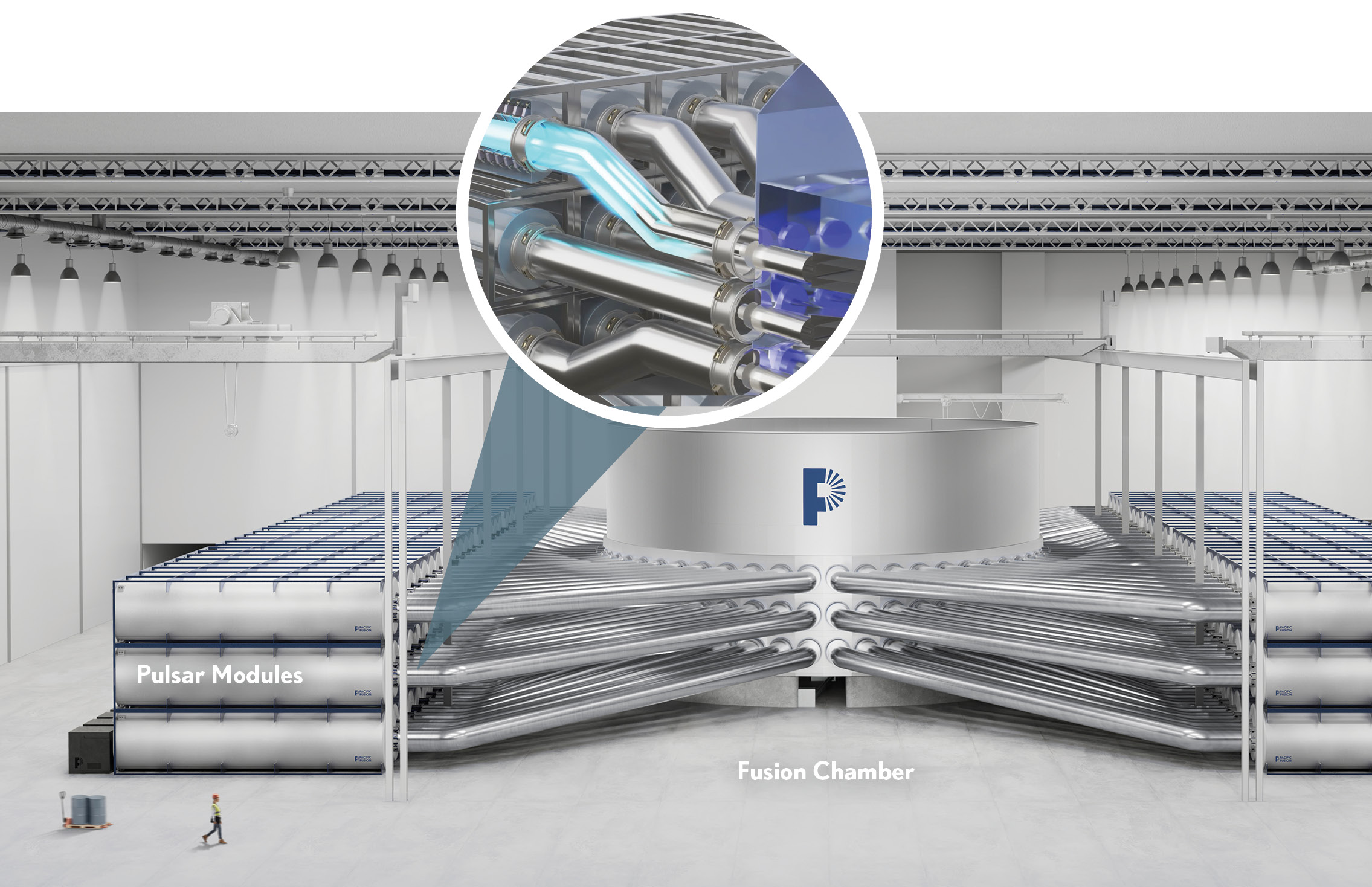
A rendering of Pacific Fusion’s reactor, which uses a method of creating nuclear fusion that employs electrical pulses to compress and heat the fuel.

Pacific Fusion’s method of creating nuclear fusion uses electrical pulses generated in pulsar modules to compress and heat the fuel. Capacitors discharge their energy toward the fusion chamber in the center.

A fusion company needs to create high temperatures for the fusion reactions, high plasma density and long confinement time, which refers to how long particles are confined within the plasma before losing their energy. Magnetic confinement focuses on producing long confinement times, while inertial confinement produces intense pressures to increase the density.

In Pacific Fusion’s approach, they start with a cylinder of fuel inside a pencil eraser-sized conducting metal container. They then drive a large electric current through it, which generates a magnetic field, and the electromagnetic interaction generates a force that compresses the fuel. It’s like a can crusher, except much more extreme, Zylstra says.
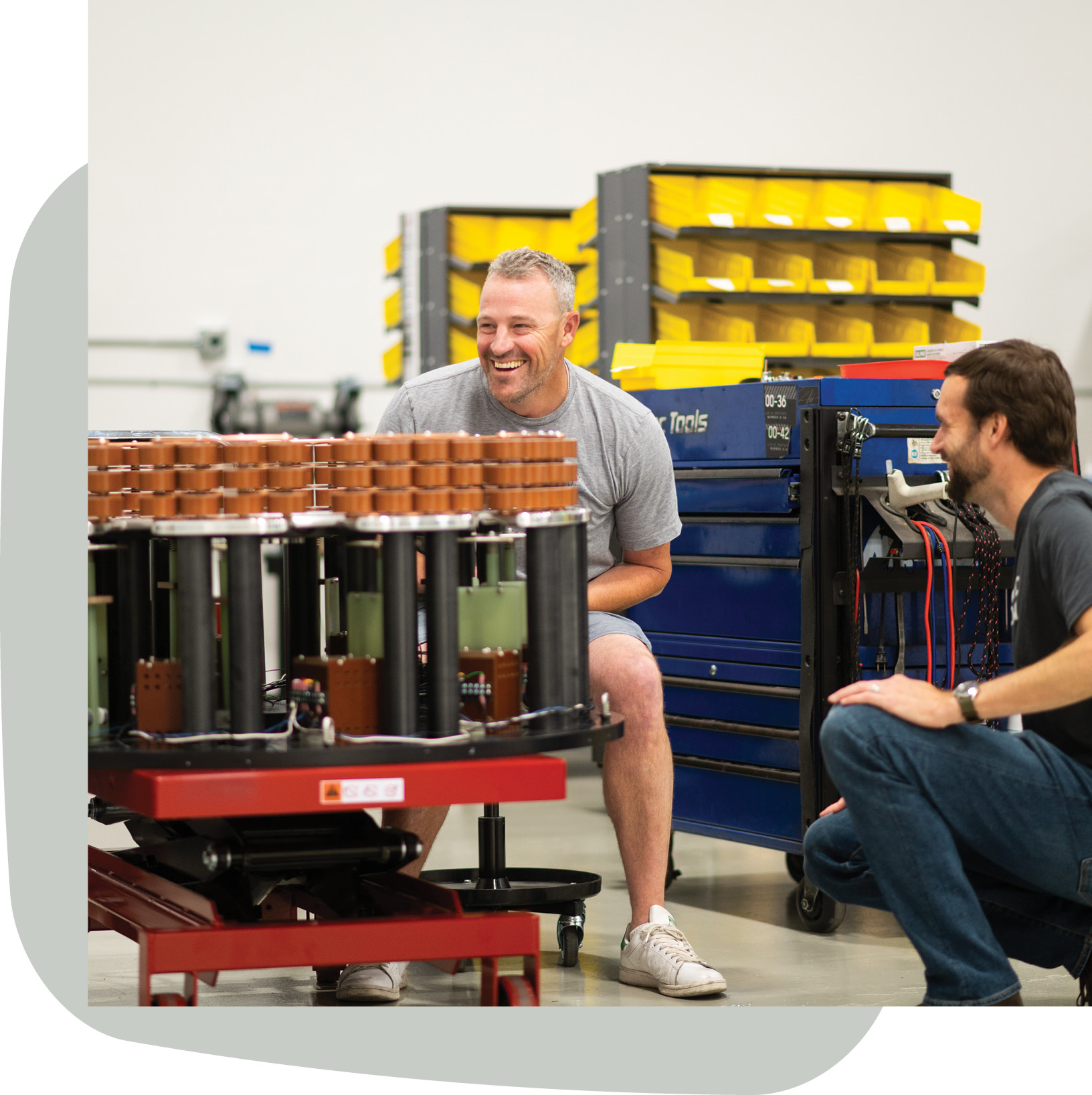
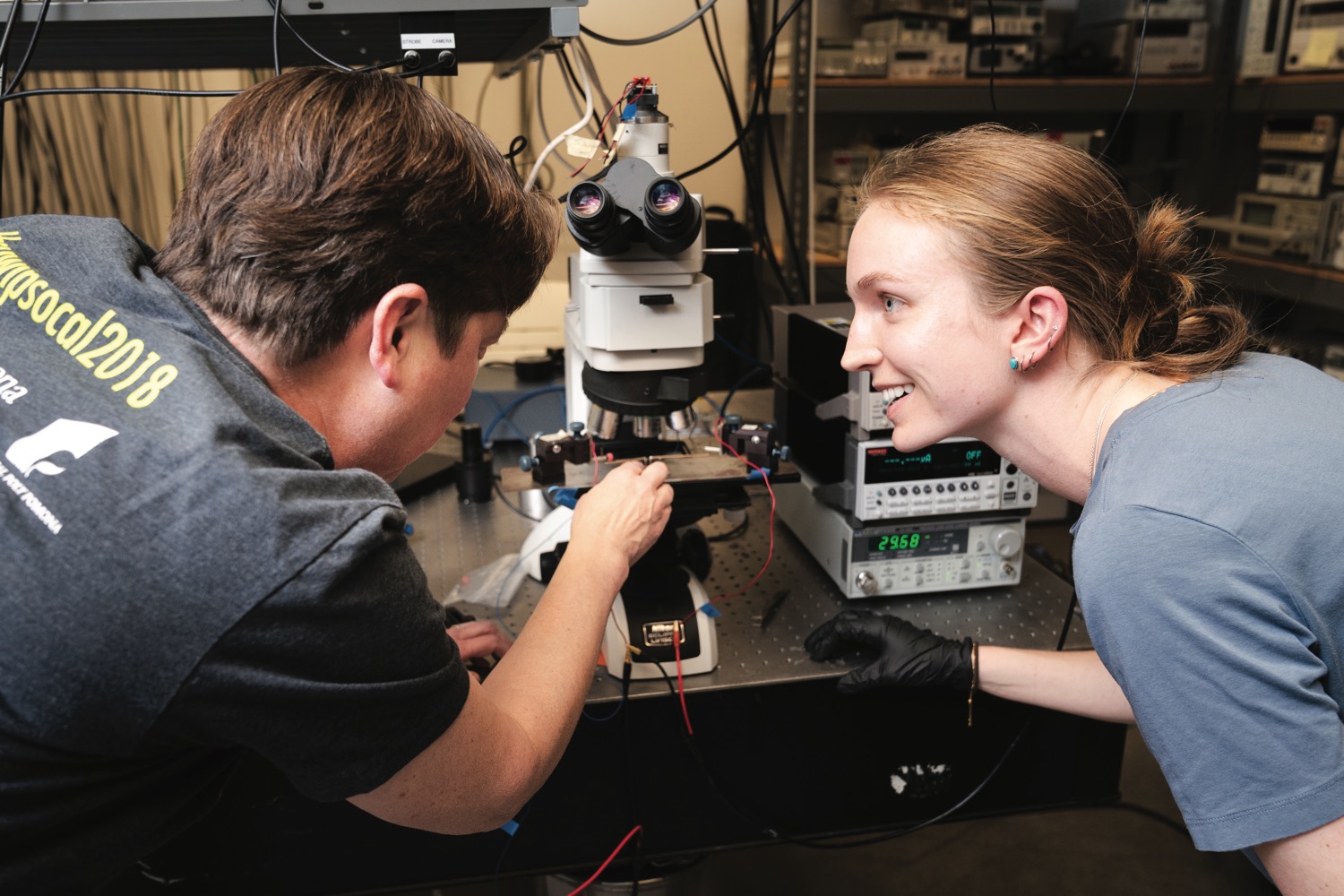
Alex Zylstra ’09 (right) with a colleague working on nuclear fusion. Photo courtesy of Pacific Fusion.

Nuclear fusion and nuclear fission sound similar, and both sometimes have associations with nuclear weapons research. (Almost all countries with multiple fusion startups also have nukes, with the exception of Germany and Japan.) But they’re rather different. Fusion refers to combining nuclei, while fission refers to breaking them apart.

For fusion, the reactions are hard to start and easy to stop, but for fission, it’s the opposite; when the reaction gets out of control, it leads to a meltdown, with safety and health risks that are well-known, thanks to the fallout of disasters like Chernobyl, Three Mile Island and Fukushima. Fission also requires environmentally harmful uranium mining and larger quantities of fuel, and it produces toxic waste that’s radioactive for millennia, while fusion only requires small amounts of tritium, which is only mildly radioactive.

As Zylstra sees it, fusion comes with some long-term challenges, such as limited global supplies of tritium for fuel, but overall, these considerations add up to huge advantages for fusion, if it can indeed become a bona fide energy source.
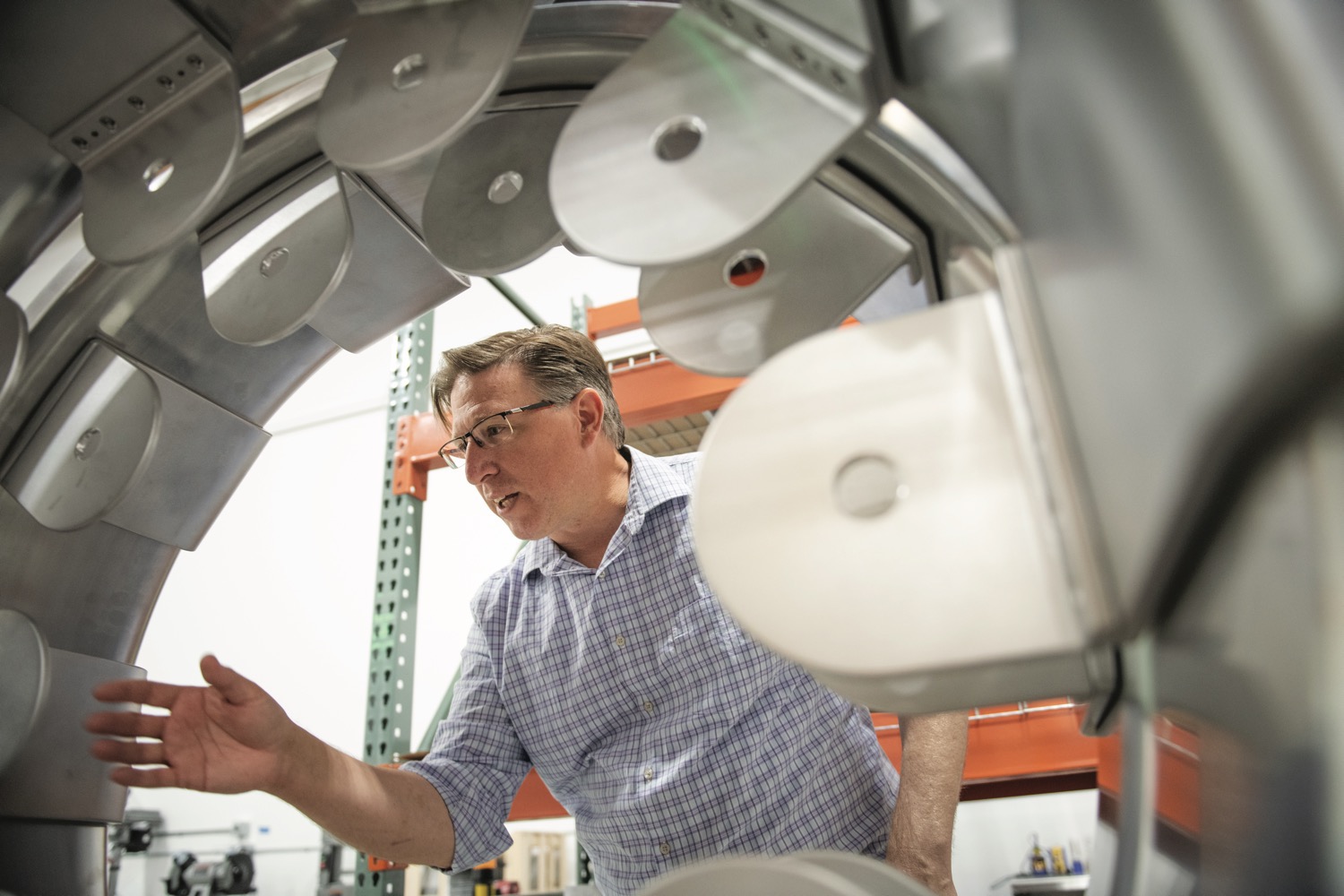
Keith LeChien, Pacific Fusion’s CTO and co-founder.

Keith LeChien, Pacific Fusion’s CTO and co-founder. Photo Courtesy of Pacific Fusion.

Fusion advocates got a massive boost from recent breakthrough experiments at Livermore that briefly produced more energy than was put in—more than 3 megajoules of fusion energy output with 2 megajoules of laser energy input—a milestone called scientific energy break even or fusion ignition. “The National Ignition Facility at Lawrence Livermore National Laboratory succeeded in achieving ignition in 2022, in great part thanks to Alex,” says Hans Herrmann, Zylstra’s former mentor at Los Alamos National Lab and now a consultant for Pacific Fusion.

After that quantum leap, funding started streaming into fusion startups, with several new companies forming, including Pacific Fusion. Now that ignition has finally been demonstrated, Herrmann believes that fusion companies will be “putting electrons on the grid” well within 20 years. That may or may not come soon enough to matter for combating global warming, but it does appear to offer an improvement over some current energy sources.

*        *        *

A historic shift has begun to take place as private sector investment in nuclear fusion—recently surpassing $10 billion—could soon outpace government funding. Fusion has expanded from the academic experiment stage to a global proliferation of companies all racing to develop commercially feasible reactors. Zylstra’s career has mirrored that shift, as he has transitioned from academia to industry.

“I consider my career to be successful if I play a role in putting fusion power on the grid.”
—Alex Zylstra

Zylstra had his first laser research experience at Pomona, learning from and working with Dwight Whitaker, a professor of experimental physics and former chair of Pomona’s Department of Physics and Astronomy. “He was outstanding, really quick to pick up how everything works. It felt like working with a colleague,” says Whitaker.

As one of Whitaker’s first thesis students, Zylstra tried to advance experiments to turn gases into a unique quantum state called a Bose-Einstein condensate. At one point, he figured out how to build an electronic box, designed so that they wouldn’t accidentally burn their detector to a crisp with the high-powered lasers. But sometimes with experiments, things don’t work, Whitaker says.

“He had the right sort of mindset to get through those difficulties. You’ve really got to take your lumps, keep moving forward and keep trying things.”

Whitaker praises Zylstra’s career path. Working in national labs and in the fusion energy industry requires becoming a multidisciplinary physicist, engineer and people manager—a rare combination of skills that Zylstra possesses, Whitaker says.

Herrmann similarly highlights Zylstra’s experimental and computational skills, which transfer well to fusion energy R&D. “He’s well-rounded and can master just about any technical problem that’s thrown at him. He’s got the most creative and brilliant problem-solving capability of just about anyone I know,” Herrmann says.

After Los Alamos, Zylstra went on to Lawrence Livermore, where he collaborated with physicist Steven Ross ’03. Their work together included an award-winning research project published in 2024 that built on the previous burning plasma experiments at the National Ignition Facility. In particular, they demonstrated the importance of symmetry, since uniformly compressing the implosion improves how much energy can be produced by such fusion reactions. Ross also compliments Zylstra on his research style. “We’re lucky to have very talented people at the lab and he fit right in: very detail-oriented, meticulous, while executing these complex experiments,” Ross says.

As ongoing investment continues to super-charge the industry, many top researchers like Zylstra have gone from labs and major universities to join startups. For example, the biggest fusion company, Commonwealth Fusion Systems, spun out of MIT, and is focused on designing tokamak reactors. First Light Fusion came out of Oxford, using an approach based on somewhat similar technology as Pacific Fusion’s, and Thea Energy spun out of stellarator research at the Princeton Plasma Physics Laboratory.

*        *        *

For Zylstra, commercial fusion is feasible in the near future, but success depends on advancing along three dimensions: sound science that builds upon work done at national labs; a plausible path based on known technology and engineering; and, of course, viable economics. “At the end of the day, if you can’t make a power plant that produces energy at an economically competitive price, then what’s the point?” he says.

Nuclear Fusion
By The Numbers

100 million°C, the temperature reached by plasma in reactors necessary to overcome electrostatic repulsion.


Nuclear energy can theoretically generate 4 million times more energy per kilogram of fuel than burning coal or oil.


To confine the plasma, some fusion devices generate electrical currents 10x a bolt of lightning (making it arguably the most complex machine ever built).


Fusion reactors use special superconductors that create compact magnetic fields by operating at roughly -196°C … which is significantly colder than the liquid nitrogen doctors use to burn off warts and skin cancers.


Pacific Fusion is now building a demonstration system in Albuquerque, and by 2030 they aim to go beyond fusion ignition and achieve “net facility gain,” where they produce more energy than is stored in the entire facility—an effort that is being led by, among others, Zylstra. They’re also working on the commercial side of things, making their fusion system modular and affordable so that it becomes possible to mass manufacture fairly simple components for easily assembling power plants. Pacific Fusion aims to have its commercial plant online in the mid-2030s.

Ultimately, a few fusion companies may find ways to successfully and economically generate energy. “It is important to have multiple efforts going, including Pacific Fusion. You never know exactly where the most perfect solutions to the engineering challenges will be,” says Keith LeChien, Pacific Fusion’s CTO and co-founder.

Other companies have similarly ambitious goals. Commonwealth Fusion wants to have its first commercial plant built and running in Richmond, Virginia, in the early 2030s. Helion Energy’s target for putting electricity on the grid is as soon as 2028. These facilities are designed to have an electricity generating capacity in the range between 50 and 400 megawatts, enough to power tens of thousands of households (or a single large data center). The race is on, even if some of these timelines turn out to be a little unrealistic.

In the meantime, other sectors of the clean energy industry have been growing. Solar and wind energy capacity continue ramping up, despite federal government recent attempts to undermine them, and they’re projected to provide most non-nuclear energy in the United States by 2050, with significant energy contributions also coming from hydropower, fission and geothermal sources. As efforts continue to advance a clean energy transition within the next decade or two, could Pacific Fusion and others in the industry transform energy generation with fusion?

“Personally, I consider my career to be successful if I play a role in putting fusion power on the grid,” says Zylstra.
Meeting of the Minds

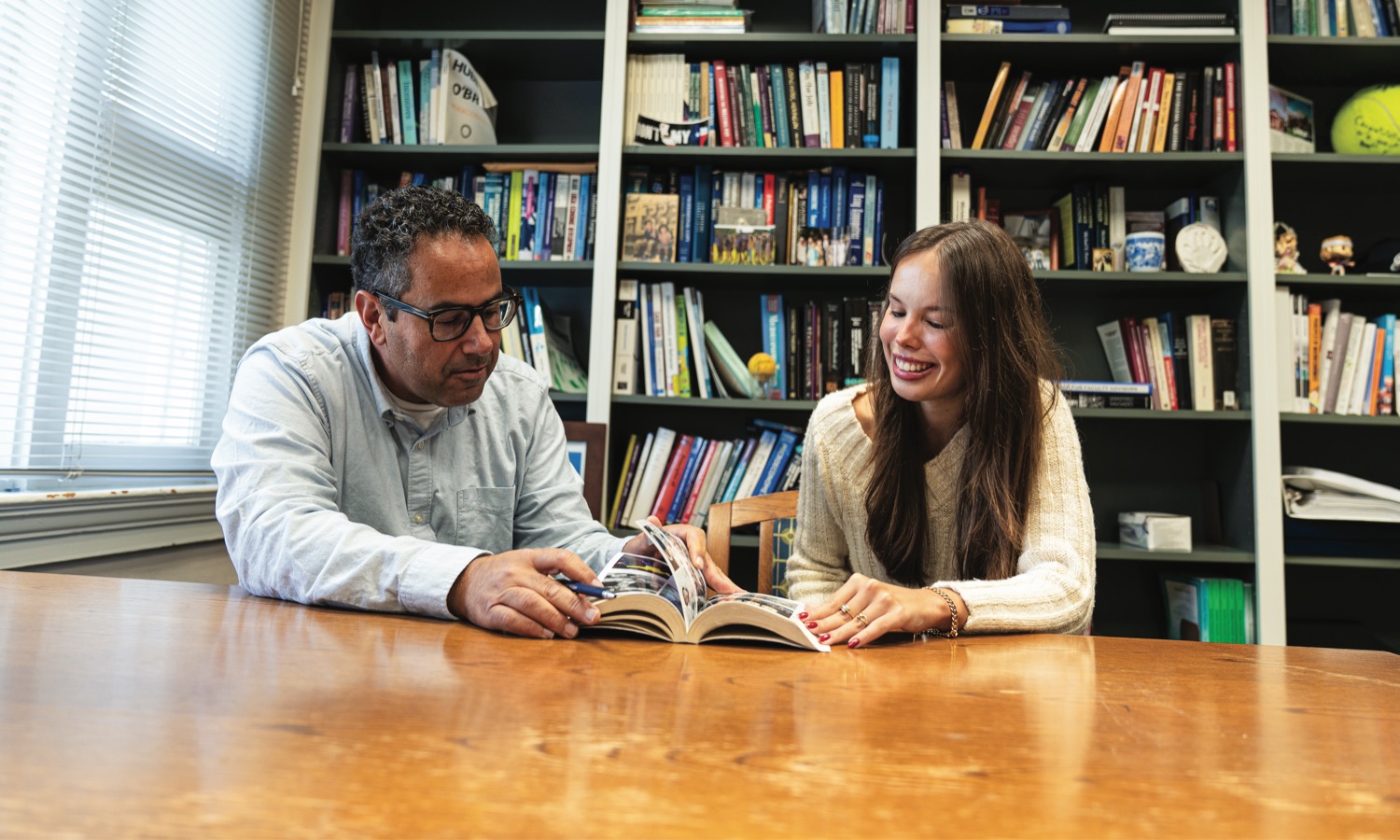
Professor of Economics Fernando Lozano with Alice Dantas ’26.

Pomona’s academic offerings have increasingly crossed disciplines to address the critical issues of our time.

For a class that starts before many students have grabbed their morning coffee, discussion is lively at 8:10 a.m. on a Thursday in Carnegie 214. At the whiteboard, Fernando Lozano, Morris B. and Gladys S. Pendleton Professor of Economics, is encouraging the participants in his Economics and Film class to tie together the economic findings of an academic paper with the character arc in the Academy Award-winning film Moonlight.

“What is the relationship between toxic masculinity and economic outcomes?” Lozano asks. Before this session is over, discussion will have incorporated concepts from media studies and psychology as well as economics.

What happens Tuesday and Thursday mornings in Lozano’s class and hundreds of others across campus is a far cry from the earliest days of the College. When Pomona began instruction 138 years ago, undergrads in the new “College Department”—all three of them—could choose among Greek, Latin, mathematics, science, English, German, drawing and painting, piano, harmony and music theory. (This in the year 1888, that included a presidential election and a battle over tariffs. Sound familiar?)

Professor of Economics Fernando Lozano with Alice Dantas ’26.

Professor of Economics Fernando Lozano with Alice Dantas ’26.

Today, Pomona’s academic offerings—more than 800 courses across 48 majors—reflect the College’s commitment, as articulated in its Strategic Vision, to address Grand Challenges—to ask big questions and solve big problems.

Those issues don’t fit into the neat, traditional subject-area silos common a century ago. So, over the years, majors have emerged that cross—even fuse—disciplines. A lot of the newer programs end in “Studies,” such as American Studies, Late Antique-Medieval Studies, Gender and Women’s Studies.

Others include the conjunction “and,” as in Science, Technology and Society.

The Art and Science of Optics


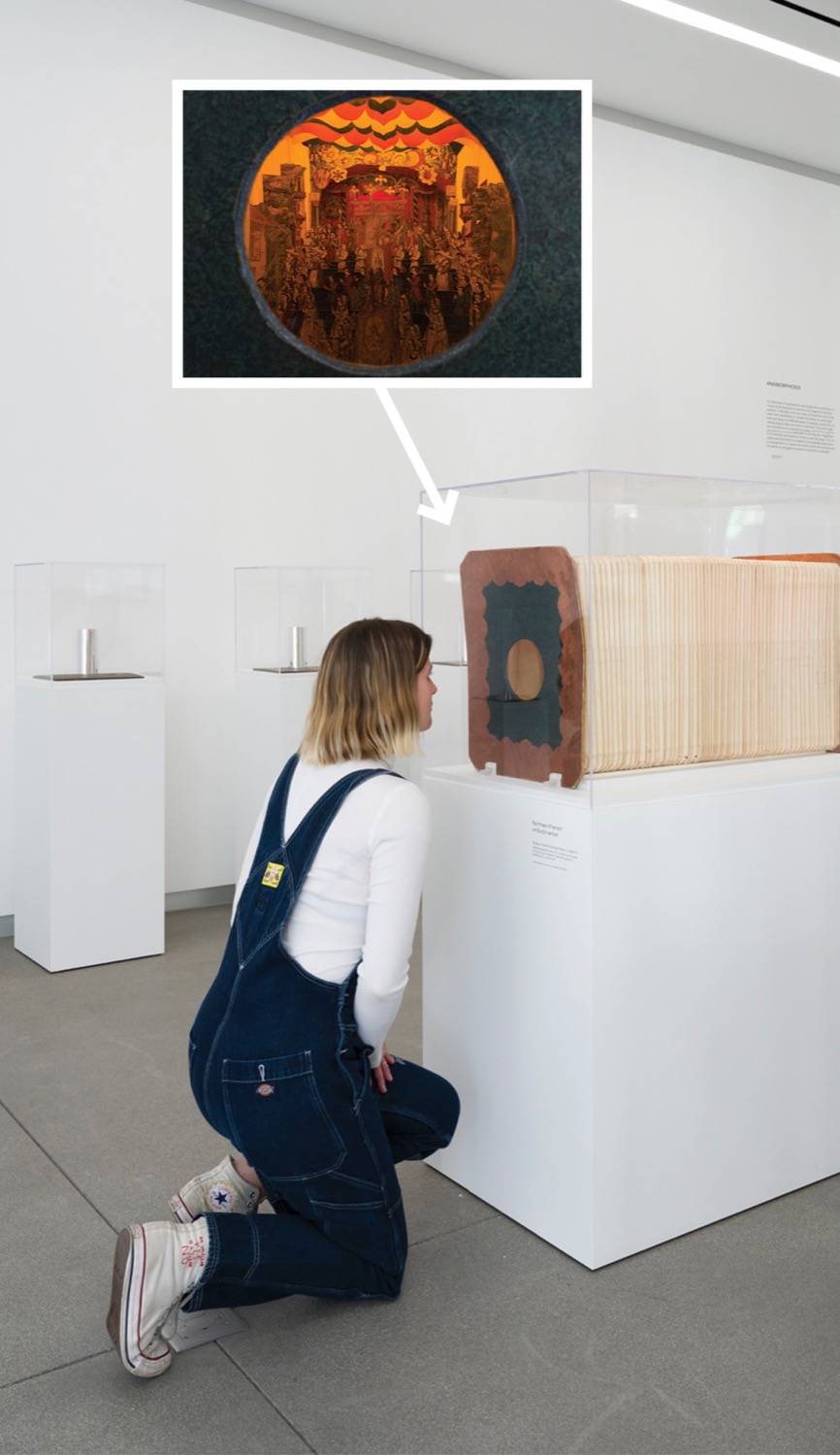
A visitor at the Benton Museum of Art at Pomona College kneels to view a 19th-century Religious Festival Viewing Theatre.

A visitor at the Benton Museum of Arts Captured Vision exhibit at Pomona College kneels to view a 19th-century Religious Festival Viewing Theatre.

Collaboration among three seemingly unrelated disciplines—physics, studio art and art history—not only resulted in a popular course: Physics 16: The Art and Science of Optics. It also led to a four-month exhibition at the Benton Museum of Art.

“Captured Vision—Optics in Early Modern European Art” ran from November 12, 2022, through March 26, 2023. It encompassed works from 1500–1800, a time when interdependence between art and science led to the discovery of new ways to represent the three-dimensional world in two dimensions.

“The class covered perspective and other areas of inquiry, as well as refinement of technologies of vision, such as the microscope and telescope,” says Victoria Sancho Lobis, Sarah Rempel and Herbert S. Rempel ’23 Director of the Benton Museum and associate professor of art history. “Most crucial was the evolving understanding of optics—how visual perception works in anatomical and theoretical terms. Through the development of mathematical perspective, artists contributed to the development of the science of optics.”

The exhibit included works by artists such as Albrecht Dürer and Paul Vredeman de Vries, perspective boxes, an early 16th-century panel painting—a gift from the Samuel Kress Foundation—and a camera obscura, a device that may have helped artists of the time to achieve near-photographic precision in their work.

Watch this video from the Benton Museum of Art about what it means to be a teaching museum:

To Be a Responsible Citizen

One of the “and” majors first appeared in the Pomona catalog in 1987 but has its roots at Oxford University a century ago. There, “students had been expected to read ‘the Greats,’” says Eleanor Brown ’75, James Irvine Professor of Economics. “But the Great War had brought great change, and people were thinking, ‘What do you really need to study to be responsible citizens and leaders in the modern world?’” Says Brown: “Their answer was philosophy, politics and economics, and this shift to PPE—‘the Greats without Greek’—made an Oxford education more accessible to women and to middle-class men who had not had an opportunity to learn ancient Greek.

“Philosophy, Politics and Economics brings together disciplines that have gone off in different directions but are worth tying back together,” Brown says. She adds that it is especially appealing for pre-law, graduating alumni who know how to “write, argue and keep up with economists.” PPE alumni include Conor Friedersdorf ’02, staff writer at The Atlantic.

Chris Hussey  ’26

Chris Hussey ’26

Chris Hussey ’26 says that he used to buy into the idea that economics is quantitative, politics is institutional and philosophy is humanities oriented. As he’s progressed through the PPE major, though, he’s learned it’s never that simple. “Every major political thinker I know was also a philosopher, or every major economic writer was also a political thinker.”

The PPE major, Hussey says, “is a beautiful overview of the way three pillars of human thought interact with each other.” A course in philosophy of law showed him that he really enjoyed grappling with judicial and legislative questions. So, “why not pursue law school?” he concludes. “That’s definitely where I think I’m headed.”

An International Approach

By the time PPE was hitting its stride at Pomona, the International Relations major was already attracting students who aimed for careers in diplomacy, conflict resolution or international development. “IR started in the 1960s as a pretty conventional program mixing politics, history and economics with a strong U.S. foreign policy focus,” says Pierre Englebert, H. Russell Smith Professor of International Relations, professor of politics and current Oldenborg faculty fellow.

Pierre Englebert, H. Russell Smith Professor of International Relations and Professor of Politics; Oldenborg Faculty Fellow

Pierre Englebert

Now Englebert, from a perspective covering 28 years of the department’s history, notes that the program has evolved to incorporate not only the original three disciplines, but sociology and anthropology as well, with requirements in both quantitative and qualitative methods. Students are also required to study abroad and gain proficiency in at least one language.

“IR majors are curious, open-minded, altruistic and usually join IR because they have a personal or family international profile. Or they want to work in development, conflict resolution, diplomacy or a related field,” says Englebert. Alumni have worked as foreign correspondents and in international development, law and even AI model training and content evaluation.

Adam Cox ’14 still keeps in touch with Englebert, whose IR classes helped him understand development and politics in
Africa. “At the heart of international relations is the notion of relative power,” he says. “As a European who studied in the United States and now lives in Africa, I continue to think a lot about the components of power, be it in the past, the present or the future.”

Eleven years after studying abroad in Senegal, Cox is an entrepreneur in the West African nation. With a partner, he’s already built and sold a million-dollar business and is now building a distribution company focused on agriculture chains across Francophone Africa.

“We need leaders—perhaps especially ones in the United States—who understand the world as a whole,” Cox says, something that is key to the study of international relations at Pomona. “Progress on global issues like climate change, human rights and inequality will only ever be possible through intelligent leadership with a keen understanding of international relations,” he says.

Multiple Perspectives

Chris Chow ’26,

Majors: Theatre and Economics

I came to Pomona knowing I wanted to study theatre. I’ve performed my whole life, through youth programs outside of school, public speaking competitions and theatre productions, and it’s always been something I loved.

Economics came later. I took Microeconomic Theory with Associate Professor Kyle Wilson and was immediately fascinated by the way he explained economic thinking. It completely changed how I thought about the world, how incentives shape behavior and how decisions are made.

Theatre and economics encourage very different ways of thinking, and having both has helped me approach problems from multiple perspectives. Theatre pushes me to think creatively and empathetically, while economics encourages analytical thinking about incentives, systems and decision-making. Combining them has made me a more flexible thinker.

Some people might think theatre wouldn’t help with a corporate career, but in reality, it has helped tremendously. Theatre teaches you how to communicate clearly, present yourself confidently and work closely with a team, all skills that translate directly into the professional world. It’s also been really special to be part of two different communities at Pomona.

Ultimately, I want to work in a space where theatre and business intersect. I care deeply about both worlds. After graduation, I’ll be working at AlphaSights [a company providing knowledge on demand to clients] in New York City, which will allow me to build strong business and strategy experience. Long term, I hope to end up somewhere that combines the creative world of theatre with the business side of the arts.

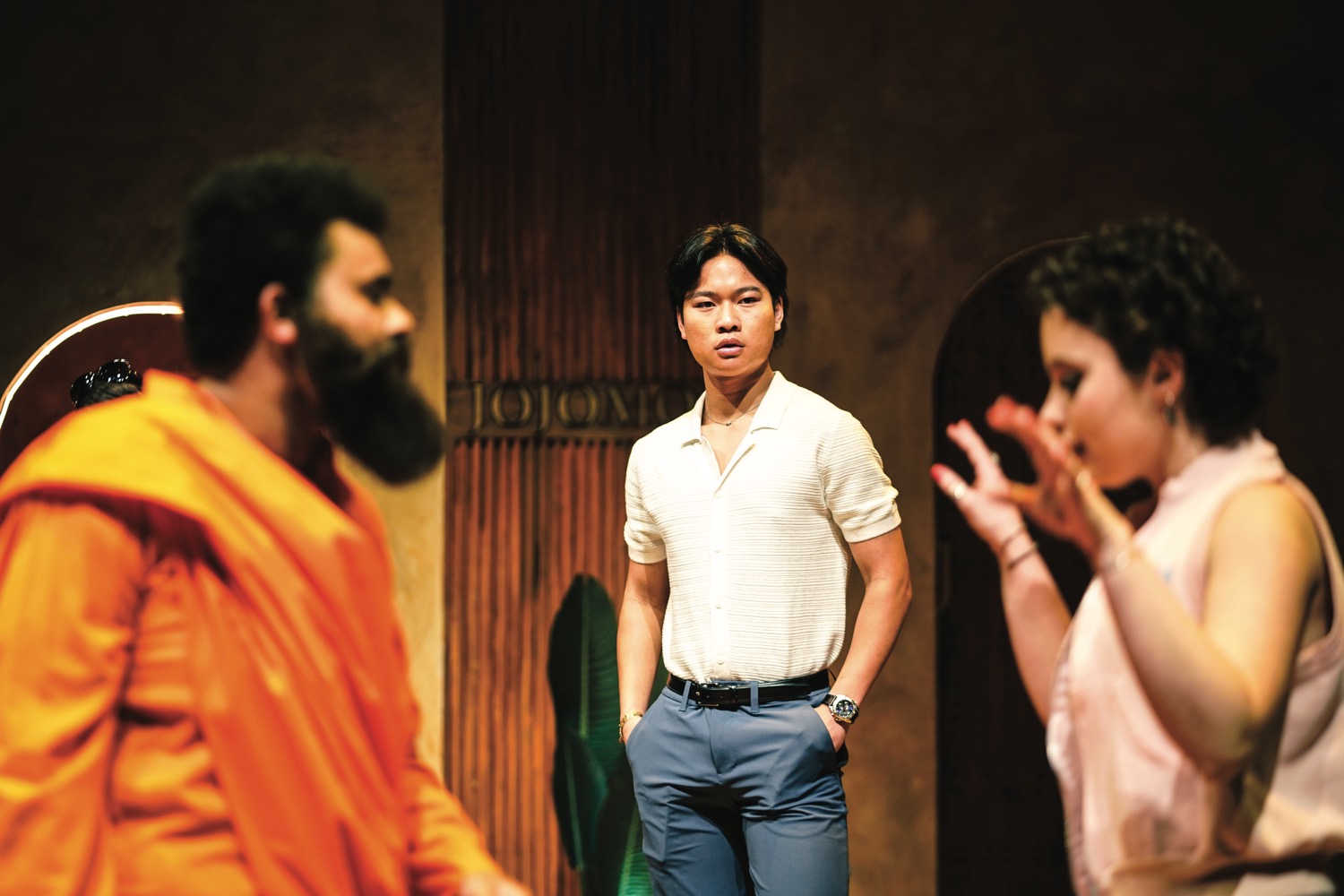
Chris Chow ’26 (center) in the Fall 2026 production of Yoga Play by Dipika Guha.

Chris Chow ’26 (center) in the Fall 2026 production of Yoga Play by Dipika Guha.

Policy-Focused

Cox majored in Public Policy Analysis (PPA), which, like PPE and IR, draws on multiple disciplines, but the students it attracts have as their main interest “changing the world for the better,” says Lozano, PPA coordinator. “They have a great ability to empathize and to work with other people to try to make somebody’s life better.”

The major, first offered at Pomona in 1980, offers 11 concentrations ranging from biology to sociology, and the senior seminar often brings together unusual pairings. For example, Lozano says, “I have a PPA-geology major who interacts with a PPA-psychology major. They learn from each other and cross-pollinate ideas.”

Camille Green  ’26

Camille Green  ’26

When Camille Green ’26 came to Pomona, she expected to major in something quantitative, such as economics or math. A summer internship in (now former) Congressman Colin Allred’s office helped her discover an interest in politics and community oriented endeavors. “I found the PPA major, which allowed me to take a more policy-focused approach to economics and combine my quantitative skills with a richer academic experience in public policy,” she says.

She is also double majoring in French.

Green’s favorite course has been David Menefee-Libey’s Policy Implementation in which each student writes a case study of a California policy of their choice. “You really dig into what ‘policy analysis’ actually means in practice,” she says.

“What has guided my path so far is a desire to do work that gives back to my community and makes a meaningful social difference,” says Green. “I think that is what draws a lot of students to the PPA program.”

Building Sustainability

One of Pomona’s newer multidisciplinary majors began as a response to climate change concerns that could not be addressed by just one discipline. In 1996, interested faculty formed the Environmental Science/Studies Interest Group to explore possibilities for a new program. Participants included professors from anthropology, art and art history, biology, chemistry, economics, geology, mathematics, Russian and German studies, sociology and theatre.

The first course in what would become the Environmental Analysis (EA) major was offered in 1999, but launching a new program coherently, across so many disciplines, proved to be a challenge. The leadership of Richard Hazlett, now emeritus professor of environmental analysis and geology, along with funding from the Pauley Foundation, helped solidify the new program, offered with faculty drawn from across the 5Cs.

Char Miller, W.M. Keck Professor of Environmental Analysis and History, says that no single type of student is attracted to the program. It offers two tracks—Environmental Science or Environment and Society—and multiple course plans within them. One of the largest is Sustainability and the Built Environment “because students want to get their hands on problems and issues facing the world in planning, policy, architecture and design,” he says, noting that it came about because of student demand.

Aerienne Russell ’12 says she’s always been drawn to nature and being outdoors. Living in Claremont, “I started to get curious about why our built environment was designed the way it was,” she says. “I saw a lot of friction between the ‘nature world’ and the ‘human world’ and wanted to contribute to transforming that relationship to be more sustainable.”

Today, Russell is production manager of outreach and engagement at CicLAvia in Los Angeles, an organization that produces open street events, transforming streets into public parks for a day.

“Now more than ever we need dreamers to become leaders,” Russell says. The EA major “prepares students to be thought leaders and to imagine a better world to be possible.”

Technology’s Impact

Another multidisciplinary program, like EA, also extends across the 5Cs. Science, Technology and Society (STS) incorporates the lenses of history, philosophy and social science to explore the impact of science and technology on the world.

Adelina Grotenhuis ’28 came to Pomona conflicted about whether to major in biology or philosophy. Then she found the STS program and realized it would allow her to connect her interests in the humanities and STEM subjects.

Physics lab at Pomona College

Physics lab at Pomona College

“What I learn in STS transforms the way I think about knowledge and leaves me constantly curious about our rapidly changing world,” says Grotenhuis. She is already incorporating it as a leader for the College’s chapter of The Luddite Club, which, she says, “inspires students to form healthy relationships with technology and creates a phone-free environment to be with others every week on Marston Quad.”

After graduating, Grotenhuis envisions an international career, perhaps in science education and communication and exploring technology’s impact on mental health.

Doubling Up

A growing number of students create their own multidisciplinary course of study by pursuing a double major. Since 2021, the number of graduates completing two majors has nearly doubled, representing 18 percent of the Class of 2025.

It’s not an easy path, and Pomona faculty recommend that students considering it work closely with their academic advisors. Chris Chow ’26 is double majoring in economics and theatre. “I knew I couldn’t just choose one major because I wanted to explore both at a deep level,” he says. “If there are two subjects you’re passionate about, it can be incredibly rewarding.”

Aditya Bhargava ’26 is one such double major. Originally from Beirut, Lebanon, with roots in India, the United Kingdom and Switzerland, he is majoring in international relations and economics.

“Growing up across so many different countries gave me an inherently international lens,” he says. “IR felt like that natural academic home for that background—a place to ground lived experience in theory.

“Regional dynamics, political history, institutional fragility—these are things IR handles in ways that pure economic modeling often can’t,” Bhargava continues. “The double major lets me hold both: the analytical rigor of economics and the contextual depth of IR.”

Bhargava aims for a career in international economic policymaking at an institution such as the World Bank or in consulting. “Both majors directly support that path,” he says. “Economics gives me the technical tool kit, while IR sharpens my understanding of the political and regional contexts in which policy actually operates.”

Both Sides of the Coin

Liam Bayer Jr. ’27

Majors: Computer Science and International Relations

Liam Bayer Jr. ’27

Liam Bayer Jr. ’27

Initially came into college with a broad interest in international relations, in analyzing political authority across the globe through the lenses of history, politics and economics. Then, in my first semester at Pomona, the Chinese language resident and department faculty welcomed me with open arms, and my ID1 professor got me hooked on screening foreign films out of Oldenborg’s underground International Theater. During my junior year I studied abroad in China, improving my Mandarin and becoming thoroughly acquainted with Chinese culture and society.

My peers encouraged me to take a swipe at computer science. The culmination was a summer research project in Associate Professor Eleanor Birrell’s Data Privacy & Security research lab. Since then, I have studied data privacy in the contexts of the European Union, China and India.

My two majors look at human relationships across different mechanisms we use to organize ourselves, be it actors like states or technologies like the World Wide Web. Living in a globalized world amid the information age, it’s hard not to see the connection between these fields. Thorough study in both disciplines gives me the tools to work in and understand both sides of the same coin.

In high school, I vaguely imagined a career in the U.S. Foreign Service. Ironically, it was through computer science, rather than international relations, that I made it in. At the end of my sophomore year at Pomona, I secured a Foreign Affairs Information Technology Fellowship. I will serve abroad as a diplomatic technology officer for the U.S. Department of State after graduation.

Alternate Lenses

Beyond multidisciplinary programs, professors are developing classes that fuse sometimes surprising pairs of disciplines that, when taught in tandem, exponentially expand student horizons.

Physics Professor Dwight Whitaker and Victoria Sancho Lobis, associate professor of art history and Sarah Rempel and Herbert S. Rempel ’23 Director of the Benton Museum, periodically teach The Art and Science of Optics. Typically, 40 or 50 students vie for the 12 available spots in the class.

Described as covering “historical and current understandings of the science of optics experienced through the prism of the visual arts,” the course examines ways that art and science are more closely intertwined than our modern minds might imagine.

Students read texts in art history. They do drawing exercises with a studio artist to understand how observation leads to pictorial representation. And they learn in the physics lab how lenses work and how images can be made using lenses.

In keeping with the Pomona mantra to try things out, the only prerequisite, says Lobis, is “demonstrated interest in learning more about the field of knowledge that you’re least comfortable with.”

The Humanities Studio brings together Pomona students and faculty to enrich interdisciplinary study of the humanities. It also builds connections between the humanities and the social and natural sciences through a fellowship program—which brings students, postdocs and faculty together in dialogue every Friday around an annual theme. It also sponsors a speaker series and professional development events such as workshops on writing op-eds and publishing with a scholarly press.

Kevin Dettmar, W.M. Keck Professor of English and founding director of the Humanities Studio, says that vocabularies in particular disciplines exist for a reason—efficiency of communication. Conversations in the Humanities Studio, he says, “help us to understand what a question looks like when approached from a different set of assumptions and methodologies.”

“It’s difficult work and the outcome is hard to predict,” Dettmar says. “But it’s pretty magical when it happens.”

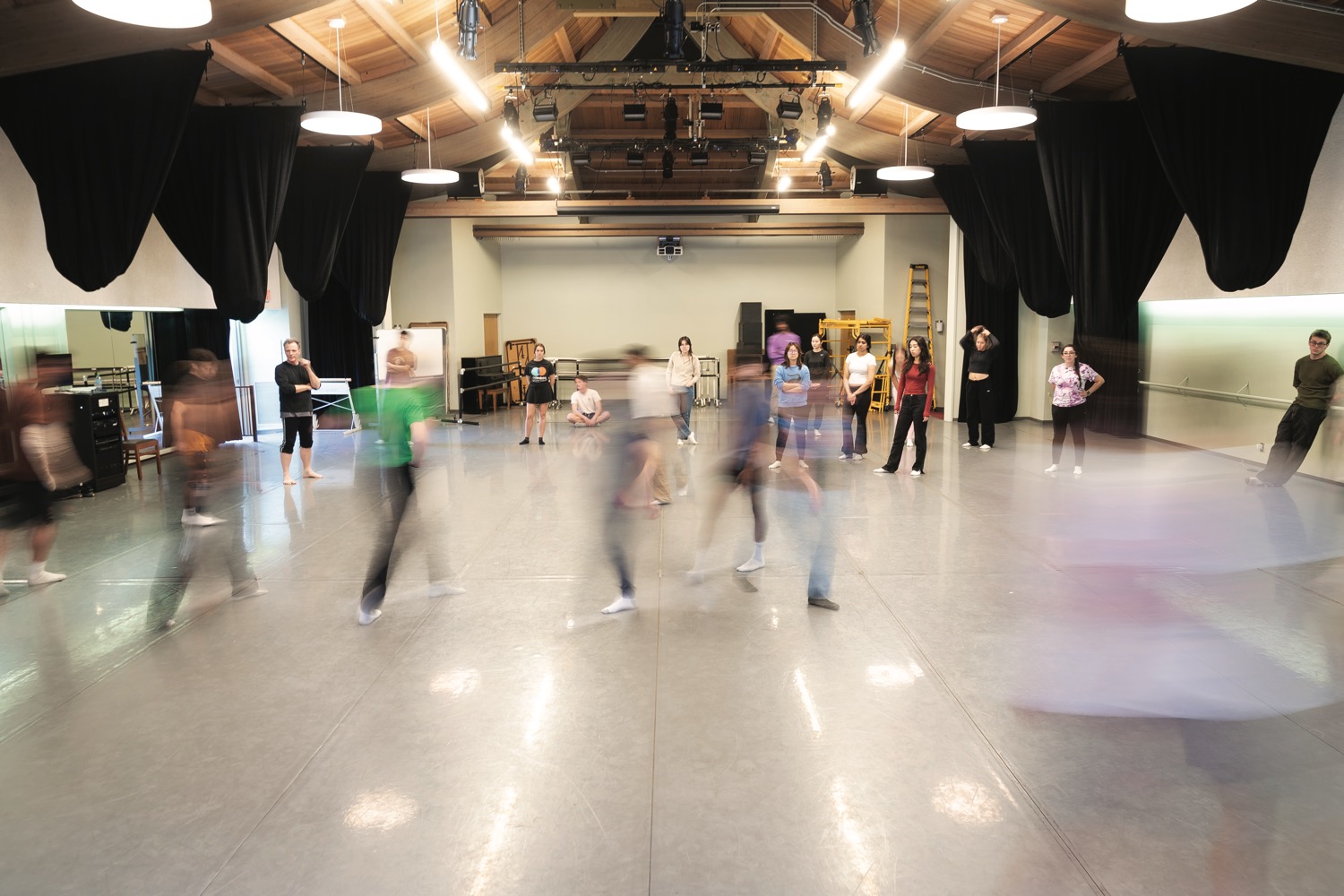
2025 introductory dance class held by John Pennington

2025 introductory dance class held by John Pennington

Pomona has come a long way from its original nine disciplines. In its constantly evolving curriculum, new avenues for academic fusion continue to take shape.

One of the most significant new initiatives is about to take a tangible form. In a historic move that will significantly increase opportunities for cross-disciplinary learning, the College will soon begin construction of the new Center for Global Engagement (see story on page 12). It will be a hub for addressing the Grand Challenges facing our world through many lenses, as the College envisions.

One thing will remain certain in the years ahead: Pomona’s academic lineup will hardly resemble its 1888 form.

But their passion for impacting the world will continue to drive our students, and inspire their faculty mentors, as they prepare for the world that they will soon enter and that their generation will ultimately lead.

Science Takes the Stage

Kaitlyn Casimo  ’13 visiting Claremont for a talk at CMC in Spring 2026

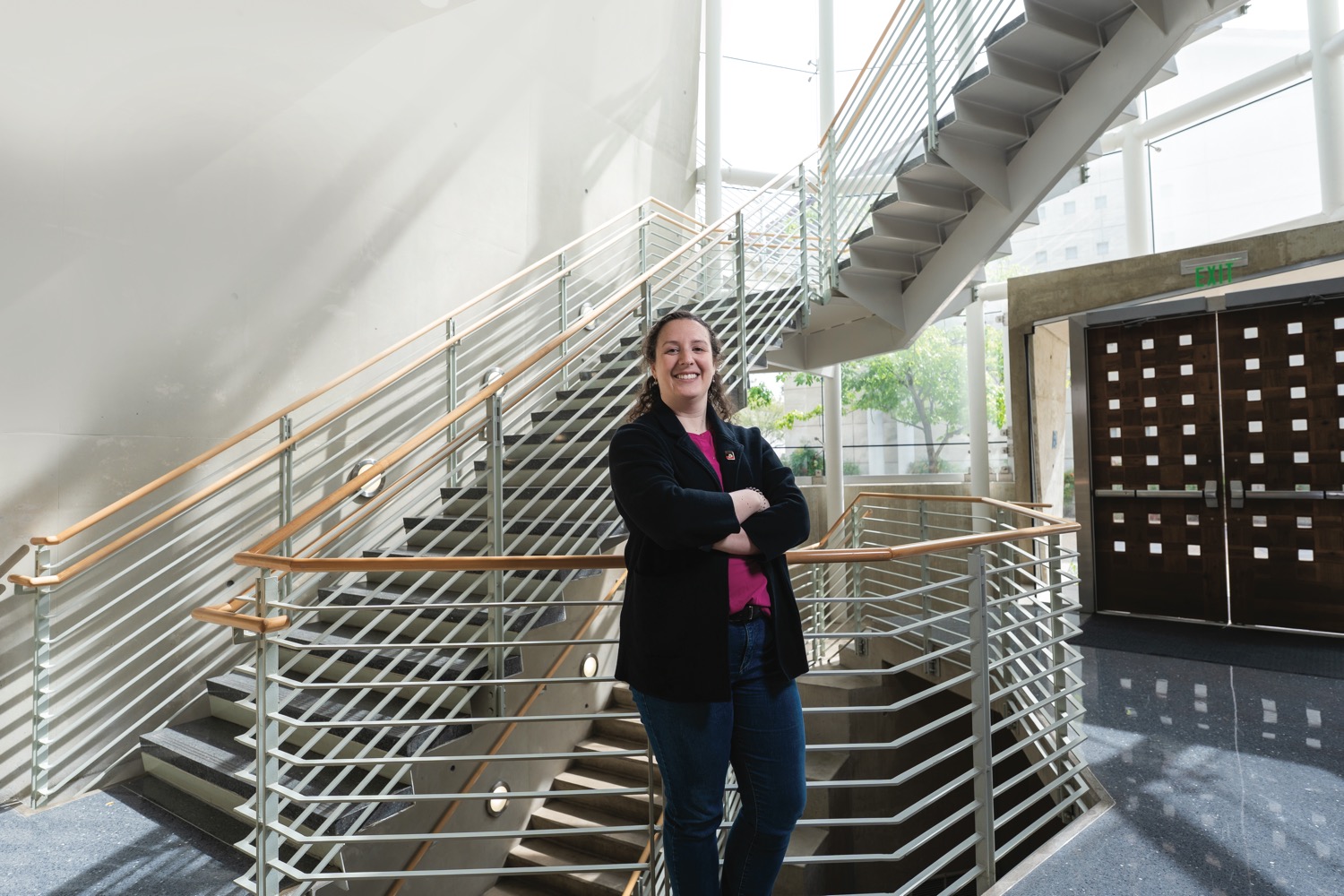
Kaitlyn Casimo ’13 draws on her background in both neuroscience and theatre to explain science.

Kaitlyn Casimo  ’13 visiting Claremont for a talk at CMC in Spring 2026

Kaitlyn Casimo  ’13 visiting Claremont for a talk at CMC in Spring 2026.

Kaitlyn Casimo arrived at Pomona in 2009 planning a double major in biology and theatre. She thought of herself as a science person, fascinated by animal behavior, human-animal interactions and climate change. As a teen, she had volunteered at her local zoo talking about global warming in the shadow of the polar bear exhibit. She didn’t yet know that explaining science would become her career.

In the fall of her sophomore year, Casimo enrolled in Introduction to Neuroscience, taught by Jonathan Matsui—now at Harvard. Pomona, she notes, was one of the earliest colleges to offer this major. That matters to her now, because working with undergraduate neuroscience programs is a part of her daily mission.

She attended graduate school at the University of Washington and thought she wanted to be a teaching faculty member at a college like Pomona. But her plan shifted. As a grad student, she began doing a substantial amount of science communication work, as well as behind-the-scenes education outside of the classroom, including curriculum design. By the time she was finishing her doctorate in neuroscience, she knew she was headed toward a role in science communication or education.

Of Cyborgs and Space Colonies

In her downtime, science communicator Kaitlyn Casimo loves to geek out on sci-fi and science-related books and TV shows. Here are her top five picks:


The Murderbot Diaries series, Martha Wells

About a cyborg who has gained autonomy and uses its freedom to watch soap operas, have anxiety and eventually make friends. (It’s a comedy!) The supporting cast of scientists reflect real scientists’ personalities and group dynamics. Now also a TV show.


Stories of Your Life and Others, and Exhalation, Ted Chiang

Short story collections that dig into the implications of science and technology on life. Many of the stories are cautionary tales, and all of them have a huge amount of heart. One of the stories is the basis for the movie Arrival.


Lady Astronaut series, Mary Robinette Kowal

After a meteor strikes Earth causing massive global warming, NASA accelerates its efforts to set up human space colonies. The story follows a female astronaut dealing with sexism, racism and anti-space-travel activists while contending with the challenges of space.


Vinegar Girl, Anne Tyler

A retelling of The Taming of the Shrew set at a biomedical research lab at Johns Hopkins. Of course I’m going to pick the book that has both science and theatre in it!


Call the Midwife TV series

In a poor neighborhood of London, the midwives provide maternity and general health care and a huge dose of community support from their scrappy clinic. Every episode, infused with real health and medicine, centers on women’s science expertise.

Today, leading a nine-member team, Casimo helps people use open science data from Seattle’s Allen Institute to do their own work and to educate the next generation of scientists. The institute was created by former Microsoft executive Paul Allen, who dedicated much of his philanthropy to accelerating science discoveries.

Her team’s focus is open science: the practice of making scientific data, publications and software publicly accessible, and helping educators, students and working scientists dig deep and fully use those resources. Open science also encompasses open education, citizen science and community science projects. All of these are science—but carried out outside of the walls of research institutions.

In a full-circle moment, more than a decade after listening to Matsui talk about neuroscience at Pomona, Casimo co-authored a research study in 2023 about how to educate undergraduates in the Journal of Undergraduate Neuroscience Education. Her paper outlines how to create a student project around an open data set of neuron cells, encouraging the students to use statistical analysis.

Her team at the Allen Institute does everything from training scientists to running field trips for high school students. As leader of the program, Casimo is a frequent science communicator. She may appear on the local news, or speak at a science night for the public, using zombies to speak about motor control and other parts of the brain. She sees communication as built by skill practice, not as an innate talent.

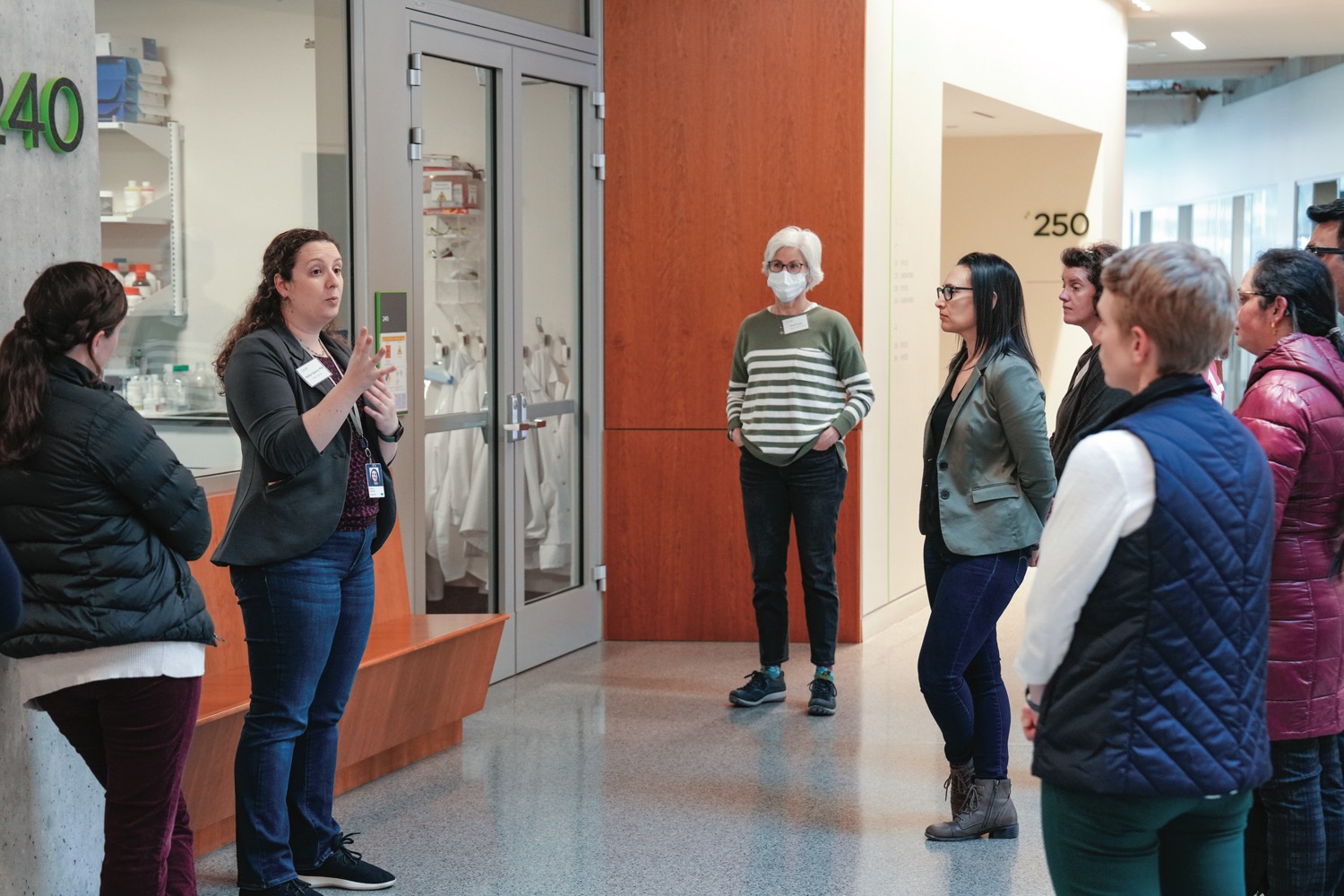
Kaitlyn Casimo ’13 leading a group at the Allen Institute’s inaugural teacher academy in 2023.

Kaitlyn Casimo ’13 leading a group at the Allen Institute’s inaugural teacher academy in 2023.

Casimo is direct about the challenge of the moment. “If we don’t go speak up for science,” she says, “then it’s the people who don’t care about accuracy who are speaking about science.” Scientists, she finds, tend to argue that the work should speak for itself. Or they may default to fun facts when doing outreach, abandoning what she sees as the more crucial sharing of the process. She wants academics to talk about the joy of, say, reasoning your way through a messy set of data.

The scientist’s misconception when communicating, she says, is forgetting that science is a way of understanding the world.

Curtains, Cue Sheets and Calling the Show

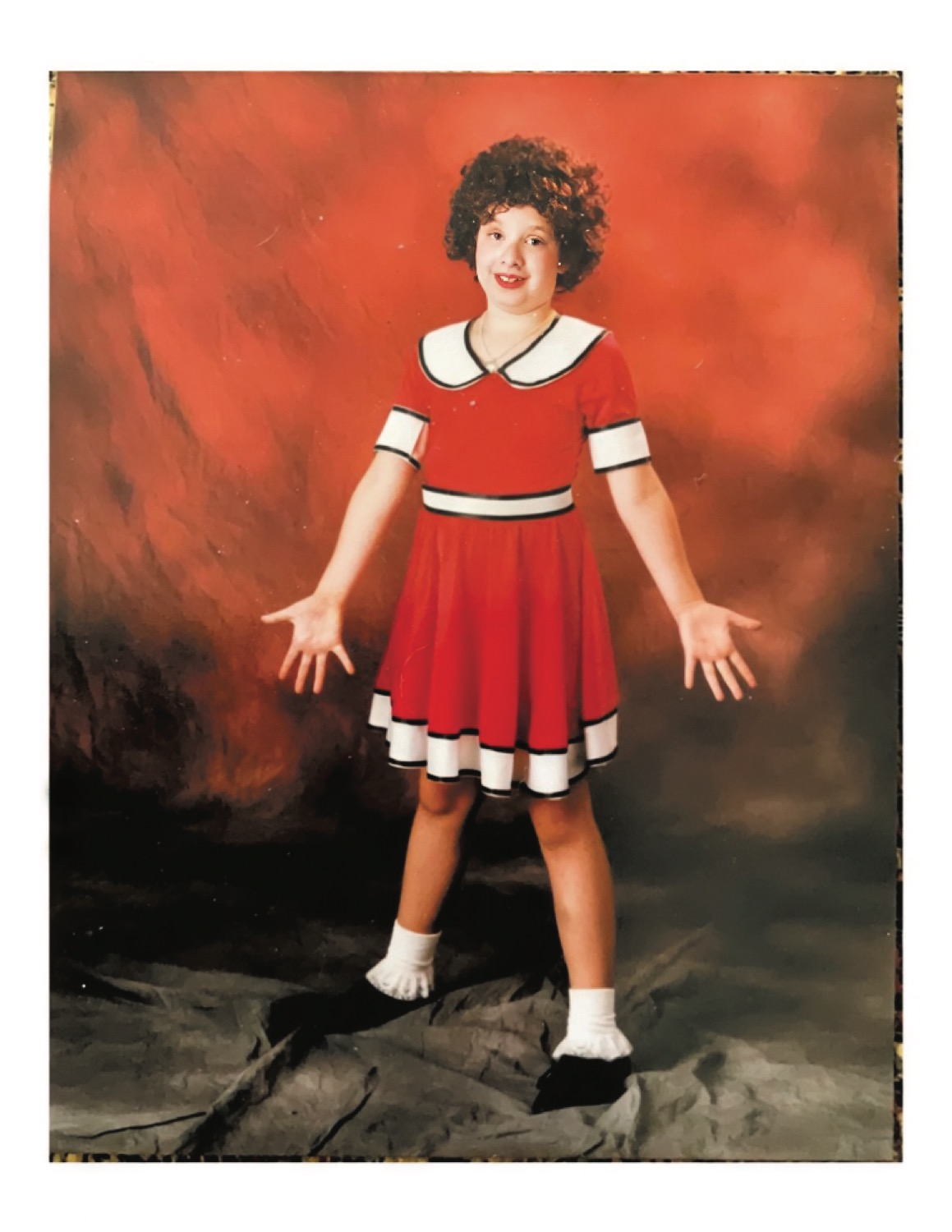
Kaitlyn Casimo as Annie at around 8 years old.

Kaitlyn Casimo as Annie at around
8 years old.

Casimo’s theatre story opens when 4-year-old Kaitlyn takes the stage in a performance as Goldilocks.

During the performance, a flat—one of the set pieces propped along the back of the classroom—began toppling toward the cast and her father grabbed it to save the day. Having survived that, she was hooked. She would go on to play Annie in a production of the musical, when she was about 8 years old. Musical theatre became a passion.

She chose Pomona specifically because she could be a science major and do theatre. She braided them together each day, often with coursework in the morning, lab in the afternoons and rehearsals and performances in the evening.

Two productions at Pomona stand out.

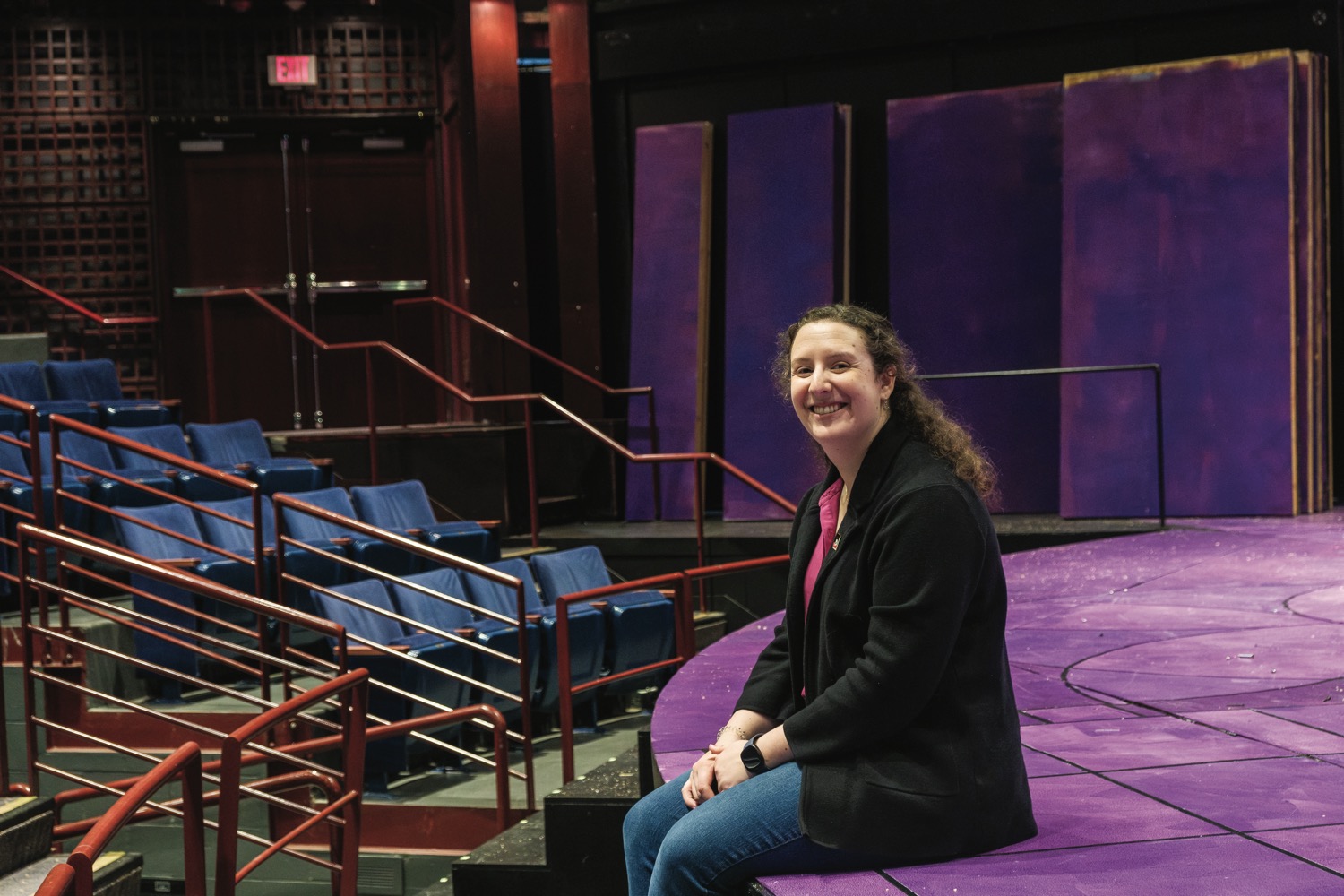
Kaitlyn Casimo  ’13 sitting on the main stage in Seaver Theatre.

Kaitlyn Casimo  ’13 sitting on the main stage in Seaver Theatre.

The first was the Henrik Ibsen play John Gabriel Borkman directed by the legendary Leonard Pronko, during her sophomore year. Casimo portrayed Borkman’s wife, her first encounter with what she calls “a classic piece of theatre.” Not knowing Ibsen’s place in Western history kept her from being intimidated. She still has that script, with comments from Pronko scribbled on. “Sit like a goddess,” he told her.

The second was not a performance at all. Fall of her senior year, she signed up to stage manage a production of Kindertransport, a play about the rescue of children from Nazi Germany. She had been working behind the scenes in theatre since she was a teen, doing run crew and costume crew on various shows. But stage managing a full play was different.

“Stage managing just changes your perspective,” she says, “because you’re looking at the whole thing.”

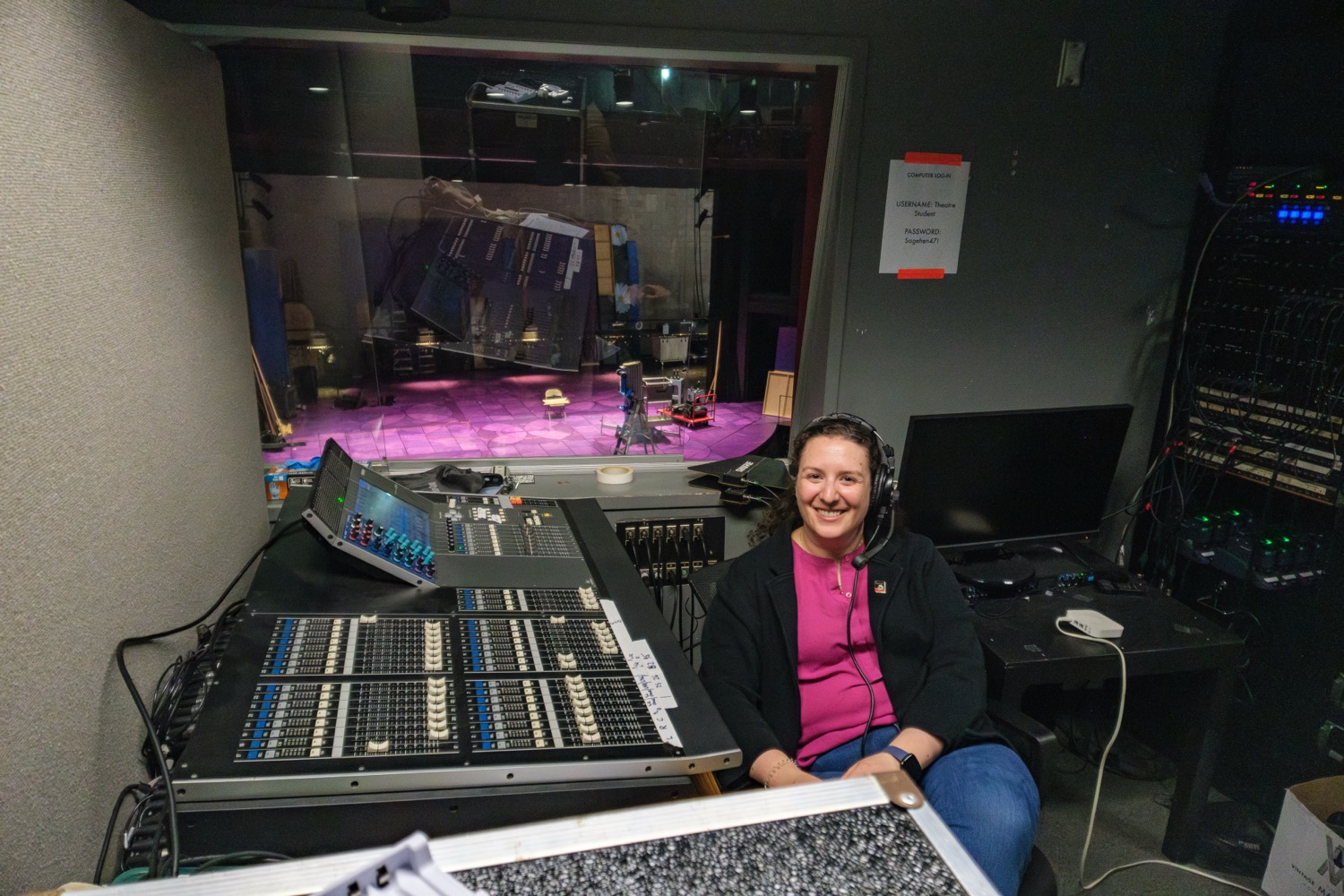
Casimo returns to the booth at Seaver Theatre.

Casimo returns to the ‘hot little booth’ at Seaver Theatre.

From a hot little booth, crowded with electronics for the lights and sound, she kept her vital notebook of every cue she had to manage.

That perspective, she would realize later, is exactly what reshaped how she thinks about science communication. A stage manager’s job is, at its core, about consistency and seeing the big picture. “Running a show as a stage manager is not entirely unlike running an experiment in a lab,” she says. “You have a set of steps you want accomplished in the right order. And it has to be the same every time.” Also, she points out, she is not intimidated by technology—which is lucky, because a stage manager is typically running three to five separate pieces of electronics at any given moment.

The communications work she does with scientists on how to talk about their research is heavily influenced by her theatre background—not just in obvious ways like stage presence and projection, but in the deeper sense of thinking about oneself, and the whole production team, as performers. “You are playing the role of a scientist talking about their work,” she explains. “What is your story arc? What is the set design of the place where you are having this conversation? What are the ways that the physical environment shapes perception.”

While she no longer seeks out performing roles herself, she loves the backstage life of theatre and still does some directing at a short theatre festival in Seattle.

Her biggest regret from college is that the senior seminar for theatre and the senior seminar for neuroscience conflicted. She would love to go back and add a theatre thesis and theatre major to her record.

The advice she would give her college self is a single sentence: Ask for help. The world, she has learned, is not as rigid as it sometimes appears. If you go ask someone to work something out, more often than not, they will.

Meeting of the Passions

Casimo sees both science and theatre as ways of exploring our relationship with the world—science by breaking things down into tiny pieces to understand the mechanisms, and theatre by examining how we interact with each other. “Ultimately,” she says, “both of them are asking: what is it about the world that makes this an interesting story?”

While she once identified first and foremost as a scientist, Casimo now embraces being an interdisciplinary person.

“I could not do what I do now if I had not done research myself,” she says. “That heavily informs the way that I talk about science.”

She’s at once a scientist and a science communicator and a theatre kid, and the kind of sci-fi nerd who just casually whips out a DVD of the original Star Trek in the middle of a conversation.

“I contain multitudes,” she says, laughing.

Food Beyond Fusion

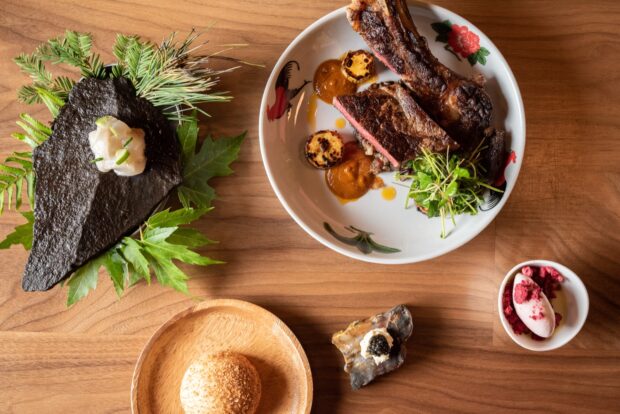
Dishes from Archipelago. Photo by Jaclyn Warren.

Dishes from Archipelago. Photo by Jaclyn Warren.

Dishes from Archipelago. Photo by Jaclyn Warren.

Samuel Yamashita remembers clearly what happened when he mentioned the word fusion at a food panel at the annual meeting of the American Historical Association held in New York in 2009. “I think I got jeered,” says the Henry E. Sheffield Professor of History with a smile.

Fusion cuisine, a popular trend in the last decades of the 20th century—think sushi burritos, curry pizza—has long fallen out of favor with the culinary cognoscenti. But while the term itself has become a pejorative, the practice of blending techniques and ingredients from different food traditions is very much alive.

Yamashita has written extensively about early modern and modern Japanese intellectual and cultural history as well as Japanese and fusion cuisine and the new hyperlocal cuisines that have appeared in global cities along the Pacific Rim.

The author of Hawai’i Regional Cuisine and the forthcoming Chefs Don’t Talk and Other Kaiseki Writings, the first English-language anthology of kaiseki chefs’ writings, Yamashita has thoughts on why fusion matters and how it has evolved into an entirely new kind of cuisine.

Was there fusion before “fusion”?

Absolutely. We see it in China very early, between the third and eighth centuries when Central Asian foods, especially dairy products, were introduced to China. One doesn’t associate cheese and milk with East Asian cuisine, but they were consumed in China and in Japan, probably Korea as well, before the early modern period. That’s an instance of natural fusion.

A brilliant writer named Zilkia Janer has also written about the imposition of Spanish culture on the Caribbean and Central and South America, beginning in the 1600s. She talks about the fusion that resulted from Spanish rule, when meat and bread became more important in the diets of those places.

How did fusion cuisine change the food world?

The Franco-Japanese fusion that happened in the ’70s, ’80s and ’90s was really important because it opened the door to Asian cuisines that classically trained French chefs had formerly turned their noses up at. Important here were the nouvelle cuisine chefs who moved away from the rich, sauce-based cuisine classique. One result is that refined Japanese haute cuisine—kaiseki—has been recognized after several hundred years. And Buddhist vegetarian cuisine, which is over a millennium old, also can now be recognized.

Nouvelle cuisine also led to the New Nordic cuisine, which in turn opened the door to a resurgence of foraging and indigenous cuisines.

Why did fusion as a trend fail?

I think there was just a lot of bad fusion. People were overdoing it. Roy Yamaguchi, one of the founders of the fusion movement known as Hawai’i Regional Cuisine, put it this way: “A lot of chefs, when they don’t know what they’re doing, may put too many Asian ingredients into a sauce, and it really doesn’t go with what they’re trying to do as a whole…”

Are we seeing a re-emergence of fusion? Would the chefs you talk to call it that?

No, we’re two steps beyond the fusion cuisine that nouvelle cuisine enabled. Many chefs are now practicing what I call “culinary hyperlocalism.” Brian Hirata, an innovative chef in Hawai’i that I’ve written about, would be very uncomfortable if we brought up the word fusion. The multiplicity of techniques he uses reflects his cultural background. He’s of Japanese descent and was a culinary arts student and instructor, so he knows French and modernist techniques. He also has an interest in reviving Hawaiian food ways—gathering, fishing, hunting and foraging most of his ingredients himself.

Chefs like Jon Yao [head chef and co-owner of Michelin-starred Kato in downtown L.A.] and Aaron Verzosa [chef/co-owner of Seattle’s Archipelago] would say they are doing something unique that reflects their own position as children of immigrants and the family food they remember eating. Yao talks, for example, about what his mother cooked at home and how it represents her journey from Taiwan to Los Angeles. So, their fusion is an unintended byproduct. The powerful drivers are really diasporic immigrant community memories.

For Verzosa in particular it’s not just about food, it’s about Filipino culture and narrative. For chefs all over the world now, especially fine dining chefs who trained in France or the U.S., narrativization has become very important—talking about oneself and one’s family. That’s something new. Everybody is searching for meaning and significance.

And they’re also looking at food and its relationship to a particular food shed—the local area where the food is sourced. When French cuisine was utterly dominant, French ingredients were imported everywhere—to the tropics, to America. But as one chef in Hawai’i put it, “the days of the FedEx chef are over.”

A Big Night at Bridges

Tene Ariyo ’26, center, stands in as a gubernatorial candidate during a dress rehearsal.

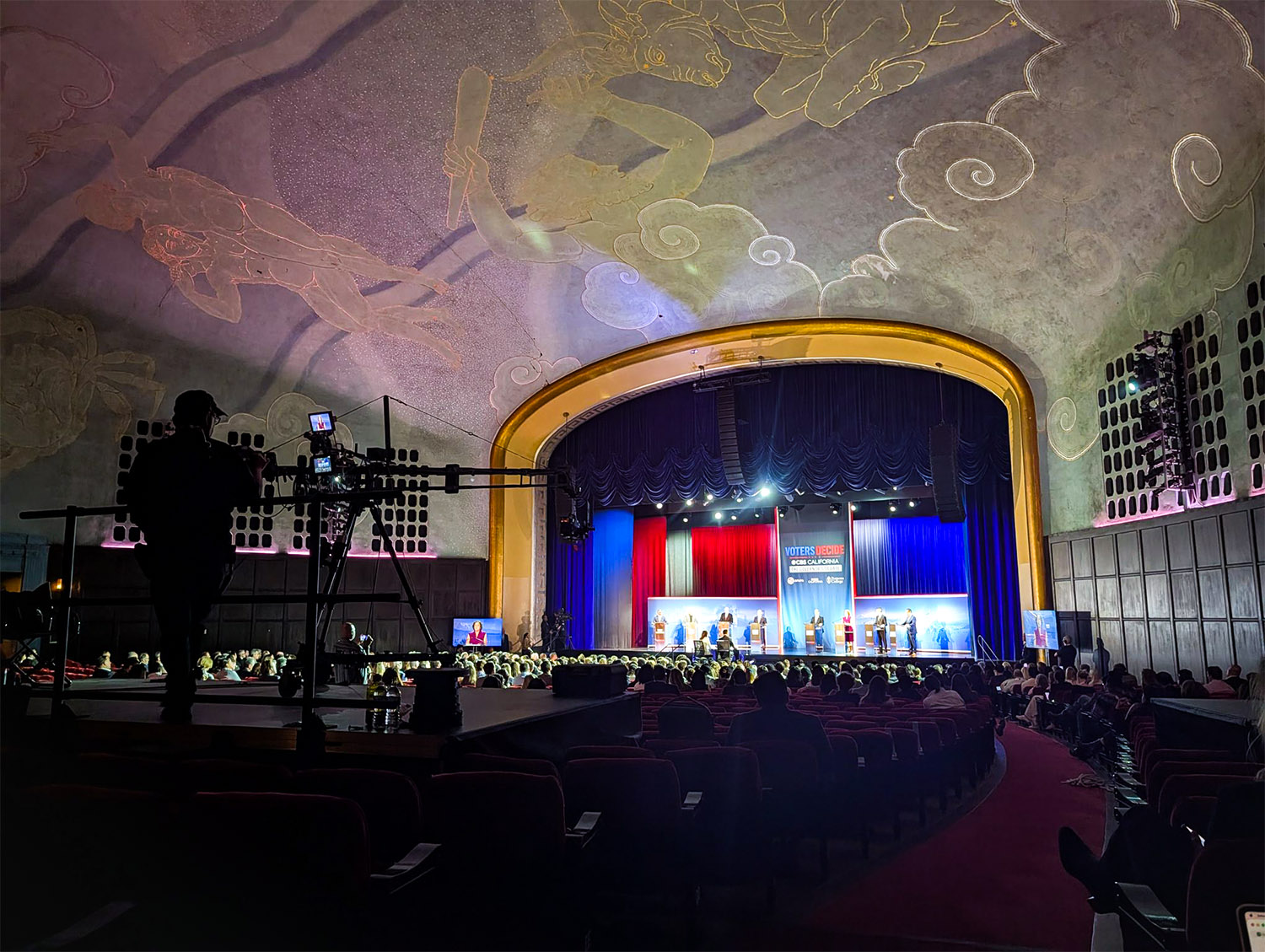
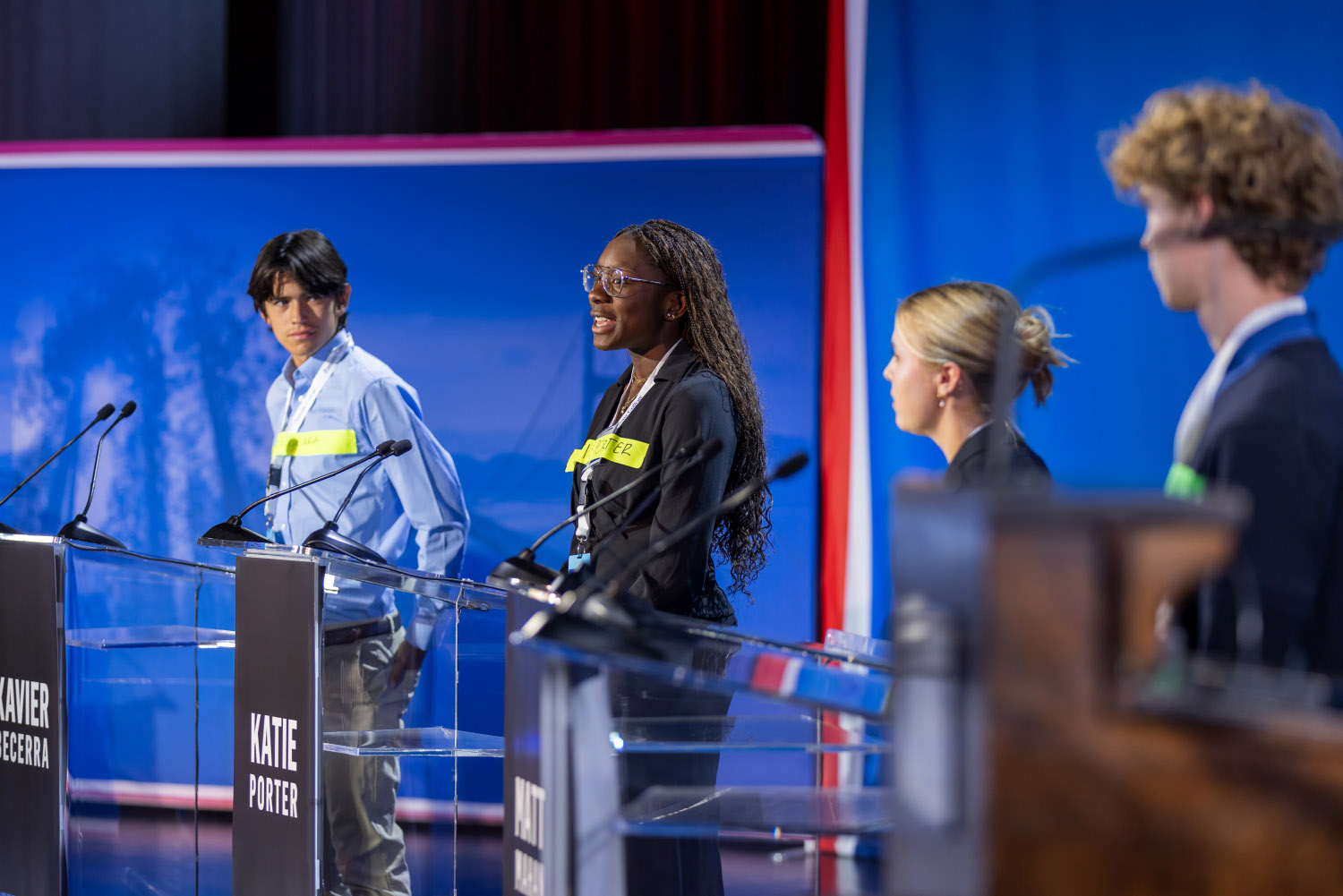
Bridges Auditorium hosted the most inclusive debate of the 2026 race for California governor.

Bridges Auditorium hosted the most inclusive debate of the 2026 race for California governor.

Leading up to the high-profile event at Bridges Auditorium—hosted in partnership with CBS News California and Asian Pacific

Tene Ariyo ’26, center, stands in as a gubernatorial candidate during a dress rehearsal.

Tene Ariyo ’26, center, stands in as a gubernatorial candidate during a dress rehearsal.

American Public Affairs—students took on myriad behind-the-scenes roles to help prepare for the live production and keep the night humming.

They stood in as moderators and candidates during dress rehearsals; greeted and assisted candidates as they arrived; ushered

dozens of media members and VIP guests; shot video; helped check in visitors outside; and guided attendees to their seats and the post-event reception.

Jake Chang ’26, a public policy analysis major who greeted VIP guests when they arrived, says being a welcoming face for elected officials, leaders and other stakeholders “gave me the opportunity to talk with the changemakers of California and see this monumental event as bigger than myself.”

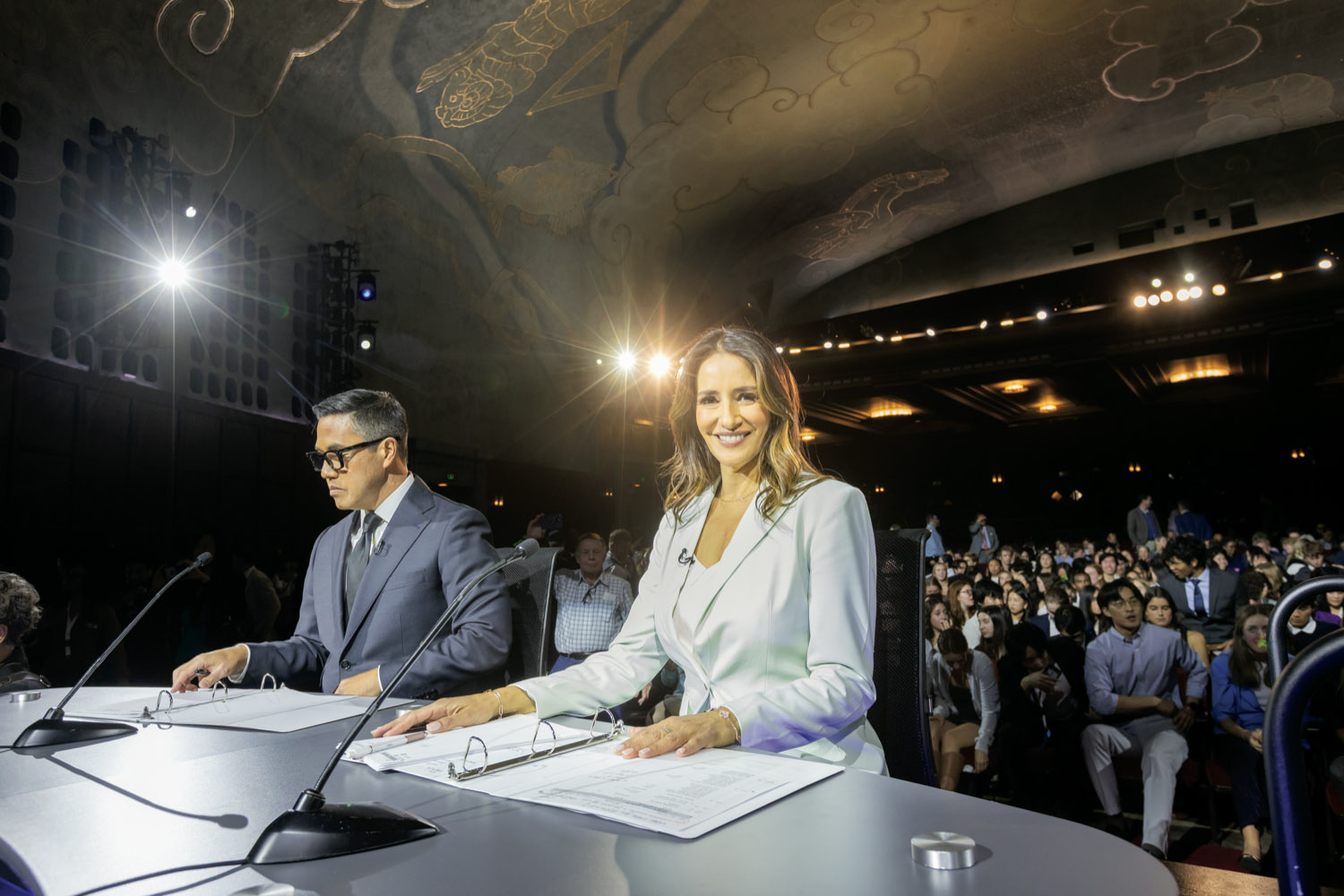
Sara Sadhwani, assistant professor of politics, helped moderate the final segment of the gubernatorial debate.

Sara Sadhwani, assistant professor of politics, helped moderate the final segment of the gubernatorial debate.

In addition to backstage roles, four from the Pomona community had on-screen roles.

Sara Sadhwani, assistant professor of politics, moderated the final segment of the evening with CBS Bay Area anchor Ryan Yamamoto, and Dante Gilbert ’27, Ryan Kossarian ’27 and Kloi Ogans ’28 each asked the eight candidates onstage a question.

Kossarian, a politics major, believes he spoke for many when he remarked, “Wow, that was a bit of a mess,” in response to the candidates’ back-and-forth early in the debate.

“I was glad I was able to say that part out loud on the stage—and many people seemed to agree,” he says, adding that he felt “the presence of the democratic spirit” in being able to ask the candidates directly how they would tackle the rising cost of education and bring jobs back to the Golden State.

Elaine Suh ’28, one of several students who ushered visiting media members, says being involved in the event reminded her that “even as a molecular biology major, I have every opportunity to engage in the political sphere.”

Commencement 2026

Seated candidates during Pomona College's 2026 commencement ceremony


Wig Awards

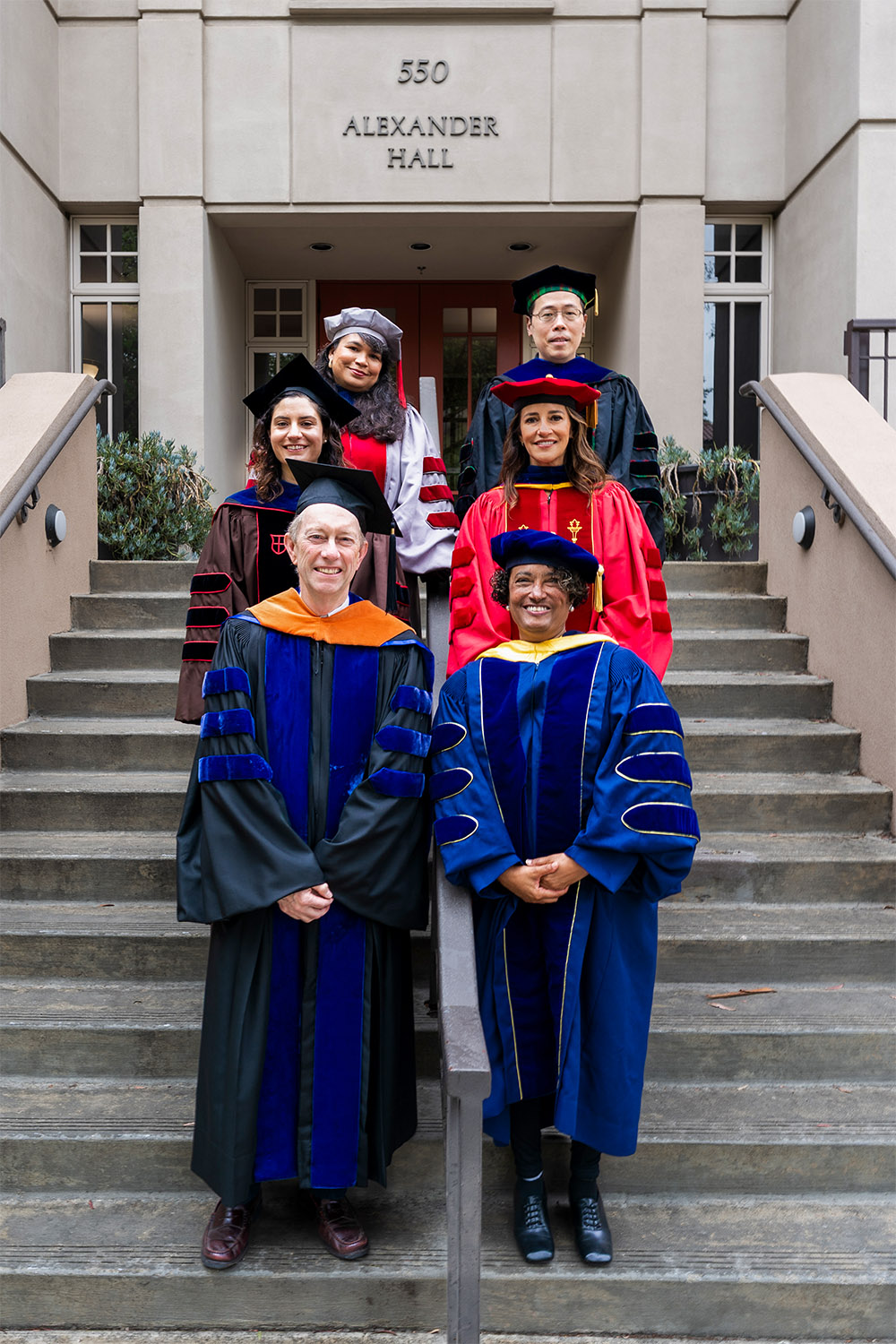
Seven Pomona faculty members received the 2026 Wig Distinguished Professor Award at Commencement on May 17 for their excellence in teaching, commitment to students and service to the College and the community. Presented annually since 1955, the Wig Award is the highest honor bestowed on Pomona faculty. Recipients are elected by juniors and seniors and confirmed by a committee of trustees, faculty and students.

2026 Wig Award winners. Top row: Erica Dobbs and Feng Xiao. Middle row: Alexandra Papoutsaki and Sara Sadhwani. Bottom row: Michael Kuehlwein and Nicole Weekes.

2026 Wig Award winners. Top row: Erica Dobbs and Feng Xiao. Middle row: Alexandra Papoutsaki and Sara Sadhwani. Bottom row: Michael Kuehlwein and Nicole Weekes.

This year’s recipients are:

  • David Divita, professor of Romance languages and literatures
  • Erica Dobbs, associate professor of politics
  • Michael Kuehlwein, George E. and Nancy O. Moss Professor of Economics
  • Alexandra Papoutsaki, associate professor of computer science
  • Sara Sadhwani, assistant professor of politics
  • Nicole Weekes, Harry S. and L. Madge Rice Thatcher Professor of Psychological Science and professor of neuroscience
  • Feng Xiao, associate professor of Asian languages and literatures

Family Ties

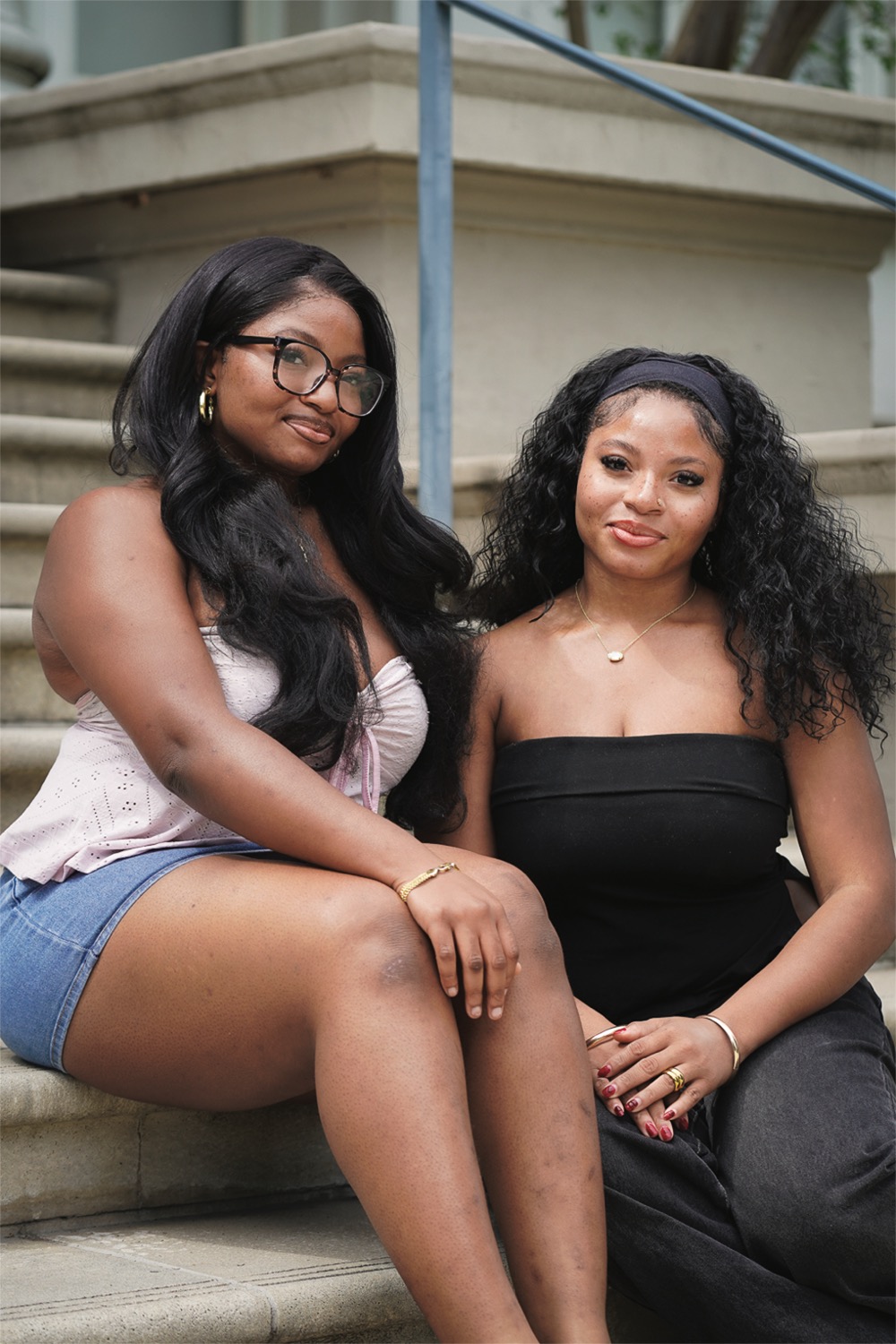
On National Siblings Day (April 10), we went looking for some Sagehen siblings on campus. We love these two pairs:


Siblings Isadora Raines-Hepple ’28, Neuroscience and Jackson Raines-Hepple ’28, Geology

Chidimma Chukwuocha ’29,
Molecular Biology; Chimuanya Chukwuocha ’28, Neuroscience

Both are QuestBridge Scholars from East Hartford, Connecticut. When Chim was matched with Pomona, Chidimma says her “heart dropped” because of how far away her sister would be. A year later, Chidimma also matched with Pomona, and Chim “was the happiest for me. She started tearing up.”


Isadora Raines-Hepple ’28, NeuroscienceChidimma Chukwuocha ’29, Molecular Biology; Chimuanya Chukwuocha ’28, Neuroscience
Jackson Raines-Hepple ’28,
Geology

The twins left Fresno, California, to become roommates here and sing in the Pomona College Choir and Glee Club together. “A lot of our mutual friends are in Glee Club,” says Jackson. “We have a lot of the same friends and a lot of different ones.”

Into the Eye

With his new documentary feature, director Miko Lim ’02 takes SXSW by storm.

Miko Lim self portraitWhen he first saw a photo of Hurricane Katrina taken by storm chaser Jeff Gammons, Miko Lim ’02 felt as if he was looking at a nebula in outer space. “I was immediately drawn to it,” says Lim, a filmmaker based in Los Angeles. “Everybody else’s work seemed to capture a lot of death and destruction, but his was such an artistic take on natural phenomena.”

Lim hired Gammons, a photographer and videographer, for a commercial he was directing, and after the shoot they kept talking. Those conversations led Lim—who has directed campaigns for Adidas, Nike and Disney and won a Clio for his short film Ocean Mother—to embark on his first feature documentary. Stormbound, which chronicles Gammons’ life and pursuit of extreme storms, had its premiere at South by Southwest (SXSW) in March, where it won the Special Jury Award for Best Feature Documentary, followed by a European debut at CPH:DOX in Copenhagen.

Lim was drawn to Gammons’ life story not only because he braved life-threatening storms and captured them in all their sublime beauty, but because he did so while battling a litany of illnesses and diseases, including spinal cancer and heart and kidney failure.

“This is a guy who’s been dealt the worst possible hand health-wise,” says Lim, “and yet he is still driven to go out into the world and see it with marvel and wonder and hope. It was very inspiring to me.”

After initial meetings with studios more interested in the newsworthy angle of the story than in the personal journey he wanted to share, Lim met Adam McKay (The Big Short, Vice), who understood his vision and signed on as executive producer. With McKay on board, IMAX quickly bought into the project, providing funding and access to the full array of IMAX cameras.

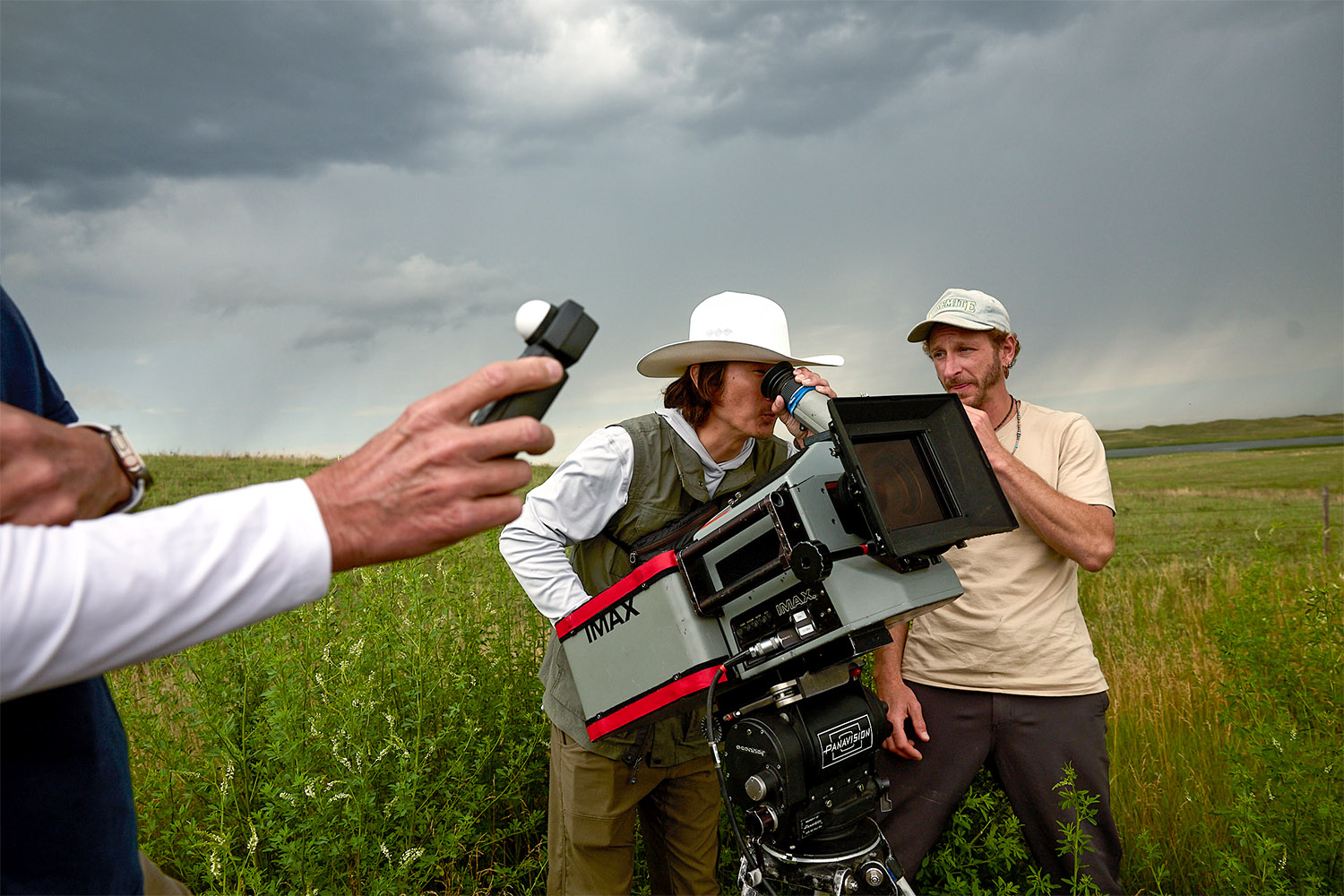
“It was a wonderfully hard experience,” says Lim. “There’s a reason why people just film these things on their phones and GoPros. We were out there lugging 80-pound cameras the size of a fridge into these storms.”

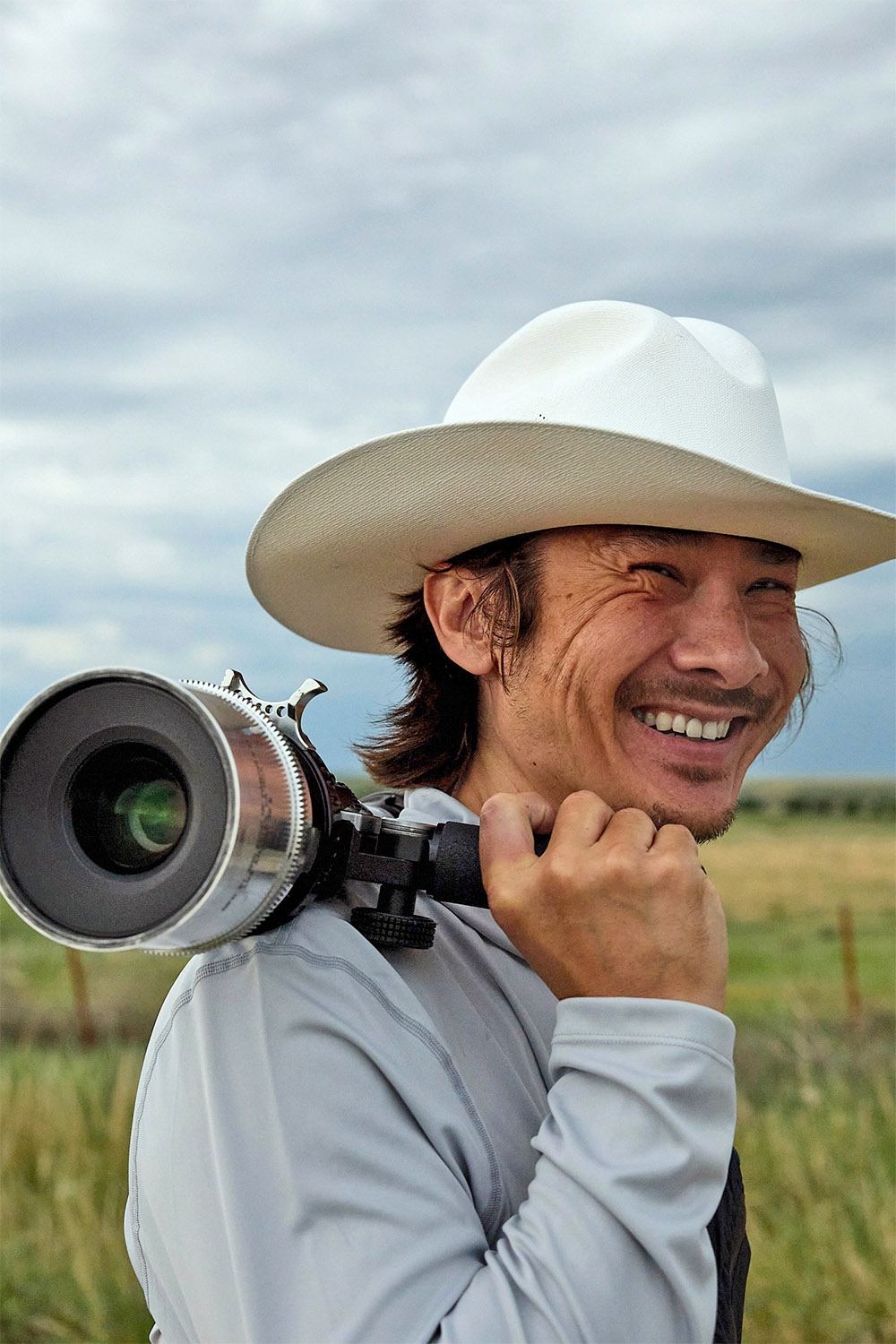
Miko Lim filming Stormbound with an IMAX camera.

Miko Lim filming Stormbound with an IMAX camera.

Using IMAX cameras was important to Lim because they are “inherently more cinematic” than digital cameras. As well as the “fun impossibility of it,” he also appreciated the taller aspect ratio, which is more similar to an old TV than the modern widescreen format.

“So much of this film is literally and metaphorically about looking up. So having a screen this high allowed us to frame things where we can still see our subjects down at the bottom, but we can see the sky opening up and exploding in front of them all in one image rather than having to pan up.”

Premiering the film at SXSW seemed fitting, he says, given that Texas is at the bottom of Tornado Alley and the documentary takes place almost entirely on the roads of the U.S.

A pre-med student at Pomona, Lim realized while doing an oncology research project at UCLA that he might not be able to handle the emotional toll of being a doctor. Having taken a creative writing elective with David Foster Wallace, he decided to tap into his artistic side and applied for a script reader job on Craigslist.

That turned out to be an internship at Angelina Jolie and Billy Bob Thornton’s production company. “I walked in blind to that, just trying out something new, and that got me into the idea of using my imagination and creating things. That gave me the bug.”

Lim still takes on occasional commercial work. It can be creatively liberating, he says, and it is also lucrative (he has three kids). Recently, he has been moving more into TV and has started writing his first narrative feature.

“I’m very interested right now in these tiny, intimate stories about people in massive worlds that feel otherworldly,” he says. “You get older and you feel like this world is such a big, magical place, and you’re so small in it, and it’s not a bad thing. Your little story is just as exciting and lovely as the story of the whole universe.”


Making Her Met Debut

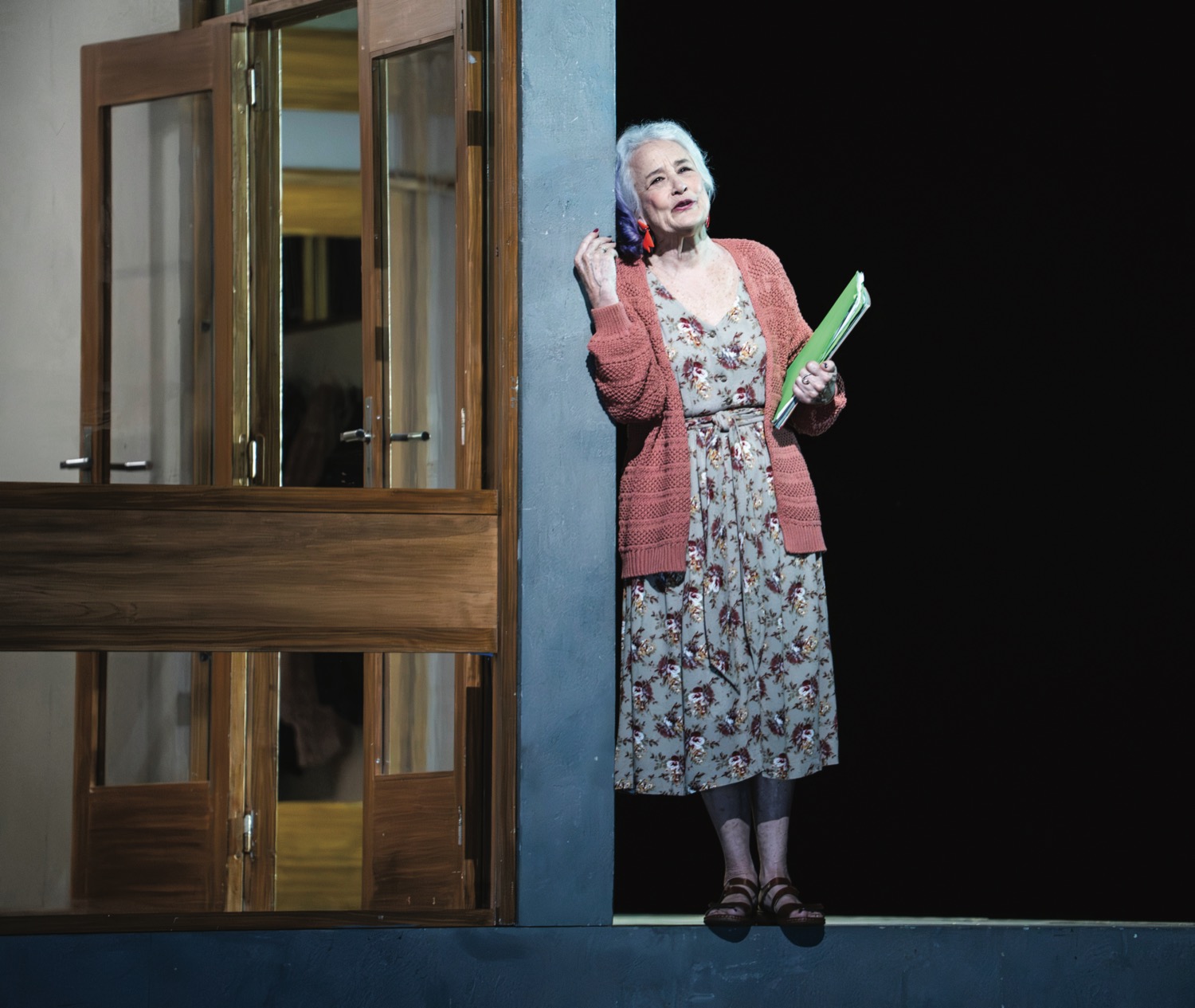
Lucy Shelton ’65 takes to the famous stage for the first time at age 82.

Lucy Shelton Portrait

Photo by KARJAKA STUDIOS

When soprano Lucy Shelton ’65 celebrated her 75th birthday in 2019 with a special concert in Manhattan’s Merkin Hall, she thought it might be her last public performance. Shelton, who is internationally acclaimed for her work in contemporary music, performed that night with more than a dozen colleagues and former students and sang several pieces that had been written especially for her over the years.

It could have been a fitting finale to an extraordinary career. But that’s not how it turned out. Since 2021, Shelton has sung on stages around the world—in Aix-en-Provence, Helsinki, London, Amsterdam, San Francisco and Adelaide—as The Teacher in Kaija Saariaho’s final opera Innocence and, in 2024, in a role tailor-made for her in the world premiere of Laura Kaminsky’s chamber opera Lucidity.

When Innocence, which tells the story of a school shooting and its aftermath, premiered at the Metropolitan Opera in April, Shelton made her debut at that hallowed institution at the age of 82.

Shelton’s explanation for her career’s longevity? “I simply love making music.” Beyond that, she thinks she is still able to sing “because I’ve used my voice in many different ways over all of these decades and always found ways to meet the various challenges of the repertoire.”

The distinctive feature in her dramatic role in Innocence is that it primarily uses sprechstimme (speechsong) rather than traditional operatic singing. Shelton is renowned for this expressive style developed in the early 20th century. Saariaho knew of her mastery of sprechstimme and had Shelton in mind when composing the role.

Lucy Shelton ’65 as The Teacher in Innocence

Lucy Shelton ’65 as The Teacher in Innocence

Shelton grew up in Claremont (her father was a Pomona College geology professor and grad) and music was a frequent family activity—her parents met at a music camp in Massachusetts. All five children took piano lessons and studied another instrument as well. Shelton remembers “singing rounds and Bach chorales and silly versions of Christmas carols, where we experimented with sliding between pitches and making weird dissonances. Even as a kid I loved the tension of dissonance and the beautiful release of the consonance that followed!”

After attending Vermont’s Putney School, a high school with an “extraordinary music program,” Shelton entered Pomona College. “I knew how wonderful music at Pomona was, having attended concerts at Big and Little Bridges all my life. Bill Russell, Doc Blanchard and Karl Kohn were all family friends and neighbors.”

While a music major at Pomona, Shelton played flute in the band and orchestra and sang in Choir and Glee club. She took leading roles in the annual Gilbert and Sullivan productions, garnering admiration from fellow students including Deb Hunter ’65. “I followed her because she was quite a star,” says Hunter. “She was just very special even then.”

Hunter, along with 37 other members of the Class of ’65, attended the Met production of Innocence, celebrating their classmate with a reception and dinner after the matinee performance. “I intended to go myself,” says Hunter, “and just threw out the idea at our 60th reunion.”

Debuting at the Met was never a goal for Shelton, whose calendar was already filled with exciting performing opportunities. “It was never something I had imagined or even hoped for,” she says. “I’m delighted—it is a big deal, obviously! But the main big deal is that this opera is such a stunner.”

After all those performances around the world (and she will again sing the role in Paris in November of 2027), Shelton still finds herself moved by the opera. “It is a sublimely devastating drama with astounding music from Saariaho. It still gets me.”

Four Throw Threat

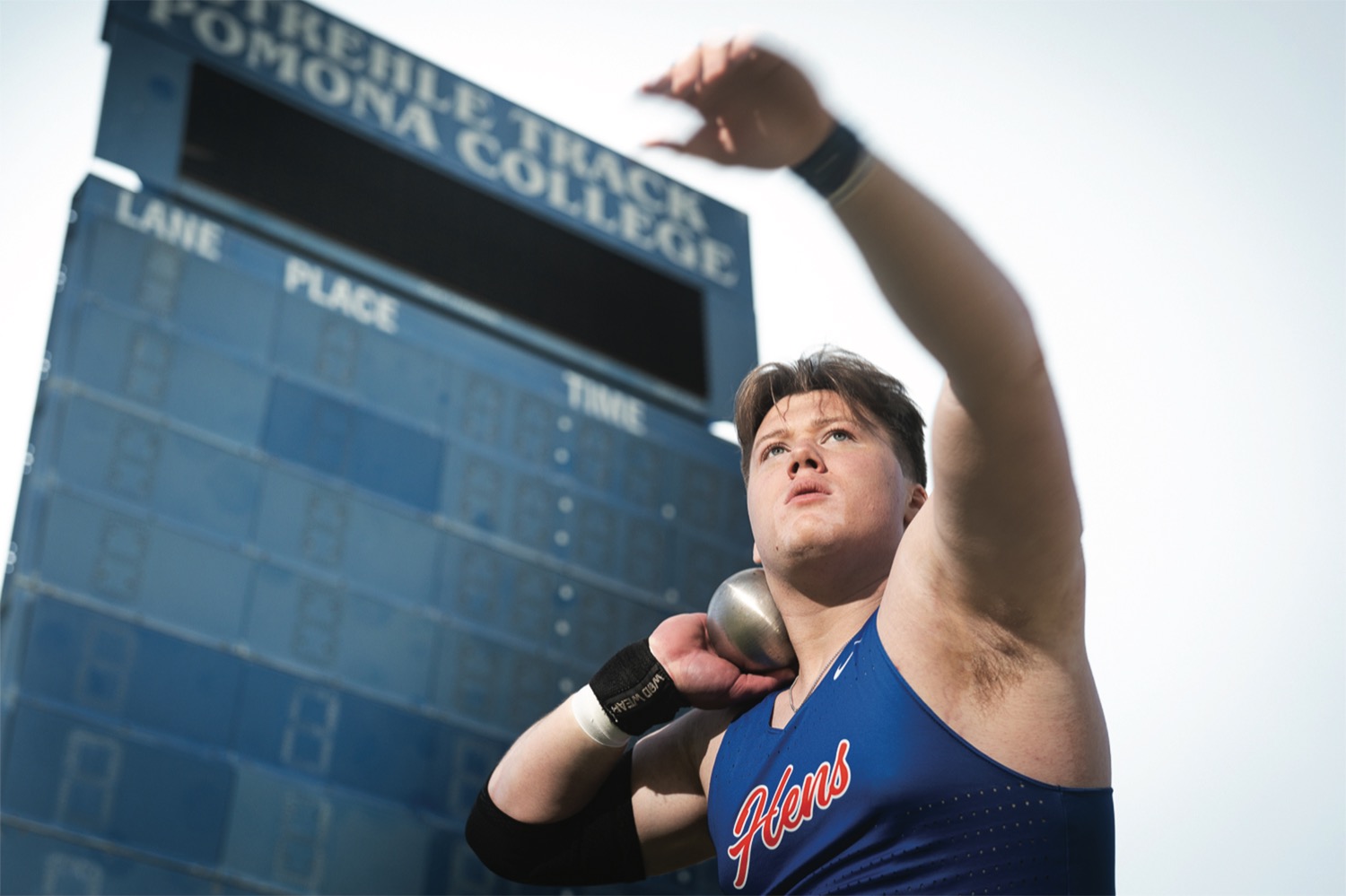
William Marquart ’26 is seeing success in shot, discus, javelin and hammer.

William Marquart ’26 seen throwing a track-and-field shot put

The symptoms started appearing early last fall, each more ominous than the last.

A burly lineman and thrower his first three years at Pomona, William Marquart ’26 lost 45 pounds between September and October. He’d convinced himself a stomach bug was to blame. Surely his muscle mass would return once he recovered.

But why was he having trouble concentrating? And why couldn’t he sleep? And why was his vision deteriorating? “This will all go by,” he thought.

Only when the symptoms became unbearable did Marquart go to the hospital, where he was admitted to the ICU immediately. A doctor told him it was a miracle he could still walk. “You should be in a coma right now.”

Marquart, a biology major from Woodway, Washington, was diagnosed with severe diabetic ketoacidosis, a life-threatening medical emergency requiring immediate and monitored care. Having dealt with autoimmune conditions his entire life—vitiligo, hypothyroidism—he’d gotten used to downplaying warning signs.

“But last semester everything finally caught up with me,” he says.

Once diagnosed and on the proper medication, Marquart returned to the weight room to regain his strength. Doctors recommended he limit himself to 1,300 calories a day, an impossible charge for a 280-pound athlete who needed north of 5,500 calories a day to throw competitively.

Fully healthy this past spring, Marquart was stronger than he was last May, when he became the first Sagehens thrower in 40 years to put the shot farther than 50 feet.

“A big part of throws is body awareness,” he says. “It’s making sure your body is at its peak, and you’re not just strong, but also athletic. You see plenty of strong people try and fail in these events because they don’t know how to use that strength properly.”

While throwing the shot, discus, javelin and hammer can get repetitive, Marquart used each practice in the spring to hone the quirks of his implement and avoid falling into any bad habits.

After becoming the first men’s thrower since 2017 to etch his name in the Sagehens record book last season, Marquart’s personal records in 2026 replaced program marks previously held for decades.

He reached 55’-10.5” in the shot put on March 20, a distance second only to Pomona-Pitzer Hall of Famer Ray Fogg ’75, whose record toss of 58’-10.5” in 1974 remains the oldest track and field mark in Sagehens history.

Elsewhere on the field, Marquart’s top distances in the javelin (187’-10”) and discus (151’-7”) this past spring ranked eighth and ninth all-time, respectively.

“Will brings deep thoughtfulness and explosive quickness to his throwing,” track and field coach Kirk Reynolds says. “To have success in all four throws is remarkable.”

When Marquart wasn’t refining his throwing technique, he was studying for the MCAT, which he plans to take during his upcoming gap year before applying for medical school.

At Pomona, he had the chance to do research “I would never have gotten access to until I was post-grad or a professional,” he says. “I’ve been doing research since my sophomore year, and I’m really glad I’ve been able to build connections and get out there so soon.”

“Pomona was exactly what I was looking for,” he adds. “Small school, phenomenal academics and pre-med program, amazing professors who have a personal investment in their students. This was the perfect fit.”