
Pomona’s academic offerings have increasingly crossed disciplines to address the critical issues of our time.
For a class that starts before many students have grabbed their morning coffee, discussion is lively at 8:10 a.m. on a Thursday in Carnegie 214. At the whiteboard, Fernando Lozano, Morris B. and Gladys S. Pendleton Professor of Economics, is encouraging the participants in his Economics and Film class to tie together the economic findings of an academic paper with the character arc in the Academy Award-winning film Moonlight.
“What is the relationship between toxic masculinity and economic outcomes?” Lozano asks. Before this session is over, discussion will have incorporated concepts from media studies and psychology as well as economics.
What happens Tuesday and Thursday mornings in Lozano’s class and hundreds of others across campus is a far cry from the earliest days of the College. When Pomona began instruction 138 years ago, undergrads in the new “College Department”—all three of them—could choose among Greek, Latin, mathematics, science, English, German, drawing and painting, piano, harmony and music theory. (This in the year 1888, that included a presidential election and a battle over tariffs. Sound familiar?)
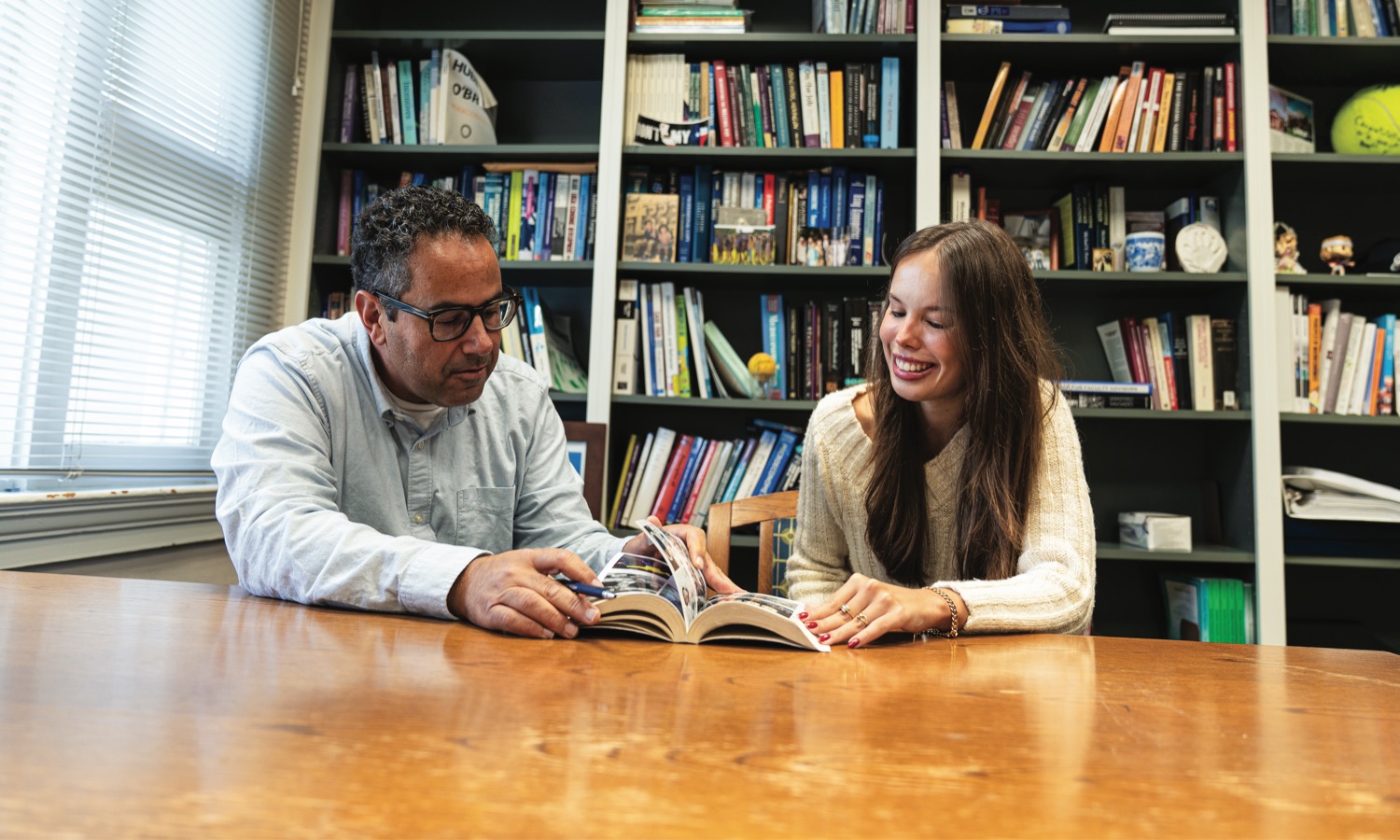
Professor of Economics Fernando Lozano with Alice Dantas ’26.
Today, Pomona’s academic offerings—more than 800 courses across 48 majors—reflect the College’s commitment, as articulated in its Strategic Vision, to address Grand Challenges—to ask big questions and solve big problems.
Those issues don’t fit into the neat, traditional subject-area silos common a century ago. So, over the years, majors have emerged that cross—even fuse—disciplines. A lot of the newer programs end in “Studies,” such as American Studies, Late Antique-Medieval Studies, Gender and Women’s Studies.
Others include the conjunction “and,” as in Science, Technology and Society.
The Art and Science of Optics
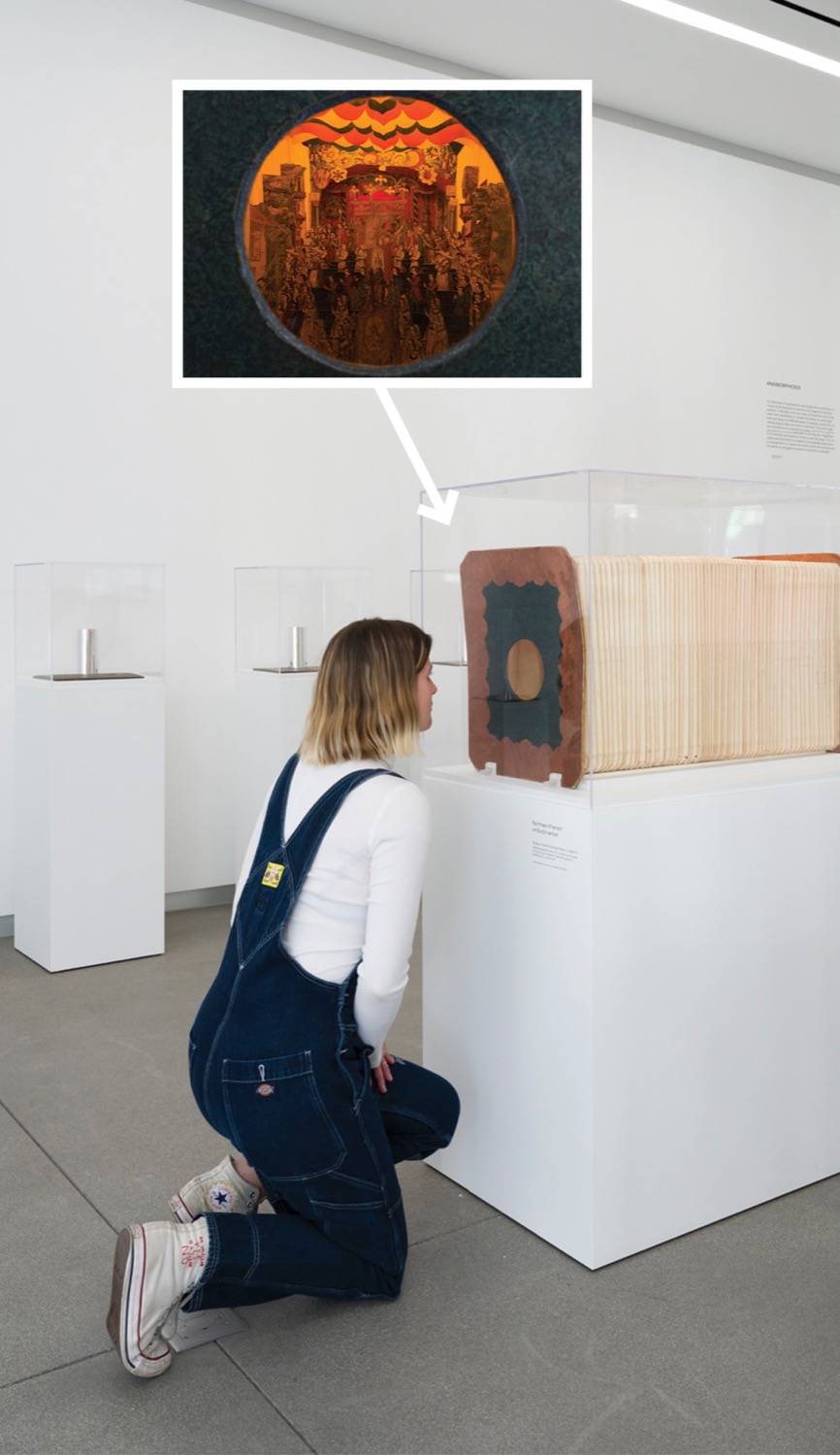
A visitor at the Benton Museum of Arts Captured Vision exhibit at Pomona College kneels to view a 19th-century Religious Festival Viewing Theatre.
Collaboration among three seemingly unrelated disciplines—physics, studio art and art history—not only resulted in a popular course: Physics 16: The Art and Science of Optics. It also led to a four-month exhibition at the Benton Museum of Art.
“Captured Vision—Optics in Early Modern European Art” ran from November 12, 2022, through March 26, 2023. It encompassed works from 1500–1800, a time when interdependence between art and science led to the discovery of new ways to represent the three-dimensional world in two dimensions.
“The class covered perspective and other areas of inquiry, as well as refinement of technologies of vision, such as the microscope and telescope,” says Victoria Sancho Lobis, Sarah Rempel and Herbert S. Rempel ’23 Director of the Benton Museum and associate professor of art history. “Most crucial was the evolving understanding of optics—how visual perception works in anatomical and theoretical terms. Through the development of mathematical perspective, artists contributed to the development of the science of optics.”
The exhibit included works by artists such as Albrecht Dürer and Paul Vredeman de Vries, perspective boxes, an early 16th-century panel painting—a gift from the Samuel Kress Foundation—and a camera obscura, a device that may have helped artists of the time to achieve near-photographic precision in their work.
Watch this video from the Benton Museum of Art about what it means to be a teaching museum:
To Be a Responsible Citizen
One of the “and” majors first appeared in the Pomona catalog in 1987 but has its roots at Oxford University a century ago. There, “students had been expected to read ‘the Greats,’” says Eleanor Brown ’75, James Irvine Professor of Economics. “But the Great War had brought great change, and people were thinking, ‘What do you really need to study to be responsible citizens and leaders in the modern world?’” Says Brown: “Their answer was philosophy, politics and economics, and this shift to PPE—‘the Greats without Greek’—made an Oxford education more accessible to women and to middle-class men who had not had an opportunity to learn ancient Greek.
“Philosophy, Politics and Economics brings together disciplines that have gone off in different directions but are worth tying back together,” Brown says. She adds that it is especially appealing for pre-law, graduating alumni who know how to “write, argue and keep up with economists.” PPE alumni include Conor Friedersdorf ’02, staff writer at The Atlantic.
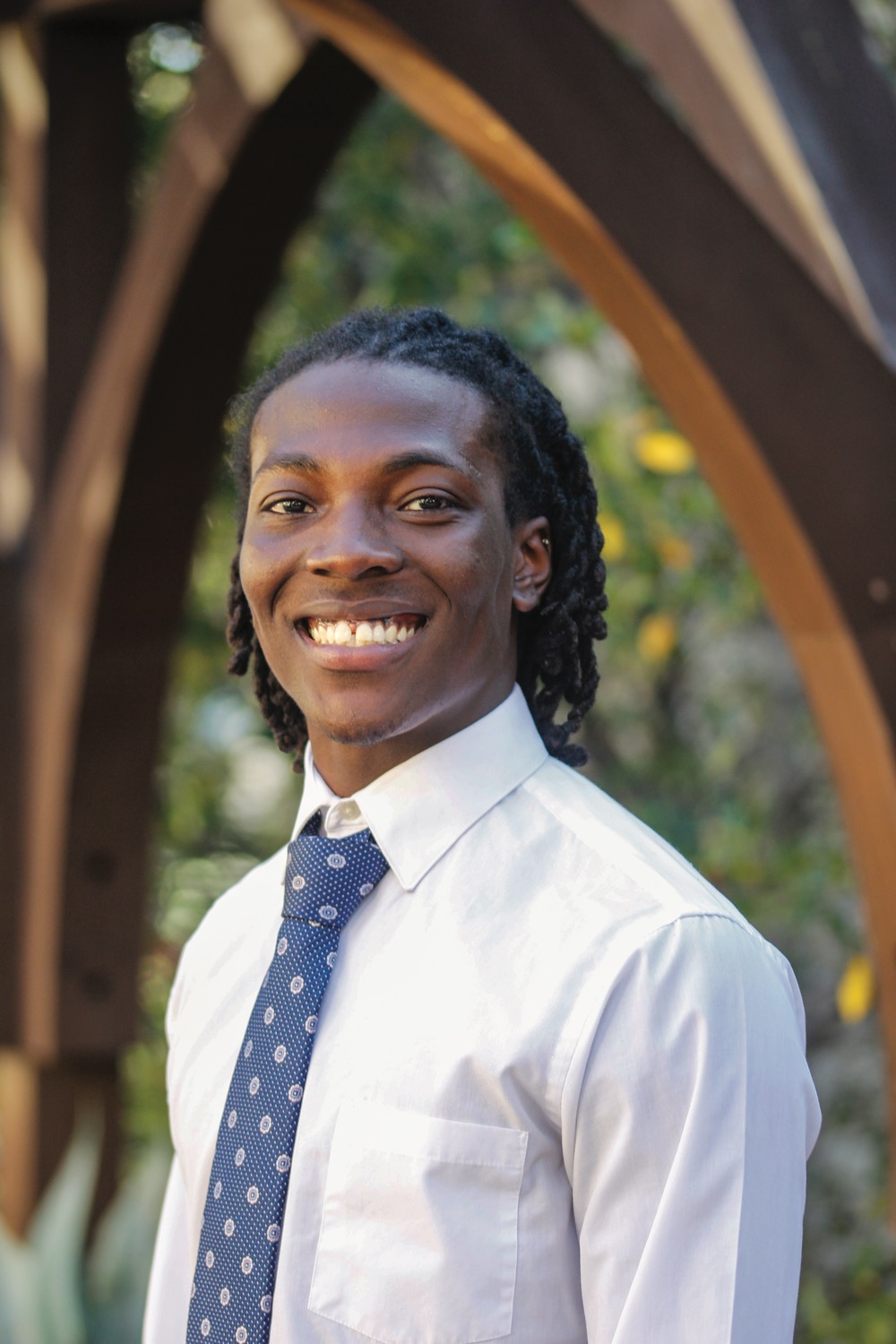
Chris Hussey ’26
Chris Hussey ’26 says that he used to buy into the idea that economics is quantitative, politics is institutional and philosophy is humanities oriented. As he’s progressed through the PPE major, though, he’s learned it’s never that simple. “Every major political thinker I know was also a philosopher, or every major economic writer was also a political thinker.”
The PPE major, Hussey says, “is a beautiful overview of the way three pillars of human thought interact with each other.” A course in philosophy of law showed him that he really enjoyed grappling with judicial and legislative questions. So, “why not pursue law school?” he concludes. “That’s definitely where I think I’m headed.”
An International Approach
By the time PPE was hitting its stride at Pomona, the International Relations major was already attracting students who aimed for careers in diplomacy, conflict resolution or international development. “IR started in the 1960s as a pretty conventional program mixing politics, history and economics with a strong U.S. foreign policy focus,” says Pierre Englebert, H. Russell Smith Professor of International Relations, professor of politics and current Oldenborg faculty fellow.
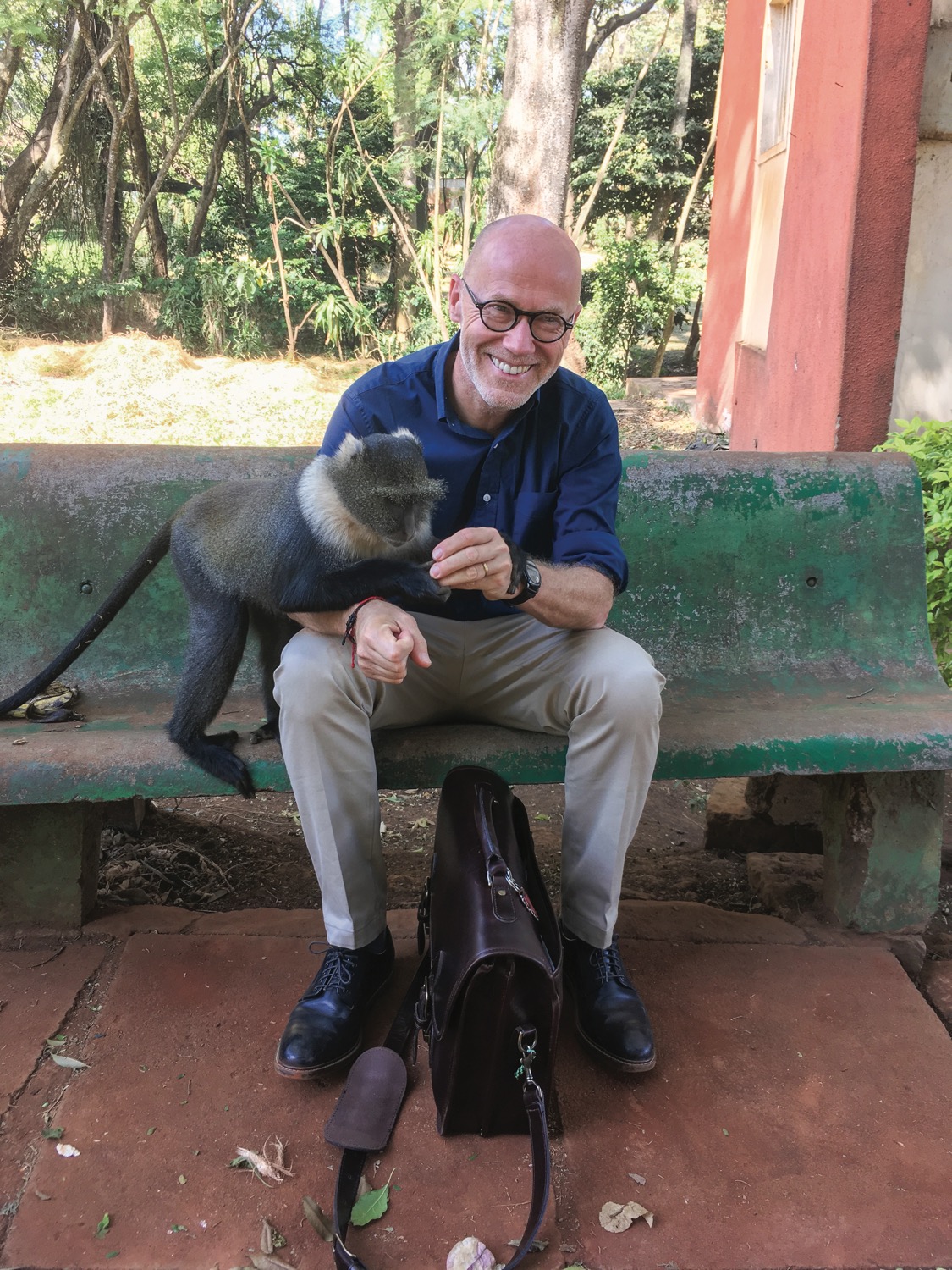
Pierre Englebert
Now Englebert, from a perspective covering 28 years of the department’s history, notes that the program has evolved to incorporate not only the original three disciplines, but sociology and anthropology as well, with requirements in both quantitative and qualitative methods. Students are also required to study abroad and gain proficiency in at least one language.
“IR majors are curious, open-minded, altruistic and usually join IR because they have a personal or family international profile. Or they want to work in development, conflict resolution, diplomacy or a related field,” says Englebert. Alumni have worked as foreign correspondents and in international development, law and even AI model training and content evaluation.
Adam Cox ’14 still keeps in touch with Englebert, whose IR classes helped him understand development and politics in
Africa. “At the heart of international relations is the notion of relative power,” he says. “As a European who studied in the United States and now lives in Africa, I continue to think a lot about the components of power, be it in the past, the present or the future.”
Eleven years after studying abroad in Senegal, Cox is an entrepreneur in the West African nation. With a partner, he’s already built and sold a million-dollar business and is now building a distribution company focused on agriculture chains across Francophone Africa.
“We need leaders—perhaps especially ones in the United States—who understand the world as a whole,” Cox says, something that is key to the study of international relations at Pomona. “Progress on global issues like climate change, human rights and inequality will only ever be possible through intelligent leadership with a keen understanding of international relations,” he says.
Multiple Perspectives
Chris Chow ’26,
Majors: Theatre and Economics
I came to Pomona knowing I wanted to study theatre. I’ve performed my whole life, through youth programs outside of school, public speaking competitions and theatre productions, and it’s always been something I loved.
Economics came later. I took Microeconomic Theory with Associate Professor Kyle Wilson and was immediately fascinated by the way he explained economic thinking. It completely changed how I thought about the world, how incentives shape behavior and how decisions are made.
Theatre and economics encourage very different ways of thinking, and having both has helped me approach problems from multiple perspectives. Theatre pushes me to think creatively and empathetically, while economics encourages analytical thinking about incentives, systems and decision-making. Combining them has made me a more flexible thinker.
Some people might think theatre wouldn’t help with a corporate career, but in reality, it has helped tremendously. Theatre teaches you how to communicate clearly, present yourself confidently and work closely with a team, all skills that translate directly into the professional world. It’s also been really special to be part of two different communities at Pomona.
Ultimately, I want to work in a space where theatre and business intersect. I care deeply about both worlds. After graduation, I’ll be working at AlphaSights [a company providing knowledge on demand to clients] in New York City, which will allow me to build strong business and strategy experience. Long term, I hope to end up somewhere that combines the creative world of theatre with the business side of the arts.
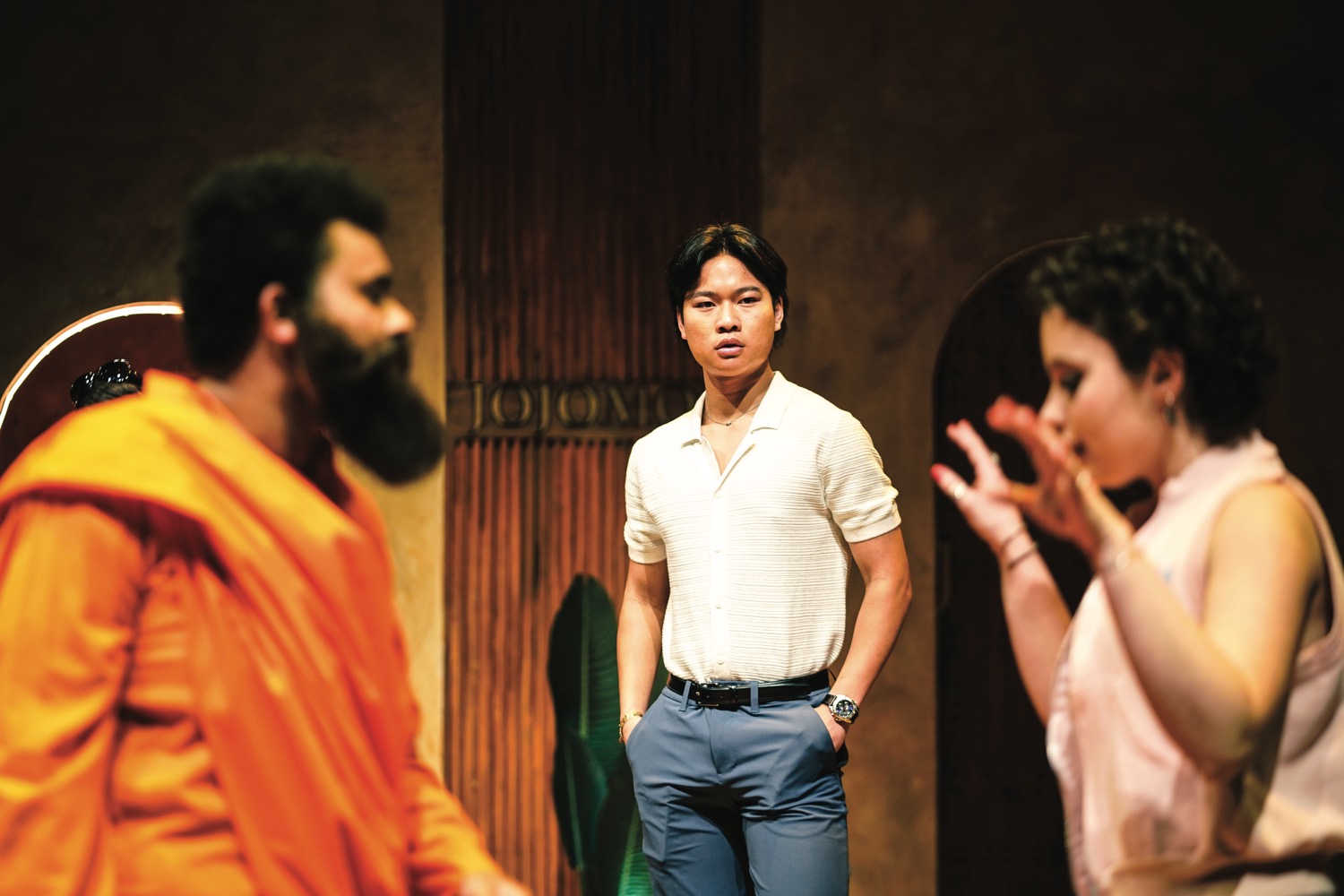
Chris Chow ’26 (center) in the Fall 2026 production of Yoga Play by Dipika Guha.
Policy-Focused
Cox majored in Public Policy Analysis (PPA), which, like PPE and IR, draws on multiple disciplines, but the students it attracts have as their main interest “changing the world for the better,” says Lozano, PPA coordinator. “They have a great ability to empathize and to work with other people to try to make somebody’s life better.”
The major, first offered at Pomona in 1980, offers 11 concentrations ranging from biology to sociology, and the senior seminar often brings together unusual pairings. For example, Lozano says, “I have a PPA-geology major who interacts with a PPA-psychology major. They learn from each other and cross-pollinate ideas.”

Camille Green ’26
When Camille Green ’26 came to Pomona, she expected to major in something quantitative, such as economics or math. A summer internship in (now former) Congressman Colin Allred’s office helped her discover an interest in politics and community oriented endeavors. “I found the PPA major, which allowed me to take a more policy-focused approach to economics and combine my quantitative skills with a richer academic experience in public policy,” she says.
She is also double majoring in French.
Green’s favorite course has been David Menefee-Libey’s Policy Implementation in which each student writes a case study of a California policy of their choice. “You really dig into what ‘policy analysis’ actually means in practice,” she says.
“What has guided my path so far is a desire to do work that gives back to my community and makes a meaningful social difference,” says Green. “I think that is what draws a lot of students to the PPA program.”
Building Sustainability
One of Pomona’s newer multidisciplinary majors began as a response to climate change concerns that could not be addressed by just one discipline. In 1996, interested faculty formed the Environmental Science/Studies Interest Group to explore possibilities for a new program. Participants included professors from anthropology, art and art history, biology, chemistry, economics, geology, mathematics, Russian and German studies, sociology and theatre.
The first course in what would become the Environmental Analysis (EA) major was offered in 1999, but launching a new program coherently, across so many disciplines, proved to be a challenge. The leadership of Richard Hazlett, now emeritus professor of environmental analysis and geology, along with funding from the Pauley Foundation, helped solidify the new program, offered with faculty drawn from across the 5Cs.
Char Miller, W.M. Keck Professor of Environmental Analysis and History, says that no single type of student is attracted to the program. It offers two tracks—Environmental Science or Environment and Society—and multiple course plans within them. One of the largest is Sustainability and the Built Environment “because students want to get their hands on problems and issues facing the world in planning, policy, architecture and design,” he says, noting that it came about because of student demand.
Aerienne Russell ’12 says she’s always been drawn to nature and being outdoors. Living in Claremont, “I started to get curious about why our built environment was designed the way it was,” she says. “I saw a lot of friction between the ‘nature world’ and the ‘human world’ and wanted to contribute to transforming that relationship to be more sustainable.”
Today, Russell is production manager of outreach and engagement at CicLAvia in Los Angeles, an organization that produces open street events, transforming streets into public parks for a day.
“Now more than ever we need dreamers to become leaders,” Russell says. The EA major “prepares students to be thought leaders and to imagine a better world to be possible.”
Technology’s Impact
Another multidisciplinary program, like EA, also extends across the 5Cs. Science, Technology and Society (STS) incorporates the lenses of history, philosophy and social science to explore the impact of science and technology on the world.
Adelina Grotenhuis ’28 came to Pomona conflicted about whether to major in biology or philosophy. Then she found the STS program and realized it would allow her to connect her interests in the humanities and STEM subjects.
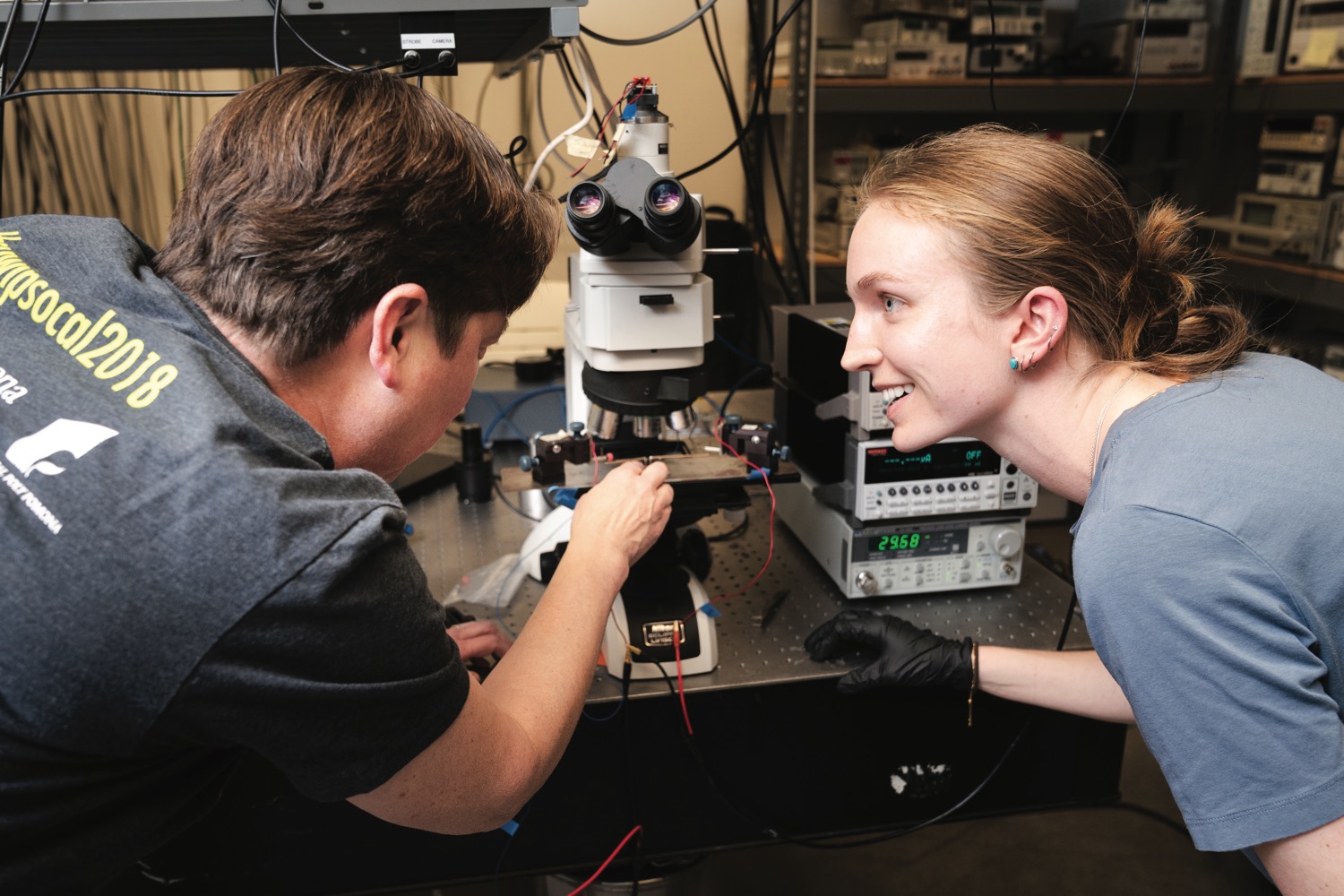
Physics lab at Pomona College
“What I learn in STS transforms the way I think about knowledge and leaves me constantly curious about our rapidly changing world,” says Grotenhuis. She is already incorporating it as a leader for the College’s chapter of The Luddite Club, which, she says, “inspires students to form healthy relationships with technology and creates a phone-free environment to be with others every week on Marston Quad.”
After graduating, Grotenhuis envisions an international career, perhaps in science education and communication and exploring technology’s impact on mental health.
Doubling Up
A growing number of students create their own multidisciplinary course of study by pursuing a double major. Since 2021, the number of graduates completing two majors has nearly doubled, representing 18 percent of the Class of 2025.
It’s not an easy path, and Pomona faculty recommend that students considering it work closely with their academic advisors. Chris Chow ’26 is double majoring in economics and theatre. “I knew I couldn’t just choose one major because I wanted to explore both at a deep level,” he says. “If there are two subjects you’re passionate about, it can be incredibly rewarding.”
Aditya Bhargava ’26 is one such double major. Originally from Beirut, Lebanon, with roots in India, the United Kingdom and Switzerland, he is majoring in international relations and economics.
“Growing up across so many different countries gave me an inherently international lens,” he says. “IR felt like that natural academic home for that background—a place to ground lived experience in theory.
“Regional dynamics, political history, institutional fragility—these are things IR handles in ways that pure economic modeling often can’t,” Bhargava continues. “The double major lets me hold both: the analytical rigor of economics and the contextual depth of IR.”
Bhargava aims for a career in international economic policymaking at an institution such as the World Bank or in consulting. “Both majors directly support that path,” he says. “Economics gives me the technical tool kit, while IR sharpens my understanding of the political and regional contexts in which policy actually operates.”
Both Sides of the Coin
Liam Bayer Jr. ’27
Majors: Computer Science and International Relations
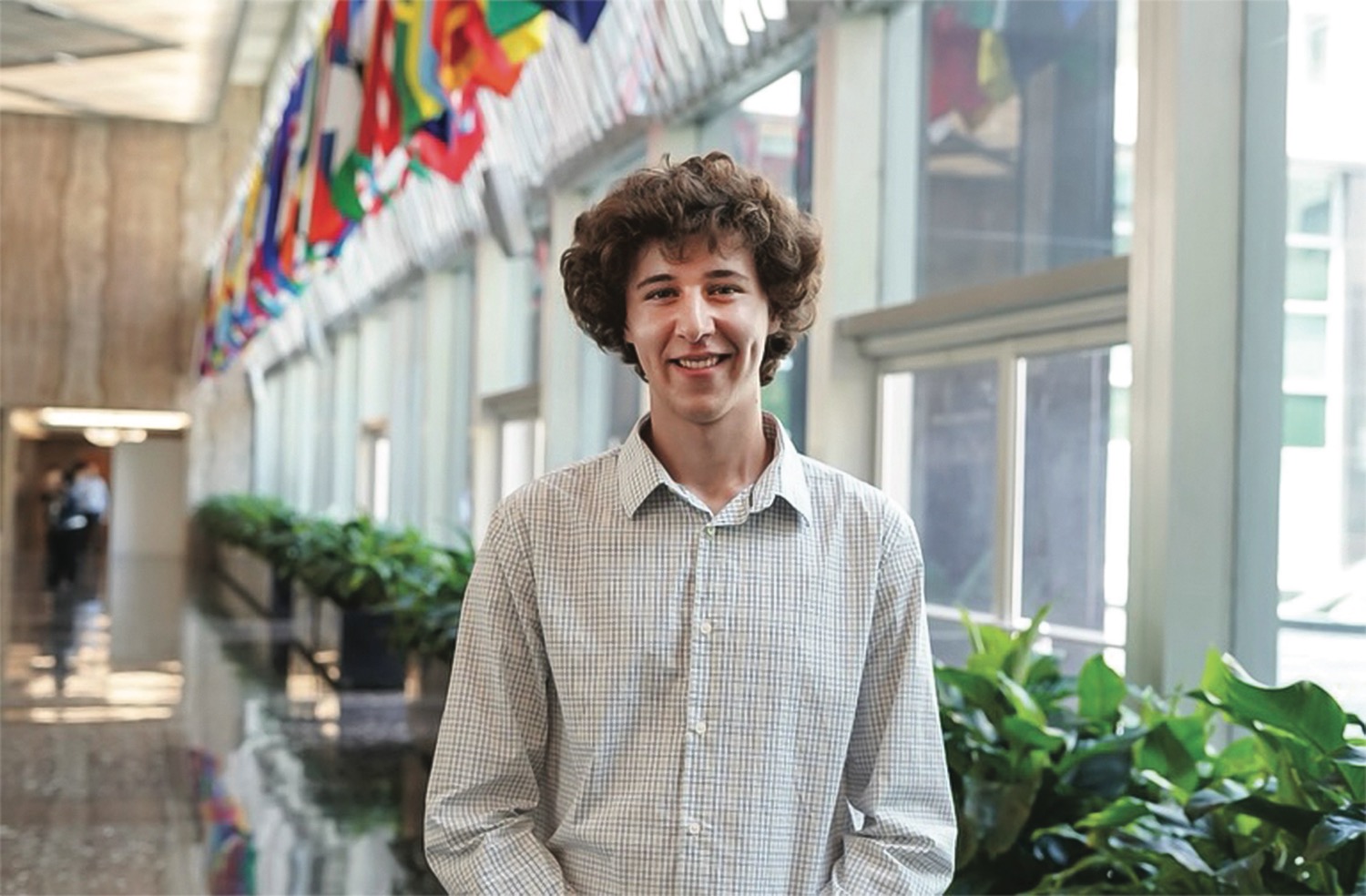
Liam Bayer Jr. ’27
Initially came into college with a broad interest in international relations, in analyzing political authority across the globe through the lenses of history, politics and economics. Then, in my first semester at Pomona, the Chinese language resident and department faculty welcomed me with open arms, and my ID1 professor got me hooked on screening foreign films out of Oldenborg’s underground International Theater. During my junior year I studied abroad in China, improving my Mandarin and becoming thoroughly acquainted with Chinese culture and society.
My peers encouraged me to take a swipe at computer science. The culmination was a summer research project in Associate Professor Eleanor Birrell’s Data Privacy & Security research lab. Since then, I have studied data privacy in the contexts of the European Union, China and India.
My two majors look at human relationships across different mechanisms we use to organize ourselves, be it actors like states or technologies like the World Wide Web. Living in a globalized world amid the information age, it’s hard not to see the connection between these fields. Thorough study in both disciplines gives me the tools to work in and understand both sides of the same coin.
In high school, I vaguely imagined a career in the U.S. Foreign Service. Ironically, it was through computer science, rather than international relations, that I made it in. At the end of my sophomore year at Pomona, I secured a Foreign Affairs Information Technology Fellowship. I will serve abroad as a diplomatic technology officer for the U.S. Department of State after graduation.
Alternate Lenses
Beyond multidisciplinary programs, professors are developing classes that fuse sometimes surprising pairs of disciplines that, when taught in tandem, exponentially expand student horizons.
Physics Professor Dwight Whitaker and Victoria Sancho Lobis, associate professor of art history and Sarah Rempel and Herbert S. Rempel ’23 Director of the Benton Museum, periodically teach The Art and Science of Optics. Typically, 40 or 50 students vie for the 12 available spots in the class.
Described as covering “historical and current understandings of the science of optics experienced through the prism of the visual arts,” the course examines ways that art and science are more closely intertwined than our modern minds might imagine.
Students read texts in art history. They do drawing exercises with a studio artist to understand how observation leads to pictorial representation. And they learn in the physics lab how lenses work and how images can be made using lenses.
In keeping with the Pomona mantra to try things out, the only prerequisite, says Lobis, is “demonstrated interest in learning more about the field of knowledge that you’re least comfortable with.”
The Humanities Studio brings together Pomona students and faculty to enrich interdisciplinary study of the humanities. It also builds connections between the humanities and the social and natural sciences through a fellowship program—which brings students, postdocs and faculty together in dialogue every Friday around an annual theme. It also sponsors a speaker series and professional development events such as workshops on writing op-eds and publishing with a scholarly press.
Kevin Dettmar, W.M. Keck Professor of English and founding director of the Humanities Studio, says that vocabularies in particular disciplines exist for a reason—efficiency of communication. Conversations in the Humanities Studio, he says, “help us to understand what a question looks like when approached from a different set of assumptions and methodologies.”
“It’s difficult work and the outcome is hard to predict,” Dettmar says. “But it’s pretty magical when it happens.”
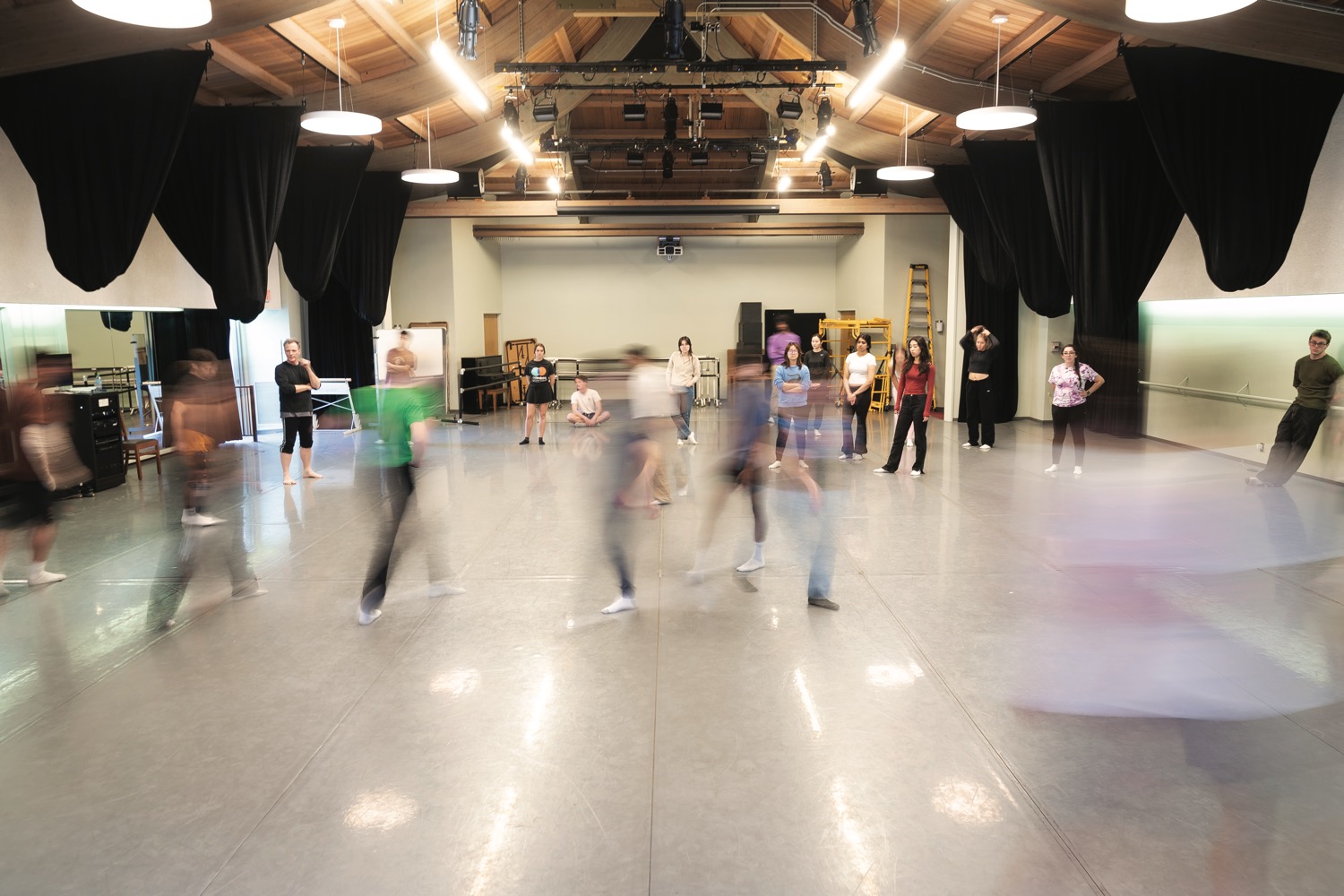
2025 introductory dance class held by John Pennington
Pomona has come a long way from its original nine disciplines. In its constantly evolving curriculum, new avenues for academic fusion continue to take shape.
One of the most significant new initiatives is about to take a tangible form. In a historic move that will significantly increase opportunities for cross-disciplinary learning, the College will soon begin construction of the new Center for Global Engagement (see story on page 12). It will be a hub for addressing the Grand Challenges facing our world through many lenses, as the College envisions.
One thing will remain certain in the years ahead: Pomona’s academic lineup will hardly resemble its 1888 form.
But their passion for impacting the world will continue to drive our students, and inspire their faculty mentors, as they prepare for the world that they will soon enter and that their generation will ultimately lead.