Nearly a century ago, a handful of Pomona College students set sail for Asia, launching one of the nation’s earliest study abroad programs. Today, Pomona is again pioneering a new frontier in global education.
In March, the Board of Trustees formally approved construction of the Center for Global Engagement (CGE), a liberal arts laboratory and a dedicated home for students, faculty and staff to collaborate with partners on complex societal issues of local and global consequence.
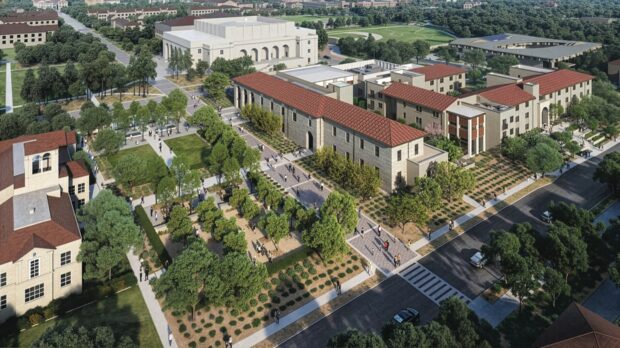
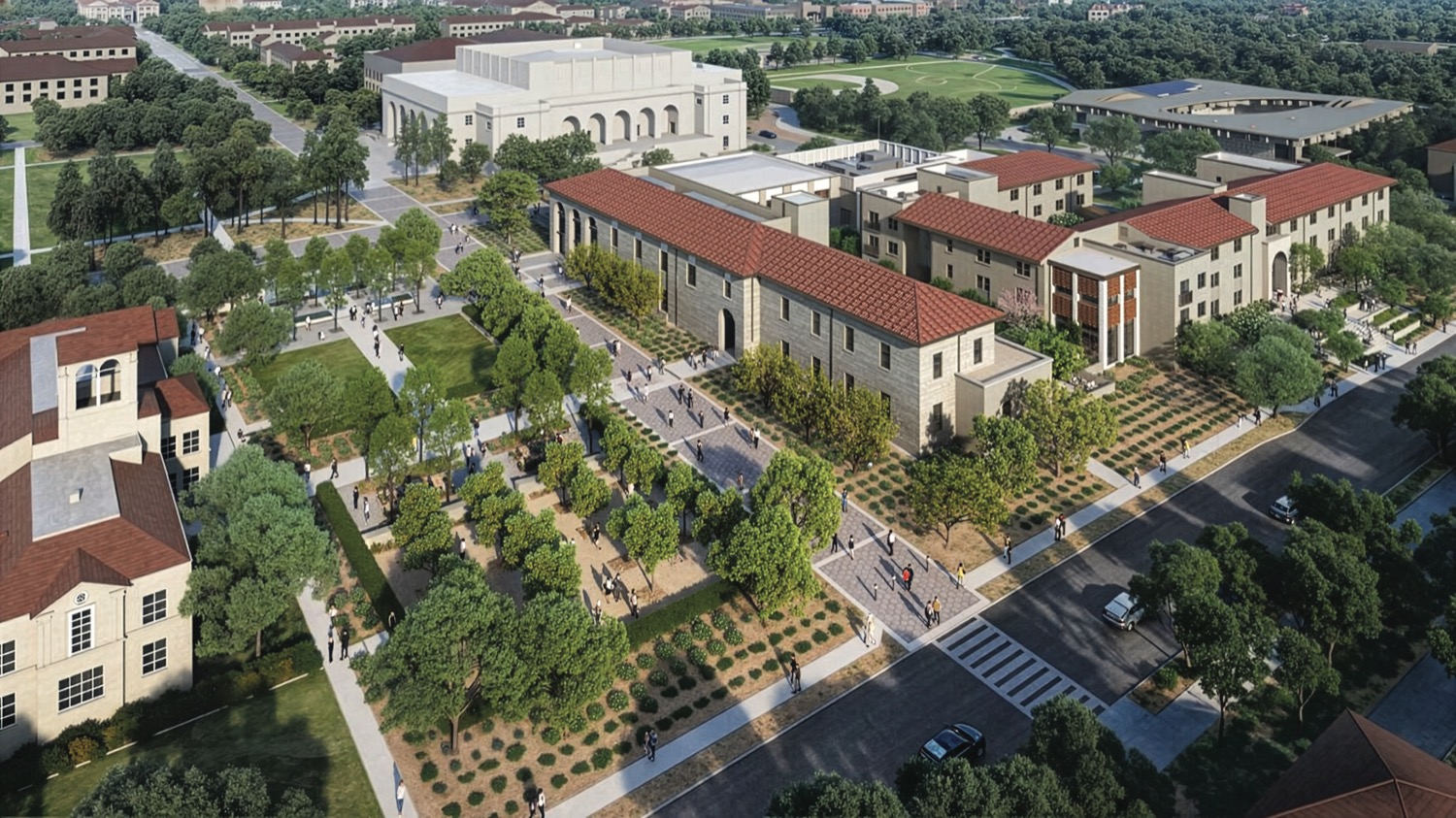
Architectural rendering of the Center for Global Engagement
The College’s most ambitious construction to date, the $125 million center will house 200 students and nine visiting scholars in immersive living-learning communities. It will also include academic, meeting and conference spaces alongside a forum dining hall and event space, which will host campus- and community-wide events.
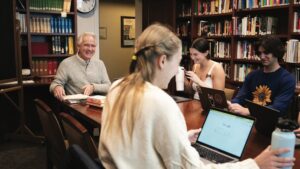 “The Center for Global Engagement is not just a project. It is key to Pomona’s path forward—our opportunity to imagine what a 21st-century liberal arts college can be, and to build the structures that make that possible,” Pomona College President G. Gabrielle Starr says.
The College’s leadership in global education has long been part of its identity, from its early study abroad programs in China and Japan in the 1920s to the opening of the Oldenborg Center for Modern Languages and International Relations in 1966.
In spring 2020, the College’s Board of Trustees and faculty leadership reaffirmed this commitment through a new Strategic Vision focused on investing in people and tackling the defining issues of our time.
Today, that vision is reflected in the makeup and experiences of Pomona’s community, where 14 percent of students are international, hailing from 65 countries outside of the U.S., and 20 percent of faculty have earned an undergraduate or graduate degree internationally. Currently, half of all Sagehen students study abroad—five times the national average—and the College intends to make these opportunities available to even more students in
the coming years.
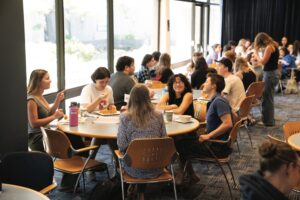
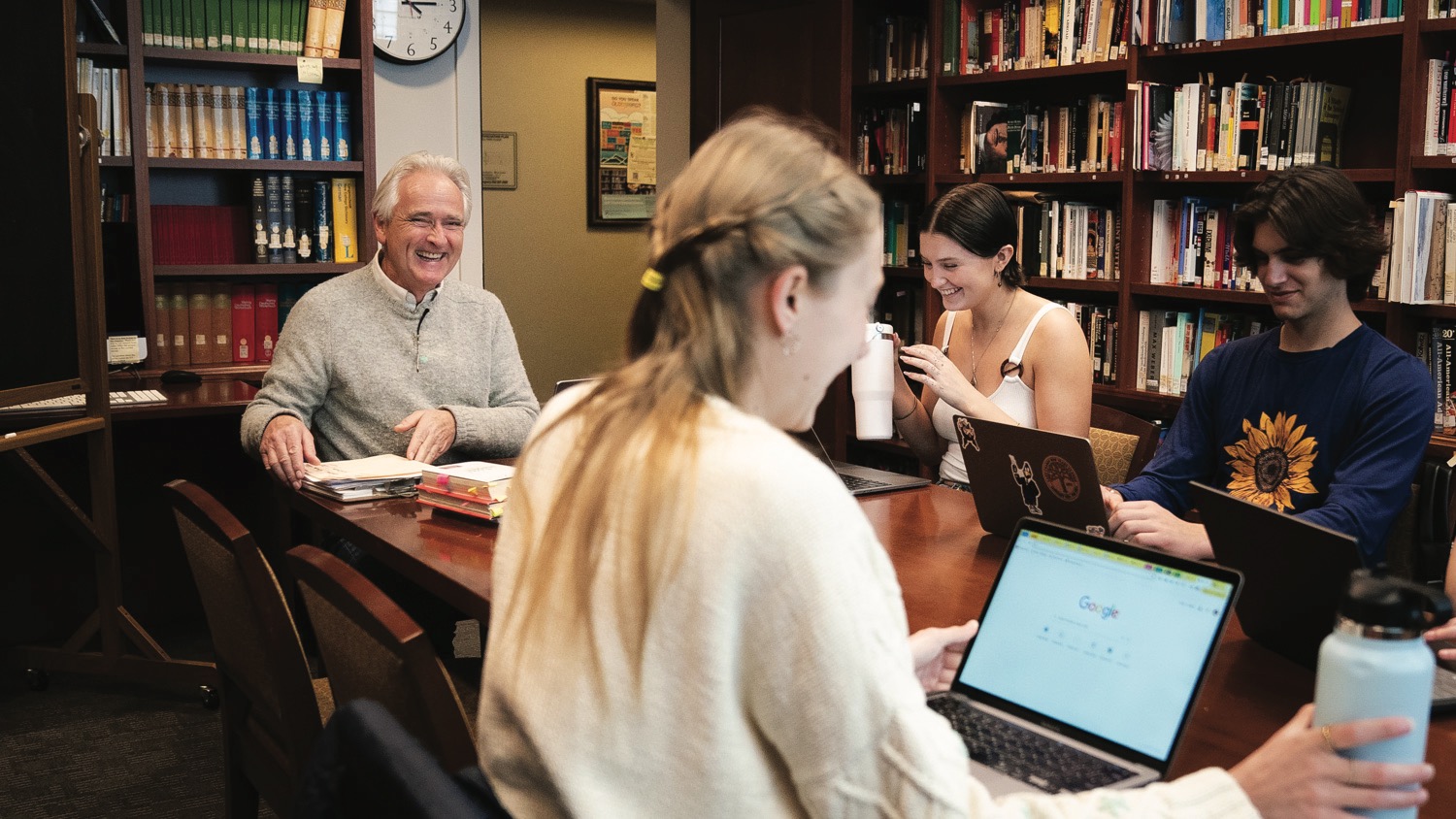
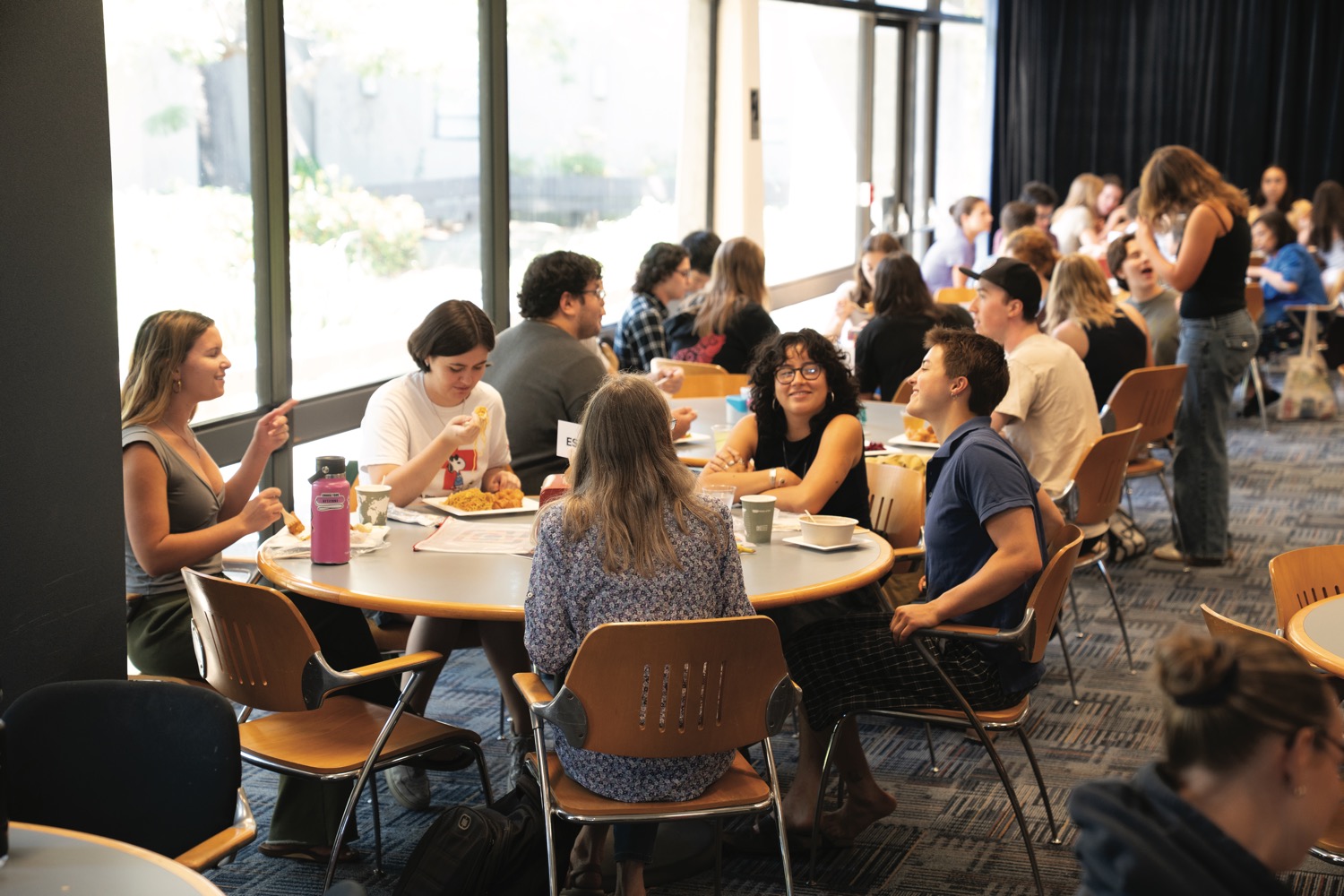
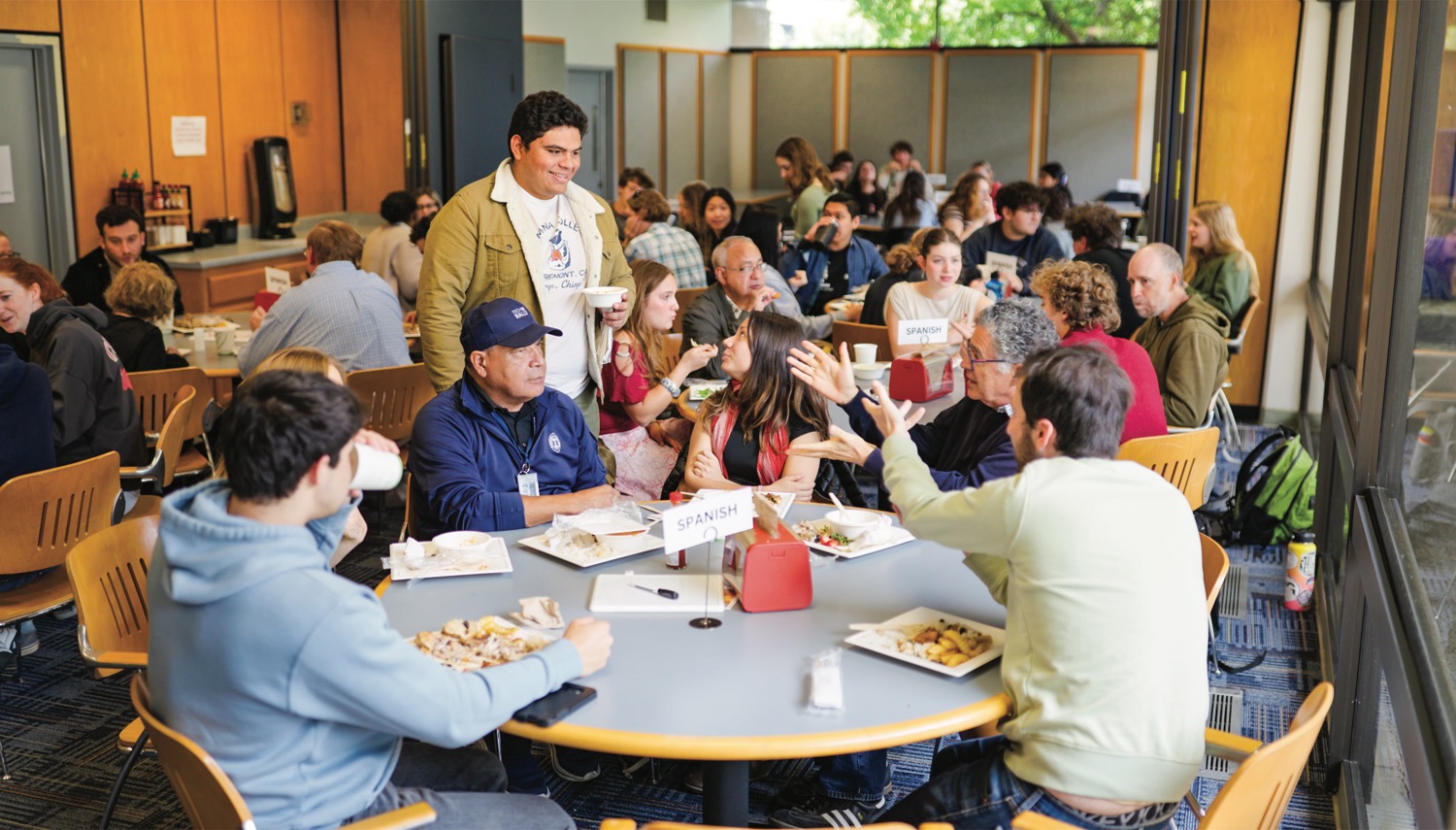
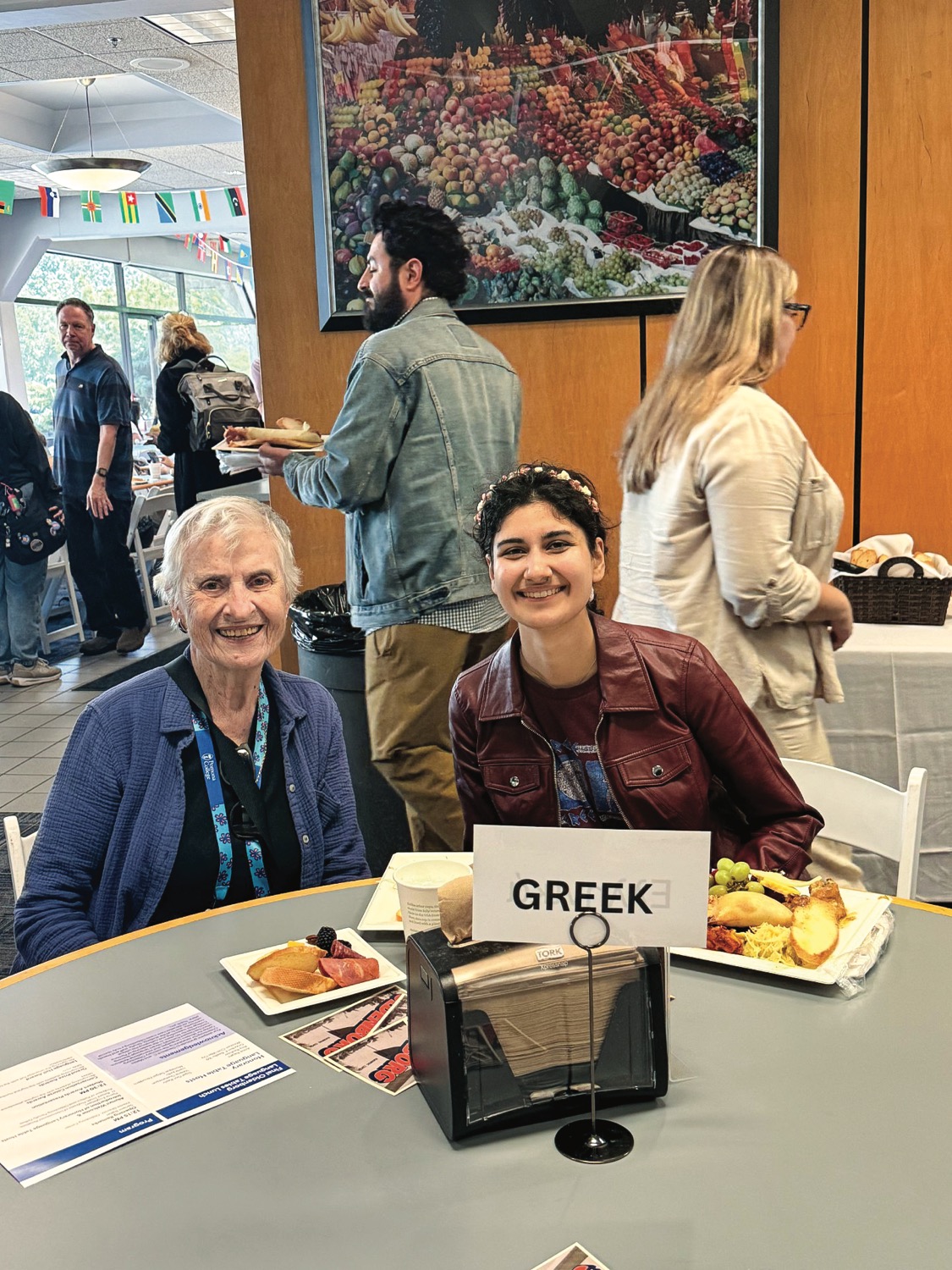
April 2026 Language Tables in the Oldernborg Center
The CGE will be powered by new and expanded initiatives designed to prepare students to lead across borders and disciplines. Students, faculty and local and international partners will have opportunities to collaborate through hands-on projects that address urgent societal challenges. Programming will include interactive seminars that bring leading experts into conversation with students and faculty on pressing issues that require interdisciplinary thinking.
The center will also serve as a hub and home for programs that expand students’ horizons. In addition to traditional semester-long study away programs, Pomona has begun offering Global Gateways programs— shorter term, faculty-led study away courses tied directly to the curriculum.
“The phrase ‘global engagement’ is deliberate,” says Kara Godwin, assistant vice president and chief global officer. “It signals a move away from thinking that is bound by geography or academic major to focus on the problems we want to solve and the skills we want to develop.”
The Board’s approval of the CGE follows the successful effort to raise commitments totaling $50 million toward the full cost of the building—a threshold the Board established in 2022.
“Philanthropy has always driven bold ideas at Pomona—and the success of the Center for Global Engagement is no exception,” says Maria Watson, vice president for advancement. “Visionary partnerships with alumni, families and friends have made this a reality. I would like to extend my heartfelt thanks to the exceptionally generous donors who have supported this project.”
To learn more about the Center for Global Engagement and its role in advancing Pomona’s global initiatives, visit the CGE website.
A Global Scholar’s Journey
Let’s explore the student experience of the CGE through the eyes of a Sagehen—we’ll call her Maya.
First Year
Maya attends a CGE seminar led by a visiting global health scholar, where discussions about aging populations motivate her to enroll in a sociology course on public health that includes real-time collaboration with peers at a German university and policy analysts in Washington, D.C.
Sophomore Year
Looking for opportunities to study public health challenges in different parts of the world, Maya joins a Global Gateways study away program in Nepal, shadowing health care practitioners and interviewing centenarians about their daily lives and traditional practices.
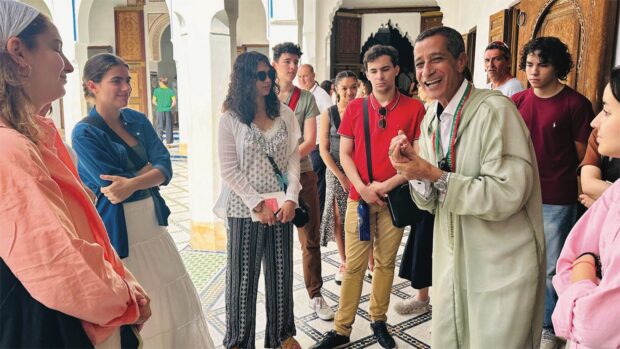
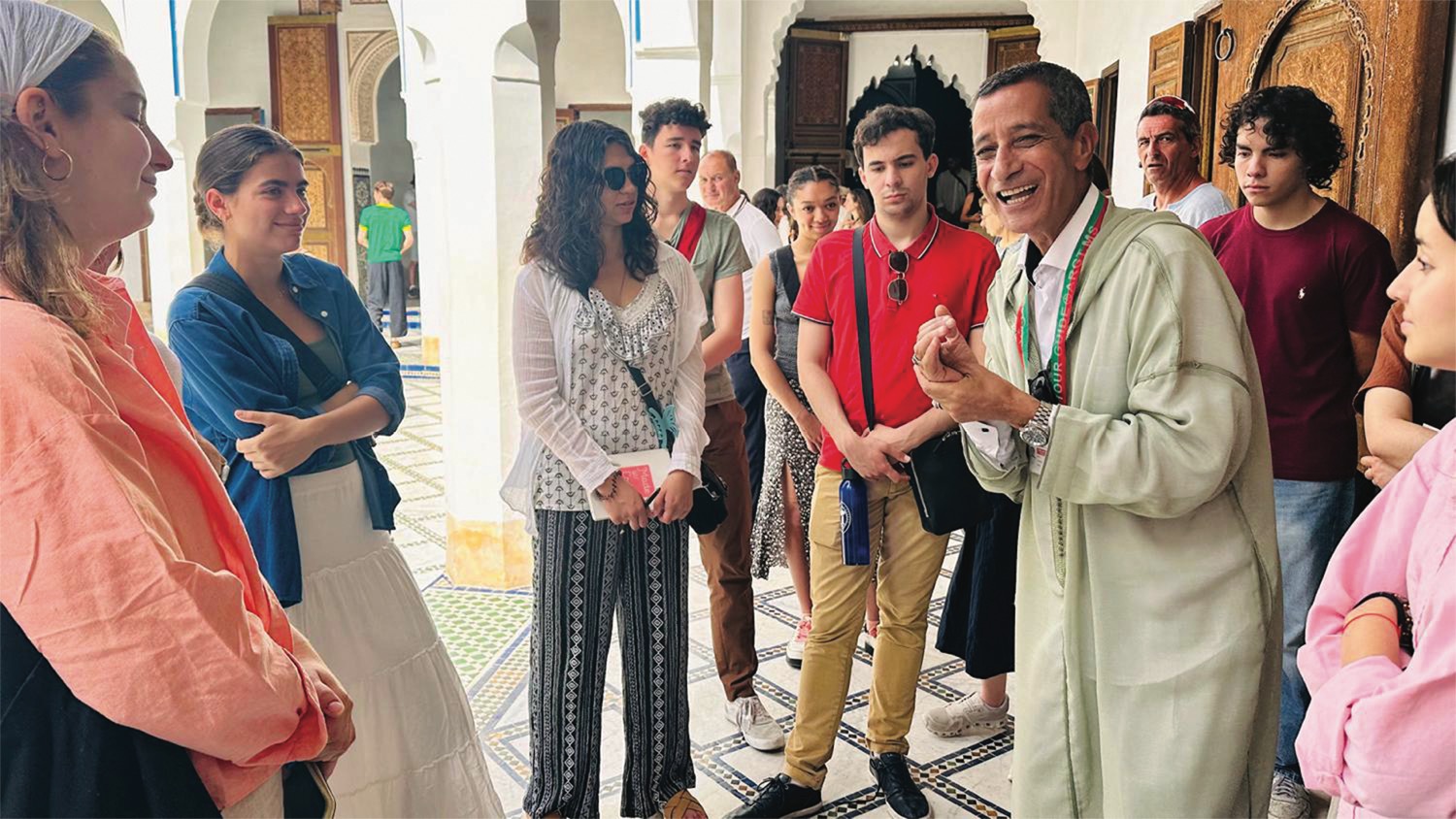
Global Gateways students in Morocco
Back on campus, Maya declares a major in sociology and begins joining the advanced Spanish discussion table in the CGE, led by a visiting language resident from Mexico, to build the language skills she needs to study health care systems in Latin America.
Junior Year
Maya joins an interdisciplinary research team housed in the CGE, and together they examine barriers to care for Southern California Latino communities and produce a report that becomes the foundation of her senior thesis. She presents her work in both Spanish and English to peers, faculty, local partners and community members.
Final Year
Through conversations with alumni mentors and global partners, Maya learns to put language to her interests in aging, chronic disease and health equity in Spanish-speaking communities and earns a spot in a top public health graduate program.
25th Reunion
Maya returns to campus as a visiting scholar housed in the CGE. Now an international expert in chronic disease intervention, she is eager to inspire the next generation of Sagehens, sharing her knowledge, experiences and commitment to lifelong learning.
“Graduates today will encounter difference and dissonance everywhere: in their communities, in their professions and in their lives. Our mission is to make sure they are ready—not just to succeed, but to lead and thrive,” says Kara Godwin, assistant vice president and chief global officer.