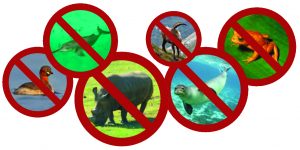
 We are in the middle of a mass extinction event, says Professor of Biology Nina Karnovsky, and, this time, it’s our fault.
What’s Next For:
Revolutions?
Syria?
Mexico?
Japan?
The United States?
Earthquake Safety?
Climate Action?
California Water?
Climate Science?
Solar Energy?
California Fruit Farming?
Technology Investing?
Nanoscience?
Digital Storage?
Artificial Intelligence?
Cyber-Threats?
Social Media?
Space Exploration?
Science Museums?
The Sagehen?
Biodiversity?
The Blind?
Big Data?
Mental Illness?
Health Care Apps?
Maternity Care?
Etiquette?
Ballroom Dance?
Thrill Seekers?
Outdoor Recreation?
Funerals?
Writers?
Movies?
Manga?
Alt Rock?
Women in Mathematics?
“It’s called the Anthropocene Era because it’s being caused by humans,” says Karnovsky, who specializes in the study of seabirds. “The warming of our planet, the destruction of habitat, pollution and other contaminants are causing widespread extinctions. It is really grim. I don’t think I would be able to cope if I didn’t try every day to do something to ameliorate this overwhelming thing that’s happening around us.”
Paying attention is one way to make a difference, says Karnovsky, who assigns her students to keep journals and record their observations.
“It’s extremely important to be a great naturalist and to keep track of what you’re seeing around you, and to notice and document that,” she says. “If you aren’t really noticing the change in the species, then you won’t notice when they’re gone.”
In fact, many species that we didn’t know about are already lost, says Karnovsky. It’s not just about climate change, but habitat destruction, harvesting, oil spills and other things that are causing a “vortex of extinction.” And when a population gets impacted and can’t recover, that affects other species, including humans.
“It’s not esoteric. It’s a social justice issue,” says Karnovsky. “There isn’t enough food to eat because the ice has changed; the marine mammals aren’t coming into the fjords where they used to come and people used to hunt them. So for these communities, this is life or death.”
Compounding the problems in identifying and studying endangered species are cuts to research made by the current administration, making it harder for researchers to keep up sustained studies, where they return to the same locations to test for changes that show a species has become more vulnerable.
For Karnovsky, the warnings are clear and call for some big decisions about what direction we’re going. “We need to tell our leaders, and it has to be a multi-pronged approach.” She says. “We have to be active on political fronts, but also in our daily lives.’
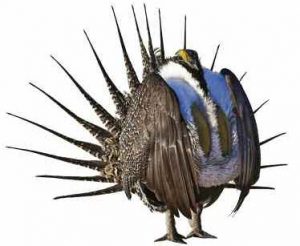 Pomona College’s mascot, the sagehen—the sage grouse in the real world—needs a “lek” up.
 Science museums are not just science lessons for kids any more.
 As we near the 50th anniversary of the first moonwalk, Colleen Hartman ’77 believes the next chapter in human space exploration is not far away. “When I talk to high-school and younger groups, I always tell them that I’ll be alive when the first human puts her foot down on Mars, and they always laugh,” she says.
 When he’s traveling, Eric Oldrin ‘95 likes to make his kids laugh by connecting with them on Facebook Messenger with bunny ears and a cute little bunny mask on his nose. Of course, Facebook’s head of emerging platforms doesn’t really put on a bunny mask—it all happens in cyberspace, using augmented reality (AR).
 When Professor of Media Studies Mark Andrejevic started writing about what he calls “the surveillance economy” back in 2001, “I was considered to be a very angry, cranky, dystopian naysayer,” he recalls. “But recently—and especially in this past year—it’s become a commonplace that we live in a surveillance society in which our information is leveraged for profit. And so, it’s a weird feeling of vindication and, also, helplessness.”
 Imagine a future in which robots screen job candidates, universities introduce artificially intelligent tutors into classrooms and news services use a combination of social media and artificial intelligence (AI) to roll out breaking news.
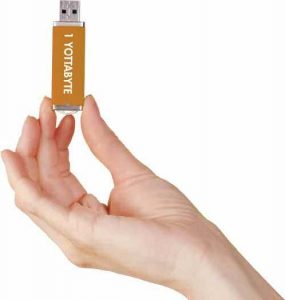 At the dawn of the digital age, storage was measured in kilobytes. Over the years, we’ve gotten used to megabytes, gigabytes and terabytes. But have you heard of petabytes, exabytes, zettabytes and yottabytes?
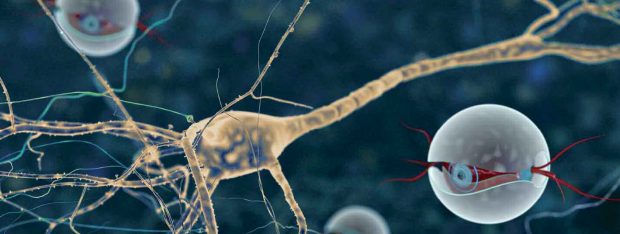 Two words: Killer nanobots.
 Artificial Intelligence? Think again.