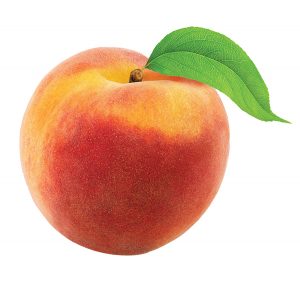
 The weathered sign on the old fruit stand at what remains of the last orange grove in Rialto, Calif., reads “Adams Acres” and “Since 1907.” Owner John Adams ’66, a third-generation fruit farmer with a passion for the perfect sweetness of a peach, waves his hand at a plum tree that is in full leaf but bears no fruit.
What’s Next For:
Revolutions?
Syria?
Mexico?
Japan?
The United States?
Earthquake Safety?
Climate Action?
California Water?
Climate Science?
Solar Energy?
California Fruit Farming?
Technology Investing?
Nanoscience?
Digital Storage?
Artificial Intelligence?
Cyber-Threats?
Social Media?
Space Exploration?
Science Museums?
The Sagehen?
Biodiversity?
The Blind?
Big Data?
Mental Illness?
Health Care Apps?
Maternity Care?
Etiquette?
Ballroom Dance?
Thrill Seekers?
Outdoor Recreation?
Funerals?
Writers?
Movies?
Manga?
Alt Rock?
Women in Mathematics?
“There are so many people who come and say, ‘I can’t understand it. My apricot tree is not producing,’ or ‘My Santa Rosa plum is not producing and they were always so good.’ They wonder if there’s a disease or something,” Adams says. “I say, ‘No, it’s global warming.’”
Adams is not merely nostalgic for the days when orchards blanketed the area. He has a Ph.D. in soil science from UC Riverside and a scholarly bent. He steps into a small house built by his grandfather to email an article from the journal Agronomy citing 89 reports and studies on climate change and its potentially devastating implications for California agriculture.
Among them: Before the end of the 21st century, 90 percent of the state’s great Central Valley could be unsuitable for growing apricots, nectarines, peaches, plums and walnuts.
It is not just that the weather is getting hotter, but that it no longer gets cold enough. Adams’ focus is on chill hours, the number of seasonal winter hours below 45 degrees Fahrenheit.
“That is like a clock that tells the deciduous fruit tree it’s time to start blooming, to put out your leaves and produce fruit,” he says. “So many of the old favorites, we’re not getting enough chill hours most years to have a decent crop, or to have any crop.”
Some varieties of apricot and plum require 700 or more chill hours, though the Santa Rosa plum needs only about 300. At UC Riverside, the most recent seasonal report recorded a mere 191, and the five-year average is 217.
The average in the first decade of the century was over 300. Adams has watched the changes over more than 50 years. The prized Rio Oso Gem peach of his youth—a variety that requires 800 chill hours—is merely a memory.
“The only things that we raised in the old days that we still can are things like figs and pomegranates that need very low chill hours,” he says.
Farmers can try switching to varieties that require fewer chill hours. They can also shift operations to higher, cooler altitudes. Adams is farming about 30 leased acres in Cherry Valley, and continues to farm the remaining two acres of the 20 his grandfather planted. The family sold 10 acres in the 1970s.
“Just now sold 7½ out of 9 ½ acres for $2 million,” Adams says. “I had to sell it, because I went broke maintaining the groves.”
Next door on that plot, a new crop rises under the California sun.
“CrestWood Communities. Now Selling! Upper $300,000s.”
The development’s name is bittersweet: Adams Grove.
 When we think about the future of solar energy, we usually think about new generations of solar cells that are more efficient or more affordable or longer-lasting—or some happy combination of the three. Lots of scientists and engineers are at work on that side of the equation, including Professor of Physics David Tanenbaum, whose current research involves the development of perovskite and organic polymer-based solar cells that should be cheaper to produce than the silicon variety.
 The study of our changing climate has a newcomer: the social psychology of climate change. Professor of Psychology Adam Pearson is helping lead the way with the growth of a new branch he and his collaborators have coined “social climate science.”
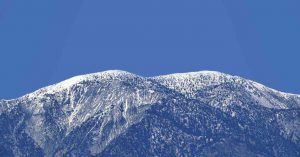 What’s a California winter with no snow-covered peaks? How will we even know it’s December?
 Will the United States meet its emissions reduction goals as outlined in the Paris Agreement? Unlikely, says recent grad Tom Erb ’18. Without a strong, federal price on carbon—a long shot under the current administration—the U.S. will surely fail.
 Someday—probably in some crowded city in a developing country—an earthquake will come along that causes a million casualties, warns seismologist and President of GeoHazards International Brian Tucker ’67.
 Susan McWilliams doesn’t mince words when it comes to predicting the future of the American Experiment.
 Japan may be the economic canary in the coal mine, Matt Sanders ’00 believes. And at the same time, it may already be transforming itself into the economy of tomorrow.
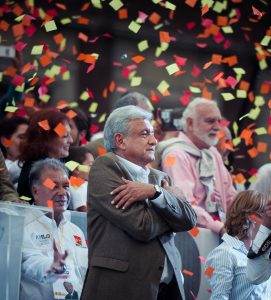 With the July 1 election of Andres Manuel Lopez Obrador (widely known by his initials, AMLO) as president, Mexico stands at a historic turning point, one that leaves Professor of Latin American Studies Miguel Tinker Salas cautiously optimistic about the prospect for real change.
 Predicting the future in a conflict as multi-faceted as the Syrian Civil War is daunting, and Politics Professor Mietek Boduszynski says his thoughts on the matter have shifted several times, including last May, when the United States pulled out of the Iran nuclear deal.