
Blog Articles

Heart to Heart

The feeling Elisa (Mawer) Louizos ’96 noticed in her chest was odd but not entirely unfamiliar. It wasn’t quite pain—more a tightness, a bit like heartburn but not as sharp. “Bummer,” she thought to herself as she started the car and headed out with her ninth-grade son to pick up his books for virtual school. “Maybe I’m getting a flu kinda thing.” And maybe, she thought, it will just go away.

On the way home, though, Louizos had to pull over to the side of the road, violently ill. Composing herself, she made it into the house, stretched out on the sofa and tried to eat some of the ramen noodles her son brought her. The nausea passed, but the tightness in her chest remained, along with lightheadedness and a dull ache mid-back. She fell into a fitful sleep.

“When I woke up in the morning,” Louizos recalls, “I didn’t know what it was, but I had the sense that ‘something’s a bit off.’” Her doctor’s office told her to go to a local emergency room, where she was sure she’d be “wasting people’s time” and that “it was going to be a pain in the butt,” all the while surrounded by people with COVID-19.

Medical personnel who attended to Louizos ran some tests and blood work, then turned their attention to other patients. “Everything was coming back negative, negative, negative,” she remembers. “And then the final test was for a cardiac enzyme, troponin.” In an instant, Louizos’ life changed. “The doctor looked at me and said, ‘Well, it looks like you’ve had a heart attack. Where is your husband? I need to talk to him.’”
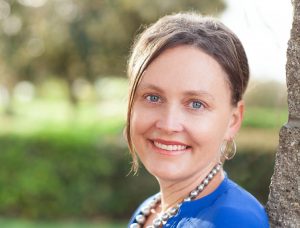
Elisa (Mawer) Louizos ’96

A second surprise lay ahead. Louizos—a therapist who was just 46, healthy, and with no family history of heart disease—had not experienced the typical heart attack caused by plaque in the arteries. Rather, she had survived spontaneous coronary artery dissection—SCAD—a tear in a cardiac blood vessel that disrupts blood flow to the heart. The condition was viewed as so uncommon that it was considered too rare to get research funding, according to Katherine K. Leon, who founded the nonprofit SCAD Alliance in 2013 to change that. Leon herself experienced a SCAD in 2003. Through grassroots fundraising, the organization supports research and the iSCAD Registry, the only such multicenter SCAD registry in the country.

Cardiologist Sahar Naderi, director of Women’s Heart Health at Kaiser Permanente San Francisco, is one of a small but growing number of SCAD specialists. In her practice she sees two to three SCAD patients a week, and she is a part of Louizos’ treatment team. Nearly all of her SCAD patients—98%—are women, mostly in their late 40s to early 50s. Naderi says those studying the condition believe it may be the leading cause of heart attacks in women under 50, as well as during pregnancy.

“We still don’t really understand the condition,” Naderi says. “There seems to be some perfect storm of hormonal changes that happen toward menopause that perhaps triggers, or at least is associated with, these events. We also know that mental and physical stressors long-term seem to play a role.”
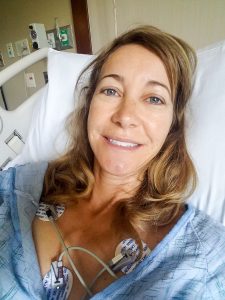
Roxanne (Ruzicka) Maas ’94

Eighteen months before Louizos’ SCAD, Roxanne (Ruzicka) Maas ’94 was taking a morning shower on the last day of vacation with her in-laws near Detroit when she began to experience chest pain. “I need to see my father-in-law,”’ she recalls thinking. (He is a retired physician.) Maas quickly dressed and gingerly went downstairs, hanging on to the banister to steady herself. “I couldn’t breathe,” she says. “I was sweating. I was dizzy and nauseous. I remember saying, ‘Maybe you should give me some aspirin.’”

As Maas was heading out the door on the way to the hospital, she suddenly vomited. She still doesn’t understand why, but after that, for whatever reason, “the pain and all the symptoms, like 95% went away. I was almost all better.” She went to the hospital anyway.

Maas was 47, healthy and active. Like Louizos, she had a husband and three children, along with a career as a genetic counselor. Nothing in her health profile would point to cardiac risk. But just as with Louizos, a series of tests showed elevated troponin. She had experienced a heart attack. After cardiac catheterization, her doctors concluded she had experienced a spontaneous coronary artery dissection, SCAD. The artery involved, says Maas, “looked like a frayed knot.” She flew home to California the next day, with the approval of her doctors, scared to death it might recur in mid-air.

A Strange Coincidence

When asked how it might be that two Pomona alumnae who sang in Glee Club together in the 1990s could both experience the same very rare heart attack just 18 months apart, Pomona Economics Professor Gary Smith suggests selective recall coincidence. Smith is the author of What the Luck: The Surprising Role of Chance in Our Everyday Lives. “Selective recall in general means that you remember selectively, often because it supports your prior beliefs, but also because it is so striking,” Smith explains. “Like a baby born at 7:11 on 7/11 weighing 7 pounds 11 ounces. If you predict, ahead of time, that a woman’s baby will be born at that time on that day with that weight, it would be astonishing if it came true. If you, instead, look at the birth records of the millions of babies born in the United States every year, it is utterly unsurprising that you will find a baby with an amusing combination of birth statistics. In any large set of data there are lots of coincidences that are memorable but meaningless.”

So it is likely that the two women’s experiences with SCAD might have remained as isolated, individual rare events were it not for a third Sagehen and mutual friend, Tori (Ashe) Erslovas ’95. “Last January I got a text message from Elisa. ‘I’m ok, but I had a mild heart attack,’” Erslovas relates. “When I talked to her and she told me what it was, I said, ‘That’s so weird. I know someone else that happened to—it’s Roxanne from Glee Club. Can I connect you?’”

Louizos says she dialed Maas’ number with “a mix of hopefulness and anxiety.” She was just a few days past her SCAD heart attack. “I was so scared. So scared. And I had so, so many questions.”

There was much for Louizos and Maas to discuss. Maas “was great,” says Louizos. “She had already been through that initial shock and was able to keep me grounded and provide hope.” Maas talked about how her life had, for the most part, kept on as it had been, minus rollercoasters and scuba diving, and she walks now more than she runs.

The current standard of care favors conservative treatment whenever possible, as SCADs often heal on their own, and that was the route Maas and Louizos took. Both women take a couple of medications and have instructions to keep their heart rate within certain safety parameters and to focus on mild to moderate cardiovascular exercise rather than activities such as weightlifting. “We were both glad we didn’t have babies or toddlers to lift anymore,” says Louizos.
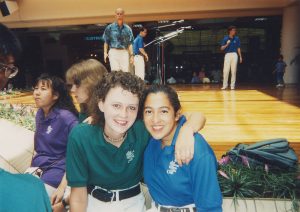
Elisa (Mawer) Louizos ’96 with Tori (Ashe) Erslovas ’95 during a 1990s Glee Club trip. Erslovas made the connection between Louizos and Roxanne (Ruzicka) Maas ’94 after each experienced a SCAD.

Having a heart attack in the prime of life, especially one that was so atypical, has left Louizos and Maas eager to make people aware of SCAD. Elisa is part of the SCAD Alliance’s iSCAD Registry. Both have sent their medical records to the Mayo Clinic for a virtual SCAD registry and are part of a supportive SCAD Facebook group.

Fear of a recurrence has not completely disappeared. The literature indicates that 20-30% of SCAD survivors, as veterans of SCAD often call themselves, experience a subsequent episode. “I might go weeks and even months without thinking of it, and then it’ll just sort of occur to me,” says Louizos.

“The scariest thing about this is that it came out of the blue,” Maas adds. “It’s not like ‘As long as I don’t run a marathon, I’ll be fine.’ It could totally happen again.”

‘Listen to your body’

Today, Maas and Louizos continue to be sources of support for each other. They now consider themselves “SCAD sisters.” Says Maas, “This unfortunate experience deepened a friendship we started 20-some years ago at Pomona College.”

Encouraging everyone, especially women, not to discount health warnings is important to them both. As Maas learned, there are different types of heart attacks that can occur even in people whose arteries are, as her cardiologist described hers, “crystal clear.” She emphasizes that “you really don’t want to ignore symptoms or think ‘That can’t possibly be a heart attack.’”

In January, Louizos posted a message to her friends on Facebook: “Today is the one year anniversary of my heart attack. I am feeling incredibly blessed by the support I have felt and so grateful that it was mild and the effects have been minimal.” And, she continued, “Just a reminder to listen to your body and take what it tells you seriously. Even if you are healthy these things can happen. And slow down once in a while and enjoy life. Stress does not serve us well!”

Maas fights back tears as she talks about two friends recently claimed by cancer. “The message I want to get out is enjoy your life. Appreciate your health and all the good things in your life. That’s what matters.”

Louizos, drawing on her own SCAD experience, concurs. “There’s an expiration date, for sure,” she says about each of our lives. “[Let’s] do all we can to make our experience on Earth as rich as we can. Take our health seriously. Listen to our bodies. And believe in each other.” 
Top 5 for ‘Best Financial Aid’

Pomona is No. 3 on The Princeton Review’s 2022 list for Best Financial Aid among private colleges. Pomona is one of a handful of institutions committed to need-blind admissions and to meeting the full demonstrated financial need of all students who enroll.

And the Oscar Goes To …

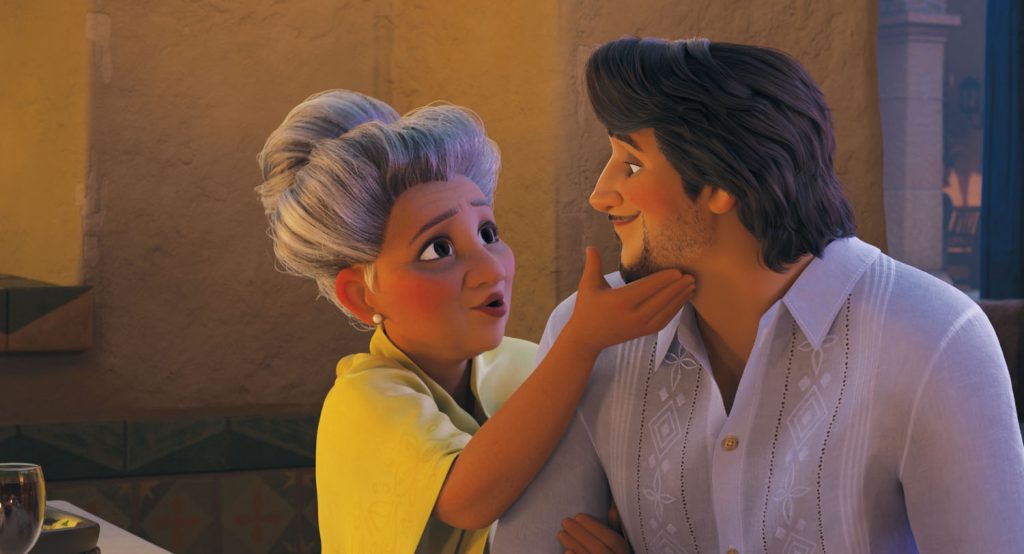
Rose PortilloAt the moment when Encanto won the Oscar, Rose Portillo ’75—the voice of Señora Guzmán in the 2022 Academy Award winner for best animated feature—was on her way home after performing in a play.

“It happened as I was driving in. Friends were texting me and saying ‘You won! Congratulations!’” Portillo says. “It still feels odd to realize that I actually am a part of this. I still look at it and think: Isn’t that wonderful? My friends won. This is a lovely moment and, I feel, a deserving moment. And then I have another moment of oh, it’s kind of me, too.”

An accomplished actor, writer, director and visual artist as well as a Pomona College theatre lecturer, Portillo was too busy to enjoy the Oscars until after her afternoon performance in the nearly monthlong run of the Pulitzer Prize-winning play Anna in the Tropics at Pasadena’s A Noise Within theatre.

“By the time I got home, there was a watch party next door,” Portillo says. “When I walked in, they were all, ‘Congratulations, congratulations,’ which was very sweet and lovely.”

Scene from the film, Encanto. Courtesy of Disney

Besides voicing Sra. Guzmán, mother of the hunky Mariano, Portillo spent two years developing the character of Abuela Alma Madrigal, matriarch of the warm Colombian family whose magical powers not only help them to survive after fleeing a junta but also help to sustain their community.

Portillo calls participating in the production “joyful” and is particularly proud of the animation’s realistic depiction of varied skin tones within a family. She also talks about the invisible effects of unspoken trauma reverberating through generations and the potential for healing. 

She wasn’t the only Sagehen involved in Encanto. Jasmine Reed ’12 was an editorial production supervisor for Walt Disney Animation Studios. Encanto is being celebrated throughout the world. “It is proof that the better we come to truly know each other, the better we can embrace each other. That’s the kind of project I’m always looking for,” Portillo says.

Watson Fellows ’22

For sheer armchair traveling pleasure, we present this year’s Thomas J. Watson Fellowship winners:

Xiao Jiang ’22 and Mark Diaz ’22 are among 42 students selected from 41 private college and university partners to receive $40,000 grants to pursue research projects during 12 months of international travel.

Jiang found care and acceptance in New York City’s Chinatown at the age of 5 when she and her mother came to the U.S. from China. After arriving at Pomona as a Questbridge Match Recipient with a full four-year scholarship, Jiang was worried about returning to her Chinatown for fear of seeing it changed—gentrified —into a place she would no longer recognize as home. As a sophomore, she took an anthropology course and studied the effects of gentrification on Los Angeles’ Chinatown. For her senior project in anthropology, she created a short documentary on how COVID-19 has affected Chinatowns in New York and Los Angeles.

Jiang will spend her Watson year traveling to China, Malaysia, Singapore, Vietnam, the United Kingdom, France and Belgium to learn how immigrants and Chinese residents engage with Chinatowns to develop a sense of self within a community of like-minded people.

Diaz was a junior in high school when he was first introduced to kabuki, a traditional form of Japanese theatre that incorporates dance, music and mime. At Pomona, he drew Emeritus Professor Leonard Pronko out of retirement to study under him and to have Pronko teach a masterclass on kabuki. They staged Narukami Thunder God at Pomona’s Alumni Weekend in 2019 before Pronko’s death later that year.

Thinking about his own ancestors, the Maya and the Basque, Diaz wondered what type of theatre they developed and how it is also under-staged or recognized in the U.S. Diaz will travel to Japan, Spain, Belize and Guatemala to explore traditional dramatic forms: kabuki in Japan, religious dance ceremony in Guatemala and Belize, and pastorale in Spain.

This is Jeopardy!

Some 26,000 students from more than 4,000 colleges auditioned for the chance to be among the 36 competitors in the Jeopardy! National College Championship, televised in February.
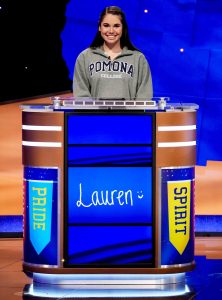
Lauren Rodriguez ’22 made the cut and then some, taking home $20,000 after reaching the tournament semifinals.

“I had such a blast competing on the show,” says Rodriguez, a public policy analysis and sociology major whose first post-graduation job is in management consulting. “Being part of the College Championship as opposed to regular Jeopardy! made it so rewarding, because I was able to meet 35 other college kids from all across the country and form friendships with them. We all embraced our inner nerd together and had a lot of fun.”

The tournament champion, University of Texas senior Jaskaran Singh, won $250,000.

Besides cash, Rodriguez took home memories for a lifetime.

As she posted on Instagram to promote the show, “I’ll take Bucket List for 2022, Mayim 🤪

What’s Next for Women in Math?

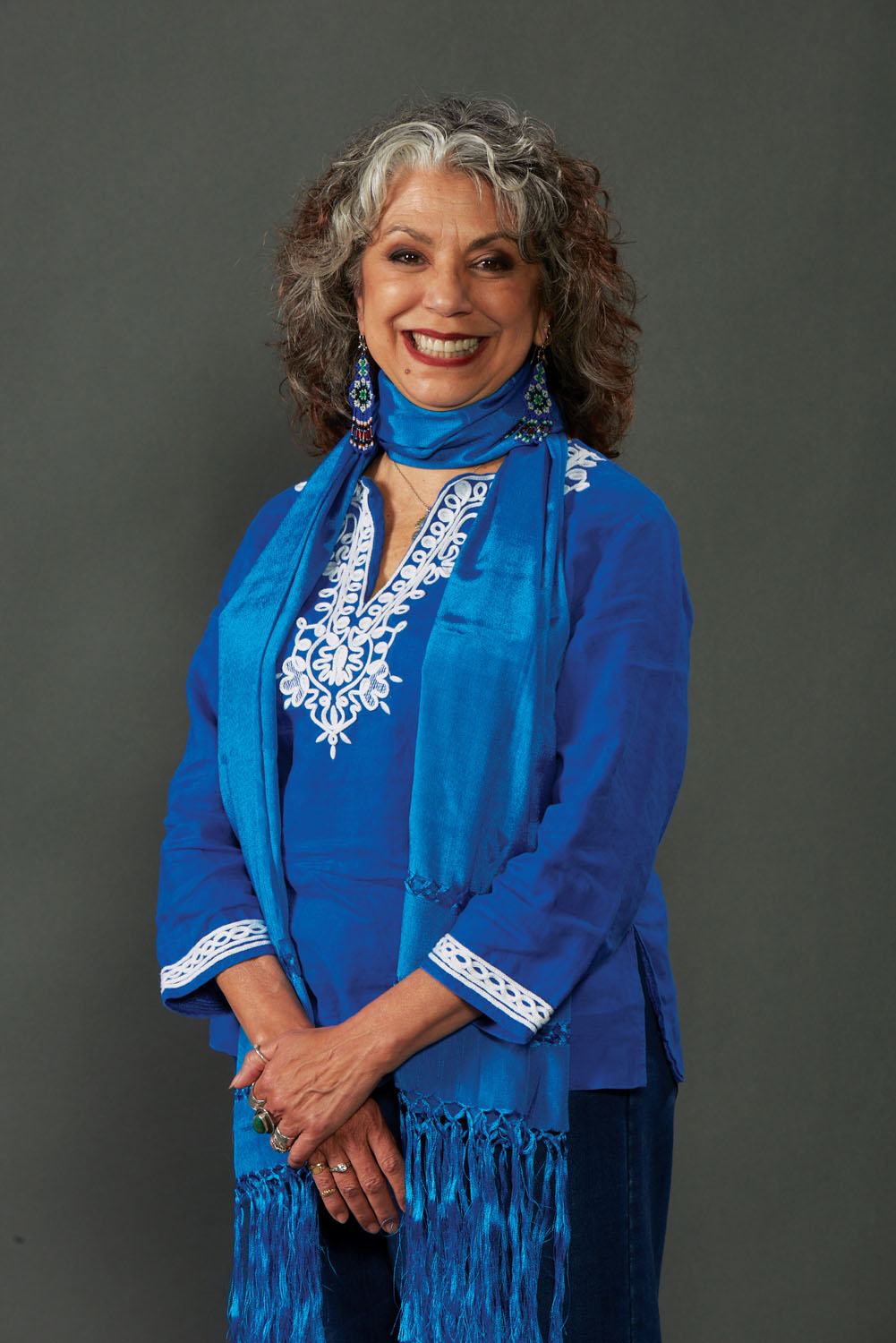
Prestigious Fields MedalHidden figures no more. That’s the future that Professor of Mathematics Ami Radunskaya hopes to see soon in the world of mathematics: more women—particularly more women of color—in the field.

“There’s been an increase of awareness about equity in mathematics thanks to the Hidden Figures movie, which came out almost two years ago,” says Radunskaya, who has seen the success of programs like Black Girls Code—part of a growing trend to get middle and elementary school-aged girls interested in math.

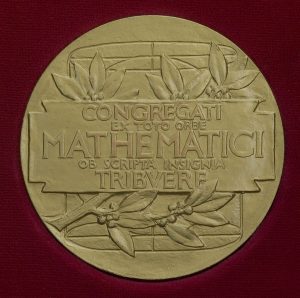
The first and last time a woman received the prestigious Fields Medal, the highest honor a mathematician can receive, was in 2014, when Maryam Mirzakhani won the coveted medal, often described as the “Nobel Prize for mathematics,” for her work in the field of geometry.

Although the Fields Medal is awarded to only a handful of mathematicians every four years, Radunskaya is hopeful that more women will be named winners in the near future.

Radunskaya, who is also the president of the Association for Women in Mathematics (AWM), adds that while more young women are majoring in math at the undergraduate level, more needs to be done to see women continue studying math at the graduate level and beyond. “It’s like a leaky pipe,” she says.  “As you go up, the numbers of women faculty at large and prestigious research universities gets smaller and smaller. The gender equity needs to trickle up.”

So what’s needed exactly to see more women win the Fields Medal in the future? Radunskaya says, “It’s really about supporting women of color get into positions where they are visible who can then become role models for the future so that when we walk into a room at a math conference we’re not surprised to see all kinds of people: different genders, different races and different backgrounds.”

Previous (Alt Rock)

What’s Next for Alt Rock?

solar trailerA solar-powered Coachella? That’s a future that alternative rocker Skylar Funk ’10 hopes to see one day. Although there isn’t a solar generator that is big enough to power the Coachella main stage yet—things are moving in that direction, says Funk.

As students in the environmental analysis program, Funk and classmate Merritt Graves ’10 became passionate about environmental issues, and since founding Trapdoor Social together, they have combined their love of music with their sustainability activism. After driving around the country to play shows, Funk became frustrated with all the gas they were burning. So, in 2015, the band acquired a solar trailer that provides them with more than enough power for their concerts. “The real treat is that there is no loud generator which disrupts the whole sonic experience of the festival,” says Funk.

In 2016, Trapdoor Social launched the fully solar-powered Sunstock Solar Festival in Los Angeles, a zero-waste event that also raises money for worthy causes. He adds, “We need a place, we need a positive space to cross-pollinate and to grow our movement and to be a community.”

Previous (Manga)

Next (Women in Mathematics)

What’s Next for Manga?

MangaSales of the Japanese graphic novels and comic books known as manga have been falling inside Japan itself since the mid 1990s—a fact that Carl Horn ’91, manga editor for Dark Horse Comics, attributes to the long decline in the nation’s population—especially at the young end of the spectrum. “Even though Japan has the deserved reputation as a country where adults read comics, the top-selling titles are your Dragon Balls, your Narutos, your One Pieces, your Attack on Titans,” Horn says. “In other words, manga that were made for younger readers.”

That means the future of the manga industry is increasingly outside Japan, Horn says. And for American readers, that offers both pluses and minuses.

On the plus side, manga creators are starting to become more accessible to their foreign readers—appearing slightly more often at conventions and responding on social media. On the minus side, however, Horn worries that their stories may lose some of their Japanese flavor.

“The fans don’t necessarily want to see manga becoming ‘more American,’ whatever that means,” he says, adding that for most manga readers, the cultural differences are an important part of the attraction. “However, what they would like to see, I think, are more personal connections with the creators—that is, Japanese creators getting more involved with their English-language readership.”

One thing he doesn’t think will change is the special attraction manga holds for people who feel like outsiders. “Manga is a medium where people who wouldn’t be cast as heroes in traditional American stories, can be,” he says. “You don’t necessarily have to look the part. People considered oddballs, you know, people who dress weird, people with weird hair—in manga they can still be the heroes of an action epic.”

Previous (Movies)

Next (Alt Rock)

What’s Next at the Movies?

film stripShe’s smart. She’s funny. She’s a 20-something-year-old Saudi woman growing up on the Moon. That’s Jazz Bashara, the protagonist of Andy Weir’s newest sci-fi book, Artemis, and a soon-to-be-made feature film by producer Aditya Sood ’97.

“She resembles [The Martian’s] Mark Watney in spirit and intellect but is otherwise a completely fresh hero for the 21st century,” explains Sood, president of Genre Films, the production company behind the hit films The Martian, Deadpool and Deadpool 2.

This newest project for Sood is part of the growing change in Hollywood that Sood is excited to be a part of. “The biggest thing happening in entertainment right now is that there’s more and more options for viewers than ever before—the era of one-size-fits-all is going away,” says Sood. “You’re seeing that manifest itself in an increase of representation, in terms of the stories that are being told, the people telling the stories, and the people representing those characters on screen.”

“The superhero world—movies like Wonder Woman and Black Panther and the upcoming Captain Marvel—the success of those movies is no surprise. The smartest filmmakers and studios are getting ahead of this.”

Sood adds that there’s still a long way to go but audiences will continue to enjoy more diverse films because they continue to demand stories that reflect themselves.

He wants Pomona readers to heed his words: “I want people who read this, whether they’re students or alumni, who haven’t thought before that [the entertainment industry] speaks to them because of their backgrounds, that we need more writers, executives and producers who come from diverse backgrounds who can tell these stories authentically.”

Previous (Writers)

Next (Manga)

What’s Next for Writers?

post notesIn films, they’re famously known as continuity errors. But these annoying little bloopers also creep into novels. For example, in J.K. Rowling’s Harry Potter and the Prisoner of Azkaban, a griffin first seen tied to a tree later finds itself tied to a fence.

While writing his 900-page tome Sacred Games, novelist Vikram Chandra ’84 found the task of avoiding such errors maddening. Keeping accurate track of his huge cast of characters over the novel’s 60-year span was a constant struggle. “It just feels like doing manual bookkeeping with a goose quill and a double ledger,” he says.

Certain that someone must have designed software to help, he did some research and found to his surprise that no such software existed. So, after finishing his novel, Chandra—who is also a programmer and self-described “geek”—decided to create his own.

“I did a couple of attempts myself,” he says, “and then realized that putting everything into a database or spreadsheet didn’t really solve the problem, because there was no connection to the text. You still had to remember every time you made a change in the text to update your data, and the other way around. So then, my question was, ‘Why not attach knowledge to text? Why can’t we keep the text and information about the text in sync, as it were?’ And that turns out to be a much, much harder problem, for various technical reasons.”

Over the following decade, the seemingly insoluble problem continued to prey on his mind. Then one night, while he was lying in bed, the answer suddenly came to him.

And so, in 2016, he joined forces with an expert programmer, Borislav Iordanov, who took his raw insights and converted them into actual code. Together they founded a company named Granthika—a Sanskrit noun for “narrator.” Their software—also called Granthika—is now patent-pending and in beta testing, and they hope to release a version for fiction writers in early 2019. Future versions may be geared to the needs of other types of writers, from journalists to scientists.

Chandra explains: “The idea is that you’ll write, ‘Jack met Mary at a café,’ and the software, if you want it to, will prompt you, saying, ‘Is Jack a person? Is Mary a person? Is café a location? Does this entire sentence represent an event?’ When you say yes to those questions, you’re creating knowledge, facts that are attached to the text at a very intimate level.”

Since writers may not want to be interrupted while writing, they can also turn that function off and go back to it later, but the final result is the same—a collection of metadata, linked directly to the text itself, to help the writer maintain the illusion of reality.

Recently, as Sacred Games was being transformed into a TV series on Netflix, Chandra wished Granthika had been available when he was writing it. To trace all of the story’s complex, interwoven timelines, the series’ creators had to buy dozens of copies of the book, transfer the info to index cards and arrange them on a wall. With Granthika, he says, “what we’re able to do is have a menu choice that says, ‘Export Ontology,’ and when you hit that, it just takes all the knowledge of the work that you created and puts it in a package so that somebody else could then import it.”

But Chandra’s vision doesn’t end there. Granthika also has him thinking about how the interactive nature of this new software might lead, someday, to the creation of new forms of interactive or multimedia books.

“Since we’re making it so easy to attach metadata to text, our dream is that we’ll be able to make it possible for a writer to say, at the time of writing, ‘When the reader reaches this sentence and goes past it, dissolve into this moving image that will last for three seconds,’ and so, you see a bird walking across the beach, right? So in a sense, what you’re doing is programming a book as much as you’re writing it. And a reader is able to interact with the book—let’s say, adjust reading difficulties, or read the same novel from the point of view of different characters, all that good science-fiction-fantasy stuff we’ve been dreaming about for the last two or three decades.”

Previous (Funerals)

Next (Movies)