Class Acts

New Knowledge

Studying Stress During a Pandemic

Studying Stress During a Pandemic

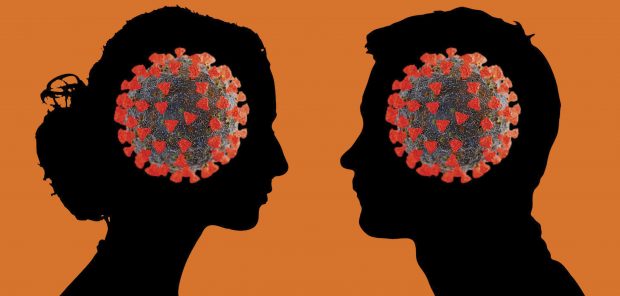
The COVID-19 pandemic—and the personal and financial emergencies that accompany it—are causing heightened levels of stress and anxiety across all demographics. In the U.S. alone, the pandemic has touched the lives of millions, and the economic halt has led to record-high unemployment.

To study the effect these stressful events are having on the people living through them, Professor of Psychological Science Patricia Smiley has received a $164,138 research grant from the National Science Foundation. Her study will explore the changes in stress response in adults and children brought on by the coronavirus (COVID-19) pandemic.

The one-year study titled “The COVID-19 Pandemic and Changes in the Stress Response: Identifying Risk and Resilience in Adults and Children” is a collaboration with Professors Stacey Doan of Claremont McKenna College and Cindy Liu of Harvard Medical School. The researchers will focus on acute and chronic stress, the transmission of stress between caregivers and their children, and risk and resilience factors associated with exacerbating or reducing stress.

The research team will capitalize on an ongoing longitudinal study of stress and adaptation of 150 families with young children in Los Angeles County. “The pandemic will allow us to address fundamental questions about the effects of chronic stress that we would not otherwise be able to answer,” says Smiley. “Uncertainty is something our brains dislike and that’s when we see increased cortisol production, a stress hormone, in our study participants. In our original study, we saw heightened cortisol levels in those participants who are not able to quickly adapt to stressful situations, so in the time of the current pandemic, they may be more susceptible to chronic stressors, showing higher cortisol levels and poorer psychological health.”

Gaze Sharing and Remote Work Collaboration

During the coronavirus pandemic, working remotely has become, in some cases, the only way for many workplaces to continue to function. That has added a new urgency to a line of research that Alexandra Papoutsaki, assistant professor of computer science, was already pursuing before the pandemic began. To continue her work, she recently was awarded a $105,572 National Science Foundation (NSF) research grant, which she will use to study gaze sharing in support of more effective remote work collaboration.

Gaze sharing, in which collaborators can see where each other’s gaze is directed on a shared screen, has been shown to have a positive effect in various visual tasks such as writing and programming.

Studying a person’s gaze is significant because it is a sign of human attention and intention and has a central role in workplace coordination and communication. Through eye tracking, researchers can assess eye movements to determine where a person is looking, what they are looking at and for how long they look at a screen.

Researchers like Papoutsaki have been developing tools to lessen some of the problems encountered in remote collaborations.

Papoutsaki’s two-year study aims to better understand gaze sharing and examine previously overlooked dimensions of remote collaboration. First, she will investigate the effect of the choice of the communication channel—either audio or video-based communication that is used in conjunction to gaze sharing in the screen collaboration process. Second, she will seek to understand how the awareness of someone else’s gaze affects groups of up to six remote collaborators that go beyond the traditionally studied pairs.

Modeling the Next Gravitational Wave Detector

“Gravitational waves are tiny ripples in space and time that Einstein himself thought people would not be able to measure,” Professor of Physics Thomas A. Moore explains. “But now they have been measured, and that promises a lot of interesting astronomy to be done in the future.”

Moore has received a $145,223 grant from the National Science Foundation (NSF) to develop, test and share a computer application that simulates how future gravitational wave detectors would react to binary star systems. Moore’s three-year project, “Adding Spin to a Gravitational Wave Detector Simulator,” will create undergraduate summer research opportunities beginning in 2021 that expand on his work with Yijun “Ali” Wang ’19, now a graduate student in physics at Caltech. The project was “partly inspired by the interest that a lot of my students have because of the recent detection of gravitational waves,” Moore says, referring to the historic 2015 observation that led to the 2017 Nobel Prize in Physics for Rainer Weiss, Barry C. Barish and Kip S. Thorne.

The 2015 observation of waves created by a collision between two black holes was accomplished through the Laser Interferometer Gravitational-Wave Observatory, or LIGO, which consists of two U.S.-based facilities, one in Hanford, Washington, and the other in Livingston, Louisiana. Each facility has two arms that stretch 2½ miles in different directions and use vacuum systems, lasers and mirrors to detect gravitational waves.

Moore, who has taught physics at Pomona since 1987, has been particularly interested in a planned space-based gravitational wave detector known as LISA, for Laser Interferometer Space Antenna, and notes that a detector built of satellites would have certain advantages over those on Earth. Computer modeling would allow scientists to evaluate potential designs before undertaking such massive projects.

Developing New Chemical Reac­tions for Drug Discovery

Nitrogen-based sulfur compounds such as sulfonamides, sulfamides and sulfamates are important compounds that have therapeutic applications against cancer, HIV and microbial infections. But existing approaches to making these compounds are limited by the commercial availability of the starting materials and by harsh chemical reactions that prevent late-stage functionality of the compounds.

Assistant Professor of Chemistry Nicholas Ball has received a $394,145 research enhancement grant from the National Institutes of Health (NIH) to focus on the development of new chemical reactions that can facilitate drug target discovery using sulfur (VI) fluorides. For this three-year grant, Ball will work with an industry collaborator, Pfizer’s Christopher am Ende, and Chapman University’s Maduka Ogba. This collaboration will expand opportunities for Pomona College students to gain research experiences at Pfizer and in computational chemistry.

Ball’s lab has been working on sulfur-fluoride exchange chemistry, which is a promising new pathway to synthesize sulfur-based compounds by using easy-to-handle starting materials such as inexpensive Lewis acid salts and organic-based catalysts. The successful implementation of the research proposed for this grant will represent a considerable advance over current methods that rely on starting materials that are challenging to synthesize or isolate.

Equally important is the industry research experience that undergraduate students will gain from this research. The work in this proposal will expose them to biomedical research with significant focus on synthesis and medicinal chemistry.

Exploring the History of Environmental Law

The Andrew W. Mellon Foundation’s highly competitive New Directions Fellowships are awarded annually to exceptional faculty in the humanities and humanistic social sciences who seek to acquire systematic training that pushes the edges of their own disciplinary background. One of the recipients this year is Aimee Bahng, assistant professor of gender and women’s studies.

Through this $285,000 grant, Bahng will explore where property law and environmental law overlap or diverge, a path of inquiry which has taken her into legal terrain that is straining her disciplinary training in literary studies and feminist theory.

Working at the interstices of environmental justice, feminist science studies, and Indigenous Pacific and transnational Asian American studies, Bahng proposes to study the history of environmental law around oceanic bodies of water. She plans to analyze how human governance of the environment emerged out of Western liberal humanistic concepts of property. It questions whether the property-based origin of our existing legal framework can be an effective lens through which to legislate the oceanic commons; it will also explore historical determinations of who and what is able to bear rights.

Bahng hopes to spend at least part of her fellowship time pursuing coursework in environmental law at Lewis and Clark Law School, native Hawaiian law at the William S. Richardson School of Law at the University of Hawai‘i at Ma-noa, and indigenous law at the University of Victoria in Canada.
Wig Awards 2020

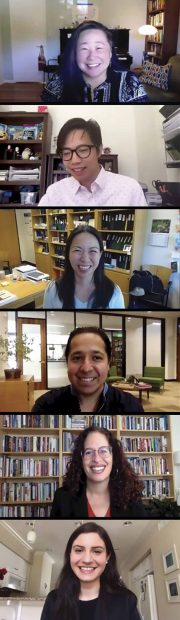
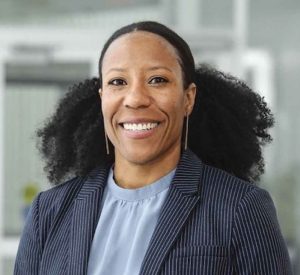
From top: Aimee Bahng, Tom Le, Jane Liu, Jorge Moreno, Gilda Ochoa and Alexandra Papoutsaki

From top: Aimee Bahng, Tom Le, Jane Liu, Jorge Moreno, Gilda Ochoa and Alexandra Papoutsaki

Six professors have been selected to receive the 2020 Wig Distinguished Professor Award for excellence in teaching. The award is the highest honor bestowed on Pomona College faculty, recognizing exceptional teaching, concern for students and service to the College and community. Here’s a list of this year’s recipients, along with anonymously written nomination comments from their students:

Aimee Bahng
Assistant Professor of Gender and Women’s Studies

“Professor Bahng is one of the most intellectually generous people I have ever met. Her courses are fascinating, excellent discussions that I feel have contributed to my growth as a person. She masters the difficult dance of encouraging rigorous intellectual work while recognizing the strangeness of academia as an elite space (particularly in the context of Gender and Women’s Studies).”

Tom Le
Assistant Professor of Politics

“I met Professor Le my sophomore year in an upper division international relations class. At first, I was intimidated by his candor and overwhelming expertise on the subject of East Asian politics. However, in the span of a few weeks, I realized how lucky I was to have the chance to take one of his classes. Professor Le has always pushed me to be better, work harder and care more. His leadership style is inspiring, and Pomona is lucky to have him as faculty. Thank you, Professor Le, for always encouraging me to be a better scholar, student and friend.”

Jane Liu
Associate Professor of Chemistry

“It’s amazing how a professor can make such a big difference in your academic experience, even if you only see them once a week for lab. Professor Liu is not only extremely knowledgeable and a talented scientist, but she is also one of the kindest human beings I have ever met.”

Jorge Moreno
Assistant Professor of Physics and Astronomy

“Professor Moreno has completely reimagined the possibilities of the STEM classroom. His teaching style and commitment to students—particularly students that have been historically excluded from STEM spaces—makes him one of the most beloved professors at Pomona. In his short time at the College, Professor Moreno has made an impactful impression on students from all disciplines. He is truly an advocate for his students.”

Gilda Ochoa
Professor of Chicana/o Latina/o Studies

“Gilda Ochoa is the most deserving faculty member for this award because she is always available for students regardless of their major or background. Gilda Ochoa is the person to ask you how you are feeling rather than how you are doing. She will listen to you and make you feel heard and cared for. Her research advances social justice by centering underrepresented voices.”

Alexandra Papoutsaki
Assistant Professor of Computer Science

“I was not the best computer science student and was never going to end up going very far in it, but Professor Papoutsaki still worked hard to make sure I understood things. Some people who are as evidently smart as she is in a given field aren’t able to make things accessible to those who don’t share their knowledge, but she can. I think it shows not just her talent for teaching, but what a genuinely great person she is.”

New Director of Athletics Joins Sagehen Team

Miriam Merrill

Miriam Merrill

Innovative and accomplished athletics administrator Miriam Merrill will lead Pomona-Pitzer Athletics into its next era after being selected as director of athletics following a national search.

Merrill, previously the associate director of athletics at Hamilton College in Clinton, New York, also served as interim director of Hamilton’s NCAA Division III program for four months in 2019. She starts at Pomona-Pitzer on July 1, and also will be professor and chair of the Department of Physical Education at Pomona College, overseeing the joint athletic department’s activity classes, faculty/staff fitness and wellness program, intramural/club sport and recreation programs and academic offerings.

“Miriam is a collaborative and inspiring leader, and I’m confident she has both the vision and the experience to help take Pomona-Pitzer athletics to the next level,” said Pomona College President G. Gabrielle Starr.

Merrill brings broad experience in athletics and academia to Claremont. She earned a Ph.D. in the psychology of human movement at Temple University in 2019, and previously has served as an athletics director at Richard J. Daley College, a Chicago community college, and as head coach of women’s track and field at Robert Morris University in Chicago. As an athlete, she was an NCAA Division I All-American in track and field for the University of Cincinnati in 2001 and was inducted into the university’s Athletics Hall of Fame in 2012.

Baseball by the Numbers

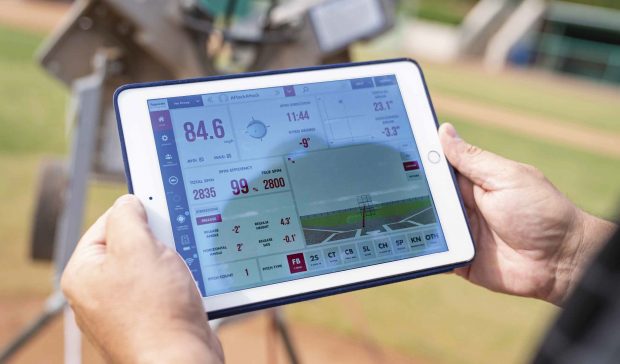
Rapsodo device provides pitching data that includes velocity, spin rate and vertical and horizontal breakGATHERED ON THE pitcher’s mound during class, Pomona College students feed balls into a pitching machine, then quickly glance down at an iPad.

On the ground between them and home plate is a boxlike device called a Rapsodo, a $4,000 radar-based system that provides data not only on pitch velocity, but also spin rate, spin axis, horizontal and vertical break, 3D trajectory and a strike zone analysis.

The Rapsodo device provides pitching data that includes velocity, spin rate and vertical and horizontal break.

Welcome to PE 086: Baseball Analytics, a new course taught by Frank Pericolosi, a professor of physical education and coach of the Pomona-Pitzer baseball team.

The class formalizes what has emerged as a notable career path for Pomona alumni: More than a dozen graduates or current students have put backgrounds in mathematics and computer science to work for Major League Baseball teams analyzing the game-changing explosion of data in baseball.

They’re following a trail blazed by Guy Stevens ’13, a former Sagehens pitcher and math major who has risen to senior director of research and development/strategy for the Kansas City Royals. He was on staff for a World Series championship in 2015, less than three years after working with Math Professor Gabe Chandler to publish a statistical analysis of minor league data.

“Talking to Guy [Stevens] over the years, I ask, ‘What do we need to be doing on campus to make these kids better candidates for these internships and for these jobs?’” Pericolosi says. “He gave some suggestions in terms of, ‘They need to be doing creative, innovative projects on their own.’ The driving force for getting this technology on campus was initially to help our kids who want to go into analytics. Also, we’re in a heavy-data era of baseball even more so than before, and it’s going to give us good data to evaluate our players as well.”

Five of the 15 students in the class play baseball for the Sagehens. One of them, catcher and math major Jack Hanley ’20, worked for the Oakland Athletics two summers ago and spent last summer as an associate in quantitative analysis with the New York Yankees. This October, he watched his former colleagues advance to the American League Championship Series.

“It’s definitely very rewarding to know that whatever small role I played this summer in making the team better, it paid dividends,” says Hanley, whose description of his research for the Yankees is vague. That’s because he had to sign a non-disclosure agreement to protect what amount to industry secrets.

Not all the alumni putting data analysis to work for major league teams are former baseball players. Jake Coleman ’13 played Ultimate Frisbee at Pomona but completed a Ph.D. in statistics at Duke University in May and joined the Los Angeles Dodgers in August as a senior quantitative analyst. Nor are they all men: Christina Williamson ’17, a former water polo player and swimmer who majored in math, was featured by The Athletic as one of 35 people under 35 shaping the game of baseball for her work with the Yankees using biomechanical data to aid player development and reduce injuries.

Pomona, Stevens is confident, is gaining a reputation in the game.

“If you think about how small the sport is, with only 30 teams, and how well-connected it is, there’s a pretty good chance if you’re in baseball, you know someone who knows someone who went to Pomona,” he says. “A lot of these jobs in baseball, it’s the same set of skills that translate anywhere: If you’re working with data, it’s curiosity and creativity and thinking outside the box. And Pomona trains you for that 100%, whether it’s baseball or finance or whatever else.”

Baseball analytics once was based on information available in a box score, but has evolved rapidly in the era since it was popularized by the 2003 book Moneyball and the movie that followed. It is now decidedly high-tech, requiring expensive equipment that Pericolosi was able to purchase for the course through Pomona’s Hahn Teaching with Technology Grants. He’s in the process of acquiring a second Rapsodo that gathers hitting data, measuring such things such as exit velocity—the speed of the ball off the bat—launch angle, 3D ball flight and expected landing location. Blast Motion swing sensors that attach to the knob of a bat are yet another tool in an array of devices that are used in training to aid the development of players and to help shape strategies.

Though some of the students in the class chose the course as an intriguing elective—Noah Sasaki ’20 thinks it could help him in a planned sports media career—those who play baseball are earnestly using the data to improve their skills and approaches. Analyzing spin data has helped catcher Jake Lialios ’20 and pitchers Luka Green ’20 and Simon Heck ’22 determine a particular pitcher on the staff should throw higher in the strike zone because the spin rate makes his fastball appear higher than it is. Green suggests data also could be used to recognize injuries.

“If your slider spin rate gets cut in half, your elbow probably hurts—and sometimes people don’t tell anyone,” he says.

Hanley plans to use bat sensor data to study swing paths in a senior thesis supervised by Chandler, the math professor and former assistant baseball coach whose mentorship helped launch Stevens’ career. After Stevens showed Chandler a trove of minor league data he was struggling to shape into a project, the pair joined forces and published an article in the Journal of Quantitative Analysis in Sports in 2012. That, plus an introduction from Chandler to an East Coast statistics professor who also worked with the New York Mets, helped Stevens break into Major League Baseball.

“At that point, people at Pomona realized this is something that one can do,” Chandler says. “I don’t know if people were thinking this before they decided to enroll here, but all of a sudden we went from having almost no math major baseball players to having two or three a year.”

Hanley, who communicated with Stevens even before arriving at Pomona, would love to follow the same sort of path. For his thesis, he is building on research he began with the A’s to study swing mechanics through functional data analysis, a statistical method Chandler calls “cutting-edge stuff.”

“What I’m really interested in is the function of position or acceleration over time—not just to reduce the entire function down to one point, but to use the entire function in data analysis,” Hanley says. “Generally, the project is to look at these swings and see how much information we can really glean. Let’s not limit ourselves in terms of format or data structure. Let’s see what we can really do with this stuff.”

After graduation, Hanley hopes to land a position with a baseball team, but he notes that more and more baseball analytics researchers have graduate school training and he might also go that route after a couple of years. Peter Xenopoulos ’18, who has worked for the Philadelphia Phillies as a quantitative analyst associate, is now a Ph.D. student in computer science at NYU, and Mike Dairyko ’13 earned a Ph.D. in applied math at Iowa State and works as a data scientist for the Milwaukee Brewers, though he is on the business side. “I do think this is something where Pomona is getting a reputation,” Hanley says. “It’s really a great breeding ground, a great incubator for baseball analytics in college.”

Pomona’s Baseball Analysts

The following is a list of recent Pomona alumni who have worked for MLB teams in roles related to data and analytics:

Drew Hedman ’09
Run Production Coordinator
Arizona Diamondbacks

Guy Stevens ’13
Senior Director, Research & Development/Strategy
Kansas City Royals

Jake Coleman ’13
Senior Quantitative Analyst
Los Angeles Dodgers

Mike Dairyko ’13
Senior Manager, Data Science, Business Analytics
Milwaukee Brewers

Jake Bruml ’15
Pro Scouting Intern
Boston Red Sox

Kevin Brice ’16
Quantitative Analysis Assistant
Los Angeles Angels

Simon Rosenbaum ’16
Assistant, Baseball Development
Tampa Bay Rays

Dylan Quantz ’16
Player Development Assistant
Atlanta Braves

Christina Williamson ’17
Research Analyst, Performance Science
New York Yankees

Peter Xenopolous ’18
Former Quantitative Analyst Associate
Philadelphia Phillies

Bryce Rogan ’18
Quantitative Analysis Assistant
Los Angeles Angels

Andrew Brown ’19
Apprentice, Baseball Analytics
Texas Rangers

Jack Hanley ’20
Former Summer Associate
New York Yankees

Nolan McCafferty ’20
Former Quantitative Analyst Intern
Baltimore Orioles

Outsmarting the Market

Stocks with clever ticker symbols CASH. BABY. BOOM. Stocks with clever ticker symbols such as these continue to outperform the market as a whole, a new study has confirmed.
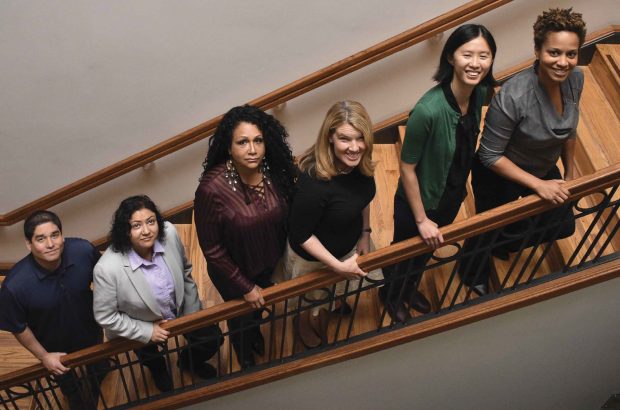
The study’s authors, Professor of Economics Gary Smith, along with recent Pomona graduates Naomi Baer ’19 and Erica Barry ’19 studied the performance of a portfolio of 82 stocks and found that companies with clever tickers outperformed the market from 2006 to 2018.

This new study is a follow up to a 2009 study in which Professor Smith and his co-authors Alex Head ’05 and Julia Wilson ’05 found that a portfolio of stocks with clever ticker symbols beat the market by a substantial margin during the years 1984–2005. Smith and his co-authors re-examined the 2009 study’s surprising conclusion by updating the analysis for the subsequent years 2006 through 2018. They pursued the new study to demonstrate the resiliency of this phenomenon with respect to both the original clever-ticker stocks and a more recent set of clever-ticker NASDAQ stocks, a phenomenon that strongly contradicts the efficient market hypothesis.

The authors replicated the earlier methodology with a new list, focusing on NASDAQ stocks, which historically use four-digit ticker symbols, in contrast to the NYSE and AMEX, which use three or fewer characters. Examples include PZZA for a pizza company, BDAY for online party supply retailer and BOOM for an explosives company, among others.

“For example, WOOF, the ticker for VCA Antech, which operates a network of animal hospitals and diagnostic laboratories, is a lot more amusing and memorable than something boring like VCAA or VCAN,” says Smith.

A possible explanation to this stock overperformance is that memory involves the acquisition, storage, retention and retrieval of information and the understanding of human memory suggests that clever tickers may heighten investors’ recall of companies, according to Smith and his co-authors.

Critical Inquiries

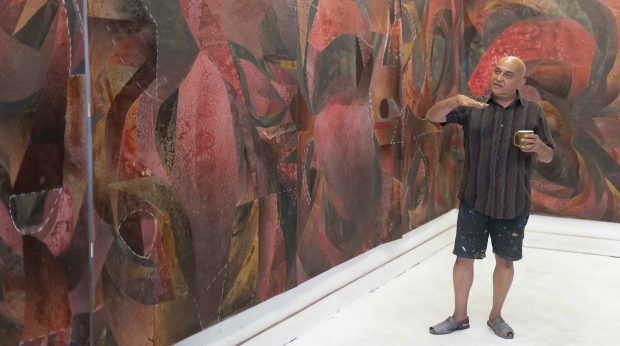
Professor Sandeep Mukherjee in his studio

Professor Sandeep Mukherjee in his studio

A glimpse inside three of Pomona’s creative ID1 classes

With any luck, many first-year students will find in their Critical Inquiry seminars what Miguel Delgado-Garcia ’20, president of the Associated Students of Pomona College (ASPC), told those gathered for 2019 Opening Convocation he found in his.

It was “the first of many homes for me” at Pomona College, Delgado-Garcia said as he addressed students in Bridges Hall of Music on the first day of classes.

Known as ID1 courses for their interdisciplinary designation in the catalog, Critical Inquiry seminars give first-year students an introduction to the kind of deep reading, writing and discussion that will be a foundation of their educations at Pomona. ID1 is one of three time-honored traditions (along with Orientation Adventure and sponsor groups) that introduce first-years to small groups of students who share close experiences that help them form early friendships on campus—and perhaps find the first of many homes.

Here’s a look at three of the 30 ID1 courses this year.

I Disagree

It’s little surprise one of the most requested ID1 classes this year considers “the problem of living with difference.” Professor of Mathematics Vin de Silva has taught the class a number of times, but says “what I’ve found in the last couple of years is that I feel that it’s almost inadequate for the much bigger task of rebalancing our public climate.”

De Silva has no illusions of resolving political conflict, but through various case studies students learn more effective ways of communicating. One example is the 1957 movie 12 Angry Men, in which the character played by Henry Fonda slowly changes the minds of jurors in a murder trial. Another comes from Edward Tufte, a Yale professor emeritus of political science, computer science and statistics. Tufte studied the efforts of Morton Thiokol engineers who advised against the 1986 launch of the ill-fated shuttle Challenger. NASA officials pushed back, and the launch went ahead.

“Of course it wasn’t OK,” de Silva says. “So then, the whole question is: If you have some piece of information and some understanding that makes you think that something shouldn’t be done, and there’s still pressure to do it, how do you try to communicate that? The contractors went to NASA and showed them all sorts of complicated figures and then said, ‘We don’t think you should launch.’ That isn’t always going to be effective. Tufte proposes a simplified chart, and as soon as you spend a couple of minutes looking at it and figuring it out, then you realize it’s totally clear that you shouldn’t launch.”

On Fiction

In an era when truth is under scrutiny, where does that leave fiction? Colleen Rosenfeld, an associate professor of English and a faculty fellow this year in Pomona’s Humanities Studio, designed her course to complement the studio’s 2019–20 theme, Post/Truth.

The question of post-truth was especially interesting to me for fiction because the debate right now is so much around facts. How do we evaluate facts, and is it about trusting institutional sources?” Rosenfeld says. “Fiction has an interesting status because it’s neither truth nor lies.”

Among the readings in this class is the essay “Defence of Poesy” by 16th-century poet Philip Sidney. “Sidney says against the charge from Plato that poets are liars that, well, a poet cannot lie because ‘he nothing affirms,’” Rosenfeld says. “If you don’t make an affirmation, then your speech can’t be held to the question of true or false.”

Other texts include Italo Calvino’s short story collection Cosmicomics and Lewis Carroll’s Alice’s Adventures in Wonderland.

“There’s a long tradition which says, “Yes, fiction does involve truth—it’s just truth operating on a higher order,’” Rosenfeld says.

“These questions are old. We’re thinking about them in this political context, but it’s the same set of ideas that people have been using to think through literature and poetry and fiction, as far back as I can read.”

Color and Its Affects

Inside Sandeep Mukherjee’s studio, a work in progress lines two walls in layers of fleshy reddish-brown paint. Hanging from the ceiling are aluminum moldings of tree trunks, sprayed with black and white paint that runs down the metal like rivulets.

Mukherjee, an associate professor of art and recipient of a 2017 Guggenheim Fellowship, says one of the challenges his ID1 students will face is the elusive endeavor of writing about color and its affects. (He draws on affect theory as proposed by French philosopher Gilles Deleuze.)

“It escapes, because color isn’t a fixed entity,” Mukherjee says. “It depends on what’s around it, where it’s located, space, time, the person viewing it. So when all these factors come together is when color is produced as an experience, and to try and pin it down in language is almost impossible.

Black and white will be examined too, and Mukherjee notes the inadequacy of those terms in describing race or skin tone.

“You’ve got brown, purple,” says Mukherjee, who often assigns self-portraits to beginning painting students. “I have them make the color that is their flesh, their hair, their eyes, their eyebrows. So they understand how much color each of us has.”

More unsettling is an essay students will read by Aruna D’Souza in Whitewalling: Art, Race & Protest in 3 Acts on the painting Open Casket by Dana Schutz. The painting depicts the grotesquely mutilated face of Emmett Till, the 14-year-old black boy who was murdered in 1955 after whistling at a white woman. His mother chose a glass-topped casket to show the world what had been done.

“There was a huge controversy at the Whitney Museum about race and who gets to speak on it,” Mukherjee says, noting that Schutz, the artist, is white.

“The most gratifying feedback I get is, ‘The way I look at the world has changed on the most basic level,’” Mukherjee says. “That’s profound.”

Wig Winners 2019

The 2019 recipients of the Wig Distinguished Professor AwardThe 2019 recipients of the Wig Distinguished Professor Award, the highest honor bestowed on Pomona faculty, were (from left):

  • Stephan Garcia, W.M. Keck Distinguished Service Professor and professor of mathematics,
  • Guadalupe Bacio, assistant professor of psychology and Chicana/o Latina/o studies,
  • Valorie Thomas, professor of English and Africana studies,
  • Susan McWilliams Barndt, professor of politics,
  • Pey-Yi Chu, associate professor of history, and
  • Carolyn Ratteray, assistant professor of theatre and dance.

In anonymously-written nomination comments, students offered high praise for the six professors who were honored at Commencement on May 19.

Stephan Garcia

W.M. Keck Distinguished Service Professor and Professor of Mathematics Stephan Garcia is the author of more than 80 research articles, many of them with Pomona students as coauthors. In 2018 he was recognized by the American Mathematics Society for his excellence in research in operator theory, complex analysis, matrix theory and number theory. This is his second Wig Award.

  • “Professor Garcia is the best lecturer I have had at Pomona. He is incredibly organized and manages to ensure that all of his students get the most out of every lecture. There has not been a lecture period where I felt that a minute is wasted. Moreover, he cares about bridging disciplines using math. He has a unique ability to put whatever we are learning in terms of contexts that students in other disciplines care about.
  • “Professor Garcia is an amazing math professor. I am thoroughly impressed and grateful for his ability to synthesize different fields of mathematics to portray linear algebra topics from a variety of viewpoints. His Advanced Linear Algebra course is unique in that it caters to majors not only in mathematics but also in physics, economics and computer science.”

Guadalupe Bacio

Bacio joined Pomona in 2016 with a double appointment to the departments of psychology and Chicana/o Latina/o studies. A clinical psychologist and researcher, she explores disparities in alcohol and drug use among young people of ethnic minorities. Bacio directs the CENTRO research lab where she and her students combine several research methods including community-participatory research, laboratory-based tasks and large-scale surveys. This is her first Wig Award.

  • “Professor Bacio is a professor like no other. She does double the work in her classes as she not only provides the learning content, but also a learning community. Students are driven not only to be invested in their own learning but in the learning of everyone around them. She has very high standards for her students, but her drive, passion and energy gives you every reason to want to impress her.”
  • “She teaches from a rich background working on the frontline with the people who are the subjects of our readings. Probably the most ‘real world’ informed professor I’ve had here, which was really refreshing at a point in my time here when ‘the bubble’ was really getting to me.”

Valorie Thomas

Professor of English and Africana Studies Valorie Thomas has taught at Pomona since 1998 and specializes in Afrofuturism, Native American literature, African Diaspora theory and decolonizing theory. Thomas also studies film and visual art, has an ongoing interest in the connections between writing, art and social justice and is a screenwriter. This is her second Wig Award.

  • “I’ve had the chance to take two courses with Val Thomas over the course of my college career. Both have been two of the most impactful classes of my entire four years. Val is communicative, encouraging and articulate without sacrificing accessibility. She’s confirmed to me that I made the right decision when I became an English major. Plus, she’s funny. She knows how to gauge the classroom’s level of attention and emotional state, so that the space is always welcoming even when in the midst of heavy discussions. I have the feeling she’ll be one of the professors I reference in my 30s and 40s when responding to the question: Who influenced you?”
  • “Professor Thomas is the single most compassionate professor I have ever had the honor of knowing. What she teaches students reaches far beyond any academic instruction; the nurturing learning space that she cultivates enlightens students’ minds and spirits in a way that is unparalleled at Pomona College.”

Susan McWilliams Barndt

A third time Wig Award winner, Professor of Politics Susan McWilliams Barndt currently serves as chair of the Politics Department, where she has taught since 2006. Among her areas of expertise are political theory, American political thought, politics and literature and civic education. She is the author, most recently, of The American Road Trip and American Political Thought (2018).

  •  “One of the most brilliant, funny and compassionate professors I’ve ever had. Not only was Professor McWilliams one of the main reasons I chose to major in politics, she’s also one of the people that I trust most on Pomona’s campus. She’s always willing to support students in their academic and personal development, and she provides this support while quoting Plato and James Baldwin.”
  • “Professor McWilliams has taught me how to ask questions. It seems so simple to say, but in this, she has changed my life. Skepticism is not easy to come by anymore; it is hard to remain uncertain in a world as fraught as ours today. I would prefer to make simple choice and think simple thoughts. Professor McWilliams shows how inadequate this is, and how incredibly choosing complexity instead can be.”

Pey-Yi Chu

Associate Professor of History Pey-Yi Chu teaches European history focusing on Russia and the Soviet Union. Through her research, she aims to understand the environment and environmental change through the history of science and technology as well as environmental history. Her first book, The Life of Permafrost: A History of Frozen Earth in Russian and Soviet Science, explores the history of the study of frozen earth and the creation of permafrost science in the Soviet Union. This is her first Wig Award.

  • “ID1 [Critical Inquiry Seminar] is more of a distant memory at this point, but Professor Chu’s Cold Places seminar was a wicked introduction to the writing and creative learning process Pomona so adores.”
  • “Professor Chu is committed to empowering her students through the learning process. She has provided pages (single-spaced!) of feedback for every paper draft I’ve submitted and put in hours of work to make sure that I was producing the best work I possibly could. She treats her students as collaborators, considering their ideas with the utmost respect. She is kind, approachable and dedicated to teaching for teaching’s sake.”

Carolyn Ratteray

Actor and director Carolyn Ratteray is a Daytime Emmy-nominated actress who joined Pomona College in 2016 as a tenure-track faculty member. A first-time Wig Award winner, Ratteray has worked in off-Broadway and regional theatres as well as in television and commercials. She’s served as moderator for on-campus speakers such as Seinfeld’s Jason Alexander and has directed numerous student plays during her time at Pomona such as Midsummer Night’s Dreamand In Love and Warcraft.

  • “Carolyn has meant more to me than I can say. Her presence makes me feel like being an artist, is attainable, worth it and powerful. And more than any other professor here she has been concerned with helping me find my voice not just the directors. Not to mention her commitment to bringing in relevant guest speakers who have ignited my passions all the more!”
  • “Professor Ratteray creates spaces of healing, which is to me, one of the most radical productions of space in an academic setting. In her work as a director for theatre productions housed on Pomona’s stages, and in her classrooms, Professor Ratteray’s pedagogy revolves around centering the voices of people of color, queer and trans folks, and focusing on the imbricated experiences of intersectional bodies. Plainly, she allows us to speak, to move, and to emote in places where the emotional is seen as removed from the work that we must do.”

How to Excel in Both Ballet & Chemistry

Lawrence Chen ’20

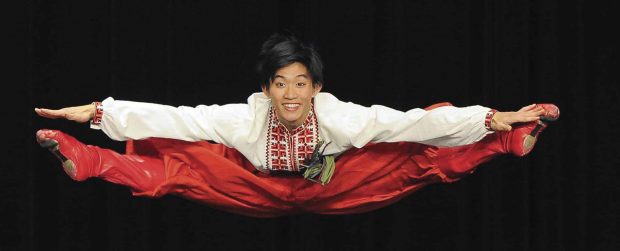
Lawrence Chen ’20 knows how to raise the barre. A ballet dancer since the age of 13, Chen is able to balance his professional dancing career while also being a full-time student majoring in chemistry. This April, Chen saw his first co-authored academic article published in a prestigious chemistry journal—a major achievement for any undergraduate student. The publication of the article is the grand finale for Chen, who spent two years doing research with Professor of Chemistry Roberto Garza-López. To understand how Chen is able to rehearse for 15-plus hours (sometimes up to 40 hours a week during performance season) and do graduate-level computational chemistry research, put yourself in his ballet slippers…

1Grow up listening to your mother share stories of studying ballet in Hong Kong—and how she had to give up a career in dance to support her family.

2Own a DVD of the American Ballet Theatre’s 1977 production of “The Nutcracker” starring Mikhail Baryshnikov and Gelsey Kirkland and watch it over and over.

3Begin to study ballet at age 13—an “extremely late” start. Decide to be home-schooled for high school courses in order to allow time to study ballet intensely at a small ballet academy.

4In addition to home-schooling, attend your local community college part time and take almost enough math classes to get an associate’s degree in the subject.

5Participate in large competitions, like the International Ballet Competition and Prix de Lausanne, to have a chance at scholarships to ballet companies with international prestige. Learn from both your successes and your losses to work even harder.

6Get accepted to a number of colleges—including the University of Southern California for its dance program—but choose Pomona for its small classes and close-knit community.

7In your first year, enroll in a ballet class taught by Victoria Koenig, director of the Inland Pacific Ballet dance company. Get invited to audition and dance in productions of “The Nutcracker” two years in a row.

8Take general chemistry courses and find a supportive mentor in Professor of Chemistry Roberto Garza-López, who attends a performance of “The Nutcracker” to see you dance.

9Spend your first two summers on campus, thanks to grants from Pomona and the Howard Hughes Medical Institute (HHMI), conducting computational chemistry research for Garza-López.

10As a co-author, see your data published in Chemical Physics Letters: X, a peer-reviewed chemistry journal, during your junior year while starting rehearsals for a production of “The Little Mermaid.”
 

—Photo by Siggul/VAM

New Knowledge

Leanchoiliid fossil

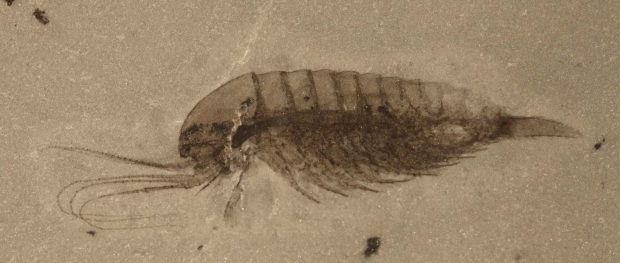
Leanchoiliid fossil from the Qingjiang biota —Photo by X. Zhang

Geology: Back to the Cambrian

These days, whenever there’s a truly earthshaking development in the world of Cambrian fossils, Professor of Geology Robert Gaines seems to find himself squarely in the middle of it. Last year, it was an article in Science called “Cracking the Cambrian,” about the latest discoveries in the fossil-rich sites that Gaines and his team unearthed in Canada’s Kootenay National Park back in 2012—considered one of the most important geological finds in recent history. This year, it’s something that may be even bigger: a 518-million-year-old fossil site unearthed in the Yangtze Gorges area of South China that may turn out to be even more important, according to a new article, also published in Science.

The new site—dubbed the Qingjiang  biota—was discovered by a team of Chinese researchers in South China. It’s home to a nearly pristine and diverse 500-million-year-old fossil record that has not been impacted by metamorphosis or weathering. The diversity of its fossils may rival that of the Burgess Shale of British Columbia and the Chengjiang fossil site in China’s Yunnan province, which are considered two of the most important fossil finds of the 20th century, according to Gaines, the only American on the team that is studying the site. The new site is more than 600 miles from Chengjiang.

In addition to their high taxonomic diversity, Qingjiang fossils are characterized by near-pristine preservation of soft-bodied organisms—including juvenile or larval forms, arthropod and worm cuticles and jellyfishes—and soft-tissue features that are rarely seen in the fossil record. More than 4,000 specimens have already been collected, with 101 species identified. Of these species, 53 are so new to science that names have to yet to be assigned to them.

“This finding enriches our view of the early animal world and offers us really remarkable views of the simplest animals,” says Gaines. “One of the most incredible things about this finding is the pristine condition of many of these specimens—fossils that haven’t been substantially affected by impacts of time, and in them you can clearly see soft tissues like eyes, tentacles and gills.”

Biology: Olson Wins NSF Grant for Nematode Research

Pomona College Biology Professor Sara Olson has been awarded a prestigious Faculty Early Career Development Award from the National Science Foundation (NSF) to explore the process of embryo development in roundworms. The five-year award of $827,962 will fund her study, as well as research opportunities for Pomona College biology and molecular biology students and rising high school seniors in the Pomona College Academy for Youth Success (PAYS) program.

Using fluorescence microscopy, biochemistry, molecular biology and genetic approaches, Olson’s research focuses on the nematode worm C. elegans, a roundworm, as a model organism to explore how protective barriers form around embryos. Findings from this study could shed light on early embryonic development in other species, including mammals.

“The idea of building a protective barrier around an embryo is common throughout the animal kingdom,” says Olson. “From worms to flies to fish to mammals, all of these animals build protective barriers around their embryos. We study how that barrier forms over the egg during early development. Before fertilization, it has to be porous so the egg is accessible to the sperm, but after fertilization it has to get remodeled and be closed off for protection.”

Another goal is to identify new drug targets to fight parasitic roundworm infection in humans, plants and animals. “These parasitic worms affect people in developing countries in Africa, Central and South America and Southeast Asia,” says Olson. “Parasitic nematode infections are a major burden that cause loss in agriculture, sickness in humans and loss of productivity. If we can figure out how the worm’s eggshell is built, we can also figure out how to destroy it in the parasitic worms.”

Homepage

Running Dry

Ogallala Aquifer

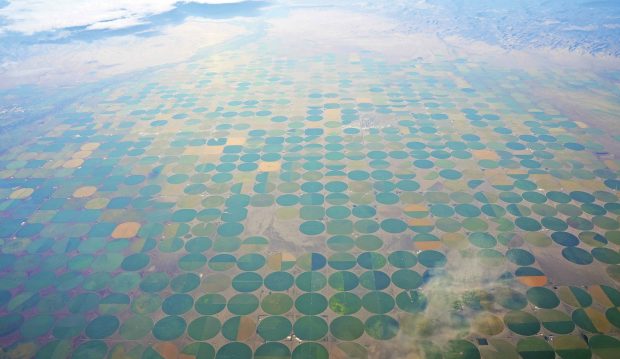
You cannot see an aquifer. What you can see, however, is the impact of these underground water systems, as revealed in this artful image of the vast irrigated fields above the Ogallala Aquifer, which underlies 174,000 square miles of the Great Plains. W.M. Keck Professor of Environmental Analysis and History Char Miller—one of the co-authors of the third edition of Ogallala: Water for a Dry Land (Nebraska, 2018)—describes monstrous roaring pumps that suck the ancient water stored deep beneath these green-hued circles into an array of pipes to irrigate sorghum, corn, cotton and wheat, or to nourish livestock.

“The massive Ogallala, which runs from Wyoming to Texas, has been one of the world’s most productive aquifers, not least because it has been crucial to the growth of the global food system,” he explains. “Yet it is an open question how long it can continue to sustain its vital role, a question that drove John Opie, Kenna Lang Archer and me to co-author this book.”

“Although the book encompasses half a billion years of the region’s history,” Miller adds, “its next-to-last sentence is perhaps the most unsettling: ‘The clear, fresh waters of the Ogallala are being gulped down at 10 times their trickling pace of replacement.’ That demand is accelerating with the exponential growth in the world’s population. By 2050, the Ogallala may be exhausted.”

Ninety-Five Percent Perspiration

molten aluminum

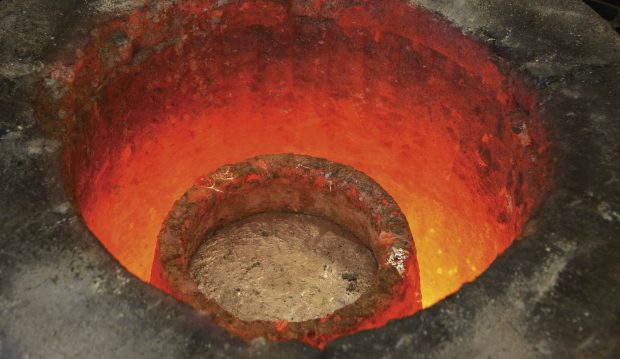
To describe the process of casting in metal, Professor of Art Michael O’Malley offers a paraphrase of Thomas Edison’s famous remark about genius: “It’s 5 percent inspiration and 95 percent just hard work.” The metal pour itself, he explains, is one of the last in a long series of intricate steps, each involving a great deal of painstaking labor. In fact, he says, “I often think of casting as a finishing process, in the same way I think of painting something made of wood.”

The molten aluminum in this photo was to be cast as the legs of a conference table, part of a project intended to engage students in personalizing Pomona’s new Studio Art Hall when it opened a few years ago. “We wanted to connect a teaching experience with a lived experience with future objects,” O’Malley says. “So the idea was to build as much furniture as possible.”

The project grew out of O’Malley’s longtime interest in the narratives encapsulated in the built environment. “Why does the world look the way that it does?” he asks. “And what is it that we can do to, perhaps, populate the built environment with objects that have alternative narratives and signal different kinds of values, different kinds of positions in the world?”

Seabirds and Island Ecology

Anacapa Island

Fresh out of college, Professor of Biology Nina Karnovsky took a job studying seabirds—and she was hooked for life. “Seabirds are sentinels of what’s happening in the ocean,” she says. “There are so many stories about human impacts on bird populations; there’s climate change that is changing the food web, the temperature, the winds. And the birds are responding.”

Over the years, she’s studied penguins in Antarctica, little auks in the Arctic and, closer to home, seabirds on the Channel Islands. “We’ve studied the prey availability and bird distribution around Santa Barbara Island,” she says. “We’ve done cruises with students where we were watching the birds, doing the net-tows, the physics measurements and the chemistry. And I’ve taken students back to the islands for field trips as well, including Anacapa.”

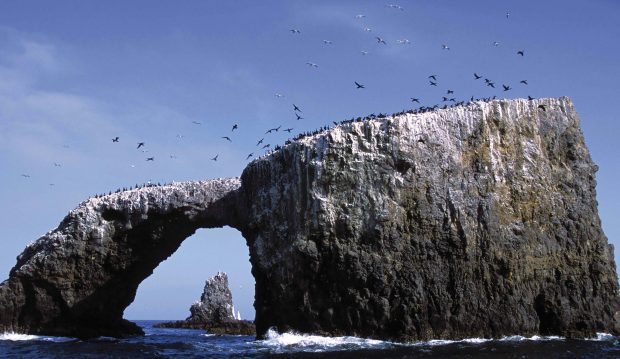
Anacapa Island (pictured) is home to one of the great success stories in conservation. In recent years, the careful elimination of invasive, egg-eating rats on the island has brought the Scripps’s murrelet out of the shadow of extinction. Last year, Karnovsky took her Advanced Animal Ecology class to Anacapa to participate in an accompanying effort to restore native plants. Unfortunately, she says, “there aren’t many success stories like that in island ecology.”

Cold Case from a Hot Planet

NASA image of Maat Mons

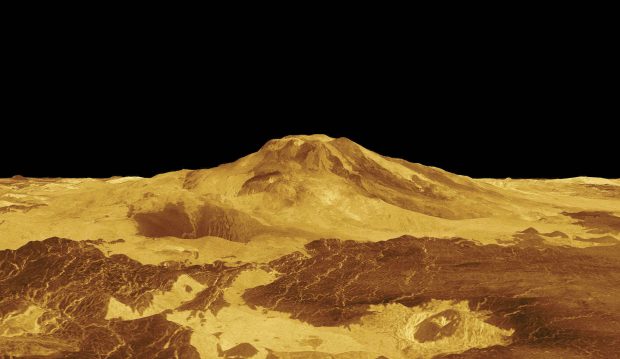
This NASA image of Maat Mons, one of the largest volcanoes on Venus, was created from radar data gathered by the Magellan spacecraft as it orbited the seething hot planet. That was a quarter-century ago, but the total amount of data Magellan sent back during its four-year life was so vast that scientists like Eric Grosfils, the Minnie B. Cairns Memorial Professor of Geology, are still digging through it to make new discoveries.

“One of the primary things that we’re doing right now is trying to understand how volcanoes grow and evolve,” Grosfils says. “For a long time we’ve been looking at what controls where magma goes beneath the volcano—why it goes straight up and erupts at the summit, for example, or goes out along a rift zone. The eruption that just happened in Hawaii underscores the fact that even at one of the most heavily studied and instrumented volcanoes in the world, we still get surprised all the time.”

Studying volcanoes on another planet, Grosfils says, is a good complement to studying them on the Earth, partly because it offers a glimpse of how volcanoes evolve in different environments, but also because the volcanic record in a place like Venus is so pristine. “Venus is not subjected to lots of erosion,” he explains. “It doesn’t have oceans that obscure the surface. For reasons like these, there is a pretty complete record of their evolution preserved for us to see.”

Grosfils says fresh discoveries still lurk in those mountains of Magellan data. For instance, last summer, two students in his lab—Brooke Carlson ’20 and Harvey Mudd student Gabi Bellino ’19—used the data to map in detail, for the first time, two large volcanoes, Dzalarhons Mons and Kali Mons. The result? “Among other things, our mapping revealed that the size of each volcano is two to five times what it was understood to be before we mapped,” Grosfils says, “and now we know the sequence of events that built each volcano from the ground up.”