Blog Articles

Backroads scholar Dan Hickstein ’06 writes the guide to mountain biking in Colorado

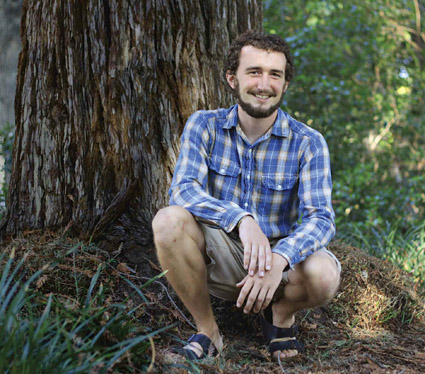
During his Pomona College days, Dan Hickstein ’06 landed a prestigious Churchill Scholarship to study at Cambridge (where he earned his master’s in physics), co-authored articles for such publications as the Journal of the American Chemical Society and  completed two internships at the National Institutes of Health.

But Hickstein also knows how to let off some steam in the great outdoors, and he recently took a year off from pursuing his Ph.D. in chemical physics at the University of Colorado at Boulder to write The Mountain Biker’s Guide to Colorado, earning rave reviews on amazon. The result: 367 pages chock full o’ trail details and ratings, maps, photos and even tidbits on bike shops and places to eat from Fort Collins to Aspen.

As Hickstein told Colorado Daily:

“A week at a time I’d drive out to some part of Colorado and ride all the trails — and ride them all with a GPS. I wanted to have really good maps in the book. I would ride with digital camera and each time I got to a turn I’d make a point on the GPS and record the instructions as a little movie on my  camera. I spent hours going through the videos and GPS tracks. I really tried to be out there most every day, rain or shine, trying to get the trails ridden and get the research done.”


Susan Beilby Magee ’66 delves into the art and life of Holocaust survivor Kalman Aron

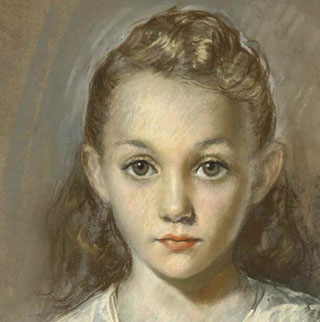
When Susan Beilby Magee ’66 was 6 years old, she posed for a portrait by Kalman Aron, a Holocaust survivor and fine artist who had come to Los Angeles after World War II and was barely eking out a living.

Fifty years later, Aron, a respected portrait and landscape artist, whose com- missioned subjects include Ronald Reagan, Henry Miller and André Previn, would ask Magee to write the story of his life.

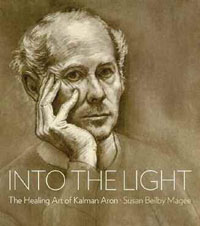
The result, nearly 10 years in the making, is Into the Light: The Healing Art of Kalman Aron, co-published in October by Hard Press Editions and Posterity Press, Inc. in association with Hudson Hills Press. A compelling and graceful mix of first-person memoir, biography and commentary, the book is also a comprehensive retrospective of Aron’s work, encompassing 210 stunning color plates and 30 black-and-white images.

Aron and Magee saw each other only sporadically after her 1951 portrait sitting. Graduating in 1966 from Pomona with a B.A. in international relations, Magee became a leader in the women’s movement in Seattle. She was a White House Fellow, earned her M.B.A. at the Wharton School and held positions in domestic finance and economic development in the U.S. Treas- ury and Commerce departments during the Ford and Carter administrations.

“Pomona College,” Magee says, “gave me the foundation that a liberal arts education is supposed to give you. It was a springboard for me to explore and be curious about life.”

In the mid-1980s, Magee’s life took an unexpected turn. She became a certified hypnotherapist and meditation teacher, founded the Washington Circle of Master Healers and is involved with healing pro- grams at the Center for Prayer and Pilgrimage at the Washington National Cathedral.

Meditation would play a part, too, in Magee’s understanding of Aron’s story and how it informed his art. “If you ask Kalman, ‘Why did you paint that particular painting about that subject?,’ he’ll say, ‘I don’t know.’ His work is unconsciously done.

“Yet you can see in his work that he metabolized his experiences,” she says. “In Kalman’s early work, he was painting all of the desolation and lack of light and color that he saw. That was what was going on in- side him. As he regained texture and color in his life, his paintings exploded with it.

“I sat in silence for five months by myself with 10 groups of his paintings,” Magee says. “What was going on in his life at the time he painted them? What was he working out? What was the influence of the Holocaust? I depended on that quiet listening for the answers.”

It was during a mutual visit with Magee’s ailing mother that Aron asked Magee to write his story. (An interior decorator and art patron, Magee’s mother played a major role in Aron’s early success as a portrait painter. “She sent him all her clients,” Magee explains.)

Aron’s request came after seeing the 2002 film The Pianist. Based on a Jewish-Polish musician’s World War II memoir, the film, Magee says, had somehow given Aron the freedom to tell the story he had tried to forget.

“I wasn’t going to have anybody write it,” 88-year-old Aron says from his home in Los Angeles, “because I didn’t want to remember it.” Magee, he says, “did a good job.”

After an initial 18 hours of interviews, Magee’s research took her to the U.S. Holocaust Memorial Museum in Washington and to Europe, where she visited the sites of Aron’s childhood home in Riga and the camps where he was incarcerated in Poland, Germany and then-Czechoslovakia. Among the records that she found was the transit paper marking Aron’s arrival at Buchenwald.

From Prague to Salzburg, Magee followed Aron’s post-liberation route as he fled Russian Army custody. She went to Vienna, where the artist and his first wife lived before emigrating to the United States in 1949, and where Aron attended the Vienna Fine Arts Academy on a full scholarship after the war.

At the site of the Rumbula massacre where Aron’s mother was among 25,000 Jewish Latvians killed over two days in 1941, Magee placed a memorial stone honoring both of Aron’s parents.

Aron, who refuses to go back to Latvia, was uneasy about the trip. “I didn’t want her to go,” he says. “It was brave of her.”

Magee, who is not Jewish, believes, however, that she could not have written the book if not for her own “deep healing journey” as a victim of child abuse. “People who know me know the history of what happened to me,” she adds, “but this is the first time that I’ve written it in print.”

For Magee, one of Aron’s most revelatory pieces is a small, dark painting from the early 1950s called “Kalman Marching in the Camp.” In it, Aron is the skeletal central figure, flanked by smaller faces that appear alternately “wise, sad or terrorized.”

“I realized that those were all aspects of Kalman in the camps,” she says. “But the one that survived is the one upfront and center, the one who is utterly determined to survive, even though he has had to let go of most of his light.

“That’s what he would reclaim,” Magee says. “He wanted to live so that he could see the world and paint it.”

Awkward!

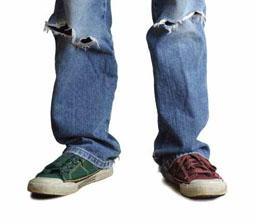
On the first day of his Critical Inquiry class, Linguistics and Cognitive Science Professor Michael Diercks strolled into the room, looking very much like any other college student, wearing a plain T-shirt and a pair of jeans. He sat down among his students and introduced himself as Michael. After engaging in conversation with his “classmates” about how late the professor was, he finally introduced himself to the class as their teacher. An awkward silence fol- lowed. And then some nervous laughter. What did they expect? This was a class on social awkwardness!

Inspired by the humor around awkwardness in media, particularly TV shows such as The Office and Arrested Development, Diercks created this class as an extension of his Social Awkwardness Project, which seeks to understand those gawky moments in real life, examining, why, where and when we experience the phenomenon.

In the Pomona College class, students look into the linguistic triggers of social awkwardness, reading papers on the topic and investigating situations that are considered to be awkward. The larger project started more than a year and a half ago, with student research carrying on over the summer. “We are trying to put together a new body of knowledge around social awkwardness,” says Diercks. “The extent to which we become successful remains to be seen.” And if there are trip-ups along the way, let’s just hope they don’t happen while he’s carrying a tray through a crowded lunchroom while walking past the cool kids’ table …

Hen Hunter

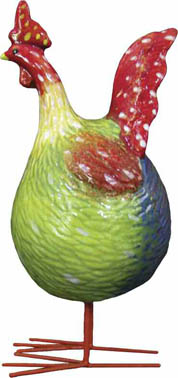
It’s not part of her official job description, but P.E. Coordinator Lisa Beckett still puts plenty of gusto into her once-a-year hunt for the “weirdest-looking hen I can find at the cheapest possible price.” Scouring the clearance racks at places like Marshalls and Tuesday Morning, the former women’s tennis coach always comes up with perfectly kitschy cluckers—ceramic bobble chicken, anyone?—to serve as prizes for the competitions at the annual tennis event held during Alumni Weekend. Taking home the tacky treasures this year were Brenda Peirce Barnett ’92, Robb Muhm ’91 and Constance Wu ’14, who, we are sure, now have their poultry prizes on proud and prominent display.

NPR’s Joe Palca writes about what bugs us

“A constant struggle against being annoyed all the time may be a phenomenon limited to New Yorkers,” says Joe Palca ’74. The relocated Upper West Sider knows of what he speaks when it comes to irritable straphangers, but he has also established himself as one of the world’s experts on annoyance with Annoying: The Science of What Bugs Us, a book that’s about just what you think it’s about, and which the NPR science correspondent co-wrote with NPR multimedia editor Flora Lichtman.

Palca earned his Ph.D. in psychology at UC Santa Cruz after graduating from Pomona, where he got his start on radio at KSPC. “We just brought our record collections to the station and played what we would have listened to anyway,” he says of his radio days in Claremont.

These days, Palca spends his time in Washington, D.C., although he also recently logged six months back in Southern California as the science writer-in-residence at the Huntington Library. The catalytic annoyance that inspired this study of all things annoying arrived—and it’s tempting to write “of course”—on the New York City subway. Palca spoke to PCM about how he came to study annoyingness, the reasons why you—and everyone else, everywhere—hate the sound of fingernails on a blackboard, and his as-yet-unfulfilled quest for the definitive annoying experience.

As a sentient human living in a major American city, you are more or less guaranteed multiple annoyance triggers in a given day. Can you put your finger on a moment when that workaday annoyance started to seem like something worth writing a book about?

The finger-putting moment for the book actually came from my co-author, Flora Lichtman. She was riding on the subway from Brooklyn to Manhattan, and the guy sitting next to her on the train was clipping his nails. She found herself becoming increasingly annoyed as the clipping seemed to continue way longer than necessary for someone with only 10 digits. She asked me if I thought exploring why this experience annoyed her so could make a book, and I said, “Sure.” I pitched her idea to an editor at Wiley, he loved it, and though we ultimately had interest from several publishers, Wiley won a bidding war.

In Annoying, you identify an experience’s unpleasantness as a fundamental aspect of its annoyingness, which seems hard to argue with. There’s no accounting for taste on the question of pleasantness-versus-unpleasantness, but did you find anything that annoyed more or less everyone, everywhere?

I suppose the quintessential universal annoyance is fingernails on a blackboard, although with the disappearance of blackboards that may change. Rubbing Styrofoam boxes together captures some of the same awfulness. Skunk smell also seems to be a nearly universal annoyance. Why? Hard to say for sure. Fingernails on a blackboard has an acoustic signature similar to a human scream or a primate’s warning call. Skunk spray’s smell comes from sulfur, and high sulfur environments tend to be low oxygen environments. Perhaps these things evoke a primal avoidance reaction, which we have modified over evolutionary time to be merely annoying.

No one really likes overhearing half of someone else’s phone conversation, but I was surprised to learn that our brains are actually wired to listen to and attempt to interpret that sort of “halfalogue.” To what extent is being annoyed attributable to unhelpful reflexes like that? And can we do anything to change that?

Annoyances can seem reflexive, but in nearly all cases they are learned. Does that mean we can train ourselves not to be annoyed? Not really. We can try to become calmer people, of course, but once something’s annoying it usually stays annoying. But you can, with practice, learn not to respond. You can’t prevent your leg from twitching when a doctor taps your patellar tendon with a hammer. If you can, you have problems that go way beyond annoyance.
You pin down three main factors that go into making experiences annoying—they’re unpleasant, unpredictable and of an uncertain duration. Excluding three-for-three flukes like getting stuck in traffic with a screaming baby and a car radio inexplicably stuck on a Black Eyed Peas marathon, what would be your ultimate annoying experience?

For me, being stuck in a noisy, hot waiting room for a flight or train that is delayed with no explanation is close to my ultimate annoyance. The absence of information is what pushes me from everyday annoyance into the top echelon. I have to fudge on whether it’s the ultimate annoyance, though. I feel life is full of discoveries, and I hope I have yet to discover my ultimate annoyance.

—Interview by David Roth ’00


Cereal Thrillers

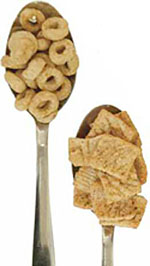
Cold cereal is a hot topic for Sagehens who rely on General Mills for a fast fill-up before class. Some 664 students responded to an online cereal survey conducted in the spring by the ASPC Food Committee. These favorite cereals, along with three others, will be served in Frank and Frary dining halls this semester.

And if wolfing down a bowl of cereal is often an auto-pilot routine, some students are mixing things up and thinking outside of the cereal box. “Cereal mixing is truly an art,” says Ellen McCormack ’12. “One of my staple breakfasts [while studying abroad] in Ireland was generic Cheerios, plain yogurt, one glob each of peanut butter and Nutella and a ripe banana cut into slices with a knife … As a bonus, I grossed out my Irish flat mates.”


Pomona’s Top 5 favorite cereals:

  1. Honey Nut Cheerios
  2. Cinnamon Toast Crunch
  3. Special K Red Berries
  4. Frosted Flakes
  5. Golean Crunch

Catchy Classes

Each fall semester brings a new batch of critical inquiry courses, the intensive writing seminars that all first-year-students take.  As a side benefit, the titles and descriptions for these creatively-conceived classes always enliven the course catalog. Read these blurbs and you’ll wish you could enroll:

Fragrant Ecstasies: A Cultural History of the Sense of Smell. Mr. Rindisbacher. “The reek of a Kansas feed lot, the aroma of fresh-baked bread, the scent of jasmine on a breezy spring day… Smells connect to perfumery and luxury, to chemistry and neuroscience, to aromatherapy and advertisement, to stench and death—but always also to the erotic and sex. It is an interdisciplinary field par excellence …”

Can Zombies Do Math? Ms. Karaali. “We have all heard of the objective and universal nature of mathematics. Bertrand Russell talked about a beauty cold and austere. Are these perceptions of mathematics related? Accurate? “Can anyone but the warm-blooded humans that we are do math? Does a zombie have what it takes to comprehend and appreciate the aesthetics of mathematics? …”

Nanotechnology in Science and Fiction.  Mr. Tanenbaum. “Nanotechnology … is currently one of the most heavily funded and fastest growing areas of science. Depending upon what you read, nanotechnology may consume our world or enable unlimited new materials, destroy life as we know it or enable immortality, lead us to squalor or utopia, or simply make better electronic gadgets. … ”

In Memoriam: Corwin H. Hansch

Corwin H. Hansch
Professor of Chemistry Emeritus
1918–2011

Corwin H. Hansch, professor of chemistry at Pomona College from 1946 to 1988, died May 8, 2011, after a long bout with pneumonia. He had served on the Pomona College faculty from 1946 until 1988, and even after retiring from teaching he had continued with his research in the Chemistry Department until 2010. He was 92.

Hansch, the founder of Quantitative Structure Activity Relationships (QSAR), received his B.S. in chemistry from the University of Illinois and his Ph.D. from New York University. After a brief postdoctoral stint at the University of Illinois, Chicago, he worked on the Manhattan Project at University of Chicago and at DuPont Nemours in Richland, Wash. After World War II ended, he took a position as research chemist at Du Pont Nemours, but left soon thereafter, coming to Pomona College in 1946. During his tenure, he completed two sabbaticals, one at the Swiss Federal Institute of Technology in Zurich and the other in Rolf Huisgren’s laboratory at the University of Munich.

Shortly after arriving at Pomona, he met a Pomona botany professor, Robert Muir, and their mutual interest in understanding the workings of plant hormones led to his pioneering work in QSAR. Hansch soon changed the direction of his research from the study of high temperature dehydrogenations to the correlation of biological activity with chemical structure; this led to the publication of his early, seminal works in QSAR, ably aided by Toshio Fujita. The founder of QSAR, Hansch came to be recognized as the “father of computer-assisted molecular design,” and the methodology he spawned is now utilized in most pharmaceuticals and biotechnology companies.

The author of numerous books running the gamut from organic chemistry texts to medicinal chemistry to QSAR treatises, he also wrote or co-authored more than 400 publications in all. During the period of 1965 to 1978, he was one of the 300 most cited scientists in the world. He also received many awards, including two Pomona College Wig Awards for excellence in teaching, two Guggenheim Fellowships and numerous accolades from the American, Italian and Japanese Chemical Societies. He was the first recipient of the American Chemical Society (ACS) Award for Research at an Undergraduate Institution (1986), as well as the first recipient of the Smissman-Bristol-Myers-Squibb Award from the ACS’s Division of Medicinal Chemistry (1975). In 1990, he was elected to the Royal Society of Chemistry and in 2007, he was inducted into the ACS’s Medicinal Chemistry Hall of Fame.

Mentor to a large number of undergraduate students and more than 40 visiting scientists and postdoctoral scholars from the U.S. and around the world, Hansch helped raise the profile of research at primarily undergraduate institutions and was instrumental in establishing the Fred J. Robbins Lectureship in Chemistry which helps to bring scientists of Nobel Laureate stature to the Pomona College campus.

In recent years, he devoted his time and effort to developing and organizing QSAR equations based on data generated internally and from global literature. His electronic database CQSAR, now contains more than 22,000 mathematical models. He was especially interested in comparing chemical QSAR with biological QSAR to gain insight into how chemicals interact with biological receptors.

Hansch was a voracious reader, his reading tastes ranging from scientific literature and politics to economics and film. He and his wife, Gloria, who was instrumental to his success, loved to travel, and their adventures spanned the globe. He was an avid skier and loved to ski Mt. Baldy, Aspen, the Alps and the Andes. —Cynthia Selassie

Arango/Aramont Gift Supports Outdoor Education

Pomona College students quickly learn the wilderness is within easy reach and it’s full of experiential learning opportunities. For years, freshmen in Orientation Adventure, students from On the Loose (OTL) and various field-trip-oriented faculty members have been taking advantage of these opportunities to learn and explore in the Mojave Desert, Joshua Tree, the Channel Islands and other Southern California spots.

Now, Pomona’s new Outdoor Education Center (OEC) will be the organizing force behind recreation and learning in the College’s environs. The center, which has been in the planning stages for about two years, is a part of an initiative to “build local and global connections” in Campaign Pomona: Daring Minds. It has received a generous $600,000 gift from Lucila Arango ’88 and the Aramont Foundation to help fund the initial startup costs of the center and provide annual support.

“I came to Pomona from a high school with an active outdoor program and, as an undergrad, missed having that as part of my college experience,” says Arango, an avid biker, climber and hiker who has summitted Mt. Whitney and Mt. Kilimanjaro.

On a recent rock-climbing trip to France, Arango and her son had a chance meeting with another American climber who happened to be a recent Pomona graduate and told them about the heavy interest in outdoor activities among today’s Sagehens. “I wanted to help encourage that interest,” says Arango. “After many conversations with President Oxtoby, I was convinced that Pomona could create a first-class Outdoor Education Center.”

With almost 500 students participating in OTL trips each year, and the entire incoming class of first-year students taking part in Orientation Adventure, the cramped rooms in Walker Lounge could no longer support the demand for storage and meeting space. In its location in Pomona Hall, one of the College’s new residence halls, the OEC offers a large storage space for equipment, easy access for loading vehicles and a library of books and maps, as well as serving as an organizational center for OA, the student-led On the Loose outdoors club, and other campus groups and faculty who want to arrange field trips. It also is an educational center with workshops, new credited Physical Education classes and a new three-level Outdoor Leadership Series certification program.

“You progress through levels through your college career,” says Martin Crawford, senior coordinator for the OEC. “By level three, you are helping to arrange trips for the faculty and putting on workshops at the OEC.”

This organized approach to outdoor exploration and learning also will assist faculty with planning field trips and providing trained student guides. Astronomy Professor Bryan Penprase has gone on several trips in the past with professors and classes in other disciplines and is planning another for November, now with the OEC and Crawford involved. In a trip to the Mojave National Preserve, Penprase will bring his Earth’s Cosmic Origins class and lead a “star party” at night. Anthropology Professor Jennifer Perry will discuss prehistoric rock art, Geology Professor Bob Gaines will discuss the geological landscape and Crawford will lead a trip into a lava tube.

“It’s an amazing thing to mix classes of students and subjects, and take people out of the box a little bit and get them out of their usual classroom mode,” says Penprase. “I think both the professors and students find that refreshing, and the outdoor settings around here are so amazing.”

Daring Mind: Outdoors adventurer Adam Buchholz ’12

Adam Buchholz ’12, a director of On the Loose (OTL), has led nine OTL trips and participated in seven others since joining the student outdoors club as a freshman. A biology major from Olympia, Wash., Buchholz says that when he was weighing his decision about where to go to college, OTL tipped the scale in favor of Pomona.


Favorite first-year trip: Definitely Moab. It’s one of the best places in the world for mountain biking. I’d never done it before, but we were with a very knowledgeable group from OTL, and by the time we reached a classic part of the trail called Porcupine Rim, I felt a lot more secure. That section is about a foot and a half wide; you’re dodging boulders, and about 10 to 15 feet on your right is a 1,000-foot cliff that drops down to this beautiful green river and red rock. It was very scenic, exciting and memorable.

It’s not just the scenery: Part of what I enjoy about OTL is the community because it brings together so many people who are excited about the same thing. It’s easy to feel sort of stuck in the Claremont bubble and OTL trips are a great way to get out and have a completely different experience.

Just outside the bubble: Joshua Tree, which is only two hours away, is a great destination for rock climbing. Another place that’s close by is Mt. Baldy. Our most heavily attended event of the year is the Baldy Speedo Hike, which is an experience every Pomona student should have. We hike to the top wearing Speedos, hiking boots and knee socks and bond over the strange looks we get from people.

Reaching the top: It can take weeks to figure out how to do a climb; you try it over and over and one day you come at it from a different angle, and you finally reach the top. Sometimes you find a climb, like “Necessary Evil” in Apple Valley, that is in a beautiful setting and the line you’re climbing is perfect. It’s just a question of trusting it and making yourself push through the exhaustion and fear. And it’s exhilarating when you reach the top.

The Outdoor Education Center: The great thing about it is it provides a lot of formal opportunities to be educated and gain wilderness skills, and it provides certification. If you’re not experienced, planning an outdoors trip can be a very daunting task, and OEC can provide that kind of expertise professors need to integrate field trips into their curriculum.

Daring Minds: One of the OTL commandments, which comes right after “being safe,” is “going big.” What that encourages you to do is go out and try something like hiking Mt. Baldy, which is about a 10-mile-long trail and 3,950 feet of elevation gain. Most students would say, ‘No way,’ but when you get a group of people together who know what they’re doing and know how to do it safely, you can push your boundaries and accomplish things that you never would have done on your own.