Blog Articles

Stray Thoughts

This fall we’re celebrating originals.

Original thinking—one of the hallmarks of this singular place—is at the heart of Originals: The Campaign for Pomona College, an ambitious fundraising campaign to enrich and sustain the College for generations of Sagehens to come. You can read more about Originals in this issue’s special section (page 25), and I encourage you to do so.

What makes a thing original has also been very much top of mind for our editorial team as we contemplated our feature stories for the magazine.

In “What’s the Big Idea?” we cast our eyes back over decades of Pomona history to lift up a dozen (or so) true originals who came up with brilliant ideas and had the talent, tenacity and all-around gumption to turn those gems into transformative realities—be it an Avery label, a windsurfer or a bengal cat (see page 33 for more genius inventions).

We’re pretty sure there are scores more Sagehens out there who have changed the world—or at least a corner of it—for the better through next level creative thinking and extraordinary powers of collaborative problem solving.

Have you crossed paths with a fellow alum who fits that description to a T? We’d love to hear about them. Send me a note!

—Judy Hill 
editor-in-chief
judy.hill@pomona.edu

Remembering Rev. Gordon Verplank

I was saddened to read in PCM of the death of Rev. Gordon Verplank ’62 in September 2024. He was a very fine person and someone who had a major impact on Pomona and the other Claremont Colleges as College chaplain from
the late 1960s through the 1970s.

Rev. Verplank, or Gordon as I and other students knew him, started as the Colleges’ chaplain during the height of the Vietnam War. He helped organize protests against the war and became the administrator for the Claremont Colleges Draft Counseling Center, working with countless students faced with the difficult decision of whether to enlist, wait to be drafted, become a conscientious objector or go to Canada. It’s safe to say that his work saved many young lives.

Gordon was also the driving force in expanding the chaplaincy from being solely a Protestant ministry to including both a Catholic priest and a Jewish rabbi as co-leaders with him.

I came to know Gordon my last two years at Pomona when he learned that I was doing a double major in political science and religion. It was Gordon Verplank who challenged me to “come out as a Christian,” not in terms of sexual expression, but to quit letting other people define what being Christian meant. For Gordon, that meant caring about this world and its peoples, standing up for justice and working for peace. “If you think that’s what is important in life,” he said, “then don’t let other people get the last word about what being Christian means.”

I know from other classmates that he played a similar role in their vocational decisions. Both Pomona College and this world were well-served by Rev. Gordon Verplank.

—Rev. Talitha Arnold ’75
The United Church of Santa Fe


Object Lesson: Gentle Giant

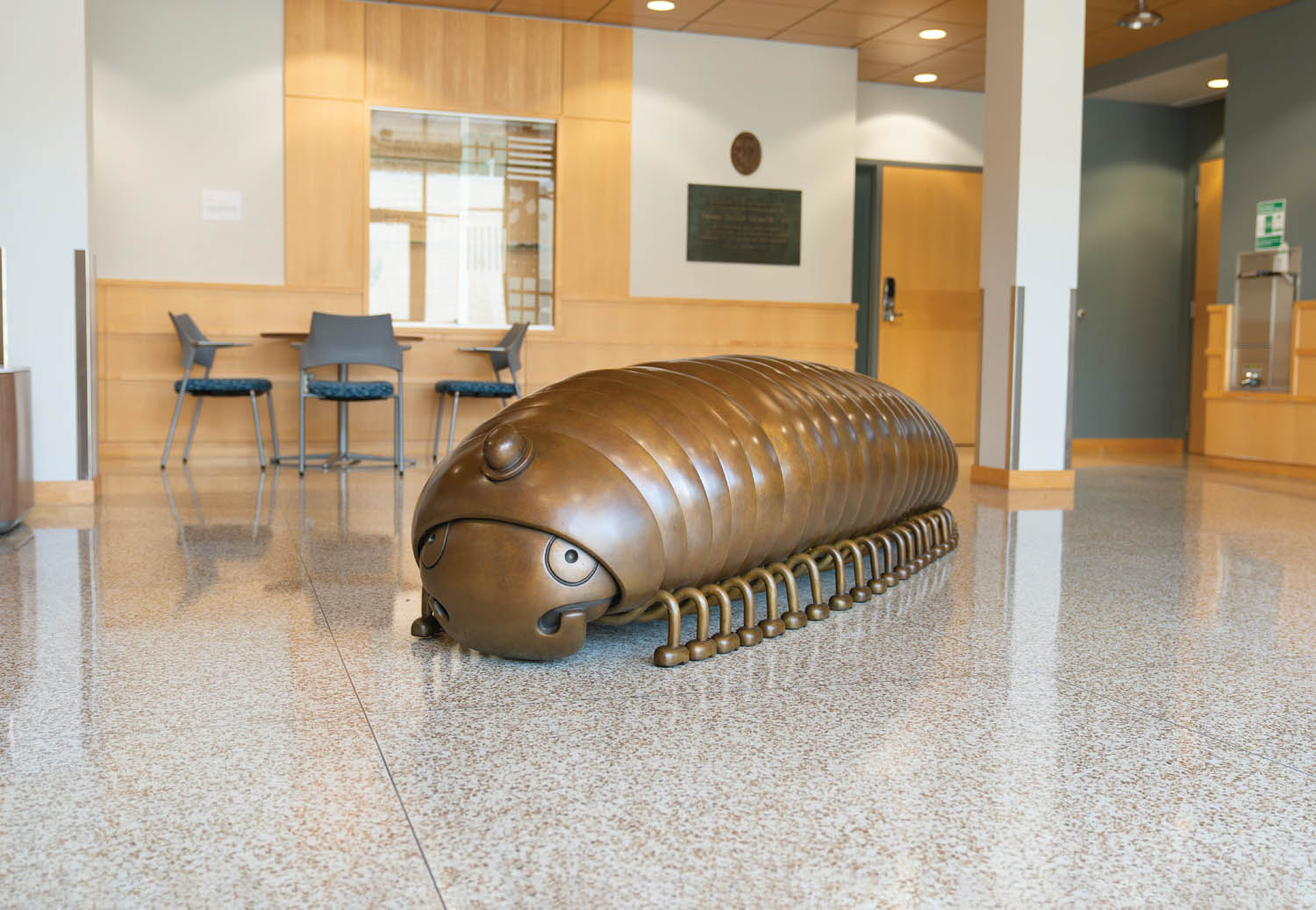
Bronze sculpture of a millipedeThis many-legged friend, happily residing in Seaver South since 2024, is the creation of American sculptor and prolific public artist Tom Otterness.

  • Aptly titled “Millipede,” the 25-foot-long bronze sculpture was given to the college by Janet Benton ’79, Pomona College alumna and chair of the Board of Trustees.
  • For many years, the shiny arthropod had lived in an outdoor location, requiring regular surface treatment. Benton’s gift was contingent upon the museum finding a suitable, sheltered space on campus.
  • A full-scale cardboard mock-up was created by two interns to determine optimal placement before the final move.
  • Otterness is known for playful, cartoonish sculptures that often blend humor with social commentary. Our millipede may be an anomaly.
  • Public art pieces by Otterness can be found in the New York Subway, the zoo at San Jose, Manhattan’s Battery Park City and cities including Seoul, Toronto and Scheveningen, the Netherlands.

New College Registrar

Lindsay Stadler has been selected as the College’s new registrar after serving in the role on an interim basis for almost a year. Stadler earned her bachelor’s from Claremont McKenna College and master’s from Claremont Graduate University. “I have been around The Claremont Colleges the vast majority of my adult life,” says Stadler, who started at Pomona in 2022 as associate registrar of operations. “I feel I’ve grown up professionally here, and I’m really fortunate to have such supportive and collaborative colleagues in registrar’s offices around the consortium.”

At the Humanities Studio

With the Humanities Studio’s much-lauded founding director Kevin Dettmar stepping down from his role last spring, the studio, which fosters interdisciplinary study of the humanities among Pomona students and faculty, is now headed up by Tomás Summers Sandoval Jr., a professor of history and Chicana/o Latina/o studies. Sandoval’s teaching and research focuses on Latine populations in the United States and he is currently at work on a book examining the history of Latinos in relation to the U.S. war in Vietnam.

Peeling Back Time

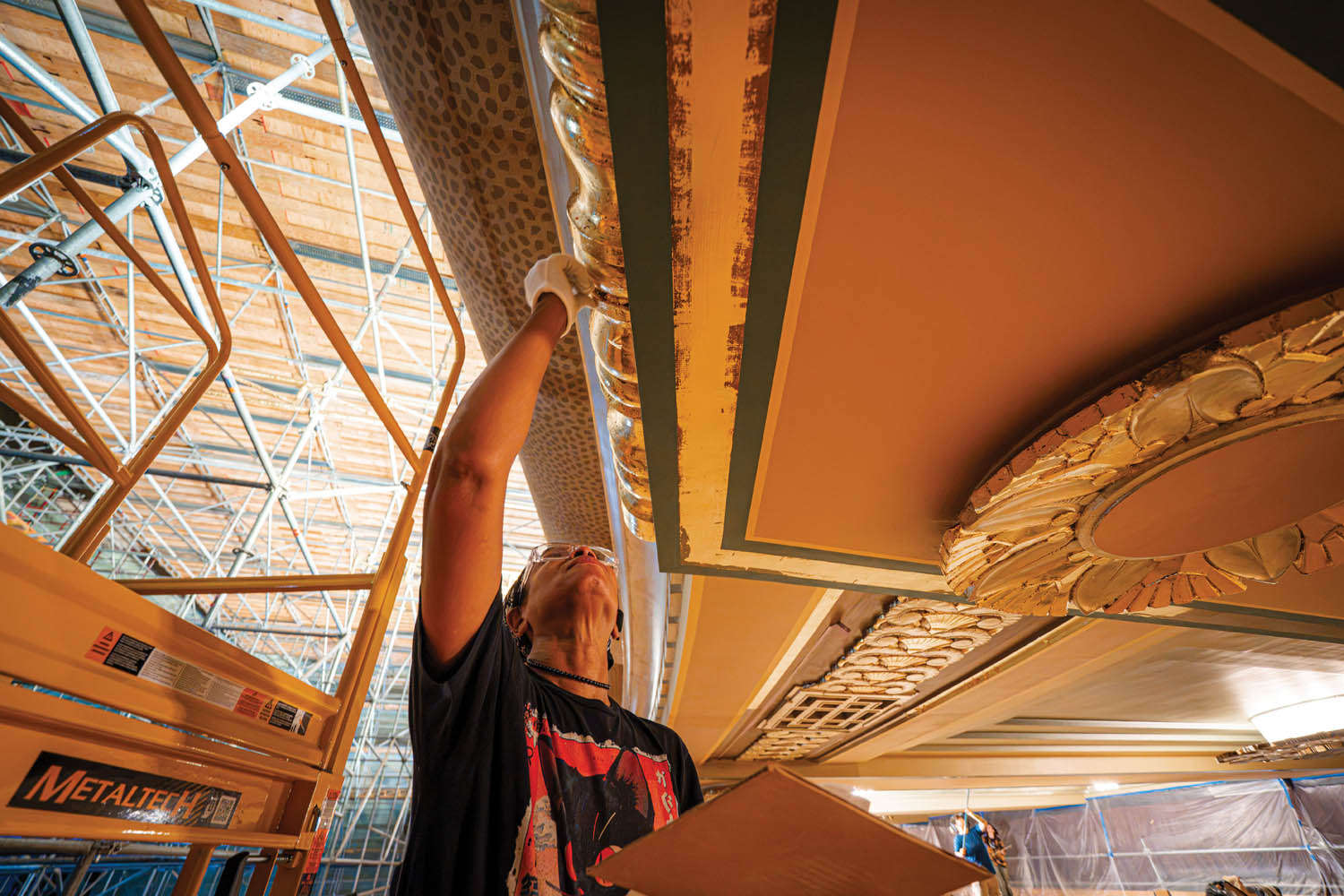
Woman applying gold leaf to the underside of a balcony

Lead restorer Marlene Sophia applying Dutch metal leaf to the underside of the balcony.

As “Big Bridges” approaches its 2031 centennial, its iconic ceiling mural, created by Italian American artist Giovanni Smeraldi, has undergone a full restoration supported by a $1 million donation from the Timken Foundation.

“The Smeraldi mural is a priceless work of art that should be preserved for future generations to enjoy,” says Kurt Timken ’86. It was Timken’s great-aunt, Amelia Bridges, who, with her husband, Appleton Bridges, funded the original construction of Big Bridges and Little Bridges, in memory of their daughter, Mabel, who died in 1907 during her junior year at Pomona.

Brooklyn-based EverGreene Architectural Arts carried out the restoration work, which began with assessing obvious damage—water staining, cracks from the 1994 Northridge earthquake and overall fading and peeling—and cleaning the entire ceiling with dry sponges. An elaborate scaffolding system allowed the conservators to reach every inch of the mural.

When audiences return to the auditorium this fall, the ceiling won’t look vastly different, just a little fresher. Since the last restoration in the 1970s, explains restorer Brynn Griffiths, “dirt and soot and smoke and time” have taken their toll. “A lot of the pigments that were used in the past,” she says, “were not light fast, and with time they discolor and oxidize.”

The most noticeable changes for audience members may be the proscenium arch and the underside of the balcony (EverGreene site lead Marlene Sophia is shown here applying Dutch metal leaf to that area). The restoration team was able to peel back an area of the tan paint that has covered it for the last 50 years and uncover the original colors and patterns beneath.

Gurnee Fellows Hart 1929–2026

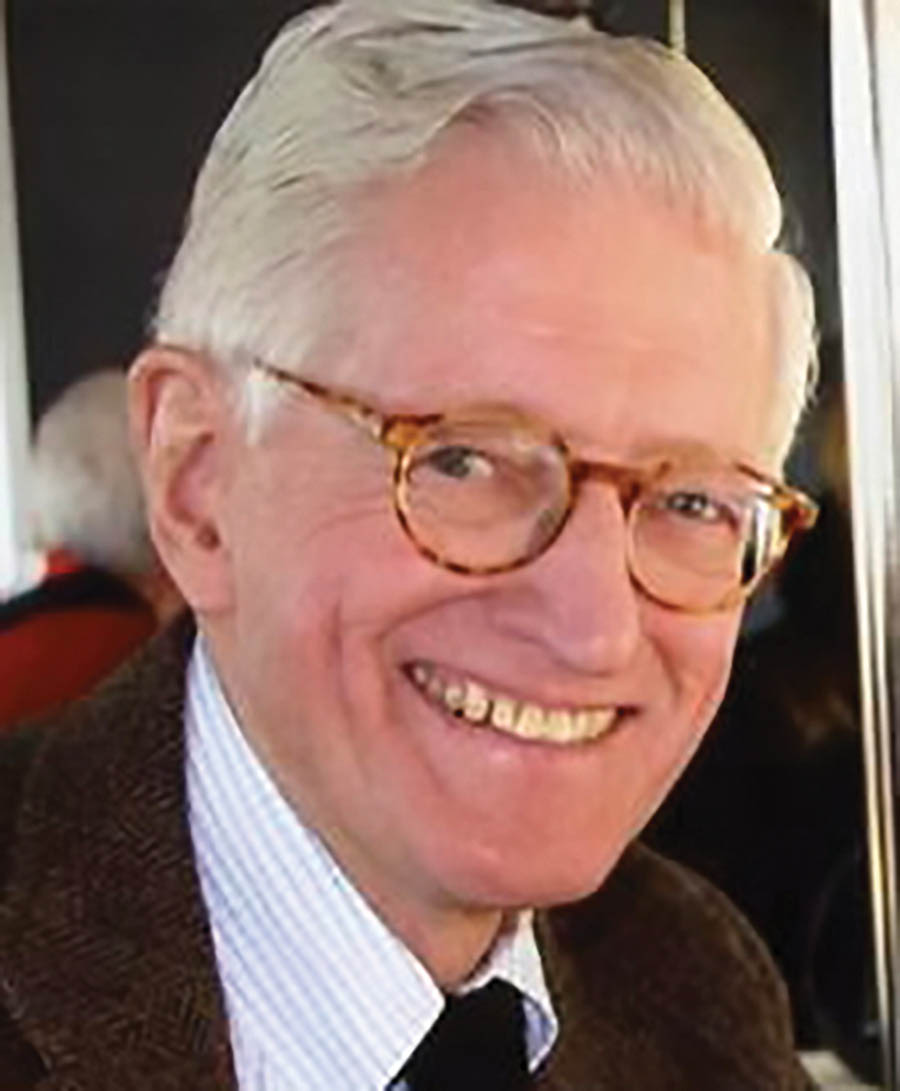
Portrait of Gurnee HartThis spring, Pomona College President G. Gabrielle Starr shared the following message with the community.

It is with profound sadness that I share the news of the passing of Trustee Emeritus Gurnee Hart ’51. Gurnee departed peacefully on May 22, leaving a legacy defined by wisdom, generosity and an abiding love for Pomona College that spanned more than seven decades.

A proud member of the Class of 1951, Gurnee earned his bachelor’s in economics, was elected to Phi Beta Kappa and carried the spirit of a Pomona education for the rest of his life. After serving our country in the U.S. Army during the Korean War, Gurnee went on to earn his MBA at Stanford—and from there had a distinguished career culminating as partner at Scudder, Stevens & Clark before retiring in 1994.

Yet for Gurnee, achievements were never an end in themselves. It was always about being in service of something larger. In retirement, he became a visiting scholar at Jesus College, University of Cambridge—one of our partner schools—and went on to serve as a founding chairman of Cambridge in America. He lent his quiet and steady leadership to the boards of the New York Philharmonic and the French Heritage Society, among several other institutions.

To the College, Gurnee gave everything a person can give: his time, his counsel and his treasure. He served on the Board of Trustees for 18 years, and continued as an engaged trustee emeritus long after, serving on the finance and advancement committees, in addition to co-chairing the Campaign Steering Committee from 1996 to 2002. He participated joyfully on his 40th, 45th and 55th reunion gift committees, and later co-chaired his 60th.

He and his wife, Marjorie Leigh Hart, have contributed more than $2 million—creating lasting gifts to our community: the Hart Institute for American History and the Gurnee F. Hart ’51 College Archives Fund, each a testament to his belief in the importance of remembering and honoring the places we come from. Throughout the decades, they have also been loyal Annual Fund supporters.

Gurnee was, in every sense, the embodiment of what it means to bear added riches beyond the Gates in trust for humankind. He did not simply believe in Pomona’s mission—he lived it, in the fullness and generosity of a life well spent.

Our hearts continue to go out to his beloved Marjorie and family, and to all who were fortunate enough to call him a colleague, mentor and friend.

As we remember him, may we honor his life and legacy by carrying forward the example he set throughout his life: bearing his added riches in trust for humankind.

Warm regards,

Gabrielle Starr, President
Student Spotlight: Elle Hawthorne ’29

Hometown: Wilton, Connecticut
Intended Major: Double major in geology and environmental analysis
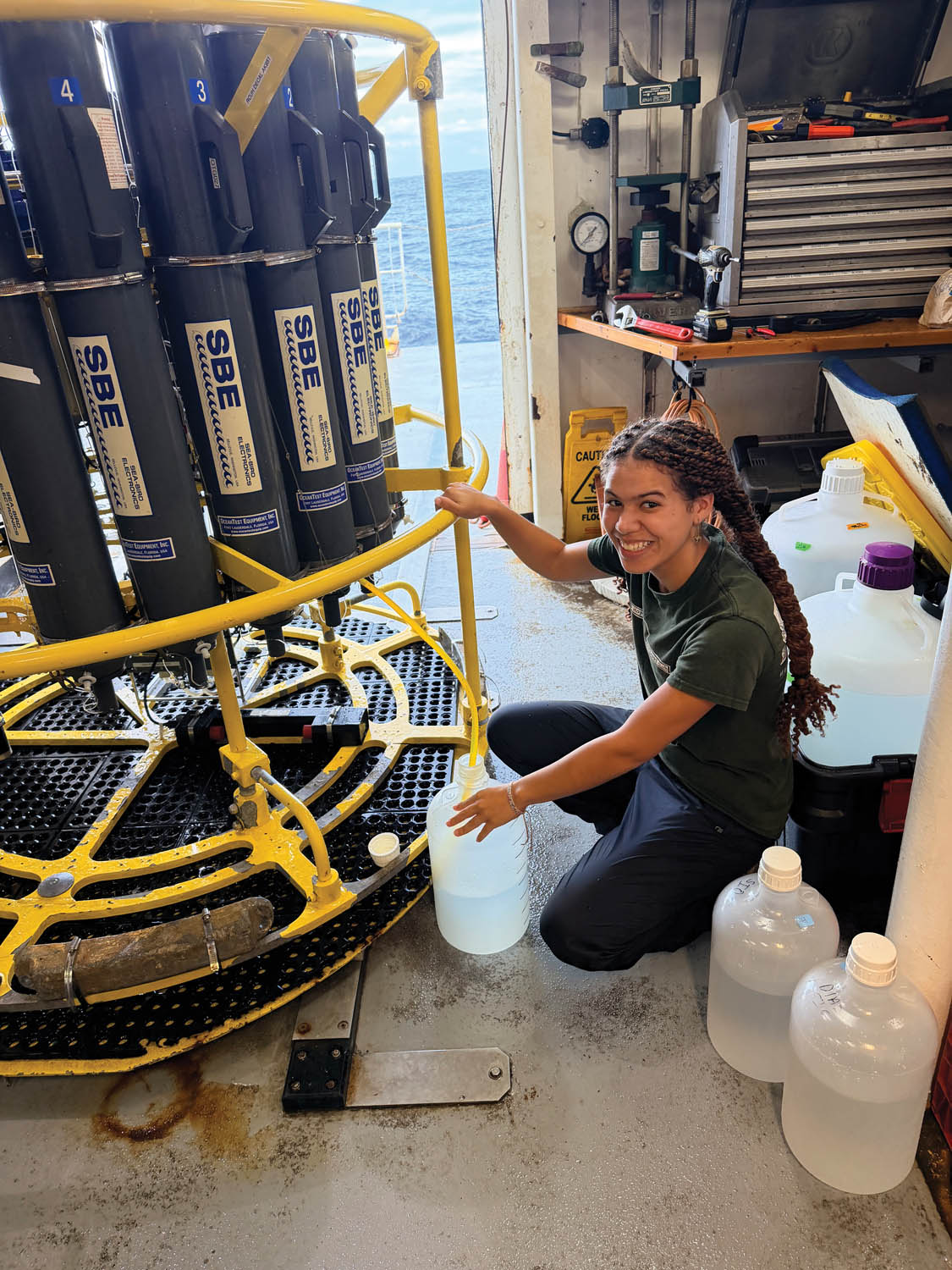
Peak Pomona Experience: Participating in a one-month oceanographic research cruise from San Diego to Hawaii to study the role of nutrients in the ocean.


Student working on science project aboard a research vesselHow it happened: I took an Intro to Geology class taught by Professor Maria Prokopenko, with a focus on oceanography. One day she mentioned she would be at sea for a month doing research this summer in the North Pacific. I went up to her after class and asked if she was looking to take any students. She was!

Onboard: There were scientists and grad students from the University of New Hampshire, University of Minnesota, Texas A&M, USC and Scripps Institute of Oceanography at UC Diego. Charlotte Renner PZ ’27 and I were the only undergrads.

A typical day: We would start sampling water around 7 a.m. and wrap up close to 8 p.m. When we were traveling to another station, it was more relaxed, and our only responsibility was to collect samples of surface water every four hours. On those days, we got to do recreational activities like fishing. One of the crew members was from Hawaii and she gave us lessons in hula and Hawaiian culture.

Takeaway #1: There were a couple of times where people would notice something interesting in the water and say, ‘OK, let’s go run an experiment.’ I thought that excitement and willingness to explore things they didn’t understand was really cool.

Takeaway #2: At the beginning I felt nervous and didn’t ask too many questions. As I became more comfortable, when something confused me, I would talk to people, and sometimes it turned out they didn’t understand it either. Asking questions benefited everyone because then we had more things to explore and discuss.

Takeaway #3: I learned just how much we don’t know about the ocean. I was reminded how vast and important it is.

By the numbers: Charlotte and I did a tally of how many liters of water we filtered to see how much we had accomplished. We estimated around 2,600 liters.

Post-Pomona: This experience has solidified my interest in geology and made me consider going to grad school for oceanography. A lot of the time I was there, I was thinking I could totally see myself doing this as a career, so that’s a great insight to have.

Read All About It

A stack of booksWe got several responses to our call in the last issue of PCM asking Sagehens to tell us about their first-year class book (pre-2003). This is what we know so far (and who told us):


1961
The Two Cultures and the Scientific Revolution
by C.P. Snow
(Svata M. Louda ’65)
or
Memoirs of Hadrian
by Marguerite Yourcenar (Candy Reiter Midkiff ’65)

1963
The Secret Agent
by Joseph Conrad (Judith Grammel Evans ’68)

1967
No first-year read
(Peter V. Huisking ’71)

1974
No first-year read
(Diane Mayfield ’78)

1978-1979
No first-year read
(Margo Tanenbaum ’82,
Jack Mearns ’83)

1996
Palace Walk
by Naguib Mahfouz
(Kelly Nord ’99, Shauna Pellauer ’00)

1997
The English Patient
by Michael Ondaatje
(Alex Cho ’01)

1998
Life on the Color Line: The True Story of a White Boy Who Discovered He Was Black
by Gregory Howard Williams (Vanessa Kettner ’02, J. Speidel ’02)

A Break From Screen Time

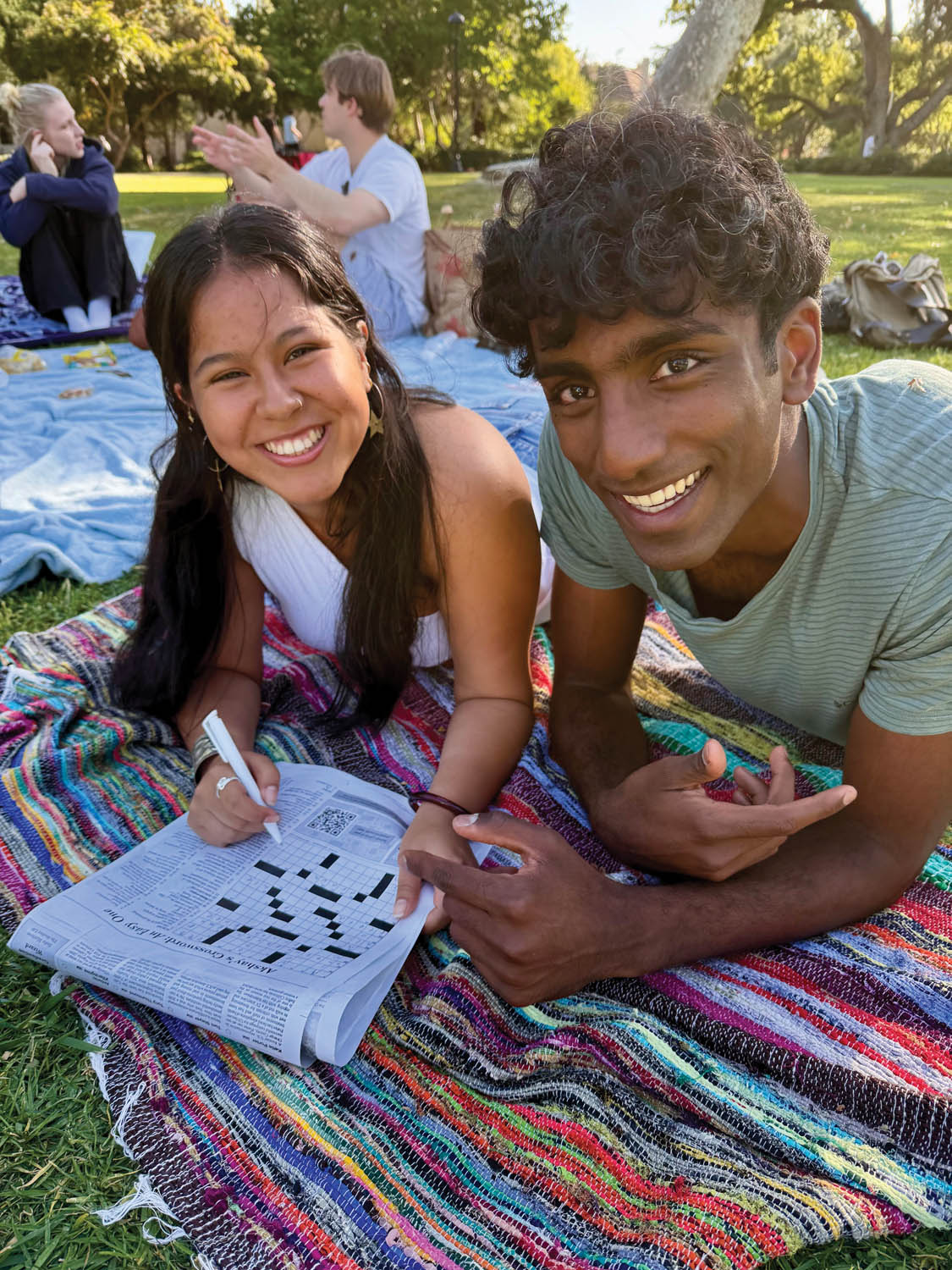
Students working on a crossword puzzleOn a late Friday afternoon on Marston Quad, a group of students are seated on blankets munching on snacks, shuffling cards for a game of Egyptian Rat Slap and sharing insights from a class discussion.

A second group starts a game of spikeball as other students stretch out to work on The Student Life newspaper’s crossword puzzle. No one is scrolling. There’s not a smartphone in sight.

Welcome to the weekly meeting of The Luddite Club, which for the past year has promoted a healthy approach to technology for Pomona College students and others at The Claremont Colleges.

The idea for the club “actually came from a New York Times article that I read my sophomore year,” says co-founder Kaitlyn Ulalisa ’27, a politics and French major. “I was very, very, very heavily addicted to social media and my phone at one point in high school and a little bit into college. Then I got rid of everything.”

Ulalisa joined forces with Abhi Namala PZ ’27, a computer science major, to start the club. He too wanted what he calls a screen “detox” and a place to unwind with fellow students who also were holding themselves accountable in the “attention economy.”

The meetings have no concrete structure. Each week, the leaders bring a red wagon filled with snacks, cards, arts and crafts supplies and balls of various types. “Then we lay out blankets, and people come,” says Ulalisa. “Every week—same time, same place—so people know where to find us.”