Class Acts

In Class With Professor Nicole Weekes

Neuroscience / The Human Brain

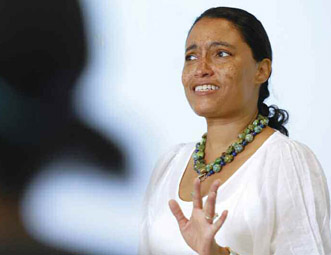
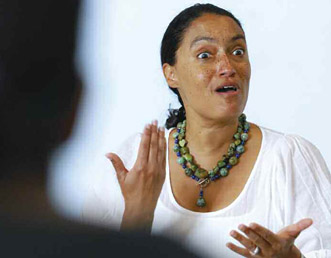
For today’s lecture on The Human Brain, Professor Nicole Weekes is focusing on the prefrontal cortex and what happens to higher level cognitive functioning when it is damaged. She also talks about the age-old debate between Cartesian dualists, who argue that the mind is a non-biological entity that determines our personalities and defines our humanness, and monists, who assert that the mind and body are one. “Witness the prefrontal lobe,” says Weekes in this abridged and adapted snippet of discussion, “and you’ll find the answers.”

WEEKES: Dualists and monists don’t disagree about how we move around; dualists and monists don’t disagree about how we take in sensory information. What they disagree about is how we start to integrate that sensory information higher and higher up in the system. When you get up that level of functioning, dualists argue there has to be something else. Conscious awareness requires more than just the meat on top of your neck. It has to be immaterial. It can’t just be the structure of the brain.

BRIAN: What do the dualists say about the monkey who learned sign language? That’s pretty high-level cognitive functioning.
WEEKES: I don’t know that much about that particular study but I think there was some debate about whether the monkey was signing at the level of creativity and complexity that you would see in humans or whether it was just mimicking humans. It’s a good question. Maybe dualists would say that monkey has a little bit of spirit. We know that lower-level animals are capable of some level of cognitive functioning. But what about personality? What is it that makes us human and what is it that makes us so different from one another?

A number of researchers have done studies looking at people with brain damage. In 1923, Feuchtwanger studied 200 individuals who had frontal lobe gunshot wounds and 200 with non-frontal lobe gunshot wounds. One of the interesting points he made was that, unlike individuals with non-frontal lobe damage to the cortex, those with damage actually showed less deficit in intellectual function—basic motor and sensory and even in basic memory and language functions that we think of as being higher-level cognitive functioning. Frontal lobe-damaged individuals had far fewer of those deficits.

What was fascinating, even back in 1923, is we had some understanding that the frontal cortex seemed to affect more dramatically people’s attitudes, their moral functioning, even people’s personality. I can’t think of higher-level functioning than that.

If you have damage to the most anterior parts of the brain, you’re going to have problems making those decisions you usually can make. “That looks fun, but maybe that’s dangerous,” or “that looks fun, but I have an exam in three weeks.” That’s what your prefrontal cortex gives you, the ability to say, “No, thank you; I think I’ll just pass on this.” As my father used to say when I was about 16, and he would let me free for a couple of hours, “I just want to say this to you, Nicole. I want you to use your better judgment, not the judgment you usually use.” It’s because he was hoping my prefrontal cortex would develop faster than most people’s do.

ASHA: Is that why they want to raise the age for teen drivers?

WEEKES: Yes, there is no reason why teenagers should be able to drive until they’re 27 [laughter]. Because it isn’t until your mid 20s that you fully have developed and refined your prefrontal cortex. The sad part is you get about 15 years before it starts to die off, at about 40.

Another interesting thing about the frontal cortex is that it is very well connected, so just about every other area of the brain connects up the frontal lobe and that’s both in terms of external and sensory information and internal limbic information. So, that frontal cortex is getting a lot of information from your sensory cortices behind it; visual information, auditory information from the—

 MELANIE:  Temporal lobe.

 WEEKES: The types of deficits you see following damage are partly dependent on what part of the frontal lobe we’re talking about. You can imagine that there is going to be heterogeneity in the symptoms that result from damage to different parts of the frontal cortex. If everyone is talking to the frontal cortex, presumably it has a role in all sorts of functions.

You can think about the complexity of these functions and we can talk about the fact that the frontal cortex is so connected to other parts of the brain and how the pathways from other parts of the brain and back again may be responsible for giving rise to this level of complexity.

Neuroscientists have also made the argument that dualists assume the brains of humans are the same as the brains of other beasts. Maybe the brains of a beast can’t do these higher-level functions. Humans don’t have the brains of the beasts; humans have evolved to have more complex tissue, particularly witnessed in the complexity of the prefrontal cortex.

And that the higher level of structure, mostly of the prefrontal cortex, is capable of higher-level functioning. You don’t need a spirit, you don’t need a soul in order to explain why you have personality, why you make the decisions you do. No, you just need part of the frontal lobe called the prefrontal cortex.

SIDEBAR:

The Professor

On Pomona’s faculty since 1998, Professor of Neuroscience Nicole Weekes is a graduate of Boston University, and she received her M.A. and Ph.D. from UCLA. Her research interests include the effects of biological sex, stress and hormone levels, hemispheric specialization and memory functioning. A three-time recipient of the Wig Distinguished Professor Award for Excellence in Teaching, Weekes also has received the Emerging Black Scholars Award.

The Class

Co-taught by Weekes and Richard Lewis, professor of psychology and neuroscience, The Human Brain is an advanced laboratory course on the relationships between structure and function that exist in the human nervous system. Topics include sensation and perception, cognition and emotion, movement, regulatory systems and social behavior.

Reading List

Neuroscience: Exploring the Brain (3rd ed.) by Mark F. Bear, Barry W. Connors and Michael A. Pardiso

Cognitive Neuroscience: The Biology of the Mind (2nd ed.) by Michael S. Gazzaniga and Richard B. Ivry, George R. Mangun

Fundamentals of Human Neuropsychology (6th ed.) by Bryan Kolb and Ian Q. Whishaw
2011 Wig Awards

The 2011 Wig Awards

Each year, juniors and seniors help select the recipients of the Wig Distinguished Professor Award for Excellence in Teaching, the highest honor bestowed on Pomona faculty. In their anonymously written nomination comments, students  offered high praise for the six professors who were honored at Commencement in May:

About Oona Eisenstadt, the Fred Krinsky Professor of Jewish Studies and associate professor of religious studies: “Whether she’s translating obscure ancient Hebrew texts on the fly or having dinner with students, the level of her intellect and the fluency with which she speaks of her areas of expertise never ceases to amaze.”

About Pierre Englebert, professor of politics: “There are very few professors anywhere who are able to make a three-hour-long stats seminar that begins at 7 p.m. interesting or educational, and Englebert is one of those few.”

About Richard Hazlett, the Stephen M. Pauley M.D. ’62 Professor of Environmental Science and professor of geology: “Most inspiring, knowledgeable, passionate, approachable and amicable professor ever. … He has also inspired me to do something meaningful in this world, to make a change, and to take on the world’s environmental issues with hope and courage.”

About Richard Lewis, professor of psychology and neuroscience: “His lectures are well thought-out and tell an interesting story. His classroom style uses a combination of intelligent commentary, wit and anecdotes that make the material more accessible and interesting.”

About Nicole Weekes, professor of neuroscience: “Her lectures are engaging and thought-provoking, and she is always so welcoming of questions, be they silly or mundane. She has also been incredibly accessible outside of class, and I have felt respected and understood.”

About Samuel Yamashita, the Henry E. Sheffield Professor of History: “He is so knowledgeable and imparts it in an even, measured and considered pace, keeping the class entranced. It’s not just the way in which he works with the students that’s so remarkable—his choice of outside reading matter … would bring even nominally interested students into the fold.”

Gone Fishing

A fish that can be found in almost any pet store may hold the key to therapies that can restore damaged vision and hearing in humans. Like other species of non-mammalian vertebrates, the zebrafish (Danio rerio) has the ability to regenerate cells responsible for vision and hearing, sometimes in as little as a few days.

The freshwater fish has been the subject of a long-term research project by Jonathan Matsui, who joined the Pomona faculty two years ago as an assistant professor of biology and neuroscience. Last year, he received a $440,159 National Institutes of Health (NIH) grant for the project.

Aging, poor genetics and environmental stresses caused by listening to an iPod too loudly for too long can cause our sensory hair cells in the inner ear to die, leading to irreversible deafness or difficulties with balance. Cells in the human retina are subject to similar degeneration, causing diminished eyesight or blindness. Unfortunately, unlike fish, frogs and birds, we do not have the ability to regenerate these sensory receptors.

We do, however, share certain similarities with the zebrafish, which makes it an ideal model for research on degeneration and regeneration of sensory systems, says Matsui. Although the fish doesn’t have a cochlea, which is the auditory portion of our inner ear, they do have a vestibular (balance) system which is almost identical to humans. The retina is also almost the same, adds Matsui.

The NIH grant funds research into mutant zebrafish lines that have smaller eyes due to reduced cellular proliferation in the ciliary marginal zone, a part of the retina that produces precursor cells, which can become all of the other types of cells found in the growing retina. Similarly,   the inner ear of the fish has “supporting cells,” which are the source for new         sensory hair cells. For Matsui, “this raises the question of whether there is a redundancy between sensory systems.”

“If the role of supporting cells in the ear is comparable to that of the ciliary marginal zone in the retina, do these mutant fish have defects in their sensory hair cell development and/or regenerative abilities?” asks Matsui. “Preliminary data indicates that these mutants have fewer hair cells. Funds from the grant will help us further characterize these fish and identify the genes causing the small eye phenomenon.” Understanding the genetics of cell proliferation in non-mammalian vertebrates could ultimately lead to therapies to restore lost hearing and vision in humans by revealing genes that regulate cells found in the eye and ear.

Matsui, whose interest in studying sensory systems started in high school, continued his research as an undergraduate at the University of Washington, where he worked in one of the laboratories that discovered it was possible for chickens to regenerate sensory hair cells in the inner ear. During his postdoctoral fellowship at Harvard University, Matsui began to focus on zebrafish to see if he could find commonalities between vision and hearing.

Matsui developed more than a research interest at Harvard. As the faculty advisor for students majoring in neurobiology, he discovered he enjoyed working with undergraduates, which he says is the main reason he chose to teach at Pomona. In his lab at Seaver South, he works with a cohort of students during the summer and throughout the academic year. This past summer, two students focused on research funded by the NIH grant, while another four students did related research on topics that included the effects of ethanol on the development of sensory systems (fetal alcohol syndrome) and genetic causes of degeneration of vision and hearing.

“I like the students’ enthusiasm,” says Matsui, “and seeing that spark when they find something that they hadn’t thought about or, possibly, when they realize that maybe it’s something that no one else in the world has ever seen before.”

In Class With Professor Victor Silverman

Professor Victor Silverman

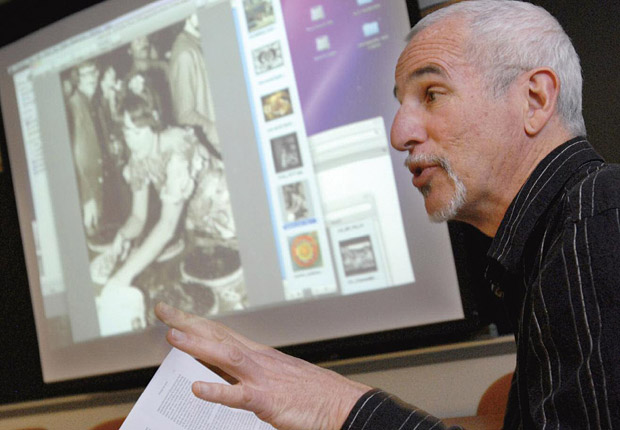
Professor Victor SilvermanFor tonight’s meeting of Professor Victor Silverman’s seminar class on California history, students were assigned to read architecture critic Reyner Banham’s influential 1971 book Los Angeles: The Architecture of Four Ecologies. An unabashed fan of L.A., the chipper British academic viewed the city through distinct “ecologies”:

Surfurbia (the coast), the Plains of Id (Los Angeles Basin), the Foothills and Autopia (the freeways). But his real innovation, Silverman points out, was in the way Banham looked at Los Angeles architecture in a broad sense, giving hot dog-shaped eateries consideration along with highly-regarded landmarks such as the Modernist Eames House. In this abridged and adapted snippet of discussion, the class takes a happy detour into the quintessential L.A. topic of traffic.

SILVERMAN: Maybe we can turn now to Banham himself and to looking at what he is arguing …What did you think of the book?

LAUREN: I thought it was really interesting because it portrays Los Angeles in a positive light. Being from Los Angeles, I get a lot of crap for that. (Laughter from the class.) He looks at things that tend to be viewed in a very negative light and shows why they can be positive and how they really work in Los Angeles and how they help define it.

 SILVERMAN: So what is it about L.A. that he likes that’s different than the usual?

MATT: Well, I’ve only been to L.A. proper twice. He likes L.A. for reasons I don’t like L.A. L.A. just seems vast and it’s loud and it’s smoggy and it’s kitschy. You have Hollywood and you have people in costumes …

LAUREN: Hollywood’s not actually like that. It’s one street that’s like that …

MATT (to laughter): That one street has affected my entire view … It really was not my thing but [Banham] comes through and says, well, that’s what makes Los Angeles so cool because it’s not like any other city. It doesn’t fit any archetype. I had no idea about the Watts Towers. He introduced me to the city in a way that made me step back. He takes you through the back alleyways. He shows you all these very cool architectural buildings. It made me want to see more. I want to understand L.A. for what is.

JAY: Last year I was driving on the freeway—10—to downtown L.A. I really enjoyed it because I was stuck in traffic and I’m like, OK, now I’m in L.A. It confirmed my existence in L.A: I’m in traffic, finally I can tell my friends about it. I was taking pictures of buildings around me, freeway signs. That’s a prime example of what I enjoy about L.A. There are freeways and exits all over the place. It’s just fascinating to me. And he just captures the essence of it.

SILVERMAN: Where does Banham say something that really captures that? Right in the first couple pages, right? … “The language of design architecture and urbanism in Los Angeles is the language of movement,” which is directly contradictory of what you’re saying Jay, which is that the language of Los Angeles is being stuck in traffic. (Laughter.) He goes on: ‘Mobility outweighs monumentality there to a unique degree and the city will never be fully understood by those who cannot move fluently through its diffuse urban texture … So like earlier generations of English intellectuals who taught themselves Italian in order to read Dante in the original, I learned to drive to read Los Angeles in the original.” … So then, what about the freeways?

LAUREN: If you’re from here, you just grow up with it, so it’s normal. I don’t mind traffic. It’s part of Los Angeles and [Banham] accepts that and kind of embraces that. It just becomes a part of how he’s explaining Los Angeles and why it’s different and it’s just a big part of how people function.

SILVERMAN: It’s not just how [people] function. Banham makes it one of the ecologies as well, thinking about the freeway as its own place as opposed to a means of getting from one place to another. And the fact that it’s the one ecology that is everywhere makes the freeway central to his overall point—just as it’s central to what makes L.A. L.A.

Senior Seminar on California History

The Professor

At Pomona since 1993, Professor of History Victor Silverman teaches classes on topics ranging from the labor movement to the U.S. role in the Middle East to drugs and alcohol in modern society. He earned his Ph.D. in history from UC Berkeley. An Emmy-winning filmmaker, he is also the author of three books and many articles. His latest book, California: On-the-Road Histories, will be published this summer.

The Class

From the European conquest to the current stalemated government, Californians have contended with a series of upheavals often at a great human cost. This upper-division reading seminar offers students a chance to learn the current scholarship about this tarnished Golden State.

Reading List

  • Conquests and Historical Identities in California, 1769-1936, by Lisbeth Haas
  • Indian Survival on the California Frontier, by Albert Hurtado
  • Americans and the California Dream, by Kevin Starr
  • The Conquest of Bread: 150 Years of Agribusiness in California, by Richard Walker
  • Los Angeles: The Architecture of Four Ecologies, by Reyner Banham
  • Suburban WarriorsThe Origins of the New American Right, by Lisa McGirr
  • Guest Workers or Colonized Labor?: Mexican Labor Migration to the United States, by Gilbert Gonzalez