
These Sagehens, original thinkers all, turned blue sky thinking into the real deal.
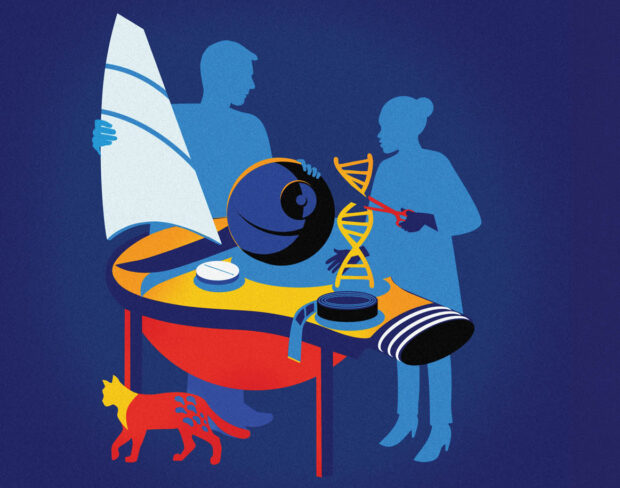
It’s not enough to have a good idea, though it’s a good start.
What follows that moment of inspired thinking is what really matters. Will that precious germ of an idea shrivel on the vine, or will it flourish and bear dazzling fruit? That, of course, depends on myriad factors—timing, talent, toil, grit. A dash of good fortune?
In the following pages, we present a baker’s dozen of Pomona alums who took their boundary-pushing ideas and ran with them, turning inspired dreams into lasting realities. Some of our visionaries created something entirely new; others solved an intractable problem, inspired vital change, transformed our perceptions, or simply made an aspect of daily life so, so much better. All our idea makers have made an outsized impact in their field, the ripples of their achievements fanning out far and wide into the world at large.
Pomona College has been nurturing innovative thinkers for well over a century now, and the Sagehens we recognize here represent just a fraction of a much longer list that could have filled many issues of the magazine. We hope you’ll let us know who else we should have included.
James Turrell ’65
Artist
The Big Idea: Make art out of light
Not content with limiting himself to traditional materials—paint, metal, wood, stone—James Turrell chose light itself as his sculptural medium, launching a lifelong artistic investigation into the very nature of perception. A pioneer of the California Light and Space Movement of the 1960s, Turrell has created immersive installations around the world that employ light as a tool to alter how we sense space, depth, color and form. Most famous are his Skyspaces (including our very own in Draper Courtyard), which open up to the sky and, with programmed lighting at dawn and sunset, offer a profound, perception-altering experience for those seated below. Turrell also has been working since 1977 on turning an extinct volcanic crater in Arizona into a naked-eye observatory that connects visitors with celestial events and the cosmos.
 Stanton Avery ’32
Inventor/Businessman
The Big Idea: Invent self-adhesive labelsGrowing up poor in Oklahoma during the Great Depression, R. Stanton Avery went on to create a global company and invent a revolutionary technology—the self-adhesive label. Labels had existed before, of course, but those required moistening or gluing. Avery’s inspired concept was to create a sticker that was pressure sensitive, self-adhering and resealable. He created his first set of labels soon after graduating from Pomona, with a $100 loan from his future wife Dorothy Durfee and a combination of used machine parts and a saber saw, from which he crafted a rudimentary die-cut labeling machine. In 1935, he founded Avery Adhesives, a small company in Los Angeles that grew into Avery Dennison, a global Fortune 500 company. Avery’s invention forever changed the world of packaging, retail and shipping, making it feasible to apply large numbers of labels quickly and affordably.
Gary Acosta ’85
Entrepreneur
The Big Idea: Expand Latino wealth and business ownership
As an advocate for Latino wealth creation, Gary Acosta wears many hats. He is co-founder and CEO of the National Association of Hispanic Real Estate Professionals (NAHREP), the nation’s largest Latino business organization, with around 100 chapters across the U.S. Acosta also is a founding partner of venture capital fund L’ATTITUDE Ventures, which invests exclusively in Latino-led companies, and he is a founder of the Hispanic Wealth Project, dedicated to increasing household wealth and economic mobility in the Latino community. Through his entrepreneurship, investing and public policy work, Acosta has become one of the nation’s most influential advocates for Latino economic advancement. While at Pomona, Acosta played varsity basketball under future NBA Hall of Fame coach Gregg Popovich, and he has said his mentor’s intensity and consistent commitment to excellence has stayed with him.
Stephen Smith ’17
Health Care Entrepreneur
The Big Idea: Make OCD therapy accessible and affordable
After struggling for many years with undiagnosed obsessive-compulsive disorder (OCD), Stephen Smith eventually found help through exposure and response prevention (ERP) therapy, a type of cognitive behavioral therapy now considered the gold standard for treating the condition. Knowing that many with OCD face long delays in getting an accurate diagnosis or evidence-based treatment, Smith co-founded NOCD, a digital community and telehealth platform that offers OCD prevention and management therapy. The service officially launched in 2017, the same year Smith (a transfer student and Sagehen football player) graduated from Pomona. The company has since grown into the world’s largest OCD specialty telehealth provider, with more than a million therapy sessions annually and 140 million people able to access it through their insurance. Recently, NOCD acquired a PTSD-focused platform, launching a parent brand called NOTO, with comedian Howie Mandel—who also lives with OCD—as its spokesperson.

Jennifer Doudna ’85
Biochemist
The Big Idea: Take gene editing to the next level
In 2020, Jennifer Doudna’s work co-inventing CRISPR-Cas9, a breakthrough method of gene editing that allows scientists to make precise changes to DNA, received the highest of accolades, a Nobel Prize in chemistry. The technique Doudna and her collaborator, Emmanuelle Charpentier, created has transformed science by making gene editing faster, less expensive and more accurate. It is now a standard tool in genetics, biotech and biomedical research. CRISPR can treat genetic diseases by correcting errors in DNA and treatments using the “genetic scissors” have already been approved for patients with sickle-cell disease. It also shows potential for treating cancer and inherited disorders. Beyond medicine, CRISPR is being used to improve crops and better understand how genes function in plants, animals and humans.
Maya Horgan Famodu ’13
Venture Capitalist
The Big Idea: Re-envision investing in African companies
A two-time Forbes 30 Under 30 honoree, venture capital investor Maya Horgan Famodu has been named a Most Influential Person of African Descent by the United Nations and a Young Global Leader by the World Economic Forum. The Nigerian American entrepreneur, who grew up poor in a trailer park in rural Minnesota, founded her investment fund Ingressive Capital in Lagos, Nigeria, at the age of 25. Since then, she has been a powerful force in building Africa’s technology startup ecosystem and increasing access to early-stage venture capital for African founders. Key to her success has been her ability to persuade influential investors in Silicon Valley and around the world to pay attention to the continent’s tech sector and consider it worthy of investment. Famodu also is helping to prepare tomorrow’s tech workers through Ingressive for Good, a nonprofit she co-founded that provides scholarships, technical training and career opportunities for young Africans pursuing technology careers.
Myrlie Evers-Williams ’68
Civil Rights Activist
The Big Idea: Push forward the goals of the Civil Rights Movement
Myrlie Evers-Williams arrived at Pomona to begin a new life as a student and young widow with three children a year after the 1963 assassination of her husband, civil rights leader Medgar Evers. She would go on to chair the NAACP from 1995 to 1998 and to give the invocation at President Barack Obama’s second inauguration in 2013, the first woman and layperson to do so. For more than three decades, Evers-Williams sought punishment for her husband’s murderer, efforts that finally led to a successful murder conviction in 1994. Through her speeches, writing and public service, Evers-Williams has advocated powerfully for civic engagement, voting rights and equal opportunities for all people. In 2023, Evers-Williams donated her archival collection of papers and other memorabilia to Pomona, making them available to future scholars and the public.
 Jean Mill ’48
Conservationist
The Big Idea: Develop a new breed of domesticated cat
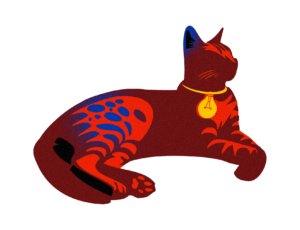
When Jean Mill set out to develop an entirely new breed of cat, she had a loftier goal in mind than merely creating a beautiful feline. Mill, who studied genetics at UC Davis after graduating from Pomona, was motivated by an interest in conservation. If people could own a domestic cat that looked like a wild leopard cat, she reasoned, there would be less poaching of wild-caught exotic felines. To create a cat with the spotted coat of a wild leopard cat and the tame and friendly nature of a house pet she crossed an Asian leopard cat (Prionailurus bengalensis) with domestic cats and then selectively bred the offspring over many generations. Eventually, the bengal cat was recognized as a distinct breed by the International Cat Association. Today, it is one of the most popular and sought after breeds of cat in the world.
Sharon Camp ’65
Public Policy Expert
The Big Idea: Get emergency contraception directly to women who need it
Known as the “Mother of Plan B,” Sharon Camp led the effort to develop and launch the emergency contraceptive in the U.S. Before Camp committed herself to the cause, major pharmaceutical companies in the U.S., fearing potential backlash, had shied away from developing and marketing emergency contraception. Camp, who previously led a nonprofit focused on reproductive health, had seen firsthand the harm caused by poor reproductive care in developing nations and knew the importance of getting contraception directly into the hands of women and making abortion safer. In the late 1980s, she worked to bring Mifepristone to the U.S. and a decade later founded Women’s Capital Corporation as a three-person startup, overcoming a slew of hurdles to develop and commercialize Plan B—the so-called “morning after” pill. Bridging research, public policy and pharmaceutical development, Camp, who died in 2025, transformed access to emergency contraception, impacting millions of women’s lives.
 Robert Blalack ’70
Visual Effects Artist
The Big Idea: Create “impossible” visual effects
Anyone who has seen the first Star Wars movie has witnessed the jaw-dropping work of Robert Blalack. A trailblazing visual effects artist, Blalack co-founded Industrial Light & Magic (ILM) and helped create many of the modern visual effects techniques that have transformed filmmaking. His work on Star Wars, which immersed audiences in a believable world of spacecraft battles and glowing lightsabers, won him an Oscar for Best Visual Effects in 1978. Blalack, who began developing his filmmaking skills while at Pomona, is known as much for the processes he developed as he is for specific techniques. Before ILM came on the scene, visual effects consisted of hundreds of individual effects created shot by shot. Blalack and ILM figured out how to scale the process and combine multiple film elements into a convincing final shot. The workflows ILM developed—where separate elements are created, tracked, composited and integrated through a standardized pipeline—laid the groundwork for modern VFX studios.
Mikey Dickerson ’01
Software Engineer
The Big Idea: Modernize government software
If you tried to sign up for “Obamacare” health insurance in 2013, when HealthCare.gov went online, you might have experienced glitches with a website that crashed within hours of launching and seemed doomed to failure. Enter Mikey Dickerson, then a site reliability engineer at Google, who was brought in to overhaul the government website. The recovery team he headed up stabilized and rebuilt the system, allowing millions of people to sign up for health insurance. In 2014, President Barack Obama appointed him as the first administrator of the U.S. Digital Service, a new department designed to improve government technology. By bringing the same engineering standards that Silicon Valley was already using—modern software engineering, user-focused design, rapid iteration—to government systems, Dickerson changed government technology. He came back to Pomona as a professor of practice from 2021 to 2024, teaching a popular computer science elective called Managing Complex Systems.
 Hoyle Schweitzer ’55
Surfer and Businessman
The Big Idea: Transform windsurfing into a global sport
Surfer Hoyle Schweitzer, who died this year at age 93, may not have invented windsurfing, but he did turn it into a global cultural phenomenon. While the idea of attaching a sail to a board had been around since the 1950s, Schweitzer and engineer Jim Drake developed and patented the first commercial Windsurfer sailboard—a board with an asymmetrical sail, a hand-held boom and a mast attached with a universal joint—in the late 1960s. With impressive business and marketing acumen, Schweitzer (with his wife Diane) whipped up interest and turned windsurfing into a hugely popular water sport enjoyed by millions during the 1970s and ’80s. Competitions, magazines and schools all devoted to the wind-powered board followed in the wake of Schweitzer’s entrepreneurial brilliance, and in 1984 windsurfing became the youngest sport ever to be included in the Olympic Games. Modern wind-powered sports such as kitesurfing and foiling owe a direct debt to the windsurfer and to Schweitzer’s invitation to the world to hop onboard and ride the wind.
Chinasa T. Okolo ’18
AI Strategist
The Big Idea: Make AI more equitable and inclusive
Chinasa T. Okolo, a Nigerian American computer scientist, has been named one of the most influential people in artificial intelligence by Time and included on Forbes’ inaugural 30 Under 30 in AI list. Okolo, who has consulted for the United Nations and the World Bank and contributed to the International Scientific Report on the Safety of Advanced AI and Nigeria’s national AI strategy, argues that AI must do a better job serving Africa and other parts of the Global South. Countries outside the traditional tech centers, she insists, should be included at the table in policy discussions determining the future of AI. Her research, much of it in the field, explores how people in low-resource settings, including frontline health care workers in rural India, interact with AI and how AI systems can be designed to be more understandable and useful for everyday users.
Watch This Space
These young Sagehens are making waves and getting noticed.
 Donny Lu ’26
Passion: Technology
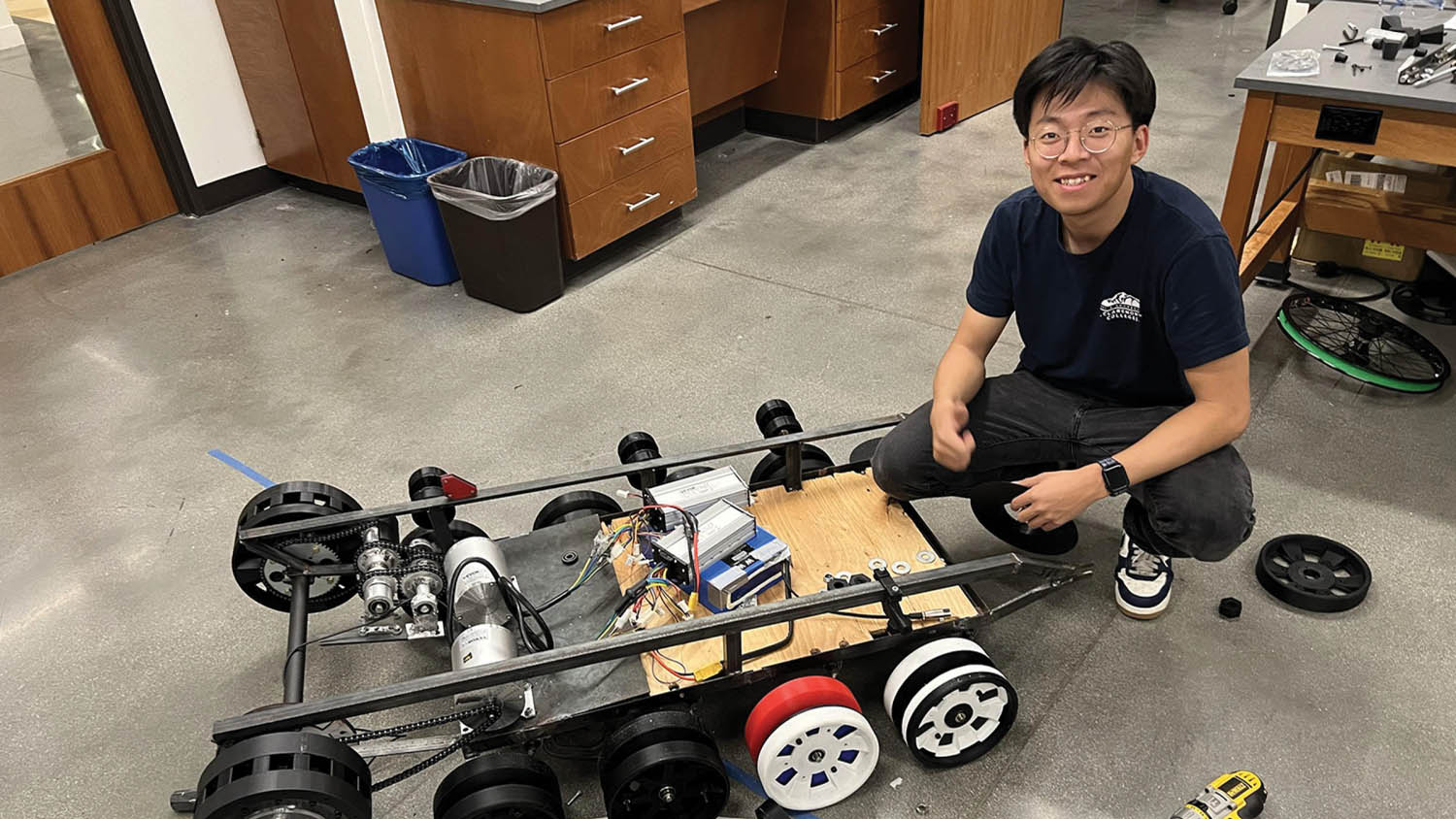
After wide-ranging academic exploration at Pomona, Donny Lu decided in his sophomore year to major in physics, finishing his degree requirements in a year before heading to Caltech for a 3/2 program in engineering. Now living in San Francisco, he has launched Dlab Sciences, a startup that aims to automate the tool-and die-making process to build hardware more economically.
 Isha Raheja ’27
Passion: Environmentalism
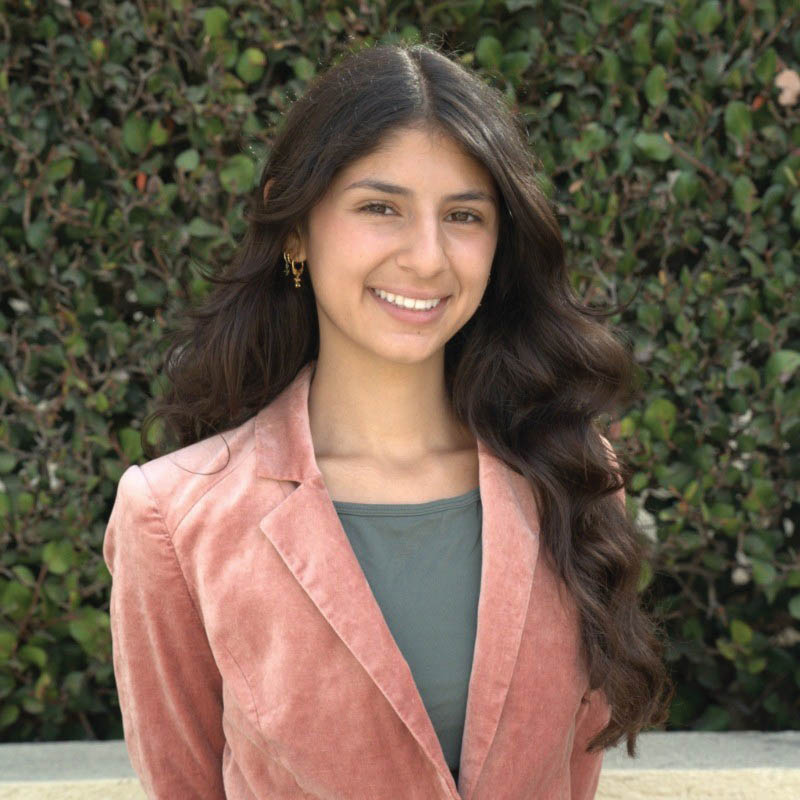
As well as bringing a beehive to the Pomona College Organic Farm, Isha Raheja has secured a contract with LA Metro to provide all 5C students with free transit access. Raheja is also head of Recoop and the Free Room, which has diverted 27,546 lbs of waste—clothes, shoes, furniture, books—and redistributed them to students and community organizations.
 Devansh Taliyan ’27
Passion: Entrepreneurship
At the age of 16, Devansh Taliyan introduced India’s first carbon-neutral soap, crafted by women from Mulshi Valley. At Pomona, he led the first student-run accelerator at Claremont Colleges. He has also developed apps to connect students with tutors; to encourage real-life encounters; and to help medical clinics get every dollar they are owed by insurance companies.