Articles Written By: Staff

Last of the Yellow Journalists

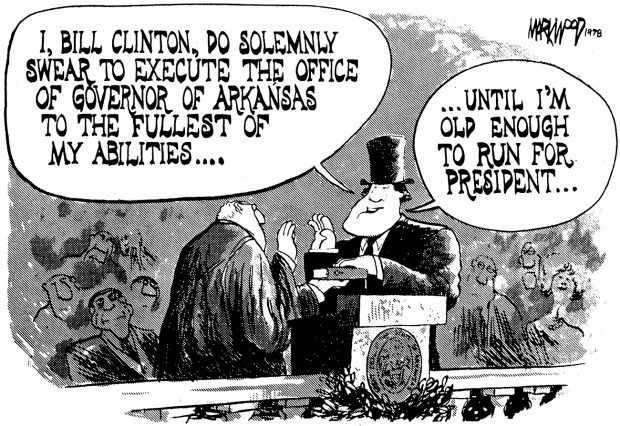
Cartoon sketch of Bill ClintonThere was a time when editorial cartooning was a job a young artist could aspire to. In 1900, there were an estimated 2,000 editorial cartoonists at work in the United States. They still numbered in the hundreds by the late ’70s, when—at the start of my career—I briefly became one of them.

It’s probably just as well that I moved on to other things. Since then, the American editorial cartoonist has become an endangered species, right up there with the pygmy elephant. The total in  the U.S. is reportedly below 25 now, and falling. Just in the last two years, two Pulitzer Prize-winners—Nick Anderson at the Houston Chronicle and Steve Benson at the Arizona Republic—were dumped. In June, following an uproar about a cartoon full of anti-Semitic tropes, the international edition of The New York Times followed the example of its national counterpart and fired its last two cartoonists—neither of whom, by the way, had drawn the offending cartoon.

Here’s how bad it’s gotten: Iran now boasts more editorial cartoonists than the U.S.

I thought for a while that editorial cartooning would be my life’s work. Old-timers like Herblock and Conrad were giving way to subtle, innovative artists like Pat Oliphant and Jeff MacNelly. Strip cartoonists like Doonesbury creator Gary Trudeau were blurring the line between the Sunday comics and the editorial page. These young guns were transforming the medium—putting irony and satire, artistic style and sly visual humor ahead of blunt-force commentary. It was an exciting time to be an editorial cartoonist.

And I loved the actual process of creating a cartoon—the immersion in the news, the joyous flash of inspiration, the inner howls of laughter as I did my preliminary sketches, the knowledge of famous faces that allowed me to draw Ronald Reagan or Bill Clinton without conscious thought and the feeling of working without a net each time I wielded my ink brush to create the final product.

Over the years, I must have done hundreds of drawings of Clinton, then governor of the state where I lived, including one, shown here, that was completed shortly after he was first elected governor at the tender age of 32. It’s without a doubt the most prescient thing I’ve ever produced.

Part of the fun of it was the pure joy of poking fun at powerful people. I used to joke that we editorial cartoonists were the last of the yellow journalists—the only purveyors of the news who still had license to use caricature and exaggeration to distill complicated situations down to a single, simplistic metaphor. Our work was full of open mockery —an artform that intentionally stretched the limits of polite discourse.

And that was probably a big part of its undoing. In a time of heightened sensitivities and social media mobs, caricature has become a dangerous sport. As Australian cartoonist Mark Knight (whose caricatures are uniformly brutal) learned when tennis player Serena Williams’s husband accused him of a racist depiction of her, there’s a fine line between the kind of harsh visual exaggeration that caricatures depend upon and the perpetuation of cruel stereotypes. Add in the decline of newspapers as a profitable industry, and it’s not surprising, I suppose, that cartoonists have become, at best, expendable and, at worst, potential liabilities.

Given all of that, the number of young American artists who now aspire to become the next great editorial cartoonist is probably on a par with the number who plan to repair steam engines. But while the bell is clearly tolling for American editorial cartooning, I have to admit that I was wrong when I said we were the last of the yellow journalists. Yellow journalism, I’m afraid, is viciously alive and well on social media and talk radio—minus, of course, the redeeming humor.

How to Become a Concert Pianist

Genevieve Lee

1

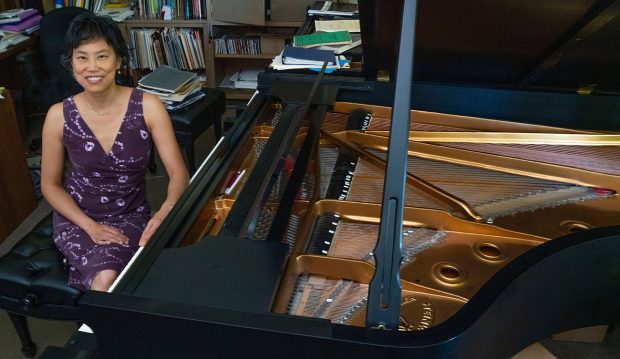
AT AGE 4, although neither of your parents is a musician, decide on your own that you want to play the piano. Study with a neighborhood teacher in Racine, Wisconsin, and discover that you love it so much that your parents never have to make you practice.

2

WHILE ASPIRING to become an architect or a brain surgeon, show so much promise as a young pianist that, when you’re 8 years old, your piano teacher tells your parents that you need to move on to a more advanced instructor.

3

AFTER MOVING to York, Pennsylvania, apply to study piano with a well-known teacher in Baltimore, an hour’s drive away. Get accepted and work with her for five years, as she gently nudges you to abandon brain surgery for a career in music.

4

AT 12, PERFORM as a soloist in your very first concert with an actual orchestra. Play a Mozart concerto with the York Symphony Orchestra and discover the thrill of performing before an audience that isn’t made up of relatives and friends.

5

AS A HIGH school senior at the age of 15, decide to apply only to music schools. Choose Peabody Conservatory in Baltimore, where you feel both intimidated and inspired by the talented people around you. Decide that this is the right path for you.

6

GRADUATE FROM Peabody in three years and attend a summer program for musicians in Fontainebleau, France, where you win a one-year scholarship to the École Supérieure de Musique in Paris. Take first prize in the school’s annual competition.

7

GO ON TO graduate school at Yale University, where you find a mentor, the pianist Boris Berman, who challenges you to think independently and find your own special voice as a musician. Eventually earn your doctor of musical arts degree there.

8

TEACH FOR TWO years as a visiting professor at Bucknell University and fall in love with the liberal arts setting. Apply for a job at Pomona College and get it. Enjoy working with the students so much that you’re still at it 25 years later.

9

IN ADDITION to your solo work, play with various chamber music ensembles, including the Mojave Trio and the Garth Newel Piano Quartet, even though the latter means flying across the country to Virginia for each rehearsal.

10

PERFORM AT venues around the globe, including Carnegie Hall in New York and Disney Hall in L.A. Play both classical works and experimental pieces and earn a Grammy nomination for a CD in which you play a toy grand piano.

Haute Cuisine, Hawaiian Style

Haute Cuisine, Hawaiian Style

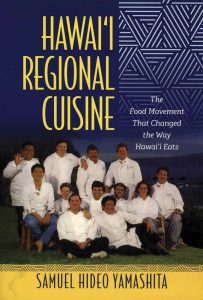
Hawai‘i Regional Cuisine: The Food Movement That Changed the Way Hawai‘i EatsOdds are high that food is one of your favorite topics. Office conversations about where to go for lunch. Calls home on your commute asking what’s for dinner. Recounting a delicious meal in meticulous detail to a friend. Binging on the Food Network. And, of course, your Instagram feed (no pun intended). Food is a near and dear topic for Samuel Yamashita, too. The Pomona College Henry E. Sheffield Professor of History combined two great loves—food and, of course, history—and wrote Hawai‘i Regional Cuisine: The Food Movement That Changed the Way Hawai‘i Eats. In the book, Yamashita chronicles the way Hawaiians have eaten over time, and the way good, local island eats combined with French and Continental mainland fare to create a distinctive style of cuisine.

PCM’s Sneha Abraham sat down for a chat with Yamashita on all things food.

PCM: You grew up on the Hawaiian Islands?

Yamashita: I did. I grew up in a suburb of Honolulu, a place called Kailua, which has one of the most beautiful beaches in the world, top 10. And it’s where Obama would rent a house during his presidency, but, of course, he really couldn’t go on to the beach because of too many people.

PCM: Security.

Yamashita: Yeah. So, I grew up in a beach town. I didn’t really wear shoes until I was 12. And so I had huge feet with really hard, kind of leathery soles. I had a great childhood. I mean, I played, I fished. I didn’t study much.

PCM: You’ve made up for it in the years since.

Yamashita: Well, I had to.

PCM: Were you born there as well?

Yamashita: I was born in Honolulu, in the same hospital where Obama was born.

PCM: What inspired you to do food studies?

Yamashita: In about 2007 or ’08, my editor at the University of Hawai‘i Press asked me out of the blue if I’d be interested in writing the history of Japanese food. She knew I was interested in food, and she was too. We’d have great lunches, and it was at the end of one of these celebratory lunches (on the occasion of the publication of my book Leaves from an Autumn of Emergencies, that she oversaw) that she asked me, “How would you like to write a history of Japanese food?” I was old enough to know that I really needed to think about this. To think about what sources I would use, how I would organize it, what kinds of narratives I would write. And I said, “Let me think about this.”

I thought about it for half a year, and then I said, “Sure, I’d be happy to give it a try.” But I said, “You and I know that you’ll be long retired by the time I finish.” She was exactly my age, and I sensed that she was going to retire in a few years, and I was right. So she retired about four or five years ago, and I’ll finish this history of Japanese food in 2025 or so. It’ll probably be my last book. That was the beginning of my interest in food studies.

I also had collected and read many dozens of wartime Japanese diaries and had written some pieces on the food situation in Japan during World War II. My first food pieces were actually on the food situation in wartime Japan. And then in around 2009, or ’08 maybe, I was having to visit my widowed father in Hawai‘i about four times a year, and I thought, “I need to be able to write off these trips.”

So I began to interview chefs—the chefs for the Hawai‘i Regional Cuisine movement. And I ended up interviewing 36 people, including eight of the 12 founding chefs of Hawai‘i Regional Cuisine. And then I wrote a paper called “The Significance of Hawai‘i Regional Cuisine in Post-Colonial Hawai‘i” and presented it at a conference, and somebody who heard it said, “How would you like to contribute it to a volume?” And so a volume called Eating Asian America was assembled and published by NYU in 2013. That was another important piece for me. And then I began to map out a book on Hawai‘i Regional Cuisine. And in the meantime, I published in 2015 a book called Daily Life in Wartime Japan, 1940–1945 that used about 100 of the diaries I collected.

Once I finished with that, then I was able to concentrate on what became Hawai‘i Regional Cuisine. I’ve also had good support from the College, chiefly in the form of the Frederick Sontag research fellowships, which are for senior faculty. So without those and without a series of spring leaves, I wouldn’t have been able to finish.

PCM: Talk about the perceptions of Hawaiian food that you write about.

Yamashita: Well, people who traveled to Hawai‘i didn’t go for the food, and Alice Waters once said to a friend, “If you go to Hawai‘i, be sure to take some good olive oil and vinegar so you can make a dressing and buy some watercress and have a good salad at least”—right? That was the prevailing view—that you went to Hawai‘i to spend time at the beach, to do other fun things, but not to eat. And the one food phenomenon that was somewhat popular was the so-called luau, a kind of Hawaiian feast. And I certainly grew up attending luaus because our Hawaiian friends and neighbors would usually have a luau whenever there was something to celebrate. When a new child was born or a child graduated from high school or somebody got married or when there was a new baby, often there’d be a luau. And this is pretty typical of the Pacific and parts of Southeast Asia—you raise a pig especially for the luau, and the pig is ready at a certain point, and it becomes the main item in the luau. And so, our neighbors would dig an underground pit called an imu, and they cooked the pig in the pit. They’d also make all sorts of dishes that accompanied it, including poke, which is very popular now in the U.S., but poke was … I could never eat poke outside Hawai‘i. Often they misspell it, P-O-K-I; it’s really P-O-K-E.

PCM: People here pronounce it poke-EE, too, right?

Yamashita: Yeah, yeah, it’s po-KEH. So, I’d say Alice Waters’s characterization of food in Hawai‘i and then the construction of the luau as a tourist food event were probably the two prevailing views of food in the islands. And, of course, as I point out in my book, there was fine dining in the islands, usually at the top hotels that would hire Anglo chefs, usually European or American French-trained chefs. And what’s interesting is that they would cook the very same things that their counterparts on the mainland or in Europe cooked. They would make the same French dishes, and they would use imported, generally imported fish, meat, vegetables and things of that sort. They weren’t using local, locally sourced ingredients much at all. And, of course, all the chefs, all the top chefs were Anglo, and locals served in subordinate positions as cooks.

So-called “local food” is the food that the local ethnic communities brought to Hawai‘i when they immigrated. The food they ate was denigrated by these Anglo chefs. So, there was a pretty stark hierarchy that separated haute cuisine, which was French and continental, from local food.

PCM: Can you talk a little bit about colonialism and then food, that relationship?

Yamashita: In almost all colonial situations, the food of the colonial masters is valued and elevated and affirmed. Of course, it is served in the homes and in the clubs of the colonial elite, and local food is denigrated. I have cookbooks from the 19th century and the recipes are typical of New England. And they added a few Hawaiian things, but about 96 percent, 97 percent of the dishes in those cookbooks were American.

There’s a scholar whose work I admire named Zilkia Janer who has written about food in Central America and Latin America. And, of course, there it’s the Spanish cuisine that’s elevated, and local cuisine of local indigenous people was denigrated. I actually use her piece in my book, as well as a number of other works on colonialism in South Asia, which offer a framework. So I also placed Hawai‘i in that broader colonial context.

PCM: Do you think we’re seeing kind of an iteration of that today in terms of globalization—the standard American diet is being adopted across the world?

Yamashita: Globalization is spreading American fast food as well as American popular culture. So McDonald’s is in many places, even places where you don’t expect to find it. Of course, now it’s almost everywhere. And that’s very typical, but it’s a new kind of colonialism; it’s a latter-day, postmodern colonialism that’s a little different from what existed earlier.

PCM: Talk a little bit more about the historical distinctions between fine-dining food versus local food. What dishes did you find in fine dining? What dishes in local food?

Yamashita: Before Hawai‘i Regional Cuisine?

PCM: Yes.

Yamashita: So essentially, fine dining was dominated by continental and/or French cuisine. And so lots of emphasis on heavy sauces, as was the case with the French cuisine served with imported wines. Usually not served with rice, but with potatoes. I analyzed menus from some of the top restaurants in the islands before HRC, and the menus would be recognizable to anyone familiar with fine dining on the mainland as well. It’s actually what you would find at top fine-dining establishments, especially French restaurants, in New York, in San Francisco and in Chicago. And you wouldn’t find local dishes on the menu.

What really suggested to me that something had happened was the following: My wife and I went to this really wonderful, well-regarded restaurant called CanoeHouse on the Big Island. It’s a great place for a great romantic dinner, located close enough to the ocean that you would hear the surf breaking. We got there at dusk and were led to a table and sat down, and I noticed on the table what you would find in the homes of locals and especially working-class locals—bottles of soy sauce and chili pepper water. And so when the waitress came back to the table, I said, “What’s this? What’s going on?” And she said, “Oh, we have a new chef. His name is Alan Wong.” That’s the two-word answer to the question. The bigger answer, the fuller answer is Hawaiian Regional Cuisine. Suddenly, people like Alan Wong and Roy Yamaguchi made it possible for local food to find its way into fine-dining establishments and, of course, this is what triggered my interest.

PCM: What did the chefs say triggered it for them?

Yamashita: Oh, that’s a good question that has several different answers. Let me give you the big answer first. Roy Yamaguchi graduated from the Culinary Institute of America, 1976. He was one of the first students of Asian descent to go there, you know—CIA in Hyde Park, New York. And after he graduated, he came to L.A. and cooked at a number of different places, finding his way in the restaurant world because there weren’t many Asian chefs. And he ended up finally at the best French restaurant in Los Angeles.

Then he cooked at two other French restaurants. And food critics writing for the Los Angeles Times wrote reviews of those restaurants and they said, “You know, I had the best French dinner I’ve had all year at this restaurant,” and who was the chef? It was Roy Yamaguchi. And then in 1984, he opened his own restaurant called 385 North, which was located at 385 La Cienega in West Hollywood. But what was also happening is that in 1982, Wolfgang Puck opened Spago, and then in 1983, he opened Chinois on Main, and then a bunch of Japanese chefs sent from Japan opened Franco-Japanese restaurants. And then Roy opened 385 North, and they were all cooking something that Roy called “Euro-Asian cuisine.” And he claims to have invented the concept in 1980; he may have invented it, but it quickly spread and was adopted by Puck and these other Japanese chefs.

Nobu Matsuhisa opened Matsuhisa in 1985, just about half a mile south of 385 North. But they were all doing Euro-Asian cuisine. And then in 1988, Roy came back to Hawai‘i and opened his own restaurant called Roy’s, and he used the Euro-Asian cuisine concept. And what that made possible was the adoption by chefs at fine-dining establishments of all kinds of Asian ingredients, the serving of Asian dishes. Conceptually that was what made HRC possible at a very high level. Because Roy was extremely well-trained and had experience and came to Hawai‘i, and that Euro-Asian framework was adopted by the other HRC chefs as well.

But at another level, if you asked Alan Wong that question, he would say something different—Alan Wong and Sam Choy, who were the two of the 12 chefs who are local. Alan Wong would say, “This is plantation food,” because the plantation communities were multi-ethnic.

Alan puts it this way: “You know, they would share their lunches, and so the Japanese would bring a Japanese lunch, the Chinese would bring a Chinese lunch, the Filipino would bring a Filipino lunch, and they would share food.” And so, Alan’s answer then is, “Well, this is what happened historically in Hawai‘i, beginning in plantation times.” It’s a very different kind of answer, but Alan did not go to the CIA. Alan went through a culinary arts program at a community college in Hawai‘i for two years, and then he went to a famous resort in Virginia called the Greenbrier, where he had two more years of training. And then he worked in New York at Lutèce, which was one of the best French restaurants in New York City. And after several years there, he then came back to Hawai‘i.

So he had the technical skill to make the best possible French cuisine imaginable, but he began to incorporate things from the local diet. That’s how he would explain that. So two very different kinds of answers. I think Alan’s answer is somewhat mythicized; it’s a kind of romantic view of Hawai‘i Regional Cuisine. I think the story of Roy is one that, historically, I’m more comfortable with. You know, I don’t like myth.

PCM: Yeah, you deal in history.

Yamashita: Yeah, that’s right, exactly right.

PCM: There is a sort of farm-to-table element, right, in Hawai‘i Regional Cuisine. Can you talk a little bit about that?

Yamashita: Well, that emerges somewhat late. Hawai‘i Regional Cuisine—its founding is formally announced in August 1991. It’s really not until the second decade, in the 21st century, that Peter Merriman and others developed the farm-to-table dimension of Hawai‘i Regional Cuisine. Of course, farm-to-table also emerges on the mainland, the continental U.S., around the same time—I think in the 21st century. And, you know, it’s important, but the impact of Hawai‘i Regional Cuisine on farming is actually much larger than that because farm-to-table is a kind of tourist phenomenon, right? It’s so that tourists can visit the farms with the chef and meet the farmers and so forth. What Peter Merriman and others began to do in the 1990s was to develop relationships with farmers. What it does is to encourage local farmers, and it makes possible a kind of locavorism that was beginning to be really big on the mainland as well.

PCM: What is the legacy of HRC?

Yamashita: Good, good—that’s an important question. In the first place, Hawai‘i Regional Cuisine has made haute cuisine in Hawai‘i part of what I call “the restaurant world” on the mainland, and this was very important. That is, they were noticed by mainland food writers and won national awards. Secondly, it affirmed locavorism and encouraged local farmers such as Tane Datta. His daughter’s name was Amber. I think she was a 2013 Pomona graduate. Third, Hawai‘i Regional Cuisine affirmed “local food,” in quotation marks—that is, the food that local people, non-Anglo people, ate. Fourth, it led to the formation of farmers’ markets throughout the islands. Fifth, it made culinary arts an acceptable path of study, and even graduates of Punahou [a prestigious private K–12 school in Honolulu] became chefs—Ed Kenney and Michelle Karr-Ueoka, they’re both Punahou graduates. In the sixth place, HRC helped de-racialize fine dining in the islands. And that’s, to me, a really important point. Roy Yamaguchi says, “In an earlier generation, I would’ve been a cook, not a chef.” So he’s aware of that demographic change.

It also helped shatter the domination of French cuisine. And I was able to track this in recipes of HRC chefs. And that connection made it easier for chefs in the islands to cook locally, to cook things inspired by what they grew up with in their respective ethnic communities. One of the post-HRC chefs, the Filipino chef Sheldon Simeon, says, “I’m cooking my community.” Which I thought was a wonderful way to put it: “I’m cooking my community.” And then finally, the HRC movement and chefs brought important food issues to the attention of the broader public. So, sustainability, obviously, is one important issue.

There’s a kind of bottom fish called pink snapper; it and other types of bottom fish were being overfished. And so HRC chef Peter Merriman brought that to the attention of the broader public in some editorials that he wrote. And this resulted in careful regulation of bottom fish catches. When a certain limit is reached, then they close it down. And some of the chefs even began to use farm-raised tilapia instead of pink snapper.

Tilapia can be farmed. And apparently, the farmed tilapia tastes good. Whereas the tilapia that some of us caught when we were kids, you know, it tasted muddy, it tasted like catfish. So, it’s had a huge impact. And, of course, the HRC chefs became celebrities, got TV shows and contracts. And so, they became part of this global celebrity-chef phenomenon. Yeah, big deal.

PCM: Yeah, it is. What was the most fun part about writing this book?

Yamashita:: Well, of course, eating the food.

PCM: I knew the answer, but I had to ask. Do you have a favorite Hawaiian dish?

Yamashita: A favorite dish? Well, you know, Alan Wong’s loco moco was my all-time favorite dish.
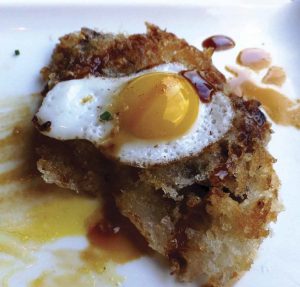
Alan Wong’s interpretation of loco moco

Alan Wong’s interpretation of loco moco

PCM: Can you describe for the readers what loco moco is?

Yamashita: Well, it’s an interesting story because the loco moco was invented in Hilo, after World War II. And it was a dish created for a bunch of local teenage boys who were about to play a football game. A particular cook said, “I’ll make a dish for you guys.” It’s a plate with a mound of cooked short grain rice, topped with a hamburger patty with brown gravy poured over it and a fried egg on top. So they got starch, they got protein, you know, and lots of carbohydrates, and that carried them through the game. And so if you go to L&L Drive-In, they serve loco moco.

What Alan Wong did was to deconstruct the loco moco. For the rice, he used mochi rice, which is a highly glutinous rice. He cooked it and then created a kind of patty, rice patty, and deep fried it briefly. And then, instead of the ground beef patty, he used ground wagyu beef and unagi, which is Japanese eel. Mixed that together, created a patty, and cooked that and slathered it with an unagi sauce, which is sauce made with soy sauce and sake, and probably sugar. It’s a thick, dark sauce. He poured that over it, and then he topped it with a fried quail egg. There’s a picture of it in my book, and it’s a magnificent, brilliant, brilliant take on a humble local dish. I had eaten several different loco mocos of Alan Wong’s over the years before I encountered the version I just described. This was, to me, the pinnacle.

PCM: Loco moco 2.0.

Yamashita: Loco moco 4.0.

PCM: Do you cook?

Yamashita: You know, I do, or I used to. My wife’s such a good cook that I leave it up to her. No, I like to cook the things that are my favorites.

PCM: What’s your signature dish?

Yamashita: I used to have my students over, and what I used to make was a beef carbonnade described in a French cookbook. It’s essentially a stew made with beef and onions and a lot of red wine. It’s just a really hearty, rich dish, but a lot of our students are vegetarians, so they didn’t always like that, but that was what I used to make.

At that point I started making instead a Chinese dish called white-cooked chicken, where you parboil chicken and serve it at room temperature, and you slice cucumbers into thin strips and put the chicken on top of that and serve it with a peanut sauce.

PCM: That sounds delicious.

Yamashita: That’s one of my favorites. So, when I’m a bachelor, I often make that for myself.
Hablas Baseball?

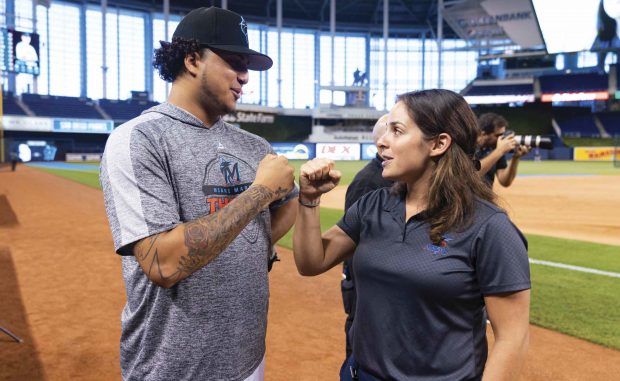
Emily Glass ’15 with Miami Marlins pitcher Jose Quijada

Emily Glass ’15 with Miami Marlins pitcher Jose Quijada

Walk through the Miami Marlins clubhouse and there’s a chance you’ll hear a Spanish phrase common in the Dominican Republic: “¿Qué lo que?”

Thanks to an innovative education program led by Emily Glass ’15, that might be an English-speaking player engaging in Spanish banter that roughly translates as “What’s up?” And you’re just as likely to hear a Latin player greeting his U.S.-born teammates in English.

With Glass’s help, the Marlins are trying to become the first bilingual organization in Major League Baseball (MLB). “We’re teaching English to our international players and Spanish to our domestic players, but then also life skills, from financial planning to cooking classes,” says Glass, whose work as the Marlins’ first education coordinator has been featured in The New York Times and The Washington Post. “The philosophy behind that is that we live in a globalized world, and Miami is at the center of that,” Glass says.

More than a quarter of the players on major league rosters at the beginning of this season were born outside the U.S., with a record 102 from the Dominican Republic, 68 from Venezuela and 19 from Cuba. In Miami and some other cities, the fans are increasingly Spanish-speaking too.

“Our new stadium is in Little Havana, so it’s in a neighborhood where everybody speaks Spanish,” Glass says. “So we want to give our players and all of our front-office employees the ability to interact with our fans that come to the ballpark and with the community, in both Spanish and English.”

Working for an MLB team seems glamorous when you see Glass bumping fists with a major leaguer on the field before a game. But the former Pomona-Pitzer softball player also spends at least a month each winter in the Dominican and much of the season on the road visiting Marlins minor- league players on teams like the Batavia Muckdogs, the New Orleans Baby Cakes and the Jacksonville Jumbo Shrimp.

Though her path to the big leagues has been winding, she has been preparing for this work even before she stepped on the Pomona College campus. She played baseball with her brother on youth teams until she was a teenager and then switched to softball for high school and college. She started every game for the Sagehens her first season, batting .386. But Glass would play only one more season of softball because competing campus interests and a love for hardball led her to recreational baseball with the guys in what she euphemistically calls a “carbonated-beverage league.”

Her first-year Critical Inquiry class at Pomona, or ID1 as it’s known, was Baseball in America with Lorn Foster, now an emeritus professor, who became such a close mentor that the two still have a standing phone call each Sunday at 3 p.m.

“She was a very gifted writer—that’s first and foremost,” Foster says. “But her interest in baseball was abiding.”

Glass later served as a teaching assistant for the class, and honed her high school and college Spanish while studying abroad in Salamanca, Spain. When it came time to write her senior thesis for a degree in public policy analysis, she again chose baseball as her topic, delving into a renowned program for disadvantaged youth called Reviving Baseball in the Inner City (RBI), founded by former major-league player John Young in Los Angeles in 1989.

She also won a coveted Watson Fellowship, which provides a stipend of more than $30,000 for a new graduate to engage in a year of independent research abroad. Glass studied international baseball while traveling to seven countries, including the Dominican, Japan and Australia. In Japan, she coached Little League on a field onto which she believes only one other woman had ever stepped. There she faced language and cultural barriers and “just baffled confusion from some people of ‘Why are you here?’”

On her return, she reached the final round of interviews for a position as an assistant of baseball operations with the New York Yankees but didn’t get the job. She then worked as the chief sales officer for a company called Acme Smoked Fish in Brooklyn for a year and a half before realizing, “I want to work in baseball. I don’t want to work in smoked fish.”

Mayu Fielding, the education coordinator for the Pittsburgh Pirates, became a mentor and referred her to multiple teams. Glass made it to the final round for a job with the New York Mets and interviewed with the Toronto Blue Jays and the Cincinnati Reds.

“My dad had always said to me that it takes six months to get the job that you want,” she says. “But if you try for six months and you put in the time and you trust the process, it will work out.”

Finally, the Marlins called, and Gary Denbo, the organization’s vice president of player development and scouting, gave her the only chance she needed.

The shared language of baseball often starts with pitches. Recta for straight fastball, curva for curveball, cambio for changeup. For catchers and pitchers in particular, it’s important nothing gets lost in translation.

“Baseball is a game of inches,” Glass says, “whether something is a ball or a strike or fair or foul, and our players see that by being able to communicate and be on the same page as some of their teammates, everything works better.”

Her mission might be most crucial with the Latin teenagers at the Dominican academy or just starting minor-league careers, many of them trying to break free of poverty and provide for their families. Landing in the hinterlands of the American minor leagues with no English is difficult.

“A lot of our players we sign at 18 or 20 years old; they’ve never cooked meals for themselves,” says Glass, who hires teachers to work with various Marlins teams in classes limited to 12 students—a hat tip to her small-class experiences at Pomona. She also shapes the curriculum, part of which is delivered by mobile phone or online.

“All of it truly is encompassed in service in the highest sense of the word—the skills they are going to need when they’re in a rookie league making very little money and trying to support themselves,” she says. “So we really tailor things toward interview skills and toward the off-field and money management skills—how to send money to your family abroad and how to communicate professionally at the field and away from the field.”

Jarlin Garcia, a 26-year-old Dominican pitcher now in the majors, remembers how challenging it was when the amount of English he spoke was nada.

“It’s a little bit hard, because you want to talk with the people, with the fans, and like when you’re out to eat,” he says in English, sitting in the visitors’ dugout at Dodger Stadium. “That’s why we need to learn.”

Beside him was Luis Dorante, a player relations and Spanish media relations liaison who works closely with Glass and travels with the major-league team to translate when necessary.

Like Glass, he is cognizant of the importance of life skills. “Some of these guys come from very humble places,” he says. “They have no idea what is a debit card, what is a credit card. Credit is difficult to explain. I say, ‘Son, be careful, you have to pay that later on.’”

Of course, only one in 200 minor leaguers ever reaches the big leagues. And even for those who do, the money may not last forever. “What we tell them is that many of these players won’t make it. Unfortunately, it’s a statistical fact,” Dorante says. “They need to enjoy this period in their life where they’re learning many skills and also gaining friends that might last for life.”

Jose Quijada, a 23-year-old pitcher from Venezuela, echoes Garcia, once again in English. “I think it’s important for me because, like, you play here in America, you need to talk with your friends from America who speak English. When you go to the bank, you need to talk English.”

It’s Glass’s job to make that happen—even if players’ Spanglish is sometimes charmingly imperfect. “Emily’s my friend,” Quijada says. “She’s a good guy.”

Pomona Walk of Fame

Pomona Walk of Fame

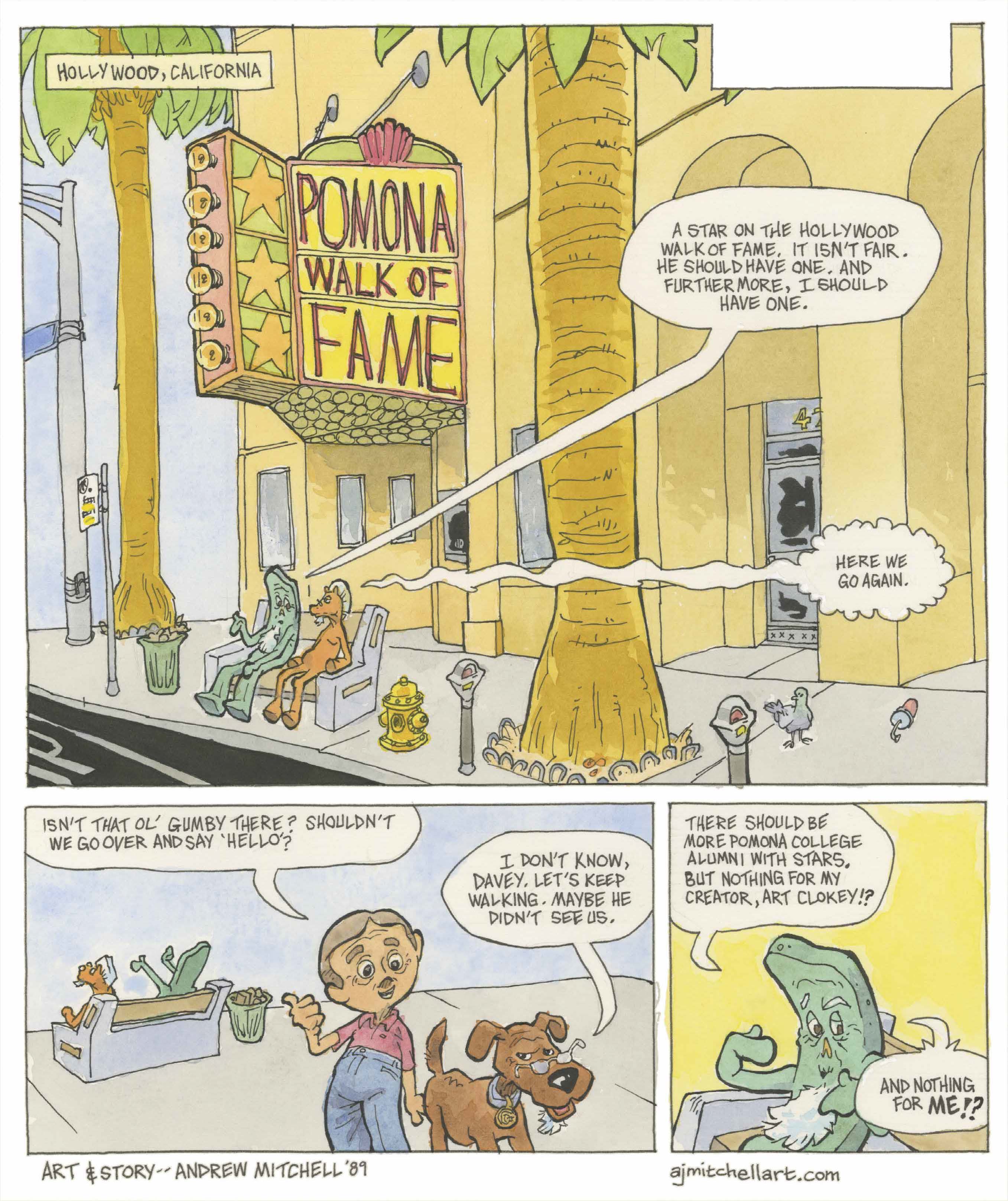
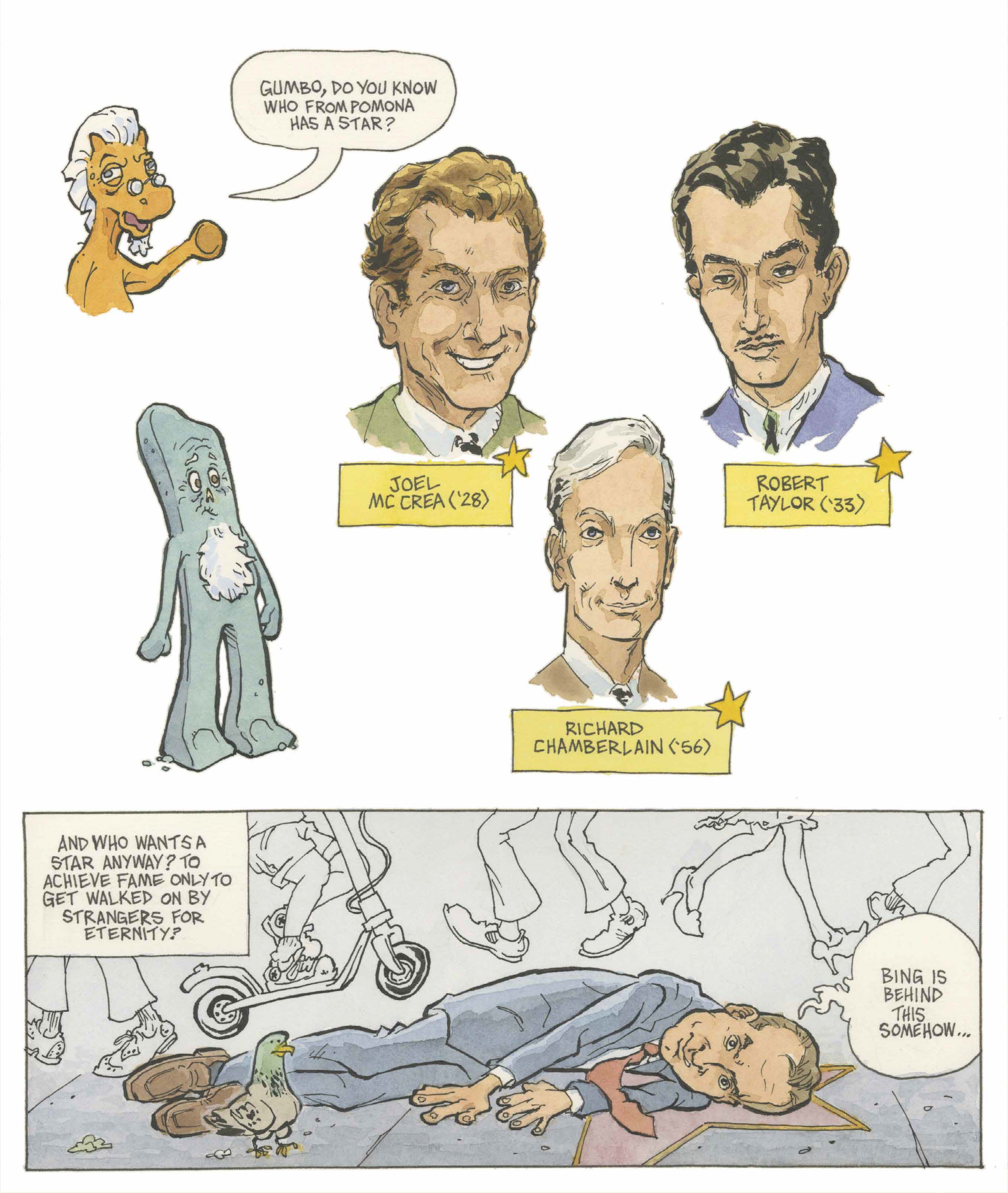
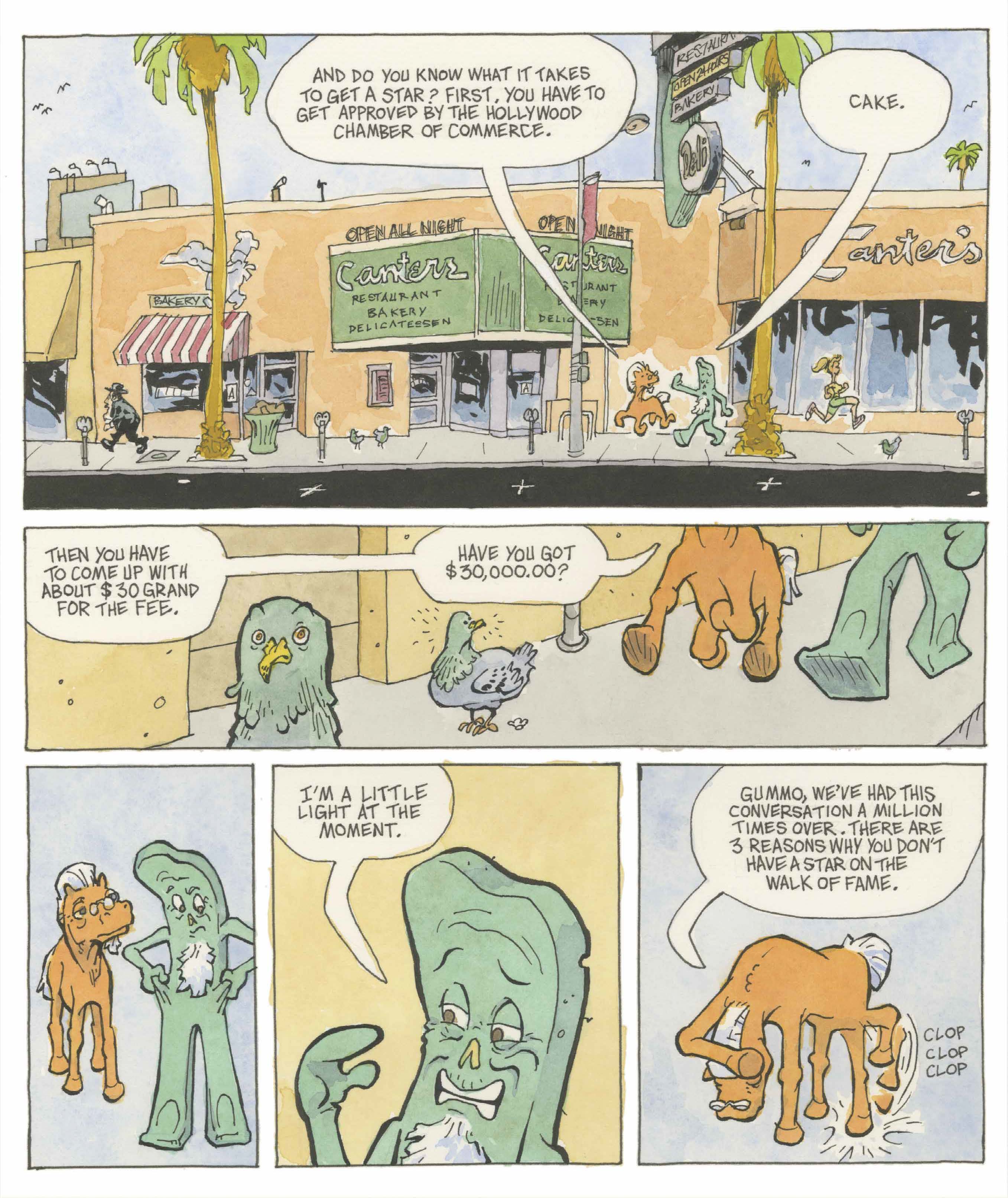
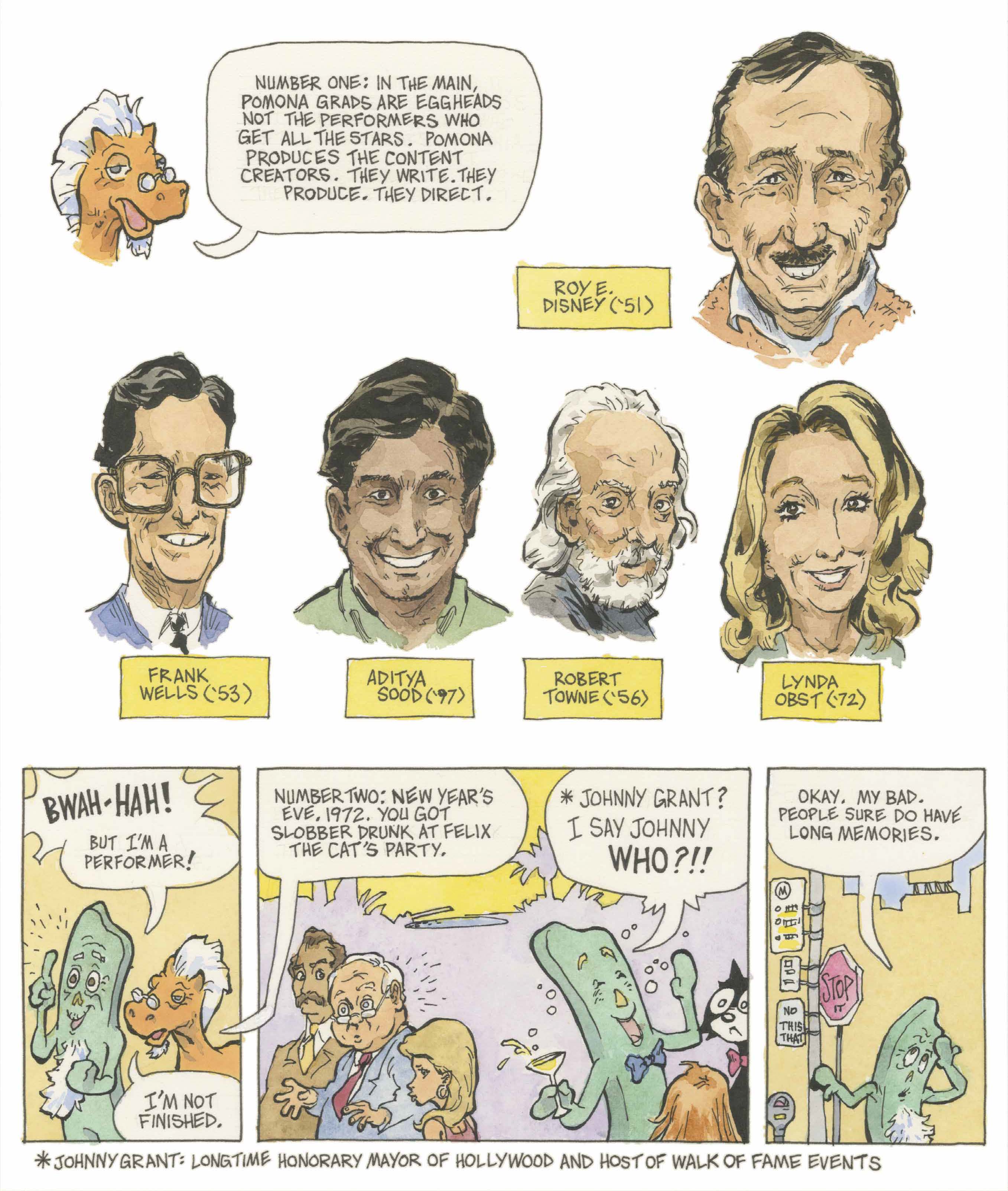
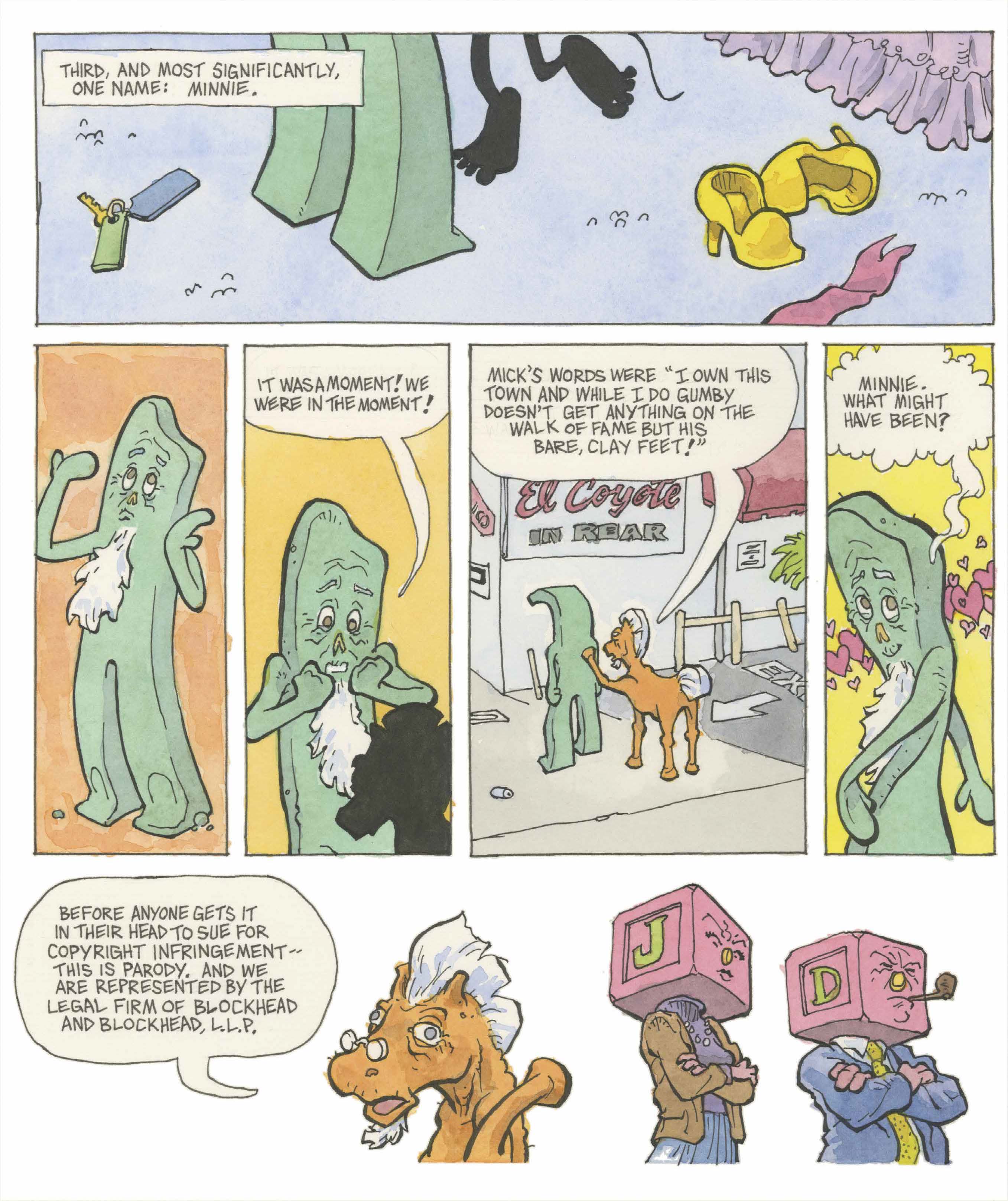
An original graphic story by illustrator and graphic novelist Andrew Mitchell ’89. Link to full script available below.

An original graphic story by illustrator and graphic novelist Andrew Mitchell ’89. Link to full script available below.

An original graphic story by illustrator and graphic novelist Andrew Mitchell ’89. Link to full script available below.

An original graphic story by illustrator and graphic novelist Andrew Mitchell ’89. Link to full script available below.

An original graphic story by illustrator and graphic novelist Andrew Mitchell ’89. Link to full script available below.

An original graphic story by illustrator and graphic novelist Andrew Mitchell ’89. Link to full script available below.

Art and story by Andrew Mitchell ’89. Full script available here.

An Unforgettable Halloween

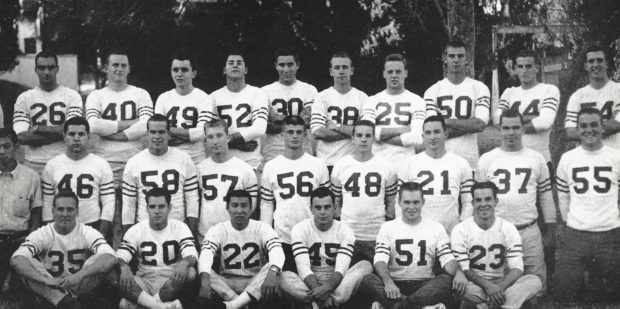
In this photo of the 1958 freshman football team, the author is number 30 in the center of the back row.

In this photo of the 1958 freshman football team, the author is number 30 in the center of the back row.

Some dates and events are indelibly imprinted in our memories. The obvious ones are typically the saddest—such as Pearl Harbor Day, the day President Kennedy was assassinated and the day the World Trade Towers were leveled. We remember where we were, who we were with and what we were doing when we received the news.

Halloween 1958 was not nearly as momentous and was far less significant to our national history. But it is still a date I’ll never forget.

Sixty-plus years ago, I was a freshman at Pomona College and (barely) on the freshman football team. In those days, freshmen had their own schedule and could not play on the varsity team. Not that I could ever have made the varsity football team and surely not as a freshman.

I chose Pomona in part because I thought of myself as a football star even though I never played in high school and could never have made the state championship team at my 3,500-student high school. Division III was for me.

What funny games the mind can play.

When I arrived at Pomona, I went out for football. The coaches needed cannon fodder for practice, so I was allowed to practice and then to suit up for real games. We played a schedule of seven games. I think I played in three of them.

I recall having a really good game against Caltech—participating in maybe 10 plays in which I made a number of unassisted tackles and a few quarterback sacks.

In those days college football players played both offense and defense. Fuzz Merritt was coaching at Pomona and insisted on using the single wing, which was in style when he had played for Pomona in the 1920s. It was decidedly not in style in 1958. Only Princeton, UCLA and Tennessee and perhaps a few other schools were still using the throwback single wing.

There are four backs in a single wing offense: a tailback who runs and throws the ball after receiving a direct snap from center, a quarterback who calls signals and sometime takes a direct snap from center, a fullback who blocks up the middle and a wingback who takes reverses and catches passes, among other things. The linemen often pull to block for the backs on power plays over tackle and around the end.

I played right guard on offense and nose guard on defense. I weighed 175 pounds. We all were small.

One of the teams on our schedule was San Diego State, which then was at the nadir of its football prowess. (Pomona would no more think of scheduling San Diego State for a football game today than scheduling UCLA.) We played San Diego State on Oct. 31, 1958, in the old, old Aztec Stadium on the San Diego campus.

We boarded a bus in Claremont in the early morning—all 25 of us—and headed south on Highway 101 to San Diego. We had a picnic lunch at a rest stop along the highway and arrived at Aztec Stadium around noon. There was no locker room for us. We changed clothes in a big room with bales of hay spread on the floor.

When we took the field, we could see the Aztecs were a lot bigger than we were. The person across the line from me was a giant. I estimate that he weighed 220 pounds, which would make him a running back today. But because we ran the single wing, which no one knew how to defend, and because our linemen typically blocked at an angle while running, we did all right.

We pushed San Diego State up and down the field but could not penetrate their 20-yard line. They couldn’t penetrate our 20-yard line either, until late in the game when our center hiked the ball over our tailback’s head and some 220-pound Aztec (probably my man) tackled our tailback in the end zone for a safety. That was the only score of the game: San Diego State Freshmen 2, Pomona College Freshmen 0.

We were solemn as we boarded the bus for the trip back to Pomona College. Our line coach, Ben Hines (for whom the baseball field at La Verne University is named), kept shaking his head and saying: “2–0. I can’t believe it. That is a baseball score, not a football score.” He must have repeated those words a dozen times.

By the time we approached Claremont, it was dark and the trick-or-treaters were out. To lift our spirits, one of our tailbacks, Hal Coons, began gustily singing a popular song of the day, the Big Bopper’s “Chantilly Lace.” Over and over again. We all joined in. The mood lightened considerably, and we all felt better.

I still hear that song in my mind every Halloween.

Most of us on that freshman football team have lived long and productive lives. We include four physicians, three Ph.D.s in physics (one of whom became a Buddhist monk and administrator of the Zen Center of Los Angeles), a Ph.D. in economics, two dentists, three lawyers, a career Army officer, the founder of the well-regarded American Museum of Ceramic Art, the president and CEO of a Fortune 500 company, a minister and several high school teachers and businessmen.

So why is Halloween 1958 burnished into my hippocampus?  Who really knows?  Perhaps it is because for the first time in my adult life, I was able to be a part of a team, however minor that part was.

Paul Eckstein ’62 is a trustee emeritus of Pomona College.

Pomona’s Walk of Fame Script

Page 1

Panel 1:

Caption:  Hollywood, California.

Image: Claymation characters Gumby and Pokey, both old, sitting on a bench in front of a marquee that says “Pomona Walk of Fame.”

Gumby: A star on the Hollywood Walk of Fame.  It isn’t fair.  He should have one.  And furthermore, I should have one.

Pokey: (Thinks) Here we go again.

Panel 2:

Image:  An old version of Davey and his dog, from the claymation series “Davey and Goliath,” walking by, seeing Gumby and Pokey on their bench.

Davey: Isn’t that ol’ Gumby over there?  Shouldn’t we go over and say “hi?”

Goliath:  I don’t know, Davey.  Let’s keep walking.  Maybe he didn’t see us.

Panel 3:

Image: Gumby talking.

Gumby:  There should be more Pomona College alumni with stars.  Nothing for my creator, Art Clokey.  And nothing for ME.

Page 2

Panel 1:

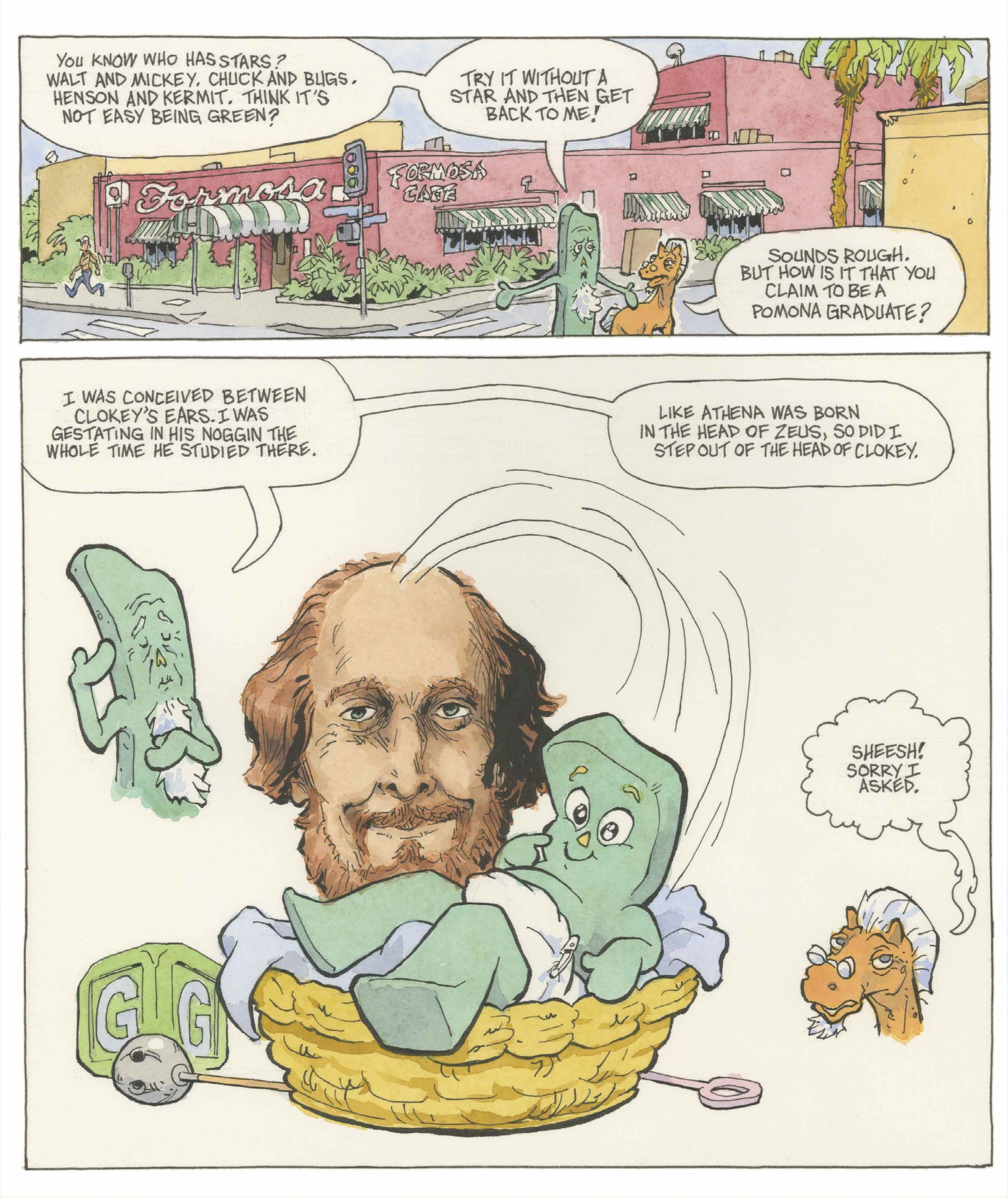
Image: Gumby and Pokey walking in front of the Formosa Café.

Gumby:  You know who has stars?  Walt and Mickey.  Chuck and Bugs. Henson and Kermit.  Think it’s not easy being green?  Try it with no star and get back to me!

Pokey: Sounds rough.  But how is it that you claim to be a Pomona graduate?

Panel 2:

Image: Gumby visualizing himself as a baby in a basket being born from the head of Art Clokey.

Gumby:  I was conceived between Clokey’s ears.  I was gestating in his noggin the whole time he studied there.

Gumby:  Like Athena was born in the head of Zeus, so did I step out of the head of Clokey.

Pokey: (Thinks) Sheesh. Sorry I asked.

Page 3

Panel 1:

Image: Open panel showing names, faces and grad years of Sagehens Joel McCrea ’28, Robert Taylor ’33, Robert Shaw ’38 and Richard Chamberlain ’56.

Pokey: Gums, do you know who from Pomona has a star?

Panel 2:

Image: People walking over a prostrate Bob Hope.

Pokey: And who wants a star anyway?  To achieve fame only to get walked on by strangers for eternity?

Page 4

Panel 1:

Image: Gumby and Pokey walking in front of Carter’s Restaurant, Bakery and Delicatessen.

Pokey: And do you know what it takes to get a star?  First you have to get

approved by the Hollywood Chamber of Commerce.

Gumby:  Cake.

Panel 2:

Image: Pokey and Gumby’s feet as they walk on the sidewalk among pigeons.

Pokey: Then you have to come up with about $30 grand for the fee.  Have

you got $30,000?

Panel 3:

Image: Pokey watching Gumby turn out his empty pockets.

Panel 4:

Image: Gumby talking.

Gumby:  I’m a little light at the moment.

Panel 5:

Image: Pokey covering his eyes and stomping one foot.

Pokey: Gummo, we’ve had this conversation a million times over.  There are 3 reasons why you don’t have a star on the Walk of Fame.

Page 5

Panel 1:

Image: Faces of some of the Pomona alums behind the scenes: Roy Disney ’51, Frank Wells ’53, Aditya Sood ’97, Robert Townes ’56, and Lynda Obst ’72.

Pokey: Number one:  In the main, Pomona grads are eggheads, not the performers who get all the stars.  Pomona produces the content creators.  They write.  They produce. They direct.

Panel 2:

Image: Gumby holding up one finger.

Gumby:  Bwah-Hah!  But I’m a performer!

Pokey: I’m not finished.

Panel 3:

Pokey: Number Two.  New Year’s Eve.  1972.  You got slobber drunk at Felix the Cat’s party.

Panel 4:

Image: Flashback of Gumby at a party holding a martini glass and saying: “Johnny Grant?!!  I say Johnny Who?!!” to Felix the Cat while Johnny Grant, standing behind him, looks startled.

Caption at bottom:  Johnny Grant, longtime honorary Mayor of Hollywood and host of Walk of Fame events.

Panel 5:

Image: Gumby leaning against a pole and holding his forehead.

Gumby:  Okay.  My bad.  People sure have long memories.

Page 6

Panel 1:

Image: Feet of Gumby and Minnie Mouse, who has lost her shoes, embracing next to the edge of a hotel bed. Hotel keys lie on the floor.

Pokey: Third and most significantly. One name. Minnie.

Panel 2:

Image: Gumby holding up his hands in silence.

Panel 3:

Image: Gumby holding his fists against his face as if embracing someone.

Gumby:  It was a moment!  We were in the moment!

Panel 4:

Image: Pokey consoling Pokey with a hoof on his shoulder in front of El Coyote.

Pokey: Mick’s words were “I own this town and while I do Gumby doesn’t

get anything on the Walk of Fame but his bare, clay feet!!!”

Panel 5:

Image: Gumby surrounded by floating hearts.

Gumby:  (Thinks) Minnie. What might have been?

Panel 6:

Image: Pokey pointing to two figures who have children’s letter blocks for heads. One is smoking a pipe.

Pokey:  Before anyone gets it in their head to sue for copyright infringement:  This is  parody.  And we are represented by the legal firm of Blockhead and Blockhead, LLP.

THE END


Bulletin Board

Miami Summer Welcome Party hosted by the Pomona College Parents Leadership Council

Miami Summer Welcome Party hosted by the Pomona College Parents Leadership Council

A Super Set of Sagehen Summer Welcome Parties

Denver Summer Welcome Party hosted by Doug Gertner and Maggie Miller P’21

Denver Summer Welcome Party hosted by Doug Gertner and Maggie Miller P’21

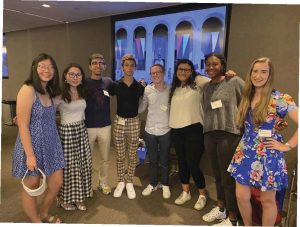
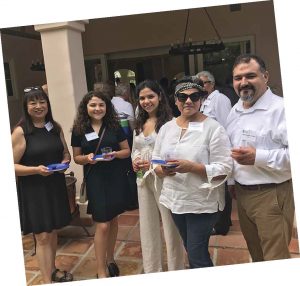
It was a busy summer season as we welcomed the class of 2023 and their families at Pomona College’s 14 welcome parties across the country and abroad. Each year during the months of July and August, the Office of Parent Engagement and Giving works with the Major Gifts Office and Parents Leadership Council members around the country to coordinate Summer Welcome Parties for incoming first years, transfers, and returning students and parents. In addition to the new students and their families, alumni and current students also attend our parties to help answer questions and offer their personal perspectives on the Pomona College experience.

We kicked off the party season the weekend of July 13 – 14 in San Francisco and Palo Alto, CA and Seattle, WA, then made our way on July 20 to Del Mar, CA, Miami, FL and Minneapolis, MN. Portland, OR was our next stop on July 25, and then we headed to Denver, CO, Chicago, IL and Hong Kong on July 27. On July 28, we made a short trip over to the Los Angeles party in Pacific Palisades, and then to our final party destinations in the East Coast to New York City, Washington D.C. and Boston.

Los Angeles Summer Welcome Party hosted by Beth Abrams and Stuart Senator P’20.

Los Angeles Summer Welcome Party hosted by Beth Abrams and Stuart Senator P’20.

All in all, more than 600 people attended these special event parties. It was a whirlwind of activity, but very enjoyable meeting our new students and chatting with their parents. We would like to extend a huge thank you to everyone who traveled near and far to attend our parties and to our wonderful hosts who helped us welcome the newest Sagehens into our college family!


Alumni Association Board: New Year, New Leaders

Jon Siegel ’84, Alumni Association President

Jon Siegel ’84, Alumni Association President

The Alumni Association Board begins its year in October with a meeting that will include a visit from President Starr, an update on the College’s strategic planning process and identifying possible cities for Regional Chapter expansion over the coming year.

Don Swan ’15, Alumni Association President-Elect

Don Swan ’15, Alumni Association President-Elect

The board will be led in 2019-20 by Alumni Association President Jon Siegel ’84 and Don Swan ’15 will serve as president-elect. The group welcomes the following new members: Chris Byington ’12, Paula Gonzalez ’95, Jade Sasser ’97, Robin Melnick (Faculty Representative), Miguel Delgado-Garcia ’20 (ASPC President) and Alanzo Moreno (Alumni & Parent Engagement Representative).

A complete list of members and a nomination form.


Rivalry Weekend

Rivalry Weekend

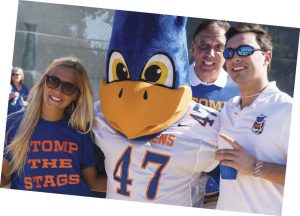
Join the Sagehen football team for Rivalry Weekend 2019! Starting Friday, November 15 and ending Sunday, November 17, the weekend will be highlighted by the big game on Saturday as the ‘Hens go for a three-peat against the Claremont-Mudd-Scripps Stags. The game will be at John Zinda Field starting at 1 p.m. Sagehens from far and wide will gather at Merritt Field in advance of the game for light bites and free swag. We’ll then march across 6th Street as #OneTeam to beat the Stags. Go ‘Hens!

Keep your eye on social media for registration information. Questions? Please contact Michelle Johnston in the Pomona-Pitzer Athletics Department at (909) 621-8016.


The Book Club’s Fall Selection

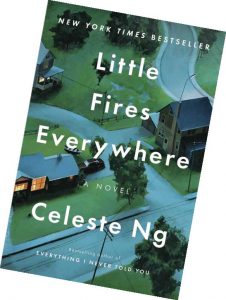
Little Fires Everywhere by Celeste NgThe fall selection of the Pomona College Book Club has been getting rave reviews, like this one:

“Witnessing these two families as they commingle and clash is an utterly engrossing, often heartbreaking, deeply empathetic experience… The magic of this novel lies in its power to implicate all of its characters—and likely many of its readers—in that innocent delusion [of a post-racial America]. Who set the littles fires everywhere? We keep reading to find out, even as we suspect that it could be us with ash on our hands.” – New York Times Book Review

This fall, join us as we read Little Fires Everywhere by Celeste Ng, named a Best Book of the Year by NPR, Amazon, The Washington Post and many more. In-person events will be taking place October through December throughout the country. Visit the Pomona College Book Club web page to learn more about events near you or to sign-up to host a book club. If you can’t wait for an in-person discussion, join the Pomona College Book Club on Goodreads to chat with alumni, professors, students and staff around a common love of reading.


Regional Volunteers Unite!

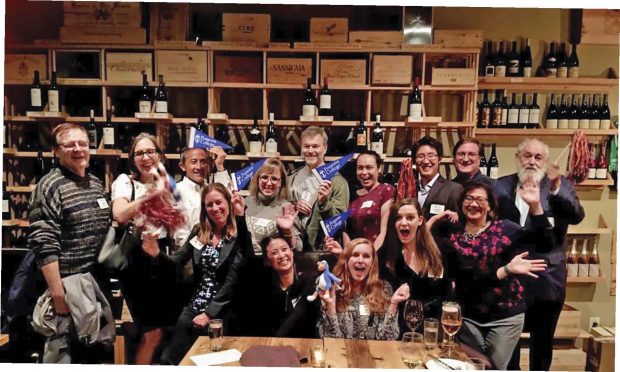
Orange County Regional Chapter Happy-Hour.

Orange County Regional Chapter Happy-Hour.

After leaving campus, alumni establish themselves in communities across the globe. Wherever you choose to take up roots, you can find and create opportunities to connect with nearby Sagehens by joining or starting a Regional Chapter. Regional Chapters support events such as Winter Break Parties, 4/7 and Book Clubs and also create unique activities for their local community.

If you are interested in starting your own chapter, or connecting with other volunteers in your area, contact Alanzo Moreno, Assistant Director of Community Development and Annual Giving, for more information.

This Is Your Brain on Humor

This Is Your Brain on Humor

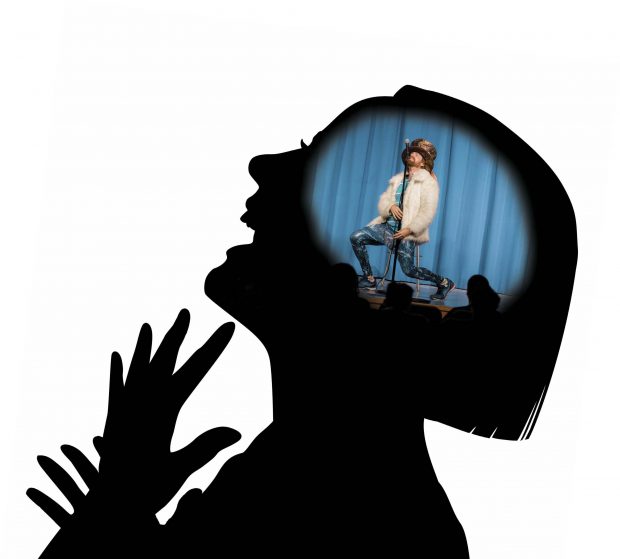
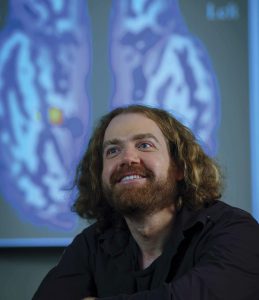
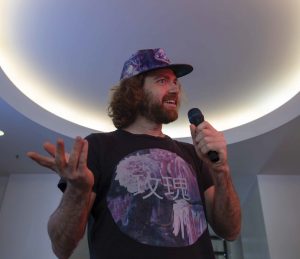
Ori AmirON A RANDOM weeknight at a comedy club in Burbank, Pomona College Professor Ori Amir bounds onto the stage.
“Hello, party people!”

By day, the bearded redhead with perpetually tousled hair is a visiting professor of psychology who has taught at Pomona since 2017.  By night? An amateur stand-up comic.

“As you can tell by my accent, I am a neuroscientist,” the native Israeli says, drawing titters from an audience that doesn’t quite know what to believe. “Sorry, I forgot I’m in Hollywood: I’m a neuroscientist-slash-model,” he says.

“I did get a new haircut. I went to Floyd’s and I told them I work at a college, so could you just give me the haircut of whatever celebrity is most popular among college students these days? So they gave me the Bernie Sanders.”

This time, the laughter is in full.

To Amir, stand-up comedy is like a scientific experiment that provides immediate results. You test the hypothesis that your joke is funny: They either laugh or they don’t. There are variables such as word choice, delivery and audience demographics, but the feedback is instant—sometimes painfully so.

His academic research is a far more sophisticated inquiry. Other researchers have used fMRI analysis, or functional magnetic resonance imaging, to study the brain’s responses to humor. Amir’s work with fMRIs and eye-tracking technology is groundbreaking: He studies the workings of the brain during the actual creation of humor.

Comedy, it turns out, is a nearly perfect subject for exploring the creative process.

“It’s a cognitive process that under the right setting could take 15 seconds, and you can replicate it many times. Anybody can at least try to do it,” Amir says. “It’s hard to ask a novelist to come up with a novel while you’re watching.”

Ori AmirAmir’s research has been featured by Forbes, and the journal Nature reported on his work last fall in an article about how neuroscience is breaking out of the lab, citing his doctoral research at the University of Southern California with Irving Biederman on the neural correlates of humor creativity. The Guardian, Reader’s Digest and the website Live Science also have featured Amir’s work.
For his research at USC, Amir recruited professional comedians—including some from the Groundlings, the famed Los Angeles improv troupe that helped spark the careers of Melissa McCarthy and Will Ferrell—along with amateur comedians and a control group of students and faculty. He then showed them examples of the classically quirky cartoons from The New Yorker with the original captions removed and asked the subjects to come up with their own captions—some humorous, some mundane and sometimes no caption at all—as he recorded which areas of the brain were activated.

What Amir found was somewhat unexpected: The regions of the brain lit up by the creation of the funniest jokes by the most experienced comedians weren’t so much in the medial prefrontal cortex, the area of the brain associated with cognitive control, but in the temporal lobes, the regions of the brain connected to more-spontaneous association. The findings fit perfectly, he says, with the classic but decidedly unscientific advice by improv comedy coaches to “get out of your head.”

Amir has expanded his work at Pomona, where he teaches such courses as Psychology of Humor, Data Mining for Psychologists and fMRI Explorations into Cognition. His current work uses eye-tracking technology to examine the relationship between visual attention and the creation of humor.

That study has given undergraduate students who are headed toward entirely different careers an opportunity to contribute to research that Amir expects to publish in a scientific journal next year. Recent cognitive graduates Konrad Utterback ’19, who is beginning his career as a financial analyst, and Justin Lee ’19, who plans to go to law school, will be among the paper’s coauthors. Other collaborators include Alexandra Papoutsaki—a computer science professor at Pomona whose expertise in the emerging uses and potential of eye tracking has been featured in Fortune and Fast Company—and students Sue Hyun Kwon ’18 and Kevin Lee ’20, who wrote computer code for the project.

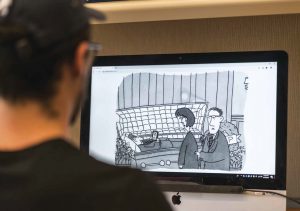
Konrad Utterback ’19 models the use of the Tobii eye tracker to track eye movements as subjects try to create a punchline for an uncaptioned New Yorker cartoon.

Konrad Utterback ’19 models the use of the Tobii eye tracker to track eye movements as subjects try to create a punchline for an uncaptioned New Yorker cartoon.

Once again using uncaptioned New Yorker cartoons as prompts, Utterback and Justin Lee conducted experiments using a similar assortment of professional comedians that included comics from the Groundlings and Second City, along with amateur comedians and students.

The eye-tracking device—a low-end model by Tobii that costs about $170 and looks like a narrow black bar attached to the bottom of a standard computer monitor—allowed the researchers to chart the movement of the subjects’ eyes on an X-Y coordinate plane over the 30 seconds they were given to look at each cartoon.

Konrad Utterback ’19 models the use of the Tobii eye tracker to track eye movements as subjects try to create a punchline for an uncaptioned New Yorker cartoon.The results were then compared to something called a saliency map of the cartoon image.
“It’s this algorithm that basically determines which part of the cartoon is the most visually salient; it defines visual saliency in terms of things like edges and contrast and light—factors which are likely to attract low-level, primitive visual attention,” Utterback explains.

Once again, the results were surprising. The expert comedians focused most closely on the salient or conspicuous features of the cartoon, including faces.

“It’s actually a little counterintuitive because you would think, well, you have all this experience doing comedy and then you end up looking at those features that the low-level algorithm has determined to be the most salient ones,” Amir says. “Our interpretation was that it has to do with them actually using the image to generate the captions, using the input to generate associations to come up with something funny, as opposed to trying to sort of top-down impose their ideas.”

That made sense to Utterback.

“The fact that these were improv comedians in particular is relevant because that’s consistent with how comedians do improv comedy,” he says. “They’re basically trained to listen to what other people are saying first and not ruminate internally too much trying to think of something funny on their own, and sort of just be reactive. It makes perfect sense with these results because they were focusing much more on the actual content of the image to create the joke rather than trying to generate it themselves and forcing it to fit the cartoon, which is what we would expect people with no comedy experience to do.”

Justin Lee’s part of the study built on those results, adding the captions the subjects produced to the original cartoons and then asking three different people to rate the funniness of the cartoons and their captions. “We were able to use the data to determine that this fixation on the salient parts of the image directly correlates with how funny the caption actually ends up being,” Lee says.

The students’ findings support Amir’s earlier results. “We basically proved the same thing that he did using a different modality (eye tracking versus fMRI),” Utterback says. “In a nutshell, both experiments show that people with more comedy experience display a higher level of bottom-up, automatic control and less top-down, intentional influence on the humor creation process.”

Growing up in Israel, Amir watched his father “joke all the time” around the house and even do some comedic appearances on Israeli television.He tried his own hand at stand-up for the first time about seven years ago while still in graduate school at USC, telling a couple of jokes at a campus comedy event. Later, he started showing up around L.A. for open-mic nights. He has appeared at some famous L.A. comedy clubs and can even be seen on TV’s Comedy Central and CMT—“assuming you watch those channels 24-7 on a split screen, without blinking,” Amir writes on his comedy website.

His mainstay is performing at smaller clubs, joints still dotted with appearances by famous or once-famous comics, where he can continue to hone his craft. The life of most comedians, he quickly learned, is not what he saw on TV growing up, somebody telling jokes for an hour in a big arena.

Ori Amir“You don’t know the path,” he says. “The path is—you’re going to end up performing for a long time in front of three apathetic strangers at an open mic, and you’re going to wait two hours to do that and have to buy something from the place. Especially in Los Angeles, it’s an extremely competitive sort of thing. But obviously if it wasn’t so rewarding, people would not be working with so much effort.”
Amir’s influences include George Carlin, the late comedian remembered for his HBO specials and his sharp political and social commentary, as well as British comedians Eddie Izzard and Bill Bailey.

As a foreigner and an academic, Amir has an uncommon perspective for a comic. Audiences don’t always believe he is who he says he is. “I had a couple of times when people said, ‘You’re not really a neuroscientist, and your accent is so fake,’” he says with a laugh. Amir also likes to needle Americans with the insight of an outsider.

“I do like being a foreigner, but sometimes I’m a little concerned that Trump is going to deport me now to Mexico,” he says onstage. “I’m trying to seem more like an American by walking around saying American things, like, ‘Hey, this is America—speak English. Jesus loves you. Sign here.’

“I love the American English,” he goes on. “I love how rich your vocabulary is. You have words like communist, socialist, Marxist, anti-American—and these are only just the synonyms for poor.”

Social and political commentary and the typical off-color comedy club fare can be a little dicey for an academic, particularly one without tenure, Amir knows. He doesn’t invite students to his gigs, but his act was squeaky clean the night PCM visited.

“I do actually have a reporter from my college here,” he told the crowd, “so I can’t say any jokes that could be offensive or construed as prejudiced or sexist or dirty in any way, so … Thank you very much, ladies and gentlemen!”

That one, he says later, would have worked better if he had led with it. His comedy is part improv and partly always being refined. He doesn’t expect to give up his day job any time soon, nor does he plan to quit performing.

“I do want to see how far I can get with it,” he says. “Very few people actually make money doing it—and also, my visa doesn’t allow me to do that for money anyway.”

Ba-dum-bump.

Back in the lab, Amir plans to turn his gaze to the potential for artificial intelligence to produce comedy.

His initial instinct is that comedy is an “AI-complete problem”—one of the few things robots are not soon going to be able to do better than humans. There are types of humor, however, that computers should be able to excel at—such as puns, the proverbial lowest form of humor.

“That’s the first type of humor computers are able to do,” he says.

By the way, Amir—who performs around Los Angeles maybe a couple of times a week—already has had the distinction of being the opening act for a joke-telling robot.

The electronic novice of the stand-up circuit was pretty funny, he admits. However, there was a catch.

“The robot told jokes written by a good comedy writer.”

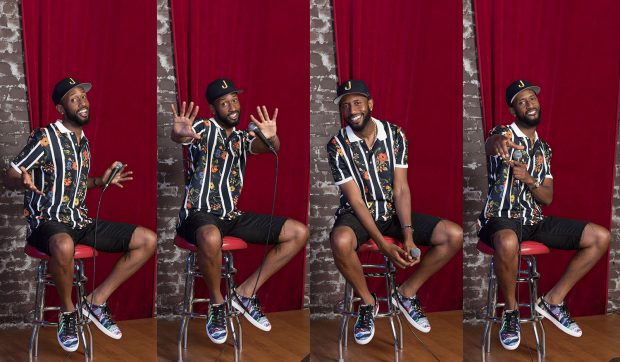
The Many Faces of James Davis

The Many Faces of James Davis
James Davis

Photos By David Zaitz

JAMES DAVIS HAS been sitting at our table at Roscoe’s Chicken and Waffles in L.A. for no more than five minutes when his phone lights up with a call. He hasn’t even had time to order yet, and already, his attention is being diverted in another direction.

It’s a girl. Davis answers and tells her playfully: “I’m mid-interview, but I was, like, ‘I have to pick this up.’”

If she’s not used to hearing it from him yet, she will be soon: Davis’s work as a comedian, actor and writer is more in demand than ever these days. Since leaving Pomona to pursue a career in entertainment, Davis has appeared on shows like Kevin Hart’s Real Husbands of Hollywood, created and starred in Hood Adjacent with James Davis, which aired on Comedy Central for a season in 2017, and, most recently, acted as the host for a game show called Awake: The Million Dollar Game, which premiered on Netflix in June. He’s got 50,000 Instagram followers and a newly released stand-up special. He’s not all the way on top of the world yet, but he is definitely making a rapid ascent.

Davis is balanced on a precipice: He’s already achieved what many people would consider a lifetime’s worth of career milestones; on the other hand, he’s only 32, and he has “very big” goals he’s still aiming to achieve, he says.

On the day we meet, however, he’s just back from a weekend trip to Las Vegas for a friend’s birthday, where he learned he loves to gamble (“like, too much”). So for the moment, he’s less comedy superstar in the making, and more relatable hungover 30-something. For today, his goals are a little smaller: He wants to reassure his girl he’s still into her, eat some fried chicken, and then take a well-deserved nap.

Despite the fact that he didn’t end up graduating, Davis says that he loved his time at Pomona. He enrolled expecting to become a lawyer, but instead, he got distracted by studying English and taking acting classes. He liked the acting part so much that he started doing some work as an extra in L.A., and that was it for him, he says: “I was like, ‘This is what I want to do.’”

“I chose the school; I chose my major,” he continues. “But that bug, when it hits you, it really hits you. And when that passion is so strong, everything else really starts to feel like a distraction.”

He quickly discovered that passion would only take him so far: “That was way more daunting than I’d assume it was going to be, coming from the Pomona bubble,” Davis says now, laughing at his youthful hubris. “Like, Hollywood. I’ll conquer that next!”

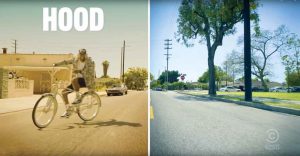
James Davis performing the rap-song intro to Hood Adjacent, which aired on Comedy Central in 2017.Luckily he’d grown up in L.A., so Davis had a place to crash while he was making a name for himself: His mom took him in while he went to auditions and started pulling together material for a stand-up routine. He doesn’t take that for granted, he says: “I didn’t have to sleep on any couches. I didn’t have that desperation with my comedy where I was like, ‘If this joke doesn’t land, or I don’t book this one gig, I’ll have to fly back home.’” Davis looks around the restaurant, which has been a touchstone in his life since he and his friends hung out here on weekend nights in high school, and smiles. “I’m already back home.”

Still, the climb from being a nameless nobody to the top-billed star of a Comedy Central show was a grind. Davis started out at the very bottom, doing what he describes as “bring a room” shows, which anyone can perform at as long as they have a friend who’s willing to accompany them (and buy a couple of drinks). From there, he befriended other comedians and persuaded them to watch his tapes; they, in turn, spoke to Ens Mitchell, who owns a mid-city LA club called The Comedy Union, on his behalf.

James Davis performing the rap-song intro to Hood Adjacent, which aired on Comedy Central in 2017.The Comedy Union was the perfect place for Davis to hone his craft, he says, in part because it tends to draw racially diverse audiences. Davis grew up toggling between black and white spaces: he was born and raised in Baldwin Hills, a historically black neighborhood, but as a teenager he would travel crosstown to Santa Monica to attend a majority-white private school, Crossroads School for Arts & Sciences.

So The Comedy Union immediately felt like home because “it’s predominantly black, but not all black. For someone who’s self-proclaimed hood-adjacent, it was important for me to have jokes that appealed to everybody. I didn’t just want to do rooms that were all black, and I didn’t want to be the comedian that only does all-white rooms either. When my friends come to the show, I want them to laugh, both white and non-white,” Davis says.

Davis credits his education with helping him craft the kinds of jokes that caught Mitchell’s eye and made him popular with those diverse audiences. “Those classes,” he says, talking about the time he spent in college, “are what I think make my jokes different from the majority of my peers’. Those classes are what gave me a certain awareness about the world, to then use comedy as a platform.”

When Davis is writing a joke, he says, he’s not just trying to be funny (though he acknowledges that getting a laugh is a critical part of his job description).  “I’m writing with multiple motivations,” he says. “I want it to catch you off guard, shock you a little bit. Under all of my jokes I feel like there is a message, some kind of actual statement.”

Davis sees himself as an activist for “my own causes, whatever I feel is important to me.” These concerns range from jokes about the absurdity of the NCAA’s rules about compensating student athletes to taking on police violence in black communities. One of his favorite bits from his stand-up routine, he says, is about the murder of one of his uncles by a police officer. There’s a joke in there, a standard laugh line: Davis riffing on how he never got to know what kind of uncle stereotype his uncle would have inhabited—the cheap one, the drunk one, etc.

But also, “I’m using this moment to say, ‘Hey, me too,’” Davis explains. “This person performing for you—I am one of those people who’s had a family member killed by a police officer. So if you think you’ve never seen somebody who’s been affected by this—here’s someone who has.”

He cites studying with ex–Black Panther Phyllis Jackson while at Pomona as an experience that helped him realize how important it was to share his perspective. “You realize that the rest of the world didn’t take this class; the rest of the world doesn’t see that particular point of view,” Davis says. “People say that I’m a smart comedian, that I’m clever. To me, I’m a product of the education I’ve been put in.”

He also recognizes that he’s lucky to have an audience to share with. “Not everybody is blessed with the opportunity to walk on a stage and be guaranteed a listening audience even for a split second,” he says. “I feel called to, in some way, use that platform for more than just self-gain.”

But putting so much into his comedy can be emotionally draining, and some days he’s not really in the mood to give his experiences a punch line. “I care about a lot of serious issues, but I’m a comedian,” Davis says. “I’m going through a lot of serious things in my personal life right now, but I’m a comedian. Right now, comedy is a little more challenging.” He pauses and considers. He also writes and acts; he could focus on those pursuits instead, and to some extent, he’s doing so. But he can’t bring himself to give up on comedy, because, he says, when he’s doing it well, it feels better than anything else on Earth.

When Davis first got into comedy, having his own show was the dream. “I remember watching Chapelle’s Show and being like, ‘This is what I want to do,’” he says. He was so focused on getting there that he regularly turned down gigs guest-starring in other people’s projects, which “would make people look at me weird, like I’m crazy.”

But his focus paid off: Hood Adjacent premiered on Comedy Central in June 2017. The show is formally similar to  Chappelle’s: It features Davis doing stand-up bits for a live audience before introducing prerecorded segments where he does things like gather a bunch of minority students from a local college campus to interview them about what it’s like to be the token in their friend groups, or takes his bougiest friends to try to earn their “hood passes” from a Compton native.

The show is extremely personal, and extremely specific to Davis: It’s his attempt to translate to a larger audience his experiences of blackness, of growing up in Los Angeles, of simultaneously belonging and not belonging in various communities. It was thrilling to get it made, but also “so stressful,” Davis says. At the time, it was hard to appreciate the full extent of what he’d accomplished, and even now, “I’ll sit back and realize, ‘I did it,’” he says, shaking his head, still amazed.

To be fair, he didn’t have very long to get used to the idea: Hood Adajcent lasted just eight episodes. “It didn’t stay on like Chapelle’s Show,” Davis says. So, on to the next one: “Then I was like, ‘I gotta create another show.’”

Davis hosting his new game show Awake on Netflix.That next show is still gestating; in the meantime, he has to earn a living, which is how he ended up on a Burbank backlot shooting Awake, a show that feels like a hard left turn for a comedian whose work is usually fairly personal and political. There’s no discussion of the nuances of the black American experience on Awake; instead, Davis is responsible for shepherding a group of contestants through a series of goofy challenges made harder by the fact that they haven’t slept in 24 hours: They chug Slushies, thread needles, and turn off alarm clocks with bleary, sometimes daffy determination.

Davis recalls a Netflix executive calling to offer him the job and asking, essentially, Are you all in on this? Is this show the biggest thing in your life right now?

“I remember saying, ‘Listen, when I left college, it was not to be a game show host,’” Davis reports, laughing. “‘But I think this is gonna be a great show. I love the premise. I’m gonna take it seriously and do my best.’”

He saw Awake as an opportunity, and he’s been in Hollywood long enough to know that you should never turn down one of those. “Unless you’re a superstar, and you have that skyrocketing trajectory of a career, every appearance moves you a little bit closer, gives you more eyes,” he says. “Hood Adjacent opened up a lot of people to me. I did a Facebook game show with charities, and that helped me get Awake. Awake is going to open me up to more hosting opportunities. Which is not what I was trying to do, but if that’s what I do in between my passion projects, that’s super cool with me.”

Davis is at an interesting juncture in his career, and his life. He’s successful enough that friends are starting to ask him for favors. (He tells them, “Appearances versus payment are very different. I’m not Tom Cruise; I’m not Will Smith. I’m not anything close to that. I can get a couple of bills—like, dinner bills.”). And Twitter haters are popping up regularly. (“If they’re tweeting at you, they know about you. I remember when I had no haters because no one knew of me. There’s just too many people on the Internet to worry about whether it’s all positive.”) But he also still feels like he has a lot left that he wants to accomplish—getting another show of his own being just one of them.

“I shot a pilot for TruTV; TruTV went through some internal issues and didn’t pick up a bunch of pilots, including mine,” he says. “But I feel really good about what we shot, so I feel like it’s going to land somewhere. I feel like there’s going to be me hosting some other stuff—I’ve had a couple of meetings and some tests.”

“Right now,” he continues, “I’m really an open slate; it’s about what I choose to do. I know for a fact that I’m going to be doing short films, maybe put some stuff in some festivals. Just elevating, and continuing to use whatever craft to speak my mind.”

He’s particularly excited about doing more writing in every format: “Writing is always my favorite, because writing is at the base of everything,” Davis says. “My favorite part is receiving a blessing of an idea, and then just capturing it and executing it, no matter what the genre is.”

And maybe he’ll help some of those friends get ahead too: His rise has given him the opportunity to open doors for old pals, a position he says he both relishes and resents. It comes with a lot of pressure: “I’ve got friends who, the plan was always, I get on, and I help them get on,” he says. Which means he has to succeed for their sake as well as for his own: “If I can’t get on, I can’t help them get on.”

Davis feels the weight of his community on his shoulders, as well as his own high expectations for himself. But most days, the challenge excites him.

“I embraced that I’m the star of the team,” he says. “I’m Kobe. Comes with the territory. Heavy lies the crown, but I still like how the crown fits.” He tilts his head back and forth and smiles knowingly. “Even though it’s heavy and it hurts, I like how it looks on me.”