
With his new documentary feature, director Miko Lim ’02 takes SXSW by storm.
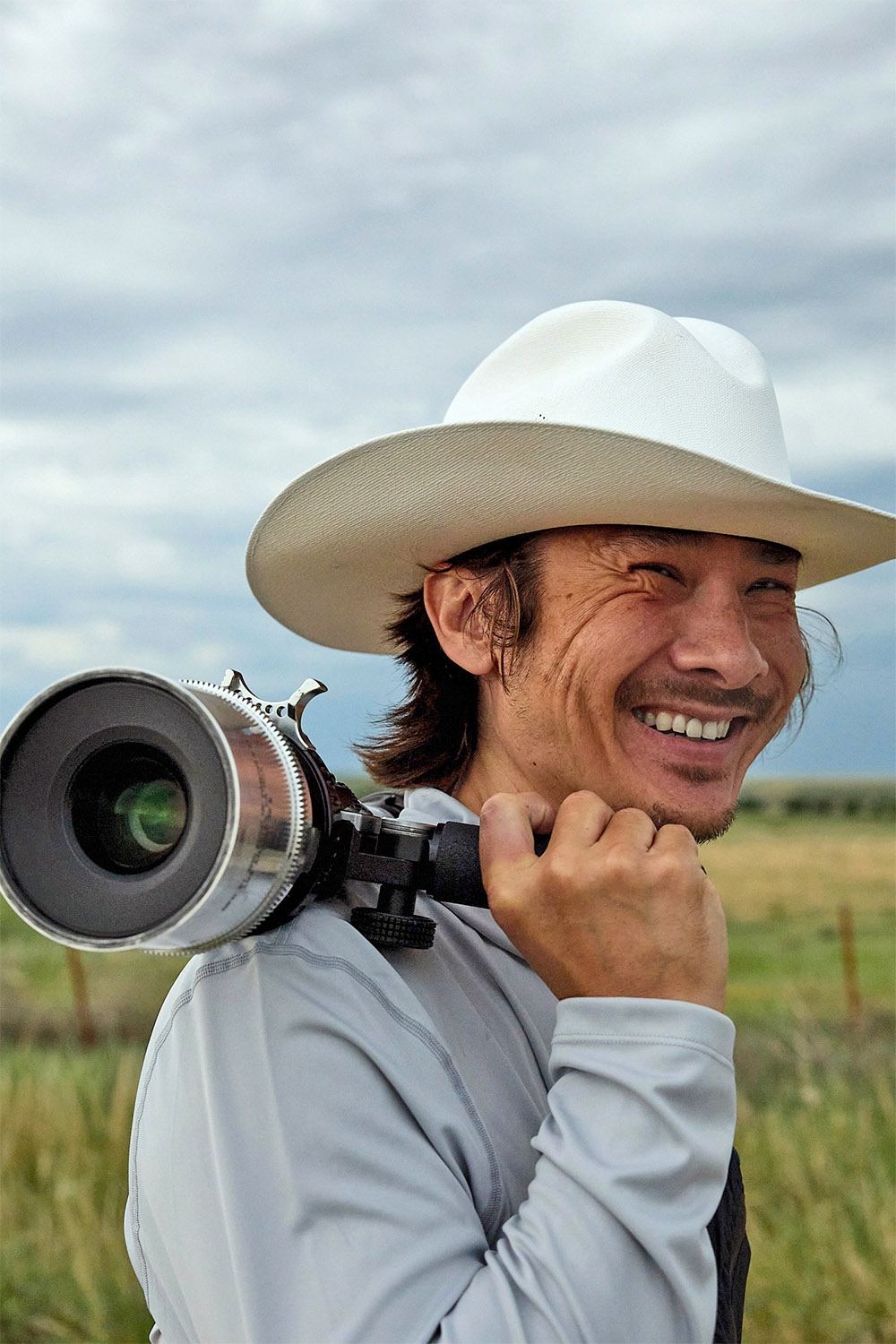 When he first saw a photo of Hurricane Katrina taken by storm chaser Jeff Gammons, Miko Lim ’02 felt as if he was looking at a nebula in outer space. “I was immediately drawn to it,” says Lim, a filmmaker based in Los Angeles. “Everybody else’s work seemed to capture a lot of death and destruction, but his was such an artistic take on natural phenomena.”
Lim hired Gammons, a photographer and videographer, for a commercial he was directing, and after the shoot they kept talking. Those conversations led Lim—who has directed campaigns for Adidas, Nike and Disney and won a Clio for his short film Ocean Mother—to embark on his first feature documentary. Stormbound, which chronicles Gammons’ life and pursuit of extreme storms, had its premiere at South by Southwest (SXSW) in March, where it won the Special Jury Award for Best Feature Documentary, followed by a European debut at CPH:DOX in Copenhagen.
Lim was drawn to Gammons’ life story not only because he braved life-threatening storms and captured them in all their sublime beauty, but because he did so while battling a litany of illnesses and diseases, including spinal cancer and heart and kidney failure.
“This is a guy who’s been dealt the worst possible hand health-wise,” says Lim, “and yet he is still driven to go out into the world and see it with marvel and wonder and hope. It was very inspiring to me.”
After initial meetings with studios more interested in the newsworthy angle of the story than in the personal journey he wanted to share, Lim met Adam McKay (The Big Short, Vice), who understood his vision and signed on as executive producer. With McKay on board, IMAX quickly bought into the project, providing funding and access to the full array of IMAX cameras.
“It was a wonderfully hard experience,” says Lim. “There’s a reason why people just film these things on their phones and GoPros. We were out there lugging 80-pound cameras the size of a fridge into these storms.”
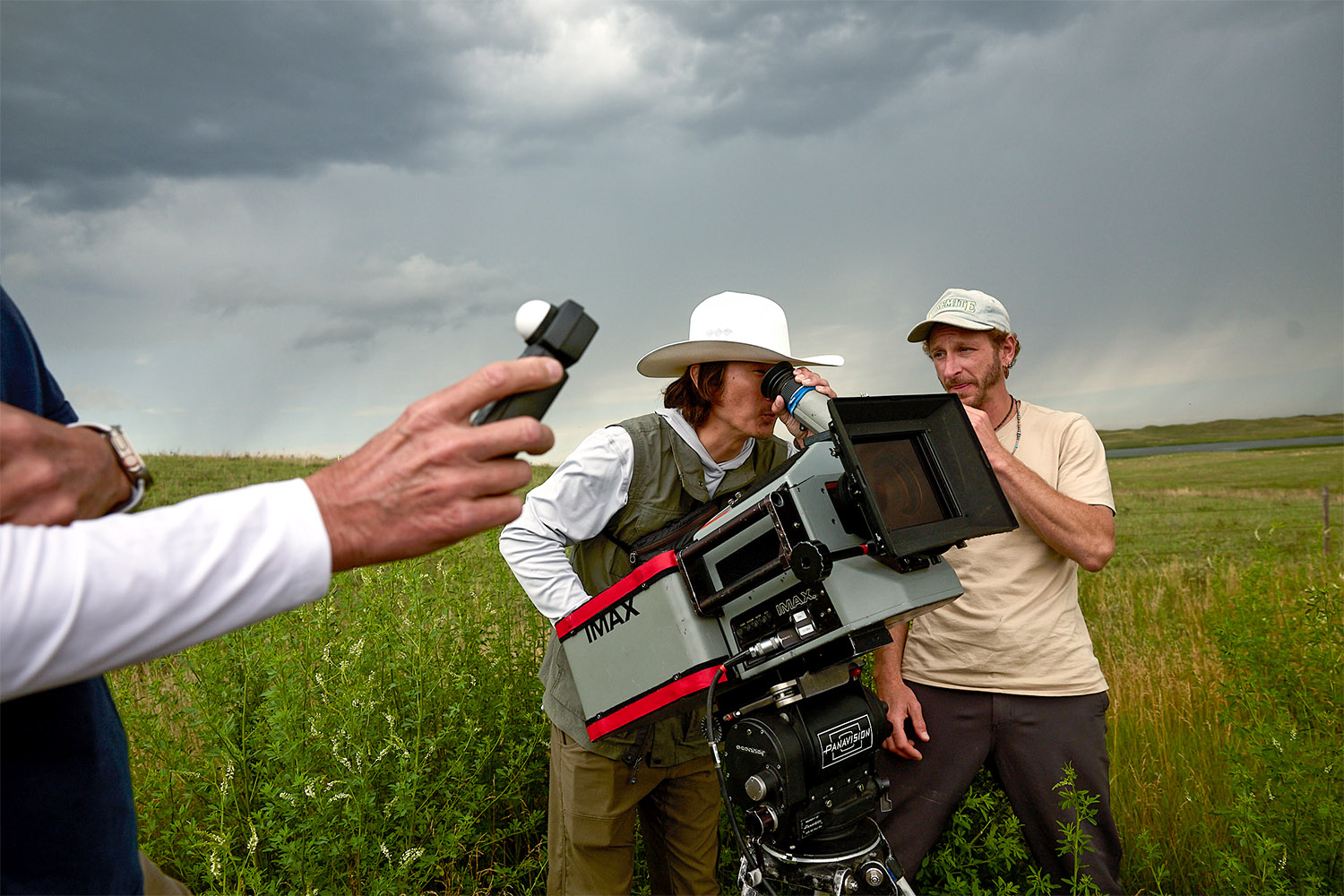
Miko Lim filming Stormbound with an IMAX camera.
Using IMAX cameras was important to Lim because they are “inherently more cinematic” than digital cameras. As well as the “fun impossibility of it,” he also appreciated the taller aspect ratio, which is more similar to an old TV than the modern widescreen format.
“So much of this film is literally and metaphorically about looking up. So having a screen this high allowed us to frame things where we can still see our subjects down at the bottom, but we can see the sky opening up and exploding in front of them all in one image rather than having to pan up.”
Premiering the film at SXSW seemed fitting, he says, given that Texas is at the bottom of Tornado Alley and the documentary takes place almost entirely on the roads of the U.S.
A pre-med student at Pomona, Lim realized while doing an oncology research project at UCLA that he might not be able to handle the emotional toll of being a doctor. Having taken a creative writing elective with David Foster Wallace, he decided to tap into his artistic side and applied for a script reader job on Craigslist.
That turned out to be an internship at Angelina Jolie and Billy Bob Thornton’s production company. “I walked in blind to that, just trying out something new, and that got me into the idea of using my imagination and creating things. That gave me the bug.”
Lim still takes on occasional commercial work. It can be creatively liberating, he says, and it is also lucrative (he has three kids). Recently, he has been moving more into TV and has started writing his first narrative feature.
“I’m very interested right now in these tiny, intimate stories about people in massive worlds that feel otherworldly,” he says. “You get older and you feel like this world is such a big, magical place, and you’re so small in it, and it’s not a bad thing. Your little story is just as exciting and lovely as the story of the whole universe.”