Culture

Peeling Back Time

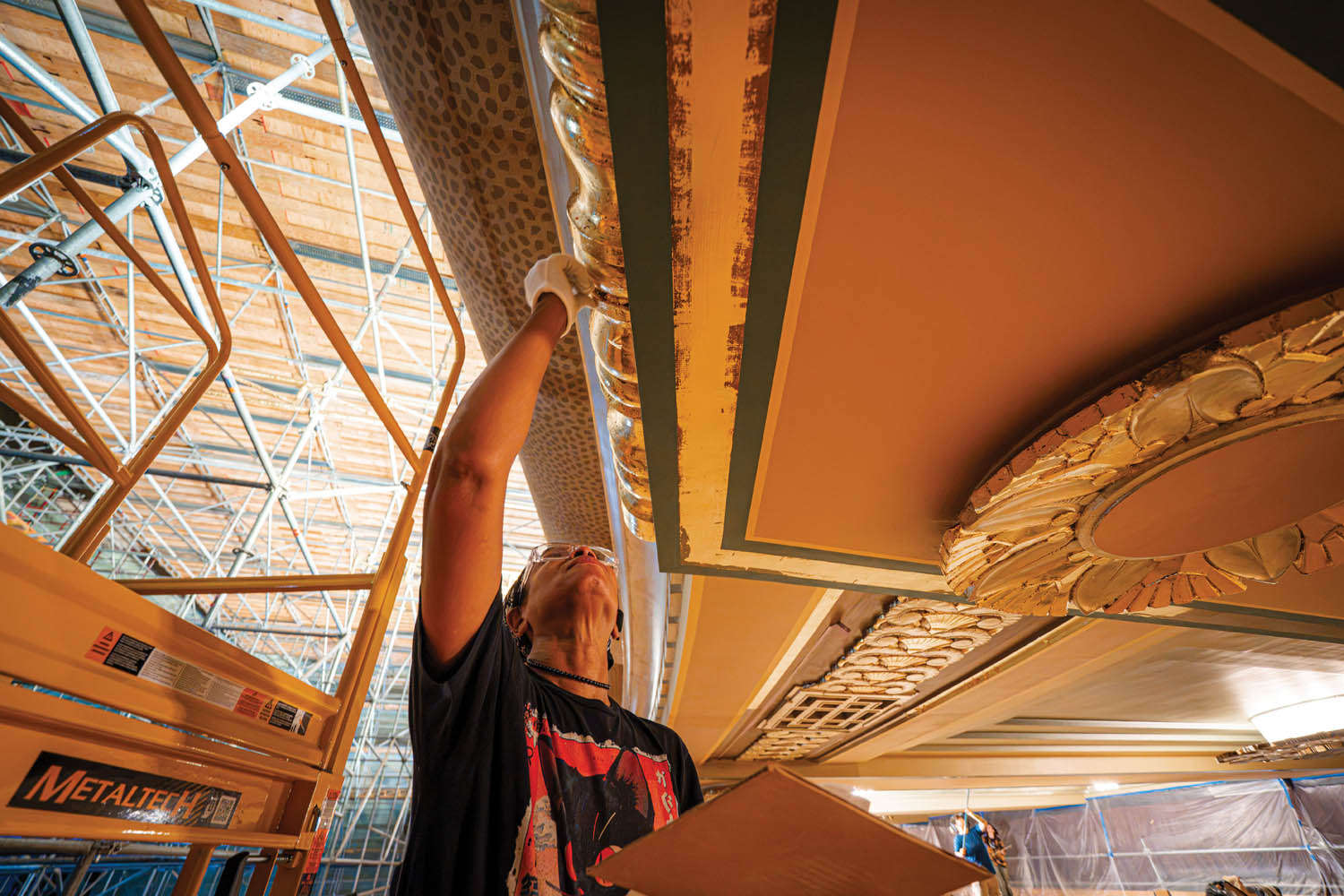
Woman applying gold leaf to the underside of a balcony

Lead restorer Marlene Sophia applying Dutch metal leaf to the underside of the balcony.

As “Big Bridges” approaches its 2031 centennial, its iconic ceiling mural, created by Italian American artist Giovanni Smeraldi, has undergone a full restoration supported by a $1 million donation from the Timken Foundation.

“The Smeraldi mural is a priceless work of art that should be preserved for future generations to enjoy,” says Kurt Timken ’86. It was Timken’s great-aunt, Amelia Bridges, who, with her husband, Appleton Bridges, funded the original construction of Big Bridges and Little Bridges, in memory of their daughter, Mabel, who died in 1907 during her junior year at Pomona.

Brooklyn-based EverGreene Architectural Arts carried out the restoration work, which began with assessing obvious damage—water staining, cracks from the 1994 Northridge earthquake and overall fading and peeling—and cleaning the entire ceiling with dry sponges. An elaborate scaffolding system allowed the conservators to reach every inch of the mural.

When audiences return to the auditorium this fall, the ceiling won’t look vastly different, just a little fresher. Since the last restoration in the 1970s, explains restorer Brynn Griffiths, “dirt and soot and smoke and time” have taken their toll. “A lot of the pigments that were used in the past,” she says, “were not light fast, and with time they discolor and oxidize.”

The most noticeable changes for audience members may be the proscenium arch and the underside of the balcony (EverGreene site lead Marlene Sophia is shown here applying Dutch metal leaf to that area). The restoration team was able to peel back an area of the tan paint that has covered it for the last 50 years and uncover the original colors and patterns beneath.

Object Lesson: Gentle Giant

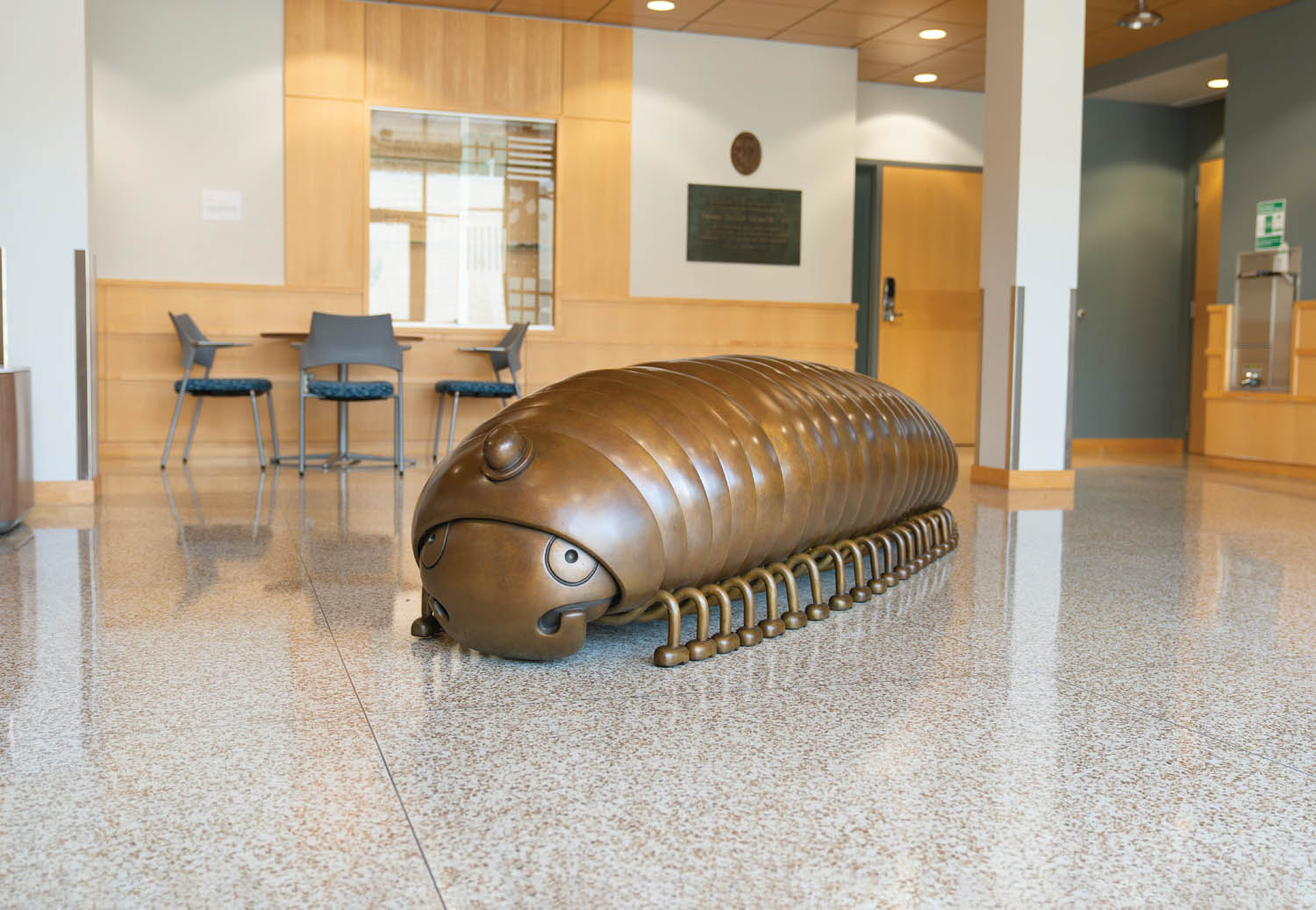
Bronze sculpture of a millipedeThis many-legged friend, happily residing in Seaver South since 2024, is the creation of American sculptor and prolific public artist Tom Otterness.

  • Aptly titled “Millipede,” the 25-foot-long bronze sculpture was given to the college by Janet Benton ’79, Pomona College alumna and chair of the Board of Trustees.
  • For many years, the shiny arthropod had lived in an outdoor location, requiring regular surface treatment. Benton’s gift was contingent upon the museum finding a suitable, sheltered space on campus.
  • A full-scale cardboard mock-up was created by two interns to determine optimal placement before the final move.
  • Otterness is known for playful, cartoonish sculptures that often blend humor with social commentary. Our millipede may be an anomaly.
  • Public art pieces by Otterness can be found in the New York Subway, the zoo at San Jose, Manhattan’s Battery Park City and cities including Seoul, Toronto and Scheveningen, the Netherlands.

In the Groove

Portrait of We Are Scientists rock musicians against a pink wall

By the time you read this, Keith Murray ’99 and Chris Cain ’99, aka the indie rock band We Are Scientists, will be deep into a North American tour that has them criss-crossing the nation (and Canada) from Chicago to Seattle to San Antonio to Vancouver, and many parts in between, before winding up in Toronto on December 5. This musical whirlwind comes on the heels of a festival tour in the U.K. and Spain that took up much of their summer.

Twenty years on from their breakout 2005 album With Love and Squalor, and with nine studio albums under their belts (including last year’s Qualifying Miles), the New York City-based band—known for frenetic rhythms, punchy hooks and witty phrasing—shows no signs of slowing down. Being on the road, they say, is as much fun as ever.

“I think the good elements of being on tour are amplified in our band,” says Murray, who met Cain when they were both undergraduates at Pomona, where they united over a love of comedy. “Most bands don’t really socialize with one another the way we do.”

When they’re back home, says Cain, “the thing that keeps the job fun is continuing to push ourselves as songwriters and recording artists.” Songwriting actually has become more enjoyable over the years, he notes. When they were first trying to break into the New York music scene, “writing a bad song felt like the end of the world.” Two decades later, more prolific and more adept, they can immerse themselves in the flow of creativity with less angst.

Though neither has become rich from their musical career, they both say they’re happy with how things turned out—partly due to the values and reverence for the arts they learned at Pomona.

“I certainly wouldn’t trade my lifestyle for one that involved more wealth and less personal interest and satisfaction inherently woven into what I do every day,” says Murray. “So, in some ways, maybe we’re the richest men of them all.”

Learn more.


Breaking the Code

Portrait of journalist Jeff HorwitzThis has been an eventful year for journalist and author Jeff Horwitz ’03.

In May, along with fellow Reuters reporter Engen Tham, he won the 2026 Pulitzer Prize in the Beat Reporting category for his “inventive and revelatory reporting on Meta,” which detailed the social media company’s willingness to expose users, including children, to scams and AI manipulation.

Horwitz, who lives in the Bay Area, says he “never expected to be in contention” for the prize and was “gratified and delighted.” He also admits that winning the award is “a pretty strong recipe for some incoming imposter syndrome” as he contemplates where to focus his reporting gaze next.

This fall, his 2023 book Broken Code: Inside Facebook and the Fight to Expose Its Toxic Secrets, which also focuses on how Meta placed profits above civic conscience, hits movie screens as the basis for The Social Reckoning, a follow-up to Aaron Sorkin’s Social Network. The new movie, released on October 9, dramatizes the 2021 Facebook leak by whistleblower Frances Haugen as reported by Horwitz in “The Facebook Files” for The Wall Street Journal.

As Horwitz recounts, he was first approached by Sony before the book was even published. “These things are wildly speculative,” he says, and it was only last year that it started seeming like it might happen. Conversations with Sorkin ensued, though Horwitz is quick to point out that while the movie is inspired by his book, Sorkin “worked with the story as he wanted to tell it, and that is just fine by me.”

Jeremy Allen White, known to many as Chef Carmy in the popular comedy-drama The Bear, plays Horwitz, with Mikey Madison (Anora) in the role of Frances Haugen and Jeremy Strong (Succession) as Mark Zuckerberg.

The experience of being played by a Hollywood actor, Horwitz says, has been “bizarre” and he finds it “deeply amusing to be played by an extremely sexy man.”

“The Hollywood stuff as a whole has been interesting and fun to see,” he says, but he has tried to keep “a moderate distance.” Meanwhile, new topics—some related to climate change, some around AI—vie for his journalistic attention.

Out in the Open

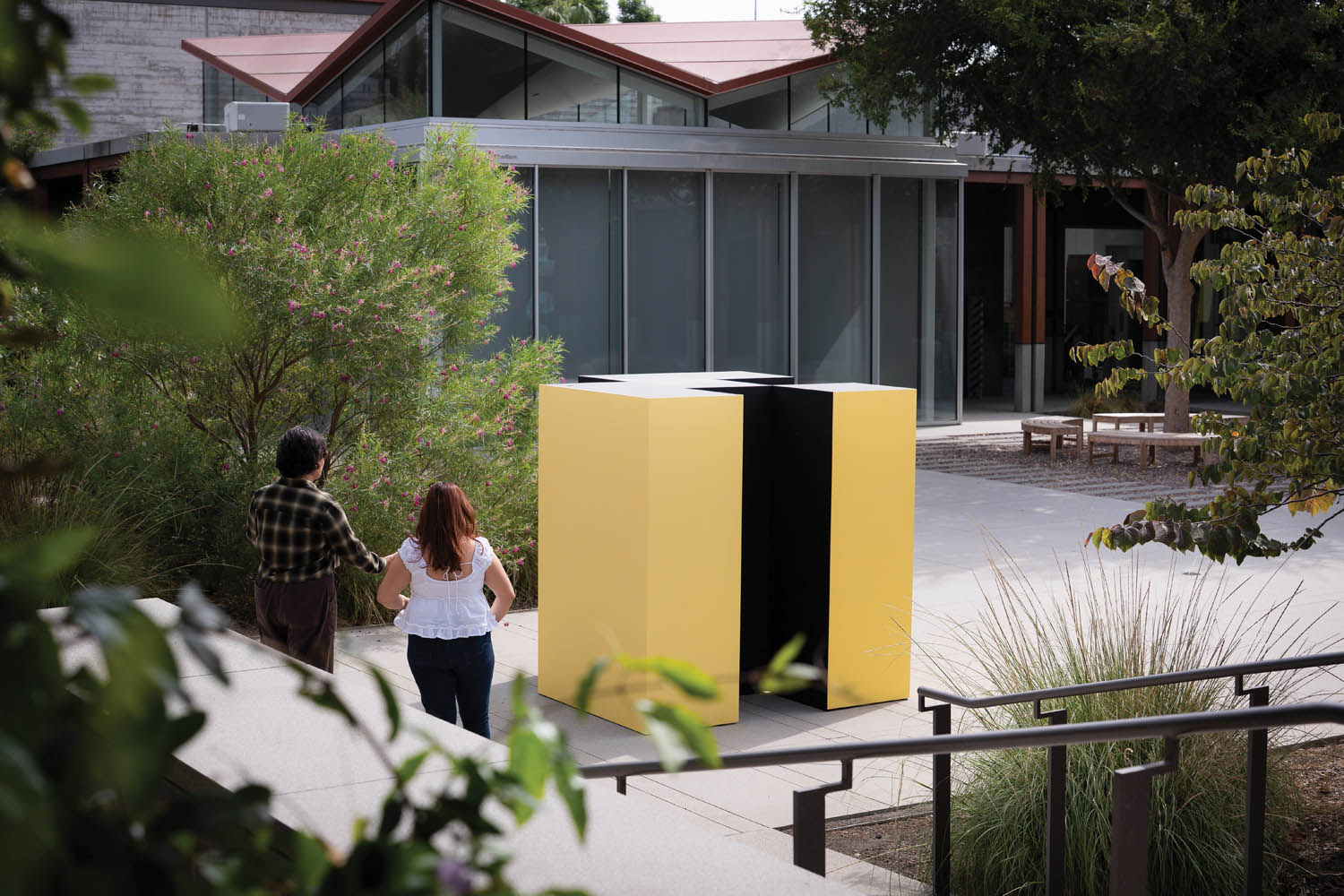
Yellow and black metal statue in a courtyard


If you’ve walked past the Benton Museum of Art recently, you may have noticed a striking yellow-and-black sculpture on display in the courtyard that faces College Avenue. Chris Burden ’69 originally designed the piece, Untitled (2011), as a student project at Pomona, but it wasn’t fabricated until 2011, the year that the Pomona College Museum of Art (now the Benton) opened the exhibition It Happened at Pomona. For that show the museum’s staff worked with Burden to complete the work. After the exhibition closed, the sculpture lived in Lyon Court outside Montgomery Art Hall until 2020, when it was moved to the new Benton building to inaugurate the John and Debbie Starr Family Sculpture Patio. Now, six years later, museum staff have reinstalled Untitled in the John and Louise Bryson Courtyard, where visitors can engage with it “in the round,” on all of its four sides.

The Healing Power of Art

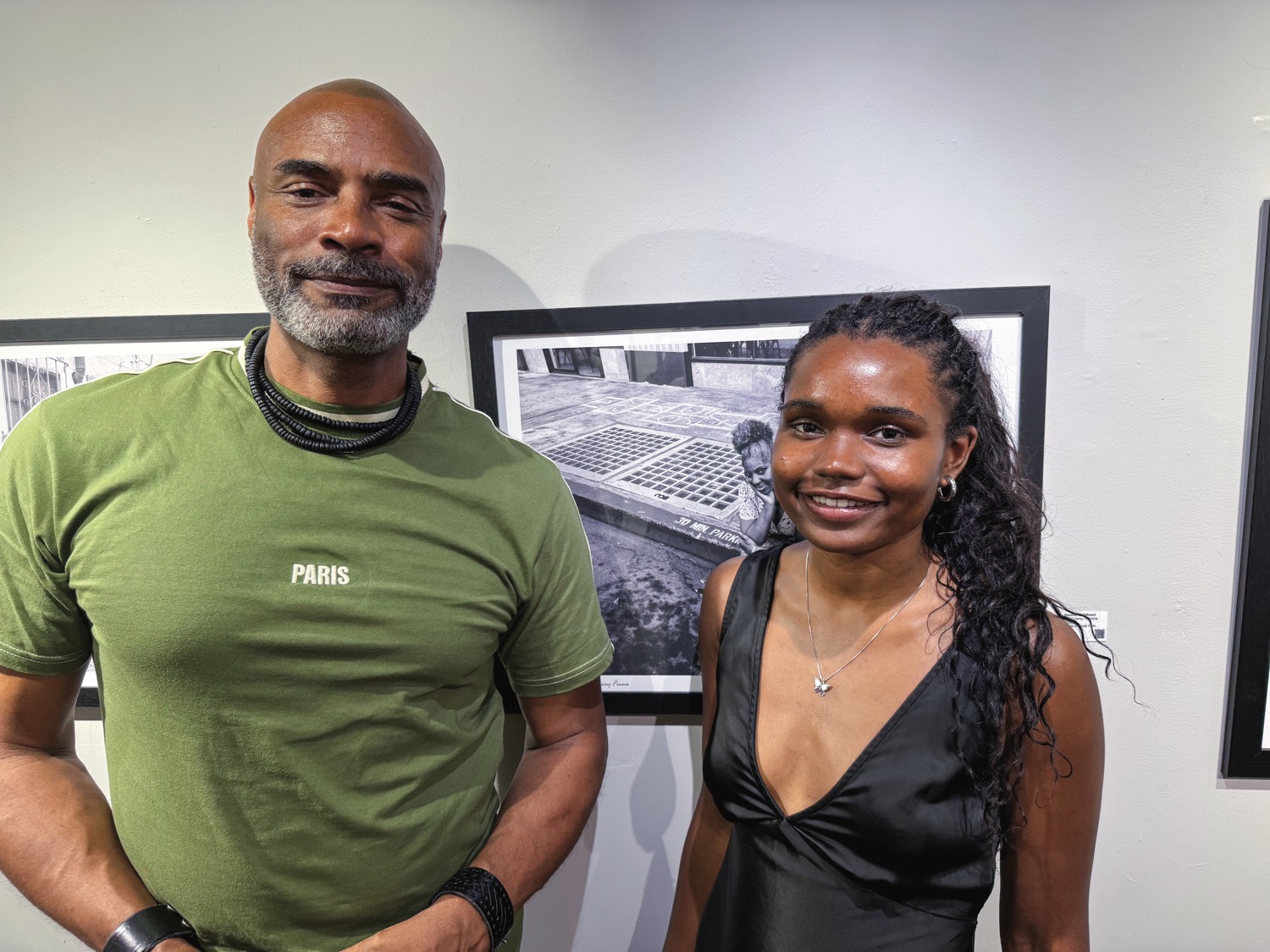
Photographer Alfred Haymond with Aminah Augustin ’28.

Photographer Alfred Haymond with Aminah Augustin ’28.

When Associate Professor of Sociology Pamela Prickett met Alfred Haymond, a photographer who lost his Altadena home in the 2025 Eaton Fire, she knew she wanted her students to hear his story firsthand.

Haymond’s photographs, which capture everyday Black life in Los Angeles, “help bring some of the theories and histories we read about in class into new, real-life perspective,” says Prickett.

In April, she took a group of her Urban Sociology students to the Sasse Museum of Art in Pomona for a private tour of Haymond’s exhibit “Observations in B&W.” Haymond talked about his art and also about the human toll of the fire and how artists have been healing and helping others to heal through their work.

“Alfred depicted what it was like to be in the community of West Altadena,” says Aminah Augustin ’28, “showing how lively, artistic and innovative it was.”


Benton Receives Saul Steinberg Gift

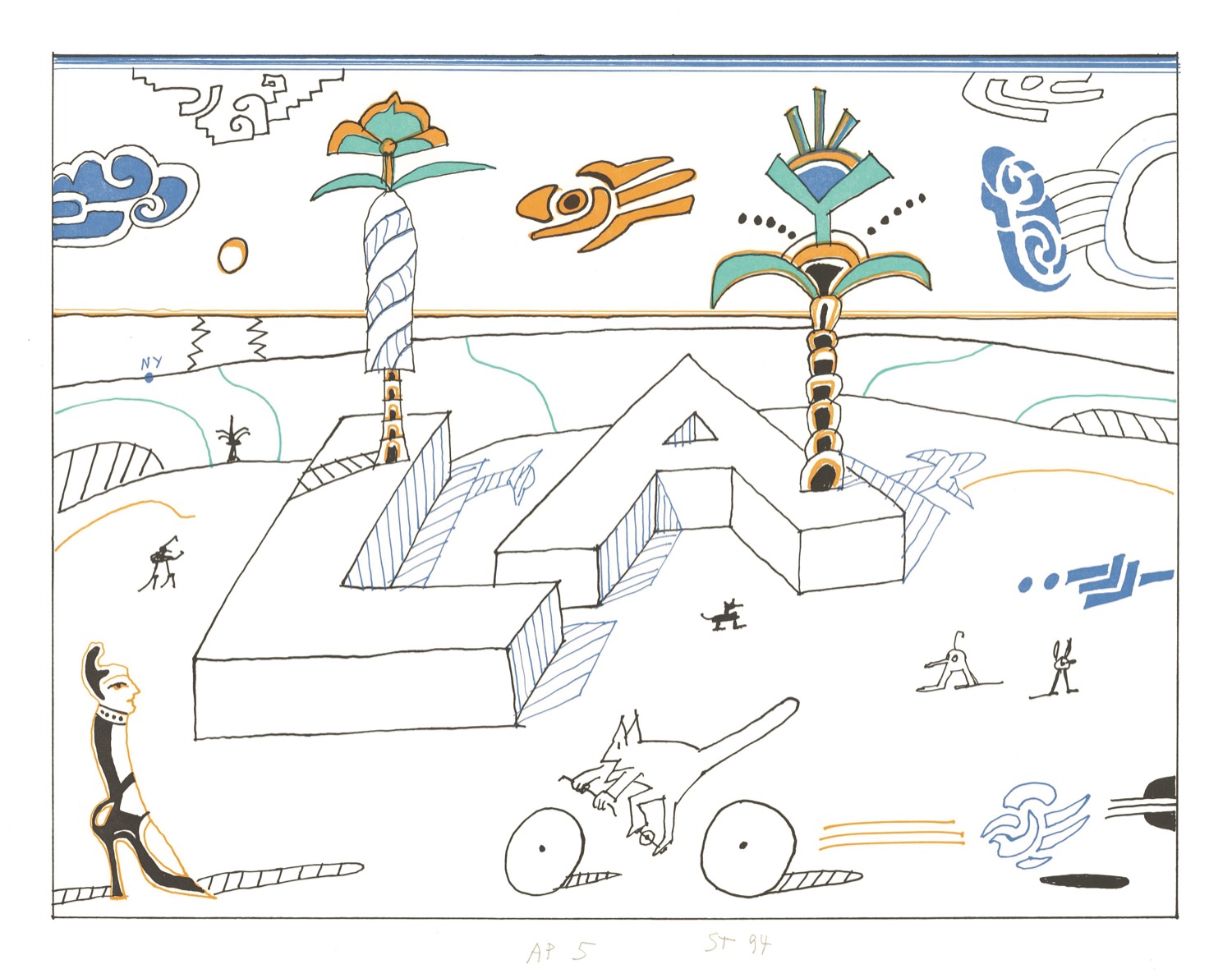
Saul Steinberg, LA, 1994. Photoengraving on wove paper. Pomona College Collection, Gift of the Saul Steinberg Foundation

Saul Steinberg, LA, 1994. Photoengraving on wove paper. Pomona College Collection, Gift of the Saul Steinberg Foundation.

Pomona’s Benton Museum of Art recently announced a gift of 76 works of art by Saul Steinberg from the Saul Steinberg Foundation, a nonprofit established by the artist in his will. The gift encompasses a wide range of two- and three-dimensional media—from prints and drawings to wooden objects—and celebrates Steinberg’s constantly evolving artistic practice and his deep level of engagement with the people and objects around him. “We are especially proud,” says Museum Director Victoria Sancho Lobis, “to preserve and interpret not only the work for which Steinberg is best known, but also the kind of creative projects that best reflect his humanity and that can inspire young people in embodying the values of curiosity, exploration and discovery.” Lobis is curating an exhibition organized around the gift that will take place at the museum this fall. Stay tuned for more details.

How Bernie Chan plans to make Hong Kong an arts hub

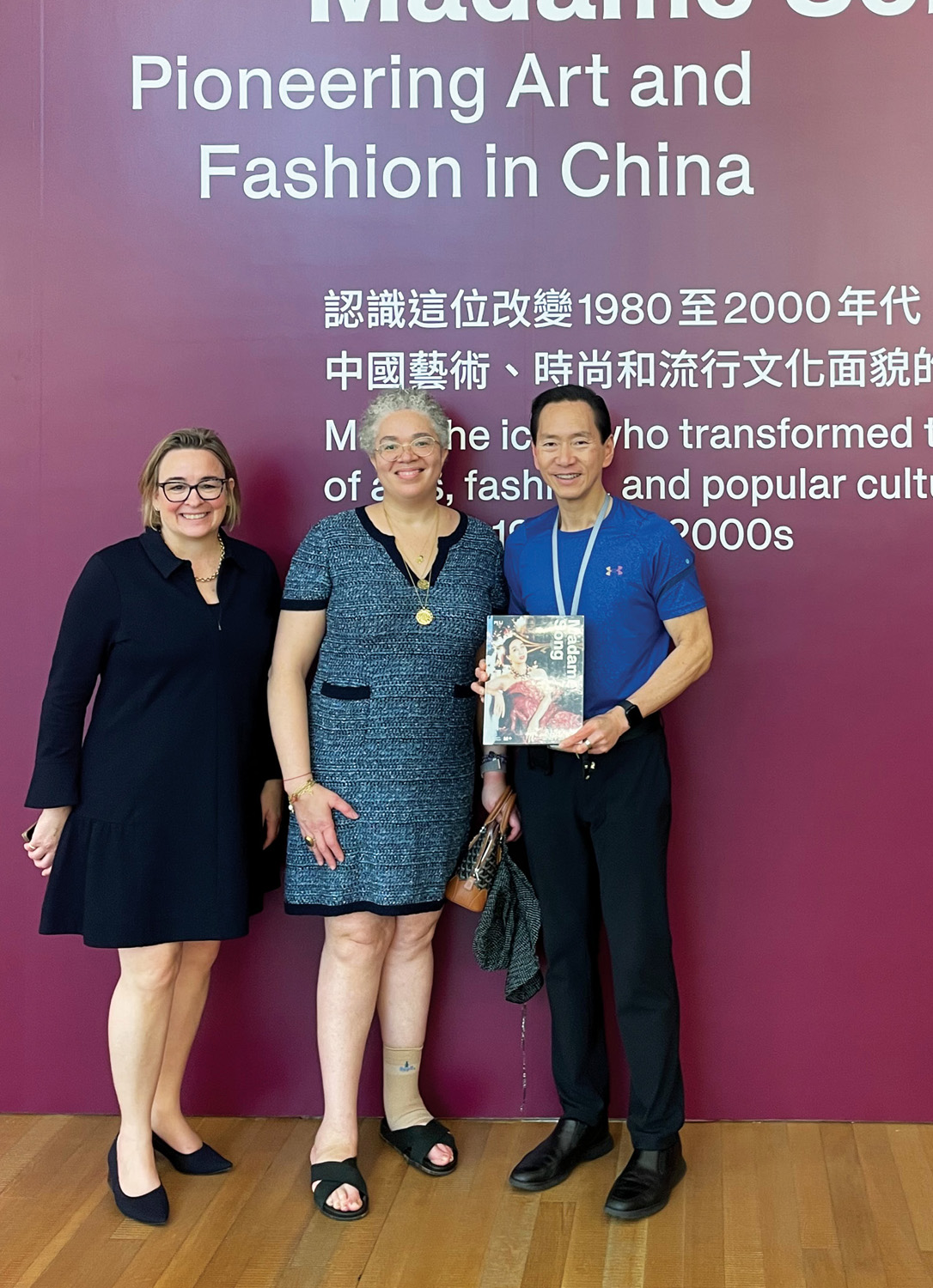
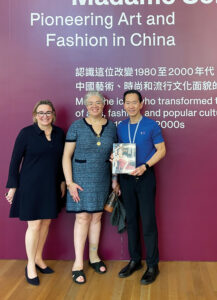
Pomona Vice President for Advancement Maria Watson, President G. Gabrielle Starr and WestK Chairman Bernard Chan ’88 at the M+ art museum in Hong Kong.

A recent project coming out of Hong Kong over the last 15 years is the West Kowloon Cultural District (“WestK”), an effort to transform the wedge-shaped waterfront into a major arts and culture hub for East Asia. In 2025 Hong Kong named as WestK’s Chairman Bernard Chan ’88, a politician and business executive who has held prominent positions in the government for more than a decade. He spoke to PCM about his new role at WestK and how Pomona helped mold his career to date.

What role do the arts play in Hong Kong today?

Growing up in Hong Kong, I never saw that we cared much about arts and culture. The biggest challenge that cities like Hong Kong face today is how to attract and retain talent. Quality of life includes culture. People go to London or New York not just because they are a financial center, like Hong Kong is, but because they are also a cultural center. Talent today can come from anywhere in the world. [The new Hong Kong arts district] is not about money-making. It’s about investment for the future.

 You were recently named board chair of the West Kowloon Cultural District Authority. What exactly is “WestK”?

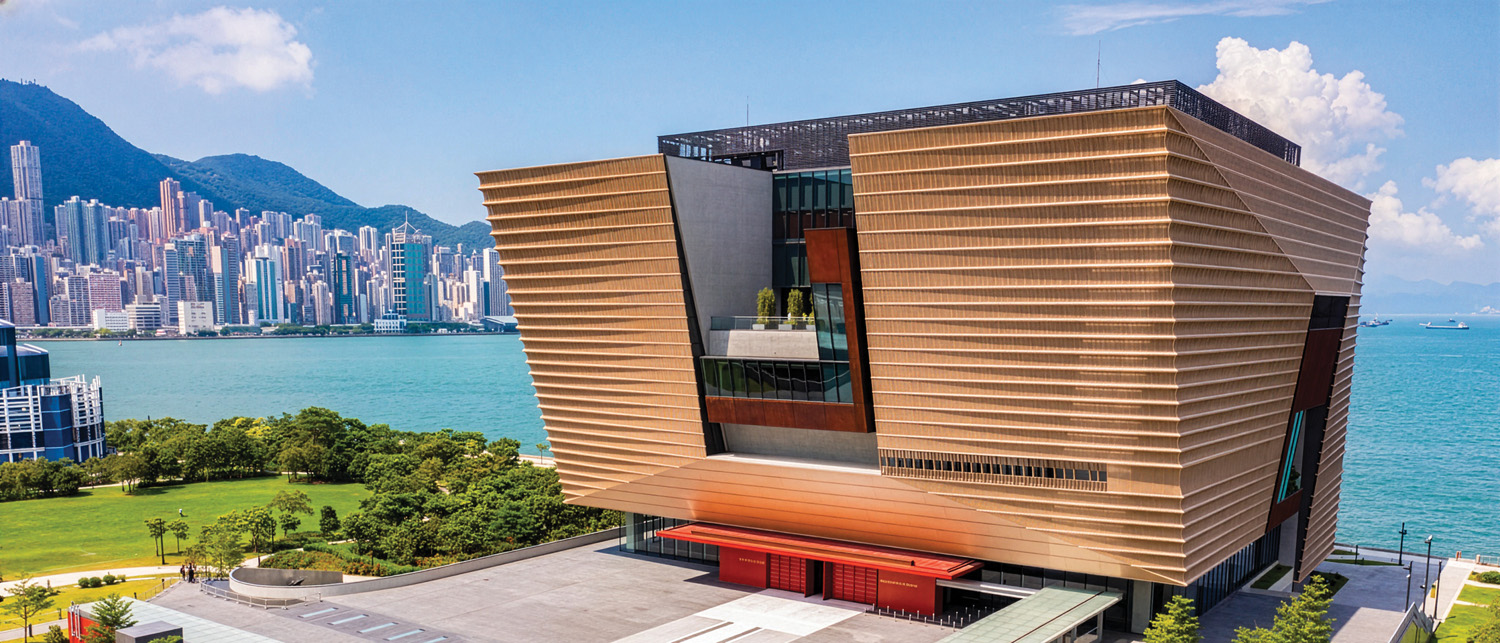
The Palace Museum

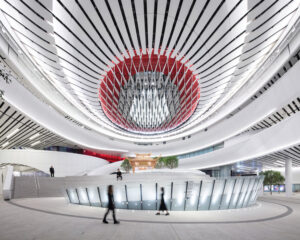
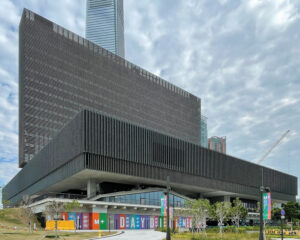
We have a new area—roughly 100 acres on the Hong Kong waterfront. In 2008, the Hong Kong government decided to create WestK, funded by the government but not run by the government. We have two new visual art museums, the Palace Museum (for ancient art) and M+ (for contemporary art). After just four years, M+ is already among the top 15 most visited museums in the world. We have a venue for Chinese opera and a black box theatre called Free Space, and another performing arts center with three theatres will open by 2027. Plans call for WestK to include two more music halls and a Broadway-style theatre.
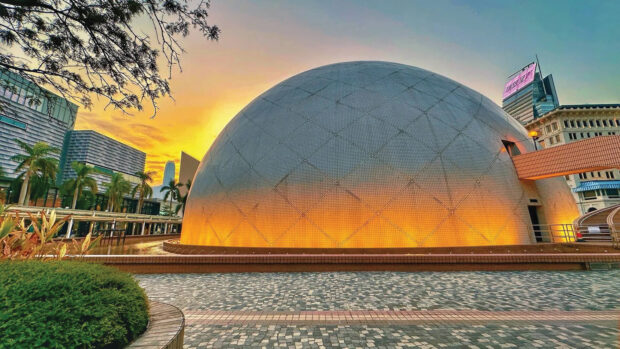
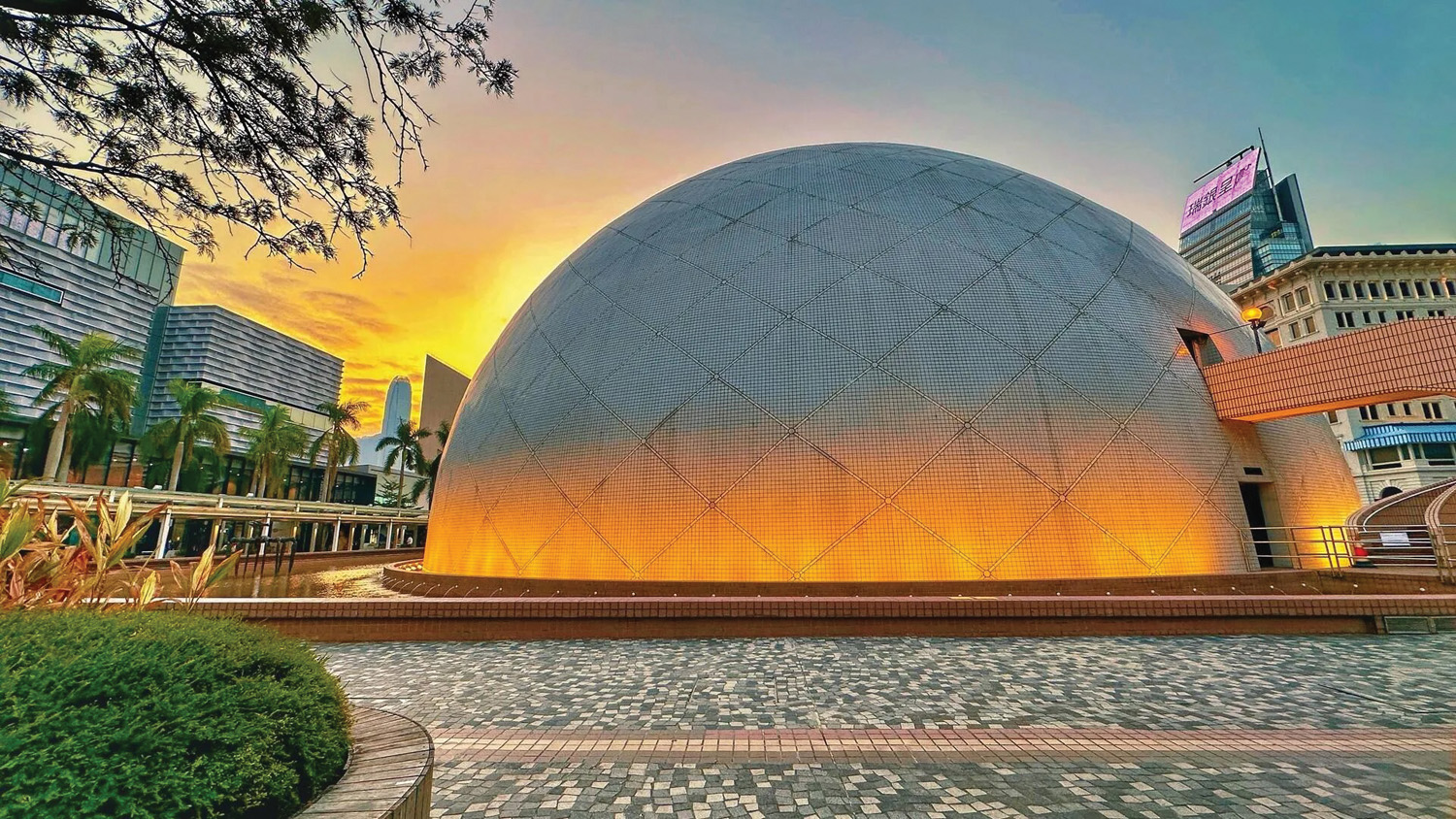
The Space Museum (credit Jenny Leung, HKSM)

How is the visitor experience immersive at WestK venues?

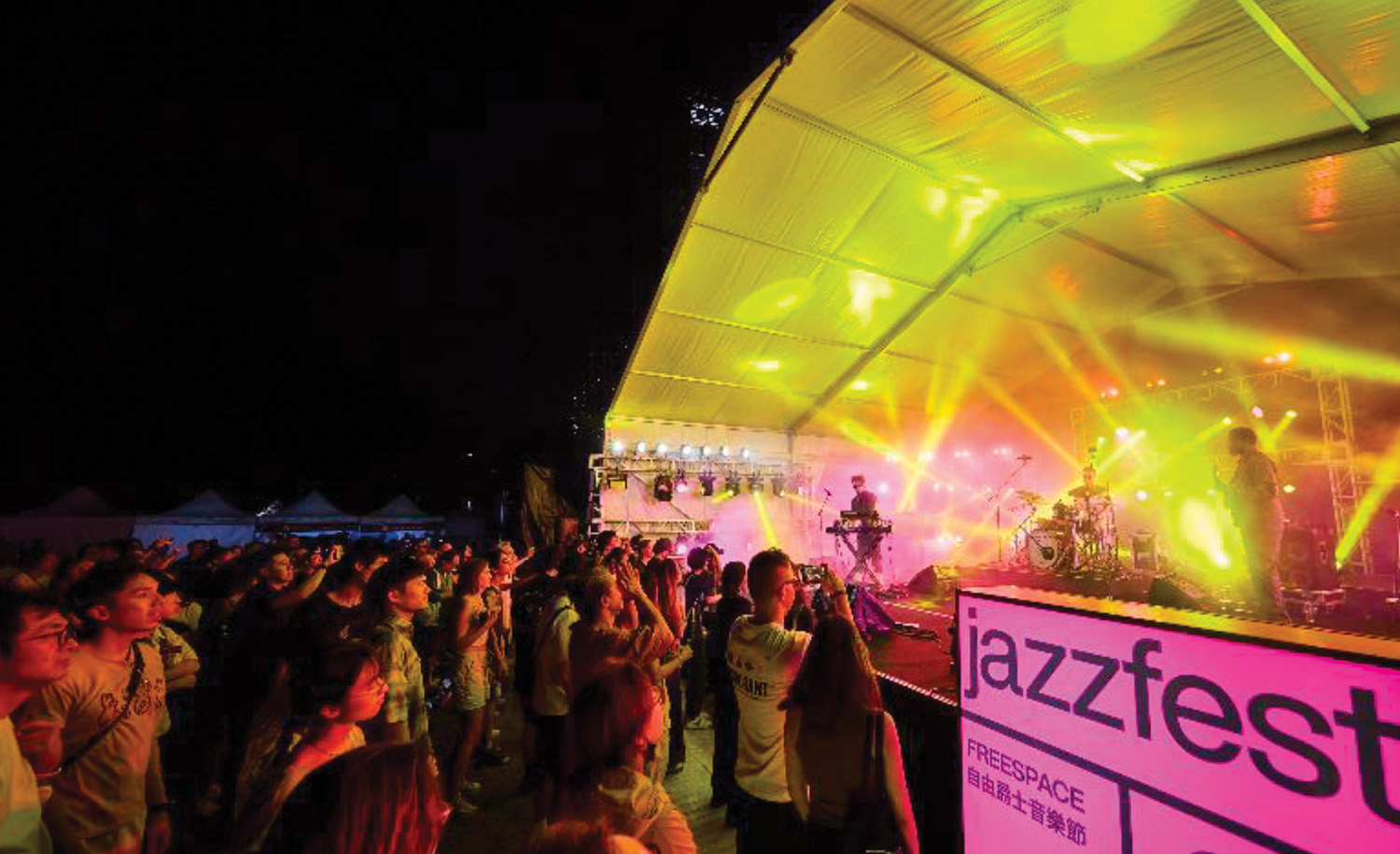
The annual Free Space JazzFest

Take the Palace Museum as an example. I was the founding chairman, and I said, I’m not building this museum for the experts and collectors. I’m building it for the average person. In the old days, a museum would present an object and a caption. Today, people don’t come to look at something two-dimensionally. They want an experience. So we use a lot of interactive technology.

In one of the galleries, we tell the story of how the emperor lived. The first object is a clock—apparently he got up at 4:30 a.m. Next we have a video to show the process of how he dressed in his finery. Later, before bed, he did calligraphy, so we have an interactive monitor with a calligraphy pen. Our mission is to build something everyone can be part of.

You personally are deeply immersed in multiple worlds—business, government, the arts. How did Pomona prepare you for these disparate roles?

I’m a true poster boy for a liberal arts education. I graduated in studio art, went into business, politics and public service, and then back into commercial. Even though I’m not exactly an artist, I applied the philosophy behind my art degree.

Coming to Pomona from Hong Kong, I was used to a culture where we’ve been told what to do. Then, in an advanced drawing class, the professor gave us an open assignment without specific instruction. After 10 or 15 minutes I walked up to him and said, “Can you tell me exactly what I should do?” and he said, “Why should I be telling you? It’s your work.”

That experience completely changed me. It forced me to be creative and push boundaries. It applies to all the work I do every day.

How did you decide on a studio art major?

I started as an economics major, but then I fell ill. I was supposed to be in the Class of 1987, but was in and out of the hospital for the first three years.

I tried to make up credits that I couldn’t earn on campus. Searching through the curriculum, the one class I thought I could do remotely was an independent study under the art department. By my senior year, I had as many art as econ credits.

I thought my Asian parents would kill me if I told them I’m going to get a studio art degree and would ask “What good is that going to do you?” But they were so happy just to see me come back and graduate.

Your senior art show ended up as a turning point in your life.

There were eight of us in the art department that had to do a senior show. The others all had developed their specialty and portfolio. I had to force myself to come up with something on my own. I knew for sure I didn’t want to be compared with the others because they were so much better than me.

I managed to come up with my own style of pointillism. I wasn’t competing on skills; I was competing on creativity. I was able to really think outside the box and stand out. That has helped me in everything else I’ve done in life—business, public service, politics, and now arts and culture. I’m forever grateful for that experience.

How has that philosophy played out in your career?

In 1997, I became one of 60 members of the Hong Kong Legislative Council, my first role in politics. Two weeks into the session the president of the council summoned me and said, “You’re the only member with an art degree, right?” I wondered if she thought I was not qualified enough. Instead, she asked me to develop a new logo for the council. I thought, “Oh my goodness, my degree has some use!”

A few years later I got a call from the Chief Secretary of Hong Kong asking me to chair the antiquity advisory board to advise the government on preservation of historical sites. I said, “Sorry, studio art and preservation are not the same thing,” and he said, “You’re the closest person we can think of. You understand and appreciate the aesthetic and the data.” So again, I used my studio art background.

Then came WestK. For 10 years I used to lie and tell people I studied business. I was afraid if I said studio art, I’d be judged. Today people say, “Wow, you’re multitalented!” I’m using my political, art and business skills to try to connect a divided world.
Students Help Curate New Benton Exhibition

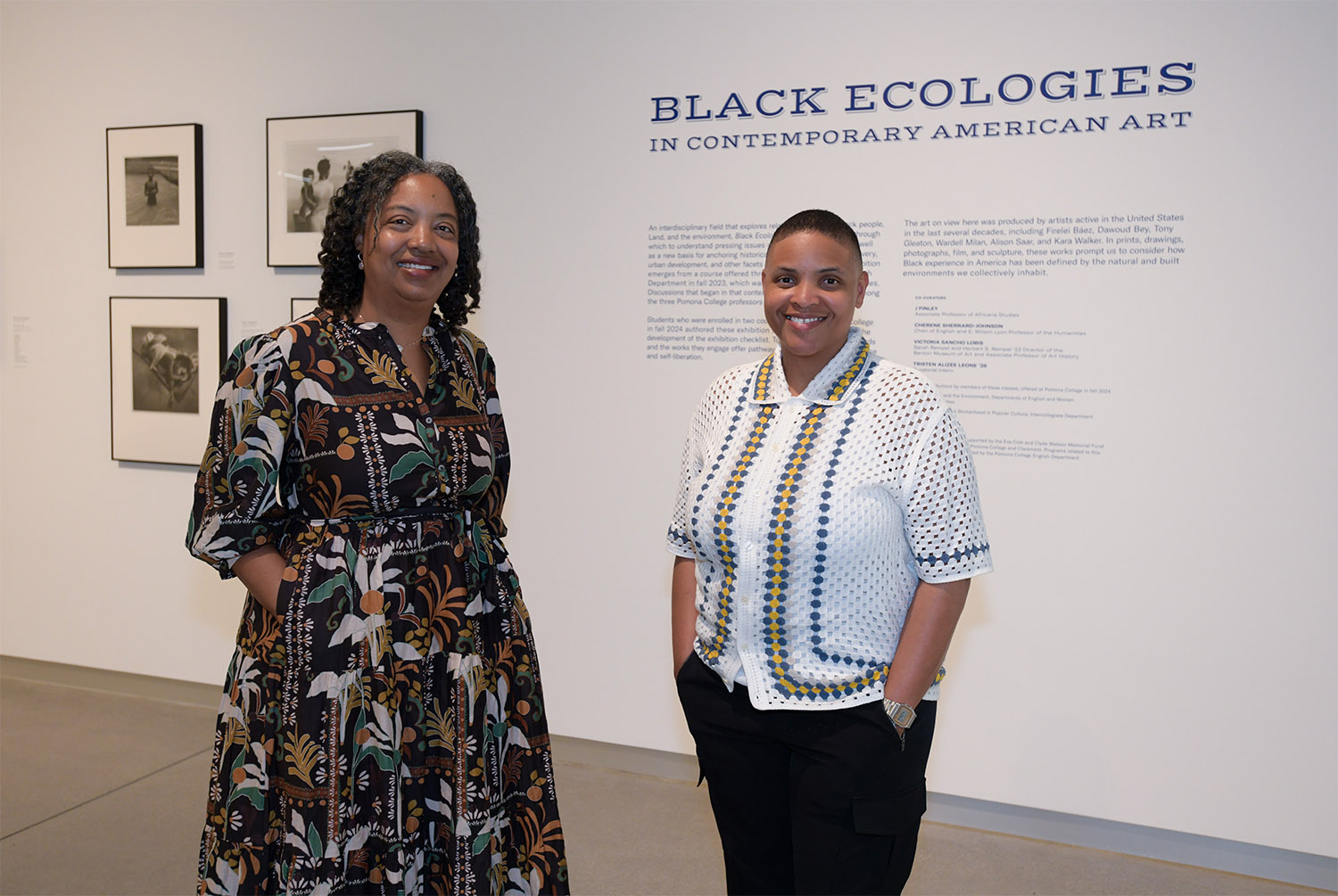
Faculty Cherene Sherrard-Johnson and J Finley in front of the recent exhibit

Faculty Cherene Sherrard-Johnson and J Finley in front of the recent exhibit

As a teaching institution, the Benton Museum of Art strives to cultivate rigorous collaboration with the Pomona community—a philosophy borne out by this spring’s exhibit on “Black Ecologies in Contemporary American Art.”

The show explores relationships among Black people, land and the environment, and features a variety of student contributions curated by J Finley, associate professor of Africana studies; Cherene Sherrard-Johnson, E. Wilson Lyon Professor of the Humanities and chair of the English Department; and Victoria Sancho Lobis, the Sarah Rempel and Herbert S. Rempel ’23 Director of the Benton Museum of Art and associate professor of art history.

As longtime collaborators with the Benton, Finley and Sherrard-Johnson often bring their classes for showings curated specifically for them. Sancho Lobis had the idea in 2023 to create this latest exhibition, inspired by Sherrard-Johnson’s Black Ecologies course.

“[The class] is very much about the body within the environment and the kind of porous boundaries between the two,” says Sherrard-Johnson. “It’s about how the social and political, as well as climate change, impact the health and flourishing of bodies in those spaces.”

This past fall, Finley’s class—Unruly Bodies: Black Womanhood in Popular Culture—explored images of Black women across popular culture, while Sherrard-Johnson’s course—Race, Gender, and the Environment (co-taught with Aimee Bahng, associate professor of gender and women’s studies)—took an intersectional approach to environmental studies.

Students from both classes visited the Benton vaults to help select works for the exhibition that spanned a range of mediums, including photographs, paintings and sculptures.

Reflecting on the experience, Amirah Lockett ’28 says, “I was able to combine my love for art with what I learned from the course and the artworks themselves: appreciating the artists’ different experiences and how they represent those experiences through their work.”

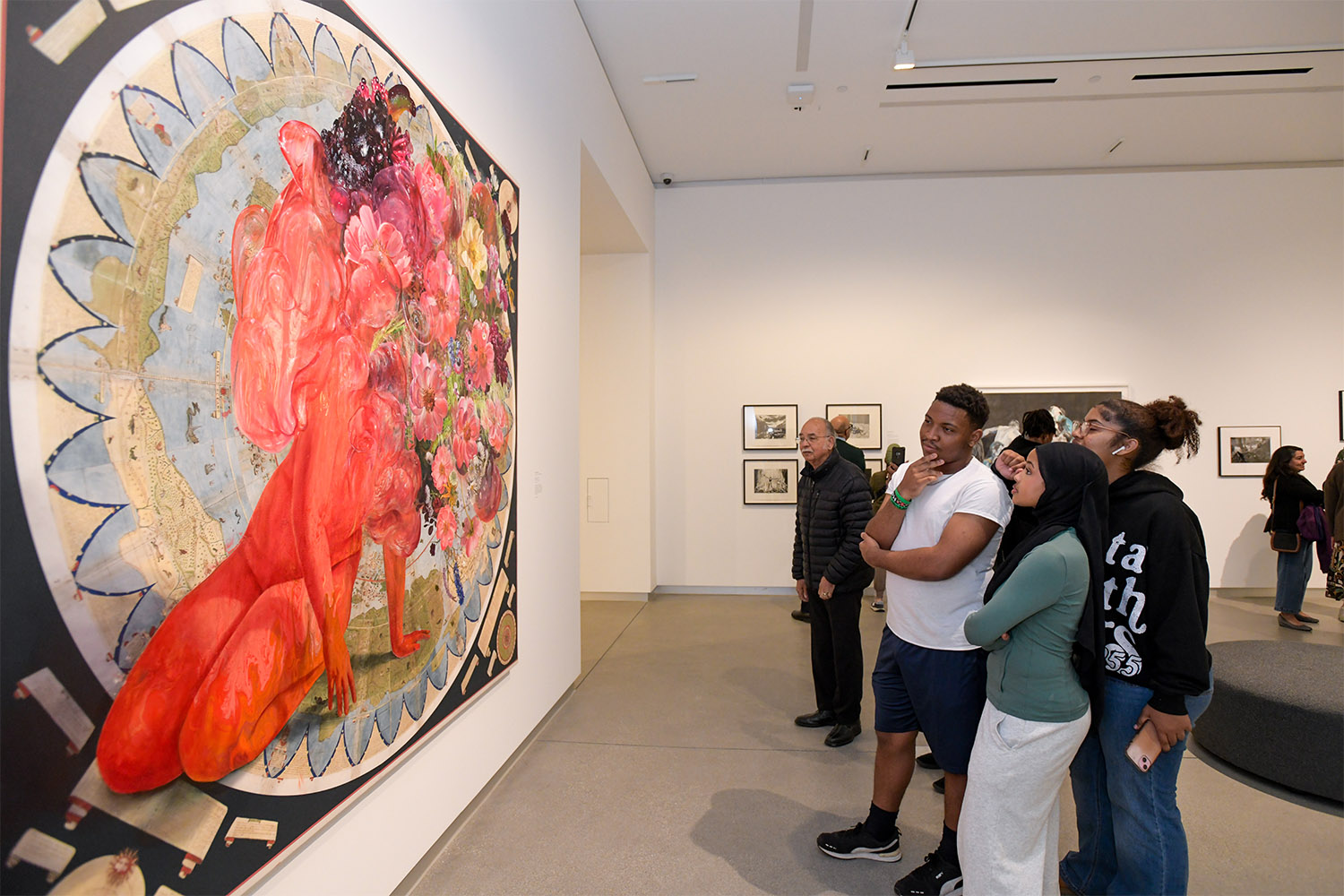
Onlookers admire Firelei Baéz’s Atabey (or change the body that destroys me). Photo credit Carrie Rosema

In addition to being part of the curatorial process, the students created most of the object labels—texts that provide information about the objects on display. Both Finley and Sherrard-Johnson assigned label writing assignments in their classes, and Finley also organized a workshop on label writing by Brittany Webb, a curator at the Pennsylvania Academy of Fine Arts.

“My main objective was to create a narrative that I felt truly conveyed the history, emotions and culture of the Black experience,” says Taylor Parks ’27. Isaiah Dawson ’26 adds, “Co-writing a label for one of the pieces in the exhibit deepened my engagement with the historical themes of the artworks.”

After months of preparation, Sherrard-Johnson says she was “very emotional” seeing the show for the first time. Finley also was appreciative of the opportunity to curate an exhibit with her students.

“One thing I really like to do in my classes is have a creative component,” says Finley. “But I had never done something like involving them in the creation of an exhibition. I always tell the class, ‘We’re not just consuming the knowledge.’ This was an opportunity for us to put that into action.”

Amped by the Sun: Musician Alums Charge Ahead with Annual Solar Fest

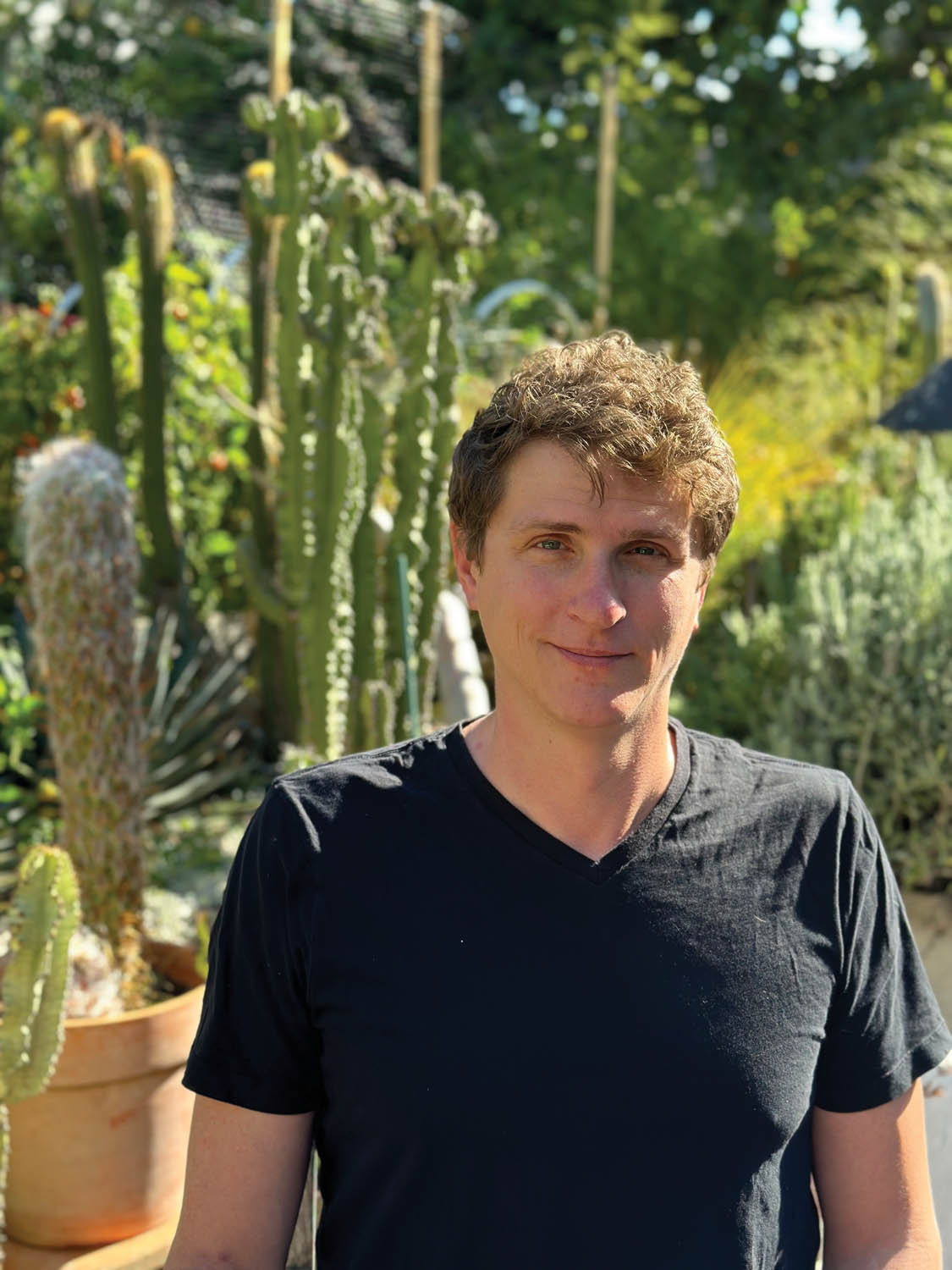
Skylar Funk ’10

Skylar Funk ’10

Rock festivals like Coachella require massive resources and, thus, end up with enormous carbon footprints. Coachella’s 600,000 daily attendees translate into an estimated net total of 700,000 gallons of diesel over two weekends—or enough gas to power 1,250 cars for an entire year.

Merritt Graves ’20 and Skylar Funk ’10 have spent the better part of a decade trying to play a role in minimizing concerts’ environmental impacts: 2026 will mark the 10th anniversary of their Sunstock Solar Festival, a California-based nonprofit indie-rock festival powered by multiple solar generators. The festival has drawn major rock bands like Ra Ra Riot and Wavves, as well as cumulative crowds of thousands over the years at locations such as Los Angeles and University of California at Berkeley.

Skylar Funk ’10 and Merritt Graves ’20

Skylar Funk ’10 and Merritt Graves ’20

Graves, who was in Funk’s class year but officially graduated 10 years later, met Funk in Pomona’s environmental analysis program. The duo spent much of their college years participating in climate activism and playing music, including in their band Trapdoor Social, which toured with The B-52s and just signed their first record deal.

In 2013, they used crowdfunding proceeds to put solar panels on the roof of the L.A. nonprofit Homeboy Industries, which works with former gang members and ex-convicts. Two years later, they invested in a solar-paneled touring trailer outfitted with a 3.5-kilowatt inverter to power their subwoofers, speakers, amps, instruments and LED lights—which set the stage for not just Sunstock Solar Festival, but participation in environmental rallies like Youth Climate Strike Los Angeles.

This spring, Funk graduated with a master’s degree in popular music teaching and learning from the USC Thornton School of Music. During his time at USC, Funk found his way into its Student Sustainability Committee, and in his second year, worked as its graduate co-chair.

“Sky takes a collaborative, open-minded approach in his interactions with stakeholders, which ensures the students’ perspective is heard,” Chief Sustainability Officer Mick Dalrymple recently told USC Today. “He also leads students to propose well-researched solutions rather than taking the simpler route of voicing concerns. Through this added value, along with demonstrating persistence, Sky helps the students earn respect and accomplish their long-term sustainability goals.”

Graves is now a fiction writer, while Funk hopes to continue to integrate sustainability themes into his music teaching. As he told USC Today, “I’m in search of kernels of wisdom and knowledge that we can use to find that magical recipe for [climate] action.”