Alumni

Name That Rock

depiction of an asteroid

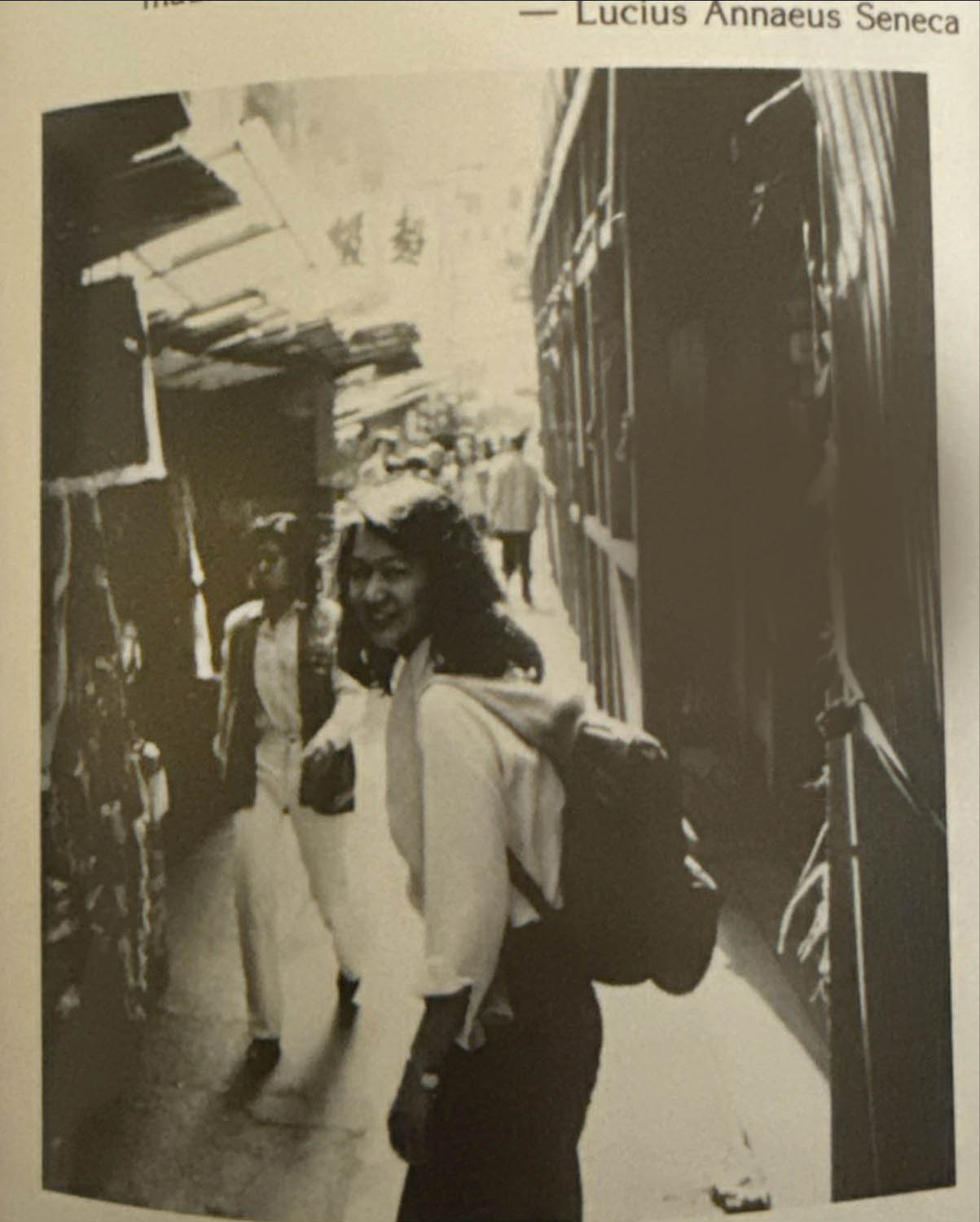
An asteroid has been officially named for American geologist Sorena Sorensen ’78 (1956-2025). A longtime curator at the Smithsonian National Museum of Natural History, Sorensen was an expert on metamorphic petrology and geochemistry who studied the formation of jade and jadeite and the role of fluids in subduction zones.

The asteroid—now named 250955 Sorena—was discovered in 2006 by the Mount Lemmon Survey. It belongs to a group of asteroids found in the outer main asteroid belt and has a diameter of 4.9 km. It is currently passing through the Virgo constellation, heading toward Libra at the end of 2026.

Ryan Long ’21 Returns to International Stage for World Baseball Classic

The 2026 World Baseball Classic put an international spotlight on major league goliaths, top prospects, former minor leaguers now with traditional 9-to-5 jobs, and a Sagehen.

Three years after striking out future Hall of Famer Mike Trout in his World Baseball Classic debut for Great Britain, Ryan Long ’21 returned to the international stage in March and threw two scoreless innings of relief across a pair of appearances.

While Great Britain finished behind Italy, Team USA and Mexico in pool play, the 26-year-old helped The Union Jack earn a spot in the next World Baseball Classic—a triennial international baseball tournament featuring 20 national teams.

“It was an unbelievable experience,” says Long, whose mother, Liz, was born in England. “I felt more confident this time and had more trust in myself and in my pitches. Over four years, I’ve pitched against a lot of high-level hitters, and I know I can get any hitter out.

“That confidence definitely helped me this time around.”

As he did at the 2023 WBC, Long donned United Kingdom colors with teammates united in heritage.

Great Britain’s 30-man roster in Houston consisted of ballplayers with familial ties to England and Wales, the Bahamas, Scotland and the British Virgin Islands.

“You try and get to know these guys as fast as possible, find ways to connect, and then go play four really meaningful games with them,” says Long, who grew up near Seattle. “It’s a unique experience, but it’s amazing. I love it.

“The World Baseball Classic is such a special tournament and one that really showcases the best of baseball,” he adds. “It was an honor to be a part of it again.”

Drafted as a starting pitcher by the Baltimore Orioles in 2021, Long spent spring training transitioning to the bullpen and cutting his teeth as a reliever.

In April, he began his sixth minor league season.

After a brief stint with the Orioles’ Double-A affiliate, the Chesapeake Baysox, in Bowie, Maryland, the 6-foot-6 right-hander was promoted to Triple-A Norfolk, where he’d made a dozen relief appearance through mid-May.

“It’s been a good change,” he says. “I’ve seen my velocity go up, and I can concentrate on throwing my best pitches as often as possible rather than trying to mix them and get through a lineup multiple times.”

“I feel confident and encouraged going into the year,” he adds, “and I’m hoping this change gives me a streamlined and efficient route to the major leagues.”

Jake Bruml ’15 Is Scouting the Next Great Boston Red Sox

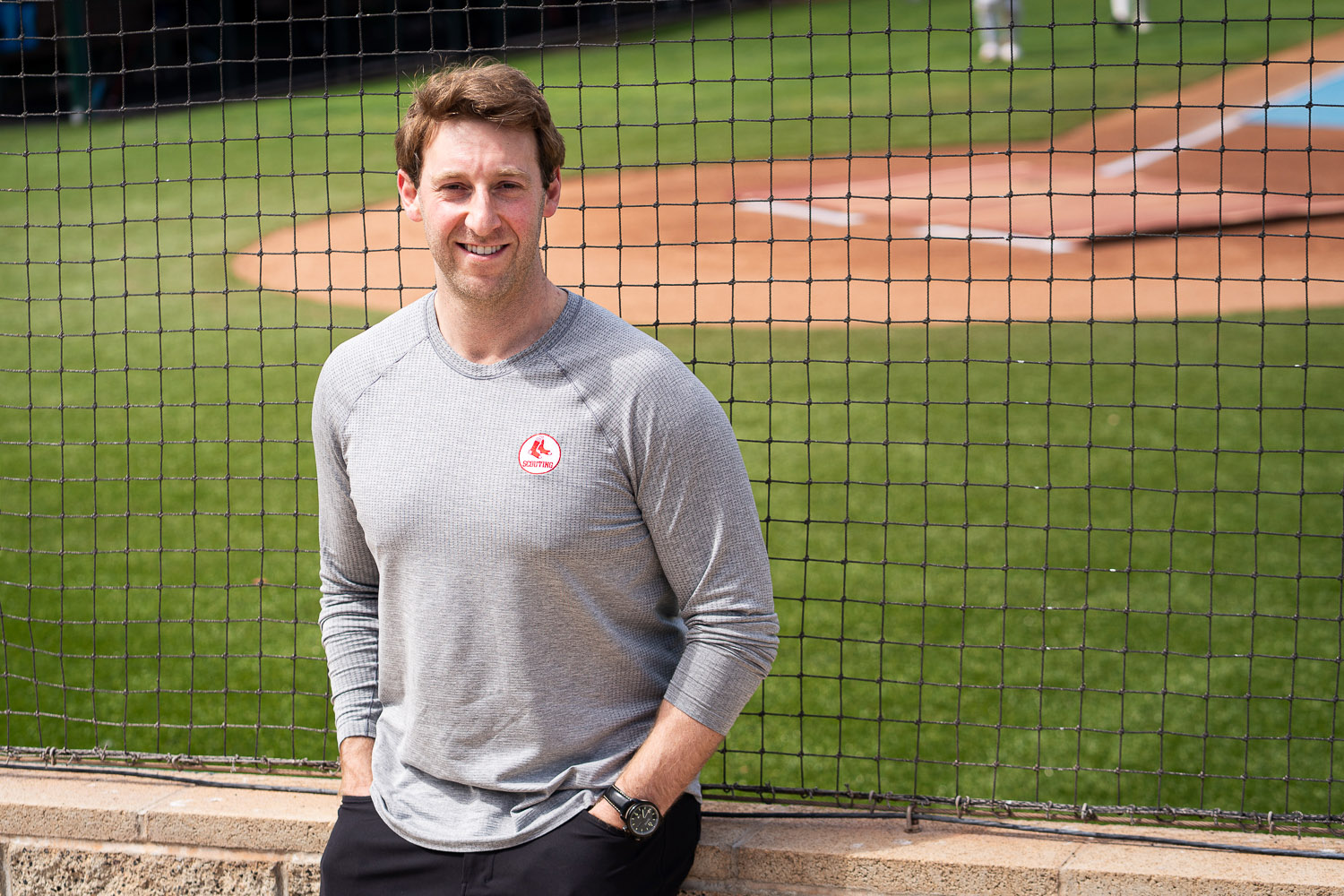
As director of amateur scouting for the Boston Red Sox, Jake Bruml ’15 is nomadic most of the year, his weekday afternoons an endless parade of baseball at different schools in different states.

It’s a gig that’s taken him to baseball hotbeds in California and Texas as often as it’s taken him to towns in Alabama and Oklahoma that have one stoplight and a can’t-miss prospect everyone there knows by name.

In April, Bruml, a San Mateo native, returned “home” to scout in Southern California, where he collected 203 hits and 23 pitching wins as a Sagehen.

“Pomona College is an incredible place,” he says. “I made connections that’ll last a lifetime.”

Since hiring the Pomona alumnus as a pro scouting intern ahead of the 2019 season, Red Sox officials have placed a premium on Bruml’s work ethic. As a result, one of Pomona’s own is a key decision-maker within a storied Major League Baseball franchise.

“Pomona challenged me in a way I’ve never been challenged before,” he says. “Between balancing the rigorous courseload and lab work that being a STEM major included, in addition to being an athlete, I really had to navigate things strategically.

“I didn’t know it at the time, but that set me up for future success in any role.”

At least three players from the Sagehens’ 2013 baseball team have held front office positions in Major League Baseball—Bruml (Red Sox), Guy Stevens ’13 (Kansas City Royals) and Simon Rosenbaum ’16 (Tampa Bay Rays).

Good work across the past six seasons has earned Bruml promotions to increasingly important positions, including his current role as director of amateur scouting.

As he applies his philosophy to a 126-year-old franchise with nine World Series titles, he’s using principles he picked up at Pomona to weigh million-dollar decisions.

As a chemistry major, Bruml followed procedures to create compounds or complete experiments. Depending on the results, he would determine how to improve either the procedure or the compound itself to generate a better outcome.

“I’ve been able to create a similar process that can be applied to evaluating players, where every player is held to the same evaluation process and scrutiny,” he says. “This allows me to home in on the questions that need answering when watching them play.”

Bruml’s holistic approach to scouting, shaped largely at Pomona, is what Red Sox fans hope will bring the next great homegrown star to Beantown.

Melissa Barlow ’87 Returns to Final Four

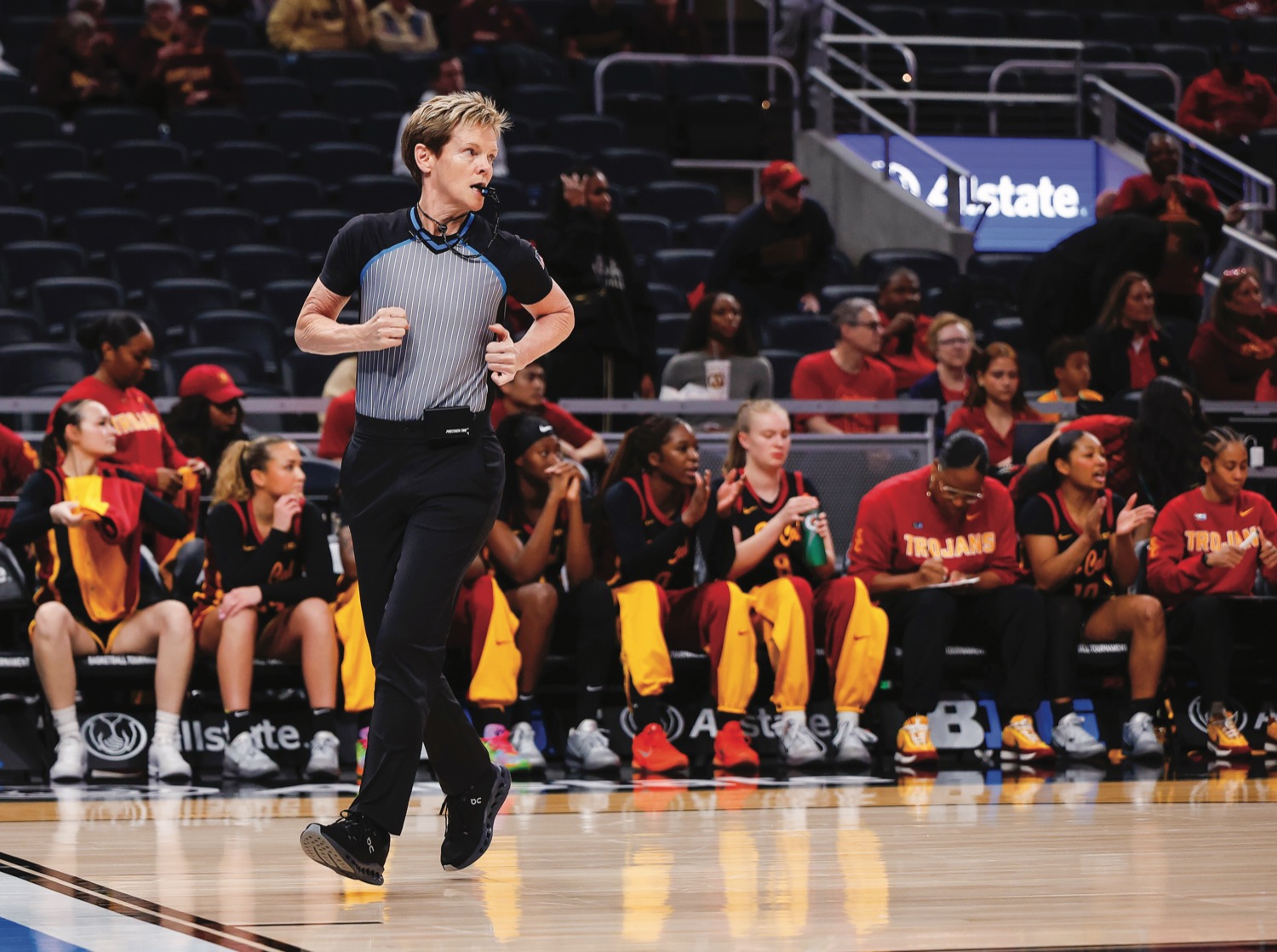
Referee Melissa Barlow officiating the Texas vs. UCLA semifinal game at the 2026 Women’s Final Four. Photo by Jeffrey Brown 

Referee Melissa Barlow officiating the Texas vs. UCLA semifinal game at the 2026 Women’s Final Four. Photo by Jeffrey Brown

Officiating the best NCAA women’s basketball teams on the sport’s grandest stage is no small task, but Melissa Barlow ’87 is no stranger to the spotlight.

In April, the Las Vegas resident officiated Texas-UCLA at the 2026 Women’s Final Four, the 13th time she was selected to work the tournament’s culminating rounds. (The Bruins won the national semifinal, then captured their first NCAA women’s basketball championship.)

“It’s special every time you get to go to the Final Four because you never know when it’s going to be your last,” Barlow says. “I was thrilled and humbled by the responsibility. You want the assignment, but it’s stressful because all eyes are on you. You want to do a really good job.”

Barlow, a former Sagehens point guard who still holds program records for career assists (411) and assists in a single season (199), hasn’t lost her love for officiating the sport’s biggest games.

Being selected to work the Final Four “is the goal every year,” she says, “but it’s not really something you can control. I’ve learned all you can control is the product you put out there on the floor. The expectation, the job, is to get plays right.”

Across her three-plus decades as an official, Barlow has shared the court with women’s basketball royalty—Lisa Leslie, Maya Moore, Penny Toler—and seen the game change tremendously.

College players today are stronger and faster than they were in the 1990s and 2000s, she says, and they play a more physical style of basketball. They’re taller, too, meaning Barlow’s had to train her gaze on the rim to make goaltending and basket interference calls.

Additionally, greater parity in the sport has made outcomes less of a certainty. “There’s so many more good games now compared to back in the day when the usual suspects won every time,” she says.

A healthy and sharp 60, Barlow has long passed the date she once expected to call it a career. “As long as I can still perform at the level I think the game deserves,” she says, “I’m going to keep doing it.”

Oldenborg Takes a Bow

For nearly six decades, the Oldenborg Center for Modern Languages and International Relations put Sagehens at the world’s doorstep. This spring, the Pomona community said goodbye to the well-loved building with a series of celebrations.

“Oldenborg’s impact lives on through the people who studied, taught, worked and built community there,” says Pierre Englebert, the H. Russell Smith Professor of International Relations and Professor of Politics and Oldenborg Faculty Fellow. “That’s why it was so important to share the place—one that has meant so much to generations of Sagehens and friends—through celebrations that honor those stories and the lasting mark Oldenborg has made.”

Dear Oldenborg, Let Me Tell You a Story

You don’t make it to 60 years without collecting a few great stories, and Oldenborg has plenty. During Alumni Weekend on May 1, the College hosted a storytelling celebration in Rose Hills Theatre where speakers revisited their favorite moments onstage.

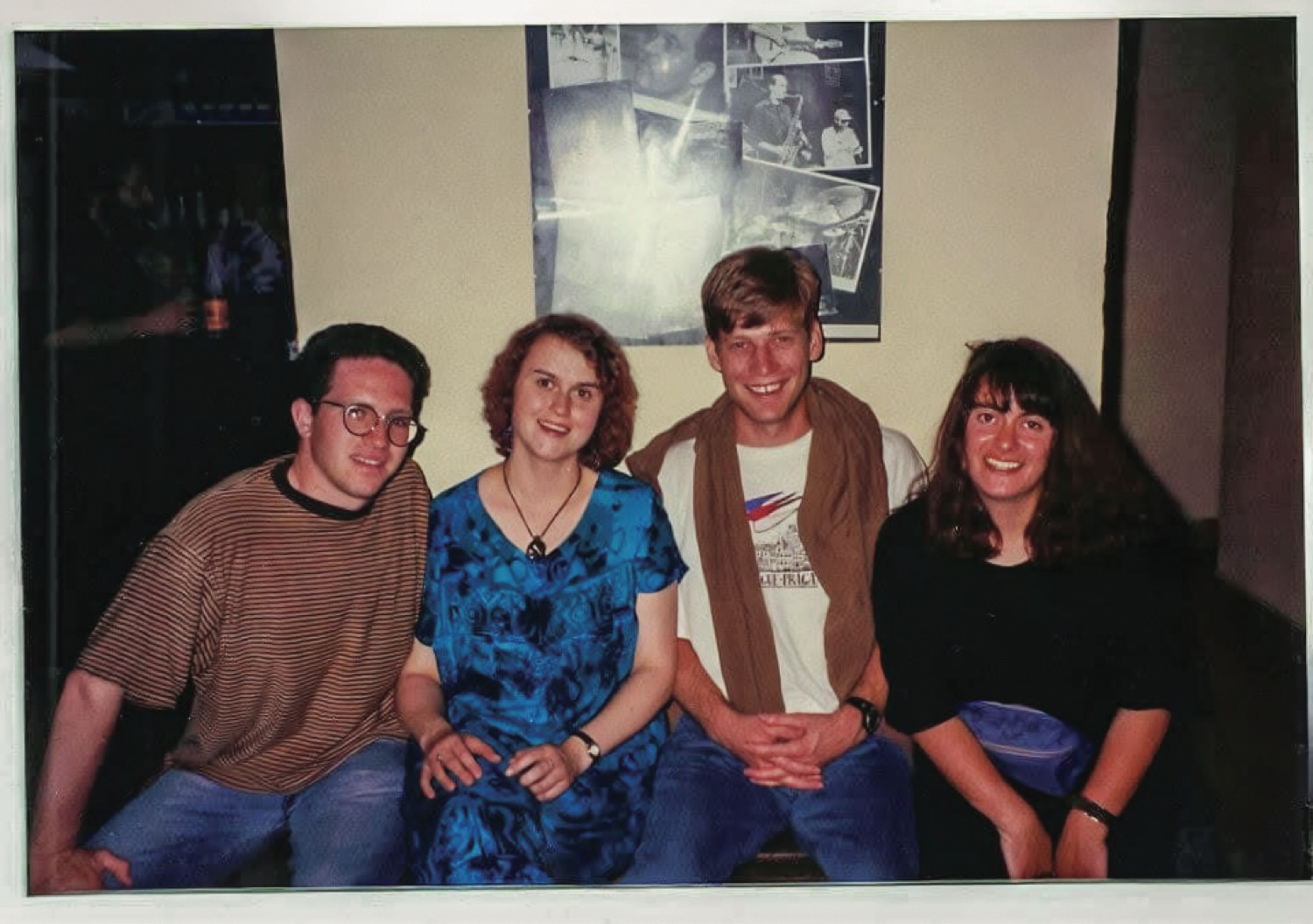
Oldenborg storytelling celebration speakers: (from left) Nimal Perera, community friend; Karin Zaugg Black ’93; Trustee Emeritus Bernie Chan ’88; Terril Jones ’80; Anne Dwyer, emcee and chair of German and Russian and a former director of the Oldenborg Center; Jacqueline Cordes ’25; Spanish language resident Blanca Lopez Sagarra; Adan Amaya of Mail Services; Liam Bayer ’27.

Stories were shared by (from left) Nimal Perera, community friend; Karin Zaugg Black ’93; Trustee Emeritus Bernie Chan ’88; Terril Jones ’80; Anne Dwyer, emcee and chair of German and Russian and a former director of the Oldenborg Center; Jacqueline Cordes ’25; Spanish language resident Blanca Lopez Sagarra; Adan Amaya of Mail Services; Liam Bayer ’27.

One Last Time at the Tables

Oldenborg slipped back into its natural rhythm during the open house celebration as guests gathered for a final meal at the language tables. Live music echoed through the corridors while alumni, students and visitors conversed across languages, greeting friends both familiar and new. Adding special resonance to the event, honorary language table hosts—former directors, emeriti faculty and longtime conversation partners—returned to Oldenborg to share in the celebration and reconnect with the community.

“Arriving at Oldenborg, walking by the hallway photos, passing through those dining hall doors, being greeted by faces both familiar and new—it felt like coming home,” said Rita Bashaw, former Oldenborg director and German conversation partner.

Anne Bages returned to the Greek table where  she met Maria-Sophia Sotiropoulou ’28, who comes from the same Greek village as Bages’ family.

Oldenborg, Piece by Piece

Students, faculty and staff worked on a memory tile projectOldenborg has always been a place where people leave with something—a new language, a new perspective, a new connection. This time, they left something behind as well. On April 15, students, faculty and staff gathered to begin a memory tile project, decorating tiles that captured what Oldenborg meant to them.

Over the course of three weeks, the collections grew as more members added their tiles, creating a shared mosaic that will carry Oldenborg’s legacy forward. The project culminated during Alumni Weekend.

With Love, the Friends of Oldenborg

Led by Trustee Emeritus Bernie Chan ’88, alumni and friends are supporting a campaign to name a space in the Center for Global Engagement in honor of the “Friends of the Oldenborg Center,” ensuring that its legacy of community is represented in the new facility.

Click here to make a gift.

A Message from the Alumni Board President

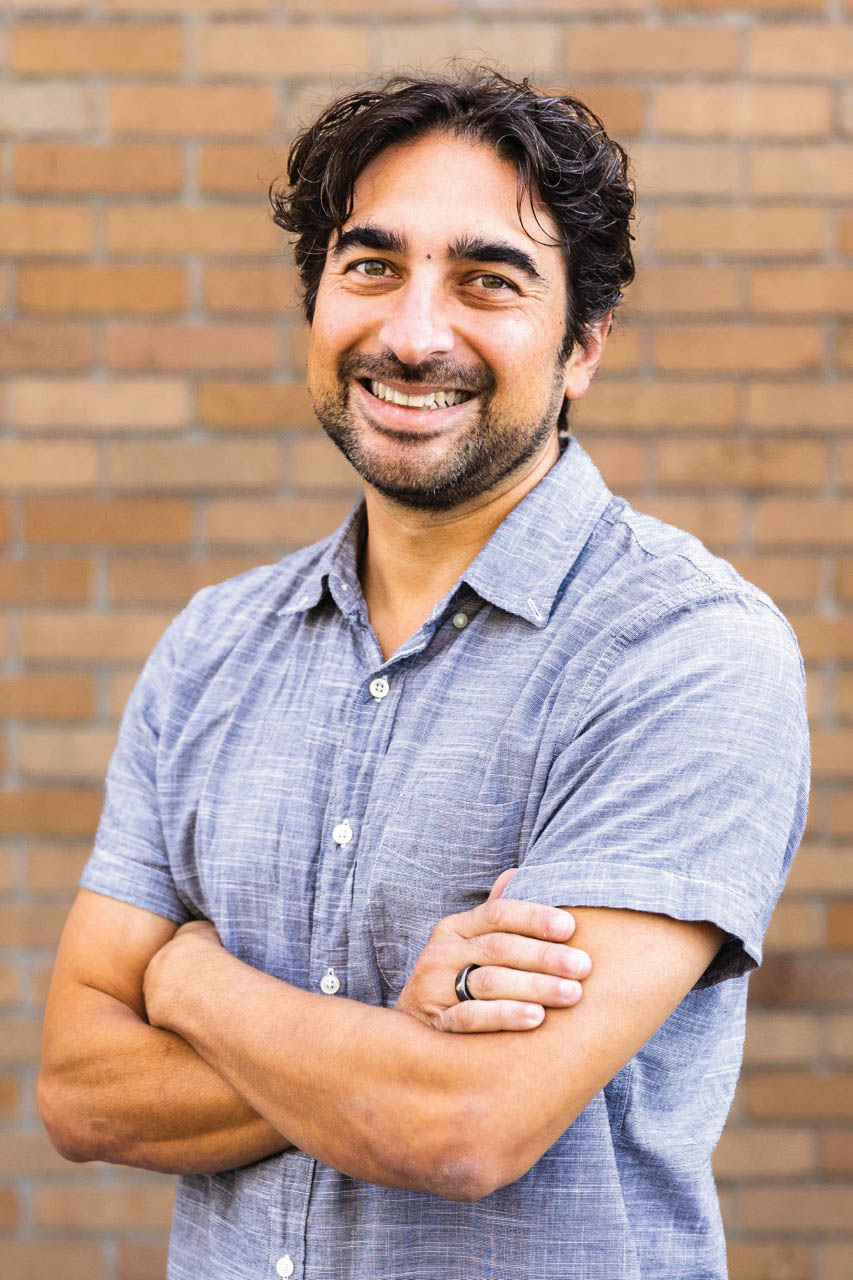
Robi Ganguly ’00, Pomona College Alumni Board PresidentDear Sagehens,

It’s an honor to serve as your new Alumni Board president. As a first-year student living in Smiley 3, I couldn’t have imagined how much my connection to Pomona would continue to grow. I’m excited to support our alumni and deepen our partnership with Pomona College.

I’m grateful to Andrea Venezia ’91 for her leadership over the past two years as the board president. Andrea brought a deep commitment to alumni engagement and a steady presence to the board, and I hope to continue to lead with consistency and a simple focus on what we can impact.

I’m excited to help connect alumni to the College—whether through regional events, career conversations with students or other meaningful opportunities. There are many ways to stay involved with Pomona in ways that fit your life. Our connection to Pomona can serve us in ways few institutions can because of how close-knit we are and how much we have in common.

Sincerely,

Robi Ganguly ’00

President, Pomona College Alumni Board

alumni.board.president@pomona.edu

In Memoriam: Douglas Gene McConnell

1945–2026

Douglas Gene McConnell (1945–2026)

Douglas Gene McConnell, of Corte Madera, California, died on January 13, 2026, at age 80, from complications following a 2022 stroke.

Born in 1945 in Santa Monica, California, and raised in the Central Valley, McConnell spent many happy weekends visiting the state and national parks with his family, where he developed his love for the outdoors. His lifelong curiosity and optimism shaped a career that intertwined storytelling, the environment and public service. At Pomona College, he was freshman class president, quarterbacked his fraternity’s champion intramural flag football team and was student body president in his senior year. After Pomona, he earned a master’s degree in political science from the Eagleton Institute of Politics at Rutgers University and briefly worked in Pomona’s admissions office recruiting students for the Class of 1973.

In 1969, McConnell’s growing interest in media led him into television “to find out who was deciding what was news and what wasn’t.” Working briefly in the mailroom at KTLA in Los Angeles, he was soon offered the position of production assistant for the late night news, gaining his first experience producing broadcast stories.

Environmental and public interest themes soon became the throughline of his life’s work. After leaving KTLA in late 1969, McConnell joined classmate Jim Chard and others in developing an environment-focused proposal for the U.S. Bicentennial Celebration. He was director of communications for the first International Youth Conference on the Human Environment in 1971 and helped prepare delegates for the 1972 United Nations Conference on the Human Environment
in Stockholm.

From late 1973 to 1981, McConnell lived in Alaska, applying television and public dialogue to civic life. When, in 1974, newly elected Alaska Governor Jay Hammond said he wanted to hear from “all Alaskans” about the important issues facing the state, Doug created the Alaska Public Forum. He served President Jimmy Carter as field survey director for the President’s Commission on Coal and produced the photojournalistic report The American Coal Miner: A Report on Community and Living Conditions in the Coalfields.

Television eventually became his most visible platform. McConnell developed and hosted programs for Discovery Channel, PBS and local stations, earning multiple regional Emmy Awards. In the 1980s and early 1990s, he was a familiar face on San Francisco’s KPIXTV, where he hosted the popular series Mac & Mutley, sharing the screen with his canine co-host, who McConnell maintained was the real star. His warmth, curiosity and boundless enthusiasm made him instantly recognizable, and his sons came to think it was normal for strangers to start talking to their dad in public.

In 1993, McConnell took the helm of Bay Area Backroads on KRON-TV, which ran until 2008, and, with Open Road with Doug McConnell, which he launched in 2015, inspired generations of Bay Area residents to explore the region’s scenic landscapes, small towns, winding waterways and public lands, and introduced viewers to the organizations working to protect them

Colleagues remember McConnell’s generosity and authenticity—he was the same person off camera as on, unfailingly kind, curious and sincere. His upbeat spirit and genuine affection for both landscapes and people gave his programs a rare sincerity. He freely lent his time as a volunteer emcee for nonprofit galas and environmental fundraisers, helping to elevate the causes
he championed.

McConnell played an outsized role in promoting the region’s parks and natural areas and he made the work behind creating and caring for these places understandable to the public. For the professionals he profiled, he was a friend and tireless champion.

Beyond broadcasting, McConnell was honored by many environmental organizations. He was especially pleased to have been named an honorary ranger by both the California State Parks and the National Park Service.

With his rugged good looks, easy manner and perpetual positivity, McConnell embodied the joyful spirit of exploration he encouraged in others. His television legacy endures in the countless viewers he inspired to get outside, discover the beauty of their surroundings and care deeply for the places that make the West unique. His friends remember him as a storyteller par excellence. He could turn a brief sighting of a mountain lion while hiking into a rollicking story of “man meets savage beast in the California wilds.”

He is survived by his wife of 44 years, Kathy Taft, sons Nicolas and Patrick and two granddaughters.

—Don Hoyt ’67, P’00, P’04

Where Head Meets Heart

Ryan Kotaro Meher ’05in Yosemite National Park

Ryan Kotaro Meher ’05, who died in 2024, pictured hiking through Yosemite National Park, a landscape that mirrors his lifelong pursuit of challenge and discovery—a spirit now honored through a Pomona College scholarship bearing his name.

Ask those who knew him, and they’ll tell you: Ryan Kotaro Meher ’05 was an eternal optimist—a Renaissance thinker rooted in the humanities and unafraid of the new.

To him, science and technology were never the destination—they were tools to uplift and serve others. Now, his legacy of compassion, curiosity and connection lives on through a newly established scholarship at Pomona College, created to support future students who share those same values.

At Pomona and across The Claremont Colleges, Meher paired head and heart, standing out for his ability to bridge worlds between disciplines and people. He sampled widely, from comparative religion and the spirituality of yoga to media studies and computer science. He became a resident assistant at Smiley Hall and was known for learning everybody’s name. His father, Rich, says there were many calls home during which Meher paused mid-sentence to greet passing friends or wave out of his ground-floor residence hall window.

Meher family in Germany

The Meher family—Ryan and his son, Atreyu; his parents, Rich and Ramona; and his sister, Robin—share a lasting bond. That connection, along with Ryan’s enduring ties to Pomona, inspired a gift that honors his life and legacy.

Ramona Meher, Ryan’s mother, sees this openness as an outgrowth of his character and education. “Partly it was Ryan’s nature,” she says. “And partly it was Pomona, which emboldens its students to become the best versions of themselves.”

After graduating in 2005, Meher went on to braid together a life of intellect and service. In Chicago, he taught video game design to teens at Alternatives, a nonprofit supporting youth with limited access to resources. His students not only learned to code and create playable games but also used early QR tools to map out where to find fresh food in their neighborhoods. All the while, he never stopped pursuing new knowledge.

“Quantum physics, neurobiology, the microbiome—you name it, he was always learning,” says his sister, Robin Meher. “If we ever had a question about anything, Ryan could break it down in a way that made sense. He was brilliant, yet humble. He spoke to people’s souls.”

Meher and his son Atreyu

Meher and his son, Atreyu, enjoyed exploring the Benton Museum of Art during a visit to Pomona.

At home, Meher was a devoted husband and father. He delighted in his young son’s curiosity, trading dinosaur talk for Greek mythology, sketching DNA strands for fun and encouraging big questions about the world. In Meher’s free time, he chased adventures, running the Chicago Marathon, climbing in Yosemite National Park and gathering with Pomona alumni in Joshua Tree.

“Pomona is magic in the way it connects people,” Rich Meher says. “Those friendships meant the world to Ryan, and they never stopped showing up for one another.”

When Ryan Meher passed away unexpectedly at the age of 42 in August 2024, his family sought a way to honor him. The result was the creation of a scholarship in his name, designed to support Pomona students who are intellectually bold, socially conscious and committed to building community wherever they go.

“Ryan Kotaro Meher’s life is a beautiful reflection of what we hope for every Pomona graduate—a mind alive with curiosity and a heart open to others,” Pomona College President G. Gabrielle Starr says. “We are profoundly grateful to the Meher family for honoring Ryan in a way that will open doors for future students.”

Ryan Meher and Elizabeth Uslander

In the Seaver Theatre courtyard, Meher reconnects with a former classmate, Elizabeth Uslander, during a visit back to campus.

In an era when the value of the liberal arts is often questioned, the family says they see this scholarship as both a tribute and a statement. “STEM matters, but not without the humanities,” Rich Meher says. “What makes us human—our ethics, empathy and imagination—should hold everything else. Pomona nurtured that in Ryan, and we want that to continue for generations to come.”

If there was a common thread running through Meher’s life, it was inclusion. Robin Meher says that her brother carried a rare empathy for those overlooked or misunderstood, and he made it his mission to notice and uplift people on the margins. That is the spirit they hope future scholarship recipients will inherit.

“You never know what will help you—or help someone else—on the day it matters,” says Ramona Meher.

Please visit the Ryan Kotaro Meher ’05 Scholarship Fund to make a contribution. To learn more about establishing a scholarship, contact Kyle Davis, senior director of development, at Kyle.Davis@pomona.edu or (909) 607-4213.

Ryan Meher and friends

Meher’s Pomona friendships lasted through the decades— (from left) Elizabeth Uslander, Ryan ’05, Whitney Stubbs ’04, Michael Owen ’05 in San Diego, Calif.

They Got Mail

Students on Round Robin group bench

The Round Robin bench in Marston Quad offers a place for current students to build connections much like the ones that bind the 1957 classmates. Photo by Jeremy Mitchell ’27

The first letters eight classmates wrote to each other after graduating from Pomona College cost only three cents to mail. Today, the stories they’ve exchanged by post for the past 60 years are priceless.

Round Robin group

Pomona alumnae captured the evolution of their lives in letters, which became a kind of collective journal. “It was our way of saying: Here’s where I am, and here’s what matters to me,” Mary Furgerson Brubaker ’57 said.

The eight women—Edith “Edie” Grant Andrew, Judith “Judy” Tallman Bartels, Gabrielle “Gabie” Berliner, Kathryn “Kitty” Bownass, Mary Furgerson Brubaker, Carolyn “Kaki” Barker Conner, Martha Livingston Perritt and Barbara Pendleton Wimmer, all from the Class of 1957—became friends at Pomona.

After graduation, they created the “Round Robin Letter Club” as a way to stay connected—one friend writing her updates then sending to the next. “At one point, we were on four different continents and on both coasts of the U.S.,” Conner said. “But the letters always made their way around.”

Round Robin Letter Club plaque

The plaque beside the Marston Quad bench honors the eight members of the Round Robin Letter Club.

When two members of the group passed away, they made a collective gift to Pomona and dedicated a bench on Marston Quad as a lasting tribute.

“These alumnae turned their friendship into a lasting legacy,” says Director of Alumni and Family Engagement Monika Moore ’03, “and we’re so proud to celebrate the spirit of community that defines our Sagehen family.”

Read the full story.

In Memoriam: Sharon Camp ’65

Sharon Camp ’65

Nearly 50 years after receiving her degree in international relations, Sharon Camp ’65 imparted wisdom to Pomona’s Class of 2013 in a Commencement speech delivered in absentia by Professor of Sociology
Jill Grigsby.

“At least once in your life,” Camp said, “put everything you’ve got behind some big, hairy, audacious idea (and I plagiarized this term). I’ve done the big, hairy, audacious idea a few times myself, and believe me, there’s nothing that works better for growing the brain power.”

Camp, a pioneer in women’s reproductive health whom The New York Times called the “Mother of the ‘Plan B’ Contraceptive Pill,” died October 25.

She was 81.

While at Pomona, Camp never missed an opportunity to play elaborate jokes on her friends. The Pennsylvania native worked on the Metate yearbook staff, served as a tour guide and played badminton.

She also participated in Model United Nations.

After earning her Ph.D. in international relations from Johns Hopkins University, Camp embarked on a career in advocacy and global development.

She led Population Action International (PAI), a nonprofit focused on reproductive health care, from 1975 to 1993 and was considered one of the leading spokespeople for international family planning.

In 1997, Camp founded Women’s Capital Corporation, the start-up behind the development and commercialization of Plan B. Half of the proceeds of the emergency contraceptive pill went to the nonprofits that financed its development, with the rest going into a charitable trust.

Camp in 2003 joined Guttmacher Institute, a global research and policy organization focused on reproductive health, and served as president and CEO until her retirement in 2013.

“Beyond her institutional achievements, Sharon was a mentor and a champion of staff development, and her warmth and laughter lit up our office,” Guttmacher executives wrote in a statement following Camp’s passing. “She believed in lifting others up, and she created a culture at Guttmacher that valued collaboration, intellectual rigor, and compassion.”

Throughout her career, Camp authored or co-authored more than 70 publications on family planning, emergency contraception and reproductive health policy.

She received an honorary LL.D. from Pomona in 2013, and in her Commencement speech to that year’s graduating class, she reflected on her decision to pursue a career as a pharmaceutical executive despite taking only two science courses at Pomona.

“Don’t ever let a lack of qualifications stop you from anything,” she said.

Camp closed her speech by encouraging the outgoing seniors to pursue their passions.

“It’s okay to start small, with a few dollars and a few friends—just be sure the potential impact is huge, because nothing is more fun than having a big impact on some of the things you care about.”

In honor of her 60th reunion, Camp committed a generous unrestricted bequest to Pomona, extending her more than four decades of consistent support. She was a member of the Granite & Sagebrush Society, which honors those who have included a gift for the College in their estate.

“Sharon’s work brought hope to women around the world,” President G. Gabrielle Starr says. “Her generosity reflects her belief in the power of education to create a better future, and it is profoundly moving to see that spirit carried forward in her gift.”

Her legacy will help ensure that our students continue to thrive, lead and make a meaningful difference for generations to come.