Articles Written By: jori2025@pomona.edu

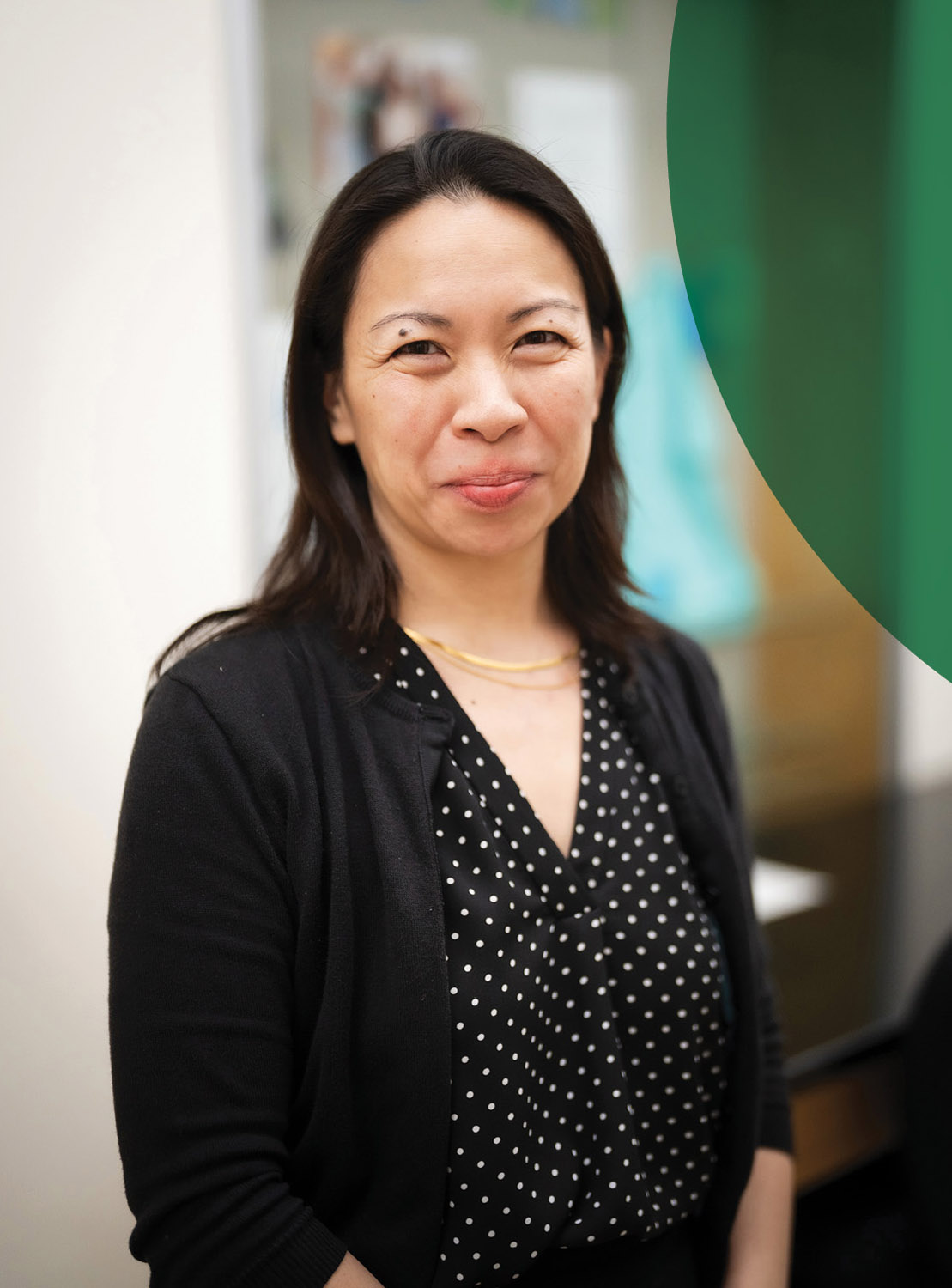
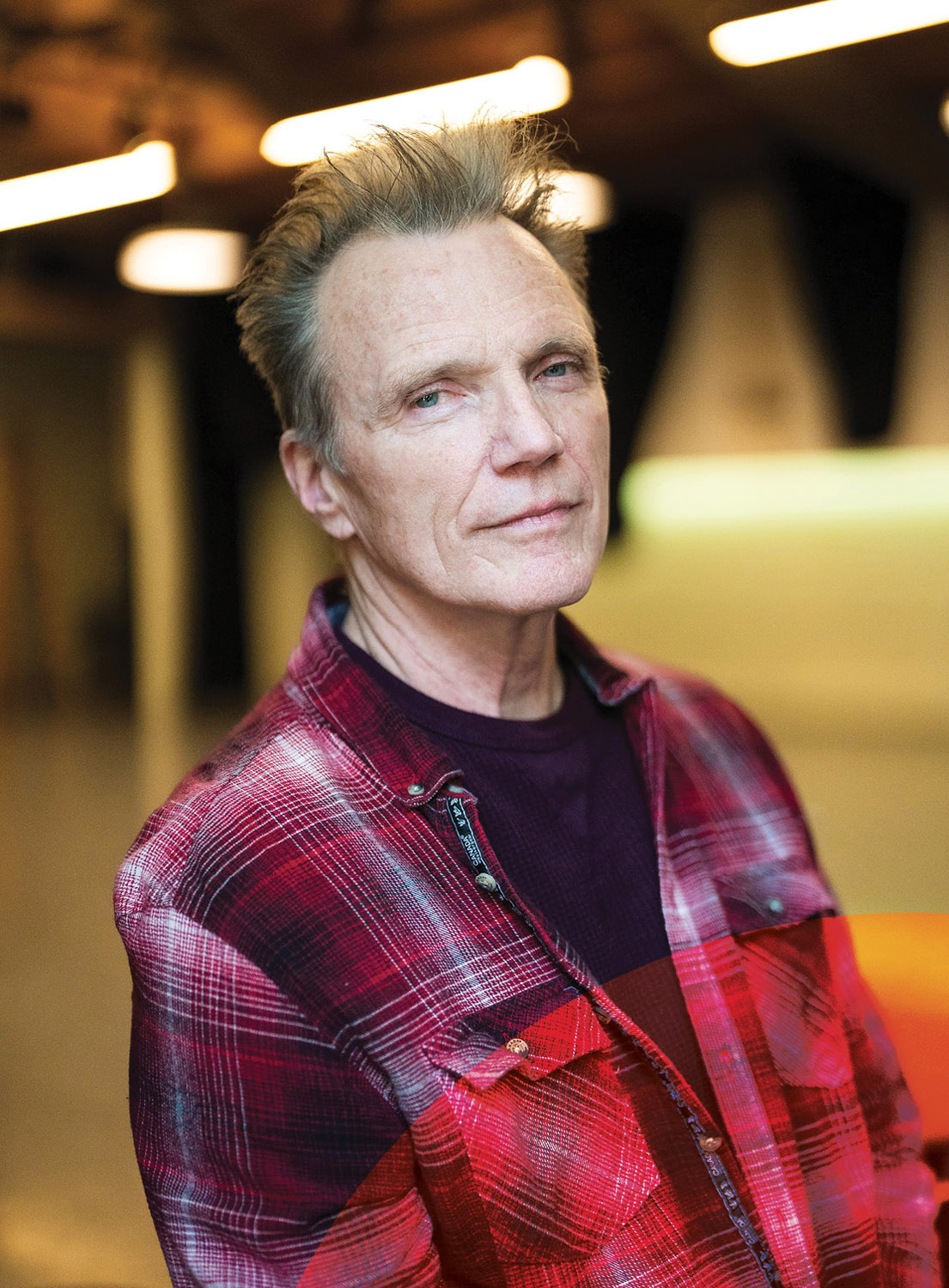
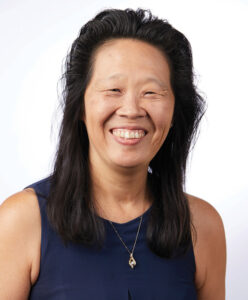
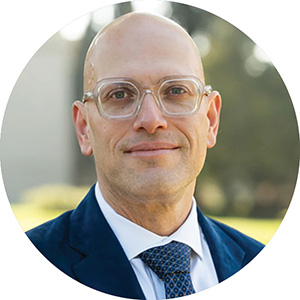
Introducing Pomona’s new Chief Communications Officer

Dear Pomona community,

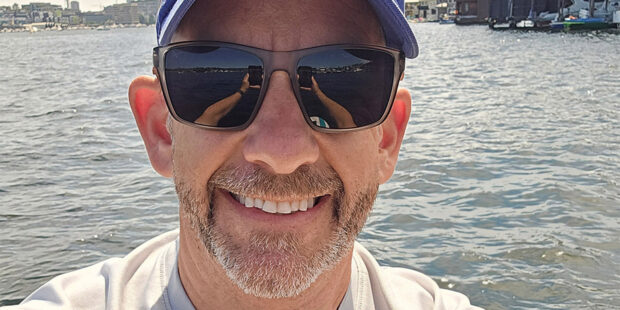
I’m very excited to have joined Pomona as its new Chief Communications Officer (CCO) this July.

I bring over two decades of strategic communications leadership to the College, and most recently served as Assistant Vice President of Executive and Community Communications at the University of Southern California (USC). I know Pomona to be a remarkable institution whose faculty and administration put student belonging, experience and success at the heart of every endeavor. I feel very fortunate for this opportunity to lead our talented Communications team and help tell Pomona’s story.

More than anything, I’m looking forward to collaborating with our gifted academic community on a host of important initiatives and showing the enduring value of the liberal arts in shaping the next generation of leaders, scholars, artists and engaged citizens.

Eric Abelev, Chief Communications Officer

As a newcomer to the Pomona community, I know that your support and input will be an invaluable ingredient to my team’s success. Your ideas and feedback will always be welcome and I hope you won’t hesitate to reach out!

—Eric Abelev
chief communications officer

‘Through the Gates’ with President Starr

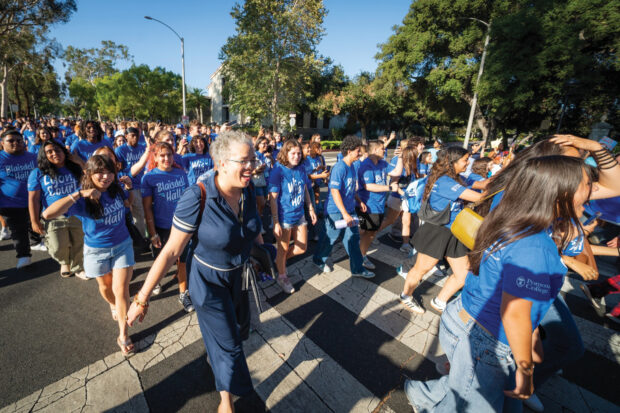
G. Gabrielle Starr and students walk through the gates of Pomona CollegeThis fall I have come back to campus after an energizing and much appreciated sabbatical. I’m looking forward to working with the entire community as we begin this new academic year together.

Sabbatical leave is one of the important ways Pomona encourages great scholarship and, in turn, the exceptional teaching for which we are renowned. It is a gift of time to study intensively and keep the light of learning glowing brightly.

During my sabbatical I had the opportunity to work on my next book, which is about why human beings need beauty. I don’t think that beauty is icing on the cake of human experience; it is part of who we are and how we learn.

Beauty leads us on in our explorations of the world around us. The products of our creativity—from paintings and poems to buildings and even tools—are records of what we have learned about the world and how we have learned it. Our symphonies are explorations of the world of sound; they are products of feeling, too, but they are also markers of collective yearning, loving and living.

It is easy, as a college president, to be fully caught up in pressing day-to-day issues, and I truly love serving the College and our community. I’m glad to be back on campus, living and loving our collective life. But, having an opportunity to focus for a time on my intellectual curiosity connected me closely once again with the heart of Pomona—our commitment to lifelong learning.

Students choose Pomona because they, too, are curious. So many elect to double major because it’s simply too hard to narrow their attention to just one discipline. And our faculty come here because there is no place better to discover, create, imagine and learn alongside each other and our incredible students.

I am grateful to the Board of Trustees and to Bob Gaines, who stepped in as Acting President, for this period of time to once again experience the life of scholarship and strengthen my kinship with our learning community. Bob’s steady, thoughtful and optimistic leadership was wonderful to see. I appreciate so much his willingness to take on the role and the expert way in which he guided the College toward the fulfillment of our mission.

Now, as we begin a new academic year, it is important that we as a community find ways to be a place of calm amidst the winds of discord and division that are currently buffeting our nation and our world. Pomona brings together people with different backgrounds, cultures, worldviews and passions. We have so much to learn from each other, ideas and imaginings that can enrich each of our lives. The key is learning to listen, not just with our ears, but with our hearts and our full attention.

On the first day of orientation I walked, as is tradition, through the gates with our newest students. When I met with them later in our beautiful Center for Athletics, Recreation and Wellness, I encouraged them to look around at their classmates. These are the people, I reminded them, who will become their teammates and friends, not just for now, but perhaps for life. I encouraged them to pay attention to and care for each other on the journey they will share at Pomona. I ended with a quote from Apollo astronaut Rusty Schweickart that I think is apt for us all: “We’re not passengers on Spaceship Earth,” he said. “We’re the crew.” (And then, of course, I said it again in Klingon.) Whatever languages we speak, whatever creeds we hold dear, and wherever we go, we Sagehens will shape our future together, and that makes me very proud.

Pomona College has been making an outsized contribution to Spaceship Earth for more than 100 years because of the strength of our community. I eagerly anticipate building on that in the year ahead.

—G. Gabrielle Starr
President

SageChat Across Generations

SageChat Across Generations thumbnail

We asked the same set of questions to 3 individual alums from 55, 30 and 5 years ago, as well as 4 couples across multiple generations. Ahead, our super-scientific results.


How did you meet?
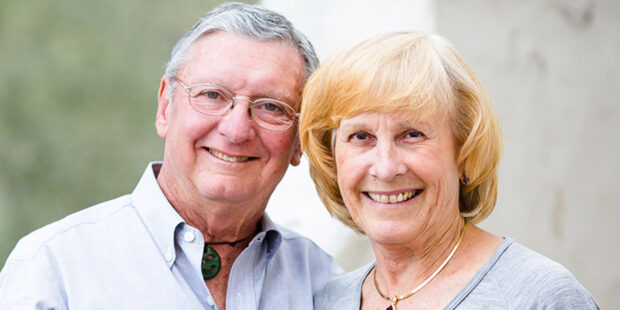
Larry Hauser ’64 and Barbara Hauser ’65: We met in 1962-1963 at a “Served Dinner” at Frary Dining Hall, where a vigorous courtship ensued with lots of coffee dates that had to be completed by the 10 p.m. curfew.

Classes of 1964 & 1965

Larry Hauser ’64 and Barbara Hauser ’65 Larry Hauser ’64 and Barbara Hauser ’65

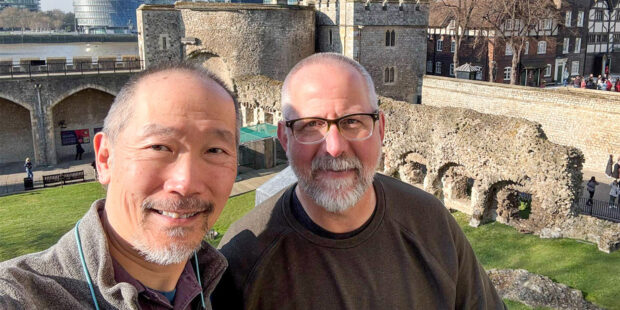
Richard Bookwaiter ’82 and Galen Leung ’82:
We met as first-years when we were both elected to the Freshman Dorm Council representing Oldenborg and Walker, respectively.
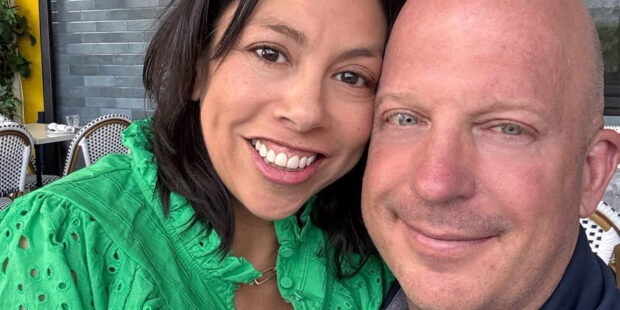
Rob Ricketts ’97 and Karla Romero ’97:
We met in January 1996 in Harwood Basement. Rob was a transfer student, and Karla was his assigned sponsor.
Kai Fukutaki ’17 and Sameen Boparai ’17:
While we first met during Orientation Adventure in Sequoia, we didn’t start hanging out until we crossed paths in the social dance clubs, including ballroom dance.


What is your favorite Pomona College
memory together?

Hauser and Hauser: Our “Pinning Ceremony”—the entire Zeta Chi Sigma Fraternity marched down to South Campus and sang a romantic serenade at Mudd-Blaisdell, marking the start of our lifelong journey together.
Bookwaiter and Leung: After the “Survivors’ Party” for students who had made it through the fall, we were the only two who showed up on the cleaning committee.

Class of 1982

Richard Bookwaiter ’82 and Galen Leung ’82 Richard Bookwaiter ’82 and Galen Leung ’82

Ricketts and Romero: Harwood Halloween, where we saw a relevantly unknown opening act called the Black Eyed Peas.
Fukutaki and Boparai: During senior week in San Diego, we put our liberal arts degrees to good use: we won pub trivia, sang karaoke and had our ecology friends help us identify tide pool creatures!


How long have you been together?

Hauser and Hauser: Married 60 years! We just attended Barbara’s 60th Pomona reunion and are forever bonded to this beautiful campus with all of its memories.

Bookwaiter and Leung: 34 years! By the end of our senior year we knew we wanted to be together. We married in August 2008.

Ricketts and Romero: We’ve been together since May 1996, with one brief intermission in 1998-99. We found our way back to each other, and have been inseparable ever since.

Class of 1997

Karla Romero ’97 and Rob Ricketts ’97 Karla Romero ’97 and Rob Ricketts ’97

Fukutaki and Boparai: 9 years! We immediately had to do two years of long-distance after college but fortunately both ended up in Seattle for graduate school.


What is your secret to a successful relationship?

Hauser and Hauser: Patience, optimism and a sense of firm commitment. Per philosopher Brian Andreas: “I’m deciding everything is falling into place perfectly, as long as you don’t get too picky about what you mean by ‘place’. Or ‘perfectly.’”

Bookwaiter and Leung: Our relationship has lasted over 34 years because we are able to communicate with each other.

Ricketts and Romero: Relationships aren’t about being right—they’re about growing together. Also, we laugh a lot. Humor keeps things light even when things get heavy. We don’t agree on everything or spend every waking moment together, but we consistently show up for one another.

Fukutaki and Boparai: Cultivating healthy communities has helped us feel fulfilled and supported so that we don’t depend solely on each other. Staying curious and always learning new things, together and apart, keeps us excited about the world—and each other.

Class of 2017

Kai Fukutaki ’17 and Sameen Boparai ’17 Kai Fukutaki ’17 and Sameen Boparai ’17


What is your fondest memory of Pomona?
Blair: Groups of us would get tickets to classical concerts in Big Bridges, where we’d see Arthur Rubinstein, Van Cliburn, Christopher Parkening and the Romeros, among many others.
Trupin: I think a lot about the freshman seminar, the intramural sports and, of course, both the good friends and the meaningful conversations I had all the time there.

Addo-Ashong: I don’t think I could truly narrow down to just one memory—I look back at dozens of moments spent with my friends and laugh all the time.


Where did you and your friends hang out?

Blair: I developed some of my longer-lasting friendships when I lived in Oldenborg for two years. We hung out in the language lounge for the Russian and Chinese students. I was studying Russian. We studied, we partied and had a great time there.

Class of 1970

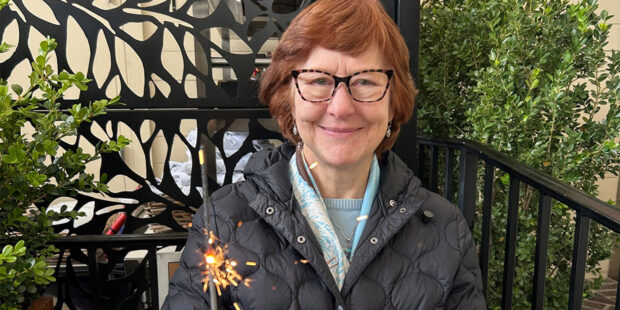
Tina Blair ’70 Tina Blair ’70

Trupin: We attempted to study at pools, a lot. Somehow I still passed my classes. We ate a lot of fried food and shakes at the Coop. And we ventured to parties on whatever campus was hosting one.
Addo-Ashong: I could guarantee that you’d see me and my friends in Frary at some point, especially for Snack. My Sontag suite was also a glorified community center my senior year with the number of people that were in and out every day.


The career path you first envisioned in college—is that what you’re doing now?

Blair: I fell in love with the fields of anthropology and education. As a result, I studied at Stanford and received an MA in Education. Although later I studied theology, was ordained a Presbyterian minister and received a Ph.D. from the Claremont School of Theology, I was always using what I had learned at Pomona.

Trupin: I majored in American Studies, so I wouldn’t say I had a planned career path. But I did get to spend a lot of time focusing on youth homelessness at Pomona, including a Watson Fellowship in Latin America. I still work on that today, so the answer, I guess, is yes!

Class of 1995

Casey Trupin ’95 Casey Trupin ’95

Addo-Ashong: I didn’t have one career path clearly laid out, but my current job working in data analysis and research for litigation is a good mix of my public policy analysis and math background. My next steps are to apply for a master’s in similar fields, so in that sense, I think I’m following what I set out to do!


What do you wish you’d known before you came to Pomona?

Blair: I felt instantly at home at Pomona because of the many new students who, like me, had lived outside the United States. I was embarrassed, however, that I had not yet heard of Jefferson Airplane and their music.

Trupin: This is a rare four-year opportunity that you’ll never get again, and you should take advantage of all it has to offer during your time there. A lot of us would come back for another year if we could.

Addo-Ashong: I wish I’d known that the pluses and minuses on grades do in fact affect your GPA, because that was a very rude awakening my freshman fall!

Class of 2020

Victoria Marie Addo-Ashong ’20 Victoria Marie Addo-Ashong ’20


What was your favorite dining-hall food?

Blair: I have little memories of the food. It was better in Oldenborg than elsewhere.

Trupin: Fried mozzarella sticks at the Coop. In the dining hall, maybe the omelet barhow nice it would be to have that in my house now!

Addo-Ashong: My usual breakfast omelet and avocado toast, maybe the tomato/burrata, and balsamic sandwiches and the oatmeal craisin cookies!


What was the best book you read during your Pomona years?

Blair: A book that over the long term shaped me the most was Mysticism, by Evelyn Underhill. I read it for a course I took at Pitzer; we also read Tillich and William James.

Trupin: In the Name of Eugenics by Daniel Kevles stuck with me and stays relevant today as a frightening and helpful exploration of using science to justify racism and every type of discrimination.

Addo-Ashong: I don’t know how many books I read for fun , but I really enjoyed American Hookup by Lisa Wade!


What was your favorite band while you were in college?

Blair: The Beatles, then Jefferson Airplane and the Doors.

Trupin: I have fond memories of seeing No Doubt perform in my dorm. They weren’t my favorite band, and I think my glasses fell into the mosh pit and got crushed, but it still stands out.

Addo-Ashong: I’d say favorite actual band was Glass Animals, and individuals were SZA and Childish Gambino.


What was the first electronic device you ever owned?

Blair: I got my first computer in 1986, when I was working on my Ph.D. dissertation.

Trupin: My roommate and I had a combo tape/record/CD player that I think was the size of half of one of our walls.

Addo-Ashong: My Game Boy Advance.

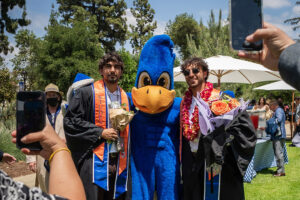
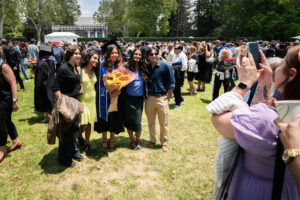
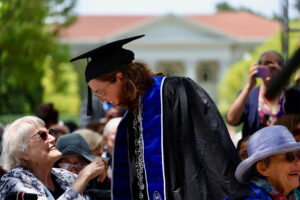
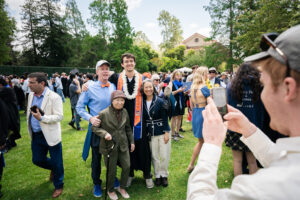
2025 Commencement

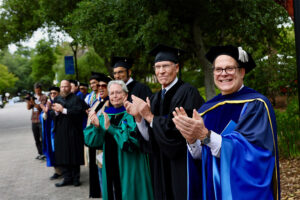
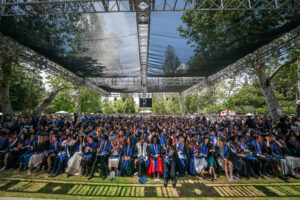
faculty attending commencement 2025
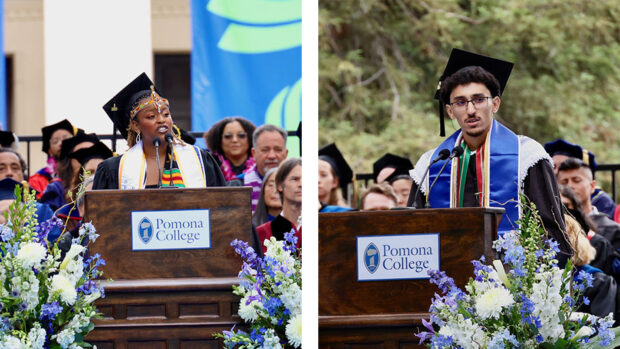
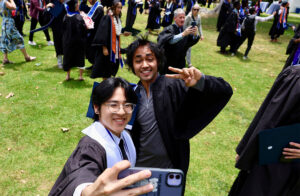
Shark Mutulili ’25 and Fares Marzouk ’25

Shark Mutulili ’25 and Fares Marzouk ’25

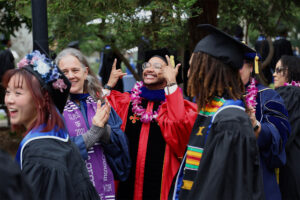
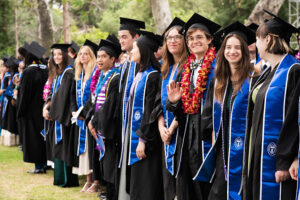
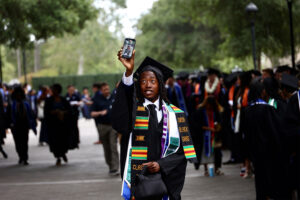
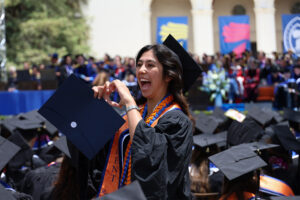
Some 447 graduates received their diplomas at Pomona’s 132nd commencement in May. Speakers included Senior Class President Shark Mutulili ’25 (top left), Senior Class Speaker Fares Marzouk ’25 (top right) and the following four recipients of honorary degrees.

W. Benton Boone ’62

As ophthalmology faculty at UCLA and the University of California, Irvine, Boone has published extensive research on advancements in eye surgery and immunology. Certified in the supervision of hyperbaric oxygen therapy, he helped to pioneer the use of hyperbaric oxygen in eye disease.

Louise Henry Bryson

Originally a documentary film writer and public television producer, Bryson later became senior vice president of FX networks and then president of distribution for Lifetime Networks. She is a former member of the board of the American Academy of Arts and Sciences, and the former chair of the Board of Trustees of The J. Paul Getty Trust.

Halim Dhanidina ’94

In 2012 Justice Dhanidina (ret.) was appointed to the Los Angeles County Superior Court, becoming the first Muslim to ever be appointed judge in California. Previously a litigator in arbitration and criminal investigations, an associate justice in the California 2nd District Court of Appeal, he became the country’s first-ever Muslim appellate-level judge.

David W. Oxtoby

A recognized leader in American higher education, Oxtoby was Pomona’s ninth president from 2003 to 2017. He also chaired the board of the American Association of Colleges and Universities and was president of the American Academy of Arts and Sciences.

Collegial Creativity: A Faculty Roundtable

Collegial Creativity faculty roundtable

What is the role of creativity in steering the work of dancers, poets, scientists and activists? What follows is a condensed and collated conversation with four Pomona professors from different fields, drawing on themes about the practice and teaching of what it means to create.
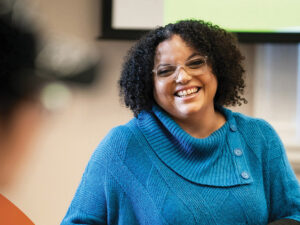
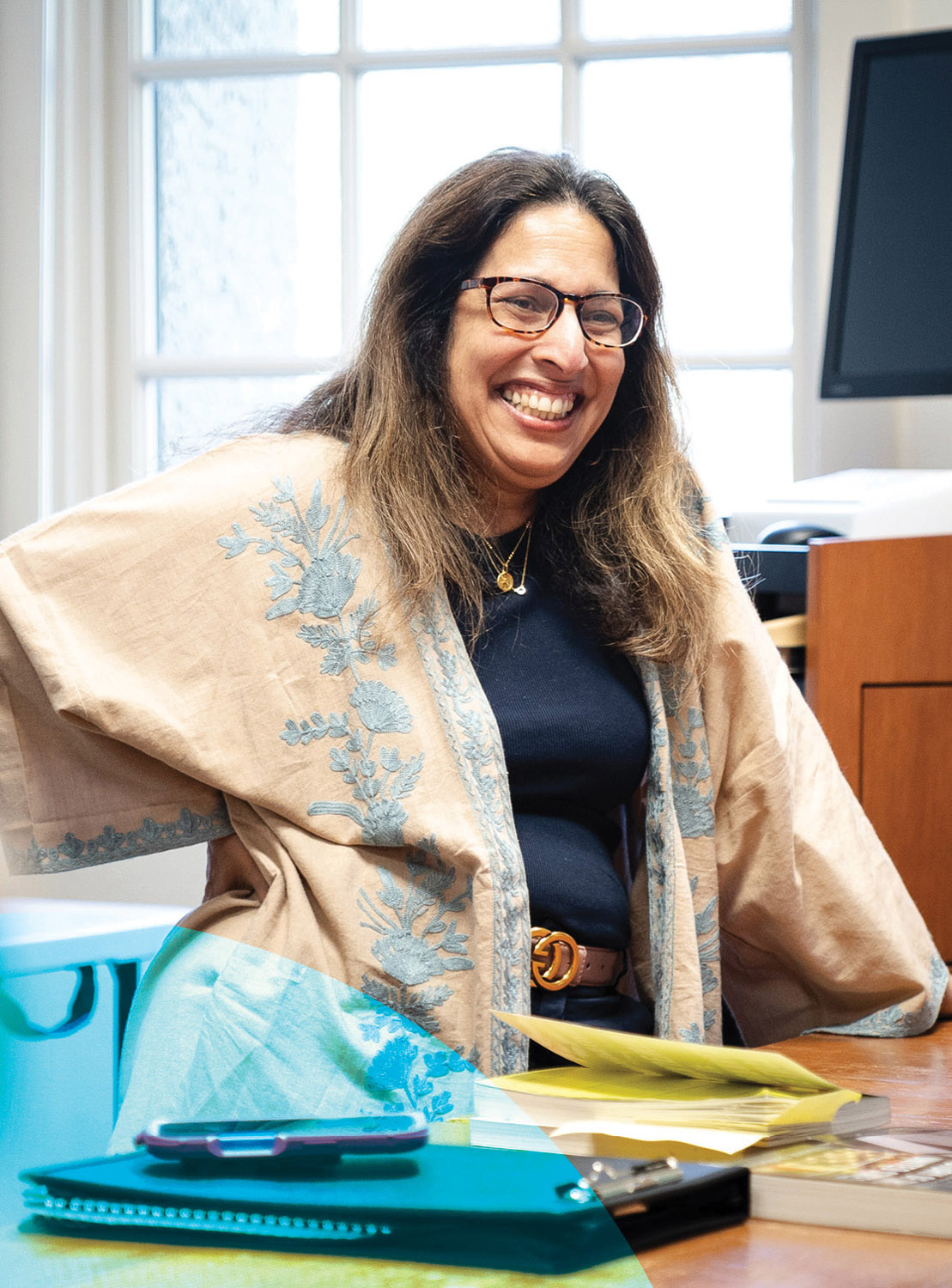
Esther Hernández-MedinaEsther Hernández-Medina, assistant professor of Latin American studies as well as gender and women’s studies, is a feminist academic, public policy expert and activist from the Dominican Republic.
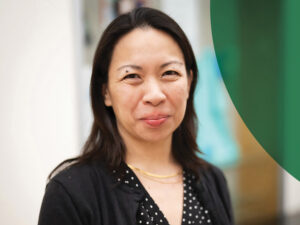

Jane LiuJane Liu, professor of chemistry professor, is also CEO of BRT Biotechnologies, a small-molecule drug discovery startup she co-founded with fellow Sagehen Greg Copeland ’96.
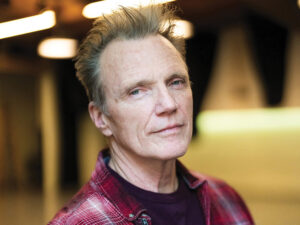

John PenningtonJohn Pennington, associate professor of dance, is the artistic director of Pennington Dance Group and ARC (A Room to Create) Pasadena after a career as a performer and teacher with the Bella Lewitzky Dance Company.
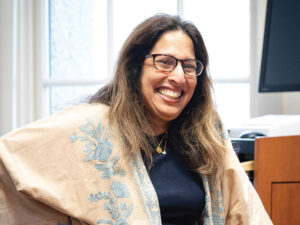

Prageeta SharmaPrageeta Sharma, Henry G. Lee ’37 Professor of English, is the author of six collections of poetry, including Onement Won, to be published in September. She is a recipient of a 2025 National Endowment for the Arts Creative Writing Fellowship.


Q: Welcome, all. We’re interested in how you think about creativity. Is it innate? Is it a practice, something that can be summoned?

Pennington: I think this has been a question of the ages. You’ve often heard about “the muses descending” and all of these ways that people are creative, and no one can put their finger on it. Over the years, particularly working in a liberal arts college and through my own investigation and curiosity, I’ve found that creativity lies a lot in neuroscience.

There’s the prefrontal cortex; it’s the executive director. There’s also the “fight or flight” response of the sympathetic nervous system. So there’s a saying that creativity comes in the three B’s—the bed, the bath and the bar. If you look at the bed, the bath and the bar, those are three places that you relax and you feel safe, for the most part. The prefrontal cortex kind of shuts off. The “fight or flight” response is not active, either. A lot of artists have said that they have their most creativity before falling asleep or when they wake up, and that’s when the brain is partly shut down.

Q: That reminds me that Paul McCartney [of the Beatles] has said the melody of “Yesterday” came to him in a dream. Have any of you had ideas or solutions come to you that way?

Liu: I don’t know if I’ve solved the problem in my dream but when you’re sort of dozing, something might come in there. I actually will make sure I get up and go write it down. Maybe that’s the key, [since] I’d like to  sleep … I don’t want to stay up and work it out, but I don’t want to forget it, either!

Q: Jane, many of us think first of the arts when we think about creativity. But what is the role of creativity in the sciences?

Liu: Whenever you’re doing scientific research or trying to progress science forward, you’re never doing the same thing someone else did. It always has to be something new. You need to think: What is the question I even want to ask? That requires creativity. Then, how are you going to approach answering that question or testing your hypothesis? You and I could ask the exact same question but take two completely different approaches based on what inspired us at that time, what our background is, what we read that morning or the conversation we had down the hall. So pulling these different pieces together—and then fitting that into progressing science and doing scientific research—that, to me, is a creative process.
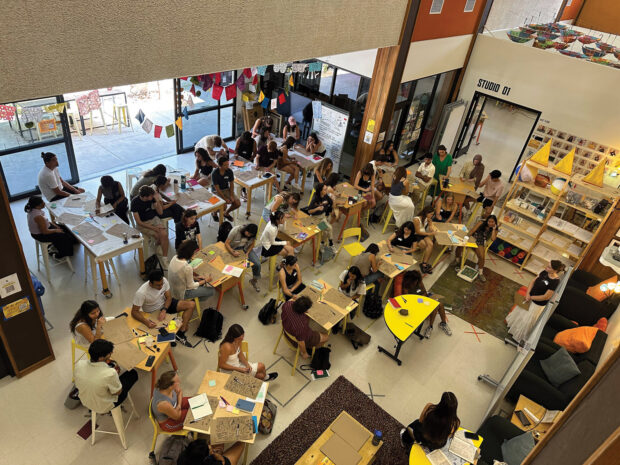
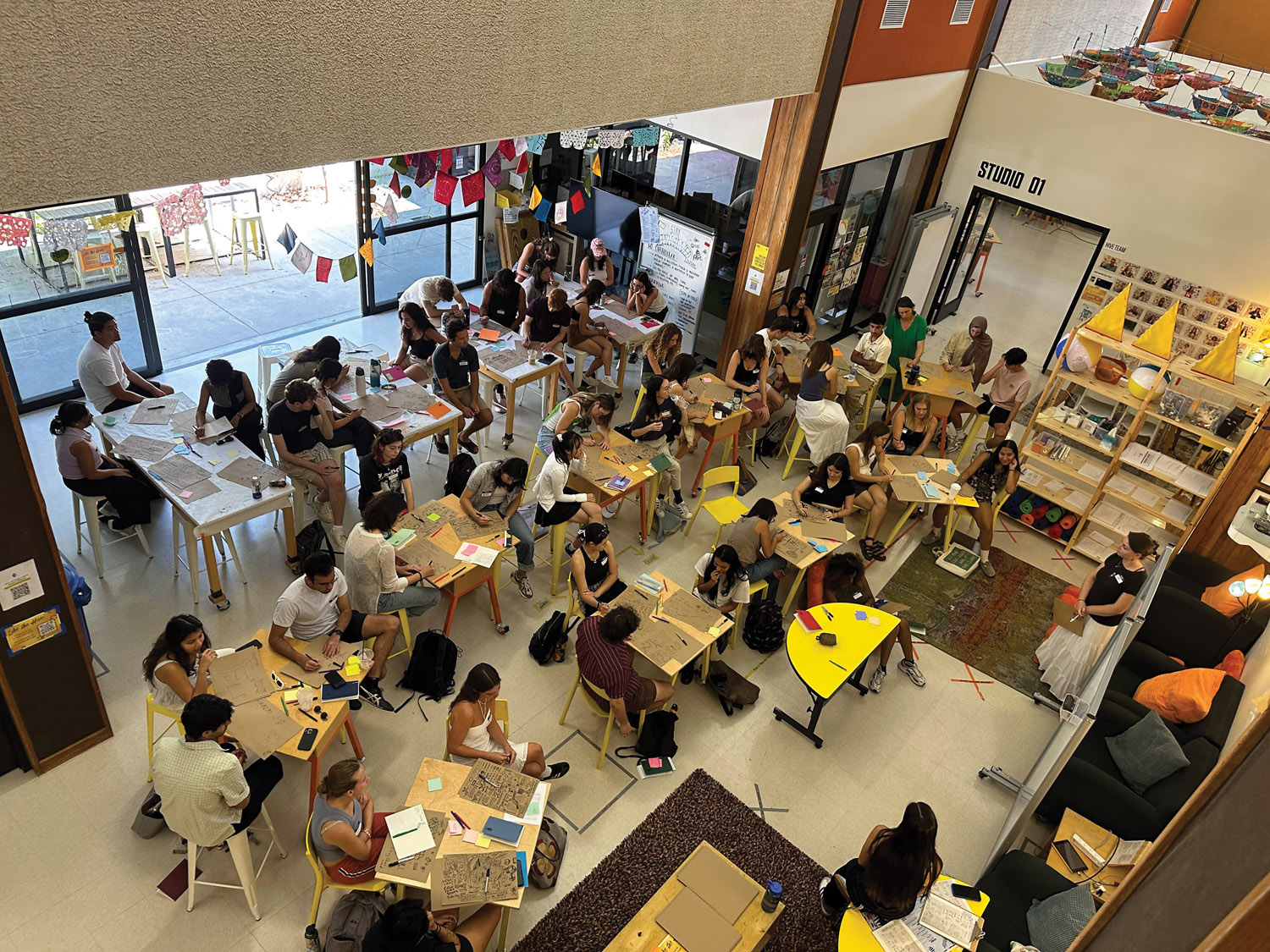
Human-Centered Design class visualization lab

A visualization lab from the Human-Centered Design class

Design as Process for Impact

What is The Hive?

The Hive, more formally known as the Rick and Susan Sontag Center for Collaborative Creativity, aims to foster collaboration and innovation for students of the Claremont Colleges.

What does The Hive do?

The Hive is a design and innovation center that hosts courses and activities that are exploratory, collaborative, and experiential, including…

  • full-credit courses in Human-Centered Design and Impact Innovation
  • workshops and events that introduce alternative ways of engaging with the liberal arts
  • makerspaces where students are given access to materials for building, prototyping, sewing, screen printing, woodworking, and music production
  • courses from around the 7Cs

Who does The Hive work with?

The Hive offers human-centered design collaborations with a diverse variety of community partners, ranging from The LA Department of Health to LAist Public Radio and StoryHouse Ventures.

Get your organization involved!
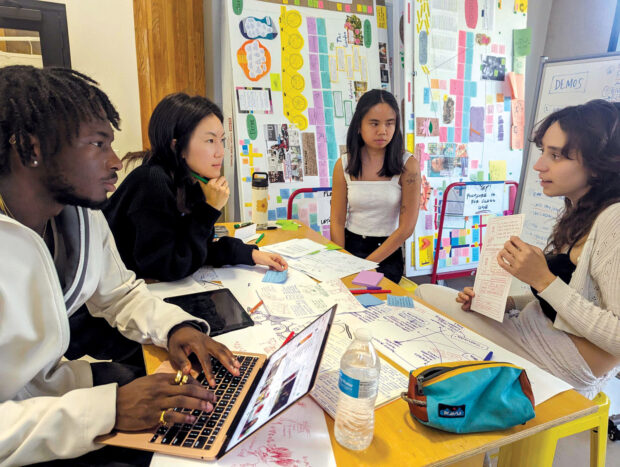
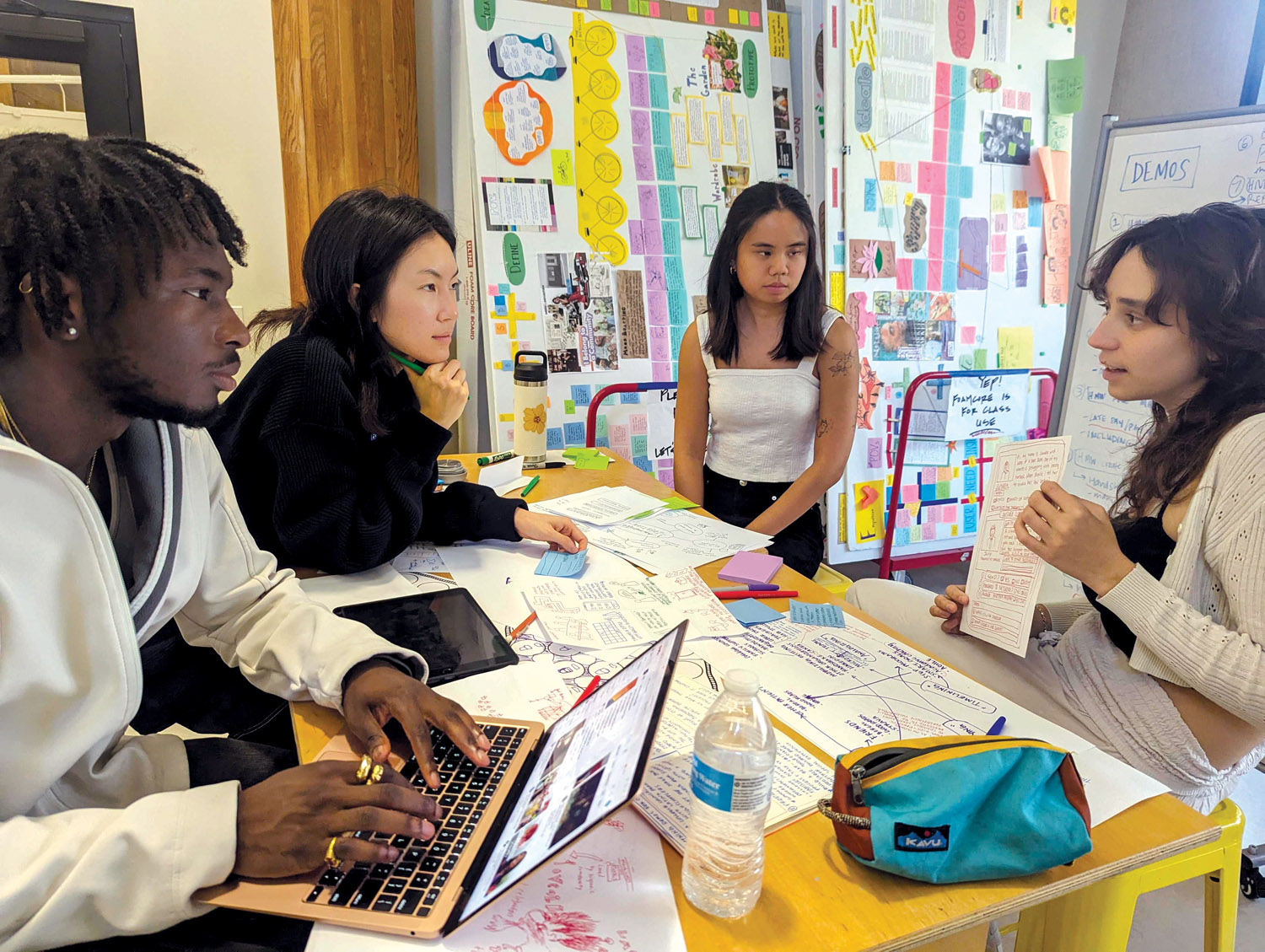
Students at The Hive

Fred Bolarinwa (HMC ’25), Janny Wu (PZ ’25), Michelle Tran ’24, Cece Malone ’24

Q: Esther, what are some of the ways you experience creativity in the social sciences?

Hernández-Medina: The area where I use creativity the most is in my teaching. Especially during the pandemic, I really rethought and retooled all my classes. Pomona’s Information Technology Services and The Claremont Colleges Center for Teaching and Learning had all these workshops, and I took almost all of them. One way is putting together digital books: We use Pressbooks to collect students’ class papers. It makes them feel empowered as authors: “Oh, wait, I am publishing, this is so cool.” Some use the link in their graduate school applications. I also sometimes use the link to their papers in the digital book when I’m writing recommendation letters for them. The students are the ones who come up with the title for the book, the subtitles, the art for the cover. So that’s another way of making them reconnect with their creativity. In some of my classes, the final project is now a podcast about their papers, after learning how to produce and edit podcasts at The Hive.

Q: Prageeta, as a poet, how do you draw out creativity in your students?

Sharma: For me, creativity comes from reading and teaching and community and attachment. What is so much fun for me is this class on the theme of diaries and daybooks that I’m teaching now. My late husband was married prior to me, and he left me his first wife’s diary she had kept for many years in the 1990s before she died in 1998. She was a really stunning person and it’s a beautiful diary. He said, “Please write about her if you feel compelled to.” I also have his writings that he left me, notes for me to read after he passed. So in class we started talking about what diaries mean to us, what kind of writing we find there, and what we hope to imagine for ourselves with private writing. I try to bring questions and subjects and work I’m engaged with to my students, to think and work and share interests together. We nurture, I think, a safe classroom that becomes sacred to our writing and to our ideas of ourselves.

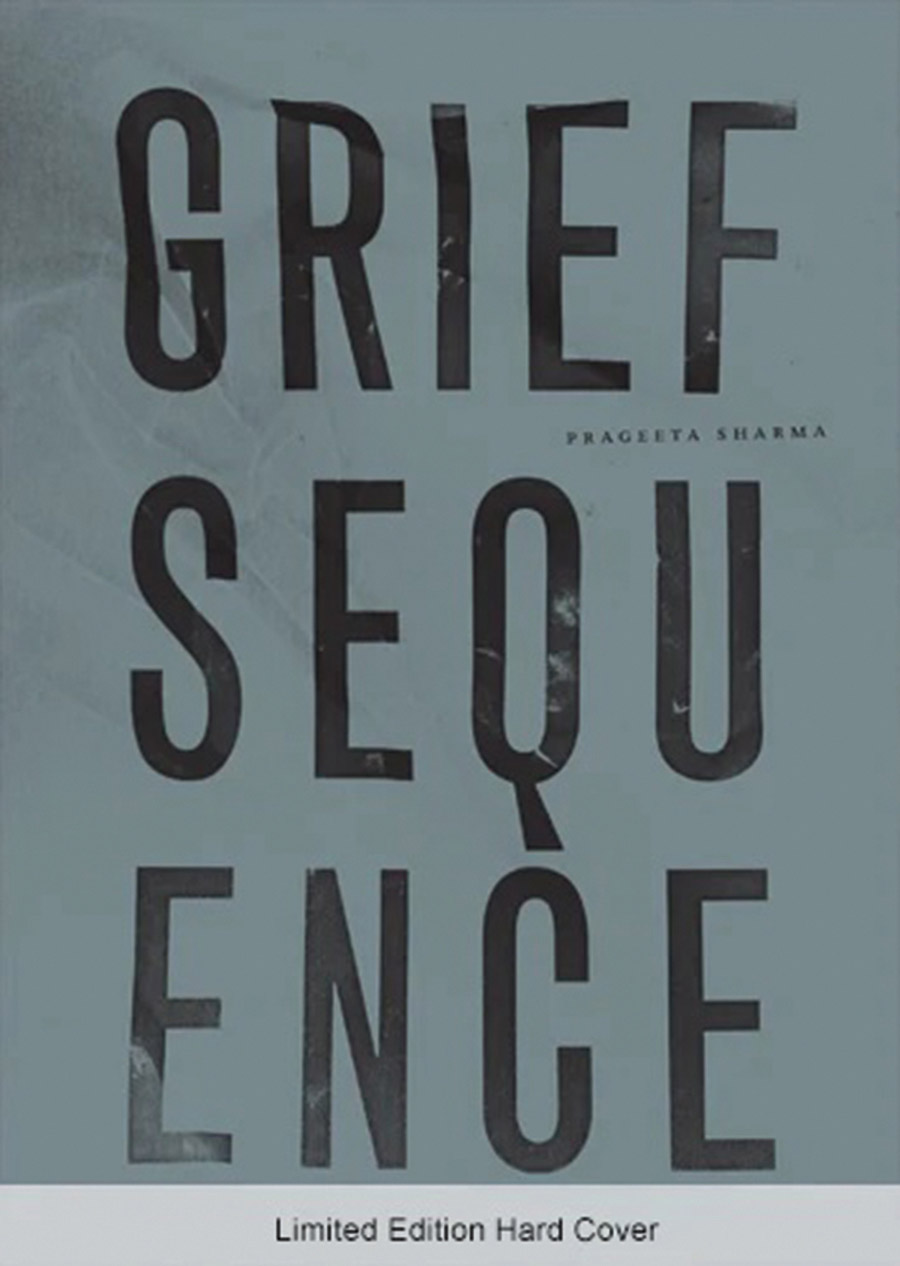
Book, Grief SequenceQ: You’ve been able to keep writing poetry at such difficult times in your life, publishing the collection Grief Sequence following the death of your first husband, Dale Sherrard, to cancer in 2015. You tragically lost your second husband, Mike Stussy, to cancer in 2023, and your upcoming collection Onement Won includes poems you wrote during his illness. It’s so common for people to try to shut everything out. Did you will yourself to continue writing? Or was it a form of therapy?

Sharma: You know, I feel lucky that Mike was so supportive of my writing poetry. He was always trying to make room for it even as we were in a caregiving situation. But I wanted to document my time with him, too. I see poetry as a record, and that it has a dailiness to it that is sacred.

Q: I’m often surprised at how many young people have suffered losses, a parent or a friend. Does sharing your experience bring out things the students may not have fully expressed before?

Sharma: Yes, students have disclosed to me personal loss, and what I hope to do is just to make them feel supported as best that I can. We think about the tradition of the elegy, the eulogy, the ode. We think about poetic forms as holding so much for them.
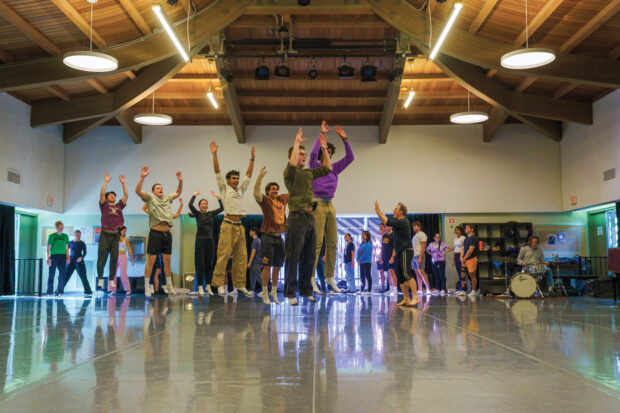
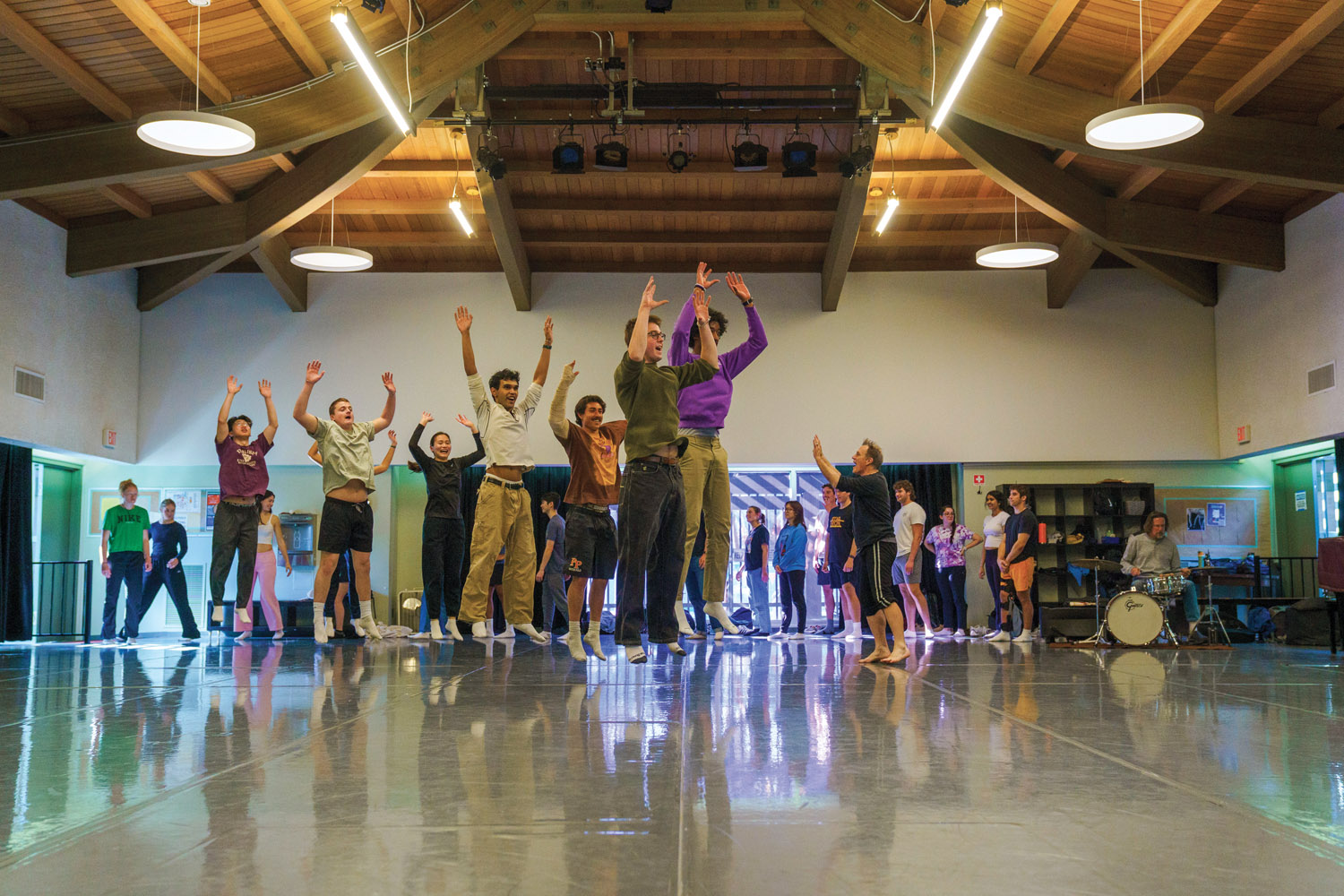
John Pennington teaches beginner dance students

John Pennington teaches beginner dance students

Q: Several of you have mentioned the idea of a safe place to create, a safe place for students to be in general. John, tell us your thoughts on that.

Pennington: When I am teaching beginners, I know I have to eliminate the fear of them thinking that I’m going to make them dance. That wall is up immediately because they hear “dance” or “movement” and say, “I’m not a dancer.” But the feedback and what they tell other students is that this class is very safe. I know what that means.

I get at beginners through problem-solving, and part of that is improvisation. One of the first exercises is to walk anywhere in the room and then sometimes I guide them and tell them to change directions. Can you walk at a different level? Can you walk high or low? And already we’re addressing part of the art form, and that is space design, motion design and floor design.

You put limitations on that creativity, or what can get produced within that problem-solving. Because what happens in any art form, when you tell people, “Just go do anything you want,” it is frightening. You need entry points and guardrails, and you need to know where you’re headed. Hopefully that becomes something that’s embodied in the students so that they say, “What if I went up or down, or did a turn here?” We’re trying to put a language to movement and identify some of those movements so that they have a toolbox. During the semester, they get more and more comfortable. They know that I’m not going to ask them to put their leg up over their ears.

Q: I’m hearing again and again about safety, community, collaboration. Esther, you’re the co-founder of a group called Tertulia Feminista Magaly Pineda, a monthly gathering of Dominican feminists and activists, and you’re also involved with the work of Josefina Báez, a Dominican artist in multiple genres who developed a method she calls “performance autology.”

Hernández-Medina: Performance autology is a way to harness your creativity in whichever way you express it. It might be as an artist, but it might be as an intellectual or an activist. The output is different, but you are still creating something.

[Báez] also emphasizes that you are creating a work of art with your life, and that includes taking care of your health and taking care of yourself while doing art. Part of the reason she founded the group was because she was very concerned about the fact that many artists are socialized to believe that they should do art despite themselves. It’s this whole myth about having to be the tortured artist to actually be able to create. And she was like, “No, no, it’s the opposite. You need to take care of yourself, so that your art is sustainable, and so that your life is sustainable.”
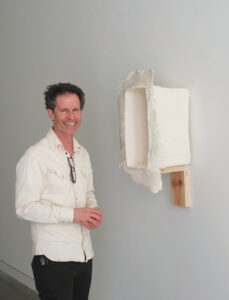
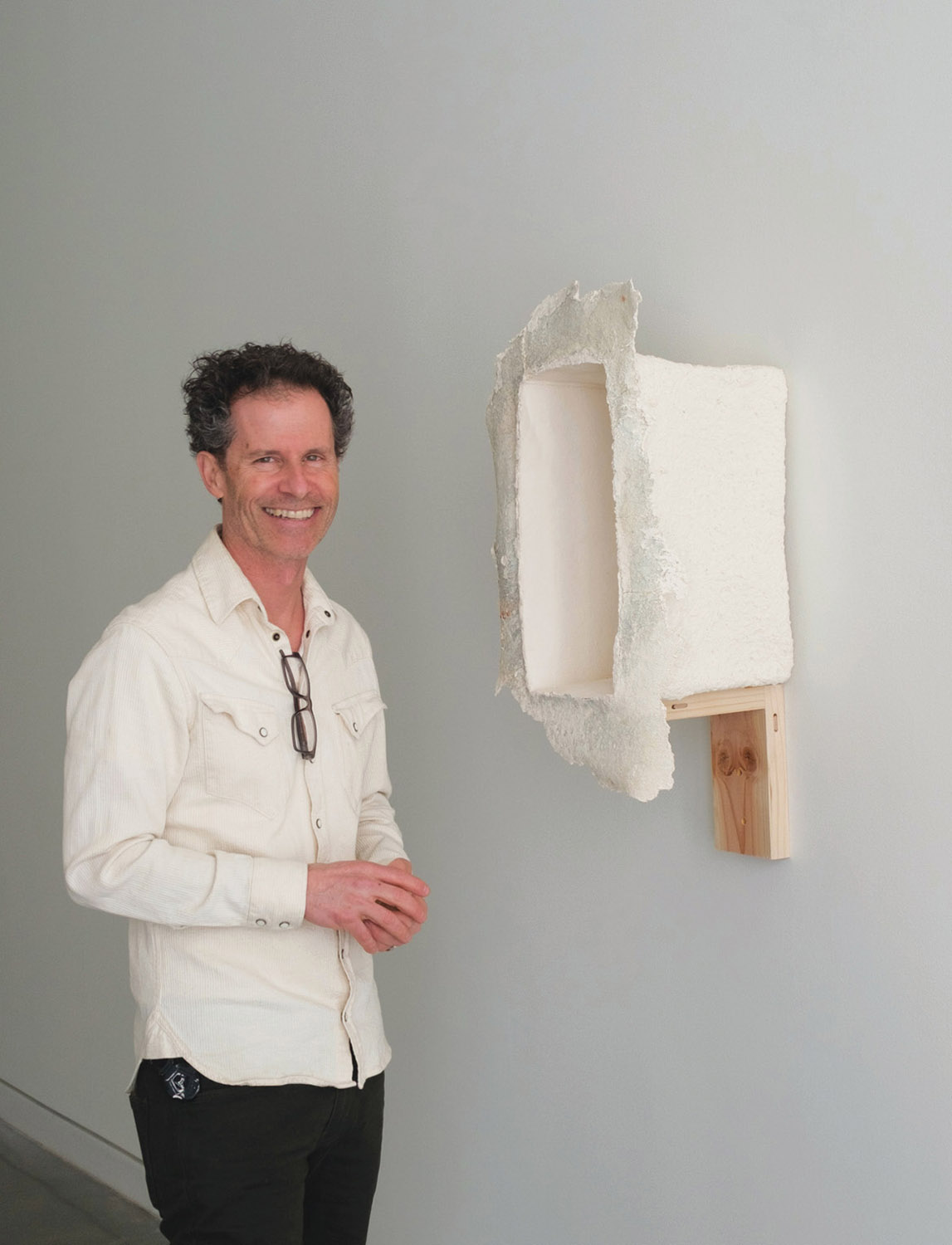
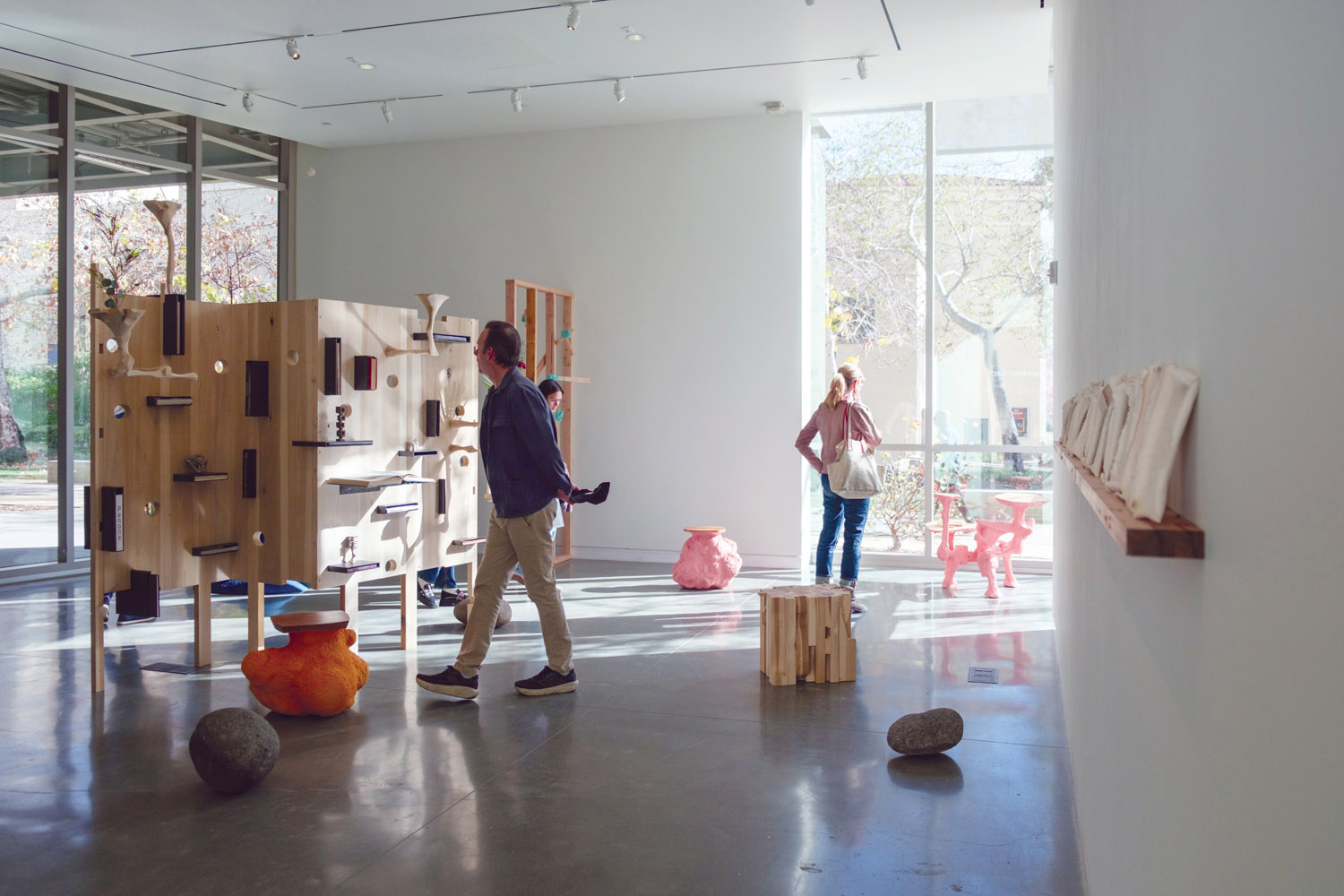
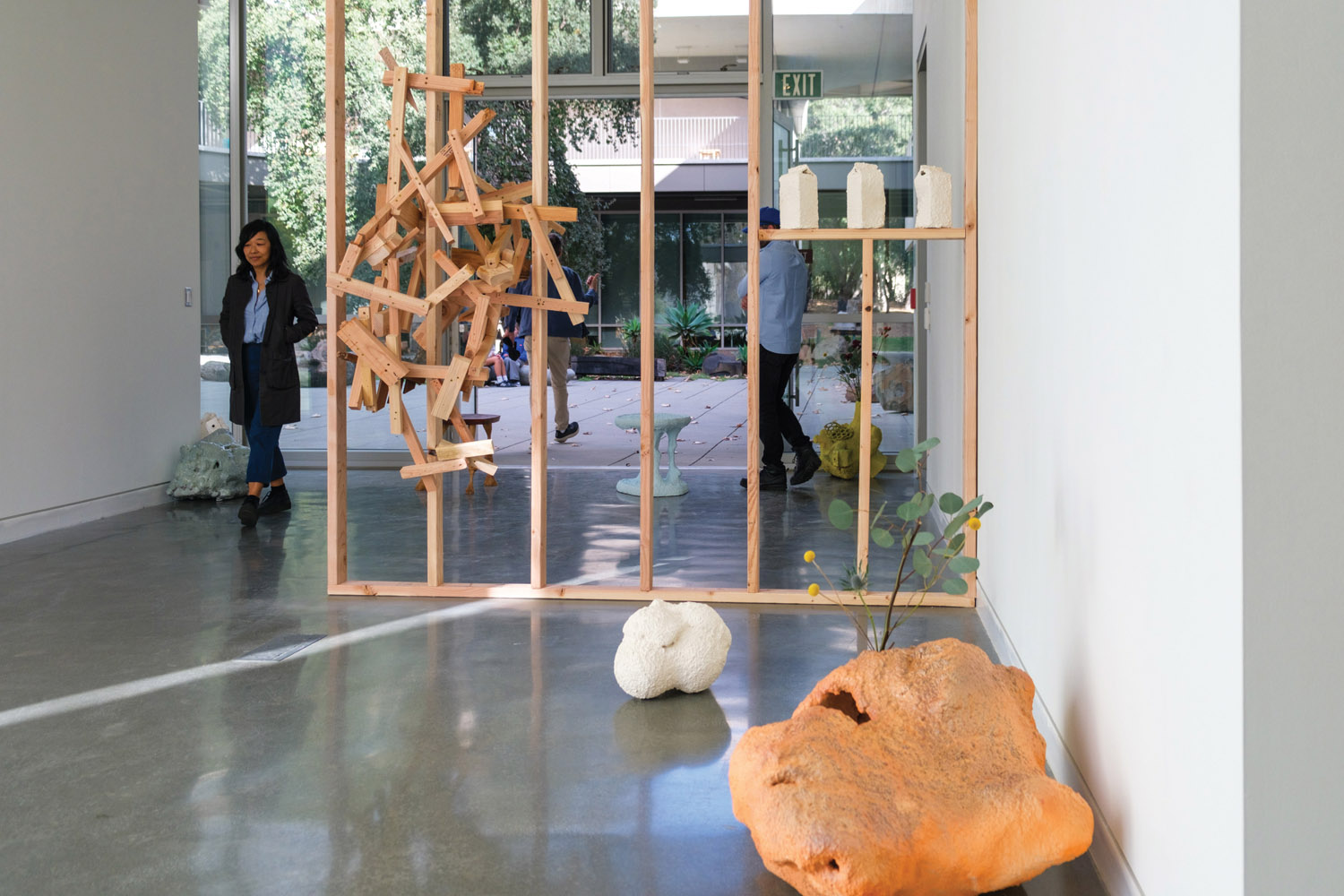
Michael O'Malley at Chan Gallery during the closing reception of his exhibition.

Michael O’Malley at Chan Gallery during the closing reception of his exhibition.

O’Malley’s “Headless Object” Exhibit

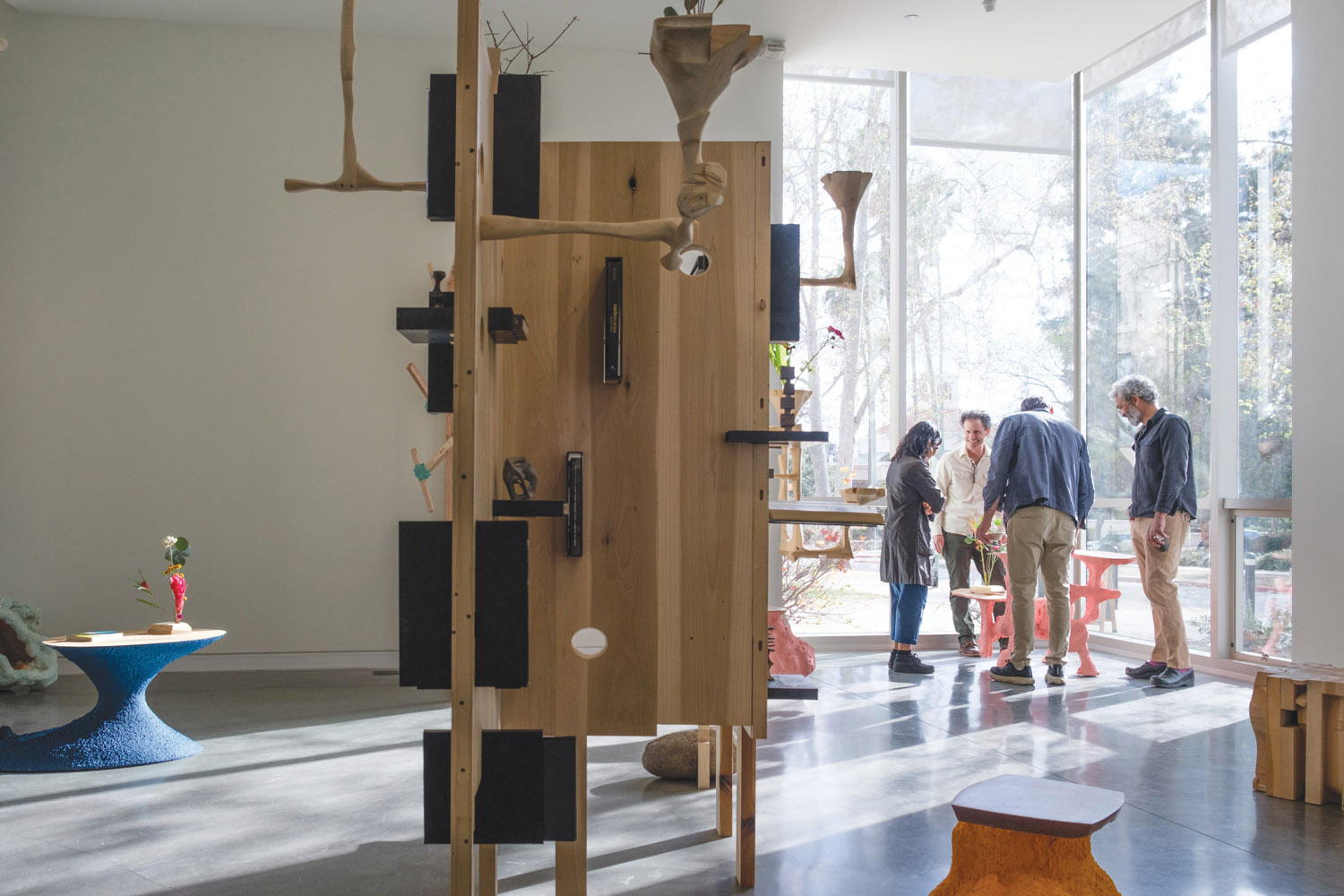
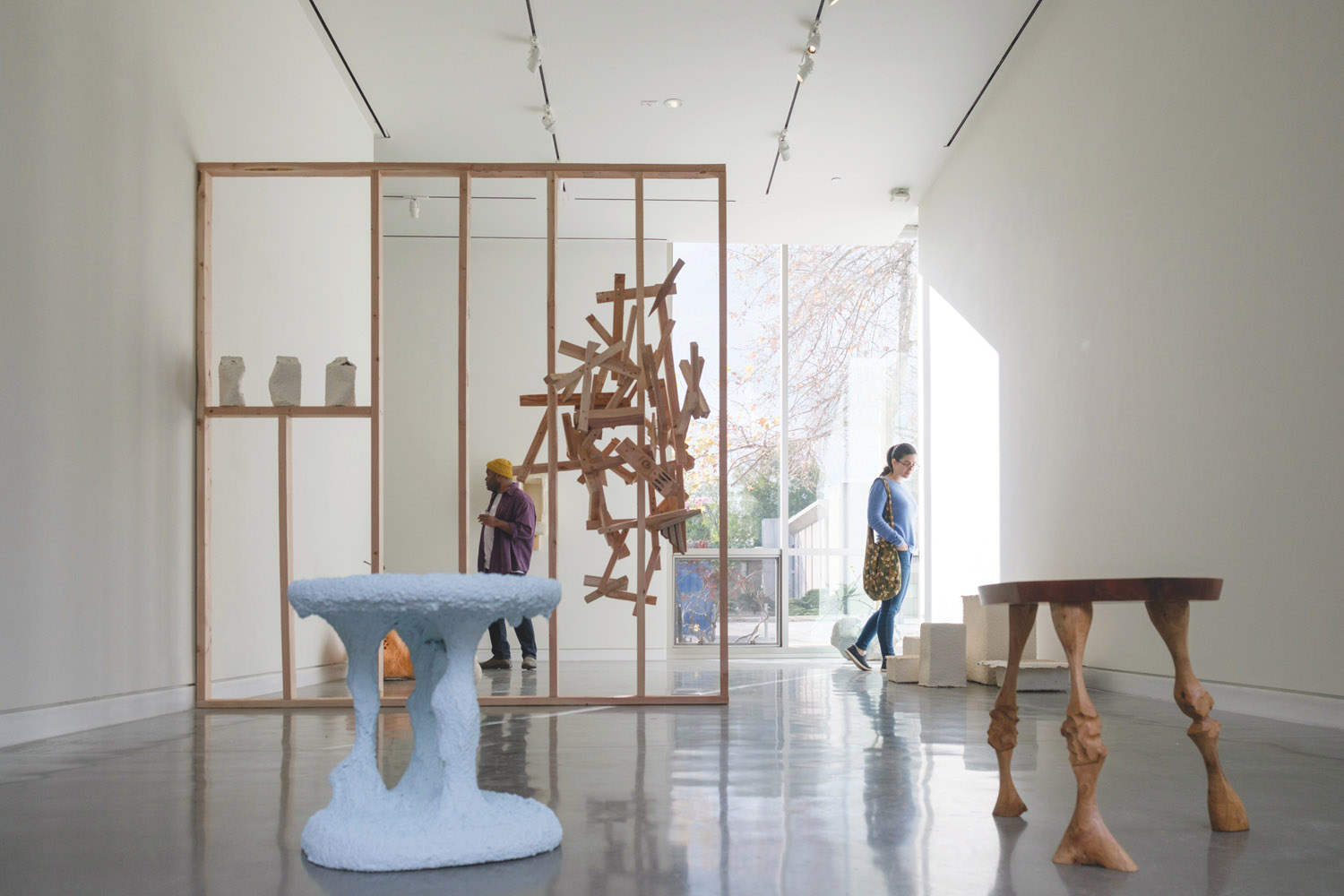
A Professor of Art at Pomona, Michael O’Malley has focused his work on engaging the aesthetics and conventions that shape the built environment. His winter exhibit at the Chan Gallery reflects his belief in art as agency—that we all create from a position in which we “make choices and exert control over the material world.”


My exhibit tests out the possibility that, like objects, I am more akin to process: emerging, changing, disappearing. The ‘exhibition’ changes each day. Sometimes a new form is added. Other times a rearranging or a removal. Arrangements of flowers echo this continuum of change as a practice of engagement and witness.”

Q: Jane, what about teaching science students to think creatively and in
a safe environment?
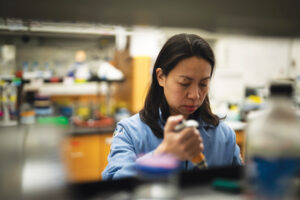
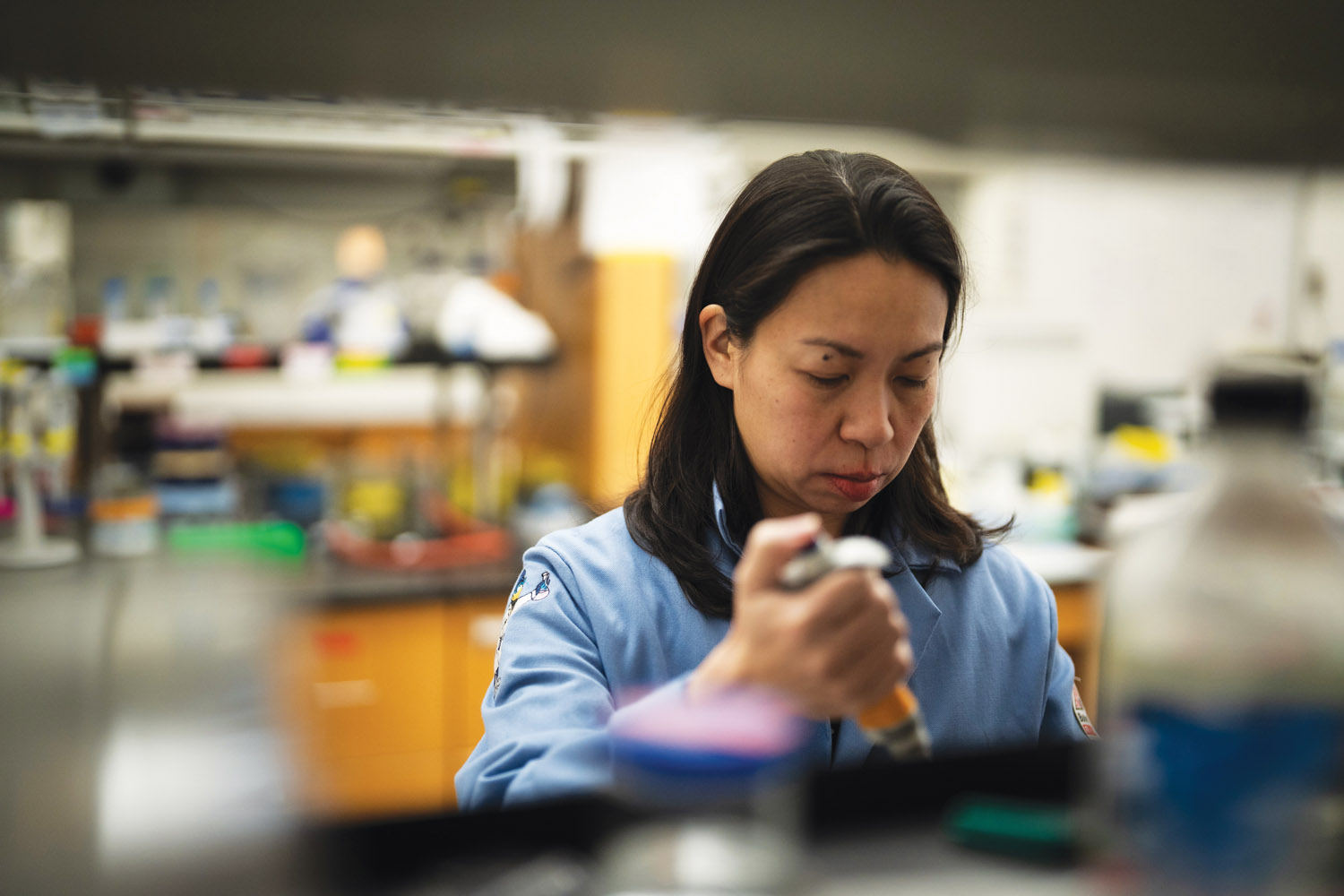
Lane Liu in her laboratory

Lane Liu in her laboratory

Liu: I still am figuring that out, because if you’re just saying, “Just do whatever you think of,” that could cause an explosion.

I think one of the challenges in science is you have to be able to understand some fundamental information first or know how to carry out some techniques. So there is a little bit of, “Know these facts; know how to carry out this protocol,” where I don’t think there’s a ton of creativity there. But you need that first stage to then be able to say, “Now just let your mind wander and be open.” Once you have a foundation, you can start thinking about creativity.

Q: I’m reminded that there is creativity in business, too. Besides being a full-time chemistry professor, Jane, you’re the co-founder of an early-stage startup, BRT Biotechnologies, in the area of drug discovery.

Liu: We are making a very specific class of small molecules called macrocycles. We’re trying to make large collections of these macrocycles to then sell to a pharmaceutical company or another biotech company, so that they can then find the next big thing.

Just being able to talk about and share the vision with others is a very creative process. There’s that 30-second elevator pitch and there’s that 20-minute deep dive you might prepare. There’s the website you might put together. There are all of these different audiences. And it’s constantly this creative process of, “How do I talk about what we’re doing in a way that gets other people excited or understanding what I’m feeling and understanding?” No one thing works. It’s a different sort of pitch if I’m talking to someone who has a background in biotech startups, versus someone who’s just excited about the science., versus someone who has no idea about small-molecule drug discovery,  versus someone who really just wants to know about the return on investment.

Q: Let’s close with a question about everyday creativity. There was a recent book by music producer Rick Rubin, The Creative Act: A Way of Being, that was a No. 1 New York Times bestseller. You don’t end up on the bestseller list for weeks and weeks because only artists are interested. Is that something you all believe—that everyone, not just the artist, is a creative being?

Pennington: I absolutely do. How do we get through the world without creativity? It’s about acknowledging it and giving yourself time to honor it. I don’t think many people who have been on one track their whole life have given themselves time. You know where it happens? It happens in retirement. All the hostels, all the painting classes, because they didn’t have time or they didn’t think they had time. You look at The New York Times bestsellers, there will be a book about creativity almost every year.

I do believe that everyone is creative, and that there are acts you can take every day. It’s about a moment in improvisation, about a different decision. It’s as simple as driving home a different way and seeing something new. It’s going to call upon a new response in the brain and challenge your senses. It’s stopping and allowing room for something else.
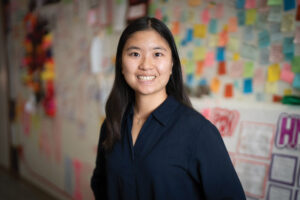
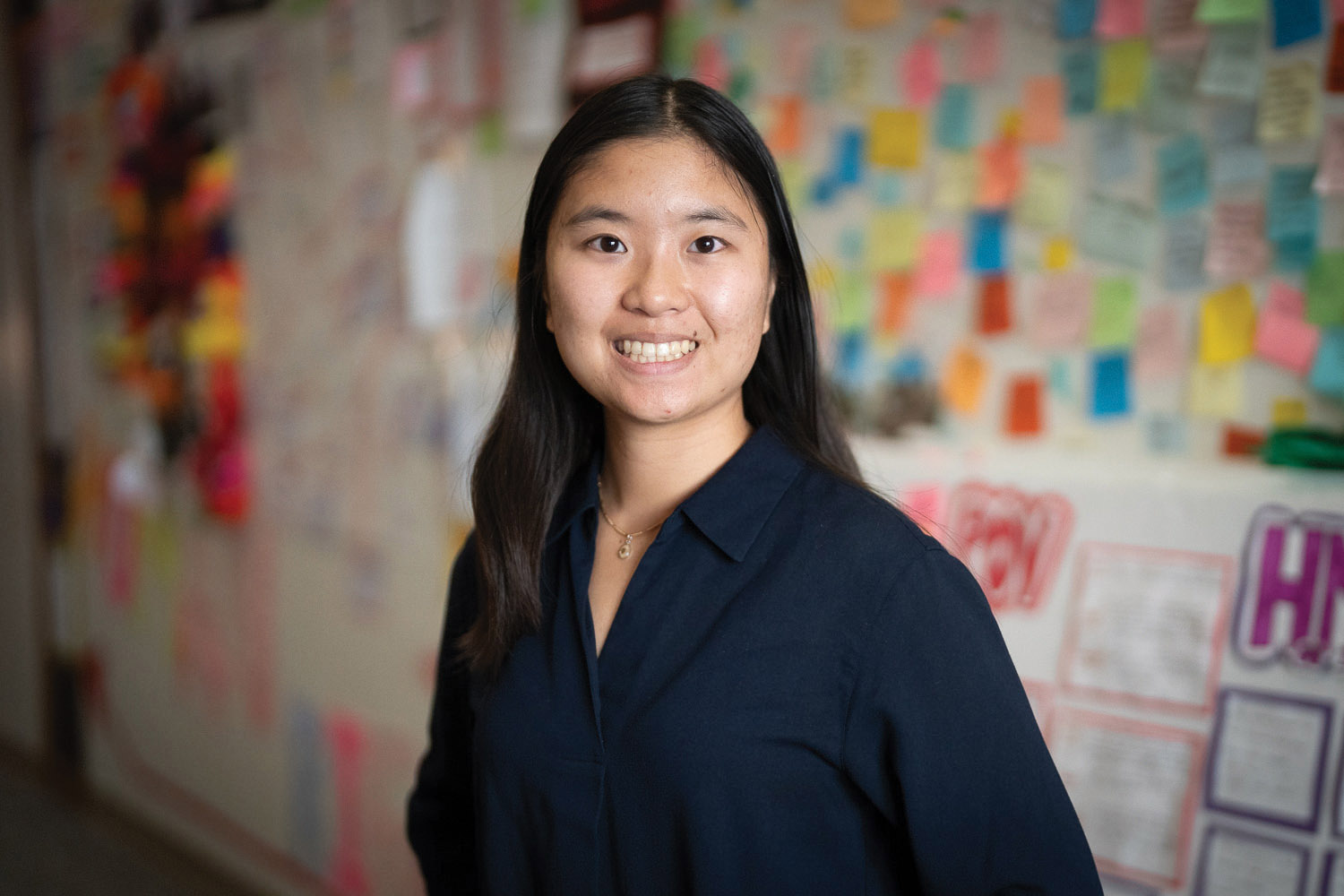
Serena Lin

Serena Lin ’25

With Uplift Notes, this Sagehen wants to counter isolation for seniors—and maybe even slow the progression of Alzheimer’s.


Connection? There’s An App For That

How Neuroscience Research Can Inform Intergenerational Conversation

By Lorraine Wu Harry ’97

In an age of pervasive social isolation, Serena Lin ’25 thinks that cultivating connection through conversation is something that’s still very much in the cards.

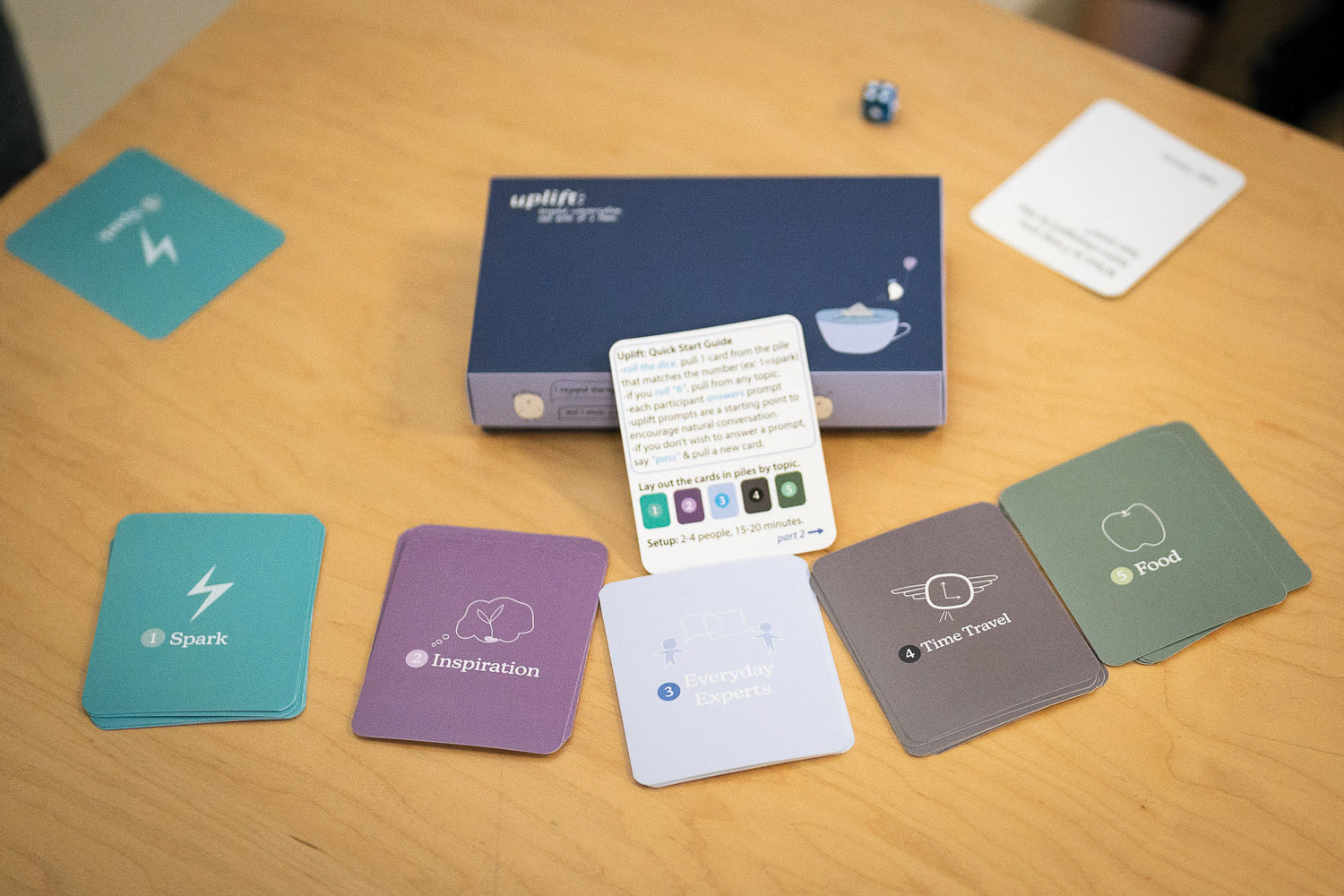
Her cards are called “Uplift Notes,” and she’s sold more than 200 boxes of them. A neuroscience major, she tested her deck on several hundred people of all ages, with a particular focus on bridging the generational gap between young adults and senior citizens, a group particularly susceptible to isolation and loneliness.

At Pomona, Lin studies Alzheimer’s disease, which has afflicted both her late great-grandfather and her great-aunt. She says that her work has helped her realize that Alzheimer’s treatment is not just about diet and medication, but social engagement.

During her sophomore year, Lin enrolled in a human-centered design course at The Hive, a design center at The Claremont Colleges (see sidebar on page 24). This class, and the mentorship of Hive executive director Fred Leichter, provided the support to create Uplift Notes to help facilitate more social interaction.

To develop the product, Lin consulted with several neuroscience faculty and alumni experts who gave her insights on the complexity of Alzheimer’s, including her thesis advisor and Assistant Professor Jonathan King, Professor Karen Parfitt and Daniel Gibbs ’73, author of A Tattoo on my Brain: A Neurologist’s Personal Battle against Alzheimer’s Disease. Her ongoing testing of the game has included working with Lyn Juckniess ’74 at Pilgrim Place, a retirement community in Claremont. Uplift Notes also has been used at Pomona’s Alumni Weekend and Bridging the Gap, a program Lin participated in that addresses religious and political polarization.
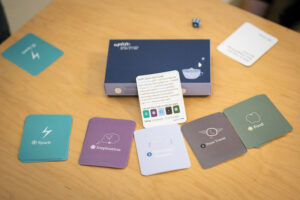
Uplift Notes game

Uplift Notes game by Serena Lin ’25

Lin is now working on a version of the toolbox specifically for individuals with neurological challenges such as Alzheimer’s and Parkinson’s disease. The 2.0 edition is part of what’s driving her senior thesis on social engagement for Alzheimer’s patients, with a focus on trying to reduce feelings of anxiety and loneliness.

Her ultimate desire is to get the toolbox into the hands of as many Alzheimer’s support groups, hospitals and senior centers as possible. But she also hopes that people of all ages and backgrounds will make use of Uplift Notes as a social engagement tool that’s “good for your well-being, longevity and brain health.”
 

Hooke(d) on sports analytics

Melissa Hooke


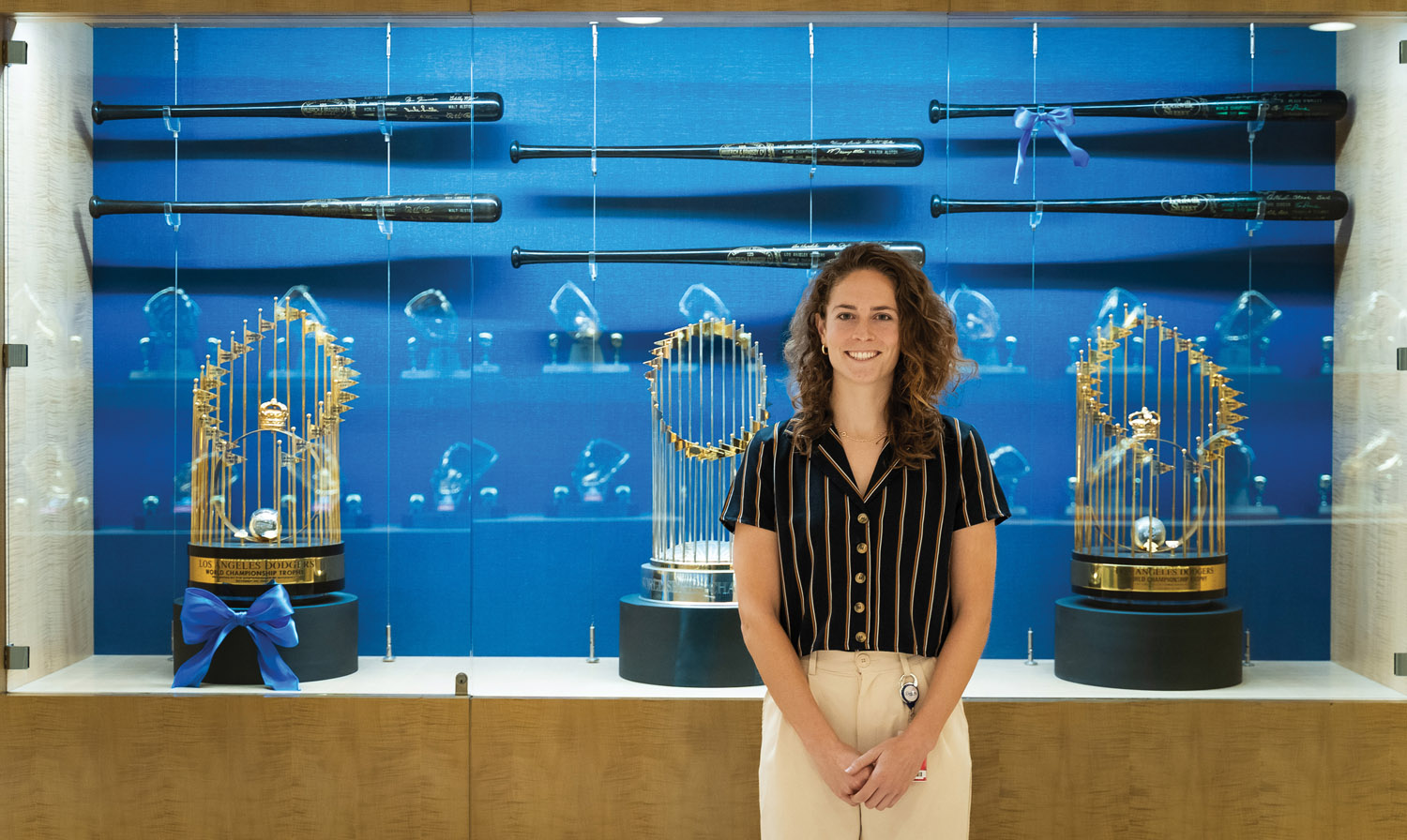
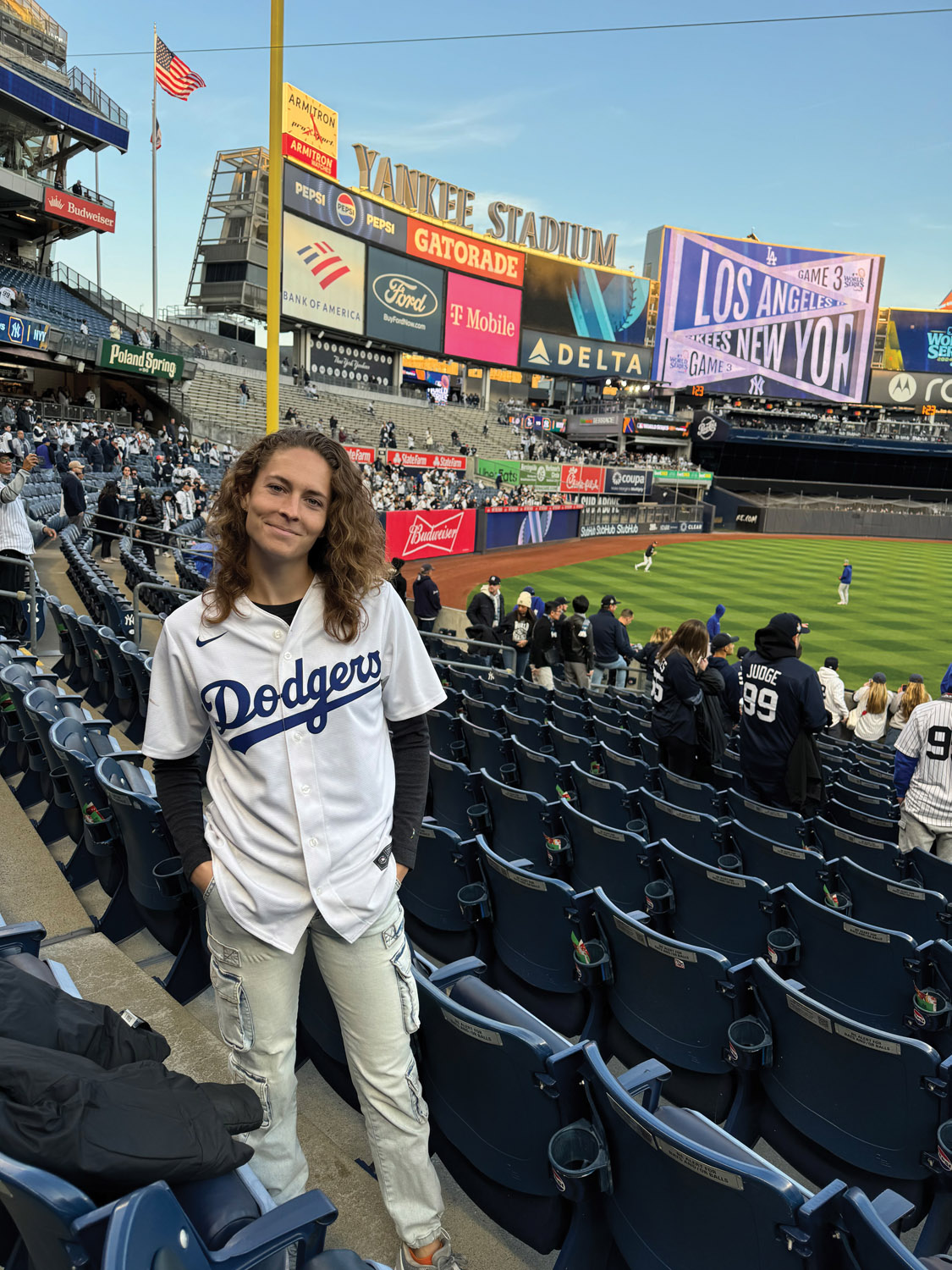
Growing up as a Boston Red Sox fan, Melissa Hooke ’19 never imagined herself celebrating a championship at Yankee Stadium. Yet there she was, cheering as the “Commissioner’s Trophy” was raised into a beautiful October night sky in the Bronx. Hooke, a senior quantitative analyst with the Los Angeles Dodgers, had just become a World Series champion.

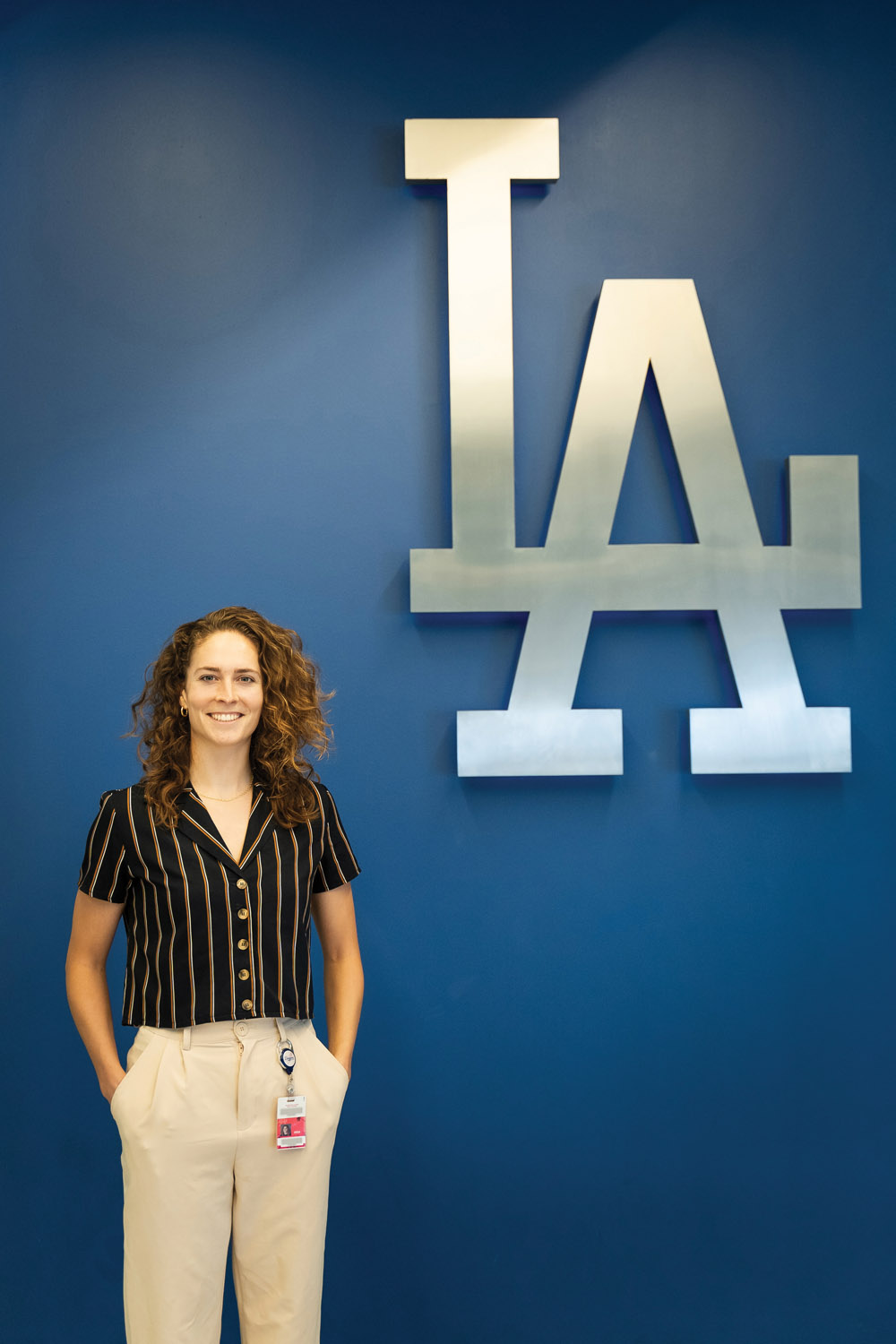
Melissa Hooke ’19 in the LA Dodgers officesStrangely enough, baseball wasn’t even her second favorite sport growing up. Hooke was recruited for basketball but also played soccer at Pomona. “I was looking at small liberal arts schools in New England, then visited Pomona and fell in love with campus,” she says. “Last minute, before early decision deadlines, I applied.”

She played midfield in soccer and guard in basketball, sometimes juggling both seasons. “Especially with our [soccer] team—we made the NCAA tournament a couple of times, so I’d join basketball midseason and have to catch up fast.”

Though an accomplished athlete, Hooke prioritized academics. “For me, it was always school first and then sports as an add-on.”

Like many incoming first years, Hooke wasn’t sure what she wanted to major in at Pomona, but after taking math and psychology courses, she ultimately declared as a math major.

“It was really my junior fall semester when I took a class with Jo Hardin [that] I decided that I really did love math and that there were career paths that attracted me,” she says.

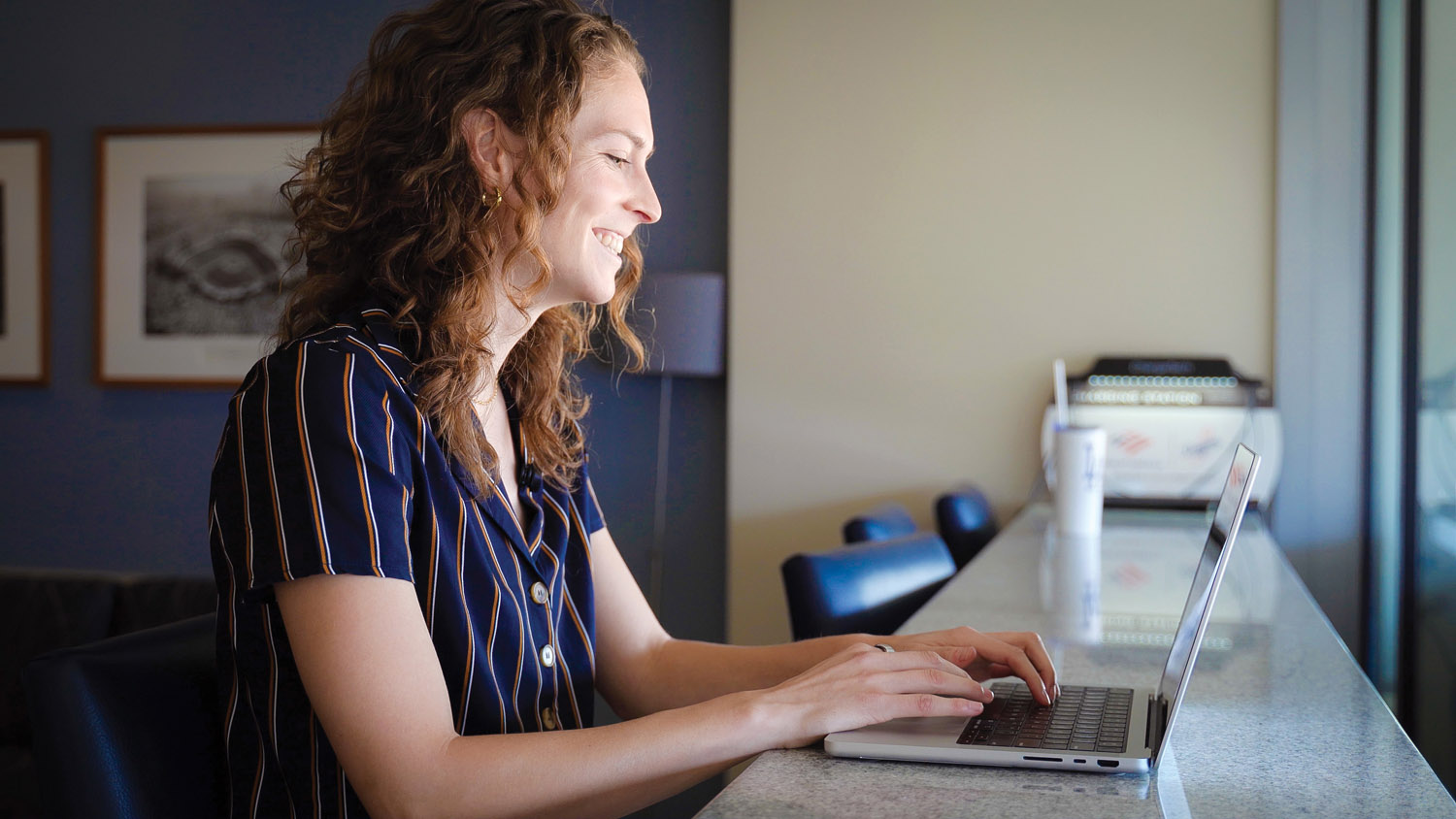
Melissa Hooke ’19 at her computer

Hooke’s time in the math department also brought her in contact with Associate Professor Gabe Chandler, a former Sagehens baseball coach who built an impressive pipeline to Major League Baseball—not for athletes, but for data analysts. Alongside his colleagues, Chandler has seen a remarkable number of graduates land roles in professional baseball analytics. Though he became Hooke’s thesis advisor, he never pushed her toward the sport.

“I don’t think I ever mentioned working in baseball, other than [sharing that] such career paths exist, as we’ve had a lot of alumni working in that space,” Chandler says.

Hooke and Chandler’s connection extended beyond academics. Athletics took a backseat for Hooke after knee injuries ended her college career, but she joined Chandler’s intramural basketball team, “which made a deep run in the playoffs, with Melissa hitting at least one game-winner,” Chandler recalls.

Academically, Hooke thrived under Chandler’s mentorship, earning Best Paper at the 2020 Institute of Electrical and Electronics Engineers Aerospace Conference for her thesis on Bayesian modeling.

A junior-year internship at the Jet Propulsion Laboratory (JPL) at the California Institute of Technology introduced Hooke to aerospace analytics, leading to a full-time offer before her graduation in 2019. While her foray into aerospace wasn’t necessarily expected, the position fit like a glove.

“I was working on early mission concepts and designs,” Hooke says. “Basically, they’d come up with some crazy idea and say, ‘we want to fly a probe into Jupiter’s atmosphere and figure out what the composition is. And we want to fly these four science instruments.’ I would help the team come up with that architecture and estimate the cost based on previously flown historical NASA missions.”

Hooke spent five years at JPL, enjoying the space industry before an opportunity with the Dodgers emerged: A former JPL colleague working for the Dodgers and aware of her sports background sent her a job listing and “wouldn’t let [her] get away with not applying.”

Hooke started with the Dodgers near the end of the 2023 season, just as the team finished with the third-best regular-season record, only to be eliminated in the first round of the playoffs. Heading into 2024, expectations were high.

Melissa Hooke ’19 by LA Dodgers trophy cabinet

Among Hooke’s duties as part of the 2023-24 analytics team: crunching the numbers to evaluate effectiveness of pitchers lower in the Dodgers’ depth chart.

“I think this year was a challenging year for the Dodgers, in some ways, with all the expectations. Obviously, the team dealt with a lot of injuries. And as an analytics department, we had experienced a few disappointing seasons leading up to this. So, going into the playoffs, there’s a lot of angst in the office. People are really nervous. A lot of people are too nervous to watch the games.”

Hooke’s Dodgers job is about removing emotions from decision-making in areas
such as player evaluation, game strategy and team management. She primarily works on pitcher evaluation.

“Math has pushed the game of baseball forward. As we get more data, we’re able to uncover more about why certain players are good,” she explains. “For pitching mechanics, we track pitcher movement, and teams can use that data to extract information about delivery mechanics—when a delivery leads to better outcomes, worse outcomes or even injury. That’s how we’re helping teams move forward.”

While analytics can clash with instinct and tradition, Hooke sees growing acceptance of its role.

“At the Dodgers, the coaches [and] executives really buy into it,” she says. “We have a culture of accepting it, and that trickles down to the players.”

That buy-in led to another successful regular season as the Dodgers finished with the best record in the MLB. But injuries left their pitching staff short-handed in the postseason. Part of Hooke’s job was to identify pitchers in the lower ranks who could contribute to a World Series-winning team.

Melissa Hooke ’19 at Dodgers–Yankees game in New York.

The Dodgers made it to the World Series, and Hooke found herself on a team-chartered plane heading to New York. After falling behind 5-0 in Game 5, she recalled the team’s resolve.
“I think we kind of just said ‘well, we’ll get it done in L.A.’ And then, as the fifth inning progressed and we started coming back, we said ‘let’s just finish this off.’”

The Dodgers did finish it off, winning 7-6, and Hooke became a World Series champion.

“It was a bit of relief, but also just pent-up from the last few years,” she says. “Having a disappointing postseason ending before, everyone expected us to [disappoint again]. It was a celebration. It was different being in New York, but I’m glad that we were because it just tied together that magical experience.”

A Decade On-Board and Off-Shore With Sailor Desiree Wicht ’08

Desiree (Golen) Wicht ’08 on bow of Atticus sailboat

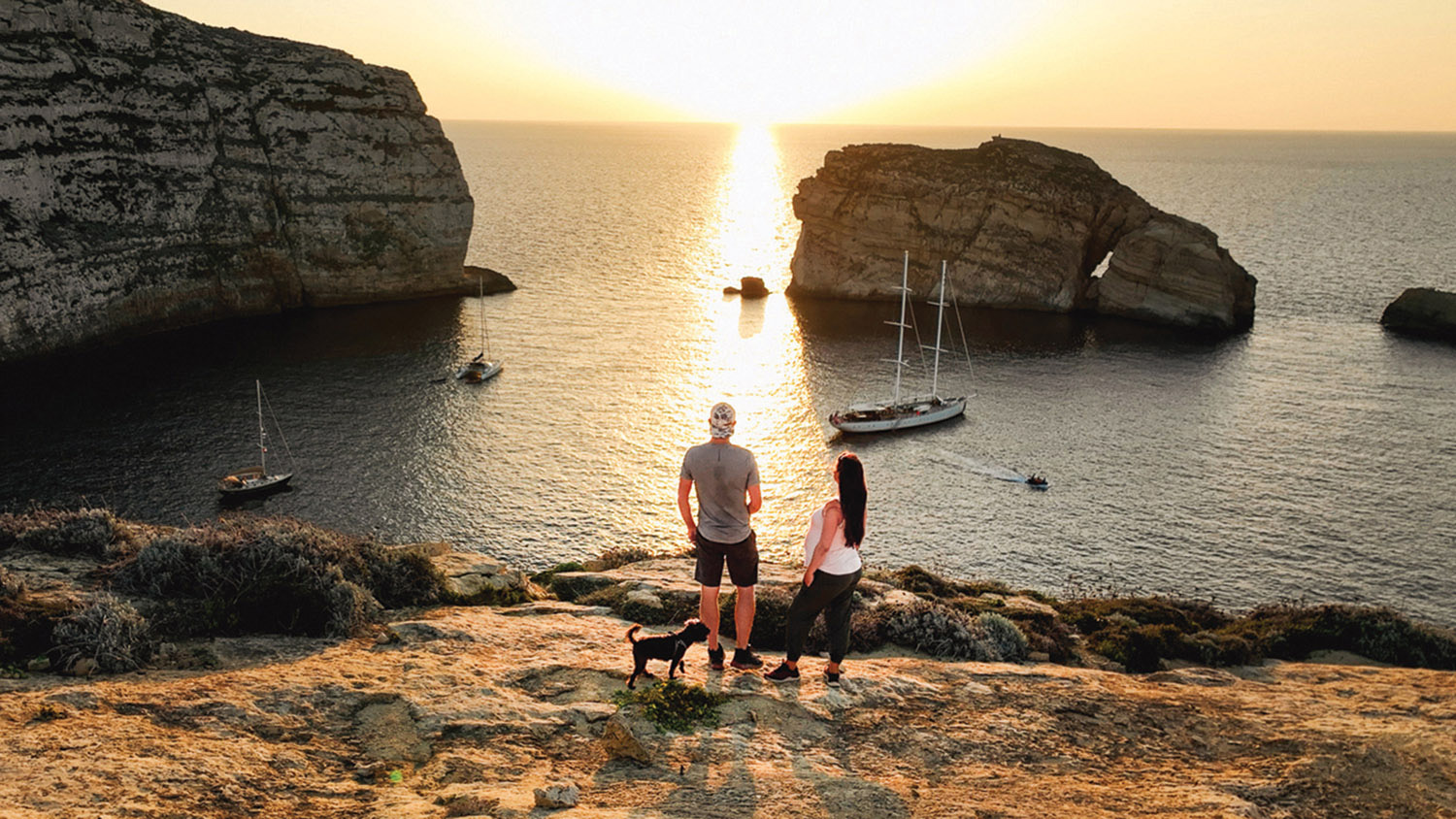
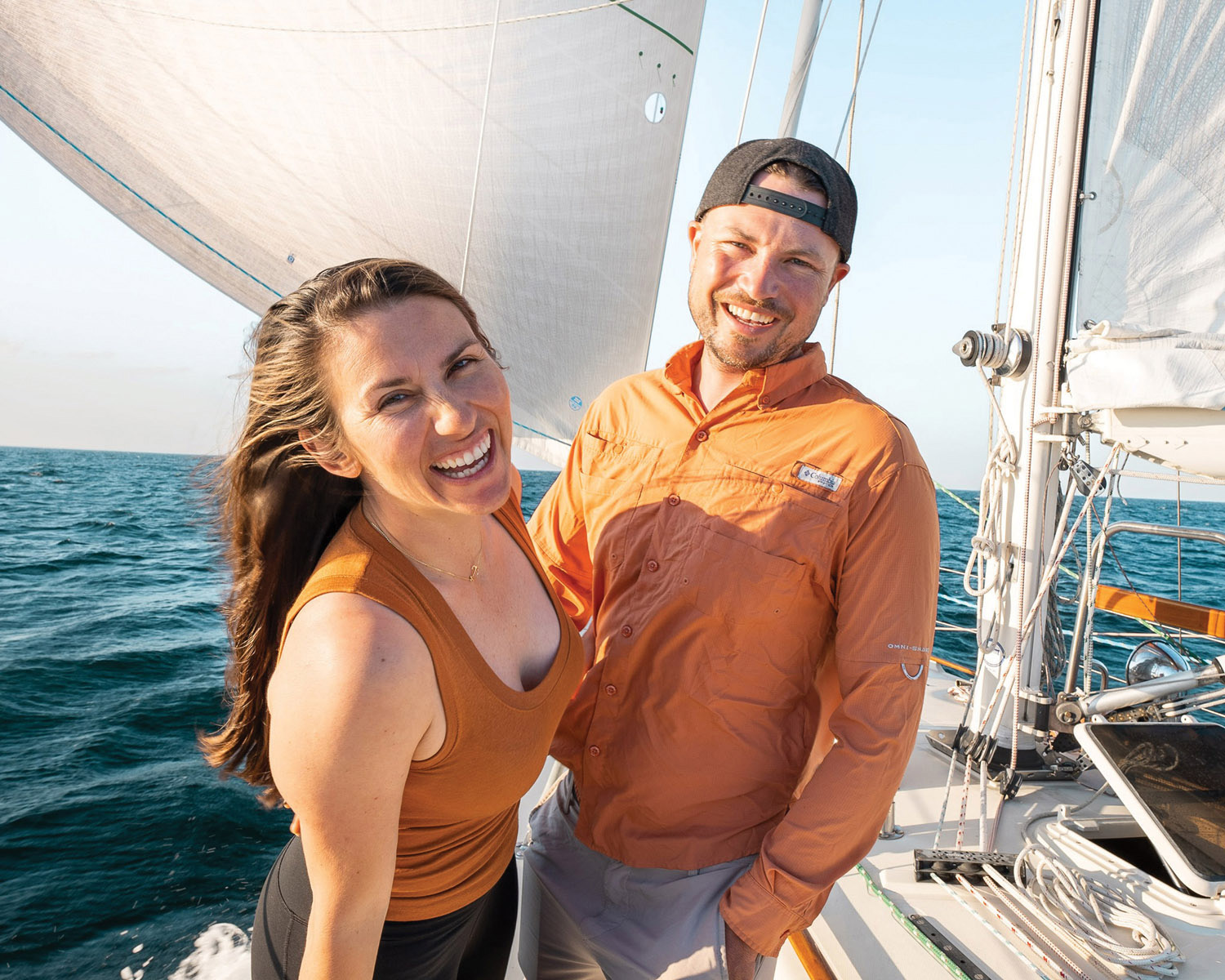
Desiree and Jordan Wicht overlooking the oceanAfter college Desiree (Golen) Wicht ’08 created a bestselling Tetris app, launched a pop-up restaurant startup, scrubbed the decks of John Kerry’s $100 million yacht and then quit the landlocked life entirely in 2014 when, within three months of meeting her partner Jordan Wicht, she decided to travel the globe in a 50-year-old, 30-foot sailboat—having never before hoisted a single jib.

“Project Atticus,” by the numbers

  • 10,804 miles traveled
  • 2,000+ total days on the water
  • 18 countries visited
  • 1 pirate ship evaded

Over the last decade the Wichts have cataloged the trials and tribulations of boat life through weekly YouTube videos as “Project Atticus,” with roughly 300,000 subscribers following their adventures doing everything from spearing hogfish in Belize, to fleeing Turkish warships, to spending the pandemic off-grid in Panama, to giving birth to their daughter Isabella on the island of Malta.

“We went on this adventure because we wanted the freedom to be able to go anywhere from the comfort of our economical, sustainable, floating home,” Desiree says. “As the tiny-home mantra goes, ‘the world gets a lot bigger when you’re living small.’”

Desiree (Golen) Wicht ’08 and her husband Jordan on boat

Desiree (Golen) Wicht ’08 and her husband Jordan Wicht spent more than half of the last decade on their 30-foot sailboat Atticus, braving hurricanes, Turkish warships and even pirates.

Along the way, Desiree transformed from a 20-something who’d never touched a screwdriver, to a seasoned seafarer bartering her boat-repair skills for groceries. She and Jordan had to wear an array of hats ranging from carpentry to amateur meteorology, all while dealing with unusual professional hazards like running out of water and evading Honduran pirates. (The team bootstrapped the 10-year project via merchandise sales, video sponsors, several side hustles and thousands of annual donations from followers on YouTube and Patreon.)

“We operated on the adage that, in 20 years, we’d likely be more disappointed by the things that we didn’t do than by the things we did,” says Desiree.

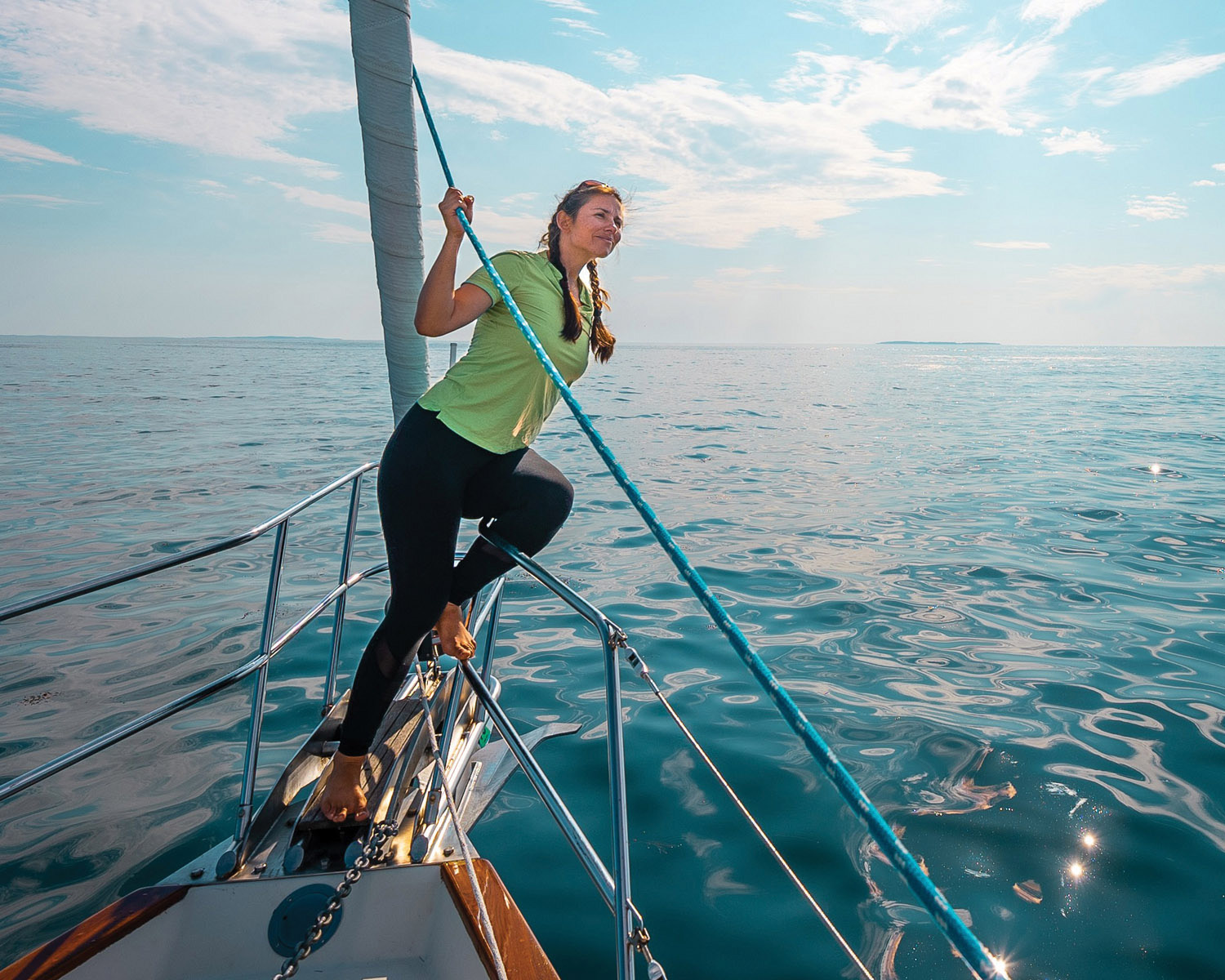
Desiree (Golen) Wicht on bow of Atticus sailboat

Desiree (Golen) Wicht ’08 on bow of Atticus sailboat

As of this fall, the Wichts have returned to solid ground—a decision brought about by the imminent birth of their second daughter Scarlett in January of 2025. After a few months exploring different areas of Appalachia, the couple decided to settle in Bryson City, North Carolina, nestled in the Smoky Mountains—and they continue to film and release weekly videos as they build a mountain homestead DIY-style. While Desiree has no regrets about their time on the water, she says that she’s very happy to be back on dry land for this next chapter of life.

“I always thought of myself as a traveler who needed to see and experience the world to feel fulfilled,” she says.“But what surprised me the most about our travels is that after a while I started to really understand how special my own home, my own family, and my own country is to me. Now I’m excited to make roots, without feeling like I’m missing out on what’s ‘out there’ anymore.”

30-foot sailboat Atticus

President Starr inducted into American Philosophical Society

Portrait of President G. Gabrielle Starr

President G. Gabrielle Starr

Last fall Pomona College President G. Gabrielle Starr was inducted into the American Philosophical Society (APS) honoring her extraordinary accomplishments as a leader in higher education.

The APS is the oldest learned society in the United States, founded in 1743 by Benjamin Franklin. Past members include George Washington, Thomas Jefferson, Charles Darwin, Thomas Edison, Marie Curie, Albert Einstein and Robert Frost. The society generally elects fewer than 30 resident members annually.

How An Exoneree Accomplished ‘The Impossible’

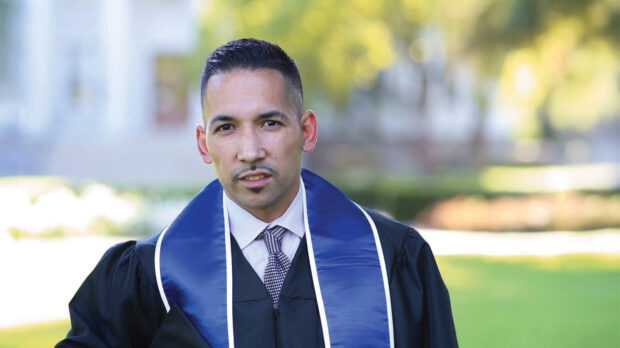
Ruben Piñuelas ’21

Ruben Piñuelas ’21

All Ruben Piñuelas ’21 wanted was a level playing field.

After being incarcerated for nearly 15 years—six of those wrongfully so—Piñuelas knew changing the trajectory of his life in his 40s would require overcoming biases society can put on people with such baggage.

“Pomona believed in me on day one,” he says, “and ushered me into this world of higher education.”

Ruben Piñuelas ’21

Ruben Piñuelas ’21

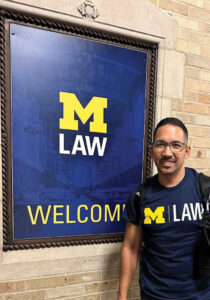
After running from the law as a young adult, Piñuelas now is a second-year law student at the University of Michigan who returned to Claremont to speak at the Athenaeum at Claremont McKenna.

“At one time society threw me away [and] told me I’ll never be good enough to be a scholar,” he says. “What I came back from—I’ve accomplished the impossible.”

Piñuelas started running with a gang in El Centro, California, in high school. In 1999, the then-20-year-old was sentenced to two years in prison for marijuana possession and erroneously placed with inmates serving life terms. He was later charged in connection with a prison riot—he says he was only defending himself in the fight, and was tricked into taking a deal to add seven years to his term.

In 2008, Piñuelas raised enough money to make bail on new conspiracy charges he was facing. While on parole, he helped local groups build houses and enrolled in night community college classes at Pierce College in Los Angeles.

Piñuelas was taken back into custody in 2010 for alleged parole violations and his alleged involvement in a 2007 prison incident involving people he says he never met. In 2011 he was convicted of conspiracy to murder, attempted murder and assault with a deadly weapon on an inmate. He was given 60 years to life and sent to solitary confinement in a maximum-security prison in Crescent City.

While in solitary, Piñuelas began studying law, and advocated for his innocence. In 2013 a panel of California appellate justices overturned his conviction based on insufficient evidence. After his 2014 release he returned to Pierce to earn two associate degrees, qualifying for financial assistance to continue his studies at Pomona.

“Sixty [years] to life, 12 years in solitary, no one comes back from that,” Piñuelas says. “I was in a dark place, but I learned it’s not what’s been done to you, but what you do with it.”

Community college students comprise about two-thirds of Pomona’s yearly transfer cohort, and while most of that group comes from California, the Office of Admissions has bolstered outreach efforts nationwide. Admissions officers attend off-campus events, host open houses and connect with local community colleges for special campus tours and financial aid workshops.

Susanne Mahoney Filback, associate director of preprofessional programs and prelaw advisor at the Career Development Office (CDO), recalls Piñuelas emailing her the summer before his first semester at Pomona about his plan to pursue law. To get accustomed to Pomona he regularly met with her and showed up at CDO law events.

“He knew he wanted to make a difference and that was directly related to what he went through,” Filback says. “He had a thoughtful understanding of why he was here and how he was going to make the most of Pomona’s resources.”

As someone who felt life would always be an uphill battle, Piñuelas was blown away by how reassuring his professors were when he questioned whether he belonged at Pomona. “They always believed in me,” he says. “They gave me everything I needed to thrive, perform and be the student I needed to be.”

As a psychological science major, Piñuelas especially admired Eric Hurley, professor of psychological science and Africana studies. “It was refreshing to hear from someone I could identify with as a student of color,” he says. Piñuelas took Hurley’s Psychology of the Black Experience course and later became a course mentor in his Intro to Psychology class.

After graduating, Piñuelas continued his studies at the University of Michigan, with aspirations of becoming a trial attorney, a civil rights lawyer and California Supreme Court justice.

“I’m trying to maximize the time I have left,” he says. “A lot of time was stolen from me, but I don’t want to mope. I want to use it as a blessing, an opportunity for others to learn about what I’ve been able to gain from my experience, and to use it to better the world.”

A Voice for Early Detection: Rhoda Au ’82

Alzheimer’s disease may afflict more than 6 million people in the United States, but according to the Alzheimer’s Association, up to half of those living with the disease have not been diagnosed. Early diagnosis can lead to better health care options and improved quality of life for those who have the disease, which makes quick detection of Alzheimer’s critical.

Rhoda Au

Rhoda Au

Now, Rhoda Au ’82 has created a promising method for determining whether a person with low level cognitive impairment is likely to lapse into more severe dementia from Alzheimer’s, using just the sound of their voice. The discovery could help patients and families deal with the devastating effects of Alzheimer’s, and also assist clinicians in identifying the best candidates for new drug therapies being developed to curb the effects of the disease.

Au is a professor of anatomy and neurobiology at the Boston University Schools of Medicine & Public Health, and a principal investigator on the Framingham Heart Study team that performed the study. The findings were published in June in the Alzheimer’s & Dementia medical journal.

Au and her colleagues at Boston University, including Ioannis Paschalidis, a professor of engineering who led the data science side of the study, built an artificial intelligence algorithm that examined recordings of the speech of persons in the program who had exhibited some cognitive issues. The algorithm determined, with 78.5 percent accuracy, whether a particular person would move from lesser cognitive problems to severe dementia within the coming six years.

The research team trained the algorithm to examine the content and syntax of speech using a portion of the recordings of study participants. They then used the AI tool to analyze the speech of a separate group of 166 participants. “Speaking is a very cognitively complex task: when we speak, we are always emitting our cognitive capabilities,” Au says. “We actually do this in a common sense way all the time, interacting with friends or family members.”

What makes the results of the study particularly powerful is the gold standard nature of the data used. After analyzing early recordings of patients with the algorithmic tool, the researchers checked the algorithm’s predictions against the later cognitive conditions of the participants, and were thus able to clearly certify whether the algorithm had diagnosed an individual correctly.

The study was possible in large part due to Au’s early intuition. She had joined the Framingham Heart Study faculty in 1990, and in 2005 persuaded those managing the study to begin to record audio of interviews with the participants.

“One of the things that I’ve always been very concerned about is that the tools that we have for cognitive assessments are not sufficiently sensitive,” Au explains. For instance, Au noticed that during cognitive tests of study participants—a regular part of the study’s regimen—verbal responses to questions varied widely, but if a response was incorrect it was simply noted as such. This binary data entry, correct or not, left out a lot of information and nuance that Au was noticing in the interviews. “I was an early adopter of big data,” Au says. “I was fortunate enough to be collecting these audio recordings while I waited for the digital voice processing and AI capabilities to develop.”

As a result of the interview recordings, by the time Au and her colleagues began their study, they had a trove of patient audio going back almost two decades.

Au’s ultimate goal is to use new AI combined with the ease and ubiquity of smartphones to create monitors and tools that can improve brain health over the course of a lifetime, what she calls the precision brain health initiative. “We can change the trajectory of brain health altogether,” says Au. “You want people to die with the healthiest brain possible. That’s our goal.”

Puzzle head with missing elements on a blue background