Articles Written By: jori2025@pomona.edu

Sagehen to Sagehen: Alumni Award Honorees Share Advice

As students, they studied on Marston Quad, discussed research with professors and dined with classmates under Prometheus’ watch. Now, our 2025 Pomona College Alumni Award honorees say those campus experiences and relationships shaped who they’ve become and the journeys they’ve taken since leaving Claremont.

They credit their Pomona education with helping them take risks, reach their goals and pay it forward. Presented with their awards during Alumni Weekend in May 2025, these exceptional Sagehens had a few words of advice for our students and recent graduates.
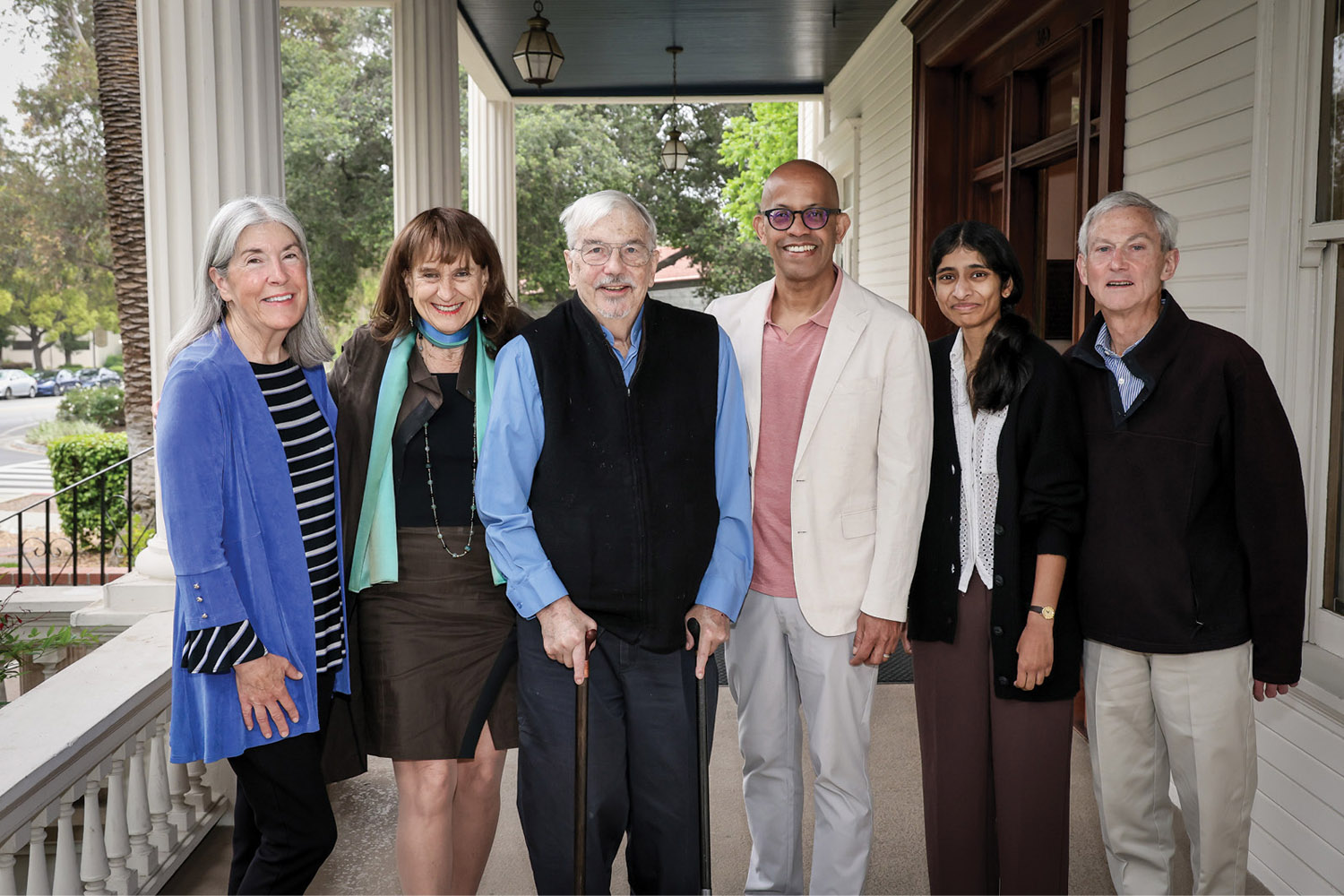
From left: Nancy Treser-Osgood ’80, Susan Blaustein ’75, Charles “Chuck” E. Phelps ’65, Douglas M. Haynes ’85, Priya Amritraj ’15 and John Rabold ’75

From left: Nancy Treser-Osgood ’80, Susan Blaustein ’75, Charles “Chuck” E. Phelps ’65, Douglas M. Haynes ’85, Priya Amritraj ’15 and John Rabold ’75

Your path doesn’t have to be straightforward

“Follow your inner spirit and your dreams, and try not to worry much about your journey being linear. The gifts that you’ve been given at Pomona really do stand you in good stead for whatever comes along. And believe me, the world needs you.”

— A composer turned international women’s advocate, Blaisdell Distinguished Alumni Award honoree Susan Blaustein ’75 is the founder, executive director and board chair of WomenStrong International.

Embrace challenges with patience and build connections

“Use your time as a student to forge relationships, take risks and allow yourself license to fail. Give yourself and others the grace to start over. As students and alumni of such a diverse community, it is not always easy to reconcile the intent and impact of the choices we make, but Pomona’s values provide us tools to navigate in these times.”
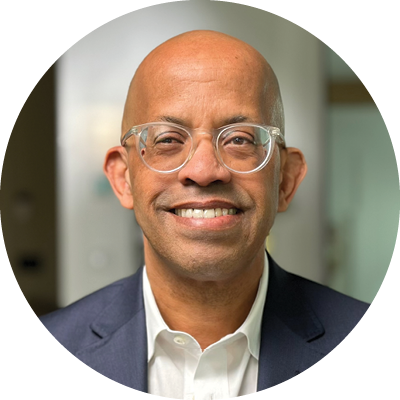
— A leader and advocate for equity and inclusion in higher education, Blaisdell Distinguished Alumni Award honoree Douglas M. Haynes ’85 is professor emeritus of history and African American studies at UC Irvine.

Be willing to take chances

“Getting outside your comfort zone can lead to things that you otherwise never would have done or accomplished. The superb liberal arts education you receive at Pomona College gives you two tools with which to explore the unknown: the flexibility in thinking that comes from exposure to many academic disciplines and the ability to keep learning throughout your lives. Go out there and do something daring—and always take your intellectual curiosity with you!”

— An internationally recognized health economist, Blaisdell Distinguished Alumni Award honoree Charles “Chuck” E. Phelps ’65 is a professor emeritus and provost emeritus at the University of Rochester.

Understanding who you are is essential

“Your time at Pomona is critical for gaining knowledge of academic subject matter and the world around you, but also of your own self. Self-knowledge requires flexibility, a willingness to challenge existing beliefs and exposure to the many kinds of experiences that are available to you at the College. Learn, and prepare to continue learning for the rest of your life.”

— A longtime Sagehen supporter who strengthens his classmates’ connection to Pomona, Alumni Distinguished Service Award honoree John Rabold ’75 is a retired finance professional and community volunteer.

Stay active with the alumni community

“For the rest of your life, you will cross paths with other Pomona alumni—sometimes in the most unexpected places. After you graduate, keep and nurture those meaningful relationships you’ve developed with fellow students, alumni, faculty and staff. Stay connected to each other and be an active part of the alumni community. You are an important member of the Sagehen flock.”
— A former director of alumni relations at Pomona and dedicated volunteer, Alumni Distinguished Service Award honoree Nancy Treser-Osgood ’80 is a senior consultant with The Phoenix Philanthropy Group.

Explore the unexpected

“Take classes outside of your major and other interests. It may be one of the last times you’ll have the freedom to learn subjects outside of your area of concentration in the company of some of the most wonderful people you’ll ever meet. The further afield the subject, the better; you never know where it may lead.”

— A global storyteller bringing underrepresented voices to cinematic life, Inspirational Young Alumni Award honoree Priya Amritraj ’15 is head of film and television for Hyde Park Entertainment Group.
A Message from the Alumni Association Board

Dear Sagehens,

I want to extend a warm welcome to the Class of 2025—our newest members of the Sagehen alumni community! No matter where life takes you after Pomona, your fellow alumni are here to support you on your journey. Please update your contact information at pomona.edu/update-your-info to stay in touch, learn about Sagehen gatherings near you or organize an alumni event in your area.

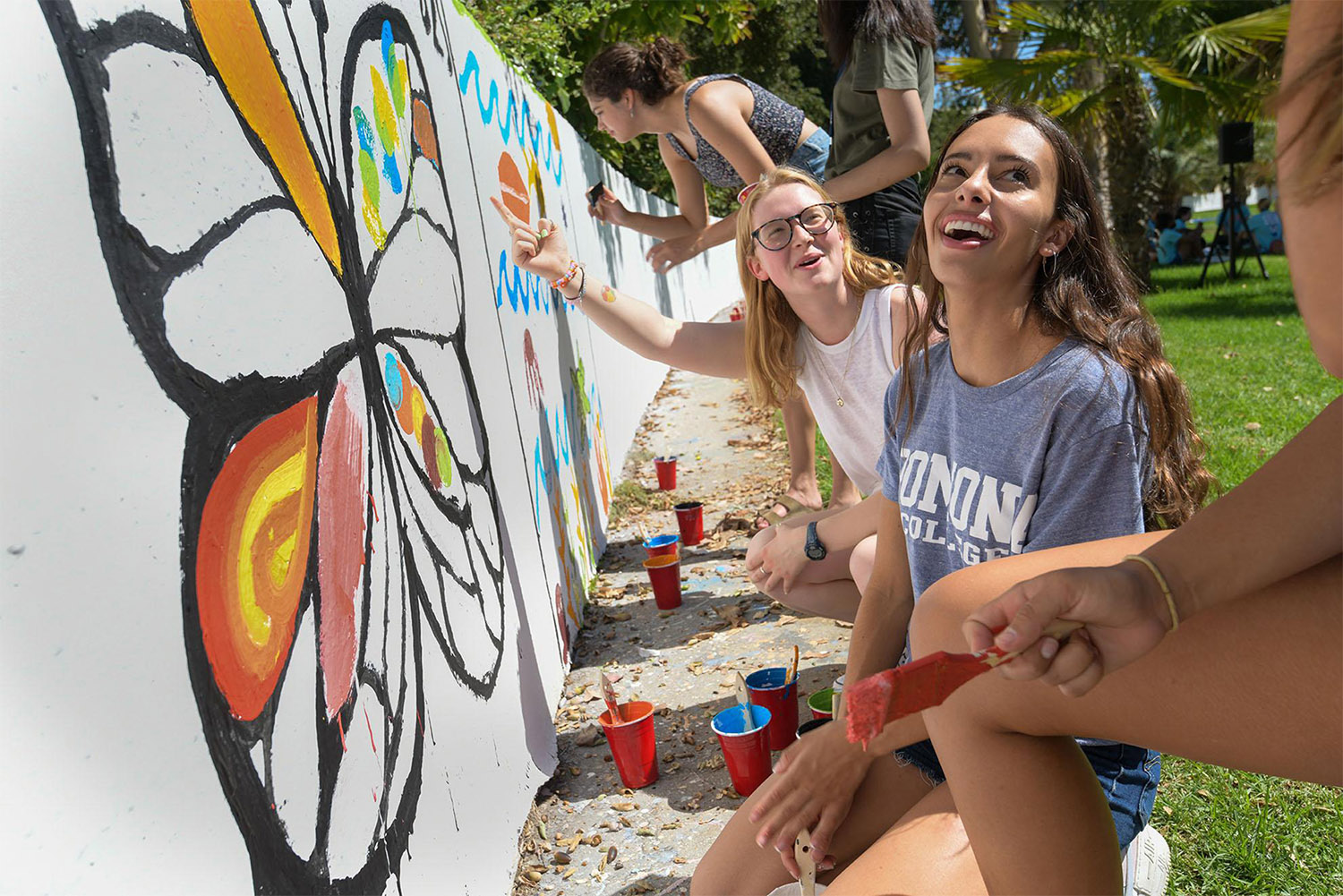
Students painting walker wall during a past first-year orientation week

As we celebrate our graduates and welcome the Class of 2029 to campus, I find myself valuing Pomona’s traditions more with each passing year. Traditions that older Pomona classes fondly remember—Mufti, dunking friends in the fountain on their birthdays, omelets at Frank and so many more—are woven with newer ones, like the Harry Potter holiday dinner and Ski-Beach Day. This evolution of traditions creates connections within and across classes, anchoring us to the special memories we created at Pomona.

Read more about Pomona College traditions.

All my best,

Andrea

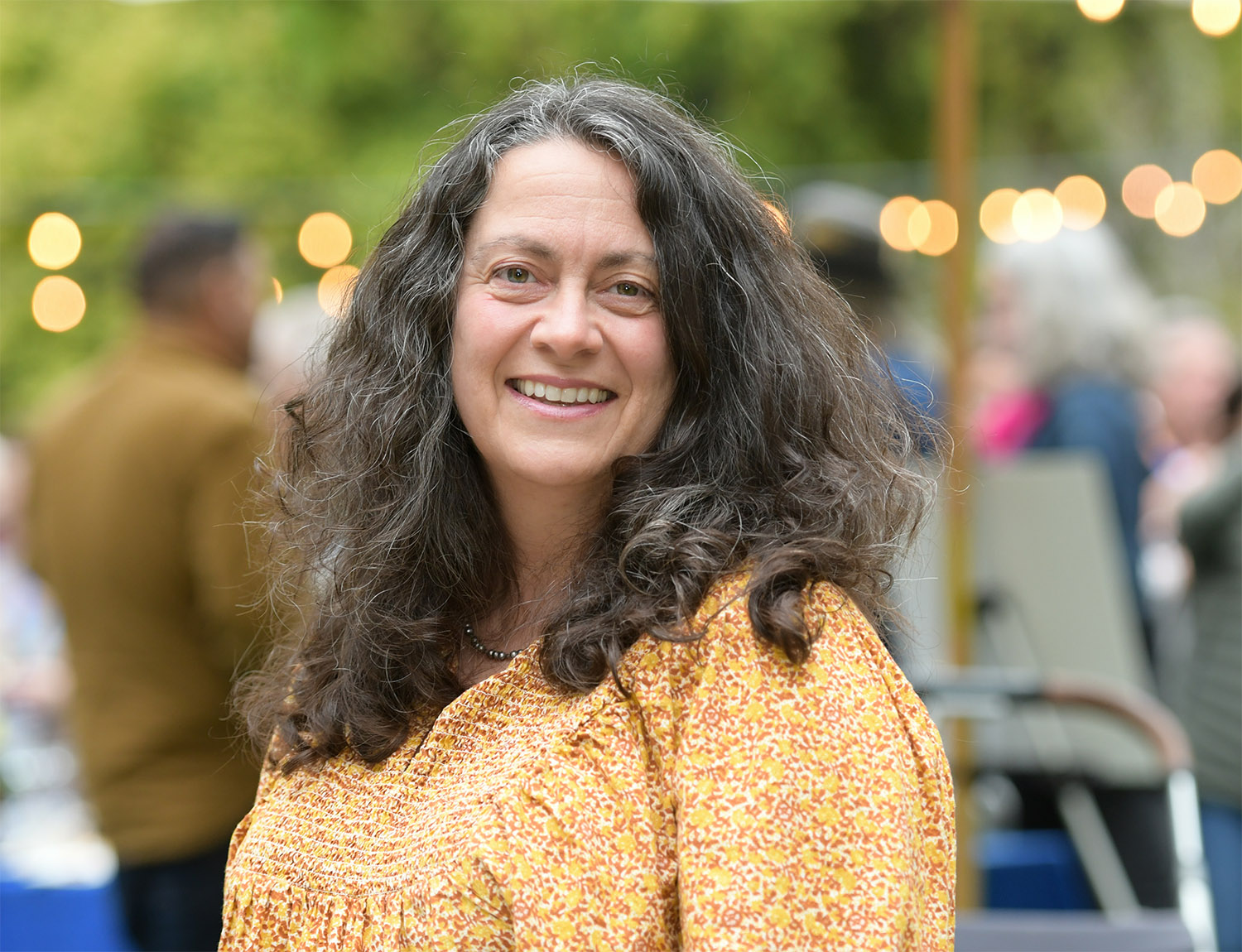
Andrea Venezia ’91 President, Pomona College Alumni Association Board

Andrea Venezia ’91
President, Pomona College Alumni Association Board

— Andrea Venezia ’91
President, Pomona College Alumni Association Board

Shark Mutulili ’25 Earns Pomona’s First Rhodes Scholarship in 20+ Years

This spring Shark Mutulili ’25, a public policy analysis major with a politics focus, was awarded a Rhodes Scholarship. The prestigious international fellowship is awarded to about 100 students each year, 32 from the United States and the rest from countries across the world.

Shark Mutulili ’25Mutulili was one of two students awarded the Rhodes Scholarship for Kenya. A Nairobi native, she is Pomona’s 13th Rhodes Scholar, second-ever female recipient and first since Peter Chiarelli ’03.


The oldest fellowship award in the world, the Rhodes covers all expenses to study at the University of Oxford for two or more years. Mutulili plans to pursue a Master of Public Policy at Oxford before returning back home to Kenya long-term.

Her ultimate hope is to “shape better systems to see the dignity in every human being,” she says.

When Mutulili learned she was one of 10 finalists for the Kenya award, she had to quickly make travel arrangements to fly to Kenya in less than a week for the final interview—a flight made possible by Pomona’s Office of the President. The day after the interview, while preparing to head to the airport, she received a congratulatory phone call. “I was jumping up and down,” she says. “I was in complete shock.”

Mutulili served as Pomona’s 2025 senior class president, leading committees to improve student life and foster community on campus.

“I wanted to serve and to understand the way people think, the things that bring them joy and the challenges they’ve gone through,” she says. “I’ve tried my best for this to be a senior year worth remembering.”

Her senior thesis focuses on comprehensive sex education to prevent gender-based violence against adolescent girls and women in Kenya. She looks at tribal knowledge, traditions and practices as well as colonial histories of education to understand how gender biases and power imbalances affect the policies that are created.

“Shark stands out at Pomona for her joyous spirit and her thoughtful and caring engagement across differences, whether of opinion, identity or discipline,” says President G. Gabrielle Starr. “We at Pomona are so proud of her and thrilled for her to take advantage of these new opportunities at Oxford.”

As a recently announced Napier Initiative Fellow, Mutulili will continue her work to improve living conditions for children and mothers in two rural prisons in Kenya, providing for immediate needs such as baby food, diapers and cots as well as working toward long-term goals such as improving sanitation, providing water tanks and creating child care spaces.

One of the first people Mutulili told about the Rhodes Scholarship was her academic advisor David Menefee-Libey, whom she says has been a staunch supporter at Pomona.

“Every time I talk with Shark, I learn about yet another amazing thing she’s been in the middle of,” says Menefee-Libey, the William A. Johnson Professor of Government. “And through all that she remains a kind and joyful person. I can’t wait to see what she does next.”

The 2025 Wig Distinguished Professor Awards

Seven faculty members—including five first-time honorees—were bestowed at Commencement with Wig Distinguished Professor Awards, recognizing their excellence in teaching, commitment to students, and service to the College and the community.

Presented annually since 1955, the awards involve anonymous votes from Pomona juniors and seniors that are then confirmed by a committee of trustees, faculty and students.

Malachai Bandy is an assistant professor of music who plays some 20 different instruments spanning more than 800 years of music history. His expertise includes viola da gamba technique, history and iconography; historical performance practice; and 17th-century North-German music.

Mietek P. Boduszyński is an associate professor of politics and expert on U.S. foreign policy, democratization, post-conflict stabilization, Eastern Europe and the Balkans, and the Middle East and North Africa.

J Finley is an associate professor of Africana studies whose research looks at Black women’s history, performance and cultural expression, and the performative and political efficacy of Black women’s humor and comedy.

Frances M. Hanzawa, an associate professor of biology who’s been at Pomona for 30+ years, conducts diverse research in ecology, evolution, plant ecology, genetic and demographic consequences of seed dispersal and plant-animal interactions.

Tom Le is an associate professor of politics with expertise in Japanese security policy, the U.S.–Japan alliance, military and security balance in East Asia and East Asia regionalism.

M. Bilal Nasir is an assistant professor of Asian American studies whose research interests include policing and surveillance, critical race studies, secularism, social movements, science and technology, and anthropology of Muslims and Islam.

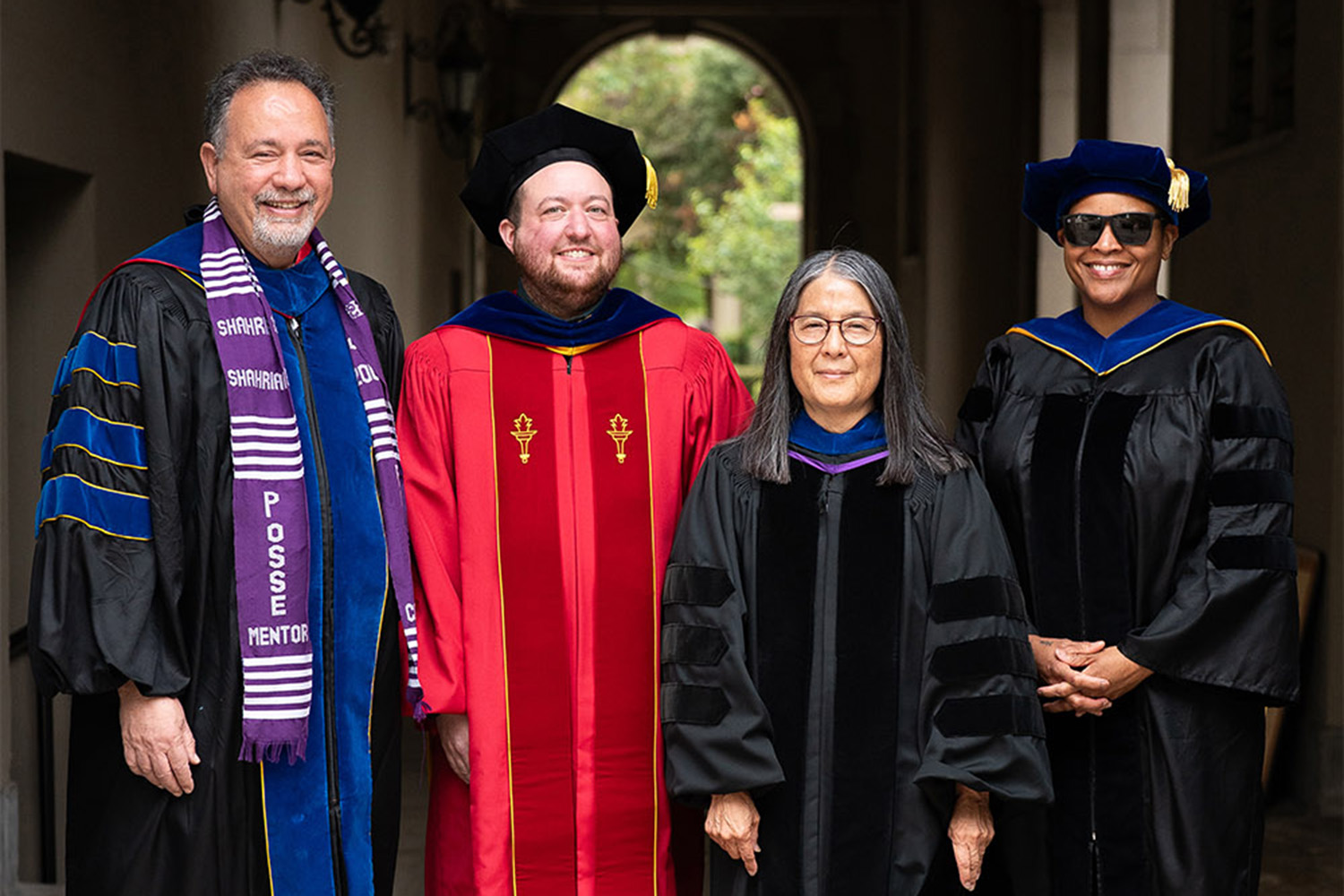
Shahriar Shahriari is the William Polk Russell Professor of Mathematics and Statistics and now a six-time Wig Award recipient, with expertise in combinatorics of posets, extremal set theory, finite group theory, representation theory of finite groups and surreal numbers.

2025 Wig scholars: from left, Pomona Professors Shahriar Shahriari, Malachai Bandy, Frances M. Hanzawa and J Finley

From left, Pomona Professors Shahriar Shahriari, Malachai Bandy, Frances M. Hanzawa and J Finley

In Search of the First Lights That Lit Up the Cosmic Night

Erica Nelson ’08

Erica Nelson ’08

Erica Nelson ’08 is aiming beyond the stars, to the origin story of the universe. Thanks to the 2021 launch of the James Webb Space Telescope, Nelson is taking pictures of the very first galaxies to learn what the universe was like at the beginning of time.

That quest has landed the University of Colorado-Boulder assistant professor of astrophysics on CBS’s 60 Minutes and NPR’s Science Friday—and on an episode of the Pomona College podcast Sagecast, where she and her undergraduate mentor, Philip Choi, associate professor of physics and astronomy, explained the paradigm-shifting potential of what she and her colleagues have discovered.

How Pomona developed her interest:

I remember my first astrophysics classes and being absolutely blown away by the scale of the universe and the incredibly complex physical processes that rule the universe on large scales. We can use powerful telescopes to effectively look back in time. As a kid I found that concept so mind-blowing that I couldn’t imagine spending my days thinking about anything else.

One of my favorite Pomona memories solidified that I wanted to teach and help the next generation. We had a computer programming assignment for Philip Choi’s class, and it was awful because I was so bad at coding. But Phil took the time to work through it with me until midnight. It was such an act of kindness and really launched me on my journey.

Her research focus:

I’m looking for new methods to understand how galaxies and black holes form and evolve. Powerful telescopes like the Webb allow us to see really, really great distances. That means we can see light that’s been traveling for almost the entire age of the universe, from close to the beginning of time itself. We’re able to see how the universe and the galaxies in it evolved, and that allows us to piece together their origin story.

Galaxy cluster Abell S1063

Galaxy cluster Abell S1063. Courtesy European Space Agency

Finding a surprise in Webb images:

When the first images were released, the most surprising thing we saw was these objects that were very, very red. They had been completely invisible to the Hubble Telescope. We had to use all of the physics and astrophysics we knew to try to infer what those objects were. They are incredibly far away, close to the beginning of the universe. Yet the masses we inferred for them were even more massive than our Milky Way galaxy is now. According to our theories, the universe shouldn’t have had enough time to form things that were that massive that early. It was surprising and stunning and, if true, upends our views of how the first cosmic structures formed in the early universe.

The reaction of the astronomy community:

There have been hundreds of papers on these [red] objects, and we are still figuring out what they are. One of the things that is surprising is that some of the most luminous objects in the universe are actually “supermassive black holes” [upward of 10 billion times the size of the sun]. There are some theories that can explain some components of the light we’re seeing from these objects as growing, supermassive black holes of a type we’ve never seen before.

The reason black holes can be so luminous is that when mass falls into a black hole, an immense amount of gravitational energy is released. Some fraction of that energy can be converted into light we see in the form of accretion disks around the objects and in these black holes blowing out enormous jets. They show up in different ways, but the reason they are so luminous is because there is so much energy available from matter falling into them. The astrophysics community is completely undecided on what these objects are. They are a complete mystery that we’re still working very hard to solve it.

(Wide) open problems that remain:

A long-standing problem in extragalactic astrophysics is that at the center of every massive galaxy is a supermassive black hole, and we do not know how it got there.

One of the possibilities … is a direct collapse black hole. Most black holes are the end product of the evolution of stars, which are powered by nuclear fusion. Once the [stars] have used up all of their fuel, they no longer have anything to support them against the immense force of gravity, and they collapse. If they are massive enough, there is nothing that can prevent them from collapsing into black holes.

But that only gets you to black holes that are on the scale of the mass of a star. The thing we need at the center of these galaxies is black holes that are millions to billions of times the mass of a star. It’s the subject of a lot of debate how you actually get a black hole that massive.

One of the possibilities for some of this light we’re seeing in the very early universe—which we’ve recently found evidence for—is the formation of a supermassive black hole directly from a cloud of gas without forming any stars. They look like stars, but instead of being powered by nuclear fusion, they are powered by growing supermassive black holes inside of them.

These are very strange objects. Understanding them is still very much a work in progress. It’s challenging, but not impossible, to truly understand the formation of the first lights that lit up the cosmic night.

This interview has been edited for length and clarity. Listen to the full interview in Season 7 of the Sagecast Podcast.

6 Inducted To the Pomona-Pitzer Athletic Hall of Fame

This spring Pomona-Pitzer Athletic Hall of Fame inducted six new Sagehens!

Anders Crabo ’12Anders Crabo ’12 – Men’s Track & Field

Crabo was a two-time All-American with a top-5 finish at the NCAA Championships, winning the SCIAC championship all four years of his collegiate career and setting the conference record in the steeplechase.

Annie Lydens ’13Annie Lydens ’13 – Women’s Cross Country and Track & Field

Lydens was an All-American in cross country and track and field, and remains one of the most decorated runners in Sagehens’ history. She was a two-time SCIAC Cross Country Runner of the Year and is No. 10 all-time in the SCIAC in the 5K.

Martha Marich ’12Martha Marich ’12 – Lacrosse

Marich was a foundational member of the Sagehens women’s lacrosse team and finished her career a three-time All-Region selection, a three-time All-SCIAC honoree, and a SCIAC Player of the Year. She is the program leader in career goals (332) and the first lacrosse player—male or female—to be inducted.

Luke Sweeney ’13Luke Sweeney ’13 – Football

Sweeney’s 2011 season cemented his place in program history as he became the first Sagehen to lead the nation in rushing yards. His 1,419 rushing yards that year remains the program’s single-season mark. He graduated as a three-time All-SCIAC honoree.

Alyssa Corley ’11Alyssa Corley ’11 – Softball

Corley made two All-SCIAC first teams and has set many Sagehens records, including being the program leader in home runs (35) and runs batted in (115). After graduation, she earned her medical degree at Dartmouth Medical School.

Kirk JonesKirk Jones – Distinguished Service
for Athletic Training

Jones has mentored multiple generations of trainers after 45 years working at Pomona-Pitzer. Among the competitions for which he has served as a certified trainer: the International Swimming and Diving Championships and the Olympic Track and Field Trials.

Sagehens Step Up: A Historic Fundraising Year for Pomona

For the second consecutive year, the Pomona College community has come together to support our students and faculty at unprecedented levels—surpassing all fundraising benchmarks in the College’s history.

More than 7,900 alumni, families and friends gave a record $82.8 million in gifts and pledges, bolstering Pomona’s transformative liberal arts education and the Sagehen student experience. That’s a 45 percent increase, or $25.6 million more, than fiscal year 2024’s historic fundraising total of $57.2 million.

“The strength of Pomona comes from the people who believe in the College and our mission—and in our collective power to shape the world,” says Pomona College President G. Gabrielle Starr. “I am deeply grateful for the support of our community, which nurtures student growth, fuels faculty innovation and fosters an environment where meaningful learning and discovery thrive.”

Here are a few ways Sagehen support makes a difference at Pomona.


Pomona studentsThanks to the enduring generosity of the Sagehen community, more than 50 percent of Pomona students received need-based aid last year, totaling $68.6 million in scholarships and grants. With need-blind admissions and financial aid packages tailored to each family’s circumstances, Pomona meets 100 percent of students’ demonstrated need. The College is also among the few U.S. schools offering significant financial aid for international students, with over 40 percent receiving need-based support.
When we invest in the future of Pomona students, we’re investing in a future full of possibility and one that is brighter for us all.”

—Johny Ek Aban ’19
Young Alumni Trustee, former FLI scholar


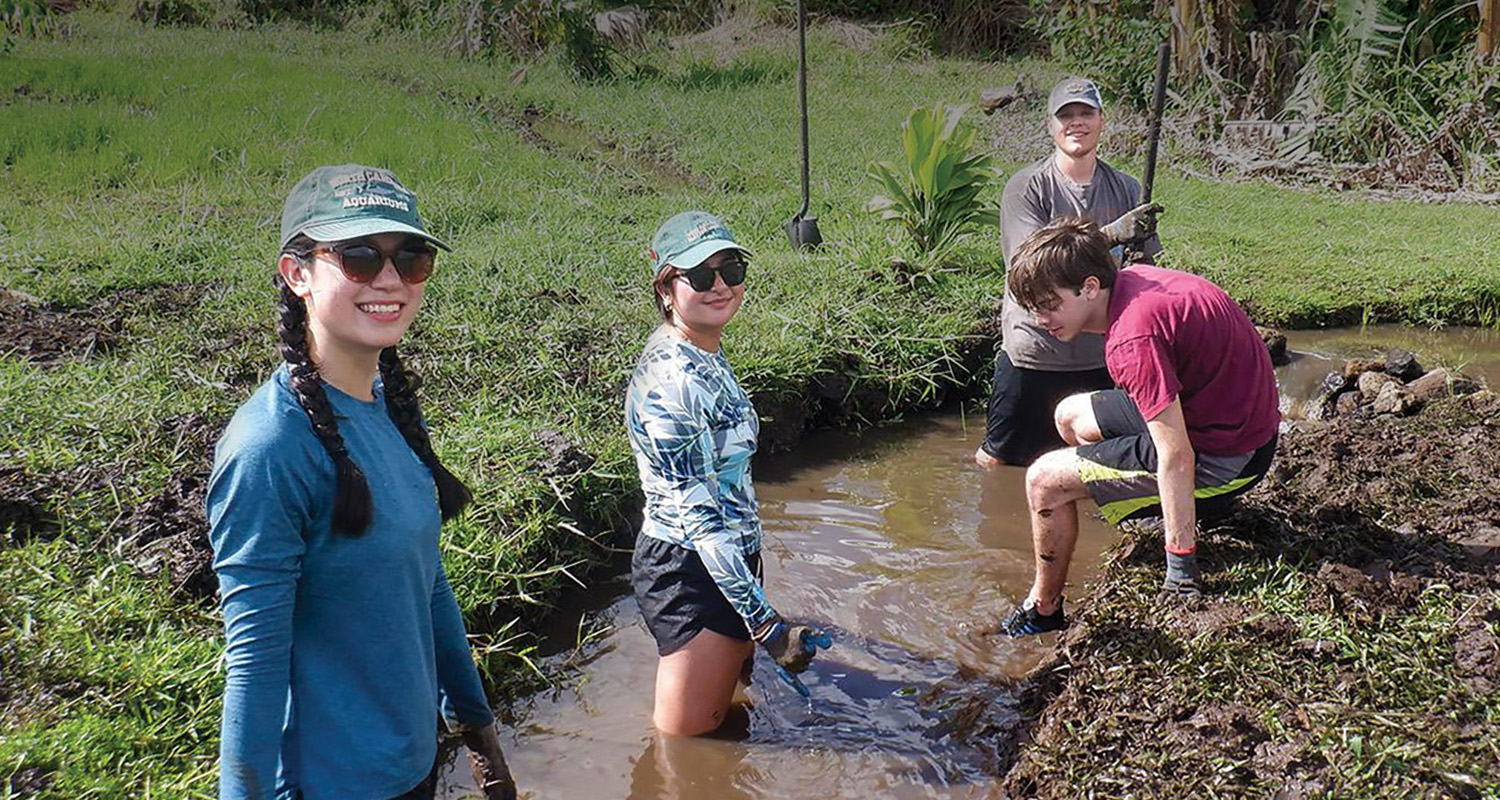
Students conducted innovative conservation research in Hawaii during spring break with Nina Karnovsky, the Willard George Halstead Zoology Professor of Biology, and Wallace Meyer, associate professor of biology. The trip was part of a semester-long course co-taught by both professors. This faculty-led study away course was one of two Global Gateway programs that Pomona piloted in 2025 to deepen students’ understanding of some of the world’s most pressing issues.

Pomona students in Hawaii

To deepen their understanding of some of the world’s most pressing issues, students conducted innovative conservation research in Hawaii during spring break with Wallace Meyer, associate professor of biology. This faculty-led study-away course was one of two Global Gateways opportunities that Pomona piloted in 2025.


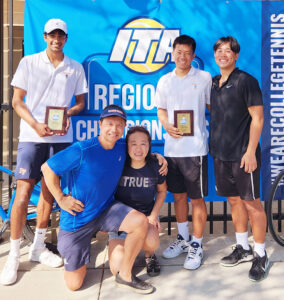
Feng familyLast year, gifts from Sagehen parents and families supported student athletics, wellness programs, student research opportunities and more.
We give because it’s evident that every gift makes a difference, and even though our student has graduated, he is still a part of the Sagehen community. And so are we.”

­—Mark Feng
proud parent of Matthew Feng ‘24


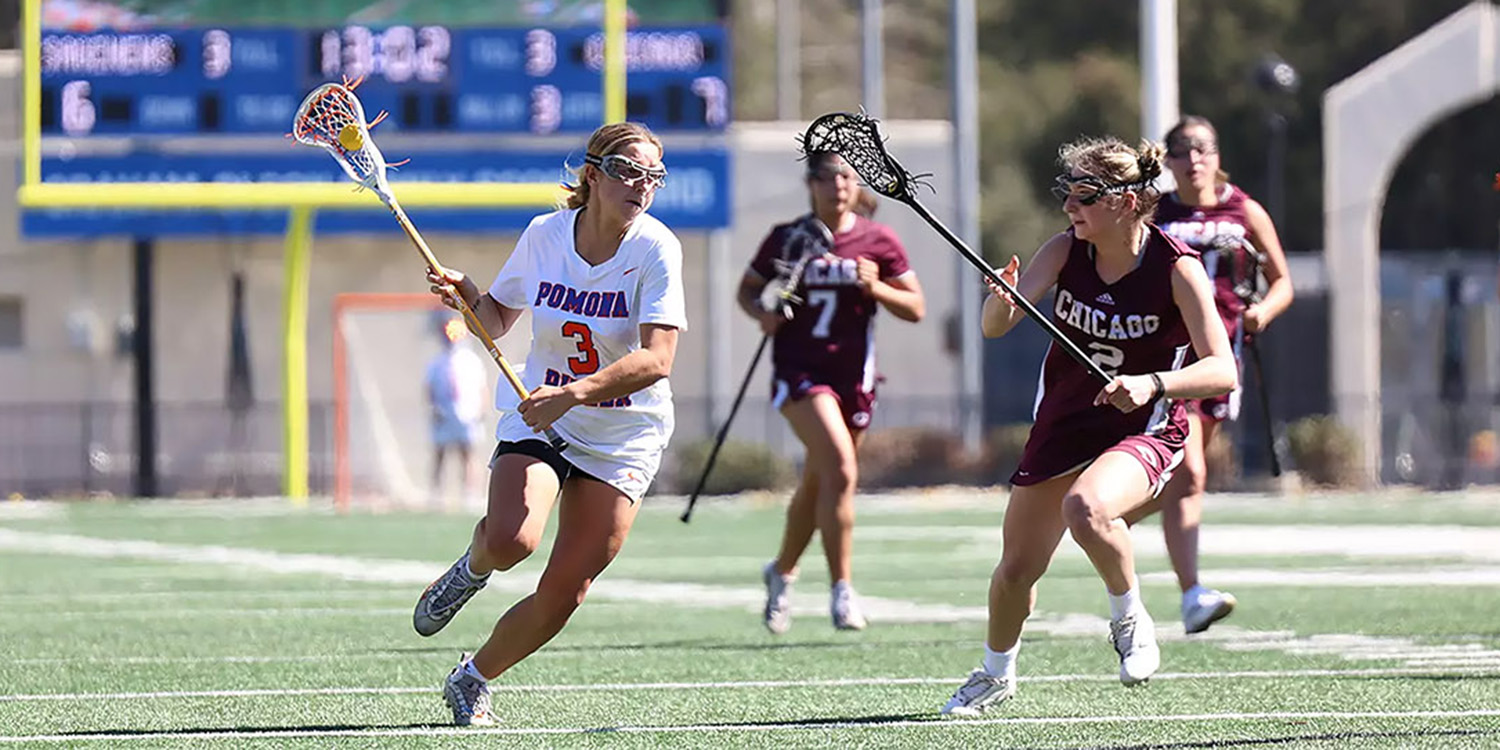
Hannah Gough ’25 playing lacrosse

For many athletes, the critical resources for training, team preparation, competition and recovery that the College provides make us feel like we are taken seriously and appreciated.”

—Hannah Gough ’25
Women’s lacrosse team member, economics and international relations double major at Pomona


For me, teaching is more than a profession. It’s a calling that began at Pomona. Giving back to the College through the Pomona Annual Fund, which supports student research, is a way of continuing the legacy.”

—Dr. Richard Lee ’90
world-traveling physician, educator and humanitarian

Last year, gifts like Dr. Lee’s supported over 200 Sagehens in the Summer Undergraduate Research Program (SURP).

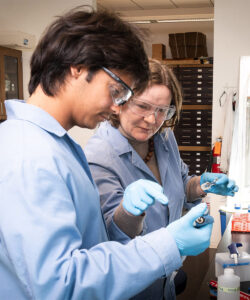
Physics major Toby Arculli ’25 and Masha Prokopenko, visiting assistant professor of geology

Pomona’s interdisciplinary curriculum ensures that physics majors like Toby Arculli ’25, pictured here with Masha Prokopenko, visiting assistant professor of geology, gain exposure to a broad range of scientific fields.


Pomona alumni

My Pomona experience has served me in every aspect of my life. How could I not give back to a place that has given me so much?”

—Andrew Brown ’77
45-year consecutive Pomona Annual Fund donor, former regional chapter lead

Read more about Sagehens making an impact.

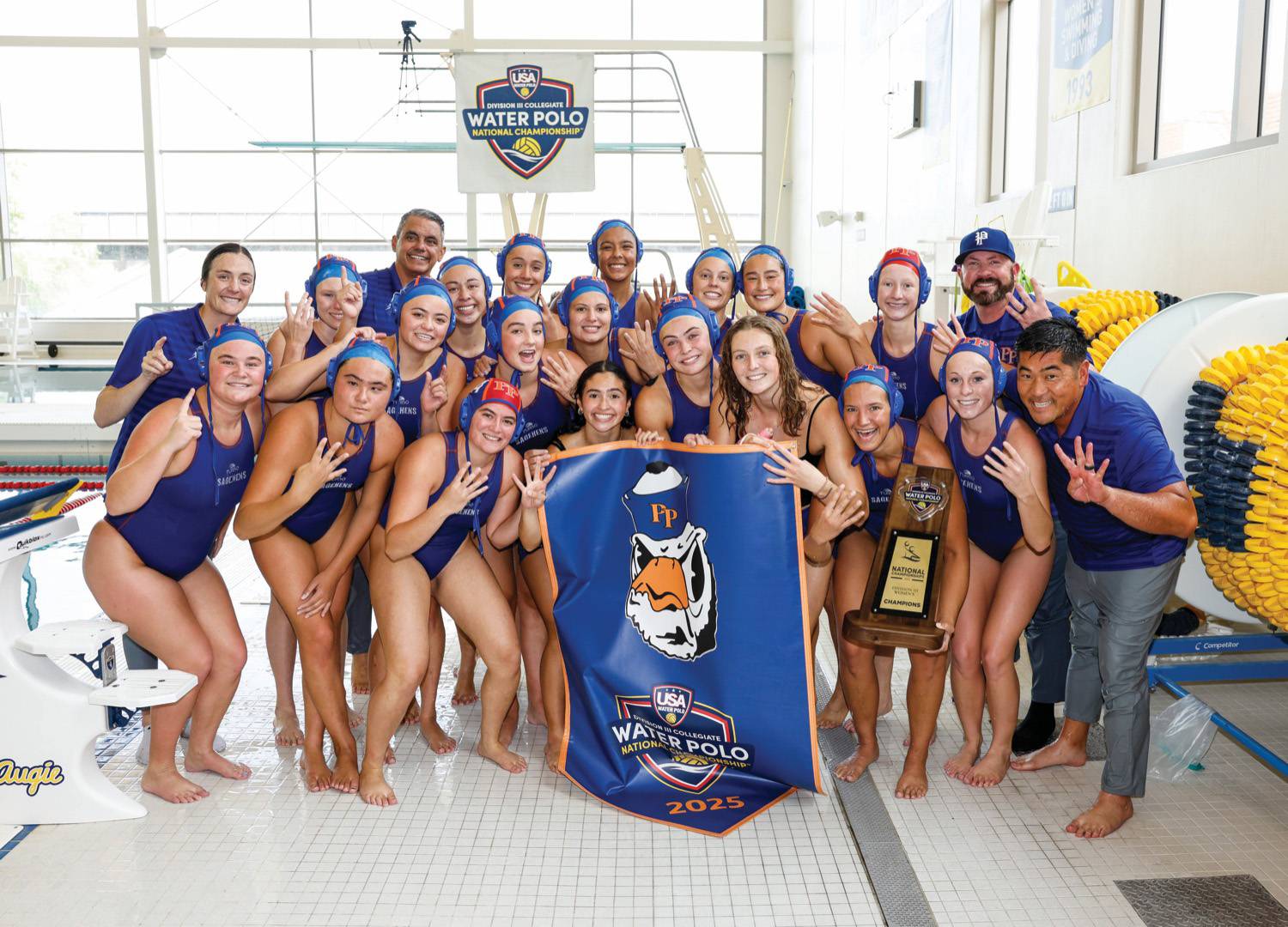
Women’s Water Polo Four-Peats as Division III National Champions

Water Polo National Champions

Water Polo National Championship
Pomona Pitzer vs. CMS

In May Pomona-Pitzer captured its fourth straight USA Water Polo Division III championship, defeating chief rival Claremont-Mudd-Scripps (CMS), 9-8, to cap another unblemished postseason run.

Kaylee Stigar ’25

Kaylee Stigar ’25

The four-peat sent Zosia Amberger ’25 and Kaylee Stigar ’25 into the sunset with the unprecedented milestone of having never lost a playoff game in blue and orange. Amberger started in goal all four years and was named Tournament MVP this spring.

“Zosia’s probably the best goalie I’ve had here [and] a huge part of what we’ve been able to do,” says head coach Alex Rodriguez. “Kaylee really stepped up and played phenomenally in the finals—she had this anger and vengeance that really helped us.”

As seniors, Amberger and Stigar were among the class of Sagehens that started at Pomona when students returned to campus following the initial pandemic shutdown. In that first year as Sagehens, Rodriguez says the current seniors learned much from the Class of 2022, including how to lead and handle adversity.

With as much winning as the program has done these past four years, the pressure to retain the top spot in Division III mounts, Rodriguez says.

“I have a simple philosophy that to get better, you have to play better teams,” the coach adds. “Because our sport is small, we play a lot of Division I teams early in the season, and that’s how we develop small goals. To be clutch, to be someone who plays well in big moments, you have to understand you’re going to fail sometimes.”

Zosia Amberger ’25

Zosia Amberger ’25

Despite losing Pomona grads Amberger, Stigar and a handful of seniors from Pitzer College, the Sagehens do not expect to relinquish their stranglehold on Division III women’s water polo anytime soon.

Rodriguez and associate head coach Alex La—one of the best coaches in Division III, Rodriguez says—expect leadership roles to be filled by Brienz Lang ’26, Gabby Lewis ’26 and Zosia’s sister Mia Amberger ’26, with key underclassmen continuing to develop and contribute in meaningful ways.

“The goal of every season is to try to have little championship moments every week,” Rodriguez says. “We try to prepare to win certain types of games, get more feathers in our cap, then win a Division III championship by the end.”

Stray Thoughts

It’s a familiar refrain heard across dinner tables, holiday gatherings and comment threads: “Back in my day…” Every generation seems to carry a version of this lament—the notion that they had it tougher or that life was more demanding. Whether it’s holding down a job at 16 or walking to school uphill both ways, the past tends to wear a nostalgia filter, painted in hues of grit and resilience.

While there’s some truth to the idea that the challenges of youth are universal, in 2025 it’s safe to say that there are some pretty unique complexities ahead for folks born in the last 30 years (i.e. the elder “Gen Z” Zoomers, and the younger “Alphas”). The next generation is in the midst of navigating a thorny landscape littered with issues like loneliness, climate anxiety, skyrocketing housing costs, an AI-disrupted job market and political polarization.

This issue aims to explore the realities, hopes and hurdles of those coming into adulthood today, with a particular focus on the three topics of work-life, parenting and mental health. We delve into the future of office work and how young professionals are questioning hustle culture and demanding purpose alongside their paychecks; we talk to experts about how financial stress and shifting cultural expectations have made younger generations less likely to have kids; and we confront the ongoing mental health reckoning that has involved evolving conversations around self-care and seeking therapeutic support.

Adam Conner-Simons ’08

Adam Conner-Simons ’08

As we turn the page of this issue, we invite you to set aside the nostalgia and listen to the stories of those growing into adulthood at a time unlike any other. While every generation thinks they had it hardest, it just might be true that this one has it different—and is rising to meet it in extraordinary ways.

—Adam Conner-Simons ’08
editor-in-chief

Letter Box

Come Sail Away

Perhaps it was because three of my grandparents were born in England, the fourth, an eighth great grandfather, born there quite long ago, or due to my dad and his father being in the Navy, I became interested in ancestry and boats. Over the last 25 years I’ve built several small wooden boats, and through that made several friends and organized many ‘Messabouts’.

Over the past decade I’ve been watching lots of YouTube videos on wooden boats and those that sail them, which led in time to videos of couples sailing wooden and fiberglass boats all over the globe for years at a time.

It was thus with great excitement that I read about “Project Atticus” in the Spring 2025 Pomona College Magazine. I’d not heard of this channel before, but I will now enjoy binge-watching the past decade of these videos, and any upcoming videos as well!

—Steve Lansdowne ’71

Desiree and Jordan Wicht overlooking the ocean

Prompts of Fond Memories

As a former editor of Pomona College Magazine, I read each issue with interest. The Spring 2025 obituaries have prompted some special memories of four people:

Perdita Sheirich was an unsung hero of the College; her myriad notes regarding births, professional and personal achievements, and obituaries captured, preserved and celebrated the fabric of the campus community for decades.

Gordon Hazlitt ’54 was a legendary editor of PCM when I arrived in 1984. He was one of several editors with whom I had the pleasure of working (Christine Kopitzke ’75, Dennis Rodkin ’83, Tom Wood, Mark Wood).

And finally, let’s remember parents and grandparents who are often unappreciated. The late Peter and Winky Hussey (parents of Duncan Hussey ’13) helped support athletics at Pomona, funding facilities and nearly single-handedly organizing tailgate parties before and after football games. They were tireless advocates and supporters of the College.

All four, in different ways, contributed mightily.

—Don Pattison
Pomona, California

Remembrances from the Golden Age

I was alarmed to find nothing in the Spring issue from my ’56 classmates. I miss knowing who is still around and what they are about. At 90, I would enjoy any bits about fellow aged lives. I have memories of the ’50s that are laughable now—Stinky’s hamburgers! May Queen! Gracious Living! I waited on tables at dinners. Are there still served dinners? My life is limited now, of course, to reading, writing a column for a local paper here in small-town Arizona, and musing about the meaning of life. I’m shorter and fatter and am married to my third husband. I don’t miss my teaching or my ministry, but I do miss my departed friends, like Ann Williams ’56 with whom I had wonderful trips and many laughs.

—Elaine Stoppel Jordan ’56

Correction

Friends, on page 8 of the Spring 2025 PCM, you identify 1982 commencement speaker Bill Bradley as a New York senator. Although “Dollar Bill” starred for the New York Knicks, he represented New Jersey in the Senate.

—Steve Johnson ’82

Write to Us at PCM

Pomona College Magazine welcomes brief letters to the editor about the magazine and issues related to the College from the extended Pomona community—alumni, parents, students, faculty, staff, donors and others with a strong connection to the College. Write to us at pcm@pomona.edu or mail a letter to Pomona College Magazine, 550 N. College Ave., Claremont, CA 91711. Letters should include the writer’s name, city and state of residence, class year for alumni and contact information. With rare exceptions, letters should be no more than 400 words in length. Letters are selected for publication based on relevance and available space and are subject to being edited for brevity and clarity.