Articles Written By: Staff

The Class of 2024

Even in the midst of a global health crisis, the work of the admissions office has gone on with the selection of the new Pomona College Class of 2024. Here are a few facts about the new class of Sagehens:

745 were offered admission.

49 U.S. states plus the District of Columbia, Guam and Puerto Rico, are represented.

45 other countries were home to new admits.

52% of the class are female and 48% male.

58.8% are domestic students of color.

20.7% of the class will be first-generation college students.

26 transfer students were admitted.

4 military veterans were admitted, representing the Army, Marine Corps and Navy.

90% are in the top 10% of their class.

6 are graduates of the Pomona Academy for Youth Success (PAYS).

16 admitted students were matched through Pomona’s partnership with QuestBridge.

20 were admitted through the Posse Foundation.

Going Virtual

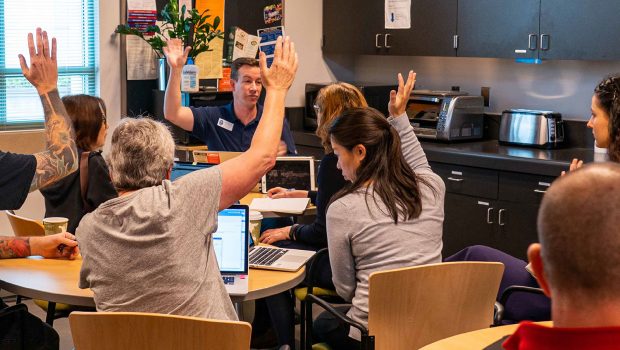
Pomona faculty take part in a workshop on remote instruction.

Pomona faculty take part in a workshop on remote instruction.

Pomona vs. the Pandemic Part 2

Part 1: Pomona vs. the Pandemic

Part 3: Bittersweet 16

Part 4: Job-Hunting in the Pandemic

Part 5: Sagehens on the Front Lines

THE LAST DAY of March in the year 2020 will be remembered as the day when Pomona College’s curriculum entered a virtual new world.

By then, most students had already moved off campus, and most staff and faculty had begun to work from home. During a prolonged spring break, professors and staff had worked furiously to shift the curriculum temporarily to online instruction. Leading up to the virual relaunch, the College’s Information Technology Services (ITS) had held countless workshops to guide members of the faculty in the use of a range of online tools, provided laptops to students and everything from tablets to video cameras to faculty. Professors had also spent the time reviewing course plans, seeking the best way to communicate content and create interaction online.

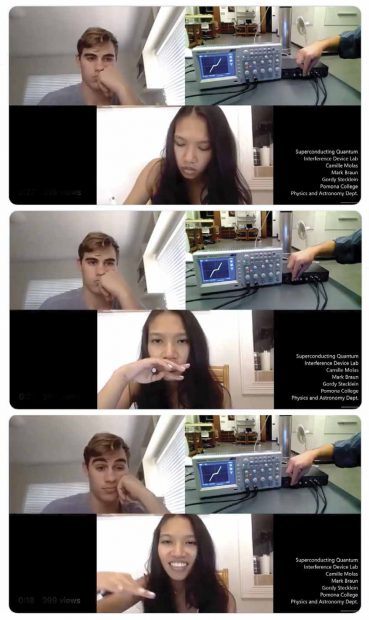
Physics Professor Gordy Stecklein and his Physics 174 students Mark Braun ’21 and Camille Molas ’21 in a Zoom class.

Physics Professor Gordy Stecklein and his Physics 174 students Mark Braun ’21 and Camille Molas ’21 in a Zoom class.

The result was a reliance on multiple approaches and technologies as professors sought to move online in the way best suited to their content and teaching style. “Our faculty have been experimenting with pedagogical techniques like flipped classrooms, where they record their lectures in advance,” Assistant Professor of Computer Science Alexandra Papoutsaki wrote, “while others have been trying different setups for real-time class meetings. Some have brought mini whiteboards home, some have been trying document-cameras so that they can project what they write on paper in real-time, and others are using set-ups like mine, switching between laptops and tablets.”

Professors also reached out to their students, both to touch base and to prepare for the resumption of classes. “Because I am aware that people’s transitions have varied quite a bit in smoothness and results,” Associate Professor of Psychological Science and Africana Studies Eric Hurley noted, “the very first concrete thing I did was to ask all my students to ‘please do let me know in an email if there are things about your particular situation that you think I need to know and consider as I try to support your navigating the remainder of the course in balance with life.’ Of course, the College has been consistent in its offers of technical and other support, but I figured that some issues and difficulties are kind of particular and that they can only be troubleshot as they come up. In fact, I did have a few responses to that, ranging from how virtual meetings might interact with students’ accommodations to the challenge of focusing on coursework while living in a small space housing a large number of people.”

Some professors chose not to try to recreate the classroom experience, moving instead to more individualized research. Associate Professor of Sociology Colin Beck explained, “Both of my seminars were already planned to transition into student-focused work—discussions on topics that they were interested in, longer research papers, peer workshops on drafts, etc. It’s not possible to recreate the magic of those discussions online, but it is quite easy to move the research process into Sakai discussion forums and Zoom office hours. So, for both classes, I have excised the minimal post-spring break “content” in favor of having students focus on their own research.”

Some classes and disciplines offered greater challenges than others. Science classes with hands-on laboratories were forced to take on new forms. Professor of Physics Janice Hudgings reported: “For labs, we’ve switched from actually building the circuits with a breadboard to ‘building’ the circuits in an online circuit simulator, which allows us to do all the same measurements that we would have in the lab. The circuit simulator is a useful new tool that we wouldn’t have learned without this shift to online teaching—so that’s a nice win!”

Music faculty did their best to meet all the complexities of guiding ensembles and individual lessons in such dispersed wide-ranging settings. “Applied lessons—one-on-one instruction on an instrument or voice—are going forward,” wrote Professor of Music Donna Di Grazia, “but it is taking herculean efforts to do so. Many students had borrowed instruments on campus from the department, which is now making arrangements to rent instruments at the department’s expense and have them delivered to as many of these students as possible. The logistics of doing this are complex, and students also face challenges doing lessons or practicing with parents and siblings home, “and there is nowhere one can retreat and practice without distractions or without distracting everyone else.”

Several faculty members praised the work and dedication of the ITS staff for accomplishing so much so quickly. Professor of Geology Eric Grosfils wrote: “The end-to-end development and testing of the Virtual Server by ITS was amazing and deserves a special call-out. This is something that would normally happen over many months; ITS did it in roughly two weeks. Without this capability, a big hunk of my computing-heavy course would be dead in the water. As it stands, I simply have to help my students adapt to a new way to access that computing!”

As at most of the nation’s top colleges and universities, after a long debate and consultation with students, in recognition of the differing situations of students in completing their work after the campus was closed, Pomona’s faculty voted to adopt a special grading policy for that semester. As a result, for spring 2020, students’ transcripts will show only grades of P (pass), NRP (no report, pandemic) or I (incomplete). No letter grades were to be recorded. In addition, student transcripts will bear the notation “COVID-19: Enrollment and grades reflect disruption of Spring 2020.”

After delaying the decision as long as possible, the College also determined that it would be unsafe to hold the usual Commencement exercises on campus for the Class of 2020, so after consulting with members of the class about their preference, the College announced that Commencement 2020 would be postponed until some as yet undetermined future date when it would be safer for the new graduates to return to campus to celebrate together the end of their four-year educational journey.

Bittersweet 16

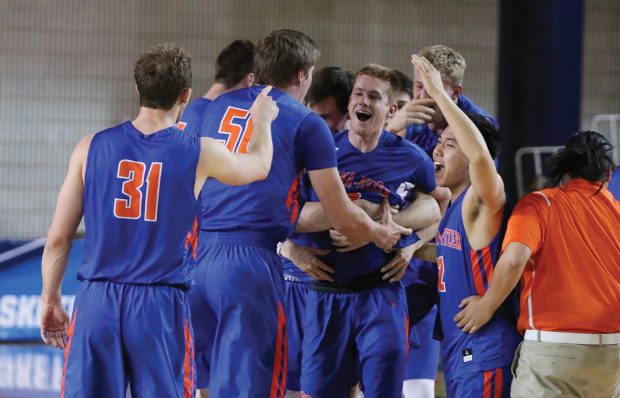
The team mobs Jack Boyle ’20 after he hit the game-winning shot to send the Sagehens to the Sweet 16.

The team mobs Jack Boyle ’20 after he hit the game-winning shot to send the Sagehens to the Sweet 16.

Pomona vs. the Pandemic Part 3

Part 1: Pomona vs. the Pandemic

Part 2: Going Virtual

Part 4: Job-Hunting in the Pandemic

Part 5: Sagehens on the Front Lines

FIRST CAME THE SHOT: Jack Boyle’s spectacular three-pointer from the corner as time expired on March 7 sent Pomona-Pitzer to the Sweet 16 of the NCAA Division III men’s basketball tournament for the first time in program history.

“It felt like it hung in the air for almost an eternity,” says Boyle PI ’20, before the ball splashed through the net for a 71-70 victory over 10th-ranked Emory and the Sagehens ended up in a celebratory pile near midcourt.

Next came the shock: Sitting on a plane five days later on March 12 as they pulled away from the gate at Ontario International Airport to fly to their next game near Chicago, players’ and coaches’ phones started to ding.

“We were 100 yards from the terminal and we all looked up at once and saw that the NCAA tournament had been canceled at all levels,” says Charlie Katsiaficas, men’s basketball coach and professor of physical education. “A flight attendant was standing right beside me, going through the normal routine that they do when you’re pulling back in terms of the air mask and the seat belt and all that. So I said, ‘Excuse me, ma’am, the game we’re flying to has just been canceled. Is there any way you can take us back to the terminal so we can get off the plane?’

“She goes running up the aisle and I’m thinking to myself, there is no way they’re going to allow us to get off this plane. She comes back 30, 45 seconds later and says, ‘Yep, we’re going to pull back in and let you guys get off.’”

So unfurled one of the most emotional turnarounds in the history of Pomona-Pitzer Athletics. The only way a season usually ends on a buzzer-beating victory is when a team wins a championship, unless a team’s not good enough to make the postseason at all. Instead, it ended by getting off a plane.

The shot was one shining moment, now forever in suspended animation.

“You realize that your sports career is over, for many of us,” James Kelbert ’20 says from his home in San Jose as classes moved online and events across the country were suspended or canceled because of the global coronavirus pandemic. “You have people crying; you have people just very upset. It’s a weird feeling, because you’re done, but you hadn’t lost. You go through a whirlwind of feelings and emotions, just trying to navigate all of those.

“But at the end of the day, you’ve got to keep it in perspective, at least from my point of view. This is a serious pandemic going on. This is probably the best thing for all of us.”

The play will live on in Sagehen lore.

Down two points with 2.2 seconds to go in the second round of the NCAA tournament, Pomona-Pitzer had the ball out of bounds near the Sagehens’ bench.

The strong-armed Kelbert, also the goalie for the Pomona-Pitzer water polo team, stood on the sideline to inbound the ball. Alex Preston ’21 set a screen in the lane to free Boyle. And Kelbert led Boyle with a pass like a quarterback leading a receiver, hitting him with a two-handed, diagonal cross-court pass as he arrived in the far corner.

“Preston set a great screen, so I was I was able to get pretty wide open,” Boyle says. “Kelbert made an absolutely phenomenal pass.”

A defender rushed in to try to block the shot, but Boyle threw a fake.

“I saw the guy fly by me, and then I had a clean look at the basket. I felt confident in the moment that I could get a good shot off, and so I just let it fly,” Boyle says.

And so it ended.

After their third-round game against Elmhurst College in Illinois was canceled, the team deplaned and returned to campus, where students were packing to leave for the semester. For seniors Boyle, Kelbert, Micah Elan PI ’20, Adam Rees ’20 and Matthew Paik ’20, it was the end of the line.

“That’s the tough thing, just trying to squeeze in that emotional journey,” Kelbert says. “I think there was a four-day turnaround between being on that plane ready to take off and then me leaving campus for the last time as a senior. People were trying to sell as many things as they possibly can, especially seniors who were like, ‘What am I going to do with my fridge now?’”

Realizing there would be no exit meetings, no banquet, no closure, Katsiaficas and his staff called a meeting for the next day, and the team played some loose, somewhat socially distanced pickup ball, then had Domino’s pizza for dinner amid informal awards and recognition.

“We all just kind of got to enjoy each other’s company and play the game we love,” Boyle says.

The son of University of Colorado Coach Tad Boyle and older brother of high school senior Pete Boyle, who plans to attend Pomona and play for the Sagehens next season, Boyle is back home near Boulder, studying online and plotting his future. After interning last summer for the San Antonio Spurs, coached by former Pomona-Pitzer coach Gregg Popovich, he plans to pursue coaching for at least a while, maybe get an MBA.

Kelbert ultimately plans to pursue medicine.

“This just makes me want to become a doctor a whole lot more,” he says. “Just because you see the bravery and you see the selflessness that they go through, because a lot of people are treating tons of victims without any personal protective equipment, knowing very well they could get infected and die from this.

“It’s really tough to see them go through these plights but it’s definitely strengthened my own convictions.”

The Division III NCAA championship game would have been April 5 in Atlanta, sharing the weekend stage with the NCAA Division I Men’s Final Four. Who is to say where Pomona-Pitzer’s run might have ended?

“I think guys were like, we want more, we want to see where we can take this thing,” Katsiaficas says. “But we also know there are a bunch of other teams that are dealing with similar situations. Division II was in the middle of their national tournament and Division I was just heading into a lot of their conference tournaments. So you had teams all over the country that were chasing their dream of winning a national championship. Spring sports are having their whole season canceled.  So there are plenty of disappointments throughout the country.  But as we get further away from it, you realize this had to be done.  It’s something that makes sense for the country.”

The pain and frustration, over time, subside.

“It’s great to go out, I guess, on a high like that,” Boyle says. “To have your last college athletics experience be that moment.”

Job-Hunting in the Pandemic

Job-Hunting

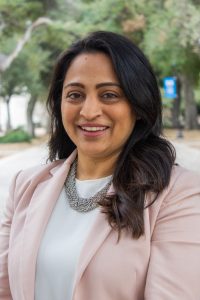
Hazel Raja

Hazel Raja

Pomona vs. the Pandemic Part 4

Part 1: Pomona vs. the Pandemic

Part 2: Going Virtual

Part 3: Bittersweet 16

Part 5: Sagehens on the Front Lines

IN THE FALL of 2001, Hazel Raja, now associate dean and senior director of Pomona’s Career Development Center, was living in New York when the unthinkable happened—the terrorist attacks of 9/11. “I’d taken out a large loan to go to New York University. It had always been my dream,” she explains. “I remember feeling overwhelmed and lost; I was emotionally drained by all of the loss, trauma and upheaval. I struggled to focus on a job search right away. What’s happening now feels very familiar.”

The global pandemic has created skyrocketing unemployment just as many of Pomona’s new graduates are job-hunting. “Students will need to continue to practice patience and focus on what they can control. They need to understand that their Plan B is just as important, right now, as their Plan A,” says Raja. “The pandemic has impacted hiring. There have been delays and fewer jobs posted. Students and our new graduates have to be realistic,” she says. “But there are things that they can do. And that’s how the CDO can be helpful.”

PCM: What services are available through the CDO?

Raja: The CDO is operating all of our services remotely. We’re offering close to 30 remote career advising appointments a day, as well as online info sessions and other resources through Handshake, plus alumni networking opportunities through our virtual programming and resources like Sagehen Connect and SagePost47.

Hiring has gone entirely online; recruiters are conducting all of their interviews via phone and/or videoconferencing. If students don’t feel 100% comfortable with using those platforms to interview, they should connect with us to get trained. We can do mock interviews with them and will share tips to ensure that they are successful in presenting themselves competitively and authentically in this job market.

PCM: Who is hiring in this environment?

Raja: There are industries that have increased their hiring as a result of the pandemic. For example, many companies are relying on their communication channels to share messaging, so they are hiring communications professionals who focus on social media and public relations. Companies that make remote work easier like Zoom, Slack, Microsoft Teams­, Skype, etc., are hiring. Obviously, the health care sector and pharmaceuticals are booming. Additionally, the public sector: governments, county offices, the schools are actively recruiting. They’re looking for people to help quickly launch projects to support communities. Other areas that are actively hiring include accounting, logistics and delivery.

Start-ups are a great option right now for students and graduates who are enterprising and nimble. There are a lot of start-ups that are looking for new graduates because of the skills they bring, their ability to be creative and innovative thinkers and their ability to quickly pivot.

In contrast, there are industries that are actively cutting jobs. If somebody said to me, “I want to get a job in the airline industry,” I would say, “Well, there are very few to no jobs being posted in aviation right now.” Additionally, leisure and entertainment have been hit hard. It’s important to recognize that there are some fields, and some jobs, that may just evaporate for the time being or disappear altogether. If a student is struggling because of the lack of opportunities in their chosen career path, I hope they will feel comfortable leaning on the CDO for support and advice.

PCM: How can students job-hunt under safer-at-home orders?

Raja: Seventy-five percent of jobs are found through networking; therefore, 75 percent of a student’s job search or internship search should focus on networking.

In a situation like this where your options to physically network are extremely limited, you need to have a really strong online brand—that’s really important now because opportunities to woo potential firms in person are not an option.

Students have to “practice their pitch,” and they just have to keep applying for jobs. To be quite frank, I don’t think students apply for enough opportunities. In this type of environment, it’s even more important that they are actively applying and that they apply for even more opportunities than they would have normally.

It’s worth noting—if you need to take a pause because the industry you want to go into is not making decisions, ask yourself: What can I do between now and when it reopens to show how actively engaged I have been, and how can I improve my candidacy for when things reopen?

PCM: What advice do you have for students on summer plans?

Raja: Summer is a time for building skills through experiences. That expectation hasn’t changed but the source of how you gain those skills may have to be adjusted. It’s worth noting that now that companies and organizations are reopening, there is going to be great need for them to ramp up quickly. They’re likely going to be looking for short-term manpower to help pick things back up again. And that is something that I think college students are the perfect candidate for, because short-term work is exactly what they’re looking for in the summer months.

Additionally, the Pomona College Internship Program (PCIP) and RAISE program are supporting hundreds of students in developing their knowledge and employability skills though internships and independent projects. While those programs are closed for this summer, students can also develop great skills through remote campus employment. Available jobs are posted on Handshake.

Additionally, students could take advantage of online learning, online teaching or tutoring opportunities, or working for summer programs for kids (if they enjoy doing that kind of thing).

If students have lost their internships or plans for the summer or are not getting any responses, they need to reflect on what they can do to stay relevant. How can they stay on the radar of the person who hired them or would have been interested in their candidacy under other circumstances? What can they do to help support the employer or that organization remotely, if they’re willing to let them do that?

PCM: How can alumni help?

Raja: Alumni and parents can be a great resource to students right now. We are working with the Alumni Office and Parent Relations to explore a number of avenues to connect our students to Sa­gehens and Sagehen-supporters out in the workforce. Our #HelpingHens campaign, which launched in April, signposts mentorship options and the promotion of jobs and internships.

PCM: What should students do to cope as they search for work?

Raja: Students need to take time to process what’s happening and take care of themselves by prioritizing their well-being. You are a better job-searcher if you feel good about yourself. And you will feel good about yourself if you are sleeping well, eating well and taking care of yourself.

This can be a very isolating experience. Students should really be thinking about their emotional health and schedule time to connect with their roommates, friends and mentors. Mental health is also not something that can be neglected. If students had therapy appointments lined up, they should keep doing them virtually, because job-searching can lead to increased anxiety, regardless of the environment. It’s really easy to be down on yourself and take things really personally if you’re not taking care of your well-being.

Sagehens on the Front Lines

Pomona vs. the Pandemic Part 5

Part 1: Pomona vs. the Pandemic

Part 2: Going Virtual

Part 3: Bittersweet 16

Part 4: Job-Hunting in the Pandemic

EMERGENCY ROOM PHYSICIAN Jonathan Gelber ’10 is on the front lines battling the coronavirus (COVID-19) pandemic at Highland Hospital in Oakland, California. Jennifer Doudna ’85, internationally famous for the CRISPR-Cas9 gene-editing technique, is establishing a high-capacity coronavirus testing lab on the University of California at Berkeley campus. And Victoria Paterno ’75 P ’07, an assistant clinical professor in pediatrics at UCLA Medical Center who had retired from private practice, volunteered to return for COVID-19 duty. Those are just a few of the many Sagehens across the country who are responding to the pandemic. Here are a few of their stories in their own voices.


Sagehens on the Front Lines

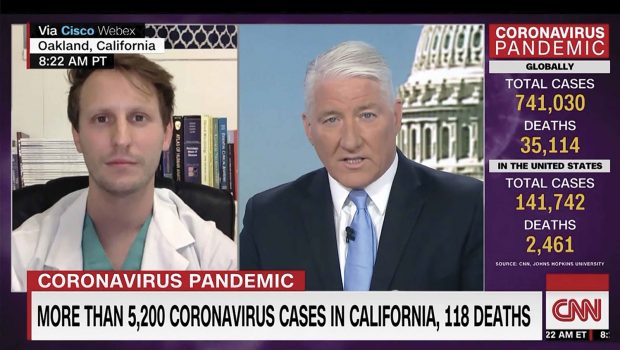
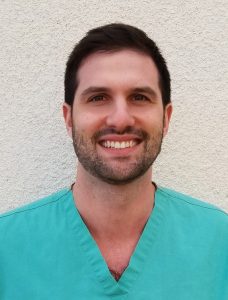
Jonathan Gelber ’10
Emergency Room Physician, Oakland, CA

“We do care predominately for vulnerable patients, people of unstable housing or frankly, homeless,” Gelber told CNN on March 30. “When we work to plan discharges, when we tell people things like ‘shelter in place,’ [we’ve learned] to make sure people have a shelter to ‘shelter in place’ in. We think it’s a lot easier to tell somebody like me to go hang out at home for two weeks and get food delivered. It’s a little harder when the patient is a 55-year-old gentleman who lives in a tent encampment under the 45th Street bypass, and with 15 other people. So we’ve learned how to plan for that and see our problems ahead of time before they arise. That’s saying, hey, how do we keep the curve flat, how do we keep patients like this from infecting other patients at shelters, at homeless encampments, as well as the general patient population? And how do we keep the people in the emergency room safe from infecting each other in the lobby?”


Zack Haberman ’10

Zack Haberman ’10

Zack Haberman ’10
Emergency Room Physician, Stockton, CA

“My ER serves a diverse community, including a large elderly and socioeconomically underserved population. I am seeing the number of COVID patients continue to grow. While I can draw on what I’ve learned from basic science at Pomona, medical school and residency, the scariest part of the virus is how much is unknown. In many ways, I am used to that—my job is to see patients with an unknown illness or problem and make life-or-death decisions based on incomplete information. However, the more I see and read about the virus, it doesn’t seem to respond in the same way that other serious heart and lung emergencies do. Because of that, we still don’t know the best way to treat patients—especially the sickest ones. And unlike most emergencies, it is putting myself, my co-workers and our families at risk. I’ve already had to take care of my colleagues who have fallen ill from COVID, and I get a pit in my stomach knowing that there will be more to come.”


Vian Zada ’16

Vian Zada ’16

Vian Zada ’16
Fourth-year Medical Student, Georgetown University

“Medical students across the country are helping out with the response in virtual ways. For me, I am part of the MedStar Telehealth Response Team and, with other students, am calling thousands of patients with their test results. I am also a coach with our school’s disaster preparedness exercise, and leading Zoom sessions for first-year medical students. I also have an Instagram page @studentsagainstcovid, which I am managing with some health professionals in the San Diego area, where I grew up. We are hoping to target younger audiences with information on social distancing and disease prevention.”


David Siew ’98

David Siew ’98

David Siew ’98
Internal Medicine Physician, Kirkland, WA

“Our hospital identified the first large-scale outbreak of COVID-19 disease in the United States after noting an influx of patients with unexplained respiratory disease from a local care facility. Up until that point, COVID-19 still felt a world away and none of these patients had the primary risk factor: international travel. We were shocked to discover ourselves at the initial national epicenter of the pandemic. I am amazed and humbled by the mobilization of our hospital and the multidisciplinary effort of every member of our organization to care for the community. My group continues to treat many hospitalized patients with the disease and has compiled the lessons we are learning for other health care providers. … The growing and evolving body of knowledge regarding COVID-19 requires providers to assimilate new information on a daily basis. Since there are many uncertainties, we have to collaborate with others and form our own critical conclusions on which to base our testing and treatment strategies.”


Daniel Low ’11

Daniel Low ’11

Daniel Low ’11
Famiy Medicine Physician, Seattle, WA

“I think it is critically important to highlight the disproportionate effect that COVID-19 has on marginalized communities. Certainly, COVID-19 has touched virtually everyone, but the manifestations are exacerbating existing socioeconomic and racial inequities in our country. Community health centers are being hit particularly hard and are having particular difficulty in serving the most disenfranchised individuals in our communities. Without a critical lens focusing on the most vulnerable, things as seemingly utilitarian as the ethical rationing of limited ventilators will ultimately worsen healthcare disparities because criteria for respirators often focus on the absence of chronic conditions, and yet we know that structural violence and systemic racism have resulted in communities of color and economically disadvantaged people having higher rates of chronic conditions at baseline. I’m trying to push an agenda that focuses on and responds to the most underserved during this crisis, as we already have emerging data demonstrating that these communities are the most hard-hit.”


Kate Dzurilla ’11

Kate Dzurilla ’11

Kate Dzurilla ’11
Nurse Practitioner, Brooklyn, NY

“I live on the Upper West Side, and look forward to 7 p.m. every night when we open our windows to hear cheers, applause, trumpets, bells, dogs barking, etc. Each night over the past week the cheers are growing louder. I cheer for my colleagues working in medicine, but also for the other essential personnel that are making this time in our lives easier, like those working in grocery stores, hardware stores, and bodegas, and delivering food and driving public transportation that helps me get to work. It reminds me that we’re all in it together, and that despite how unbelievable and painful this time is, we still feel hope and optimism.”


Vicki Chia ’08

Vicki Chia ’08

Vicki Chia ’08
Chief Resident in Obstetrics and Gynecology, Boston, MA

“I have borne witness to the impact that the COVID-19 pandemic has had on the birth experiences of patients whose communities have historically experienced denials of reproductive freedom. Restricting the presence of a patient’s labor support person(s), disclosing their diagnosis of COVID-19, and making the recommendation of separation from their baby feels like an emotional assault on a new parent, especially one who has limited resources in terms of housing and childcare. Additionally, my fellow health care providers and I are experiencing the shortage of personal protective equipment (PPE) through hospital policies that ration or require reuse of PPE, and limitations in testing capacity have resulted in late diagnosis and delayed identification of health care worker exposures.”


Shennan Weiss ’00

Shennan Weiss ’00

Shennan Weiss ’00
Neurologist, East Brooklyn, NY

“As a neurologist I was consulted for cases of stroke, seizure and confusion. We saw an increase in the number of our consultations as the COVID-19 pandemic grew. We saw at least five cases of catastrophic large blood vessel strokes in patients under 60 who were infected with COVID-19. On at least one occasion, we intervened with a thrombectomy revealing a larger than normal blood clot. Not all of these patients survived as a result of related respiratory complications. Those who did survive were discharged to nursing facilities often still suffering from debilitating hemiparesis and aphasia.”


Johanna Glaser ’10

Johanna Glaser ’10

Johanna Glaser ’10
Fourth-year Medical Student, UC San Francisco School of Medicine

“I just finished a rotation in a skilled nursing facility at the local VA [Veterans Affairs] hospital. All of my patients during this time, men over 70 years old with comorbidities, were among the highest risk for serious illness and death if exposed to SARS-CoV-2. It’s been devastating to see the fatality rate of this pandemic among the elderly, especially those residing communally, with about a fifth of all deaths in the U.S. due to COVID-19 being linked to nursing facilities. Luckily, not a single occupant of the facility where I was on rotation had any worrisome symptoms nor had tested positive for the virus. This, however, came at the cost of extreme isolation for this otherwise highly sociable group of men. …

“I hope that we can take this moment to reexamine how we deliver health and essential services in our country, with a new focus on marginalized populations and health equity. … In the medical context and more broadly, let us take this unprecedented event as an opportunity to avoid unnecessary suffering and inequality in the future.”

This Isn’t Over

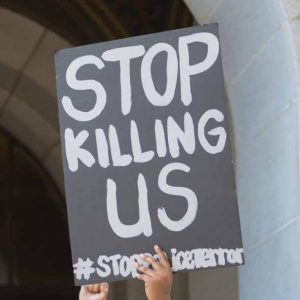
Protests rock the worldThis isn’t over, not by a long shot. America’s cities are still in turmoil, as are hearts and minds across the world, after we watched the horrifying death by suffocation of George Floyd, an African American man whose life was snuffed out under the knee of a police officer over 526 seconds. He pleaded for his life, asked for his mother. Onlookers begged the officers holding Floyd’s neck and body to the ground to stop—to have mercy.

It’s not over. It’s not even just begun. This is yet one more in a long line of deaths: pointless, painful, final. One man died by jogging. A woman by opening her door. A boy by playing in a park. And the crisis that has in America brought forth bloody flowers and strange fruit (the blistering language used to describe lynchings sprung from trees across my country) has spread.

Protests rock the world: in London, Mexico City, Amsterdam, Nairobi, Haifa, Lagos, Buenos Aires, Tokyo and beyond. Meanwhile, nations that are nearly paralyzed by the COVID-19 pandemic, and particularly the minority communities within them who are hard-hit by medical and financial inequalities, are facing choices. What do we do? How do we express outrage? Most importantly, how do we make change?

Many people ask me these questions, and as an academic, and now president at a small liberal arts college in California, I seek answers. I’m the mother of two children, both Black like me. The terror I feel for them sometimes leaves me gasping for breath. Yet I know there is a road I must walk if any of this is to change for them, and for children across the U.S. and around the world.

The hatred delivered to Black people wasn’t born on America’s streets. It runs so deep in our history and can rear its head anywhere. This is revealed in the protests around the world. The name for this systemic hatred is simple: ugly. It is the ideology of white supremacy, an ideology born of the need to control populations across the world as Europe expanded its empires. It was born, equally, of the need for those who perpetuated it to feel morally just.

I recall coming across a 400-year-old poem attributed to John Cleveland while carrying out dissertation research in the British Library two decades ago: a dialogue between “a fair Nymph” and “a black boy.” The boy pursues the nymph; the irremediable darkness of his skin threatens the proclaimed purity of hers. A solution is suggested through the metaphor of a printer’s press. The nymph says, “Thy ink, my paper, make me guess/ Our nuptial bed will make a press.” The boy’s ink will ultimately be written on her body, leaving a message for others to find.

The author must have thought himself a wit, while keeping a safe distance from the blood, brutality, murder, abuse, rape and fundamental degradation of the realities of slavery. But I can’t—won’t—keep my distance from the reality of racial hate and the necessity of making change happen today.

Each morning I must stand up and acknowledge my Black heritage for what I know it to be—a sign of strength, and a commitment to life even in the face of dark days. Then, I must straighten my back and return to a life of finely honed, severely tested optimism, in which education is held to be our last, best hope.

Thus, I work to make it possible for students to learn, research to advance, professors to teach. I work to enable the transmission, and even expansion, of the shared inheritance of humanity, the long, hard-fought knowledge we on this planet have gained, husbanded and promised to preserve. This has never been more crucial: By one estimate earlier this spring, more than 1.5 billion children had lost access to all education. Such students could fall as much as two years behind their peers.

Perhaps there is a slight opening in this moment, where the slowdown and solitude of the pandemic meets the crowds and cameras on the streets. A chance to be truly heard? We know we need far more than a fleeting “teaching moment.”

I tell my children, college students, anyone who will hear: Whatever you do to address the inequality, the brutality, the hatred and pain of racism, you must realize you cannot fight without knowledge. So spend the coming months and years as you prepare for adulthood doing just that. Study policies that help reduce the use of force, mitigate poverty, cure those who need healing. Learn the tools of justice and the history of their uses and failures. Indeed, the 14th Amendment of the U.S. Constitution was passed, in part, to stop deadly harassment by “lawful” authorities of African Americans in the antebellum period.

Help your generation and mine, and those between us and beyond, to see past the misdirection, to rebut the lies and half-truths and to find a path together. It isn’t over.

This essay was originally published in The Financial Times under the title “What to tell young people about systemic hatred in our society.” It is reprinted with permission.

Letter Box

Remembering Bob Mezey

The first time I met Bob Mezey, I was 16 years old and visiting Pomona College; I had no training as a poet. Bob had a reputation for being difficult—he was widely considered to be a master poet, but rumors swirled about his sharp tongue, frank opinions and habit of publicly renouncing poets that didn’t pay homage to the tradition of meter and form. I was a sensitive kid, and the slightest cruel word might have crushed me. Years later, I learned that Bob himself was also just 16 when he first sent his poems to John Crowe Ransom at Kenyon College. Perhaps this had something to do with how he handled our first meeting. I gave him my poems and eagerly awaited his response. “Well,” he said, “you don’t really know what you’re doing, but I see talent. I hope you come here.” Even before I began as a student at Pomona College, Bob sent me poems in the mail, photocopies of the works of Borges, Frost, Justice, along with instructions to read them carefully, listen to the sound and see if I could imitate the meter.

Later as a student at Pomona College, Bob and I frequently met for breakfast at Walter’s in Claremont. He always arrived early, and I’d find him drinking coffee, reading poetry. More than once he looked at my work and said, “This is not poetry; write something in verse. Keep the meter; use your ear.” Bob would bring in scanned versions of Larkin, Frost and Wilbur. He’d point out the ionics and spondees and explain how the poetic masters could rough up the verse, but only after years of practice. Once, while reading Wilbur’s “The House,” I saw his eyes brimming with tears. It was clear to me then that poetry was not just Bob Mezey’s profession; it was something much deeper than that.

Bob had a promising start to his career: He’d won the Lamont Prize, and many people expected him to be the next big thing in poetry. Over the next few decades, Bob garnered further success for his translations, introductions to important poets and poems appearing in major journals. But during the last 20 years, it became increasingly difficult to find his work, even in the formalist journals. What happened? Had he offended one too many people, or was his style of writing simply out of fashion?

Years later, I began to expand my own poetic repertoire to include free verse. Bob cautioned me that writing a good free verse poem was far more difficult than people thought. “But in good free verse,” he’d say, “you’ll still hear the ghost of the meter.” Bob rarely spoke of his own work in free forms. When I asked about Naked Poetry, he said, “Wish I’d never been part of the damn thing.” Somewhat ironically, just as the momentum of the poetry world was swinging in the direction of Naked Poetry, Bob was making a sharp turn back to formalism, back to the original teachings of Ransom.

In late April, I called Bob to say I finally had a draft of a poem I’d been working on since 2009—would he look at it? “Send it along,” he said. Bob was 85. On a Sunday morning, I woke early, and made coffee, eager to see if he’d written back—he had a habit of working late. But there was no response from Bob—only an email from his daughter, sharing the news that he had caught pneumonia, or possibly the virus, and passed during the night. What did he think of that final poem? “Not bad,” I imagine him saying, “only a few lines in here I might quarrel with.”

—Jodie Hollander ’99
Minturn, CO

Remembering Richard Elderkin

The loss of Richard Elderkin is very sad news. Professor Elderkin was on the admissions committee in 1985 that admitted me. When I arrived he told me he hand-picked me as an advisee because I was majoring in math, and he was intrigued and interested in the young man who wrote my admissions essay. I told him I could introduce him to the guy if he gave me a couple days. We hit it off immediately, and he spent the next four years supporting, encouraging and guiding me.

Brilliant, kind, thoughtful, caring, curious, loyal, engaged and Buckminster Fuller(!) are words that come immediately to mind when I think of Professor Elderkin. I find comfort in knowing the very large positive impact he and his wife had on Pomona College, Claremont and, in turn, the world for more than three decades. I am a wiser, better teacher because of his example, and I reflect and tell stories about our interactions regularly because of his concern for me while I was a student at Pomona.

May his memory continue to grow as a blessing to all who know and care for Richard.

—Donald Collins ’89
San Diego, CA

Athletic Mentors

Looking back, I don’t think I appreciated the quality of the staff nearly enough when I was at Pomona. I spent at lot of time around the athletics department. I realize now how much those people shaped my life and who I am today. Bill Swartz, Curt Tong, Pat Mulcahy, Gregg Popovich, Lisa Beckett, Motts Thomas, Charlie Katsiaficas and Mike Riskas. All great people and great educators, setting examples and teaching valuable lessons, whether you played for them or not. I wish I had realized how special they were at the time.

—Richard Wunderle ’91
University Place, WA

Alumni, parents and friends are invited to email letters to pcm@pomona.edu or “snail-mail” them to Pomona College Magazine, 550 North College Ave., Claremont, CA 91711. Letters may be edited for length, style and clarity.

Crossword Challenge: “Initial Hints” – Answers

Across

1. CAPES
6. APB
9. ABUT
13. PRIME
14. FLOE
15. DIBS
16. LATEX
17. ILLS
18. IKEA
19. BARQSROOTBEER
22. GUTSY
23. BOUT
24. ABLEIST
27. RED
28. OYS
31. FRANZ
32. TROTS
34. WOW
35. LINT
36. TEXTS
37. BORE
38. ADD
39. BEAST
40. PARKA
41. CEO
42. ARM
43. ETICKET
45. LIST
47. SNACK
48. JACKIEKENNEDY
52. MAKO
53. ALIG
54. IDIOT
56. OVEN
57. RING
58. CURDS
59. MASS
60. YES
61. SPEAK

Down

1. CPL
2. ARAB
3. PITA
4. EMERGENT
5. SEXQUIZ
6. ALLOY
7. POLO
8. BESTBETS
9. ADIEU
10. BIKETOWORK
11. UBER
12. TSA
14. FIRSTTEAM
20. STS
21. BODS
24. AFLAC
25 BRIDE
26. LANDOLAKES
27. ROTTENEGG
29. YORKE
30. SWEAT
33. RXS
36. TERTIARY
37. BACKEDUP
39. BASK
40. PICNICS
44. TAN
46. ICONS
47. SKINS
48. JAVA
49. ELIE
50. DIRE
51. YODA
52. MOM
55. TSK

In Memoriam

Richard ElderkinRichard Elderkin

Professor Emeritus of Mathematics and Environmental Analysis

Richard Elderkin, professor emeritus of mathematics and environmental analysis, died of Alzheimer’s disease on March 9, 2020. He was 74. Elderkin was a member of the Pomona faculty from 1974 until his retirement in 2013.

One former student noted that Elderkin was “extremely generous with his time in helping me with research … he is very good at helping students put together difficult topics.” Another former student recalled Elderkin’s Classic Environmental Readings discussion-based course and said, “He always kept things interesting by guiding the discussion with provocative questions.”

A recipient of various Mellon Foundation grants for his research, Elderkin was an expert in mathematical population ecology with a research focus in mathematical modeling. Offering their collective reflections on his impact on the College’s Math Department, Professors Jo Hardin, Ami Radunskaya and Shahriar Shahriari noted that it was Elderkin, together with Emeritus Professor of Mathematics Kenneth Cook, who first gave Pomona a national presence in mathematical modeling, leading several teams to first place in the national Mathematical Contest in Modeling. “While at Pomona, he worked closely with students doing research on interdisciplinary problems and dynamical systems, generating excitement for how broadly mathematics can be used. Several of us are grateful to Rick for bringing us to Pomona College,” they wrote.

Professor Char Miller, director of the 5C Environmental Analysis Program (EA), remembers his colleague Elderkin as “a remarkably generous soul, gifted teacher and dedicated collaborator.”

Rick Hazlett, emeritus professor and past coordinator of the EA Program, says Elderkin, who helped launch and guide Pomona’s EA Program 20 years ago, was a community-minded mathematician. “He had a great laugh, an ever approachable, attentive, good natured personality, and absolute devotion to the importance not only of teaching mathematics to his young students, but doing so in a meaningful way,” Hazlett remembers.

A native of Butte, Montana, he received his bachelor’s degree from Whitman College and his M.A. and Ph.D. from the University of Colorado, Boulder.
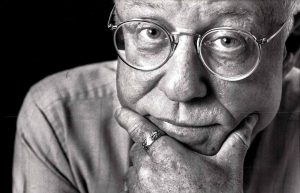

Robert MezeyRobert Mezey

Professor Emeritus of English and Poet-in-Residence

Professor Emeritus of English and Poet-in-Residence Robert Mezey died at the age of 85. Mezey taught at Pomona for more than 20 years, and his work was published widely in The New Yorker, Harper’s Magazine, New York Review of Books and Paris Review, among others.

He once said he chose to teach poetry to stay close to the language he loved. “Getting paid to talk about poetry” is how he described his job. His courses always included reciting poetry and memorizing passages—“have them in their hearts,” he said.

Poet and memoirist Garrett Hongo, ’73 shares one of his memories. “When my second book came out, I gave a reading at the Huntley Bookstore. Bob came, sat quietly in the back row through the whole thing, then spoke to me. He said, ‘Well, I don’t know if it’s poetry, but it sure is powerful, emotionally speaking.’”

“The man swung from love to reproach, meeting to meeting, yet tenderness to others and devotion to art were his dominant traits. He lit up when the topic was the love of poetry and he shared it,” says Hongo.

Emeritus Professor of English Tom Pinney remembers Bob as a lover of good poetry. “If Bob liked a poem, he had to read it only twice and he had it memorized.”

His collections of poetry included The Lovemaker (1961), winner of the Lamont Poetry Prize; White Blossoms (1965); The Door Standing Open: New and Selected Poems, 1954–1969 (1970); Small Song (1979); Evening Wind (1987); Natural Selection (1995); and Collected Poems 1952–1999, which won the Poets’ Prize. He edited numerous works, including Thomas Hardy: Selected Poems (1998), The Poetry of E.A. Robinson (1999), and, with Donald Justice, The Collected Poems of Henri Coulette (1990).

He devoted a decade of his poetic energy to translating other people’s poetry, much of it from Spanish to English. His translations included works by César Vallejo and, with Richard Barnes, all the poetry of Jorge Luis Borges.

He received several prestigious honors such as a Robert Frost Prize, a prize from the American Academy of Arts and Letters and a PEN Prize. In addition, he received fellowships from the Ingram Merrill Foundation, the Guggenheim Foundation and the National Endowment for the Arts.

He received his B.A. from the University of Iowa and completed graduate studies at Stanford University. In addition to Pomona, Mezey taught at various institutions, including Case Western Reserve University; Franklin & Marshall College; California State University, Fresno; the University of Utah and Claremont Graduate University.
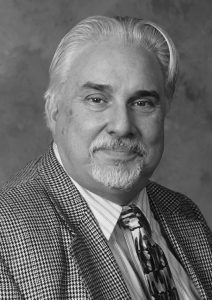

Catalin MitescuCatalin Mitescu

Professor Emeritus of Physics and Astronomy

Catalin Mitescu, professor emeritus of physics and astronomy, passed away Saturday morning. He was 81. A professor at Pomona for 47 years, much of it as the Seeley W. Mudd Professor of Physics, Mitescu was known for his roaming intellect, his ability to lecture on complex topics in physics without notes and his complete dedication to his students.

“Probably the smartest man alive,” one of his students once wrote. “He not only taught me a great deal of course content but shaped the way I think about science. He took a course overload to teach a class with me and only one other student in it.” Another student wrote simply: “With an incredible mind and a lot of patience, this man can do the impossible—make physics understandable.”A third student, looking back on the occasion of Mitescu’s retirement, wrote: “The scientific depth and rigor Prof. Mitescu brought to teaching were always balanced by a holistic approach to science and its philosophical underpinnings. Rarely a day goes by in my own professional life that these standards and this wisdom do not somehow echo in my mind and ask me to aim higher.”

One of Mitescu’s former colleagues, Physics Professor David Tanenbaum, remembers: “Prior to his arrival at Pomona, he had a strong bond with the rich traditions of Richard Feynman and major players in the physics community. He brought these to Pomona and developed new ones both here in the U.S. and in France at the École Normale Supérieure, where he was a frequent collaborator.

Most faculty will remember Catalin for his role as parliamentarian at faculty meetings, but he also led the Cabinet for many years and served for many years as head of the Goldwater selection committee and the advisor for the 3-2 Engineering Program.”

Mitescu was also a man of deep faith. Committed to the Orthodox Christian Church, he served as a deacon for many years at Holy Trinity Church in Los Angeles, then as an ordained priest there and administrator of the church’s St. John the Evangelist Mission in Claremont. Beginning in 1993, he served at Saint Anne Orthodox Church in Pomona, becoming archpriest in 2007. He was also engaged with the Southern California Orthodox Clergy Council, serving as secretary and president, and the Romanian Orthodox Episcopate of America, serving as president of the Spiritual Consistory and chair of the Department of Missions. He retired from the active priesthood in 2015.

A native of Bucharest, Romania, Mitescu immigrated to Canada as a child, graduating from McGill University in Montreal before coming to California to earn his Ph.D. at Caltech.
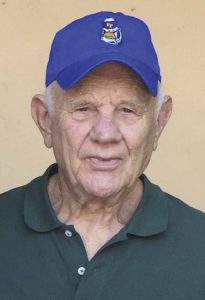

Mike RiskasMike Riskas

Professor Emeritus of Physical Education

Mike Riskas, professor emeritus of physical education and former head coach of baseball, passed away on April 1, 2020. He was 85 years old.

Riskas retired from Pomona in 2003 after 42 years serving in a wide variety of roles—from coach to facilities coordinator. As an emeritus professor, he stayed connected with many of his students, following their lives and careers through correspondence. He was a special friend and aide to all his colleagues and served the Department of Athletics and Physical Education at Pomona and Pitzer Colleges to the utmost.

“Coach Riskas set the bar and gold standard in terms of what it meant to be a coach, an educator and a professional. He was a cherished and valuable mentor for so many of us through the years. But most significant, he was a dear friend,” writes Professor of Physical Education and Men’s Basketball Coach Charles Katsiaficas.

Riskas first arrived in 1961, serving as assistant football coach for 24 years and head baseball coach for 25. He was named NCAA Division III West Region Coach of the Year in 1986, as well as the Quarter Century Award from the American Baseball Coaches Association.

Riskas was known as a team player, supervising schedules, maintaining athletic facilities, arranging for transportation, meals, strength-training and other needs for all the athletic teams and directing the intramural program. He also served as chair of the Pomona-Pitzer Hall of Fame Selection Committee, administered all NCAA compliance paperwork and taught such classes as tennis, weight training, volleyball, cardio conditioning, handball, racquetball, swimming and wrestling.

Emerita Professor of Physical Education Lisa Beckett says, “There is good reason why Coach Riskas was given the nickname ‘Iron Mike.’ The strength of his character was unsurpassed. Honest, fair, generous, kind, loyal, genuine and resilient… that was Mike. Coach Riskas made a positive impact on anyone lucky enough to be around him.”

In 2001, Riskas took a three-year sabbatical from Pomona, and Major League Baseball (MLB) sent him to Greece as a coach-in-residence to develop their grassroots baseball. He helped coach the Greek national team to a 2003 silver medal in the Senior Europe Tournament, and the team qualified for the 2004 Olympic Games in Athens.

He was inducted into the UCLA Baseball Hall of Fame in 1996 and into the Pomona-Pitzer Athletic Hall of Fame in 1997. In 2017, Riskas was honored with the SCIAC Distinguished Service Award for his meritorious service to intercollegiate athletics. Caltech.
Crossword Challenge: “Initial Hints”

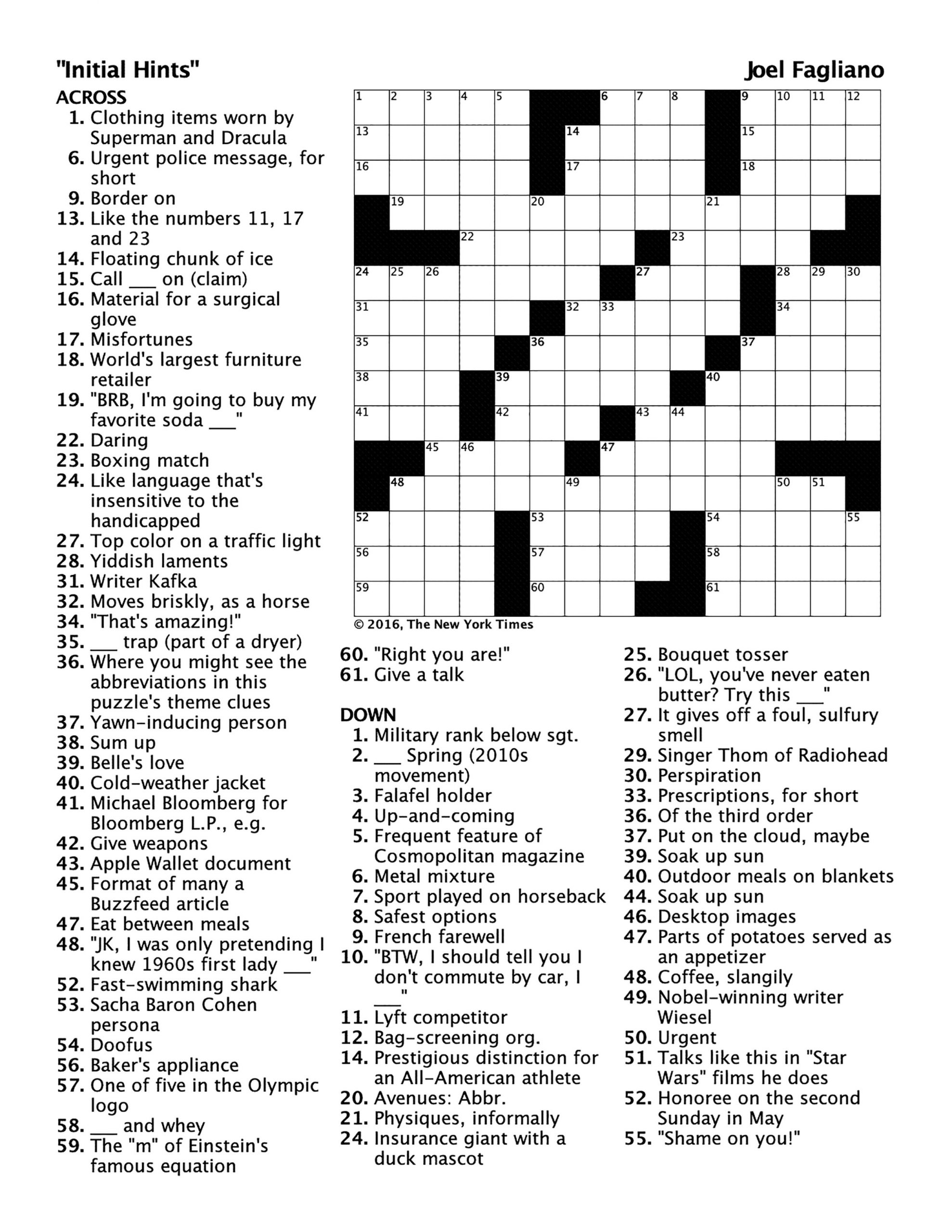
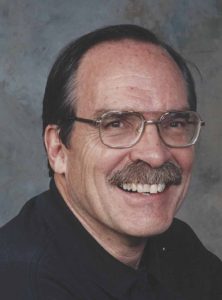
This crossword puzzle was designed by Joel Fagliano ’14, the digital puzzle editor of The New York Times and assistant to the print crossword editor, Will Shortz (Copyright 2016 by The New York Times). Just click on the crossword to expand and print. The answers are also available in case you are ever stumped.

Crossword Challenge: “Initial Hints”

CLUES:

Across

1. Clothing items worn by Superman and Dracula
6. Urgent police message, for short
9. Border on
13. Like the numbers 11. 17 and 23
14. Floating chunk of ice
15. Call ___ on (claim)
16. Material for a surgical glove
17. Misfortunes
18. World’s largest furniture retailer
19. “BRB, I’m going to buy my favorite soda ___”
22. Daring
23. Boxing match
24. Like language that’s insensitive to the handicapped
27. Top color on a traffic light
28. Yiddish laments
31. Writer Kafka
32. Moves briskly, as a horse
34. “That’s amazing!”
35. ___ trap (part of a dryer)
36. Where you might see the abbreviations in this puzzle’s theme clues
37. Yawn-inducing person
38. Sum up
39. Belle’s love
40. Cold-weather jacket
41. Michael Bloomberg for Bloomberg L.P., e.g.
42. Give weapons
43. Apple Wallet document
45. Format of many a Buzzfeed article
47. Eat between meals
48. “JK, I was only pretending I knew 1960s first lady ___”
52. Fast-swimming shark
53. Sacha Baron Cohen persona
54. Doofus
56. Baker’s appliance
57. One of five in the Olympic logo
58. ___ and whey
59. The “m” of Einstein’s famous equation
60. “Right you are!”
61. Give a talk

Down

1. Military rank below sgt.
2. ___ Spring (2010s movement)
3. Falafel holder
4. Up-and-coming
5. Frequent feature of Cosmopolitan magazine
6. Metal mixture
7. Sport played on horseback
8. Safest options
9. French farewell
10. “BTW, I should tell you I don’t commute by car, I ___”
11. Lyft competitor
12. Bag-screening org.
14. Prestigious distinction for an All-American athlete
20. Avenues: Abbr.
21. Physiques, informally
24. Insurance giant with a duck mascot
25 Bouquet tosser
26. “LOL, you’ve never eaten butter? Try this ___”
27. It gives off a foul, sulfury smell
29. Singer Thom of Radiohead
30. Perspiration
33. Prescriptions, for short
36. Of the third order
37. Put on the cloud, maybe
39. Soak up sun
40. Outdoor meals on blankets
44. Soak up sun
46. Desktop images
47. Parts of potatoes served as an appetizer
48. Coffee, slangily
49. Nobel-winning writer Wiesel
50. Urgent
51. Talks like this in “Star Wars” films he does
52. Honoree on the second Sunday in May
55. “Shame on you!”