
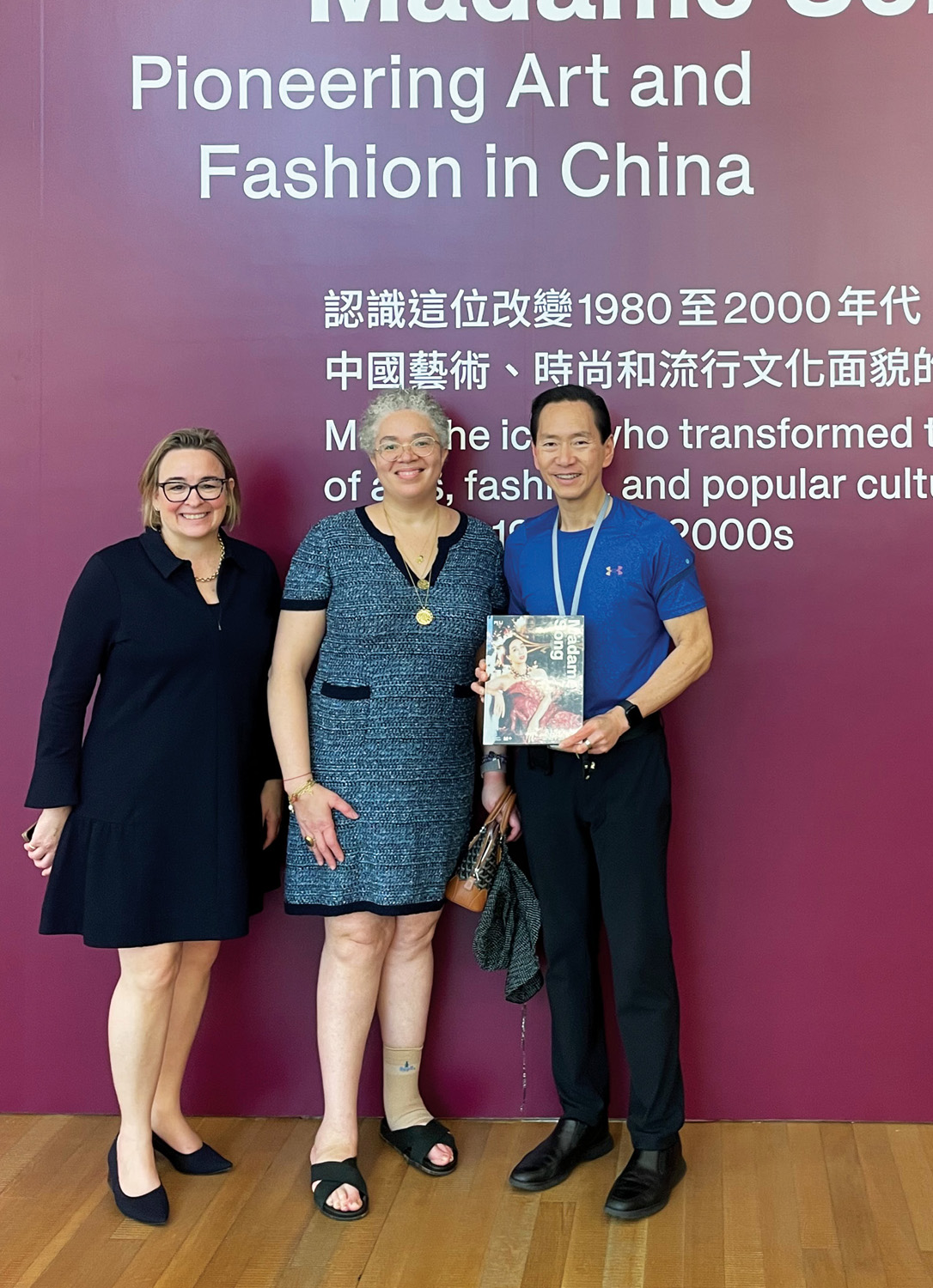
Pomona Vice President for Advancement Maria Watson, President G. Gabrielle Starr and WestK Chairman Bernard Chan ’88 at the M+ art museum in Hong Kong.
A recent project coming out of Hong Kong over the last 15 years is the West Kowloon Cultural District (“WestK”), an effort to transform the wedge-shaped waterfront into a major arts and culture hub for East Asia. In 2025 Hong Kong named as WestK’s Chairman Bernard Chan ’88, a politician and business executive who has held prominent positions in the government for more than a decade. He spoke to PCM about his new role at WestK and how Pomona helped mold his career to date.
What role do the arts play in Hong Kong today?
Growing up in Hong Kong, I never saw that we cared much about arts and culture. The biggest challenge that cities like Hong Kong face today is how to attract and retain talent. Quality of life includes culture. People go to London or New York not just because they are a financial center, like Hong Kong is, but because they are also a cultural center. Talent today can come from anywhere in the world. [The new Hong Kong arts district] is not about money-making. It’s about investment for the future.
You were recently named board chair of the West Kowloon Cultural District Authority. What exactly is “WestK”?
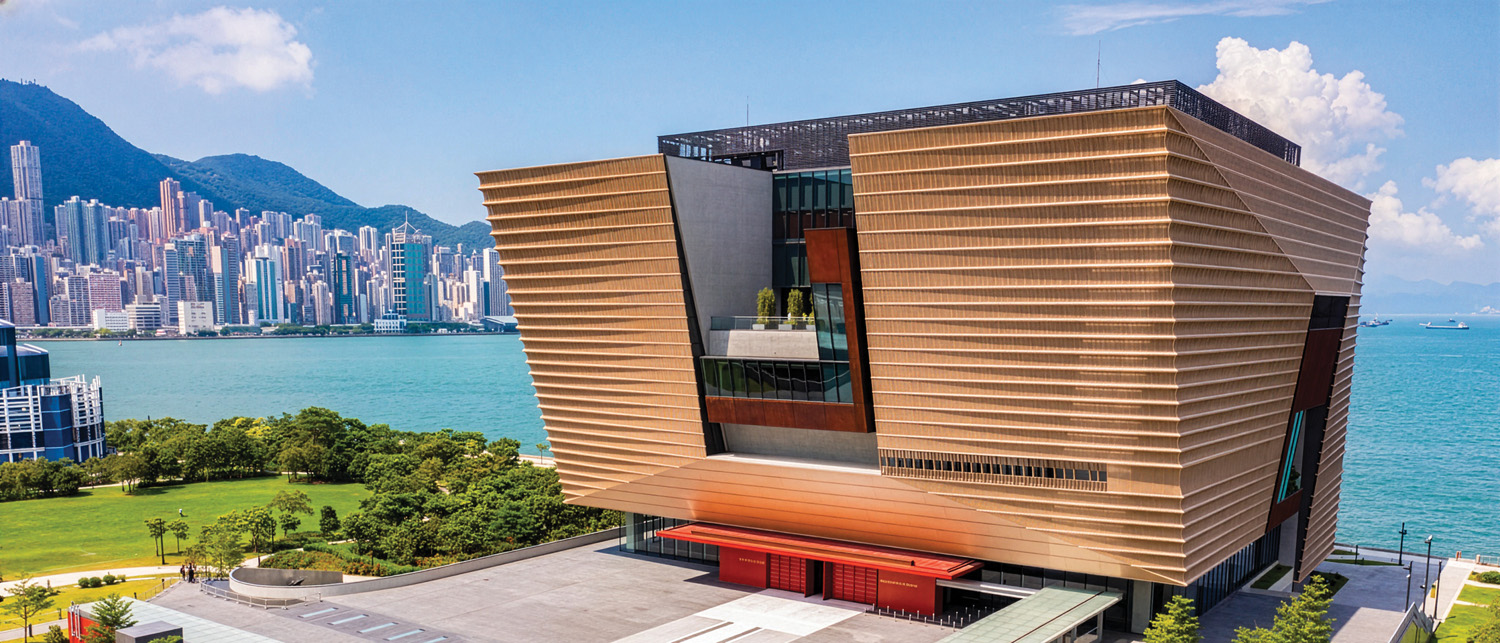
The Palace Museum
We have a new area—roughly 100 acres on the Hong Kong waterfront. In 2008, the Hong Kong government decided to create WestK, funded by the government but not run by the government. We have two new visual art museums, the Palace Museum (for ancient art) and M+ (for contemporary art). After just four years, M+ is already among the top 15 most visited museums in the world. We have a venue for Chinese opera and a black box theatre called Free Space, and another performing arts center with three theatres will open by 2027. Plans call for WestK to include two more music halls and a Broadway-style theatre.
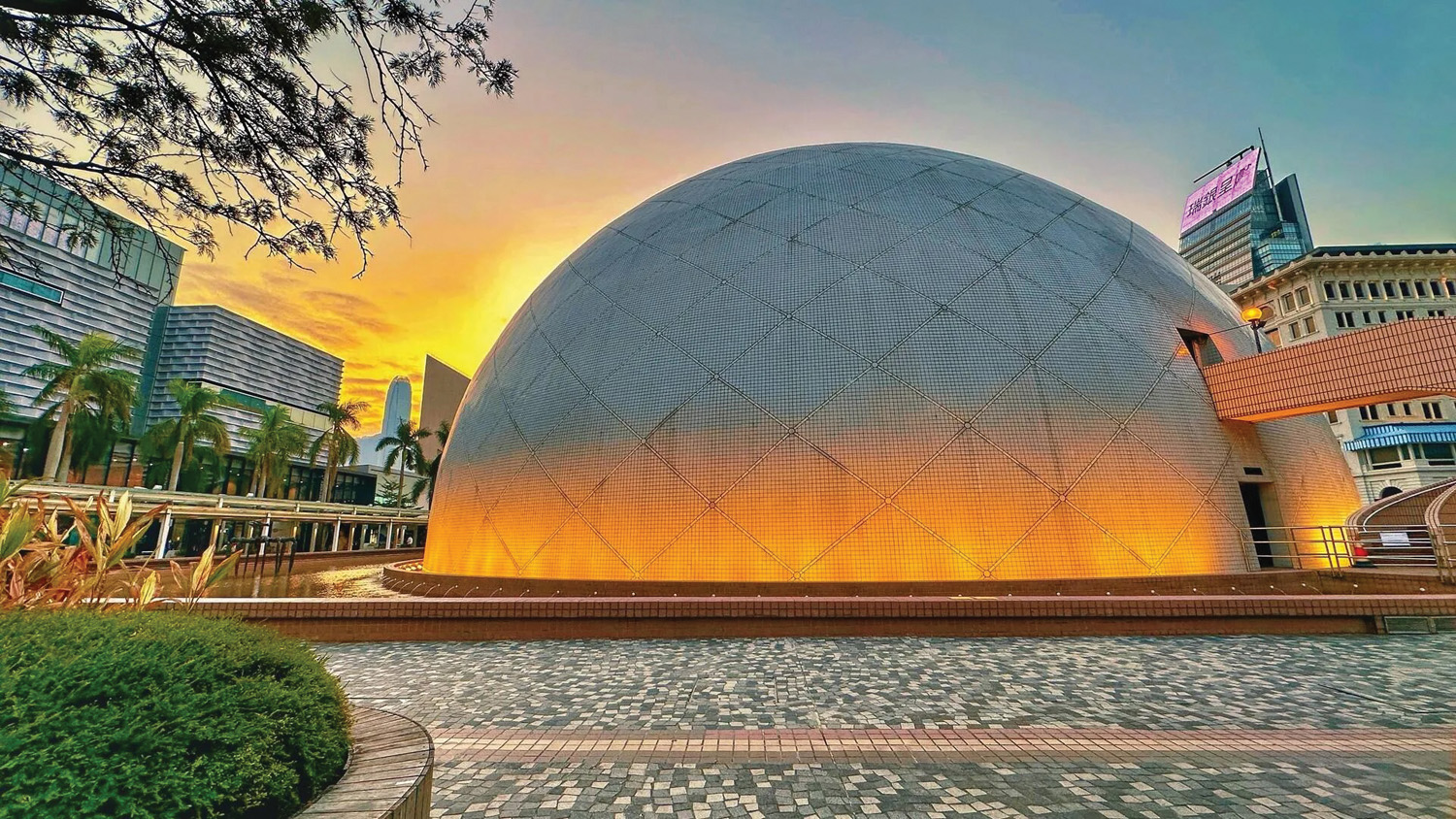
The Space Museum (credit Jenny Leung, HKSM)
How is the visitor experience immersive at WestK venues?
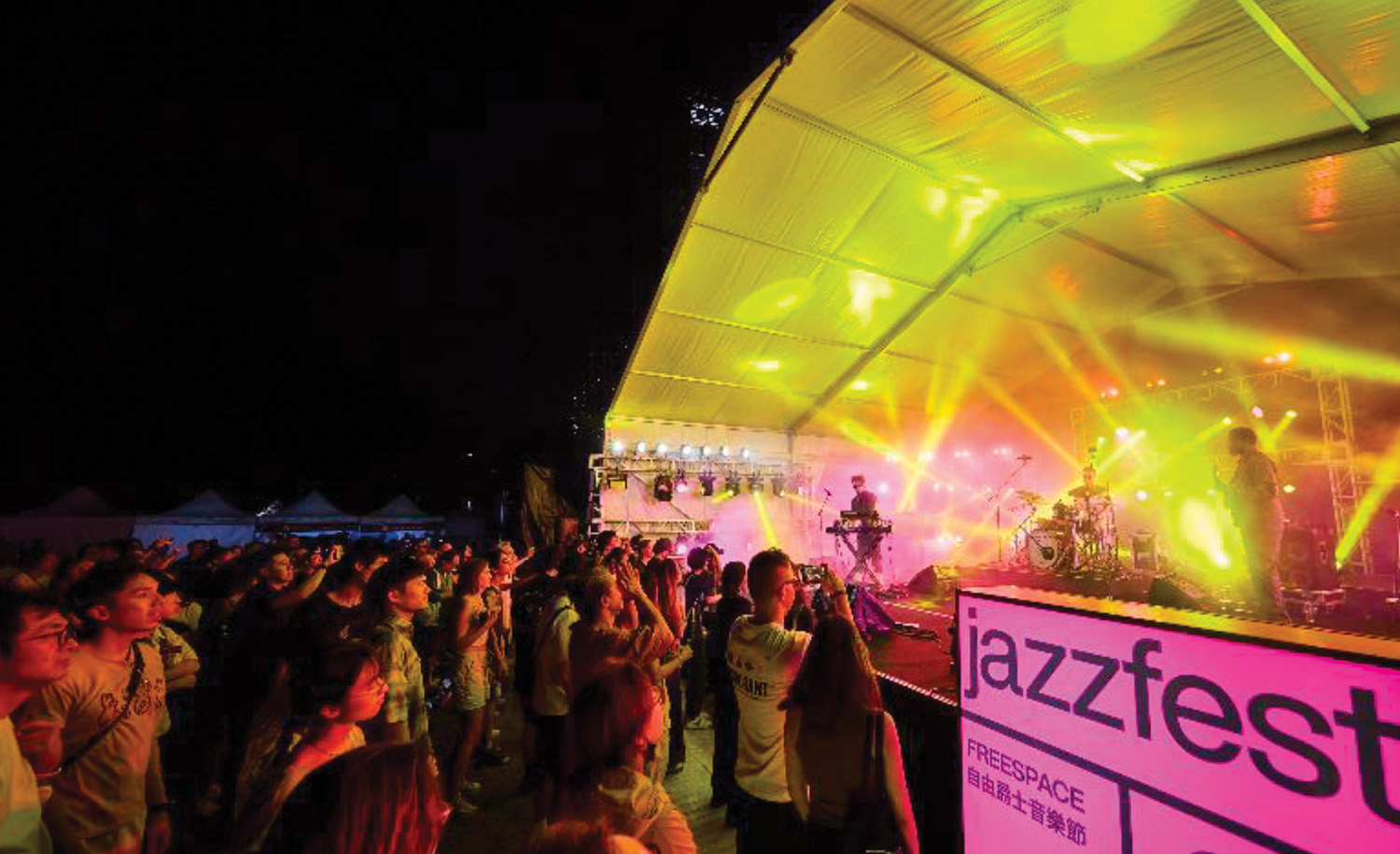
The annual Free Space JazzFest
Take the Palace Museum as an example. I was the founding chairman, and I said, I’m not building this museum for the experts and collectors. I’m building it for the average person. In the old days, a museum would present an object and a caption. Today, people don’t come to look at something two-dimensionally. They want an experience. So we use a lot of interactive technology.
In one of the galleries, we tell the story of how the emperor lived. The first object is a clock—apparently he got up at 4:30 a.m. Next we have a video to show the process of how he dressed in his finery. Later, before bed, he did calligraphy, so we have an interactive monitor with a calligraphy pen. Our mission is to build something everyone can be part of.
-
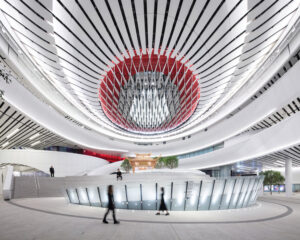
- The Xiqu Centre theater venue (credit West kowloon Cultural District Authority)
-
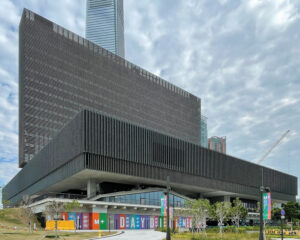
- The M+ Museum for contemporary art
You personally are deeply immersed in multiple worlds—business, government, the arts. How did Pomona prepare you for these disparate roles?
I’m a true poster boy for a liberal arts education. I graduated in studio art, went into business, politics and public service, and then back into commercial. Even though I’m not exactly an artist, I applied the philosophy behind my art degree.
Coming to Pomona from Hong Kong, I was used to a culture where we’ve been told what to do. Then, in an advanced drawing class, the professor gave us an open assignment without specific instruction. After 10 or 15 minutes I walked up to him and said, “Can you tell me exactly what I should do?” and he said, “Why should I be telling you? It’s your work.”
That experience completely changed me. It forced me to be creative and push boundaries. It applies to all the work I do every day.
How did you decide on a studio art major?
I started as an economics major, but then I fell ill. I was supposed to be in the Class of 1987, but was in and out of the hospital for the first three years.
I tried to make up credits that I couldn’t earn on campus. Searching through the curriculum, the one class I thought I could do remotely was an independent study under the art department. By my senior year, I had as many art as econ credits.
I thought my Asian parents would kill me if I told them I’m going to get a studio art degree and would ask “What good is that going to do you?” But they were so happy just to see me come back and graduate.
Your senior art show ended up as a turning point in your life.
There were eight of us in the art department that had to do a senior show. The others all had developed their specialty and portfolio. I had to force myself to come up with something on my own. I knew for sure I didn’t want to be compared with the others because they were so much better than me.
I managed to come up with my own style of pointillism. I wasn’t competing on skills; I was competing on creativity. I was able to really think outside the box and stand out. That has helped me in everything else I’ve done in life—business, public service, politics, and now arts and culture. I’m forever grateful for that experience.
How has that philosophy played out in your career?
In 1997, I became one of 60 members of the Hong Kong Legislative Council, my first role in politics. Two weeks into the session the president of the council summoned me and said, “You’re the only member with an art degree, right?” I wondered if she thought I was not qualified enough. Instead, she asked me to develop a new logo for the council. I thought, “Oh my goodness, my degree has some use!”
A few years later I got a call from the Chief Secretary of Hong Kong asking me to chair the antiquity advisory board to advise the government on preservation of historical sites. I said, “Sorry, studio art and preservation are not the same thing,” and he said, “You’re the closest person we can think of. You understand and appreciate the aesthetic and the data.” So again, I used my studio art background.
Then came WestK. For 10 years I used to lie and tell people I studied business. I was afraid if I said studio art, I’d be judged. Today people say, “Wow, you’re multitalented!” I’m using my political, art and business skills to try to connect a divided world.